The Refuge, by Sue Henry ***-****

therefugeSue Henry has two series. One is about Iditarod participant Jessie Arnold. The other is about Maxie McNabb, a widow who travels during Alaska’s coldest season and sometimes at other times also, usually in her Winnebago, and usually in the company of her miniature dachshund, Stretch. As she makes her way around the USA, the reader picks up all sorts of minutiae about the culture, history, flora and fauna of various places in the United States. For those of us who are curious yet sedentary, it’s an added benefit to reading the story, and she works her discoveries in as a natural part of what her character learns, so it doesn’t have the false, abrupt quality of (my pet peeve among cozy mysteries) dropping recipes into stories. *Shudder!* The Refuge, which I obtained free of cost at the local library to lighten up an otherwise heavy-duty reading load, is a Maxie and Stretch book, the third in the series.

I was disappointed to see that Stretch was left out of this book, except for a brief bit at the end. Maxie goes to Hawaii to assist a friend-of-a-friend who is attempting to move herself and her belongings back to Alaska, her original home, from Hawaii. She is laid up with injuries and has two weeks to get out of her rented home. Since Maxie didn’t especially want to go to Hawaii, it seemed odd she would do this for someone that wasn’t a close friend, but she does so, and then finds herself stalked by a strange man, who becomes more menacing as time goes by.

The good thing about this story is that the tone is congenial and the pacing is about right for bedtime. It is interesting yet not so heart-stopping, as some thrillers are, as to affect one’s dreams or ability to go to sleep once the book is set aside.

Once her obligation to this irritating, helpless-behaving woman is dispatched, Maxie has a few days remaining before she can return to Alaska. (Once again, one cannot help wondering, since she yearns to return to her own home and hound, why she doesn’t simply go to the airport and inquire about an earlier flight, but whatever.) She decides to rent a camper and see more of the Big Island, and her sight-seeing adventures include a place known as The Refuge. Historically this was a place built behind a wall of “lava rock” and was considered a sacred place which, if a criminal guilty of a capital crime could reach it without being apprehended, he was considered safe and permitted to live out his days. So it was rather a clever place to have the criminals follow Maxie and her travel guide and companion, and for the showdown to unfold.

As you can probably tell, I would not pay full price for one of these books, and I won’t read the other series after having tried it once and been bored in the extreme by Iditarod details. (If you think this might be interesting try the books, but I have to say that I read one with the same notion and came away glazed.)

Nevertheless, when a low key interlude is needed, Maxie and Stretch (when he is included) fit the bill, at least for me.

Recommended for cozy mystery fans that are ready to buy the premise in return for a soothing bedtime story.

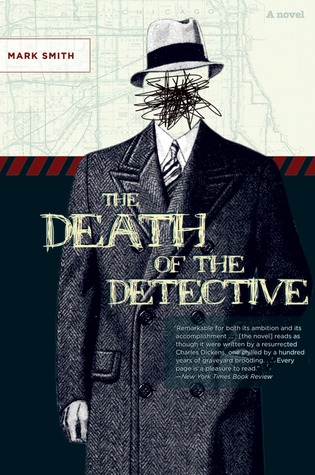
The Death of the Detective: A Novel, by Mark Smith *****

deathofadetectiveMark Smith is one helluva writer. The Death of the Detective is complex yet hazy, with a million details both enumerated and obfuscated, not unlike a day in Chicago, the city in which it is set. All told, an enormously satisfying read. Tremendous thanks go to Net Galley and Brash Books for the DRC.

The time period is the post-war era. With the Great Depression well behind it and World War II a recent triumph, the USA is at the pinnacle of its wealth and worldwide power. The Death of the Detective is spun around the lives of a handful of men , all in Chicago during this time period, men whose lives intersect and then trail away from each other, sometimes joining again, and sometimes not. The style is a lot like that last sentence, compound sentences that last a long time and yet build up to something rather than becoming unwieldy. I have never read a voice like his before.

But back to our story. First we have the protagonist, Magnuson. He is retired from his life as the head of a locally famous security firm, and life has not been the same after his wife died. He is depressed. He’s invited old friends over to play cards and perhaps talk about their glory days, but the evening is ruined, because one of them has invited a man he detests without consulting Magnuson first. He is so irritated that eventually he abandons his guests and goes to bed. If only he would stay there!

Next up we have Farquarson, at least for a short time. Farquarson is a wealthy old man, and a mean one. Perhaps it is fortunate that he is dying. Unfortunately, he has just enough time and evil intent to send out a number of extremely unkind messages, some of them whispered, others sent as poison pen letters through the US mail. Once he is gone, his parting actions send things spinning in all sorts of directions, disrupting and ending the lives of good and decent people…and others’ also.

In addition there is Cavan. Cavan has lived his life in the self-absorbed, irresponsible, idly dilettantish manner of a sole heir to a vast fortune. After all, Farquarson has no children, and he is the only nephew. He spends and drinks recklessly while planning his scholarly (and expensive) trip to Africa. His field is anthropology, and his budget is one he assumes to be bottomless. What a surprise he has awaiting him.

Finally, we have our assassin. The man would probably be considered bipolar today; he has delusions of grandeur and a lot of other strange notions too. He was committed to a psychiatric hospital, but then getting over the wall is sometimes just a matter of persistence and athletic ability. Once he is out, he takes on a number of identities, foremost among them, Death. How fortunate, then, that he has wandered into a murder mystery where he can be useful.

At times, Smith’s noir fiction is reminiscent of the late, great Donald Westlake. At one point I was surprised to find myself laughing out loud over a wry turn of events.

Smith’s well-braided story also pulls in additional supporting players with more limited roles. We have a klatch of criminals, members of an organized syndicate, and we also have some hoods that want in and will do terrible things to prove themselves. We have local cops. We also have an assortment of young people associated with Cavan, as well as ordinary people across whose paths our story marches.

Because we’re all in this together, ultimately.

One thing of which the prospective reader should be aware is that the main characters are all Caucasian, and they are generally racist. The “N” word drops in now and then, and although its use is entirely consistent with the characters who are either using it out loud or thinking it—think of white Chicago businessmen and cops during the 1950s and 1960s—it is jarring. Perhaps it would have been more offensive simply to assume, as many writers still do, that characters in the story are all Caucasian; yet I think I would have enjoyed the novel more without that particular word, and perhaps with fewer racist statements and thoughts by the characters involved. This is my sole complaint about what is otherwise a truly outstanding mystery.

Smith is brilliant at conveying the emotions and thoughts of his characters through action. This reviewer was hooked at the end of the first paragraph, when the man in the diner cut his meat and then stole the knife. Smith’s internal dialogues are lengthy but so well done that rather than reacting with impatience, the reader must instead feel as if she is getting extra time with a remarkable story for no extra cost. His facility with figurative language, particularly simile, metaphor, and repetition are so skillful that I found myself flagging pages to share with students I no longer teach. It was both wondrous and disappointing.

I no longer have my students, but I have you, reader, and unlike most of them, you read what I have to say by choice. Pay attention! Sit up straight! Spit out your gum! Oh hell, I’m sorry; I forgot myself for a moment.

What I really want to point out is that not only do I consider this book well worth your time and money, but it was nominated for a National Book Award, and the author has an impressive list of credentials. But had he not, I would still recommend this amazing novel on its own merits. Originally released in 2007, it was re-released February 3, 2015. Get it and enjoy!

Wayfaring Stranger: A Novel, by James Lee Burke *****

wayfaringstrangerThis reviewer has long been in awe of James Lee Burke’s poetic lyricism and his ability to weave together complex story elements so that they segue together at the novel’s end in a miraculous yet entirely credible manner. At times the author hints at magical realism, but the buck always ends right on solid ground. I wouldn’t care to see it any other way.

This is his most recent release, but I didn’t receive an ARC for this; I got it for Christmas. It was perched at the top of my wish list, and rightly so. Take Burke’s capacity to spin great fiction—here it is a blend of historical and detective fiction—and add to it his absolute disillusionment with American capitalism, in particular with regard to oil companies, and with the cops who favor the elite and shaft the poor, and he’s talking my kind of talk.

The cherry on the sundae? This man is old enough to be your grandfather, most likely, yet he has labeled this book Weldon Holland #1. That’s right, it’s the beginning of a new series.

I love it.

Our story commences in the dust bowl, in the midst of a worldwide depression. Two badass youngsters named Bonnie and Clyde have shot up the South. Burke sends them across the Holland family property at the outset, but they disappear and the story continues. I was momentarily confused, because I had heard that this novel was about Bonnie and Clyde. Now that I’ve read it I can tell you honestly that it isn’t, but it is.

Weldon Holland grows up and fights during World War II; he rescues a starving woman from the rubble of a concentration camp, and he falls in love with her. They are married, and when he comes home, he brings her with him. It is a miracle that he makes it back alive, given the incompetent leadership of his platoon. And yet, that same arrogant, self-absorbed son of a bitch that nearly got him killed ends up funding the pipeline that Weldon and his war buddy and business partner, Hershel start up. Sometimes life bites you in the ass and comes back for seconds, and this is one such instance.

“When you live in a democracy, there are certain things you believe will never happen to you. Then a day comes when the blindfold is removed and you discover the harsh nature of life at the bottom of the food chain.”

Time and again, those with wealth and power find ways to insult and ignore people in whose footprints they are not fit to walk. When they do things that are morally wrong, they become inaccessible rather than own up to their misdeeds. When they absolutely must discuss these things, they take the passive voice. It’s the same one mass killers use to address their victims’ families in a court of law after their lawyer tells them that an apology may make a difference in their sentencing. They never say they did things; things happened.

And Bonnie and Clyde? What of those two angry young people that the sheriff never intended to even try to arrest rather than kill? How do they fit into this more contemporary tale?

I think the answer is that they become a metaphor of sorts; it’s entirely possible that their foolishness was just their way of “getting even for the rest of us.”

When I write reviews, I generally do so quickly and easily. It’s not usually a hard thing to do. Yet in this case, I’ve stewed about this book for three days since I finished reading it, and I am still not satisfied that I have done it justice.

I guess that’s the thing about magically realistic literature; it has to be read to be understood.

You just have to read it. Pay for the book. Pay for it in hard cover. You won’t be sorry.

Rhode Island Red, by Charlotte Carter *****

rhodeislandredNanette Hayes is a musician working the streets of New York. She doesn’t intend to become a sleuth, but when a Caucasian cop follows you home and is murdered in your front hallway, it’s hard not to get involved. And that’s only for starters! This savvy, sassy detective novel, the first in the series, will be released January 27, and you won’t want to miss it! My great thanks go to Net Galley and Open Road Media for the DRC.

I was initially drawn to this series by the cover, which is unusual in that it actually appears the artist knows what is in the book. I was looking for urban and gritty, and at first was taken aback when I got urbane and French instead. I have never been to France and don’t like jazz music, so most of the cultural references weren’t useful to my understanding of the character or her story.

But a good writer can pull in anybody from anywhere, just about, and that’s what happened here. Somewhere between the 20 and 30 percent mark, I felt the pace of the story quicken and deepen, and I was hooked. By the story’s last half, I was making notations so that I would not forget particular bits of linguistic and story-arc genius that showed as Carter’s tale unfolded.

Hayes is artistic, “self-involved, mercurial, emotionally unstable”, and she’s a chronic liar to boot, especially when speaking to her mother. But the tough stuff only runs so deep: her conscience, that smaller inner voice that she has named “Ernestine”, tells her to do the right thing, even when the reader is mentally screaming for her to go with naked self interest. Doing what seems to be right doesn’t always pay off, though, and before she knows it, everything has gone to the dogs.

As the bodies pile up, Carter uses a subtle, muted kind of House-That-Jack-Built method to build tension and focus the reader, repeating questions and issues and sometimes adding one more to what was there before. I have never seen it done quite this way, and it is fiendishly effective. Her use of figurative language is among the strongest in the genre, and all of this caused me to wonder why she was passed over for an Edgar the first time this was released. It must have been poor marketing, because the writing is certainly worthy.

This is about to be re-released January 27. If you enjoy a good mystery story, do yourself a favor and order a copy. Even if it costs you a good night’s sleep, you’ll be glad you did.

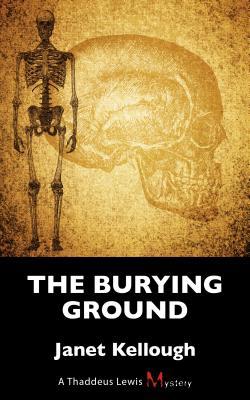
The Burying Ground, by Janet Kellough ****

theburyinggroundThis is the fourth book in Kellough’s Thaddeus Lewis series, but it was brand new to me, and I was able to follow the story quite well as a stand-alone. My thanks go to Net Galley and Dundurn Group for the DRC. This book comes out in early August, and I will run my review a second time on my blog then to remind readers that it’s available.

Kellough has merged two enjoyable genres, mystery or detective fiction and historical fiction, and added a splash of social justice–the sort that slides into the story neatly and without preaching. Lots of different story threads eventually braid together elegantly into an ending that satisfies deeply.

The settings are Montreal close to the time of the Industrial Revolution, and outside of Montreal in a village called Yorke. Our protagonists are Thaddeus Lewis, a Methodist Episcopal preacher who travels the circuit, and his son Luke, a physician who serves as the junior partner to a taciturn elderly doctor named Christie. At times Luke has his hands full; there’s a typhus outbreak, but it seems to be a mystery in itself why some entire households are spared while others are consumed and nearly none left standing. But no worries; that is not our only mystery, nor our chief one.

The primary mystery is that of the grave robbers. The sexton for the local cemetery, The Burying Ground, Morgan Spicer, has interrupted robbers who dig up the interred, but leave the body. Yet there are also some caskets that have two bodies in them. What’s up with that? An invigorating combination of red herrings mixed with interesting historical minutiae spice up the tale as it unfolds.

What’s up with the overly eager woman who resorts to a form of blackmail to lure eligible bachelors into her parlor? Why isn’t the local law protecting local Black folk from marauding American slave catchers looking to put them on the auction block back in the States?

Kellough tosses it up all up and keeps us on our toes. And now that I have enjoyed her work, I will look for opportunities to read the other three novels in her series.

Watch for this title, on sale this summer.

Flesh and Blood: A Scarpetta Novel, by Patricia Cornwell *****

fleshandbloodOnce I finally polished off Napoleon, I permitted myself to dive into the treasure trove of lovely brand new books that Santa brought. This little gem was right at the top of my “wanna” list. At this point, while she may be picking up some new readers, Cornwell is largely banking on her substantial fan base. Once more I found myself reflecting on what makes her novels so successful.

Because as she pointed out during an interview awhile back, this is completely unrealistic. Sure, she has carefully followed the procedures and science that govern what a forensic coroner does on the job; yet if she were entirely realistic, it would make for dull reading. A forensic coroner does not visit crime scenes, chase bad guys, partner with cops. She is no more likely than anyone else to be stalked, harassed, or threatened, nor would her family members be. (Although if it helps us here, we can accept that all of these things could happen to just about anybody.) Surely, she would not repeatedly engage in shoot-outs, pack a firearm, or be kidnapped repeatedly.

So what is it that keeps the reader coming back?

For me, it’s all about character development. Not only Kay, but also Marino, Lucy, and to a lesser degree Benton (whom she fleshes out a bit more here) seem almost as real to me as seldom-seen relatives about whom I hear stories second or third-hand. And the fact is, by the time we find ourselves reading #22 in a series, we have bought the premise, and she would have to mess it up pretty badly to shake us loose. Needless to say, that did not happen here!

In turns I read for hours on end, ignoring my family (and my blog); then I would realize how much of the book I had read, and I would parcel it out to myself in chunks to make it last longer. Finally I just had to know how it ended.

We start with six shiny pennies on the stone wall that surrounds Kay and Benton’s Boston home. They are about to leave for a vacation, but of course that won’t happen now. Because there’s something about those pennies. For one thing, though all are dated 1981–the year Lucy was born, and this hooked me even more, since my eldest son was also born that year–they have all been polished in a tumbler of some sort. They’re all lined up exactly evenly on the fence. And wouldn’t you know it, a serial killer appears to be loose, and he is using an unusual sort of copper bullets to do his dirty work.

I won’t ruin the rest for you.

Should you pay full jacket price for this book? I guess that depends on how much money you have, and whether you have read the rest in the series. I can tell you that popular series like this one often create a year-long back-up in the Seattle Library system.

If you haven’t read anything else by Cornwell, then go to the library or used bookstore, if this sounds like something you would like, and start with #1. That’s a cheap, easy way to get your feet wet.

But if you have read the other 21 with the same avid ferocity I have, you should probably just get a copy now. If the nearly thirty bucks it will run you is too rich for your budget right now, wait a bit; the hard cover price will drop dramatically when it goes to paperback, and we know it will.

Great escapist fun!

All That Glitters, by Michael Murphy*****

Reblogging given its release!

seattlebookmama's avatarSeattle Book Mama

allthatglittersThis was a quick read, and a fun one. Don’t be left out in the dark when it hits the shelves in January!

Jake Donovan and Laura Wilson have left the Big Apple in their dust and gone to Hollywood, where Laura is about to enter a new phase of her career with a lead role in one of the new talking pictures. All That Glitters, the new episode of Michael Murphy’s Jake and Laura series, a cozy mystery  if ever there was one, is full of Depression-era flavor, complete with celebrities from the time and place in which is it set. The writing is tight and sassy. Murphy has penned a winner! My thanks go to Net Galley and Alibi Publishers for the ARC.

Jake has promised Laura that his risky gumshoe days are over; he is a novelist now, a new leaf turned over for the woman he…

View original post 169 more words

Just One Evil Act, by Elizabeth George *****

justoneevilact Barbara Havers has gone in over her head, and the morass into which she has slogged out of love and friendship is only getting deeper.

I’m a long time fan of Elizabeth George, a writer I would never have tried on my own initiative, preferring stories that star working class heroes, but one of her early works was given to me at Christmas one year, and I was sucked in by her combination of palpable settings rendered in a painterly fashion, and what at times is intense, tightly plotted crime fiction.

Every writer who maintains a successful mystery/crime/detective series of any length faces a conundrum, sooner or later. For the sake of a good story, they’ve already been forced to twist the real lives of their police officers (or their whoever) to make them more exciting, but in the beginning, it’s easier for the reader, who also wants a good yarn, to buy the premise. Sure, someone might become a hostage, or be forced to dig their own grave while the minutes tick by and we wait for the cavalry to charge in and save the protagonist. Certainly, a person could be pistol-whipped and stuffed into the trunk of a car.

But to no one will these things happen over, and over, and over. Eventually even the most faithful reading audience will roll their eyes and say, “What, again? Oh, I don’t think so.”

There appear to be two successful ways around this, and the author can utilize one or both and if they are skillful, they can keep their series going strong. Noteworthy writers like Sue Grafton, James Lee Burke, Sara Paretsky, Ed McBain, GM Ford, and a host of others have carried them off well.

One way to keep the string going is to create stories that are not only thrillers or mysteries, but are more novel-like in many ways. The protagonist’s personal life is further developed, and if this is done successfully, it gives us still more buy-in to the mystery plot into which it is woven. And here, George has been more successful at some times than others. There is always the danger that in presenting us with the protagonist’s deepest emotions, the story can turn into a soap opera. Mystery readers don’t need the corn. They’ll pass on the series if the writer crosses a line or is not credible. But referring back to most of the writers in the list above–and if you love a good mystery series, you can probably name others–it’s clear that it can be done.

The other way to keep the string active without burning out the protagonist is to further develop secondary characters and turn them into protagonists themselves. I have been greatly cheered to see George develop both Winston Nkata and Barbara Havers in this manner; this particular book has original protagonist Thomas Lynley working in the shadows, and his life pops up from time to time as well in ways I found appealing, but the chief protagonist of this work is Barbara Havers.

And Havers is beyond question a working class protagonist. She came from no money whatsoever, and her only living family is her mother, who is in a care home and partially dependent upon Barbara, whom she does not even recognize any longer. It’s one lonely life. What do such people do? They may become self-absorbed or clinically depressed, or both. Or they may get by with a little help from their friends.

And this is the crux of this particular episode, #18 in the Lynley series. (No ARC here; I got my copy from the library, but would otherwise have requested it at Christmas.) Havers has long had a friendly relationship with Lynley, her former partner. He’s a lovely bloke, but he doesn’t come from the same side of the tracks as she does, and there are definite limits to their friendship. His love life, and hers if she had one, are not up for discussion.

Her closest friend is her neighbor, Taymullah Azhar, and his daughter, Hadiyyah, a precocious nine-year-old who has become nearly a surrogate daughter to Havers. The two of them are often the bright spot at the end of a long, often thankless day at work.

When Hadiyyah is kidnapped, Havers is beside herself. She has to help. When her boss tells her that she is to stay away from this investigation, from which she has absolutely no professional distance, she looks for ways around the order. She can investigate when she is off-duty, right? Except she uses her police credentials to open doors. Well, she probably would not be the first.

But again, and again, and again she pushes the margin of what she may do and keep her job. The result is a tightly packed psychological thriller that at times kept me awake. Was that really 700 pages? It surely didn’t seem that long!

Because it is so easy to relate to Havers, the reader is likely to feel that frustration, the one we felt when we went to the horror movie at the local theater. You know the scenario I mean: the two youngsters are out on a date and they’re caught in the rain. There is no shelter anywhere in sight except for a house that appears to be empty. The rain pours down, and the background music takes on minor strains. We say to the teenagers, “Don’t go in the old dark house! Don’t do it! Better wet than dead. Don’t turn that doorknob!”

And here we are. Havers does, metaphorically of course, go into that house, the one with no lights and things that go bump in the dark. And all sorts of interesting ethical issues bump up against her.

When is lying to your boss justified? Well, that’s not so hard…but what about lying to a friend? What if, in lying to one friend, one may save the life of another…but the life of the friend to whom you have lied may be damaged? When should journalists be called in, even if they cannot be trusted not to assassinate the character of an innocent individual while carrying out your important mission? What if there does not appear to be any other way to save a life? To stop a killer?

I was surprised to read some fairly vicious reviews of this novel. I loved it, for the outstanding manner in which setting was incorporated so palpably without slowing the course of the plot; for the development of characters (and Isabelle Ardery, boss back at Scotland Yard, is another). And I enjoyed the ambiguity of the questions it raised.

Immensely satisfying, and highly recommended.

Ring in the Dead, by JA Jance ****

ringinthedeadJance is a matriarch in the world of detective novels, or in this case, the novella. She has four different series that she prodigiously juggles and maintains. The others take place in Arizona and don’t interest me as much as this series, her first, whose protagonist is a Seattle cop named JP Beaumont.

It takes a good writer to make me buy the premise here, namely that the SPD are mostly hard-working, good-hearted citizens who joined the police department out of a sense of civic duty. The reality is very different; Seattle’s cop force was recently named the most violent in the entire USA. Cops here are legendary for their gratuitous use of brute force. They develop vendettas against individual citizens. My own middle-class neighborhood recently met with the chief of police to let him know that we are comfortable policing ourselves, and he can take those cops he says are too few to do the job, and assign them somewhere else. Anywhere else. Please. Just get them out of here!

So while the FBI knocks its collective head against the brick wall of SPD intransigence, trying to find some way to rein in these mad dogs before the city goes completely nuts and becomes another Ferguson, I read this engaging little novella, and for the brief time it lasted—a single evening—I could forget reality and buy Jance’s premise of brother officers doing good things. That isn’t easy to do.

The fifth star is denied simply because of the brevity of the work. There must surely be a definition that separates the short story from the novella, but I am darned if I know what it is. When reading a digital work it’s not a bad idea to skip to the ending first, so you’ll know when it’s coming. I was glad I did that, because this one ended 67% of the way through its brief length. A full third of its space was devoted to plugging another novel. (I was too annoyed by this to remember the title of the work-to-come, so I guess the teaser didn’t work for me.)

The novella focuses on a long-ago case when Beau was a newly-promoted detective. His partner, known as Pickles, died of a heart attack, and his daughter found some papers when she was cleaning out the family home. She comes to talk to Beau and to give him the papers, which relate to a case he had worked. In a nut shell, the story reminds us that time is short, and that we should spend ours on things that count.

I look forward to Jance’s next Beaumont novel. I just hope it’s full length. I obtained this novella from our public library, but if I had paid for it, I would have felt robbed. Get it free or cheap, or keep your plastic put away.

Nora Bonesteel’s Christmas Past: A Ballad Novella *****

norabonesteelI’m a long-time fan of Sharyn McCrumb’s ballad novels (and now a novella); they are sure fire hits. Thank you to Net Galley and Abdingdon Press for the ARC.
I feel compelled to mention that the kindle galley was so full of formatting issues as to render it unreadable. I hope the publishers will correct this issue before it is released. I was able to read it with no trouble at all once I moved it to my desk top.

But back to our story.

We have parallel stories, and the setting is Christmas, of course. The story lines, one of Christmas present, which features Sheriff Arrowroot being ordered to drag an elderly man to jail on Christmas Eve, appears to have a dead-sure predictable ending, except that it doesn’t. That’s all I’m giving away in this case.

The more flavorful thread is Nora Bonesteel’s. The Bonesteel women have “the sight”. Those who have followed McCrumb’s novels already know that, but a reminder doesn’t hurt. Nora is asked out to solve a haunted manse issue for some new-comers. I found this part vastly amusing.

The setting, for those unfamiliar with McCrumb’s work, is in the Appalachian Mountains. It was one of her novels that taught me how to pronounce the word correctly (all soft “a”s, as in apple). Her love of place comes through on the page, and as much as I love the Pacific Northwest where I have lived for most of my life, while I read this, a part of me positively yearn for the Smoky Mountains, which I only visited once as a (oh the shame) tourist. It’s a rare kind of engagement. You can say she casts a spell over the reader, if you wish.

Ah. But that leads us to the descriptor I read in Net Galley. It is described there as a “Christian” novella. I confess it gave me pause. There are Christian novels, and there are Christian novels. Some are so heavy handed that they make terrible literature, from a critical viewpoint: we’re racing along, plot-wise, when someone announces that they should go to the Lord with their problem. A page and a half of long-winded prayer follows. Lather, rinse, repeat. I didn’t want to find myself stuck with a book like that, but a strong writer builds a bond of trust with her readers, and my sense was that McCrumb was unlikely to trash her own work in such a manner. I was correct, and the story is great. The single religious reference is central to the plot and is entirely consistent with the setting. Also, sometimes “Christian” is a sort of code to let the reader know there will be no profanity or sweaty sex scenes, and frankly, I was just as glad to be spared those.

To sum up, McCrumb is a master writer, a mystery champ, and a brilliant novelist whose work with Appalachian setting and tradition stands alone in an otherwise crowded field. Pick up a copy now. You can enjoy it and then pass it around for family and friends to enjoy. The quirky humor and redolent, traditional setting are sure to please anyone who loves Christmas and a good read.