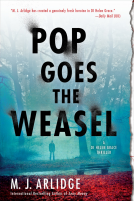
Pop Goes the Weasel, by M.J. Arlidge***

popgoestheweaselPop Goes the Weasel is the second in a detective series featuring Helen Grace. Thank you to Net Galley and Random House-Penguin for the DRC. The title goes up for sale October 6.

Arlidge is an experienced, confident writer. The opening of the book is among the best openers I have seen for quite awhile:

“The fog crept in from the sea, suffocating the city. It descended like an invading army, consuming landmarks, choking out the moonlight, rendering Southampton a strange and unnerving place.”

The tone is thus set for a grisly murder mystery, the perfect mood for an October read.

The premise here is that someone is murdering men that seek the services of prostitutes, and their slayer doesn’t merely kill the men, but eviscerates them without the courtesy of killing them first. Well, this may not be exactly evisceration: they aren’t removing their digestive tracts, but rather their hearts. And while I read that description before requesting this DRC, I should have dwelt on it a moment or two longer, because this particular story really passed my “ick” threshold, and it was my own fault for not being more careful in reading the promotional description.

That said, although it was a bit much for me, it probably won’t be for you, not if you watch a lot of cop shows on television or view a lot of adrenaline-pumping movies that feature violence. That said, I would also steer away anyone who has recently had a death in the family. The descriptions of the cadavers were so explicit that you may find your mind making leaps you didn’t count on.

Grace’s situation is linked to things that happened in Arlidge’s first in the series, and they are referred to often. You may be better off reading these in order. I didn’t read the first, and although I was able to keep up just fine in terms of following plot and character motivation, I felt a little as if I were a guest at someone else’s family dinner. There were so many little undercurrents that referred to Grace’s earlier experiences, as well as those of Charlie, another cop who’d been in the previous story as well, that I felt a bit left out. I also had difficulty, for the first half of the story, keeping Helen and Charlie distinct from one another, and this part I chalk up to the author’s failure to adequately describe each of them. Whether it is the first or tenth in a series, the author has an obligation to provide a clear picture of the protagonist as well as other important characters. That didn’t happen here. Eventually I understood the motivations of each, as well as a good deal of Helen Grace’s internal characteristics, but I never was able to form enough of a mental picture of their appearances to make a mental movie. At times, I felt as if the explicit gore and sex were substitutions for character development. The plot itself was a trifle formulaic.

For those that read the first in the series and enjoyed it, this second in the series is bound to please. It is to those readers that I recommend this mystery.

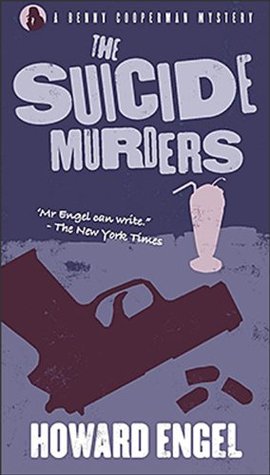
The Suicide Murders, by Howard Engel****

thesuicidemurdersThe cops said Chester killed himself. The gun was there, and he had powder burns on his head, powder on his hand. Everything tested out right. But he’d ordered himself a brand new bicycle just two hours earlier. Does a suicide do that? And then there was the very lovely wife that had been to see Cooperman, our detective protagonist, just before the unfortunate event, concerned that her man had perhaps been unfaithful. She’s caught him lying to her, and that makes a lady suspicious.

These things leave a guy like Cooperman with questions. True, he’s not a cop: “Me? I’m just a peeper. Divorce is my meat and potatoes.” But when something stinks, it’s in Cooperman’s nature to go find the source of the smell and air it out. And when others die after Chester, it makes Cooperman, who’s nobody’s fool, ask even more questions.

I received the DRC for this vintage novel, now available digitally, from Net Galley and Open Road Integrated Media. It became available for sale August 24, so you can get it now.

Engel is an experienced writer, and as he plays the thread out, with murder upon murder integrated deftly into the everyday life of Benny Cooperman, he strikes an excellent balance, building suspense and driving the plot forward with the occasional humorous reflection to keep things from becoming too ugly to be fun for the reader. And his character descriptions are particularly memorable, as with this local politician:

“He was a big man by anybody’s scale. His face looked like a roast beef dinner with all the trimmings, with a huge portion of nose in the middle. “

There were a couple of moments when the predictable occurred, but it wasn’t so dead obvious—excuse the pun—as to be an eye-roller. Rather, I experienced the satisfaction of having seen it coming and been right. And to me, as long as there isn’t too much of it, and there wasn’t, that is a sign that the writer has been fair to his audience. There are no sudden introductions of new characters during the last ten percent of the novel that change the solution in a way impossible to predict, and a lot of us like working the puzzle as we read. There are a couple of sexist references—“the kind of girl”, “bimbo”—that were commonly used in 1980 when this was first published that I didn’t care for, but they were infrequent enough that I was able to make a note to myself, and then continue to read and enjoy the story. In the end, the wry humor and up-tempo plot line makes this one a winner.

Although there are vague sexual references and infidelity is part of the plot, there is no graphic sex that should prevent a parent of a precocious adolescent mystery maven from handing the book down once they have finished it themselves. It’s hard to call any story that contains multiple murders a cozy mystery, but this one is in or near that ballpark.

Altogether a satisfying read.

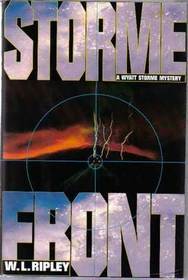
Storme Front: A Wyatt Storme Thriller, by WL Ripley*****

storme frontStorme Front, the second mystery in the series featuring former NFL player Wyatt Storme and his buddy, Chick Easton, is smart and sassy. Ripley proves that an action-packed thriller with a he-man protagonist is stronger, not weaker when it treats women respectfully, as equals to men. Thank you twice, first to Net Galley, and second to Brash Books. I received this DRC from them in exchange for an honest review. This title was released August 4, so you can get it right away.

When someone offers one a thousand dollars to make a single, simple delivery, it’s natural to be suspicious. But when it appears to also involve pulling a good friend’s cojones out of the fire, an experienced badass will sometimes agree, however cautiously, to tag along. So it is here. Drugs, guns, and bodies pile up, and all through it runs some kick-ass banter that made me laugh out loud a number of times. The exchanges are typically between Wyatt and Chick, but there’s some pretty strong humor, at times, in the interactions between Wyatt and his fiancée, Sandra Collingsworth, as well. As well as respect. I like the respect even better.

“No one likes smart, self-assured women, you know.”
“Except you,” she said. “And I’m glad.”

Complicating the picture without making it into a soap opera is the involvement, however peripherally, of an old flame of Wyatt’s. They split up a long time ago, and she married the man whose afore-mentioned cojones Wyatt is trying to salvage.

“His wife?” said Billy, smiling. “Ain’t she a sweet piece of—“
“Her name’s Kelly,” I said, interrupting. “But you can call her Mrs. Jenkins.”

The action is linear in format, so the fairly sizeable number of characters doesn’t create confusion. Then too, Ripley’s memorable character sketches certainly help:

“Snakeskins came around the truck. He had a big face, crooked nose. About thirty. A little overweight. Too many Coors in cowboy bars. Blond mustache, untrimmed, and a diamond stud in one ear. His hands were immense.”

Oh, there are so many more memorable passages, and I highlighted 78 of them, just for giggles. But the fact is, I would just hate to ruin it all for you. All told, the flavor is a bit like Sue Grafton’s, but with male protagonists in Colorado.

The examples I’ve provided show up early on, but the pace never slows till the last page is turned. In the end, I just wanted to read the next book in the series. And so will you.

Highly recommended for mystery and thriller lovers, or for anyone that needs a snappy, amusing beach read.

Cold Quarry, by Andy Straka**

coldquarry

This is 1.5 stars rounded up. No, no, and no.

I received this DRC free from Brash Books in exchange for an honest review.

I was attracted to this mystery, which is set in West Virginia, because it has the novel element of hunters that use falcons, in addition to white Supremacist bad guys known as the Stonewall Ranger Brigade. And it started out as a promising read, with detective Frank Pavlicek and his former Navy Seal partner, Jake Toronto, looking to find out who shot Chester Carew in the back, leaving him dead on his own land. The birds of prey stand as metaphors for Pavlicek and Toronto, who will now hunt the killers as “cold quarry” in order to exact justice.

Who was to expect, then, that the entire novel would be riddled with blantant sexism, with only one positive depiction of a female? It is this one redemptive moment that saved this mystery from a one star rating, a rating I save for the illiterate and the blatantly offensive.

Before I explain further about the stereotyping of women in this work, I should also mention that the N word is used twice–once by a bad guy, once by a more complex figure–and our hero is known to have shot and killed a young African-American man when he was a cop. We are told this was a righteous shooting that gives our hero terrible nightmares nevertheless.

What timing.

But back to the women. Because I wanted to enjoy this book–who picks up a murder mystery without wanting some escapist enjoyment?–I withheld judgment until the 75 percent mark, and even then I read the whole thing to see whether there would be some sly move in which the sexist behaviors of the main characters were called out, or in which the protagonist found himself reflecting that he’d misjudged some women and situations. But the entire narrative was loaded with it, not just the main character’s dialogue and behaviors, so I didn’t think it was likely, and in the end, there was only one good moment for a female character, and the rest were endless cliches.

We have Betty in her apron (“It’s all right, I’ll just be in the kitchen”); nutcase bar owner Roswell Parker; seductive reporter Kara Grayson, who goes to pieces during a violent scene in which she is not injured.

“You stay here with the woman…” Frank tells Jake.Kara tends to an injured animal, and when the dust has settled the two menfolk rush out to save the world while “A female sergeant had also arrived and seen to it that Kara Grayson and the German Shepherd were taken care of.”

We often hear of women that occupy professional positions; we just never see them do their jobs, or if they do, they mess it up. Federal agent Colleen Briggs is one such character, and everyone feels great when she is openly dissed by the deputy sheriff, since she is “a robotic clone of a federal agent”.

Pavlicek has a grown daughter who’s out of state doing some work for him online, but when he gets her on the phone she “pouts”, and he tells her, “You let me worry about that, honey.”

Chester Carew’s son Jason is just old enough to read The Cat in the Hat, but he is old enough to protect his mother, who is helpless, apparently.(Remember Betty? In the kitchen?) Pavlicek gets her permission to speak to her son alone, but he doesn’t tell her what the kid knows or what the kid has seen. And the kid doesn’t want her to know.

We meet Jake Toronto’s girlfriend, who is an attorney, but when we run into her at home, she is cradling a baby. Frank’s daughter Nicole, who has arrived in town, takes time for “the appropriate oohing and ahhing over the baby”, and then follows her father and Priscilla into…where else? The kitchen. At this point–and I don’t want to give a spoiler, so I’ll use broad strokes–Frank needs to take care of something for Jake that Jake isn’t available to do, and this includes getting confidential material out of the house. Priscilla is concerned because Jake keeps that door locked; of course she wouldn’t have a key, right? But Frank does. When his daughter asks what is in there, he says, “It’s just Jake’s little office.”

Priscilla does help, though, by getting “‘Just, um, some personal stuff I already knew about in the bedroom’…she looked at Nicole and the two of them giggled.”

Oh, but it isn’t over yet. Not by a far sight. “Priscilla’s hands were dwarfed” by Jake’s shotgun, so of course, Frank took it from her.

It occurs to me during all this that since Priscilla is–we are told–an attorney, perhaps Frank is protecting her professional credibility by having her not know some things, or else maybe Jake was, but the word “attorney” is mentioned just once and never comes into play again.

We have a number of promiscuous women, all of whom are morally compromised. We have lazy nurses. And in a confrontation with bad guys, the uglies hurl the ultimate insult and Frank and Jake by calling them “little girls”.

Excuse me now. I am going back to my DRC of Gloria Steinem’s memoir. I need something to read that will remind me that women are worthy of dignity and respect.

If your ideas about gender are lodged in the 1950’s, by all means, get this book, and have a real good time.

As for me: no more Andy Straka!

The Miser’s Dream, by John Gaspard*****

themisersdreamThe Miser’s Dream is the third in a series featuring magician Eli Marks. Once I got into it, I did a forehead slap because I could also have read the first two in the series free and reviewed them, had I been paying attention. Thank you to Net Galley and Henery Press for hooking me up with this enormously entertaining novel. It’s billed as a cozy mystery, but were the humor placed around the killer rather than the sleuth, it could have been a comic caper. The title will be for sale October 27.

Marks runs a magic shop and works as a magician locally. He lives over the shop, and the quirky placement of its windows permits him to see into the projection booth of the adjoining theater. Imagine his surprise one fine day when he looks out his window to see a corpse—the projectionist—on the floor of the projection room. It is a locked room mystery, since the man could not have killed himself; the weapon is there in the room; and the door is locked from outside, showing no sign of forced entry.

Just like magic.

Gaspard occupies common country with Grand Master James Lee Burke in his cleverness at choosing engaging, oddball names for his characters. In addition to Detective Sutton-Hutton, we also have the sinister Mr. Lime and his assistant Harpo. The latter two seem to have some inside information. Whereas the character descriptions for these two were a trifle overdrawn, putting me in mind of a Tim Burton animation, the dialogue was sometimes quite splendid, and their role in the story is interesting and well played.

For the first half of the book, I didn’t care at all who the killer was. I was having such a good time with the double features, which I highlighted in my DRC and added to at length, but you’ll have to get the book because I’m not going to post a spoiler. There were other odd bits of hilarious detail in unexpected places, perhaps the best, in my view, being the scene with the flower pot. I had begun to wonder whether there was so much extraneous hilarity here that the murder was becoming obscured, but then it all came into focus just when it needed to, and I didn’t have to retrace the thread to figure things out. The plot is mostly linear and Gaspard has used just the right number of characters, not enough to confuse or clutter.

If you need a good laugh, get this book when it comes out. If you like a good cozy mystery, I likewise recommend it. And for those that have precocious pre-teens and adolescents that sometimes read adult-reading-level material, this one has no explicit sex and relatively clean language, and so it is safe to pass on to your budding bibliophile.

To sum up: this is hands-down the funniest thing I have read in a long time, expertly paced and hilariously detailed. Do it.

Blanche Passes Go: A Blanche White Mystery, by Barbara Neely*****

blanchepassesgo“Blanche’s mind rang with remembered slights and taunts, and echoes of that awful, heartbreaking instant of fear that was a part of every trip into the white world—a fear of being refused or given poor service because she was black, stopped by a cop because she was black.”

I finished reading Blanche Passes Go on the second anniversary of the death of Michael Brown, who was shot dead by a cop for jaywalking. Bernie Sanders, the candidate who fancies himself the liberal savior for all progressive-minded Americans, spoke here in Seattle that day. The purpose of his talk, apart from campaigning and fundraising, was to celebrate the birthday of Social Security. The speech was disrupted by a pair of African-American women who took exception to his myopia.

So I guess you could say that everyone, even those that don’t generally enjoy mysteries, ought to be reading this book right about now. In particular, if the reader is still trying to figure out why so many people, particularly people of color, get upset with the clueless slogan “All lives matter”, this book is here, just for you. Neely approaches issues of race, class, and gender in a way that is clear but not unkind. It’s her best work to date, and could not have been published by Brash Books at a more appropriate time. My great thanks go to them and the people at Net Galley for providing me with a DRC, and to Neely for laying it all out so that anybody who has a willing heart can get the picture.

In this fourth Blanche White mystery, Blanche has gone home to Farleigh, North Carolina for a vacation, and to try partnering a catering business with her best friend, Ardell. But Farleigh is a small place, and she can’t avoid running up against David Palmer, a Caucasian man that raped her. She never reported it, of course; were they really going to haul the well-heeled, powerful white man for a sperm sample, given the long history of Caucasian men raping Black women with impunity? Not likely! So when her long-simmering rage is ignited by the sight of him, she vows to not only get mad, but to get even as well.

Blanche White novels always have multiple threads that weave in and out of the plot line, but this is the most complex and impressive yet. Not only does Blanche have to grapple with Farleigh and Palmer, she is back in her home town, and her mama is still here. Like many women, Blanche has hit middle age and menopause with a renewed, powerful yearning to know more about her mama, who never stops talking but never gives away the personal information Blanche is almost begging for, and about her father, about whom virtually nothing has been told her. Blanche decides that once a person has children, their privacy is no longer as sacred as it was before, and a lot of personal information becomes family property. I loved that.

Well into the book, Ardell accuses Blanche of sounding exactly like her mother, and Blanche is dumbfounded to realize it’s true. I threw back my head and laughed out loud. It’s the rare woman that doesn’t hear her own mother coming out of her mouth sooner or later, and the moment was built so deftly and executed so well that it landed hard on my funny-bone.

Other Blanche novels have accentuated the protagonist’s tightly held independence. Here, she meets a fine man named Thelvin on the Amtrak coming into Farleigh, and at some point, she has to decide just how flexible (or inflexible) she is going to be.

Another component is Mumsfield, an acquaintance that has Down’s Syndrome and is about to be married to someone who may be after his money. This aspect of the story, like the others, is skillfully crafted. Mumsfield is not completely helpless, and the fact that he has Down’s does not make him Blanche’s friend, as he claims to be. There is still that division of white privilege. It’s not that Blanche could not have a white friend, but it would have to be someone with ownership of what that means.

Because all of these components are told in the third person omniscient, and because the writer is a complete badass, we are privy to all the intricacies involved here. Add a problem with domestic abuse next door to the Miz Alice where Blanche is staying, and you have an interesting stew indeedy.

Highly recommended.

Gold Coast Blues: A Jules Landau Mystery, by Marc Krulewitch****

goldcoastblues“Tanya Maggio’s a missing person, and I got a feeling she’s missing on purpose.” This third entry of the Jules Landau series finds Landau searching for Eddie’s missing girlfriend. There’s a faded noir feeling in its pages as Landau bounces between Chicago and New Jersey trying to trace back the thread. Though confusing at times, a trifle overburdened by excess characters, it’s a fun, original story. Thank you once and thank you twice to Net Galley and Random House Alibi for the DRC. This title is available for purchase September 22.

The search for Tanya leads Landau to the mean streets of Irvington, New Jersey, where a crooked cop named Cooper explains that in their town, they don’t try stamp out crime…they manage it. So anyone that is hooked up to the criminal world is fair game; the idea, at least ostensibly, is that bystanders should not be caught in the crossfire.

Right.

Turns out the New Jersey people are running a scam. Those among the one percent that have more time and money than good sense invest in fine wine, wine that is worth hundreds of thousands of dollars for a case of a dozen bottles. Hey, its value appreciates, and some liken it to gold or silver. If a bottle gets busted, then that’s what insurance is for.

With a bizarre scenario such as this one, it’s only to be expected that someone would come up with the idea of counterfeiting labels and brewing up some fake stuff. After all, no one is going to drink it anyway, right? Who’s to know?

The plot twists, and it turns sometimes enough to confuse me. Hold up…are we in Illinois, or are we still in Jersey? But when push comes to shove, this romp is too enjoyable to walk away from. “That little shit Spike”, an heir to the Irvington mob, is one character that shines bright enough to keep those pages turning. Another, of course, is Landau’s ridiculous cat Punim, for whom he sits down to compose a legal trust fund when he is depressed and in danger. His own life may be on the line, but by god someone has to be paid to feed Punim his chicken hearts every day. And then there is Amy. Is she an enemy? A spy? She sure as hell isn’t really a psychic, but she knows enough that she has to be something. Maybe she has Tanya tied up in her closet. You never can tell.

The originality of the plot is assisted by Krulewitch’s affinity for figurative language. I loved his description of the “horror hotel” and the “stunningly verdant” house located on…wait for it…Bunnybrush Lane.

September is a good time to curl up under the quilts with a good book, or for those in warmer climes, it’s not too late to stretch out on the beach with one. Either way, if you need an escapist beach read, or a good noir mystery, this might be the book for you.

The Eight, by Katherine Neville****

theeight Katherine Neville is one of those people that does everything well. She’s been a model, a computer wiz, a photographer, and she’s also an impressive author. I was lucky enough to read this first in the series since Open Road Integrated Media has just re- published it digitally. Thank you to them, and to Net Galley, for permitting me a free copy in exchange for my review. This book was released Tuesday, and is for sale now.

Our protagonist, Cat Velis, lives in New York; the time is 1970, at the height of the Vietnam War. Cat lives in New York City and works for Con Edison. Since she has refused to do something illegal for her boss, who is engaged in some sidelines back-scratching with a client, she is being shipped off to Algeria. Before she can pack, however, a fortune teller warns her that she is in great danger. She scoffs, but less than a week and two corpses later, her irritation has turned to fear. She calls in her mentor, a mysterious man that seems to travel Gandalf-like, practically appearing in thin air. He comes and talks to her in much the same way as the fortune teller did, but he also tells her that she has to go to Algeria and fulfill her destiny.

Transposed with this story is a tale that takes place around the time of the French Revolution. The Montglane Abbey is closing its doors because of the Bill of Seizure. Buried beneath its floor for centuries was a legendary chess set whose worth is beyond anyone’s wildest dreams. Composed of huge gems, gold, and silver, it is all the more valuable for a formula that its individual parts, when put together, have etched on their undersides. Is it a secret weapon? Is it a supernatural curse that is activated when the pieces are together? The Abbess only knows that she must separate the pieces and get them out of France, along with herself. She takes herself to Russia, to her closest friend, who is Catherine the Great. From there, the parallel story to Cat’s unfurls itself. Eventually the two part of the story come together.

Here’s a clip of the author discussing her novel, and the life experiences that shaped it:

This is ordinarily not the sort of historical fiction that attracts me; there are really well-developed, highly sympathetic royal characters, and then there are the savage, dirty masses. It grates. While it’s true that the French working class and peasantry really did tear royals from their splendid carriages and either kill them on the spot or take them off to the Jacobins to be killed later, Neville paints the royals in such an idealized fashion that the reader, if not already informed, might wonder indeed just why the masses would do such a thing? Unless, of course, it’s in their inferior DNA. I ground my teeth and read on.

Add a reference to the Freemasons and the number 666, and I was ready to hurl my kindle across the room! But I had an obligation to the publisher, and so I persevered, and I am glad I did, because what Neville does with the plot is quite cunning. If one were going to chart the book into a grid, it would correlate with the grid that is part of the story itself. And if this makes no sense whatsoever to you, all I can tell you is that you have to read the book and watch closely. Watch for the patterns; this is actually slick as hell! And so in the end, I was glad I had seen it through. Though maybe more famous people are worked into one novel than is natural, the elegance of the plot itself (and the chess detail), rather than historical veracity or character development, is what sustains this substantial work.

The reader’s understanding of this hyper-literate story will be aided by knowledge of chess. In fact, I found myself taking a few notes, though I haven’t played in years! Those unschooled in chess can also enjoy the book, but I do not recommend this book to anyone for whom English is not the mother tongue. The vocabulary and historical references will be so much work for you that you won’t enjoy it.

But I did.

Recommended to those that appreciate symmetry and precision in a novel.

X, by Sue Grafton *****

xBefore I review this title, I have a plea: can we just make the alphabet a teensy bit longer? Because I don’t think I am ready for this series to end, and it’s getting perilously close. But meanwhile, thank you to Net Galley and Putnam-Penguin Publishers for the free DRC, an unexpected treat, especially since it was such a clean galley. The title goes up for sale August 25, but you can order it in advance, too.

As often happens, our story isn’t just about one mystery. There’s an official investigation that goes bad; an unofficial investigation that goes worse; and then there’s a big pile of trouble that drops itself into the neighborhood where Kinsey and Henry (who is ten percent Kinsey’s landlord and ninety percent her surrogate father) live. As always, taut suspense is intermingled brilliantly with silly, naughty, impulsive things that Kinsey Millhone, our intrepid but mischievous detective, dreams up.

This past year saw Grafton inducted as a Grand Master by her fellow mystery writers, and it really should have happened sooner. The level of writing she practices spills over the standard detective story genre and at times approaches literary fiction.

In this story, Kinsey is concerned about the drought in California, and the issue is deftly interwoven into the plot without ever becoming preachy or slowing the pace. Like everything else Grafton writes, it’s well executed.

And here’s my own confession: I love this book so hard that I deliberately slowed down how much of it I read each day. I could have had this review to you last week, but every time I noted that I’d gone 10 or 15 percent further in, I took it away from myself and forced myself to go read a different galley for awhile, sort of like Mary Ingalls making her Christmas candy last as long as possible. But now it’s finished, and the only thing left to do is tell you that it’s every bit as good as what you have come to expect. And if you are new to the series…well okay, I guess if you are new to the series, you are either really young, or you’ve been in a coma for the last twenty years. Welcome to the world of the living; here is your book. And although it can stand on its own just fine if you read it without reading the A-W mysteries, it’s even better if you read them in order.

I can remember my first Kinsey Millhone story. I found C is for Corpse in a train station shop, and soon afterward found myself in bed, recovering from whiplash. (People really do get whiplash; mine was from a car wreck, not a train wreck.) I was mostly okay as long as I kept my head on the pillow and did not try to move my neck—so ideal for reading a paperback. Once I was up and at ‘em, I hunted down the A and B titles, and from then forward, I read the series in order. And over the years and many installments, Kinsey has evolved from the super-hardboiled detective she was in the first book (which was already really strong) to a more developed character. Because when you have a longstanding series, you really can’t have one episode after another in which your protagonist gets whacked over the head or grabbed from behind, hogtied and tossed into the trunk of a car. People start to roll their eyes if you do too much of that shit, but then you have to find another way to maintain their interest level. Grafton does this by combining some really tricky, interesting problems (and yes, some danger) with a lot of character development.

I don’t know about you, but I tend to assign faces of people I know or have seen to characters in books. It helps me run the book as a mental movie if they have a face and a voice. Since Grafton has said in interviews that she sees Kinsey as a sort of younger, skinnier alter ego, I have created an imaginary Kinsey who looks like a cross between younger-Grafton and Stephanie Zimbalist (actor who played a TV detective many years ago). But when she opens her mouth to crack wise, I hear the voice of Roseanne Barr. So go figure!

So here we are. I am more than twenty years older than when I first met Kinsey; since then, I’ve gone back to school, had a career, had another child and raised her, adopted another child and raised him, and retired from teaching. Through it all, Kinsey has remained a wonderful constant, perhaps the adult version of having Grandma come to visit. Oh boy, she’s here! Or, oh boy, she’s coming back! And frankly, I am just not ready to let go. If you’ve been following the series for a long time too, you may feel the same.

The good news is the present. Right now, there’s this wonderful detective novel that you can order up, and you can float away to Santa Teresa. What an awesome vacation read. Even if it rains wherever you are going, you could have a terrific time curled up on a bed just reading this. In fact, you don’t really even have to go anywhere. Turn your phone off; get your favorite beverage and maybe some munchies; and reserve a time to just wallow and enjoy. Because when it comes to a riveting novel that is also, at times, laugh-out-loud funny, I just don’t see where you will find anything better.

The Murderer’s Daughter, by Jonathan Kellerman *****

kell__jkt_all_r1.inddGrace Blades is a psychologist helping victims of violent trauma, those she mentally refers to as “The Haunted”. And she should know; as a small child, she watched her mother murder her father, and then more or less eviscerate herself before Grace’s own tiny eyes. So yes, she knows. But a client has come to her with a concern that is more than it appears to be, and it dovetails with a harrowing part of Grace’s past. In fact, she has reason now to believe she may be in danger, and it’s up to her to sort out the pieces and save her own life. This riveting DRC came to me free from Net Galley and Random House-Ballantine Publishers; thanks go to both. The book is for sale August 18.

Fans of Kellerman’s have likely bonded with his Alex Delaware series. Although Delaware’s name is coyly inserted into the background text a time or two, this book isn’t about him, it’s a stand alone. It’s a strong story, and Kellerman’s initial career as a child psychologist makes Grace wholly believable. Someone that has gone through the multiple traumas her childhood has visited upon her would probably have trouble bonding with others, and indeed, Grace goes through life neither wanting nor having real friends her own age. She trusts one social worker, as well as the psychologist who together with his wife ultimately adopts her. And even with them, she has to force herself to smile, to show affection; these are never spontaneous behaviors, but ones learned by observation.

Readers of my blog know that I generally don’t review books about wealthy people. I don’t relate to the rich, and it generally seems like a coward’s way out on the part of the author, because they can excuse their protagonist from the daily financial obstacles that most people have to deal with. But Grace has gone through so many hells by the time she reaches her wealth that this book is different; then too, Jonathan Kellerman is such a crazy-good writer that it would be hard to leave a galley of his by the wayside in any case.

In addition, I appreciated the strength and intelligence of this protagonist. Although the sexual (and sexually violent) content makes the book unsuitable for younger teens, it’s still great to have a strong female character that doesn’t need to be saved by men. And thank you, thank you Mr. Kellerman for avoiding the nearly-obligatory kidnapping scene as part of the climax. I have often wondered why exactly so many sleuths, particularly female ones, end up bound, gagged, and in the trunk of a car at some point near the story’s crescendo, and I was heartily glad not to find it here.

In short, fans of Kellerman’s will get their money’s worth and more, whereas those that have never read his work but love a good mystery can dive in here and also be deeply satisfied. Terrific work by one of the best mystery writers out there.