
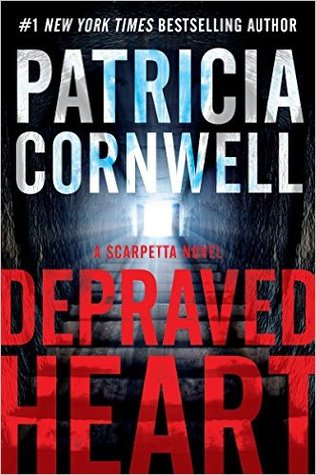
 I’ve been reading Cornwell for over a decade. Her Scarpetta series is curiously addictive, a bit like curling up in my favorite chair with a furtive pint of gelato and maybe a ridiculous TV show or YouTube clip. But in thinking that way, I sell Cornwell short. She started out strong; floundered just for a short time; and now she is better than ever. And perhaps you are waiting for a disclaimer saying that I read it free, but in fact I did not. I’ve yet to see Cornwell’s work on Net Galley. The kindle version popped up as the deal-of-the-day for four bucks, and I grabbed it while I could.
It was worth it.
We open with Kay Scarpetta’s head in a really bad place. Those that follow her series will recall that the previous novel ended with her being shot in the leg with a harpoon by a villain we had believed to be dead. Scarpetta is fragile now, both physically—that leg will never be the same—and mentally. She jumps at shadows now. Unfortunately, not everything is in her head; as the story opens, Scarpetta’s niece, Lucy, is having her home ransacked by the FBI. At the same time, Scarpetta’s phone has been hacked—certainly a fear to which all of us can relate—and a creepy video clip of Lucy from long ago, including Lucy doing things that are illegal—is shown on Kay’s phone, beyond her control and without Lucy’s knowledge, while Scarpetta is working a crime scene. Once the clip is over it vanishes, leaving no record or proof that it occurred. Soon thereafter, a huge black helicopter follows Scarpetta and cop Pete Marino, a series regular, to the estate Lucy shares with her partner Janet and a small child in Janet’s custody.
Every mystery writer that is successful enough to have a long-running series is faced with credibility issues eventually. One character, whether gumshoe, cop, forensic pathologist, butcher, baker, or candlestick maker can only encounter a certain number of traumas in his or her lifespan before even the most enthusiastic readers will say, “Okay. Wait a minute. Are we getting captured and tossed into the trunk of a car again? Seriously?”
The best series writers are able to forestall this in two ways that I have seen. The first and most critical is that more of the story is about character development—the protagonist’s, and sometimes those close to the protagonist, and so we are invested in the outcome of the problem because we care so much about our hero. And if a writer is really strong, as Cornwell is, she can make us care about the lives and problems of regular side characters also.
The second way longstanding series writers get away from repeating the classic or even trite gumshoe stand by scenarios, such as I’m-being-framed-and-must-prove-my-innocence, or The-bad-guys-have-threatened-to-harm-someone-in-my-family-if-I-don’t-follow-their-demands-so-I’m-going-to-catch-them, is by being totally bad ass writers. By this I mean that either they go ahead and use the stupid devices I just mentioned but they do it so well we don’t care, maybe don’t even realize they’ve done it till the story is over; or they find another way to ramp up the tension without employing those tired devices. Cornwell scores big in this department with Depraved Heart.
Rather than wondering about the threat of evil, possibly death, that may come from outside her nearest and dearest family—including people like Marino who she considers family—part of the threat appears to be coming from within it. So we have this stark psychological thriller; for example, given that Scarpetta’s husband Benton works for the FBI, isn’t it odd that he didn’t say anything about the bust on Lucy’s place? Isn’t it strange that he won’t answer her texts? But then given how jumpy and shaky Kay Scarpetta is, and the fact that she is defying doctor’s orders in order to do the things she is doing, we also wonder…hey Kay, are you all right?
Maybe what she actually needs is a pile of meds and a good long nap.
So we have the suspense of fearing external threats; fearing treachery from somewhere within the family; and added fear that Kay has finally just straight-up lost it. And then there’s the fear that Kay is right to feel threatened, but that others will disbelieve her, and we see their skepticism.
I have to tell you, this is a fast read, partly because of the amount of dialogue but also because the pacing is electric!
By now, you probably already know whether you are a Scarpetta fan or not. If you are on the fence, this should pull you over onto the side of avid readers. If you have never read a book in the Scarpetta series, don’t start with this one. Get a copy of the first in the series, or as close to the first as you can get, and work your way forward, because a lot of the reader’s sense of urgency is spun from the bond we have already formed with the protagonist and those close to her in previous installments. It’s not a good series to enter from the middle.
But for Scarpetta fans, this is a must-read!
 The Disappeared was published in UK, and is now available to readers in the USA. Scruton shines a spot light on victims of domestic violence, trafficking, and rape. It’s a timely issue, and no one can read his story and walk away unmoved. Thanks go to Bloomsbury Reader for inviting me to read and review the DRC free in exchange for an honest review. This book is available to the public tomorrow, February 26.
 Barclay is an established writer, with a number of best sellers to his credit, but he was new to me. My thanks go to Net Galley and Berkley Publishing Group for providing me with a DRC in exchange for an honest review.
 In 2015, I reviewed Storme Front, the second of four books in the Wyatt Storme series. I loved it and rated it 5 stars. Given the opportunity to read and review this first in the series, thanks to Brash Books Priority Reviewers Circle, I didn’t have to think twice. Thank you to Brash for the DRC, which I read free in exchange for this review.
 Brash Books has a new release, and it’s exactly the kind of novel you’d want to take to a warm sandy beach, or perhaps just to curl up with while the snow falls. I was permitted an advance glimpse, courtesy of Brash Books Priority Reviewers Circle. It was originally published in 1997, but due to be released again February 23, 2016. You’re in for a good time with this one.
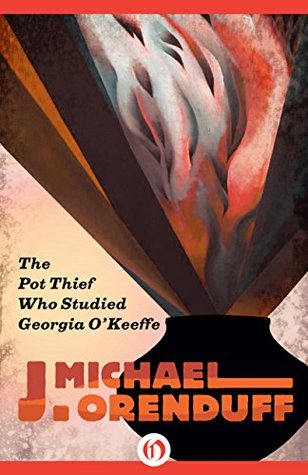 I read this book at the invitation of Open Road Integrated Media and Net Galley. Thank you to both parties. This title is one of several in a series that I had not encountered before. The pot in question is the ancient artifact sort, not the type that people grow and smoke. The author manages to work several disparate and esoteric topics into a single novel, but not necessarily to its benefit. My own viewpoint is that a high profile editor might be of great use here.

 Seattle Book Mama