Sweet Holy Motherfucking Everloving Delusional Bastard, by Jerome Segundo****

sweetholyWow. What do I do with this story? It is clear to me that it’s most likely only nominally fictional. This is the saddest funny memoir I have ever read in my life.

Most of you won’t have the benefit of reading the cover letter that first-readers receive, which made me laugh out loud. This man has a gift for writing, and has the potential to be really hilarious. In places, his book is funny, in a dark way. But life has taken the spring out of his step.

He’s been to prison, and he emerged broke, without a license or a home. He had earned a college degree before being incarcerated, but now because his name was tarnished, it is virtually worthless, since he has to get a job under an assumed name. And he has to register as a sex-offender.

I got this from the Goodreads.com giveaway, and it initially gave me serious pause–and gentlemen out there, this is almost reflexive for most women–to see the man say that he was a convicted rapist who had pleaded nole contendre…and I had given him my address. Yes, that’s irrational. But “rape” is a really electrifying term to most of us.

Once I had read the book (and it’s a quick read, partly because I couldn’t put it down till I had the whole story, especially once I had peeked at the ending and come to believe in the guy’s innocence after all) I just wanted to cry for the man. He isn’t a rapist. He was clueless and in a relationship with a really unstable woman, unless he’s made parts of his story up wholesale…and I don’t think he has.

The fact is, the U.S. “justice” system isn’t much of one. More and more often, it serves to isolate and undercut a layer of young men and make them lesser citizens when they emerge, assuming they ever do. And whereas Segundo should have fought the charges against him, he was so physically ill,alienated and demoralized that he didn’t. Where was his family? Did they turn their backs on him, or did he slink away, afraid that they would be ashamed of him?

And I need to say this, too. This business of registering one’s whereabouts for life after having done the time for a crime (which is, as is always the case in capitalist society, unevenly enforced and penalized according to one’s wealth), is absolute bullshit. I say this as an old-school, card-carrying feminist warrior who has marched on the Capitol multiple times for women’s rights. We cannot isolate one group of “offenders” and make them permanent pariahs and then say that we have a rehabilitative system. What’s that about?

There is a lot of really graphic sexual content here. On the one hand, I am an old lady and it embarrassed me, but on the other hand, I have never seen a story where the sexual content was more essential to the telling of the story.

I wish this guy well, and I hope he can rebound and regain some joy in living. If he has become cynical, one can hardly blame him. This is not a light read, but a Lenny-Bruce-like attempt to restore some dignity to his own life and that of others who may find themselves wrongly accused and convicted of one of society’s most heinous crimes.

The Opposite of Fate, by Amy Tan *****

theoppositeoffateThough book stores and book clubs bill this as a memoir, it is really a collection of essays and speeches originally published for other purposes. Though I would love to read an actual autobiography written by Tan, this is an excellent anthology, and I cannot deny it the five stars it deserves.

Tan writes about a wide range of experiences, from contracting Lyme disease to writing the screen play of The Joy Luck Club for Disney. It was nice to see somebody say something positive about Disney for once.

But if there is one really urgent entreaty nestled amongst the wide variety of topics addressed here, it is this: Tan would like to be released from her pigeon hole. Though the large number of her books sold is both profitable and gratifying, she feels both awkward and a trifle outraged as well at having been labeled by the press, by school districts who require that her stories be read, and by any number of other sources as an Asian-American writer, or a writer of color. What, she asks, is required just to be called an American writer? She was born in the USA. It’s accurate to say that she has written a lot of stories, both fictional and true, about her mother, who was born in China. But Tan takes exception to being held up as the one person who is supposed to represent all Asian-American writers.

One might imagine other Asian American writers would take even greater exception, if they could be heard.

I confess that I am at least partially among the guilty, having created an Asian studies label on my own bookshelves. Actually, since I am married to a Japanese citizen, the titles written by and about Asian Americans are crowded by vastly more titles written in Japanese, which take a number of bookcases all by themselves. This is not something that happens in most American homes. But yes, I have also regarded Tan as an Asian-American writer, and she is right in saying that regardless of pigmentation or ethnic background, her prose has won her a place on our shelves. Marketing be damned.

I reflected a bit here. My youngest daughter is half Japanese, half Caucasian. We named her for her Japanese grandmother, and we started attempting to teach her Japanese when she was quite young. She has been to Japan and met relatives there. Yet she would rather be regarded as an American rather than an Asian-American. She pointed out to me that my own side of her counts too; does anyone call her an Irish-American because one parent is of Irish descent?

The score stands at parents 0, offspring 1.

But Tan also reminds us that our lives are not about what has happened to us—and she certainly does a fine job of recounting her own varied, sometimes bizarre experiences—but about whether we take charge of them. In the final essay, “The Opposite of Fate”, she contracts Lime disease and it continues to ravage her health and interfere with her writing until she does a comprehensive web-crawl and diagnoses it herself. Leaving the mystery for physicians to unravel hasn’t helped, and so she does what needs doing. That having been done, the official, medical diagnosis and treatment are fairly straight-forward. The cure isn’t easy or quick, but progress is made steadily. She took ownership of her problem, advocated for herself, and received treatment.

Though the message inherent in the title seems obvious, I find it powerful. Most of us know someone—perhaps even in the family—who seems to ride through life helpless and riddled with excuses for everything. There is nothing for these folks that can’t wait another day, and sometimes another and yet another. They don’t “do” things; things “happen”.

I confess it makes me crazy.

Thus I found Tan’s essays keenly satisfying. She tells hilarious stories sometimes, while others are poignant, but all of them involve decisions at some level, though not always up front and pointed. She doesn’t preach, but she also doesn’t duck and cover. When life presents challenges, she rises to meet them.

One could, of course, say that in publishing these stories, she has created a powerful example for Asian-American girls. But one really shouldn’t.

Because the fact is, she has presented a strong, positive example for everybody.

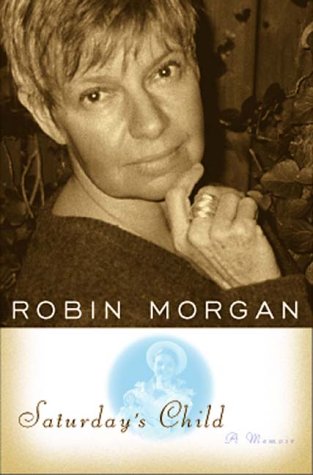
Saturday’s Child: A Memoir, by Robin Morgan *****

saturdayschildRobin Morgan is one of the mothers of contemporary feminism. She has charted history, together with other women and those who support them, in more ways than I can even keep track of. Although she was once famous for her performances as a child actor, it is for her feminism that I know her, and for that reason I was eager to read her memoir. Huge thanks to Net Galley and Open Road Integrated Media for the ARC.

Now a social warrior of advanced age, she is still undoubtedly one of the most articulate individuals alive. However the heat that came from her discussion of her childhood all but singed my eyebrows. Some of us grow mellower with age and learn to let go of things that happened when we were small, but I suppose for some, outrage and sorrow compound faster than interest on a credit card.

You see, Morgan was raised as a child celebrity. From the age of two years her life was a constant swirl of organdy dresses, auditions, and performances. She rode in parades and promoted a doll that resembled her, though she was not permitted to play with one. She wasn’t allowed to nurture friendships, and would not have had time for them in any case. Work, education, and rehearsal took up all of her time, and special arrangements had to be made in order for her education to be completed because of her exhausting schedule. She was a highly capable student and is clearly extremely literate, but her formal education ended with high school; her mother, who lived off of Morgan’s pay from Morgan’s toddlerhood until her death (including investments that lived on after Morgan retired from show business), told her that college was out of the question. She deals articulately and extensively with issues surrounding the exploitation of child actors by adults during this period, as well as the surprise revelation that came about when she tracked down the father she had never known.

I found my long dead and slightly famous great-uncle buried in her text; Sherman Billingsley, owner of The Stork Club, named a drink for her, similar to a Shirley Temple, but with a chunk of pineapple. Funny stuff, though Morgan’s childhood experiences were mostly grim.

The rest of the book gave me what I came for. Morgan came of age during the antiwar era of the late 1960’s and early 1970’s. The era of protest surrounding the US war against the people of Vietnam radicalized the youth who participated in it; the women who had been side-lined during this time period by their male counterparts began to realize that they should be taking part in the decision-making process instead of rustling up sandwiches and coffee while the men talked politics.

“Free love” really meant group sex, and Morgan learned quickly that it was not liberating for her, but rather it was traumatic. From Eldridge Cleaver to Abbie Hoffman, one radical male after another showed himself to be a member of the old boys’ club where women were concerned. It gave her and several other women pause, and soon led to a number of publications, including Sisterhood is Powerful, an anthology I treasure to this day. Morgan’s energy and achievements appear to have been boundless.

The urban myth in which feminists all burn their bras appears to have originated with Morgan and other feminists’ boycott and picket of the Miss America Pageant in 1968. At this event a certain amount of street theater took place to draw attention to the objectification and trivialization of women in US society. One of these involved whirling bras, symbol of the restriction and shaming of women, in the air and then dramatically dropping them in trash cans. (No fire.)

Morgan’s achievements are too many to enumerate here, but her history, and that of other feminists, from Betty Friedan, bell hooks and Bella Abzug to Gloria Steinem, founder of Ms. Magazine, should be part of every general course in American history, and here the author weighs in once more. She is absolutely correct in reminding us all that the history of women does not belong isolated in a women’s studies department, but is a part of history in general. Pick up a textbook and list the names; how many are male, and how many are female, even for the relatively recent period since World War II? Nor is this problem limited to the USA; in fact, it appears to extend all over the world. There can be no post-feminist era until women enjoy social, political, and economic equality. It hasn’t happened yet.

In fact, Morgan’s internationalism, which has been a large part of her career since the first publication of Sisterhood is Global, is where she shines brightest.

After reading Saturday’s Child, I have found myself once more becoming conscious of the imbalance in the world around me. I have noted that if I mention in one instance or another that women are under-represented, even my own children give me a look that says I am bringing up trivial, petty matters that I should have let pass. And then I hear Morgan, reminding me that trivializing women is part of the problem.

If you are a woman, or if you love one, reading Saturday’s Child may leave you feeling dissatisfied and in need of social change. And until the world becomes equal for everyone, that is as it should be. If Morgan’s legacy is that more women raise hell for their reproductive freedom and economic equality until both are gained, then what better thing could she have done for the world?

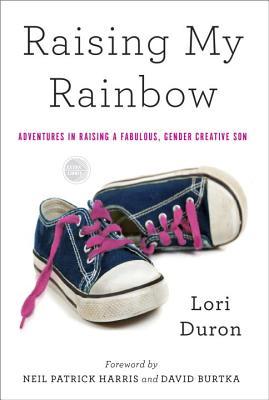
Raising My Rainbow: Adventures in Raising a Fabulous, Gender Creative Son, by Lori Duron*****

raisingmyrainbowThis ground-breaking memoir made me want to stand up and cheer. Many times, I was dumbfounded by the courage of the mother who wrote about her “gender creative” child. (The term was new to me, and raised questions, which were subsequently answered.) I had a couple of small disagreements with some of the things she said (and are there any two parents with identical viewpoints in all respects?) However, most of the time I could merely bow in awe.

That, and say thank you for the ARC! I got it in a Goodreads.com giveaway. But on with the story:

You see, her second son, who she calls “C.J.” in her book, prefers to dress like a girl, play with girl toys, and have his hair done like a girl’s.

What to do? How to protect her child from the pain the greater world might bring down upon him? What is the healthy thing to do? And also, how do they protect his older brother, a “true boy’s boy”, from the repercussions of having a brother like C.J.? It’s enough to make one’s head spin.

Fortunately for C.J., his mother is a stay-home mom, and they do not struggle greatly with financial issues. They’d rather have their medical insurance pay for a therapist, but if it came to a choice between good therapy and free therapy, they had the capacity to elect for the former.

In the beginning, an agreement was reached among the adults, while C.J. was still a toddler (and before therapy), that “girl toys” such as his beloved Barbie should stay at home, or in the car, to “keep them from getting dirty or lost”. I would’ve done the same. The very thought of the cruel things that might be said to my vulnerable little boy would’ve made anything else unthinkable.

But the author’s mother, known as Nana Grab Bags because she always comes laden with sweets and toys, deliberately breaks the rule. The author is pissed. I would be, too. I’m not a grandma yet, but the rules are clear: you get to raise your own kids, and then the new parents are the boss. Sometimes this may be painful.

My own kids are grown, but I have steeled myself not to interfere or offer advice that is not wanted if and when I get grandchildren.

Various ruses are tried to get the very young CJ back on track. Once, while they are on vacation, a relative is dispatched to their home to disappear all the girl toys in the hope that C.J. will be satisfied with the “boy” toys. The effort failed, as did the trip from Santa that featured no girl toys. A sad, sad Christmas.

Breaking the news to Dad–who is a police officer–made me cringe. My own experiences with cops, and those I know of locally and in the news don’t appear to be really flexible guys. I expected abuse. But though Dad was about as leery as most fathers would be likely to be, there were no ugly scenes, only questions.

Anybody would have questions! The author begins blogging about her experience. I have never read blogs, though for awhile I wrote one. This sounds very cathartic, and a great idea.

As the child gets older and still wants to wear feminine clothing to school, I wince. It’s not going to be pretty for him…and it isn’t. At age 3, he finds a friend. He’s still basically a baby, and there isn’t much push-back. At age 4, it gets tougher. And when he goes to kindergarten, the shit hits the fan. Throughout all of it, the parents flounder and try so many different things, that the writer realizes that her son needs predictability, and their boundary is not staying put. They need a policy they can stick to, and they decide to let him be himself.

I thought back to my own experiences with gender-nonconforming children:

*When I was seven, my family moved from California to a suburb of Portland, Oregon. There were no children my own age on my block, and I was idly amusing myself on my backyard jungle gym when I heard singing.

On the back patio next door, a little boy was daintily sweeping the cement and singing the only 3 lines of a song from Cinderella that he remembered…over and over and over. He was a little younger than me, and apparently, to my own eyes in the 1960’s, a little stranger, too. But we chatted for awhile. His own play was not only limited to girl stuff, it was limited to Cinderella, and I gave up on him. I’d been there and done that, and was not interested. But I spoke to my parents about it; they were close to the child’s grandparents. They exchanged glances, and the next thing I knew, though the friendship with the next door neighbors remained intact, we had a six foot high fence between us.

It was to keep the dog in the yard, they said.

Next thing I heard, the boy’s little brother, who was not even in kindergarten yet, was invited on a hunting trip with his dad, uncles, and grandfather. My dad said, “I think they’re making sure lightening doesn’t strike twice,” and he winked at me.

I question the wisdom of hormonal and/or surgical treatment to alter the gender of any child who has not yet reached the age of consent. It is true that there are people born wishing they were biologically the opposite gender; I have also known personally at least one young man who changed his mind entirely, despite the support of family.

It would be a helluva thing to decide you wanted to be male after all, but your anatomy had been changed while you were younger.

I was shocked when the author started discussing whether to stop her son’s hormonal development on the word of a single individual who had had surgery and wished that she had started the process sooner so she would not have become so big and tall. I hope they give their son a chance to turn 21 and make that decision for himself; hormones not only build large bodies, but sometimes they mess with our minds. How many of us turned out exactly the way we thought we wanted to be at six, at twelve, at fifteen? Maybe he will; maybe he won’t.

The writer has already dealt with plenty of criticism, and she’s learned to handle it well. The fact that she writes well is also a plus. The story of raising both sons to where they were when she published her book is well paced, concise, and jammed with information. I have no doubt there are many, many mothers who thought they must be the only ones who were dealing with such a dilemma. Ladies (and fathers too), this book is for you. And for anyone who feels confused about what to do with such friends, should their children encounter them: it’s for you, too. And for those who support GLTBQ kids, here you go. For those who fear them: read this, and grow up a little.

I had some questions: what separates a transgendered person from a hermaphrodite, for example? Is someone who has male organs only and wears dresses but likes women just a cross-dresser? A transvestite? What if he likes men and does those things? My school once had a child who used only the nurse’s office for the potty and to change clothes. He was born with a penis, but his breasts developed like a girl. I say “he” but was told the child (who was not in my class) preferred to be known as “she”. Till then, I had assumed everyone who had some of each organ had gotten that way through surgery that had stopped mid-process. An eye-opener.

I felt a little impatient with the big-deal insistence on trying to find a Mrs. Santa for C.J. to sit with for Christmas. Most little girls just sit on Santa’s lap. Why not just say, “Santa this year? Or would you rather skip it?”

Mrs. Meyer was C.J.’s teacher and guardian angel, and when the author hoped Santa was good to Mrs. Meyer, I could not (as a retired teacher) help wondering what C.J. had brought her.

Here’s the very worst part, followed by the greatest triumph: apparently at the time, Orange County schools were not strong on protecting students who were victims of bullying. The older brother is severely and long-term harassed by another student, and although the kid who harasses him has to sit out recess and have a chat with adults at the school–a good first step–it is never taken beyond this point.

For shame! This should have been dealt with swiftly. I suspect the administration’s own discomfort with a gender creative student may have caused them to delay meting out the kind of justice called for. Why wasn’t this child sent home after two warnings, or at least written up and his parents notified? Why was there no time when the child being harassed was offered a supervised meeting when the harasser would be told by adults once more that this hurtful behavior must stop, and an apology is owed? If none was forthcoming, then a promise should have been required to stay away from the victimized child completely, and not to attempt to sabotage his other friendships through rumor-mongering. As a teacher, I have seen children moved to other schools when the parents took matters to their attorneys. A good no-contact order will do that, and it is a sign that the school has failed, when the law has to step in.

Every teacher in every school should have a copy of the bullying and harassment policy their district uses. Every parent should have a copy, too.

I was ecstatic when Mom called in the ACLU and did not warn the principal that the rep would be present at the meeting she had to push so hard to get. I was also pleased that the harasser, not the child who was harassed, was the one that had to change classes.

What does the future hold for this family, and in particular, for their gender-creative son? Hey, who knows? The most important thing is what the writer begins with and ends with: she will love him, no matter what

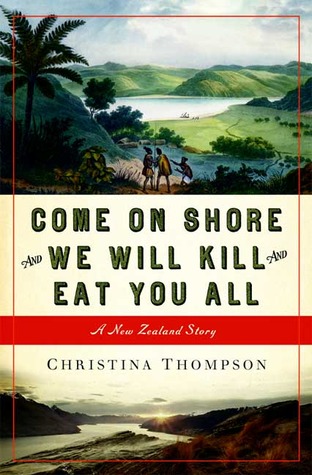
Come On Shore and We Will Kill and Eat You All: A New Zealand Story, by Christina Thompson*****

come

This book has been published for awhile, but it’s worth revisiting. There’s just nothing out there like it, at least not that I have found.

For years I searched for history books that gave either the past history, or current culture, of the Pacific Islands. The population I taught had large numbers of Islander kids in it, and they would be the first to tell you, their culture and history is NOTHING like that of people called “Asian”, i.e., China, Japan, Korea…maybe a teensy bit more like Cambodia.

This fabulous book, listed under “anthropology” (a part of the book store I never go! Good thing I saw it reviewed and went looking for it!), gives an insightful and caring chronology from the early Maoris (an indigenous people who were insightful and suspicious enough NOT to be friendly toward the British crews who came to “claim” their islands for the crown) to the present-day life there. *spoilers from here on*

The writer stayed long enough to fall in love with, and marry, one of the citizens there, and she gained insights that many of us would not have, if we simply traveled there to write a thesis and get out again.

I encourage you to read this book (you will need a strong sense of geography and a fresh, untired mind), and draw your own conclusions

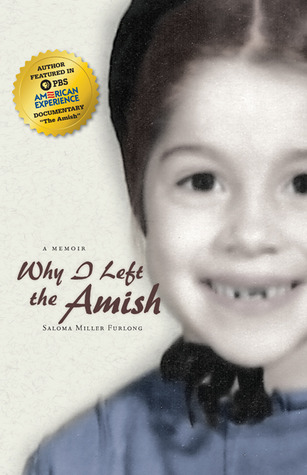
Why I Left the Amish, by Saloma Miller Furlong ****

why i left the amishThis is not just a curiosity piece, like Wagler’s Growing Up Amish. This woman can really write, and piece by piece, she puts together a very hard look at the way Amish treat the disabled, deal with issues of domestic abuse and incest, and the way that intellectualism is stamped out hard, the way you would a dish towel that lands flaming on the kitchen floor.

Before reading this book, I felt a certain…is sympathy too strong a word? Maybe it is…for the Amish. I had read in various places that more and more of their youth were leaving, and I had the impression that one more esoteric group that had struggled to maintain a cultural identity, was being left behind in the relentless march of history. Not so, and now I’m not sure it would be a bad thing if it were true.

Furlong writes really well. She tells us at the outset that she is the one person to receive a free ride at Smith College that year, and that this fulfills a lifelong dream she has had to continue her education. The Amish require their children to leave school after grade 8 in order to work, and the work done by the teenagers is all given (or supposed to be given) to the household fund. Furlong recalls her own longing, as she segues neatly from present to past and back again, as she watched her younger brothers and sisters leave for the school house she had loved, and how completely delighted her overworked, ill-tempered mother had been to have her there for domestic chores.

In the beginning, as I saw the Miller family’s role as an outcast, or nearly outcast, member of their Amish community, I wondered whether Furlong might have remained,as she says most Amish youth do, as a church member of her Amish community, if her family had been a functional one. “If only I didn’t have to live in this family situation, I could be as good an Amish person as anyone”. A friendly member of the community who has a good heart for children, Olin Clara, becomes a mentor and rescuer of sorts, occasionally bringing her over under the guise of needing “help with the little ones”, but when adolescent Saloma arrives, she is greeted by the smell of fresh-baked cookies, and Clara talks to her about her life. Finally it dawns upon Saloma that the real reason Clara has invited her over, again and again, is to show her how a normal Amish household is supposed to function. for awhile, she harbors the hope that Clara will take her in and rescue her from the cruelty visited upon her by the men in the family, and by her mother’s complicity by blaming the victim when she complains.

Saloma’s father was mentally ill and barely bright enough to maintain a home at all, and most of what is done is done by her mother, who is forced to do the backbreaking work of an Amish housewife, as well as the farm chores that are traditionally male. Ultimately, the mother makes a Mestophilian bargain of sorts: her eldest son is permitted to perform monstrous acts of cruelty upon the girls in the family, and the animals (not an easy read, and don’t hand this to your kiddies). In return, he takes on the role of the head of household in all but the most basic decisions, and exercises horrible power over all of them until,to Furlong’s immense relief, he marries and moves to a home of his own.

Here come some spoilers, so if you want to read this and be surprised, stop right here.

Still with me? Okay. Furlong is a thinker (even as a child). She has many questions about the Amish faith and the practices that are largely hinged upon those beliefs. She is not sure she wants to join the church formally, because once she does, she will be an outcast, shunned, and damned to flames of hell should she leave. However, as she passes the traditional age to join, too many questions are asked. She realizes a year later that if she doesn’t join, she will be an outcast anyway, because people really don’t just stick around at that age and NOT join.

She wants to ask questions to help her decide whether to leave or join. “I wanted to walk a spiritual path” that would permit her to ask “fundamental questions”. Since those who join always have a period when they leave the room with the Bishop and other church leaders during the Sunday service, it occurs to her that only by agreeing to join, will she get to go to those sessions and ask her questions. However, it doesn’t turn out that way. The church elders just preach at the upcoming members. “There wasn’t going to be any question and answer session”, she realizes. And this is the real beginning of the end. Every time Saloma persistently inquires about some aspect of faith, she is shushed, as though she has committed a breach of manners. The message is that she should just shut up and DO it, and the metaphor of a grain of wheat being crushed in order to make it part of the flour that can make a loaf of bread–the Amish community–weighs heavily on her. She sees herself as a grain that has escaped the pestle and remained whole, and unwilling to be crushed.

The end left me with some real questions. We are told how she makes her escape, yet 27 years pass that are all but left out. We know that she marries someone who is involved with the place that takes her in, but she has a teenage son as she writes, and yet is staying in a dormitory at Smith, hoping not to become one of the many she has heard of whose marriage dissolves because she can’t bear to leave the college when she is done.

Furlong correctly keeps her story true to the title, and the point of the book is to tell us about her path that lead to her leaving the Amish. She also gives the reader much more information about Amish life in general (including a really interesting system of dating!) than Wagler, who appears self-absorbed as he writes and tells only of his own experiences in a less detailed way, than Furlong, but the ending feels a bit abrupt. I read my copy on an e-reader, which to my frustration cuts off the author page; maybe I would have found some more scraps of how her story turns out there, or maybe she is still at Smith, hanging onto a tenuous marriage, and doesn’t know yet how things will work out.

In any case, if you have any curiosity about the Amish, there is far more in her book than I have written here. I wanted to cheer for her, and for the few who assisted her in her courageous journey. I highly recommend this book (and if you have read my other reviews, you know that I am very stingy with that fifth star).

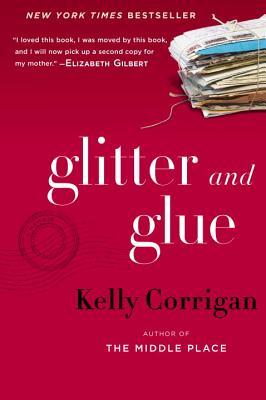
Glitter and Glue, by Kelly Corrigan*****

GLITTERANDGLUE

Whoops, nearly forgot! Thank you, thank you to Ballantine Books and the First Reads program at Goodreads for permitting me to read this book free and in advance!

This isn’t Corrigan’s first book, and it shows. At first it appears to be light, fluffy material, a beach read. The confidential one-gal-to-another tone may create the illusion that we’re going to sit down over a cup of coffee and have a little chat, just us, and the book.

It goes deeper than this, though. The complexity of relationship between mother and daughter is not a new topic, but Corrigan is a strong writer, and she makes it feel new. She recounts how she had saved her money so that she could leave home to find out who she was, following college graduation. She needed to go out into the world to do that, she explained to her mother, who thought she should do something more practical with her nest egg.

In Australia, Corrigan runs low on money, and she finds herself signing on as a temporary nanny. The dad has just been widowed, and his 5 and 7 year old children are smarting from the loss. Reminders of “Mum” and mortality seem to be everywhere. And Corrigan, who is for better or worse playing the role of surrogate mother, finds herself channeling her mother. Everywhere she goes, her mother is still in her head. I recognize some of the truisms and turns of phrase from my own mother, though I am about a decade older than Corrigan. And gradually, Corrigan comes to realize that what her mother had said before was true: her father, who always praised her and was always positive, but didn’t deal with any of the details of raising her or disciplining her, was the glitter. Her mother was the glue.

Later she comes to realize that there is not one woman inside each woman, but dozens of them: the mother who has always seemed a trifle harsh, undemonstrative, curt, and (my word) anal at home is “a hoot” at the office. Everyone finds her hilarious there. She isn’t trying to be anyone’s role model, so she cuts loose. What a revelation!

Two favorite moments: toward the beginning when she is a “classic” snoop while babysitting. Whoa, I totally did that, and my friends did too! We used the house phone where we were babysitting to call each other up and announce our findings! Funny. Another favorite was toward the end, when the author, fuming a bit at home in San Francisco because she has been back home to her folks many times, but her mother hasn’t visited her, is told by a friend that she needs to invite her mother. “Maybe she thinks you don’t care.” Again, hell yes! My own mother instilled in me the notion that once your kids are grown, you don’t push yourself at them, sure as hell don’t drop in on them. I have been inside my own son’s house just once, and last summer he made an ironic remark about it. Hey, I was waiting for the invitation! Last thing any mom wants is for her kid to pull back the curtains and hiss to whoever is present, “Oh crap. It’s my mom.” *cringe!*

Ultimately, Corrigan experiences the role reversal that inevitably must come, and she becomes her mother’s glue when she falls ill. Her father is still the glitter.

I end a lot of reviews by saying that the reader shouldn’t pay full cover price, but consider reading it if your library or used book store has it. Not so this time. If you love an accessible yet intelligently written memoir as much as I do, cut loose and buy this when it’s released. If not for yourself, read it for your family. You’re bound closer than you may think.

Good Morning, Mr. Mandela! by Zelda la Grange *****

Good Morning Mr MandelaZelda la Grange, an Africaner, grew up in South Africa under apartheid. Her family was steadfastly right-wing, and she was brought up to believe that Africaners were fighting against the “black communists”. She had been taught to fear them. The family servant, Jogabeth, was black, but she fell into a slightly different category, since she had a large role in raising la Grange while her parents, who were low income and struggled financially despite their white privilege, were working. But Jogabeth was not permitted to touch Zelda’s skin. When Zelda needed carrying, she climbed on the woman’s back, but already knew not to touch her hair, her hands.

It might rub off. It might soil her.
When she was finished with school, she got a secretarial position in the government, and it was there that she found herself working for a new president after the death of apartheid. She worked for Nelson Mandela’s personal assistant. White South Africa was in turmoil; some Africaners were progressive and welcomed the change, but her own family was outraged and frightened. La Grange needed her job and assured herself that because she was fairly far down the food chain, she would likely never actually see President Mandela.
And the very thought of running into Black people in positions of authority terrified her. How much must they hate her and all of the Africaners who had kept them down for so long? Would they hurt her? And when the day finally came that she saw the president, she kept on moving, eyes averted, but he asked one of his staff to bring her in for a conversation.

When she arrived, she burst into tears of mortification and fear. He took her hand, ending her lifelong habit of never touching a black man before she even realized what she was doing, and he made a point of holding that hand until he was ready to give it back to her. And in his kindly, genial manner, he told her, as she stood sobbing in terror before him, that she was overreacting. It would not be the last time he would tell her this.
When I began reading la Grange’s memoir, I was initially disappointed. She spoke of her own life and told the reader that this was not Mandela’s memoir but her own. I didn’t want to read about the daily doings of some Africaner functionary. If I hadn’t received the book in exchange for a review, I’d have abandoned it, and it would have been my loss. Because soon after she found herself working for Madiba, her job became inextricably intertwined with his, and it continued through his retirement. Her life was, in many ways, his life. But because Mandela did not address his presidency when he wrote Long Walk to Freedom, and because he would never brag or dwell upon his own successes unless they were important historically, her story about life with him is different from his own. And because he would never name-drop, she does it for him.
I reflected upon his choice of la Grange when he chose the entourage with which he would travel. He made a point of having a multi-hued staff around him, blacks, browns, golden toned and Africaner. She and a professor were the two Africaners he chose. So initially, he had just wanted her to be the Africaner who would represent her own race and culture on the new presidential staff. And it was a smart move. A man in his position must watch constantly for security risks. When choosing an Africaner for the staff, he needed not only someone who was organized, hard working, and competent—which she was. He also needed the least likely individual to be an assassin! La Grange describes herself as very young (I think she was short of age 20), but also shy and much inclined to blushing. Duplicity was beyond her. She also says she was plain looking and overweight.
Madiba was a really smart guy. He understood that her youth made her more malleable than some, and that she was no part of anyone’s plan for a coup. In time she replaced his private secretary, and over the course of twenty remarkable years, she developed a steel spine as she became the gate-keeper to Mr. Mandela both during his presidency and after his retirement.
La Grange has a lot of stories to tell. She traveled with Madiba to many places, and tells of his friendships with other members of royal families abroad, with celebrities, and with ordinary people. She also speaks of his tireless effort, even after the age of 80, to raise funds for clinics (especially for AIDS patients) and schools in what was still an underdeveloped nation. There was (and probably still is) a tremendous amount of corruption in government, but Madiba was completely clean, as one might expect, and made a point to keep his charity funds separate from those of the government. His travel abroad and frequent appearances sometimes caused political friction with those who succeeded him, who felt he had no right to speak for South Africa anymore; Madiba insisted he spoke for himself alone. And la Grange points out that it was the ANC that chose to make him the icon of anti-apartheid struggle, and thus they had no business complaining when international figures asked for Madiba rather than Mbeki or others who currently held office.
There is a part I skipped through at the beginning that explains what apartheid was, and how it affected the lives of those who lived under it. I didn’t read it because there was nothing there I didn’t know; I was an anti-apartheid activist once myself. But for those who were too young to recall it or whose attention was elsewhere, it may help plug the gaps.
But the vast majority of her story is of her life with Nelson Mandela. For two decades she was on the go, 24/7, and served at such a frenetic pace that she often could not take 20 minutes for a meal. The phone often rang in the middle of the night, and sometimes she worked all night long as well. Her transformation and dedication were complete.
At the very end, a fracture within Mandela’s family formed, and a couple of his daughters decided that she could no longer see him, but she had been there for him right up until he was well into his decline. The memories she shares are ones you will find nowhere else; Madiba had attempted to write a second memoir, but was unable to complete it. And even had he done so, he would not have proudly told the world about the good that he did the way that la Grange does for him.
Highly recommended to everyone.

Bringing Down the House: The Inside Story of Six MIT Students Who Took Vegas for Millions, by Ben Mezrich****

Suspenseful and great fun; nonfiction. My son has a good friend who has been a professional gambler for years. He doesn’t do what these guys do, though, because it’s true, you do become unwelcome once you have won too many times, or if you come in as a team.(It seems credible, too, that it might be illegal to signal someone to come join a card game at the very moment you know the shoe is loaded with face cards and aces).

It’s an exciting book to read–and I’ve read it twice–simply because it is so daring, and Vegas seems like such a powerful entity to challenge. I am glad the writer did not include all the casino names and the minutiae that others seemed to crave. For one thing, the urban topography of Vegas changes constantly. The MGM burns to the ground, is rebuilt further up the street. A couple of casinos don’t do well and go under, but then Steve Winn throws up some brand new ones…I think if the writer had become too specific with each and every casino, color scheme, manager’s name, etc., it would have become irrelevant within a year, as employees change, walls are repainted, casinos are razed to put up mega-casinos.

For the rare few, like the fellow I know, who have such brilliant memories and math skill that they always remember what each player at a table has played and how many face cards and aces have shown out of a six-deck shoe (set of cards the casino uses for its patrons), the only way to win consistently, though of course not every time, since luck is a factor, is to go and play at tables with other players, never against the house. Our friend of the family also makes it a point to order one strong drink and nurse it steadily throughout the night, so everybody else is drunk and he is sober.

This reviewer, being a liberal arts type and no kind of math wizard, spent an entire week in Vegas once and did not gamble a single penny. Saw lots of great shows, watched other people bet astonishing amounts of money…and then went out to eat somewhere awesome. I spent a lot of money, but lost none of it. But teachers are generally sensible that way.

Obviously, this book was not published because of the writer’s skill with prose, but with such an interesting story to tell, I am glad it was published. I greatly enjoyed it, and passed my copy on to a couple of friends before I sent it to a charity used-book sale. This is light reading, but also a page-turner. If it sounds like something you might enjoy, read it. Just don’t regard it as an instructional manual that will lead to great riches, unless your skills are similar to those of the folks at MIT.

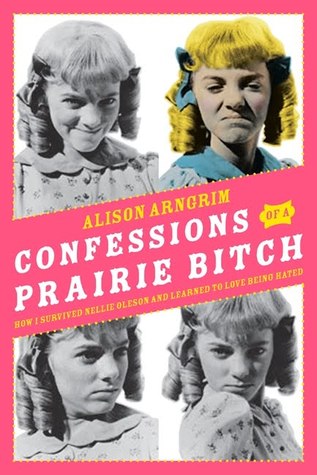
Confessions of a Prairie Bitch, by Alison Arngrim *****

confessionsofaprairiebitchThey say actors tend to have high IQs. This book is one more piece of evidence. Arngrim is super smart, and she can really write. And she is very, very funny.

Like a lot of comedians (which is what she did after being a child actor,at least for a time), her unerring comic instinct developed as a survival skill. Terrible families come in a wide range of dysfunction, but if domestic atrocities were a contest (and thank goodness they aren’t), Christina Crawford (Mommie Dearest) would be left eating Arngrim’s dust. The enormous temper tantrums and other vile forms of acting out inherent in the character she played were a recipe for mental health. How many other people get to go out and scream at other people for a living? And trust me, she needed all the help she could get. For the specifics, get this book and read it. It is worth the cover price.

Public reaction to Arngrim ranges from the hysterically funny to the almost unbelievable. She and her Prairie mom went to a fair as part of a publicity effort, to sign autographs etc, but they were attacked by an angry mob and had to slide out of there quietly. On a French television program, she was asked to explain her bad behavior, and she explained, as if she were her character, that she had been raised by a dreadful mother and was jealous of Laura. The studio audience and talk show hosts all understood entirely. It’s just too hilarious!

In real life, she has been close friends with Melissa Gilbert since their early days together on the set, and she spoke so well of Gilbert that I think I may read her memoir, too…and I was not even remotely interested in doing so before this! She also has some interesting things (I am dying to divulge, but won’t…READ THE BOOK!) about Michael Landon. Wowzers.

Not-so-funny is her experience losing a good friend to AIDS. I lost an old high school chum in the late 80’s, when a whole generation (or more) of gay men were unknowingly exposed to a deadly virus that at the time had no useful treatment. I applaud the years she has served as an advocate for HIV awareness and treatment. She has gone to bat for abused children, too. Again, you have to get the book! You just have to read it!

I always have 4-6 books on a string at a time, and I float more or less freely from one to the next. The only time I put this one down for another was at bedtime, because for awhile it was rollicking enough not only to keep me awake, but to keep me awake and laughing, or shaking the mattress with suppressed gales.