I’ll Be Right Here, by Amy Bloom***

I’ve been a reader of Amy Bloom’s novels for decades, and so when I see a new one is coming out, I leap, usually without even checking out the synopsis. Just the author’s name is enough to get me moving. This time was a little different. I began reading, but had trouble engaging, and my mind wandered. I decided to get the audio from the library, once the publication date had come and gone, and that was how I eventually finished it.

My thanks go to NetGalley and Random House for the invitation to read and review. This book is for sale now.

We start out in Europe during World War II. Gazala emigrates from Paris to New York, and becomes friends with a pair of sisters; later Samir, Gazala’s brother, joins her. Now here’s where it gets icky, (to use a highly literary term.) Gazala and Samir become a couple. They don’t tell people they meet that they are related, so they are accepted. Their friends also become involved in—to be charitable—unconventional relationships. In looking back at the synopsis, it’s all right there: “the lawlessness of love.” Hoo boy. It definitely is.

So, after forcing myself to finish listening to this thing, I nearly give it two stars, but the nugget that saves it for me is the concept that occurs when they are grieving a loved one, the notion of a “dead people’s party.” I love thinking about this! I have already started imagining my own such party, having lost too many people I cherished, when my sister dies. Her death is not altogether unexpected, as she was a great deal older than I am and has been in ill health for many years, but it still packs a punch. The thought of my sister’s dead people’s party—complete fantasy, as far as I am concerned, but who cares? Is what has helped me through a dark time.

So Bloom gets an extra star.

Nevertheless, I don’t recommend this thing unless the reader has carefully read the synopsis and is still interested. Yikes! I’ll probably read Bloom again, but this time I’ll be more careful before I commit.

My Friends, by Fredrik Backman***-****

“Being human is to grieve, constantly.”

Well now. Fredrik Backman’s many fans ought to brace themselves for his latest novel. The feel-good stories he’s written, and written brilliantly, in years gone by are nowhere in evidence here; those of us that look to this author to bolster our sense of optimism and to remember that human beings are innately good are not going to find it. This book is far darker than anything he’s written to date, and I have no idea what is behind this sorrow and misery sandwich, but I am sorry it’s come to this.

My thanks go to NetGalley and Atria Books for the review copy. This book is for sale now.

Our premise is that a homeless teen artist, grieving the death of her best friend, befriends an older, dying street artist who turns out to be someone famous and revered in the art world. The artist senses in her a kindred spirit, and so his last act is to have his friend and business agent sell everything that the artist owns in order to purchase back one of his most iconic paintings and give it to her after he dies, because “She’s one of us.”

Okay. It’s a stretch, but it’s fiction, and after all, Backman generally delivers, so I’ll suspend disbelief and roll with it.

Nearly the entire remainder of the book consists of the friend, whose name is Ted, spilling his and the artist’s past to the girl, whose name is Louisa. He’s traveling by train, and so he takes her with him. We hear all about their childhoods together, along with the two other friends that made up their tightly knit friend group. At one point she runs off, and at another, they lose the painting and the artist’s ashes, but these constitute minor breaks in the otherwise unending conversation, which is nearly a monologue.

It didn’t take me long to be heartily sorry I had ever taken the galley; I finally bonded with the narrative at about the 60% mark, and from that point until just past the 80% mark, I was reading because I wanted to know what would happen next, or be said next, rather than from a sense of duty. For most of the final 20%, I was watching the page numbers and wondering if this thing was going to end, ever.

It’s hard to rate a book like this, because so much of my disappointment stems from my earlier admiration of Backman’s works. If this was written by someone with whom I was unfamiliar, would I rate it a little higher? But then, if the author wasn’t known to me, I likely wouldn’t have picked it up in the first place. The stark shift in the author’s world view is shocking, and I am still not entirely over it. I can only recommend this book to you if you need a grief book, because anyone in need of a good ugly-cry will surely find it here.

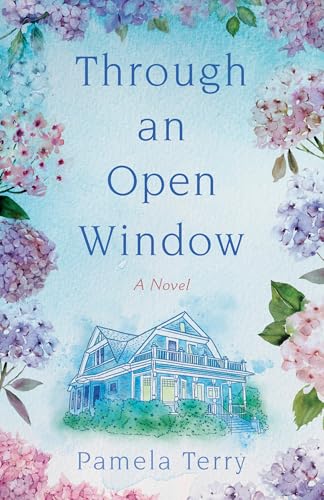
Through an Open Window, by Pamela Terry*****

“When you’re the last one with memories it’s like trying to hold on to hot sand.”

Author Pamela Terry never misses. Her debut, The Sweet Taste of Muscadines, forged such an emotional connection in me that if someone had told me they didn’t like it, I might not have cared for them as much as before. The same held true for her next work, When the Moon Turns Blue, which was every bit as good if not better. And now, with her new novel, Through an Open Window, I know that I will follow this author anywhere.

My thanks go to NetGalley and Ballantine Books for the invitation to read and review. This book will be for sale August 19, 2025. If you are female and have a beating heart, you should get it and read it.

We open with a scene from 1956. The local sheriff rescues two small children from a scene of horrific carnage; the baby girl is surrendered to the social worker before they find the little boy. The sheriff and his wife have been unable to have children, and want them so badly that instead of reporting the boy also, he takes him home and they keep him.

Cut forward now to the fictional town of Wesleyan, Georgia. A family is grieving the loss of its patriarch, Lawrence Elliot. His widow, Margaret is the first to receive a visitation—not from Lawrence, but from Great-Aunt Edith, who has been dead for years. Aunt Edith wants her to know something. And in fact, other family members will also see her at various times, in various places, but it’s not the sort of thing one shares with others. But Edith isn’t leaving until her message is received and understood.

As we see Margaret and her three adult children cope in different ways, we also see the interplay of their relationships to each other. This story is loaded with character development, and I believe each and every one, even Jubal, the rescued Clumber Spaniel that comes to live with Margaret. (I had never heard of this breed before, and now I kind of want one. Someone stop me!)

Events roll forward, and slowly we learn what it is that Edith is trying to convey, as the family does, and we find the tie-in to the prelude. It’s done brilliantly! Along the way, the author’s voice comes through in undeniable word smithery that forces me to highlight way, way too many passages to quote here. I experience the entire gamut of emotion, and when I near the ending, I am torn, wanting to read more slowly so that the book won’t end, but also needing desperately to know what is coming next.

The only possible improvement would be if Terry could write, and write up to the standard she has established, as fast as I can read, because I cannot wait for her next novel! She has become a favorite author, one I’d pay to read if I couldn’t do it free of charge. Highly recommended.

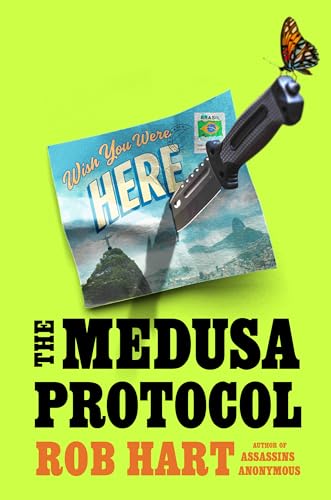
The Medusa Protocol, by Rob Hart****

“’I’m Mark, and I haven’t killed anyone in two and a half years,’ I say.    ‘Hi, Mark.’”


The Medusa Protocol is author Rob Hart’s second book in his Assassins Anonymous series. Happily for me, I didn’t notice that I was reading the second in a series; I didn’t read the first, and I might have sidestepped it had I realized I was entering mid-series. As it was, I had fun and enjoyed this satirical romp through a sea of professional murderers, sharks, and poisonous vipers.

My thanks go to NetGalley and Putnam Penguin for the invitation to read and review. This book is for sale now.

Our story commences with a group of recovering assassins meeting in a church basement. Then things start to go sideways; a member who’s expected isn’t there, but sends her personal choice of pizza to let them know she’s in trouble just as enemy assassins crash the meeting.

Huh? What?

From there, we dive down the rabbit hole, seeing the past and present alternately through the eyes of Mark, who is Astrid’s mentor in the program, and Astrid, a recovering killer who has been kidnapped and is being held in a Brazilian prison on an island in shark-infested waters, and which is home to a great many large, venomous vipers. How can her friends rescue her without having to kill anybody?

Just keep whispering the Serenity Prayer to yourselves, guys.

This is a fun read. Although the point of view shifts with every chapter, either between characters or time periods, these are clearly delineated, and I have no trouble keeping them straight. I only had the digital galley, not the audio, but I suspect that, assuming the reader provides the headings at chapter beginnings, it will be fine. The humorous moments when the rescuers worry about the mission threatening their sobriety are meted out exactly as they should be, not so many that it stops being funny, but frequent enough to keep me chuckling. There isn’t a lot of character development, but I don’t expect it from a satirical, action-packed novel like this one; there is some dialogue toward the middle that is overly wordy and should be edited down, but apart from that, it’s smooth as glass.

Some reviewers suggest not reading this one unless one has read the first; I am glad I didn’t see that advice till after I had read this one. I don’t care that this book provides spoilers for the first, because I am not going to read that one anyway. I will, however, cheerfully read the next in the series, whenever it becomes available. Meanwhile, I recommend this nifty little book to you.

The Family Recipe, by Carolyn Huynh*****

“We all need to feel needed. Otherwise, what’s the point of living?”

Carolyn Huynh made her authorial debut in 2022 with The Fortunes of Jaded Women. It was one of my favorite novels not only of that year, but of all the thousand-plus galleys I have read since I began reviewing. She’s back again with The Family Recipe, and it’s every bit as good as the first. My thanks go to NetGalley and Atria Books for the invitation to read and review, but make no mistake: I would have hunted this thing down and bought it with my Social Security check if it came down to it. I wouldn’t have been sorry, either.

This book is available to the public now.

Once again, our protagonists are Vietnamese and Vietnamese-Americans, mostly women, and once again, they are siblings and other family members that must come together; it isn’t a voluntary reunion. And that’s where the similarities between the first book and this one end.

Duc Tran, the patriarch, has laid out the terms by which his children may inherit his fortune. Once upon a time, he was the Vietnamese sandwich king, and in order to become his heir, each of his four daughters must relocate to a city she doesn’t want to live in, and revive a down-at-the-heels restaurant in a now undesirable end of town. It’s a contest; that is, unless Duc’s one son, Jude, succeeds in getting married within the one year’s time limit of the contest. If he can do that, he wins. (His sisters aren’t worried; who would marry Jude?)

The story is told from several points of view; these include the siblings, their uncle—a shady lawyer, and Duc’s best friend; their mother, who abandoned them when they were small, when her mental health collapsed, and never went back; Duc’s second wife; and briefly, Duc himself, who mostly serves as a mysterious figure that doesn’t even return to the States to lay out his children’s requirements, sending their uncle as his proxy.  As the story unfolds, we learn more about each sibling, and about the traumas they have experienced, as well as their successes.

The thing that makes it work so well is Huynh’s unerring sense of timing. It’s a dramatic tale, but it’s shot full of humor, as we see at the outset, when we learn the sisters’ names. Their father was a huge fan of the Beatles, and so the girls are named Jane, Paulina, Georgia, and (wait for it…) Bingo!

There are plenty of twists and turns, and the dialogue crackles. The internal monologues are mesmerizing. This book would make a fantastic movie.

Since I was reading this galley digitally, I highlighted quotes that I thought I’d like to use in this review, but there are 28 of them. Obviously, I cannot share them all here, but let that inform you, if nothing else here has, how much I love this book.

Highly recommended to anyone that has a beating heart, at least a passing interest in Vietnamese-American culture and/or family stories, and can use a few good laughs.

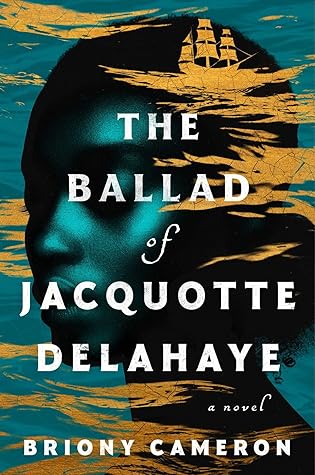
The Ballad of Jacquotte Delahaye**-***

The Ballad of Jacquotte Delahaye marks Briony Cameron’s authorial debut. She is a talented wordsmith, and my thanks go to Atria Books and NetGalley for the invitation to read and review. While I enjoyed several exciting passages—I do adore a good pirate tale—in the end there were issues with credibility that got in my way.

 This story of a pirate woman’s derring do is for sale now.

When I read that Jacquotte Delahaye was a real person and that the book is based on true events, I was all in. However, there are passages that made me raise an eyebrow, and since there didn’t seem to be any notes that would indicate what is true and what is the author’s invention, I took to Google to find out more. This is where I learned that actually, she may have been a real person, or she may be only legend. The stories surrounding her life and exploits are also legend. There’s virtually no verified historical information on this character.

I love good historical fiction, which is where actual, documented facts are given warmth and life by an author that adds dialogue and perhaps fleshes out a few areas where the record is sketchy. Then, if the author is sharp and professional, there will be end notes that explain what is a matter of historical record, and what has been invented. That’s my happy place. Even better is when sources are provided for interested readers. Of course, a writer of any kind of fiction isn’t required to provide footnotes or other documentation, but when they do, it’s the cherry on the sundae, and it makes me love them all the more.

Because this story is not nearly as closely aligned to historical record as the promotional materials would have me believe, I nearly dropped my rating to two stars. I felt, and still feel, that the synopsis provided is misleading. I don’t like feeling as if I’ve been played. However, I realize that the author probably is not in charge of her own promotional blurb, and I can’t see penalizing her for what the publicist has chosen to do.

Do I recommend this story? Not so much. Had it been written in such a skillful way that I felt no need to do research of my own, I might not know that this is pure fiction based on little more than speculation. That’s not the case, though. It doesn’t ring true in a number of places, and that’s partly because it isn’t. However, should the reader decide to pursue it, I would advise that you get this book free or cheap, unless your resources are endless ones. Don’t pay full cover price.

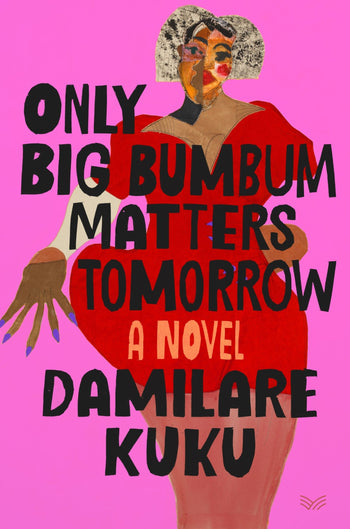
Only Big Bumbum Matters Tomorrow, by Damilare Kuku

When a novel written and set in Nigeria is so successful that it’s translated into English and sold in the U.S., you know it’s probably one hell of a good book, and Only Big Bumbum Matters Tomorrow is clear evidence that this is true. My thanks go to HarperCollins and NetGalley for the review copy; this book is for sale now.

Our protagonist is Teme (TEE-mee), a young woman fresh out of college who is sure of her next course of action: she must develop a perfect body, starting with her backside. She works and saves her money so that she can have her buttocks enhanced surgically. Everybody loves a woman with a big butt, and once hers is augmented, she can marry anybody she wants. It will be a great investment!

This choice, not surprisingly, blows the roof off her family home. All of the women, her mother, auntie, sister, and others are adamant, and they scheme together, and bicker together, about how to prevent her from carrying out what they perceive to be a dangerous and foolish task. In the process, they reveal their own long held secrets, and also? They are hysterically funny!

The reader should know that the best material isn’t dropped in at the beginning, as is the unfortunate trend. Instead, it starts out fairly serious, and then I find myself snickering a little, and then a little more, and by the end, I am howling! There are quite a number of characters, and not recalling all of them won’t interfere with your enjoyment; however, it’s easier to catch up and also identify certain Nigerian terms that are peppered in, most of which are self-explanatory anyway, if you read digitally. However, because I had fallen behind, I checked out the audio version from the library and followed along as I did my morning exercises, and the audio version is brilliant as well. The lilting Nigerian dialect is mesmerizing!

Although it doesn’t seem like it at first, this novel packs a satisfying feminist punch. I highly recommend it to any reader that has eyes, ears, or both. Don’t miss it!

The Briar Club, by Kate Quinn*****

I had never read a novel by Kate Quinn, but my friends on Goodreads raved about it and I was overcome by the fear of missing out. Happily, I was not too late to get a review copy; my thanks go to NetGalley and William Morrow, along with my apologies for lateness. From the get go, I could tell this book was too good to speed read, and so I set it aside for a time when I could sink into it and appreciate it. This fall I was able to get the audio version from the library to help me along; narrator Saskia Maarleveld is outstanding, and those that enjoy hearing their books should strongly consider ordering that format.

Our story takes place just after World War II, and it takes place almost entirely within the confines of Briarwood House, a women’s boarding house owned by the selfish, odious Mrs. Nilsson. The book’s prologue comes to us from the point of view of the house, and for a brief spell I wonder whether the house itself will become the main character. It doesn’t, and that’s probably just as well, because the women that rent its rooms, along with Pete and Lina, Nilsson’s two children, fill the story quite nicely, and all are beautifully developed, some more than others, with Nilsson herself being the only truly static character. In fact, I could argue that even the house’s character is developed somewhat.

I seldom do this, but the prologue is so juicy that I’m going to reprint a considerable chunk of it here, because Quinn’s voice—and okay, the house’s—provide a more convincing incentive to read on, than anything I can offer:

If these walls could talk. Well, they may not be talking, but they are certainly listening. And watching…Now its walls smell of turkey, pumpkin pie, and blood, and the house is shocked down to its foundations. Also, just a little bit thrilled. This is the most excitement Briarwood House has had in decades. Murder. Murder here in the heart of sleepy white picket fence Washington, D.C.! And on Thanksgiving, too. Not that the house is terribly surprised by that; it’s held enough holidays to know that when you throw all that family together and mix with too much rum punch and buried resentment, blood is bound to be shed sometimes…This was a very enthusiastic murder, the house muses. Not one moment’s hesitation from the hand swinging that blade…Briarwood House doesn’t like Mrs. Nilsson. Hasn’t liked her since she first crossed the threshold as a bride, complaining before she’d even shaken the rice out of her hair that the halls were too narrow (My halls! Too narrow!), and still doesn’t like her twenty years down the road. No one else in this kitchen does, either, the house knows perfectly well. It knows something the detective doesn’t. The killer is still very much in this room.

Now that the murder has been mentioned, I must caution you not to identify this story foremost as a murder mystery; it isn’t. The murder doesn’t come till nearly the very end, and the reason that it affects us so deeply is because of the author’s success in making every character here feel tangible and known to us. By the time anyone is enraged enough to swing anything, we know all of these women, or most of them at least, well enough to feel as if they are family. Boarder Grace March is revealed to us more slowly than the other women, but there are reasons for that, and by the end, I may love her best of all. No, this is first and foremost a stellar work of historical fiction.

At the outset, no one knows anyone else. Some are married, waiting for spouses to return from the conflict; some are single; some are professionals. Almost everybody has at least one serious secret. But as they grow to know one another, bonds are established that in some cases are stronger than those of blood relatives.

I won’t go through the plot or describe individual characters; as far as I’m concerned, that would be gilding the lily. Instead, I urge you to get a copy of this outstanding novel in whatever form is your favorite, with a slight nudge toward audio if you’re undecided. Highly recommended!

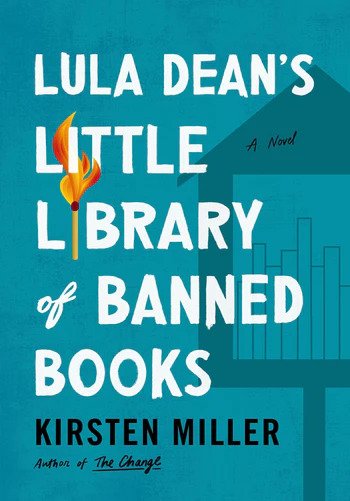
Lula Dean’s Little Library of Banned Books, by Kirsten Miller

Lula Dean is a deeply unhappy woman. Neglected by her children, alone and unappreciated, she strikes on a way to gain the attention she knows that she deserves. She embarks on a crusade to remove books she deems objectionable from local libraries, and she sets a sterling example for her town by erecting a little library on her lawn, a collection of the wholesome material she thinks is most appropriate. Little does she know that one of the town’s youths has snuck out in the dead of night and inserted banned books inside the dust jackets of the books she originally placed there. Her library becomes wildly popular, and Lula hasn’t a clue why.

My thanks go to NetGalley and William Morrow for the review copy. This book is for sale now.

The moment I saw the synopsis for this novel, I knew I had to read it. The First Amendment is a hot button for many people in the U.S., and as a language arts teacher, it’s been at forefront of my mind for most of my adult life. And I think I can safely say that Lula Dean is a soft sell; readers are generally a receptive audience, and so any novel containing the word “book” or “library” in its title should, I would argue, be held to a slightly higher standard. It’s not that hard to preach to the choir.

I love the premise of this story, and I laugh out loud more than once at the beginning. After that, though, things flatten out a bit. There are a lot of characters here, and whereas I have no difficulty keeping them straight, their numbers may have prevented author Kirsten Miller from fully developing them. I feel as if I am reading, for the most part, about cartoon cutouts rather than real people;  had I felt as if the characters were real, I would have been more deeply invested in their outcomes. However, everyone in this thing is either a fine, enlightened character or a despicable, ignorant blowhard. It accurately represents the way many Americans regard those around them, blue versus red, and that is not helpful. Two characters that stand out better than others are side character Beverly Underwood, and the young Elijah. However, even these are not dynamic characters. Nearly everyone here is the same going out as they were coming in.

Those looking for a short, funny novel to toss in their suitcase over the holidays could do worse; they could also do better. The sad thing is that had this been written in a more intentional way, with the literary standards one would hope to see in any novel, it could have been impressive, might even have changed a few hearts. This book isn’t going to do that, and so I see it as an opportunity squandered.

Let Us Descend, by Jesmyn Ward*****

Reading Jesmyn Ward always hurts so good. In Let Us Descend, she conveys the heartbreak and sense of betrayal a young girl, Annis, faces when she and her mother are sold separately by their owner—who is also her father–and the ways that she copes, and also the ways she is helped by the spirits of her ancestors.

My thanks go to Scribner and Net Galley for the invitation to read and review. I’m sorry to be so late here, and am grateful that the literary world has recognized this book for the masterpiece that it is.

You may have seen other reviews in which I complain and gnash my teeth over historical inaccuracies; sometimes I rant over an author’s failure to portray a child in a way that is developmentally inaccurate. There will be none of that here. Ward has taken the time and done the research, and so her well crafted characters aren’t compromised by sloppy background details. I had to take this story in small bites because it is excruciatingly sorrowful.  For part of it I listened to the audio version; this is a treat in itself, as Ward reads her own novel.

Some reviewers have taken issue with the amount of magical realism Ward employs. I disagree with them. How can any novelist portray such a story and such a character as Annis with any glimmer of hope, unless they employ these literary devices? Does anyone really want to read a book that is miserable at the outset, miserable in the middle, and miserable even at its bitter, wretched conclusion? Without hope, there’s not much incentive to keep reading, nor would it have been satisfying to write; but Ward will not and does not revise history simply to make her readers more comfortable. There was only one way to tell this story and be true to history and her characters, and Ward found it.

Yes, it’s a rough read, but it’s so well written that many readers must have smiled through their tears. Know that, of necessity, this story is absolutely loaded with triggers; assuming that you can navigate them without coming undone, I highly recommend this story to you.