The Wartime Sisters, by Lynda Cohen Loigman*****

Sometimes I feel sorry for writers that hit it big the first time they publish a novel, because then the expectations are raised for everything they write thereafter, and so I wondered whether Loigman, the author of A Two Family House, would be able to match the standard she has set for herself. I needn’t have worried, because if anything, The Wartime Sisters is even more absorbing. I was invited to read and review, and my thanks go to Net Galley and St. Martin’s Press. This excellent novel will be available to the public January 22, 2019.

The setting is an armory not far from where the author grew up, one that was an important manufacturing site during World War II. The characters are what drive the story, but Loigman’s intimate understanding of the period’s social mores and the economic impact the war had on women on the home front make it far more resonant. Rather than rely on pop-cultural references to set the tone, she conveys unmistakably what American women were expected to do—and to never do–in this unusual yet unliberated time period.

Ruth and Millie are sisters, and yet in some ways they don’t really know each other. Each has built up a personal narrative full of grievances and assumptions about the other over the course of their lives; they are estranged, with Millie back home in Brooklyn and Ruth in Springfield, Massachusetts. Both are married, and both of their husbands have decided to enlist, but otherwise their circumstances are vastly different. Ruth has married well, but when Millie’s husband Lenny is gone and their parents are dead, she has no one to turn to. She has a small child to consider, and during this time period it was unusual for a mother to leave a young child in the care of others. Men worked; women stayed home. And so although she dreads doing it, Millie writes to her older sister Ruth; Ruth doesn’t want to take Millie in, but she does.

Both sisters carry a lot of guilt, and each is holding onto a terrible secret.

The story alternates time periods and points of view, and the reader will want to pay close attention to the chapter headings, which tell us not only which woman’s perspective is featured, but also what year it is. At the outset we have the present time alternating with their childhoods, and gradually the two time periods are brought together.

 In addition, we see the viewpoints of two other women that are introduced later in the story. One is Lillian, the wife of a commanding officer; she befriends Ruth and later, Millie. The second is Arietta, the cook that feeds the armory personnel and also sings for them. Although these women’s backgrounds are provided as separate narratives, their main role is to provide the reader with an objective view of Ruth and Millie.

I generally have several books going at a time, but I paused my other reading for this one, because I felt a personal obligation to Ruth and to Millie. Family is family, and while I read this story, they were my sisters. You can’t just walk away.

Loigman joins women’s fiction and World War II historical fiction masterfully, and if this work reminds me of any other writer, it would be the great Marge Piercy. This book is highly recommended to those that cherish excellent writing.
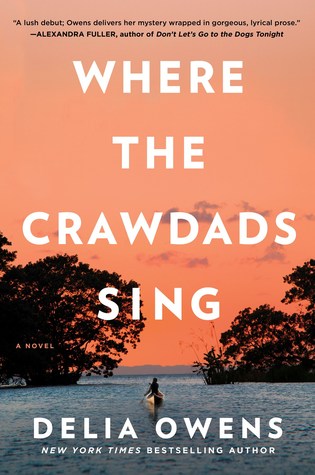
Best Novels of 2018

If I had prize money to bestow, I would divide it between the authors of these two matchless works of fiction, which in my eyes are the best of 2018. Interestingly, both feature strong women as main characters, and both are Southern fiction. If you haven’t read them yet, do it now.


Best Debut Fiction 2018

Image

                                                                                           Honorable Mention:

Best Historical Fiction 2018

Image

The Burglar, by Thomas Perry****

Thomas Perry’s tightly plotted suspense novels always keep me on the edge of my chair. Big thanks go to Net Galley and Mysterious Press for the review copy. This book will be available to the public January 8, 2019. 

Our protagonist is Elle, a twenty-four-year-old Californian that is also a professional burglar. She was raised by relatives that ditched her when she was barely grown, and so she makes her living taking jewelry from rich people’s houses. They in turn will file the loss with their insurance companies, so no harm, no foul. She is on one such expedition when she comes across three murdered people that were apparently killed while they were having a three-way on the homeowner’s bed. Worse: there’s at least one camera involved. It might provide the identity of the killer, but then it might provide her identity as well. What’s a girl to do? 

In the real world, the answer would be simple: you were never there. Destroy the camera, go through the wallets for any cash, then get gone fast. Elle has no police record, so even if she wasn’t gloved up, her prints wouldn’t matter, nor would her DNA. Just go. 

But that wouldn’t make for an interesting story, now would it? 

Elle decides to make sure that the cops get the camera, but without her identity on it. This adds a twist, requiring her to break in again in order to return the camera once she’s looked at it and done the other things she needs to do, but in the midst of all this she is being stalked by a mysterious black SUV. In time it becomes clear that someone associated with the house, and likely associated with the murders, wants to kill her. In order to stay alive without going to jail, she must learn the killer’s identity and get the proof to the cops, again without being implicated herself. 

There are a number of places here where I stop, roll my eyes and say, No way. For one thing, Elle owns her own house. How does an orphaned 24-year-old afford a Los Angeles home? I could easily see her squatting in a house that’s for sale, or even inheriting a house from a dead relative after her other family members scarper out of the area, but to have purchased real estate by age 24? No no no no. How does a young woman like that even have a credit history? It defies common sense. In addition, Elle has a vast amount of knowledge in many different areas despite her lack of formal education. How does a 24-year-old know about the history of architecture in Southern California, just for one example? 

But here’s the interesting thing. Despite all of these inconsistencies, I wanted to keep reading. I usually have somewhere between four and ten books going at a time, in various locations and on various devices, and this was not the only good book I was reading at the time; yet when it was time to kick back and read, this one is the one I most wanted to read. And this has never happened to me before. Usually a book with so many holes in the plot and in the construction of the protagonist either causes me to abandon the title or more frequently, plod through it simmering with resentment because I have committed myself to writing a fair review. But not here. With Perry’s book, while part of my brain is tallying the impossible aspects of the novel, the other part of my brain asks, “So what happens next?”

The simple truth is that despite everything, Thomas Perry is a master of suspense. This is what keeps me coming back to him, every stinking time. There’s nobody that writes taut, fast-paced novels of suspense the way this guy does, and so come what may, I had to finish this novel, not out of obligation but for myself, and for the same reason, I will come back to read him again, again, and again.

Best Mystery of 2018

Image

TheCraftsman

Holy Lands, by Amanda Sthers*****

HolyLands


“Does keeping the memory fresh prevent history from repeating itself? Surely not. Memories are meant to be forgotten. History is meant to be repeated. That of Jews, of women, of Arabs, of people who suffer, of Little Red Riding Hood. And the grandmother always, always has sharp teeth.”

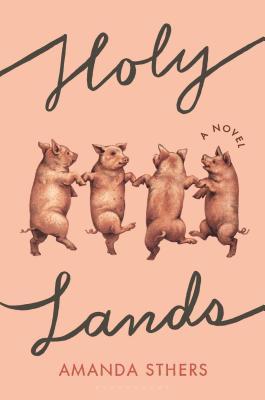
Seldom do I make a decision to read a galley based almost entirely on the book’s cover, but really. A dancing pig in the Holy Land? How can that story not be interesting? Big thanks go to Net Galley and Bloomsbury. This book will be available to the public January 22, 2019.

The whole book is a series of letters and emails sent between five characters. We have four family members: Harry and Monique are divorced, yet it’s one of those complicated divorces where there’s no clean break; David and Annabelle are their adult children.

Harry is an American expatriate who has moved to Israel, but instead of embracing his culture and homeland in a more conventional way, he has opted to become a pig farmer in Nazareth, one of the few places in this Jewish nation where the animals are not straight up illegal. And so the fifth character is the rabbi, who entreats Harry to give up the pork business. He’s upsetting people, and he should respect his roots a little more. Jews have been through enough, nu? And before we know it, there’s mention of the Holocaust.

Harry wants to keep his pigs, and he thinks it is time for Jews to lighten up about the Holocaust, maybe tell a joke about it now and then. The rabbi is floored. Joke? About the Holocaust? And so it’s on.

You would think that with such edgy subject matter the story would veer over the boundary of good taste, but Sthers—who has many bestsellers to her credit, though this is her American debut—is deft, insightful and very, very funny. The prose is angry, hilarious, and aching all in turns, not unlike our feelings for our kin.

Families are such fertile territory, and this one is among the best fictional families in literature. David, Harry and Monique’s son, is a gay playwright whose father has not come to grips with David’s sexuality. David writes him endless letters; Harry won’t respond. We see how Harry thinks and feels about David through his correspondence with the rabbi, and with the things Annabelle learns when she comes for a visit. Meanwhile, David’s new play is about to open, and it’s titled “Kosher Pig.” It’s about his father. Oh, how he wants Harry to be there for the opening! But Harry remains incommunicado.

This is a slender little book, just 176 pages, and so I expected a casual romp, but it’s more than that. It’s a quick read, not because it’s lightweight literature but because it’s impossible to put down. I recommend you should get it and read it, and then…maybe you should call your parents. Better yet, go visit them.

Best General Fiction of 2018

Image

TheCaregiver

Best Humor 2018

MrFloodsLastHonorable Mentions: 


Best Horror 2018

Image

themerryspinster