When These Mountains Burn, by David Joy*****

David Joy writes some of the best Grit Lit published in the U.S. of A, and if you haven’t read him yet, it’s time to get started. This soaring, wrenching tale of addiction, community dysfunction, and miserable unrelenting poverty delivers some hard truths about the distribution of wealth in this country, and about the uneven way that justice plays out. Lucky me, I read it free and early; my thanks go to Net Galley and Putnam Penguin for the review copy. It’s for sale today.

Ray Mathis is a big man with a big burden. His wife, Doris, has been dead for three years, but his grief hasn’t ebbed. A stoic man, he goes in and out of every day carrying out necessary tasks, but he feels as if his arm is missing, all the time. His companionship comes solely from his old hunting beagle, Tommy Two-Ton. His only child is Ricky, and although Ricky is in his forties, Ray still thinks of him as “the boy.” When the boy comes home, Ray is suffused with a sense of dread. Ricky is a hardcore addict, and all those stories you were told in junior high health class are true: a junkie has no loyalties and no shame great enough to override his need for the substance he’s come to crave. When he sees that Ricky is home for a visit, Ray’s first instinct is to check his few valuables that haven’t been stolen and pawned yet to see if they’ve vanished.

Is this all too familiar to some of you? Because it hit close to home for me.

Not long after he arrives, Ricky is gone again, and that’s not unusual; but later he gets a phone call from someone he doesn’t know. The caller says that Ricky has failed to meet a payment and will die if Ray doesn’t pay up. Because Ricky has no shame, he has told them exactly how much is in his father’s savings account. And though he understands that it’s only going to postpone the inevitable, Ray pays up, but he tells the men that collect that he will be back for them if they ever sell to his son again. And when Ricky is back on opiates before he has even recovered from the savage beating administered by the dealer’s goons, Ray tells him, “I’ve thrown you ropes till my arms is give out, and I ain’t got no more to throw.”                 `               “            

Meanwhile, our second protagonist, Denny Rattler, a Cherokee burglar, is arrested and offered treatment for his own addiction, but he declines. It turns out that the very purest heroin is sold on the Cherokee Reservation, and so jurisdictional issues complicate law enforcement. Still worse, there are dirty cops right on the other side of the state line. Denny finds himself in the middle of it all.

One of the nastiest villains in literature is Walter Freeman, who goes by “Watty.” “I ain’t calling you that,” Ray tells him. “That’s the stupidest fucking name I ever heard.” Ray confronts Watty after his son’s death to deliver some “backwoods justice,” but Watty is entirely unmoved. He doesn’t even remember Ricky. He leaves the individual users to the minions beneath him. He tells the bereaved father, “Your son is small potatoes. They’re all small potatoes. It’s too much of a headache, dealing with junkies.”

It’s forest fire season in the Appalachian Mountains, and as the conflict between Ray and Watty, between Watty and local law enforcement, and among the addicts, law enforcement and Watty build, a conflagration begins on the reservation, encompassing the “Outlet Mall,” where drugs are sold.  The entire ordeal rises to a fever pitch that leaves me sitting forward, as if the outcome is just beyond my physical reach. At one point I am sure everyone will die, and I tell myself I’ll be okay as long as nothing happens to Tommy Two-Ton.

What Joy does with the conclusion is tremendously satisfying. When I reviewed his last book, I felt as if he had wimped out on the ending, but this time it’s rock solid. It isn’t predictable, yet there are no new people or facts introduced at the last minute to prevent us from foreseeing the outcome, either.

In fact, this may be his best book yet.

I’ll offer a final word about genre. This book is billed as Crime Fiction, and that’s not how I see it. I consider this novel to be gritty Southern Fiction at its finest. The fact that it happens to involve crime as an integral part of the story is almost beside the point. But call it what you will, this book is one of the year’s best, and you should get it and read it.

I Let You Go, by Clare Macintosh**

I read this book free and early; thanks go to Net Galley and Berkley for the review copy.

Ordinarily, a book that I don’t enjoy or admire gets reviewed when it’s released, the same way I would with a book I love. However, on this one, I choked. The protagonist is a woman who’s grieving the loss of her little boy, and the author’s notes mention that as she wrote it, she was thinking of her own child that had died. How do you pan a book like that? And so I made a conscious choice to bury it. It was released in 2016, and it is by far the oldest novel in my backlog.

Since that time, this book has made bestseller lists and received acclaim from far more auspicious (and lucrative) sources than this humble blogger, and I realized this evening that I can go ahead and write my review with little likelihood of rocking this writer’s world.

What I found is some competent use of setting, but the plot was all over the place, both choppy and unfocused. I realize it is the author’s intention to build suspense by revealing the past in increments, but it didn’t build suspense for me; I felt irritated instead. The protagonist never became real for me, and ultimately the story was mostly predictable, increments or no. There was tired figurative language and a lot of cliches and truisms. I looked everywhere for the magic, but I never did find it.

I don’t recommend this book to anyone but the author’s diehard readers. The good news is that you can probably score a used copy inexpensively by now, if you’re going to go there.

Louisiana Lucky, by Julia Pennell**

Three sisters buy a winning lottery ticket and it changes their lives. Thanks go to Net Galley and Atria Books for the review copy.

Every now and then, my collection of galleys gets too dark, and so I turn to Net Galley in search of humorous reading to lighten things up. This novel caught my eye with its engaging cover, and sadly, I didn’t realize that the cover was its only positive attribute.

The word choice, character development, and even basic ability to use correct grammar came up short here, and I find myself wondering what’s up with the editor? But even a strong editor can’t help this book, because there’s nothing to salvage. None of the sisters came alive for me, and the tired old trope about money not buying happiness draws an eyeroll of epic proportions. If my mama was right and my eyes could get stuck up there, this would surely have done it.

This book is for sale now, but I’d keep my card in my wallet if I were you.

A Private Cathedral, by James Lee Burke*****

A Private Cathedral is the twenty-third in the immensely popular Dave Robicheaux series, which began in the early 1980s. James Lee Burke has been called “America’s Best Novelist” by the Denver Post, and his books have been made into movies. Lucky me, I read this one free and early; thanks go to Net Galley and Simon and Schuster for the review copy. This book is for sale now.

Fans of this series—and there are many—will recognize all of Burke’s signature elements. Set in New Iberia, Louisiana, a small working class enclave about an hour from New Orleans, we find the usual wealthy, sleazy bad guys, in this case the Shondell family and the Balangie family; their victims, ordinary people with no money that scrape by the best they can; a pair of grizzly murders; and in this instance, a case of human trafficking. There’s always a woman or two ready to fling herself into Dave’s arms, even though he and Clete are supposedly getting old, and as usual, one of the women stands on the tops of his feet before she seduces him, or vice versa. (This has got to be some sort of private joke or reference on the author’s part, because you know that a writer with this level of skill cannot be inadvertently ascribing the identical quirky behavior to all of his protagonist’s romantic interests across over three decades of a series.)

And of course, best of all perhaps, we have Dave’s fiercely loyal best friend, Clete Purcell, a man that looks “like an albino ape” and whose impulse control is even worse than Dave’s, at least most of the time. He shows up in his pink Cadillac wearing his signature porkpie hat, and I smile. I can’t help it. Clete does this to me every single time, and I’ll bet a whole lot of other readers feel just the same way.

                “He was the trickster of folklore, a modern Sancho Panza, a quasi-psychotic jarhead who did two tours in Vietnam and came home with the Navy Cross and two Purple Hearts and memories he shared with no one. Few people knew the real Clete Purcel or the little boy who lived inside him, the lonely child of an alcoholic milkman who made his son kneel all night on rice grains and whipped him regularly with a razor strop…Nor did they know the NOPD patrolman who wept when he couldn’t save the child he wrapped in a blanket, ran through flames, and crashed through a second story window with, landing on top of a Dumpster…He hated evil and waged war against it everywhere he found it. I sometimes wondered if he was an archangel in disguise, one with strings of dirty smoke rising from his wings, a full-fledged participant in fighting the good fight of Saint Paul. “

My sole complaint, a key one I probably wouldn’t give any other writer a pass on, is the way the author deals with his female characters. All the women and girls are mothers, whores, lovers, or children, and in some cases more than one of the above. No woman comes into the stories on the merit of her occupation, her character, or her abilities, aside from Helen, a long-running character that is exempted by virtue or being a lesbian and androgynous in appearance. (God forbid she be gorgeous and gay, or gorgeous and straight and completely sexually uninterested in Dave.) But the fact is, Burke has been writing and publishing great novels since 1965, and now he’s an 83 year old author and it seems unfair to expect him to change direction with regard to his female characters, or to suddenly regard them as equals in all respects rather than to nurture the whole pedestal package.

Moving on.

The story commences with Dave suspended from the sheriff’s department, and he’s behaving badly, embarking on a series of “dry drunks,” a term used liberally throughout this series and that I’ve never seen or heard of anywhere else. He’s so far out of line that Clete has to reel him back, when more often it’s the reverse. A teenager named Isolde is being sold by her parents, and Dave is attempting to rescue her. But it’s a useless endeavor because there is so much money and power buffering the offenders. Meanwhile, Clete is kidnapped and hung upside down and tortured by a being that seems otherworldly to him—mostly because it is. And this is a departure for Burke, a good one, as it turns out.

Those familiar with the series and the author know that redemption is at the core of every story he writes, and given the amount of mystic imagery that appears in his prose, it isn’t a long stretch to go from imagined spiritual beings to actual ones, which is what he does here. And I can only bow in awe at a writer—even one with residual sexist attitudes—that can take a long-running, iconic series like this one, a series that has run for more than 30 years, and decide to expand it across genres now. This would be remarkable for anyone, but for an octogenarian, it’s jaw-dropping.

I also enjoy the way he develops the side character, Father Julian, who is heroic and who pursues pedophiles and brings them to justice. Way to fight stereotypes.

I love the ending.

Highly recommended to Burke’s many fans, and to new readers as well.

A heartfelt tribute, featuring a lot of famous writers:

https://www.youtube.com/watch?v=3cwNHIsoHG0

You Are Not Alone, by Greer Hendricks and Sarah Pekkanen****

I read this novel free and early, thanks to Net Galley and St. Martin’s Press. It’s for sale now.

Shay Miller has watched a woman die, and now life will never be the same. She is alone in the big city, barely getting by like so many working class women. She is in love with her roommate but doesn’t rock the boat by propositioning him; she has no friends or family nearby. Then one terrible day, she is waiting for her subway when a sinister looking man turns in her direction. Imagine how glad she is to see Amanda, a normal-looking woman who’s also headed her way. But instead of providing the security Shay is hoping for, Amanda jumps onto the tracks in front of a moving train.

It happens so quickly!

Shay is the sort of person that relies on information to deal with stress. She has a little notebook, what she calls her “Data Book,” filled with all sorts of oddball statistics that she quotes from at the start of each chapter and throughout the novel. (Frankly, I could have lived without this feature, which began to feel like filler at times.) She deals with the stress of having witnessed a suicide by finding out every single detail she can about the late Amanda.

And this part is the hardest aspect for me to buy into. She’s haunted by what she saw; okay. Amanda looked a lot like Shay, which made her more fascinating to our protagonist. Fine. But the obsessive way she pursues information—even once she finds she has the dead woman’s necklace, which she had forgotten momentarily—doesn’t jibe with me. She goes to her apartment, visits the woman’s mom…huh. Go figure.

Now, once I quit rolling my eyes and allowed myself to buy this premise, things flowed a lot more smoothly. Cassandra and Jane, friends of Amanda’s, hold a memorial service for her, and it is by attending this event that Shay comes to know these two sisters. They are kind, they are solicitous, and they are caring. Before Shay knows it, they are her new best friends, and because she herself is a good person—if a little odd—it doesn’t occur to her that their motives might not be as benevolent as they pretend to be. They are the spiders, and she is the fly.

Here’s the thing I like best about this story. Shay’s character has to be rock solid for it to work, and once we get past the stupid parts at the beginning, it is. I half expected her to be dumb as a box of rocks all the way through, but not so much. The way she is developed, neither too unrealistically savvy nor ultra-naïve, is admirable. There’s a thin path through the middle between these two extremes, and I wondered if she would be the dithering idiot that has to be saved by someone smarter, but that’s not how it shakes out. There are a couple of loose threads that are left dangling, but it’s the way Shay’s character is crafted that wins the day.

Those that enjoyed this authorial pair’s other books will like this one too; those in search of a good beach read or a fun weekend book should consider this one. All told, big fun, and delightfully original.

Dear Emmie Blue, by Lia Louis***

I read this copy free and early, thanks to Net Galley and Atria Books. From time to time I find myself reading too much dark material, which is the direction I’m generally drawn toward. I found this title and thought that it might balance my selection. And for what it’s worth, it did that.

The premise here is that Emmie has fallen hard for a young man that she met years ago by pure chance. At age 16, she had written a secret that she needed to share on a scrap of paper, along with her email address, stuffed it into a balloon and launched it into space. (How does one get a slip of paper inside a helium balloon without losing the gas inside it? But let’s not dwell there.)  Rather than falling into the ocean and choking a seabird to death, the balloon makes it to dry land, and Lucas finds it. The two become fast friends, and as time progresses, she is sure they are meant to be more.  She is devastated to learn that his plans are different from hers.

This story is a quick read with lots of dialogue. One of my pet literary peeves right now, however, is the terrible-mother-who-ruins-everything. Oh. Come. On. You can do better than this. However, other aspects of the story are more congenial. In the end Emmie takes control of her own life, as she should have done all along, and good things result.

Those looking for a pleasant beach read could do worse. However, the publicist that compares this book to Eleanor Oliphant is Completely Fine is completely delusional.

It’s for sale now.

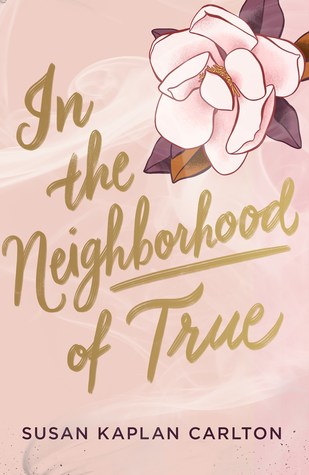
In the Neighborhood of True, by Susan Kaplan Carlton*****

“Shalom, y’all.”

Ruth Robb was born and raised in New York City, but following her father’s sudden death, she moves with her mother and sisters to Atlanta, where her mother’s family lives. The year is 1958. Almost immediately she is faced with a critical choice: should she quietly avoid mentioning her Jewish roots and allow her peers to make assumptions based on her grandparents’ standing in their Protestant church, or should she risk her newfound popularity with candor? My thanks go to Algonquin Books and Net Galley for inviting me to read and review. This book is for sale now.

The family has barely begun to grieve their loss. Everything is tossed into boxes and they leave New York, soon to be embraced by Ruth’s loving grandparents. Their new home, however, is almost too good to be true:  the house is large and luxurious, with a pool; her grandparents are generous and solicitous; their deep roots in the community make for nearly instant acceptance among the girls’ peers. But Ruth’s grandmother, called “Fontaine” within the family, has plans for Ruth and her younger sister, Nattie. They are enrolled in an elite Christian school, and Ruth is sent to private lessons for a “pre-debutante.” There’s a little pink book that serves as a grooming and etiquette guide, and it is specific and proscribed.

What isn’t in the pink book is the synagogue. Fontaine immediately informs the girls that they are, after all, “Half Christian,” but their mother quickly reminds her mother that she is a convert, and the girls are Jewish, period.

The characters are so resonant and believable that I find myself reflecting on the amount of stress that the girls, Ruth in particular, are experiencing. First, they must leave all of their friends, and the culture in which they’ve been raised, behind; their father is gone forever; and now there’s this tension between their loving grandmother, who provides them with everything, and their mother. This is not a dramatic conflict; but it shimmers under the surface constantly. They are a loving family, and they’re civilized. Yet Ruth is torn. But her nearly instant popularity galvanizes her, and she decides not to decide, by skating around questions of church and religion. After awhile her evasions become deception. Her mother is a discreet but unmovable force, with a sort of Jiminy Cricket demeanor: don’t forget who you are, Ruth. When are you going to tell your friends? What do they think you are doing on the weekend? The ante is upped when Ruth falls in love with Davis, who’s a big man on campus.

Things come to a head when the local synagogue is vandalized.

Carlton’s author blurb says that she had a similar experience, although she wasn’t the teenager, she was the mom. No doubt this is responsible for some of the story’s authenticity, but much of the compelling narrative has to be chalked up to excellent writing. There’s never a stereotype, and I never felt I was being lectured. Instead I am absorbed. What the heck is Ruth going to do? And though I am unfamiliar with Atlanta, there are several times when colloquial expressions that have fallen out of use pop into the story, expressions I recall from my early childhood in the 1960s. But the author never leans on pop cultural references; rather, they drop in naturally. It’s smooth as glass.

Sexual references tend toward the general; there is sex included, but not much detail. I include this information for teachers and parents considering including it in their libraries. If in doubt, read it before you present it to the young people in your life.

Since retiring from teaching language arts to adolescents, I have generally avoided reading young adult novels. I’ve been there and done that. But there’s an exception to everything, and I am glad I was given the chance to read this one. Highly recommended.

To Have And To Hoax, by Martha Waters**-***

Oh well.

Martha Waters spans three genres here: historical romance, rom-com, and satire. I like satire, and the other two, not so much. I am rounding my rating up to three stars, because I stepped out of my comfort zone with this novel, hoping for light entertainment; those that enjoy rom-com books may be more enthusiastic than I. My thanks go to Net Galley and Simon and Schuster for the review copy. This book is for sale now.

Lady Violet and Lord James found instant chemistry at a grand ball. Almost as instantly, they were married; then they quarreled and have been estranged ever since. Yet even the stupidest and most imperceptive reader will see that they are still crazy for one another. If one is in doubt, turn the page so the author can hit you over the head with it again. Again. And again.

I enjoy smart satire that leaves something to the imagination. This book tries too hard to be funny. I tried reading the DRC, and when I couldn’t get through it, I checked out the audio version from Seattle Bibliocommons. This made it, if possible, even worse. Overdone prose is made worse by an over-the-top voice actor.

I had been reading too much that was dark and serious, and then the pandemic broke out and I went looking for relief. I found it, but I didn’t find it here.

But again, I have never liked rom-com. If that’s your wheelhouse, you may appreciate this thing more than I do. I pushed through to the forty percent mark; my usual due diligence requires me, if skipping, to then proceed to the eighty percent mark and see if there are joyful surprises that might change my mind. But no.

Fans of the genre may feel differently, but I have to call them as I see them. Not recommended.

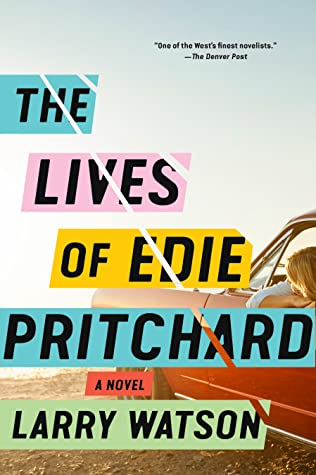
The Lives of Edie Pritchard, by Larry Watson****-*****

It’s not often that a male writer gets it the way that Larry Watson does. My thanks go to Net Galley and Algonquin for the invitation to read and review, as well as the gorgeous hardcover copy. This book will be available to the public tomorrow, July 21, 2020.

Edie’s story is divided into three periods. When we first meet her, she is a young adult, married to Dean. Twenty years later, we find her in a different marriage. The last third finds her a senior citizen. When I saw how the first and second parts were structured, I thought I spotted a formula and that I knew more or less what the last third would look like. I’m delighted to say I was incorrect.

The style in which it’s written is unusual. There’s almost no inner monologue; everything is either action or dialogue. There’s no shifting point of view, either. It’s straight forward and linear. The author takes his time establishing character and setting, and so for a long time, there’s no noticeable plot curve. At about the point where I begin to be nervous, that perhaps I’ve agreed to read and review a book that isn’t very good, it wakes up. I’m not generally a fan of spare prose writing, but this is different.

Edie has married Dean Linderman, whom she dated in high school. He’s a nice guy, but his twin brother Roy is a player. Where Dean is introverted and reflective, Roy is extroverted and aggressive; and one of the ways Roy shows aggression is in trying to seduce his brother’s wife. It never stops. Every single time they are alone together, even for a few minutes, he starts in on her. And every stinking time, she tells him no. Stop it, Roy, I am married to your brother. I love Dean, not you. But getting the guy out of her hair is like trying to herd mosquitoes. And yet, a couple of times I see Edie do or say something that, while not openly encouraging, sends mixed signals, and I think, Aha. Maybe that’s why Roy keeps trying.

 Watson uses nuance and subtlety in a way not many authors do. It makes Edie come alive, because I don’t know what she’s thinking, and Watson isn’t going to take it apart in front of me. I am left to wonder…now why the heck would Edie do such a thing? And while I read, I wonder. And when I am no longer reading, I’m still wondering.

Twenty years later, we find Edie Dunn. She’s married to someone else, and she has a teenaged daughter. Like Dean before him, Gary doesn’t spend a lot of time worrying about what Edie wants. Edie is his wife, and she should do what he wants her to do. And I won’t give any more of this bit away, but once more, Edie surprises me.

Within the last section, Edie’s teenage granddaughter is going to move in with her. Edie’s companion who’s in the car with her asks if she isn’t out of practice with teenagers. Edie says, “It’s like riding a bicycle. Once you’ve fucked up as a parent, you never forget how to fuck up again.” I love this.

When I am sent a physical book to review, as opposed to digital or audio, the book goes into the bathroom. I know that I am hooked if the book comes back out of the bathroom with me at some point. Edie came out at about the sixty percent mark, and after that she didn’t get left alone unless I had to sleep.

The thing about this story that may get in the way of good reviews here is exactly the thing that makes it so good. The way that Roy—and later, other men—follow Edie around and pester her, trying to control her and later, her granddaughter, is repetitious and maddening, and that. Is. The. Point. Though it’s conveyed subtly, we know that Edie is very attractive. And again—I love that we don’t hear constantly about her clothes, her figure, and so on; rather, we know she’s gorgeous by what others say about her, and how they respond to her. And not one living male takes her seriously. They see her, and then they want her, not because they care about her or even know her, but because it would stoke the fires of their self-esteem. And all along, Edie tries, initially, to explain what she wants instead, and not a damn one of them will listen to her. But she does what she has to do, and by the end of the book, I like Edie a great deal.

Those that enjoy strong feminist fiction should get this book and read it.

The Bright Side Sanctuary for Animals, by Becky Mandelbaum*****

Becky Mandelbaum is the real deal. In 2016 she published a short story collection, Bad Kansas, which I read and loved. ( You can find my review of it here: https://seattlebookmamablog.org/2017/09/15/bad-kansas-by-becky-mandelbaum/) And so when I found this debut novel on Net Galley, I leapt at the chance to read and review it. Big thanks to Net Galley, and to Simon and Schuster. This book will be available to the public August 4, 2020.

Ariel and her mother, Mona have been estranged for six years. But when she finds a news item about her mother’s sanctuary having been torched, Ariel knows it’s time to go home, to see what has been lost and what can be saved.

The story is told from the third person omniscient, and we hear from three characters mostly. We start with Mona, whose stress levels have become nearly unbearable. She’s getting too old to do so much work, and she never has enough money. She has just one employee, working on site primarily for room and board. Perhaps this is part of what possesses her when she leaps in her truck in the dead of night to steal the neighbor’s Make America Great Again sign. She wrestles the great big thing into the bed of her pickup, and by now we can see that she is a tightly wound person whose impulse control is just a tiny fraction of what it should be.

Meanwhile, Ariel is concerned, not only about the fire, the sanctuary, and her mother, but also about her relationship. Her boyfriend, Dex—the third of the characters we hear from most– proposes just as she has begun to fantasize about ending the relationship. As the story progresses, we can see that Ariel is the sort of person that runs from her problems, sometimes literally. She accepts the ring and then says she has to go home for the weekend, and no, he shouldn’t come with her. After all, she’ll be right back. Probably.

Mandelbaum does a brilliant job of building believable, nuanced characters and complicated relationships. Five percent of the way into my galley, my notes say, “This one is going to be a thinker.” And it is, in the best sense of the word. It isn’t a pretentious piece of writing by a long shot, and it isn’t full of florid descriptions or challenging vocabulary. Instead, we have characters that are dealing with thorny personal issues that have no obvious solutions. And my favorite aspect of it is the way the mother-daughter relationship, which is the heart of the novel, is framed. Mona has made a lot of mistakes in parenting Ariel, but she loves her daughter and is a good person. Ariel is still learning how to solve problems herself. There’s a trend in fiction writing right now to draw villainous mothers as the sources of protagonists’ problems. It’s close to becoming a cliché. Mandelbaum has steered clear of this canard and created something much deeper and more interesting. In fact, there are at least half a dozen stereotypes that she has dodged expertly. The fact that she has done this in her debut novel suggests that a great career is ahead of her.

I love the way she ends this story.

Don’t deprive yourself of this glorious novel. Highly recommended.