Hypnosis is for Hacks, by Tamara Berry****

Eleanor Wilde is a sham medium, a fraud who’s used her dramatic talents and the trust of her clients to bilk them. But lately things have changed; she has received intelligence from the great beyond, specifically from her deceased sister. As a businesswoman that now resides in a small town in the UK and doesn’t want her neighbors to hate her, she’s shifted most of her business to herbal cures and such. As it happens, this doesn’t keep all hell from busting loose.

My thanks go to Kensington Books and Net Galley for the review copy. This book is for sale now.

Eleanor–you may call her Ellie—is the protagonist in a satirical cozy mystery series, and this is the fourth. I read and reviewed the first two, but somehow missed out on the third. The first two took place in a tiny village where the ruling family lives in an honest-to-goodness castle. She went there, in the first in the series, to conduct a bogus séance, but instead fell in love with Nicholas, heir to the estate. Now the castle is in need of serious repairs. It’s summer, and the castle is hot enough to be uninhabitable, and so Ellie accompanies the elderly Vivian, matriarch of the castle, to the seaside. Her brother Liam, who is visiting, joins them. And once there, all sorts of things go wrong. We have a menacing, possessed doll that reappears in or near Ellie’s room, no matter what she does to destroy it, and a sinister figure from Ellie’s checkered past shows up as well. And of course, of course, of course, Ellie witnesses a murder shortly after arriving, but nobody will believe her.

I came away of two minds about this particular installment. The thing I’ve appreciated most about this series is that Berry’s writing is hilarious, and whenever an obvious plot device is utilized, it’s done in such an over-the-top manner that we can imagine the author winking and guffawing. Nothing here is to be taken seriously. In the past there’s been very little character development, and I was okay with that, because I wasn’t looking for great literature; I was looking for a laugh.

Here I find some changes. There’s less humor, although two particular bits, one involving lobsters and another involving, per the title, hypnosis, made me snicker. But I also find more character development. Realistically speaking, a series can’t last long if there’s no character development, and so I’m pleased to see Berry adding a bit of depth, but at the same time, what I really want is to laugh out loud. We live in tense times, and there’s a growing body of evidence that we live longer if we laugh. A silly, escapist novel that lets us forget current events entirely for a brief while, forget our own troubles, whatever they may be, and sit back and howl at what our clever author has cooked up, is worth more than many can imagine.

Nonetheless, this story is better by far than most of what’s out there within the humor genre, and I recommend it to you. Now…where’s that cat?

Autopsy, by Patricia Cornwell*****

Autopsy is number 25 in the Kay Scarpetta series, the first forensic thrillers ever to see print. This series began in 1990, and I have read every single one, but this is the first time I’ve scored a review copy. My thanks go to William Morrow and Net Galley.

When the series began, Scarpetta was the chief medical examiner in Virginia. When last we saw her, she was working in Massachusetts, but now she’s come full circle, brought back to her old position in order to root out corruption and restore the office to the integrity it held when last Scarpetta was in charge. She didn’t expect it to be easy, and it surely isn’t.

There are long running characters that have been so well developed over the years that I almost feel as if I would know them on the street. Her husband, Benton Wesley, holds a sensitive position within the FBI, and the necessary secrecy and sudden need to pack a bag and go somewhere has led to marital tension over the course of the series, but not so much this time. Kay’s niece, Lucy, is more like a daughter; she has been estranged from her mother at times, a high-strung, self-absorbed woman that looks out for number one every minute of every day. The mother—Dorothy—is now married to Pete Marino, with whom Scarpetta has worked closely for the length of the series, and they live nearby.

At this juncture, new or inconstant readers may wonder if there’s any point to jumping into a book this far into the series. I read it with that question in mind, and whereas you won’t have the background and depth of context that faithful fans possess, you can understand everything that happens here; Cornwell doesn’t burden the reader with assumed knowledge.  And if you are a new reader, likely as not, you’ll find yourself headed to the library or bookstore to pick up others from this series. It’s that addictive.

The only background information that might make a difference is that from the outset, Kay’s whole family (except Dorothy, of course) fears for her well-being. A murder occurs in the area, and the victim is a neighbor of Pete and Dorothy’s. Immediately, there’s this sense of urgency, and it’s more than one would ordinarily expect. A neighbor has been killed; the circumstances are weird, and we don’t know whodunit; everyone is edgy about personal security, and again—especially regarding Kay’s safety. So let me help you out, if you’re new: over several of the most recent episodes, someone has attempted to kill Kay, nearly succeeding more than once, and though the occasional thug has been caught, the schemer behind the attempts is still out there somewhere. The narrative makes no specific references to any of this, which I appreciate. It’s obnoxious when a book costs as much as new books do these days, for the author to insert what amount to advertisements to buy her other books. But for those not in the know: If the beginning seems a little overwrought, that’s why.

Add to this that the old guard is still entrenched in Kay’s workplace, with people whispering behind her back, and her secretary clearly plotting against her. She’s just arrived, but she is on the back foot, trying to find out what’s going on and who can be trusted, and trying to establish her own authority without making enemies unnecessarily. As I read, I find myself urging her to assert herself. Because to me, Scarpetta isn’t a fictional character at all. I believe in this character, and I believe in Benton, Lucy, and Marino, too. I’ve known them longer than a lot of people I see in real life, after all.

Those of us that read a lot of mysteries, thrillers, and so forth become accustomed to timeworn plot devices. I have a little list of things I hate to find in books of this genre, and Cornwell avoids them all. There is no alcoholic protagonist that just wants a drink, a drink, a drink. There’s no kidnapping of the protagonist and stuffing her in the trunk (or backseat, or whatever,) nor does this happen to any of her loved ones. Scarpetta is not being framed for a murder she didn’t commit, nor is anyone she loves.

Instead, we get an autopsy in outer space, supervised remotely by Scarpetta. How cool is that?

One other aspect of this book, and this series, that I love, is that there is just enough interesting information included about forensic investigation without the story turning into some tedious science lecture, as I have found in books scribed by Cornwall’s imitators.

The pacing is swift, the dialogue crackles, and a new character, Officer Fruge, is introduced. Hers is the last word in the book, and for some reason, it made me laugh out loud, a first for this series.

Welcome home, Scarpetta.

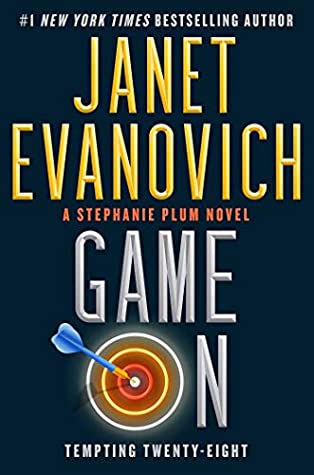
Game On! by Janet Evanovich****-*****

Stephanie Plum has been my constant companion for decades, but she never seems to get any older. We should all be so lucky!

My thanks go to Net Galley and Atria Books for the invitation to read and review. This book is for sale now.

Stephanie is a bounty hunter, working for her cousin Vinnie’s bail bond service. She tracks down no-shows, takes them to have their hearings rescheduled, and collects a commission. Her mother wishes fervently that she would get a normal job such as a bank teller, or just go ahead and marry long-time boyfriend Officer Joe Morelli, and keep house and raise kiddies. But Stephanie is long on independence, and she’s short on marketable skills, and so this is what she does. And we readers are well aware that she wouldn’t be half this hilarious as a housewife, so we cheer her on.

In an interview, author Evanovich said she had lit on the idea of a bounty hunter protagonist because the writer doesn’t need a background in legal matters the way that she would if she used a cop, detective, or lawyer. The primary skill required of a bail bonds enforcer is lying, and she felt she had a good grasp of that one.

You gotta love it.

There have been a few wobbles in the series, and a moment (long ago) when I thought perhaps it was played out. But like her intrepid protagonist, the author rallied and came back stronger than ever.

Can you read this book if you haven’t read any of the others in the series? Yes. Yes, you surely can; but you are most likely going to want to go back for the rest once you do so.

There are a few things that strike me as I read this one. I suddenly find myself wondering why Stephanie doesn’t seem to have women friends. She’s lived in Trenton—in the Burg—her entire life, so shouldn’t she have a few lifelong pals? But by the end of the story, I realized that her work buds are her go-to girls. Lula gets into a scrape and leaves what little she has to Stephanie (but of course, Lula pulls through. I don’t feel like this is a spoiler; since when would a riotously funny writer like Evanovich off a main character?) Connie is a distant relative, but she’s also a friend.

I also find myself, like other reviewers, wondering about the sanitized language and decreasing vocabulary levels. We’ve been drifting in this direction for awhile. At the start of the series, profanity was used by the people and in the situations where you’d expect to find it. The overall language level was accessible to anybody that finished eighth grade. Over the last several episodes, however, it’s been drifting downward. Now, apart from one “damn”, I found nothing, although the euphemisms are stellar (“What the fork,” “What the Hellman’s Mayonnaise,” “Son of a bagel.”)  And the overall vocabulary level is now down to about fifth grade. If it goes any lower (see the author’s other series,) I may not be interested anymore, but as it stands, it’s fast, it’s snappy, and I’m in.

The usual elements—escorting Grandma Mazur to viewings at the mortuary; exploding cars; men surprising Stephanie when they let themselves into her locked apartment; dinner with Stephanie’s parents; a geeky witness, or victim, or possibly even an offender, that Stephanie takes under her wing; and the red-hot Joe Morelli are all present and accounted for. Stephanie’s mother has been drinking heavily every time Stephanie gets into a dangerous scrape, and Evanovich has been toying with some character development in her direction. I hope she follows through.

The tension of Stephanie trying to decide between Morelli and the mysterious Ranger is over, for now, at least, and it was getting old, so I applaud this development. She knows that Ranger will never marry her, and there’s a lot he’ll never tell her. She knows Morelli. They grew up together, and they understand one another. Marriage, maybe not yet; but Joe is the one. She’s tempted by others in this installment, but for once, she behaves herself. Good.

Whereas this series isn’t the magnificent literary accomplishment attained by some mystery Grand Masters, and it doesn’t try to be, I rate it as five stars in the humor genre. It made me laugh out loud on page two, and though I read quite a lot of books each year, those that have made me howl this year can be counted on one hand. It’s a more valuable characteristic than some might guess, especially during these tense times.

Highly recommended to those that need a good laugh.

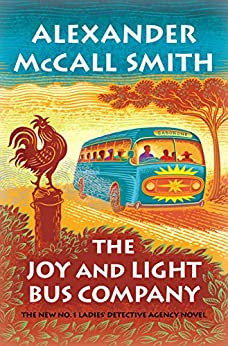
The Joy and Light Bus Company, by Alexander McCall Smith*****

“Connections with others were what made life bearable…We all need reassurance, she thought. We all need people to tell us that everything is going to be all right, even when it is not, and that we should not worry, even when we clearly need to be concerned about something. We are only human, after all, and that is why reassurance is so important to us. That is undoubtedly well known.”

I am not generally fond of cozy mysteries, yet I love this series hard. I told a friend—who works as a therapist—that the #1 Ladies Detective books are the cheapest therapy on the planet, and she agreed.

My great thanks go to Edelweiss and Penguin Random House for the review copy. This charming tale will be for sale November 16, 2021.

As is usual, we have two equally important story lines woven into a single narrative. The detective story has to do with a client—a most unpleasant fellow, but a client, nonetheless—that has come to the agency looking for help with his father’s will. His father is still alive, but not entirely himself anymore, and is planning to leave his valuable home to his nurse. Mma Ramotswe and Mma Makutsi are enlisted to dig up information about this woman, and to see if anything can be done to reverse his father’s decision. The second storyline concerns Mma Ramotswe’s husband, Mr. J.L.B. Matekoni, who has decided to invest in a dubious-sounding scheme to turn secondhand buses into a bus service. Mma Ramotswe is horrified, because in order to invest the necessary sum, it will be necessary to take out a bank loan, using the building that houses the businesses—Matekoni’s auto repair, and Ramotswe’s detective agency—as collateral. There’s also a smaller thread involving human trafficking of small children locally, and as usual, it is dealt with tidily and in a most entertaining fashion.

The book begins with Mma Ramotswe wondering what makes men happy. This is a tricky way to start a book, given the current social climate especially. Many readers, women in particular, are sensitive to having a male author write about a female character’s fervent longing to make her husband happy. The internal monologue could use some tightening up here, and that’s unusual for this writer. However, this passage is near the beginning, and once it’s done, the rest of the book more than makes up for it.

What is the alchemy that makes this series so successful? Certainly at the start, there was the novelty. It’s unusual for an English-language series to be set in Botswana, or at least, it was when this one began. But it takes a lot more than that to sustain a series over so many years.

For me, the gentle humor goes a long way. I also appreciate the depth of respect for working people that shines out of every book in this series. Mma Potokwane, who runs the orphan farm and is Mma Ramotswe’s closest friend, reflects on the squabble over the old man’s will. “Rich people are always forgetting that they are only rich because of the work of others. They do not dig their money out of the ground, you know, Mma.”

Also? There are a lot of us out here that are also “traditionally sized,” and we love seeing lovable, successful characters that look, to some extent, like ourselves.

There’s the notion that people are inherently good—try finding that in your average noir detective story—and also, the idea that ordinary people can and should intervene to the best of their ability when they see wrongdoing. “Sometimes those people simply did not see what others could see; sometimes their hands were tied; sometimes they felt threatened. And all of that meant that there were times when it was left to people like them, a private detective and the matron of an orphan farm, to do what had to be done.”

This story, however, is singular in that both Mma Ramotswe and Mma Makutsi manage their husbands through deception. Grace Makutsi reveals that she gets her husband, Phuti, to take his vitamins by stirring them into his breakfast tea without telling him. Precious Ramotswe, when unable to persuade Matekoni not to apply for the bank loan, sneaks around behind his back, looking for a way to kill the deal without his knowing it. Neither of these things leads to marital disaster, yet I find myself wondering whether these things may come back on them in a future installment.

The fact that I find myself feeling concerned about the marriages of two women that are fictional, fictional, fictional says a great deal about Smith’s capacity to develop characters with depth and breadth.

I can talk about this series, and these characters, and this book all day. I’ve already come close to it. But the best way for you to appreciate it is to get this book. It comes out in a week, so I suggest you order a copy now. Highly recommended.

Unfinished Business, by J.A. Jance*****

Judith Jance has done it again. Unfinished Business is the sixteenth in the Ali Reynolds series; not only does she weave a compelling, tightly plotted tale, but she may have broken new ground with the role technology plays in solving crimes within the storyline. Add a sprinkling of social justice issues, and what emerges is an unmissable novel. My thanks go to Net Galley and Gallery Books for the review copy. This book is for sale now.

Ali is a former journalist, but now she and her husband, B. Simpson, own and run a cyber security firm called High Noon. B. is a nice enough fellow, but we see very little of him. Most of the time he is away on business, leaving Ali to flex her badass crime solving muscles, and providing her with a healthy chunk of disposable income that makes it easier. Other continuing characters are Cammie and Stuart; Frigg, the AI entity operating out of High Noon; and Bob and Edie Larson, Ali’s parents. Our two new characters are Harvey “Broomy” McCluskey, who is a serial murderer, and Mateo Vega, a second-chancer newly out of prison and in High Noon’s employ.

The best long-running mystery series are ones that go deep into the character of the chief protagonist and sometimes others, as well. When you think about it, there are only so many interesting crimes; only so many credible motives; and only so many believable plots an author can spin that involve only the mystery at hand. What makes the most successful ones stand out is the investment the reader has in the character and her life. Jance works her characters like a champ. Within this one, we have multiple interesting side threads. Ali’s parents are aging, and although she is more than willing to support them and advocate for them, they don’t tell her everything. They are independent and intelligent. They treasure their dignity, and their privacy. Sometimes this combination spells trouble, and so it is here. We see Ali trying to juggle the ever-changing aspects of the business while B is out of town, along with health issues facing her father, who won’t talk about them; one of her children gives birth; and then there are issues with her employees.

Point of view shifts between chapters, and so we first meet Harvey, who is a resentful, entitled jerk who has murdered his mother and gotten away with it. Unfortunately, Harvey is also a tenant of High Noon’s, and he’s in arrears on his office rent. No one at High Noon knows that he is dangerous; they figure he’s a deadbeat, and he has to go. Ohhh, honey, look out!

We also meet Mateo. Mateo has spent 16 years in prison for a murder he didn’t commit. His public defender told him the plea deal was the safe bet, and so he took it. He could have been released early if he’d expressed remorse, but nobody and nothing could make him say he did it when he didn’t, so he rotted there for his entire youth. But while inside, he continued to study technology, and earned an online degree. Now he’s released, comes out with skills, and is hired by High Noon.

I love the way Jance uses all of these characters, and the thread involving Cami is particularly interesting.

I read and reviewed most of the recent books in this series, and in number 13, I called this author out for making all of the bad guys in the story Latina or Latino, and all the good guys Caucasian, except for Cami, who is Asian. It’s great to see how she’s turned it around. The social messages here—the broken prison system; issues with keeping the aged safe; the difficulty former prisoners face in starting a new life; and of course, violence against women—are all progressive ones, and none of them hijacks the plot or slows it in any way. In fact, this novel is among Jance’s best, and that’s a high bar to meet.

Highly recommended.

Lightning Strike, by William Kent Krueger*****

Lightning Strike is the prequel to William Kent Krueger’s successful, long-running mystery series based on a Minnesota sheriff, Cork O’Connor. This is my introduction to the series; my introduction to this author came in 2019, when I read and reviewed This Tender Land.  I read this free and early, thanks to Net Galley and Atria Books. It will be available to the public Tuesday, August 24, 2021.

In the prequel, Cork is twelve, and he’s on a camping expedition with his friend Jorge when they come across a body hanging off the maple tree at Lightning Strike. What’s worse, it’s someone they know; the corpse is that of Big John Manydeeds, the uncle of a close friend. Cork’s father, Liam, is the sheriff, and although he’s been told to let the adults investigate this horrific event, Cork keeps coming up with useful bits of information.

Seems he has a knack.

One of the most admirable aspects of Krueger’s writing is the way he folds his setting, characters, and plot seamlessly to create an atmospheric stew that’s impossible to look away from. The story takes place in the far northern reaches of Minnesota in (fictitious) Tamarack County, near Iron Lake and the iron range, as well as the Ojibwe (Chippewa) Indian Reservation, and the tension and conflict between tribal members, which include Cork’s mother and grandmother, toward Caucasians, which include Liam, are a central feature of this mystery. Tribal members insist that Big John would never have taken his own life, and even had he done so, he would never done it at this sacred location. At first they aren’t taken seriously, but as events unfold, it becomes increasingly clear that they are right. This was no suicide.

The key suspect in Big John’s murder proves to be the town’s wealthiest citizen, a tightfisted, overtly racist, elderly Scotsman that owns practically everything. He’s a suspect too soon to be the actual killer, I figure, and I think I can see where the story is headed, but without giving anything away, I have to tell you, Krueger introduces all sorts of twists and turns I don’t see coming, and they aren’t far-fetched ones, either.

There is dark foreshadowing all over the place, and the tension and outrage that exists between the tribe and law enforcement—well, the sheriff, really—grow to ominous proportions. Liam insists on examining facts and hard evidence; the Ojibwe are eager to include portents and messages from the great beyond. They want that nasty rich guy arrested now, if not sooner, and when Liam tells them that it doesn’t work that way because circumstantial evidence isn’t enough, that hearsay can’t win a conviction, they scoff and point out that when the suspect is Ojibwe, those things are always more than adequate. And again, they have a point. A local business owner who is Ojibwe tells him, “Sheriff, you better believe every Shinnob on the rez is watching you right now. Every step you take.”

While Liam is busy with his work, nobody is paying much attention to the boys; Cork, Jorge, and their friend Billy Downwind, who is related to Big John, poke around some more, and what they unearth is both shocking and dangerous.

Lightning Strike owned me until it was done, and though I rarely do this, I’m headed to the Seattle Bibliocommons to find the next book, which is technically the first in the series, because for this series and this writer, once cannot possibly be enough. Highly recommended!

Thief of Souls, by Brian Klingborg**-***

I was invited to read this mystery, and my thanks go to Net Galley and St. Martin’s Press for the review copy. I am always looking for something a bit different, and this sounded like it would be. And it is, but it’s not.

Here’s what I mean. A woman has been murdered in a particularly ugly, grisly manner. A hot shot cop who’s been buried in a backwater where nothing ever happens gets the case. Because he is clever and ambitious, he digs more than most cops might, and voila! Turns out this could be the work of a serial killer! But there are higher-ups in the force that would rather have a quick solve than an accurate one. Obstacles! And next thing you know, the cop is in danger too.

Yawn.

Okay. Now, take this same tired thread and drop it in China. With resonant characters, compelling use of setting, and some word smithery, it might come alive, and in the hands of a master storyteller, we might not even notice that the story’s bones are nothing new. Instead, I came away disaffected and mildly depressed. I quit at the sixty percent mark and didn’t even go back to look at the ending, which for me is unheard of, particularly in this genre.

I am no fan of the Chinese government, but the steady flow of negativity wore me down, not to mention the lack of strong character development. We know right away that Lu is a rebel, and as the story progresses, we also know that Lu is a rebel. At the start, we sense that the government, both local and national, is corrupt; as we near the climax, we also know that the government is corrupt.

What, in this story, is worth saving?

I thought it would be fun to see how an investigation works in China, and what sort of rights—or lack thereof—form the contours of the legal system. I came away sensing that the author doesn’t know all that much, either. There’s no Bill of Rights there, surely, but I knew that much going in.

I don’t have to have lovable characters to enjoy a mystery, but there does, at least, have to be someone interesting. Give me a complex, well-developed villain, for example, and I’m a happy camper. But there’s none, and I’m not.

So there you have it. Thief of Souls is one more sad case of an intriguing book cover and title promising more than it can deliver. If you want this book now, it’s for sale, but I would advise you to get it cheap or free unless you have a big stack of money sitting around that you were thinking of burning in the backyard. Otherwise, maybe not.

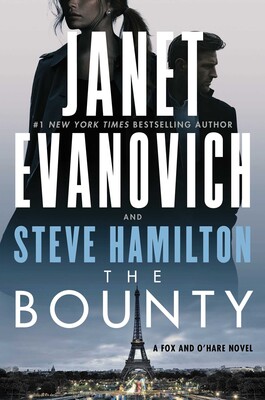
The Bounty, by Janet Evanovich and Steve Hamilton**

This book is the seventh in the Fox and O’Hare series. Our protagonists are Kate O’Hare, who is an FBI agent, and Nick Fox, a conman. My thanks go to Atria Books and Net Galley for the invitation to read and review. While this book isn’t my cuppa, there will be readers that enjoy it. One way or the other, it goes up for sale on Tuesday, March 23.

The first six books of this series were cowritten by Evanovich and Lee Goldberg. There’s no explanation for why Goldberg is out and Hamilton is in, but the switch may account for some of the inconsistencies between the earlier books and this one. An example: Kate and Nick were tight in the earlier stories, and yet somehow, they can’t stand each other now. There’s no reason given for the change, so I have to assume it’s an authorial quirk; I have to say, not an original one.

The premise is that the pair are hot on the trail of a massive cache of Nazi gold; also pursuing this treasure is criminal organization known as The Brotherhood. Kate and Nick are charged with finding the gold and bringing The Brotherhood to its knees.

Before they are even off the plane, I have questions. For example, since when does the FBI have authority to do this sort of thing abroad? In cases of terrorist attacks on American citizens, sure. But treasure hunting on foreign soil? And since when does any law enforcement body send two officers to bring down an entire organization? You can see my point.

But this is the sort of story that one can only appreciate by suspending disbelief and buying the premise. The whole thing has something of a James Bondian flavor to it, consisting of large amounts of chasing, hiding, climbing, leaping, and in between, dialogue, dialogue, dialogue. There’s a fair amount of derring- do; there’s a parachute, a grappling hook, lock picks; you name it. The element that distinguishes it from other such books is that both Fox’s and O’Hare’s fathers get involved.

For me to enjoy a novel from this genre, I need either a well-crafted story with literary merit, including character development, (i.e., James Lee Burke, Sue Grafton, John Connolly,) or else some form of well-executed humor. There are a fair number of wonderful satires out there, and of course, there’s the series that made Evanovich famous, the Stephanie Plum numbered series, which have hit more than they’ve missed and almost always make me laugh out loud more than once. In reading The Bounty, I don’t find these things.

However, not every reader has the same preferences that I do. This is a fast read with accessible vocabulary—my inner snark popped out at one point, and my galley has a note when the word “independence” is used: “Wow, four syllables!”—a linear story line, and an easily followed plot. I could see hauling something like this to the hospital when you’re going to have surgery and your attention span won’t be up to par. And then there’s the consideration of interest. Some want to read action, action, action, and if the story were more realistic, we’d probably be reading about paperwork, reports, and endless months cultivating a contact that proves to be useless. Not entertaining.

Even so, I can’t recommend this book for general audiences, or even for those that like the series.

The Unwilling, by John Hart*****

This one was worth the wait! John Hart’s new historical mystery, The Unwilling, is simply magnificent. My thanks go to Net Galley and St. Martin’s Press for the galleys; this book will be available to the public February 2, 2021. Those that love excellent fiction should get it and read it.

The French family is troubled. The father is a cop in their small hometown in North Carolina; the mother, Gabrielle, has some sort of emotional disability. Bipolar? Anxiety disorder? Who can say. All we know is that her nerves are shot, and she loses it quickly and easily. The couple have three sons; the first two are twins, but Robert, the golden one, is dead, killed in Vietnam. Jason went to ‘nam too, and rumors say that he killed 29 people there in his first year. He is rumored to be bad news and has already done a stretch in prison. That leaves the youngest, Gibson, known as Gibby. Both parents are possessive of him. As adolescence sets in, it begins to chafe, the way he is overprotected, and now that he’s a high school senior, he’d like a little more room.

And then Jason is released, and he comes home. He isn’t welcome at the family manse, so he stays elsewhere, but he wants to spend some time with Gibby before he blows town.

The title is a chewy one. Initially, I associate it with the daredevil stunt that some high school seniors—mostly boys—consider a rite of passage. It involves jumping into the quarry from a very high bluff; make the jump wrong, and you’ll be dead when you land. Gibby doesn’t jump. Jason does.

The basic framework of the story has to do with crimes Jason has done time for, and others that are committed while he’s in town. A girl he’s spent time with is viciously tortured and murdered, and many in the community make assumptions. But in reality—and we know this early on—he is being framed by a man known as “X” in prison. Truth be told, X is actually the weakest element of the story, and he’s mostly superfluous, but since this is supposed to be a thriller, the thread involving him adds suspense, particularly at the end. The climax is something else again.

But the most interesting aspect of the narrative has to do with the family, and by extension, one could say, all families. Over the course of time, a family’s story is told, and eventually labels develop. The small town setting in a pre-internet era makes this especially true, since most people’s interactions are limited to those that live in the same vicinity. And so, Robert French is the tragic hero, cut down in his prime while fighting for his country; Gibby is the baby of the family, a good kid, a good student; and then there’s Jason. Not long after the murder, Detective French speaks with the medical examiner about Tyra’s murder, and he asks the ME what would make someone do this; not just murder, but torture and mutilate. And the ME tells him that although it’s not the accepted clinical expression, “People like that are born wrong.”  And though French is reluctant to say such a thing about his own son, he wonders if he should accept this as true. His wife, mother of all three sons, tells him, “Gibby is all that matters.”

But as the story progresses, we see that there’s more to this story; a lot more. Jason has simply given up trying to defend himself. Refusing to do so is why he spent time in prison. When the world gives up on you, why try? To be sure, he’s no innocent, sad-eyed puppy. He’s seen things, and he’s done things. But people are complicated, and when we try to drop them into neatly labeled boxes, we shut ourselves off from learning details that don’t fit the picture we’ve painted.

For me, this story was less about solving a crime, and more about the characters. I was thrilled that the main story wasn’t about Robert. I’ve read too many novels lately that focus on the dead sibling, and it’s becoming trite. But Hart is a seasoned author, and he doesn’t drop into that well-worn channel. Instead, we see why various well-crafted, complex characters think and act as they do. Reading it, I find myself thinking about my sisters, and the small ways in which we developed labels as children and young adults; happily, none of us was labeled the bad seed, but if we’d been boys…? And I think also of my own children. For a brief, terrible time, I saw my eldest as that person, the one dragging his sister into trouble. Later, much later, I learned it was actually the opposite, but he figured it was better if one of them was still in good standing, and so he took blame that wasn’t entirely his. It’s not a great feeling, but at the same time, my own experience made this story more interesting, and I’m willing to bet there are a great many other readers that will read this book and think about their own families as well.

There are appealing side characters here, and the most compelling is Gibby’s best friend, a kid from the wrong side of the tracks who wants to make good.

So who is the unwilling one? Is it Gibby, for not jumping off the bluff? Is it Gabrielle, for not entertaining the possibility that her son, Jason, deserves more than she is willing to give him? Is it Detective French, for not being willing to completely give up on him? You can take this title in a lot of different directions.

Hart’s literary prowess shines here. It’s not always an easy read; during the more violent patches, I took it in small bites. I received both the print and audio galleys, and I moved back and forth between them, leaning more toward the audio, whose reader, Kevin Stillwell, does an outstanding job; but at times I forgot something, or wanted to check a detail or highlight a quote, and then I dove into my digital review copy. You can go either way without fear of disappointment.

Highly recommended.

Serpentine, by Jonathan Kellerman****

This is the 36th entry into the Alex Delaware series, and it’s still going strong. Lucky me, I read it free. My thanks go to Net Galley and Random House Ballantine for the review copy. It will be available to the public February 2, 2021.

Milo Sturgis, the only gay detective in Los Angeles, has been ordered to take up a very cold case. Money talks, and big money talks loudest. A massively wealthy young woman wants to know what really happened to her mother, and who her biological father was. Ellie Barker was raised by her stepfather, who left her everything, and now that he’s gone, there’s no reason not to go digging for information about the things he didn’t like to talk about. Milo does an eye-roll and reaches for his phone. He thinks it would be better to have a psychologist along, and so once again, Alex joins him on the case.

The case is a complex one, and it also holds a lot of surprises, especially at the end. There’s a side character named Winifred Gaines, “equine laugh” and all, that I enjoy greatly.

I’m going to use this opportunity to share some reflections on the series as a whole. At the outset, clear back in the single digits of the series, the focus was mostly on Alex, and on children. Since Kellerman is a child psychologist, this format gave him an excellent chance to showcase his professional knowledge by incorporating troubled children or adolescents into the plot. I always learned something when he did this, and it was riveting.

Over the course of the series, children have become thinner on the ground. Perhaps this is because Kellerman has used up his reserves, but I don’t think so, somehow. It’s a mighty rich field, and as far as I know, he has it all to himself in terms of long-running series. This time, there are a few references to how children might behave under particular circumstances, and there’s a brief mention of a custody case Alex is working on, which is not central to the plot, but I nevertheless learned something just from the tiny little fragment he snuck into the story. I fervently wish that he would incorporate more child psychology and less kinky sex into his series now. If that makes me sound like a bluestocking, I’ll live with that.

What he has done that I like is build Milo into a more central character. Earlier in the series, Delaware was the central protagonist, and he and his girlfriend Robin—the sort of girlfriend that seems more like a wife—had some ups and downs. They separated at one point, then reunited. It did make them seem more like real people to me. Now, both of them are static and bland, but they provide a neutral backdrop for us to see Milo in action. And I have to admit, it works for me. Right from the get-go, Milo, who has a large appetite, comes lumbering into Alex and Robin’s kitchen, flings open the fridge, and starts making himself the mother of all sandwiches, and I realize that I am smiling widely. What an agreeable character! There’s a point about a third of the way in, where another guy stands up and Milo takes his seat, and “the couch shifted like a lagoon accommodating an ocean liner.” I just love it. There are a couple of allusions toward the end that hint that Milo may be experiencing some health issues that are common to large folk, but there’s no way that this character will die; not unless Kellerman wants to kill of his protagonists as part of an authorial retirement.

When all is said and done, this is a solid mystery from a solid series. Can you read it as a stand-alone? You can. However, you may become addicted and find yourself seeking out the others as well.

Recommended to all that love the genre.