
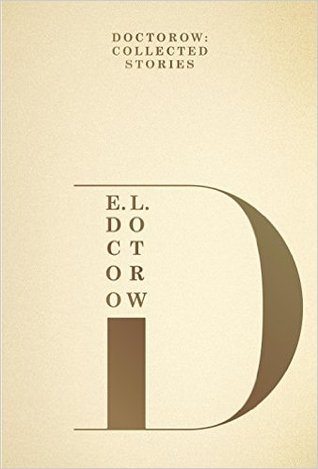
 EL Doctorow died last year, and the literary world—well, at least the English-speaking part of it—mourned. I know I did. He was one of the finest writers ever to grace the planet, and so when I spotted this collection of stories, even though I understood that I had probably read most or all of them already I snapped it up. Thanks go to Net Galley and Random House for the DRC, which I received free in exchange for this honest review. The collection will be available to the public November 1.
I am bemused by “The Writer in the Family”; I had read it before, but it’s worth reading again. Families are complicated, and Doctorow deftly creates a deeply dysfunctional dynamic with this one. Check out the premise:
“In 1955 my father died with his ancient mother still alive in a nursing home. The old lady was ninety and hadn’t even known he was ill. Thinking the shock might kill her, my aunts told her that he had moved to Arizona for his bronchitis…And so it came about that as we mourned him in our stocking feet, my grandmother was bragging to her cronies about her son’s new life in the dry air of the desert.”
But Grandma can’t understand why her son isn’t writing to her; this will never do. Thus the aunts approach the protagonist. “You’re the writer in the family,” they open, and then present the obligation to him, that he must forge a letter to Grandma from his late father. The aunts will go to the nursing home and read it aloud to her; all he has to do is write something. And of course one letter isn’t enough; there must be more, more, more, and so even as he is grieving his father’s loss, our protagonist, the good son, nephew, grandson that doesn’t make waves, is required to plagiarize one letter after another in his father’s name, until a shift alters the equation.
Because Doctorow wasn’t just any writer, I visited his Wikipedia page before writing this review, and I learned that his first name was Edgar and that he was named for Edgar Allan Poe; he was expected to become a writer. I trust his parents were satisfied. At the same time, I found myself wondering how many times he had been told that since he was the writer in the family, it was up to him to do this, that, the other. All speculation, of course, but they say to write what you know, and perhaps to some extent, he did.
On my actual bookshelves, the ones made with wood and that have books made of cardboard, cloth, and paper on them, I have half a shelf devoted to this writer’s work, and so when I downloaded this DRC, I went and retrieved the collection of his short stories that I already owned (and paid for), All the Time in the World, which was published in 2011. I wanted to see what difference there was. I found that this new collection has two stories I hadn’t read before, and so that was where my focus began. For those that also already have this author’s complete works up to now, the new short stories are “Baby Wilson” and “Child, Dead, in the Rose Garden”. The other difference is that the short story on which his outstanding novel The Waterworks is based is presented here. That one is short indeed, and it’s strong enough that it’s easy to see why he selected it to expand into novel form (which I highly recommend).
Ordinarily I would say that I’d have been annoyed had I paid full jacket price for this one, with a dozen reprinted short stories I already own; the premise for a novel I already own; and two lonely stories that are new to me. But this is Doctorow, and so my rules are different. Were I not a book blogger and able to get a DRC, I would probably wait for this one to turn up in used bookstores so that I could buy it on the cheap, but one way or another, I would have to have it. And to be sure, both stories—though maybe not good choices for the pregnant reader, given that they involve a dead child and an abducted newborn—are absolutely brilliant. Baby Wilson in particular builds irresistibly and is a masterpiece, but the voice in the Rose Garden story is guaranteed to produce chills.
I also reread my old favorites, among them “Walter John Harmond”. Whoa.
As always, Doctorow’s writing is hyper-literate. If you try to read this while doing something else, you will be lost, and I don’t recommend it to anyone for whom English is not the mother tongue unless the reader is so steeped in the language as to be comfortable with heavy literary fiction.
Don’t try to skim; savor it.
Highly recommended to the fluent reader that loves great literary fiction.
 Clifford D. Simak wrote fiction, mostly science fiction in the form of short stories, for more than fifty years. Thanks to Net Galley and Open Road Integrated Media, I’ve been binge-reading for the better part of a year. I received this DRC, as I did the others, in exchange for an honest review. This is my fourth Simak collection; most of its stories are brilliant and have stood the test of time, though a couple of them haven’t aged as well as the rest.
 Many people don’t know much about Cuba, the tiny island nation a mere 90 miles from the coast of Florida. The American media has distorted the Cuban Revolution for as long as I can remember. Before the revolution, which took place in 1959, Havana was like Bangkok, a place where little girls prostitute themselves so they won’t starve to death, where wealthy visitors can experience every pleasure, innocent or corrupt, known to humanity but where most citizens have little chance of even having their basic human needs met. Cuba’s alliance with the Soviet Union (USSR) helped the Cuban people defend themselves from US efforts to overthrow the revolutionary government, but the alliance also led to a period of Stalinist repression that darkened artists’ worlds for a period of time. Randall discusses all of this in her introduction. Following the period Cubans call the Rectification Period (reference mine), Stalinist practices were peeled away, and more freedom of expression created a more hospitable environment for artists, in addition to strengthening the revolution itself. In Cuba art is not privately sold as a general rule, and artists receive a salary for what they do, paid by the Cuban people.
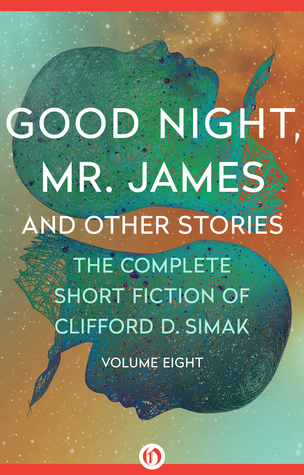 Simak was a prodigious writer of science fiction during the middle of the twentieth century; he was the third Grand Master of the Science Fiction and Fantasy Writers of America, and won numerous other awards, among them the Nebula and multiple Hugo Awards. His short stories are being republished digitally, and as fast as Open Road Integrated Media can publish them, I snap them up, having already read two volumes; this is volume eight. Thanks go to ORIM and to Net Galley, from whom I received a DRC in exchange for this honest review.
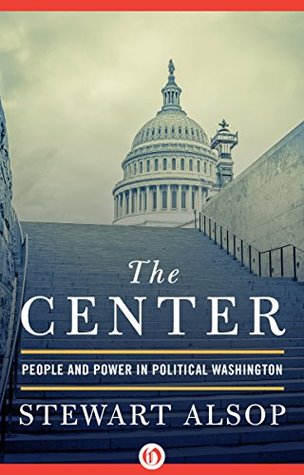 Alsop’s book is a collection of essays describing Washington, DC as it was in the 1960’s. Everything here was written then, so it’s a chance to jump back in time and see what the media—and this reporter in particular– thought was appropriate for mainstream Americans reading the news of the day. I was invited to read and review this book thanks to Open Road Integrated Media and Net Galley in exchange for this honest review. I always hate to pan a book when I’ve been invited; it sounds as if I am insulting the host after eating at his table. However, the truth is the truth, and I see this title as fitting a narrow niche audience, but not so much the general public.
 I like short stories. My Goodreads library tells me I have munched my way through 89 collections and anthologies; yet I can tell you that there is nothing even remotely similar to what Hale offers here. Thanks go to Simon and Schuster and Net Galley for permitting me to view the DRC for the purpose of an honest review. You should get a copy May 17, 2016 when it is released, so that when it is immediately banned by various school boards you will know what they’re screaming about.
 I like short stories. My Goodreads library tells me I have munched my way through 89 collections and anthologies; yet I can tell you that there is nothing even remotely similar to what Hale offers here. Thanks go to Simon and Schuster and Net Galley for permitting me to view the DRC for the purpose of an honest review. You should get a copy May 17, 2016 when it is released, so that when it is immediately banned by various school boards you will know what they’re screaming about.
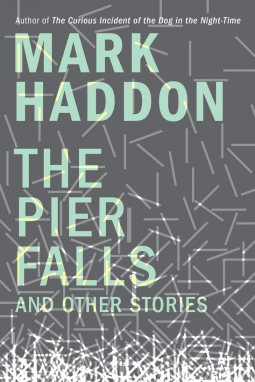 Mark Haddon has already left his mark on the world with his well known novel and play, The Curious Incident of the Dog in the Night-Time. I haven’t read that book but I will now, because this new collection is impressive. Thanks go to Net Galley and Doubleday for the DRC, which I received in exchange for a fair and honest review. At times like this, when I get to review stellar writing, it’s a great pleasure to do so.
 I received this DRC free in exchange for an honest review. Thanks go to Net Galley and Open Road Integrated Media for letting me read it; Donald won the Pulitzer for his Lincoln biography, and I was sure this series of essays written for the purpose of dismantling myths surrounding the most revered president ever to occupy the White House would be hidden treasure rediscovered. What a crushing disappointment.
 This is the second time I’ve been fortunate enough to get a DRC of Clifford D Simak’s short stories, courtesy of Net Galley and Open Road Integrated Media. (The last collection was titled We Install and Other Stories; I have reviewed it also.) Simak’s short stories are my kind of science fiction, the old school variety where there are no clever double entendres intended for–oh, for example–programmers that write obscure, difficult types of code. No, this is the stuff that is born of a fertile imagination and an excellent facility with words, and I enjoyed it start to finish, skimming nothing. And it’s for sale now, so you can get your own copy.
