
 Since the enormously popular movie based on the story of the Von Trapp family was released 50 years ago, numerous books have been published about the family, the movie, or both. This reviewer tried reading Mrs. Von Trapp’s memoir many years ago and found it surprisingly dry. Not so with this humdinger by Tom Santopietro. When it comes out in February, you may want to read it even if entertainment history is not usually of interest to you. Because after all, The Sound of Music is not just any movie! Thank you, thank you to Net Galley and St. Martin’s Press for providing the ARC so that I could check it out and report back prior to the release date.
That said, if your entire life has been spent sad and deprived, or with your nose to a video game or hiding under a rock and so, somehow, you have never seen this movie, watch the movie first. It is a full three hours long, and not a single moment is wasted. In the tradition of Rogers and Hammerstein, the music forms a part of the narrative, rather than something inserted in between lines of a story which slow it down. Painstaking care was leant to avoid having a moment when the audience would collectively think, “Ho hum, I can see we’re about to burst into song here.” In fact, musicals were not much in fashion anymore, and religious films, which had enjoyed popularity just prior to this one, were now considered old and outdated. Extraordinary effort was taken to engage the audience, and it shows.
One reason it was even considered, odds being what they were, was that the stage version of The Sound of Music, which starred Mary Martin as Maria, had sold tickets like hotcakes. The possibility of a successful motion picture was intriguing. There was no way to use Martin for the film, though; she would have been past the age of fifty years when filming began, and things that can be obscured or disguised on stage tend to show up on camera. There could be no painted backgrounds for film—how cheesy! An entirely new script, with two additional songs added by the original composers, made it much more appealing than the stage version. A lot of money went into making this show work, and it was money well spent.
How the deal was struck to make the movie is explained thoroughly without trying the reader’s patience without a lot of extraneous or uninteresting detail. Each time I thought perhaps I was getting too much information—such as back-stories on the behind-the-scenes specialists—the narrative would lead from there into the aspects of the film that were their particular contributions, and then I would understand why I needed to know about that person. The creator of that gob-smackingly gorgeous wedding dress? Oh, hell yes! The choreographers who put together the whole nine-minute Do-Re-Mi music video…oh, yes I guess that was pretty amazing, so yes! And behind all of it was the genius of Robert Wise, a producer and director I had never even especially noticed before, but now will never forget.
I loved walking through the casting roster. Hmmm, who should play Maria? How about Angie Dickinson? (If you are old enough to remember her, you’ve got to find this pretty amusing.) Mia Farrow? She would’ve had the job if she could’ve sung better. Doris Day had a red-hot career going, but she turned this one down cold, accurately pointing out that her resume had been built by being the quintessential all-American girl, and just how was anyone suddenly going to think she was an Austrian nun? Point well taken.
Some of the others were fun, too. How about Yul Brynner as the captain? He really wanted that job. NO. And so it goes.
Interwoven throughout are the real family Von Trapp. Once she had accepted the deal and signed on the dotted line, the real “Sister Maria” was every bit as outspoken in real life as her fictional counterpart. In fact, she was so outspoken in her limitless suggestions as to how the film could be kept more in keeping with events as they unfolded that finally, a letter was sent off to her explaining, for once and all, that the movie was based “loosely” on her own story and was not intended to be a documentary. Stay out of the way; we’re making a movie here!
Which scenes were shot on a Paramount stage, and which were on location? Sometimes the difference is a matter of angle, with scenes being freely mixed. (The Von Trapp manse had several different locations, according to whether one was out front, out back, indoors, or in the gazebo.)
Imagine Maria skipping down that lane singing “I Have Confidence”…with fifty or so cameramen and other personnel following closely. And didn’t she make it all look easy? A clue: it wasn’t. That woman had an unstoppable work ethic!
And what of the Von Trapps now? Once they emigrated (not really through the Swiss Alps, silly; for one thing, to get there from Austria, you have to go through Germany!), they came to the United States, flat broke after a life of great comfort, albeit not as much luxury as depicted on film. They sang and toured till some of the “children” were sick to death of it and vowed to sink deep roots and stay put ASAP. Eventually they founded a ski lodge in Vermont, where the grand-Von-Trapps, at least some of them, still live and work.
Was Julie Andrews really that nice, or was she different off-camera? You have to read the book, and then you’ll know. Who else is remembered fondly by the cast, and who not-so-much? It’s all here.
Even less central aspects of the story, such as the campy sing along tradition that draws thousands anually, many in full costume (even dressed up as carburetors!) and likened to a nerdy version of the Rocky Horror Picture Show, are interesting and amusing.
What’s more, after you read the book, if it affects you as it did me, then no matter how many times you have watched the movie, you will need to see it again in order to appreciate everything you just read. Happily, we had the DVD ready to hand, and my daughter, who has also watched a number of times before, and I nestled next to the Christmas tree and re-watched it, with me pointing things out to her as we went along.
If you don’t have a date Friday night or prefer a less boisterous evening in the privacy of your own home, this movie just could be a great plan for you! Then you’ll be properly ready to read the book once it comes out around Valentine’s Day.
Mark your calendar. This story-behind-the-story is worth the anticipation.
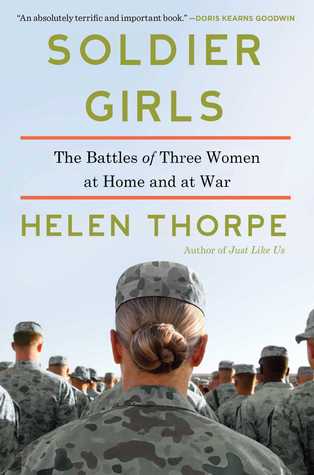 Now that this title has created some buzz, I thought I’d reblog this!


