And There Was Light: Autobiography of Jacques Lusseyran, Blind Hero of the French Resistance, by Jacques Lusseyran *****

  and there was light Lusseyran was sighted at birth, but a childhood accident caused him to lose his vision. Neither Lusseyran nor his parents–comfortable members of the petit bourgeoisie–let his blindness define him in the way that most people living in the more developed nations of the early 20th century would have done. Instead, they promoted his mental and physical development and sacrificed some of their own comfort to be sure their son continued to receive an education, although the law didn’t guarantee him one. In return, he gave not only his parents but the world a hero, one who became a leader of the French Resistance.

I have heard it suggested that those who lose one sense make up for it with the others, and so those whose eyes no longer see, or see nothing except shadow and light, hear, smell, touch and taste more acutely. Lusseyran claims that even as a child, he navigated his home town largely by smell; the baker was this way, and the creamery that way. And so the foundation was laid.

Though his education was challenged by instructors who were reluctant to have a blind student present, and who sometimes threw up nearly impossible requirements, such as reluctance to permit him the use of the braille typewriter his parents bought for him, yet others inspired him and moved him forward. Teachers, many of us at least, aspire to be someone like Jacques’s history teacher. He describes this man’s fire, and the bond that his passion for his subject and his vocation created:

“He wanted us to be exactly as we really were, funny if we couldn’t help it, furious if we were angry…his learning made us gasp. He made numbers and facts pour down on us like hail…the syllabus for history stopped at 1918…but for him this was no obstacle, for he would go ahead without any syllabus. He went past all the barriers…”

The teacher would continue to teach at the end of the school day, excusing anyone who wanted to leave (and here I think of the yellow school buses that constrict the schedules of US public school students so often now). He says that everyone stayed. “Naturally.”

The dynamic time in which he lived no doubt was responsible for much of their enthusiasm; history was clearly being created with each breath they took. Their history teacher told them–relying upon texts he had read in the original Russian–of the Bolshevik Revolution and of the Stalinism that had taken hold thereafter, of the purges. He spoke of the United States, Roosevelt, of initiative and imagination triumphant.

And so Lusseyran was not yet past adolescence when he felt he had a duty to change the world, to participate in driving out the Nazi occupiers. He tells us that it was understood for some time among himself and the friends he trusted to keep their dangerous knowledge confidential, that he would be the leader of their youth Resistance movement. Others would listen and observe to see what other individuals might join them, but of course, there were spies and each person they trusted could instead lead them to their own deaths. It was very dangerous.

And in such a circumstance, blindness became an unusual asset. New potential recruits would be led to their interview, but instead of an office or home, they were led through a labyrinth of boxes and crates in a completely unlit warehouse. Their interviewer waited at the end of this maze, and he interviewed them in the dark. He could detect falseness of character or fear of exposure from those who would betray the Resistance by listening to the nuances of their voices, and those individuals who weren’t deemed worthy were left to find their own way back out. Of course, the location sometimes had to change, but the setup was the same.

Lusseyran’s heroism is a testament to initiative and idealism. The reader will have to learn the rest of his story the way I did; the narrative is as skilled and engaging as the political work that preceded it. It is one of the most unusual and inspirational autobiographies I have encountered.

Highly recommended.

Moon Walk, by Michael Jackson ****

1062902Moonwalk was written at the height of Jackson’s fame, in the wake of Thriller and the 25th anniversary Motown TV special. It is a fascinating read, and was the #1 New York Times bestseller at the time. I give it only 4 stars because there is a ghost writer here. It’s understandable; Jackson had his finger in so many pies at the time, and also was somewhat reluctant to breach his own privacy by speaking candidly about his own life. Ultimately, though, the writer-behind-the-writer says that Jackson decided it was time to set the record straight about some things. He still nearly pulled the plug at the dead last minute, after editing and approving the final copy, leaving his ghost writer with an immense amount of time and effort that nearly came to nothing. I’m glad he decided to follow through.

At the time this was written, Jackson had no children. His name is associated with more than one book, and I may see if I can get a copy of a later one.

I am not much of a pop music fan, but the sheer enormity of Jackson’s accomplishments and his role in music history makes his a must-read for a memoir reader like me.

I came out of this convinced that though (through the lack of a normal childhood) Jackson’s social skills were sometimes off a notch and his judgment not always sharp, he was not a pedophile. I believe him when he says that children are the only people he can talk to who don’t seem to have ulterior motives (beyond a particular circle of family members and close friends), and that he enjoys making them happy. I really do think he was naive enough to think that a child would find it fun to sleep in the host’s big bed rather than be all alone in a room he wasn’t familiar with (and assume that the oh-so-grateful parent would remain such). Beyond that, I think that at some level, his involvement with children had to do with his own lack of a childhood that involved the fun and freedom usually associated with that time. My best guess is that he brought kids home, or went to their homes and hospitals, and spoiled them rotten, and enjoyed the experience vicariously.

Jackson’s own upbringing, though he loved the music and turned out to have a genius for it, was grueling. He is diplomatic in the things he says about his father, and gives him credit for finding the resources to bring not only musical instruments but microphones into their 3 room home in Gary, Indiana, so that his talented tribe would understand how to handle them and move with them by the time they were on stage. They began with talent shows that had cash prizes, and worked their way up to auditions. They played in some really raunchy clubs at an age where most first-graders would not even be watching R rated movies. But Jackson took to the life, and grew close to his brothers. Motown signed them, and they were off to California.

Jackson was instantly enthralled by all things Californian. The trees had oranges, he says, and there was the ocean, and Disneyland! Welcomed to the “Motown family” by singing legend Diana Ross and by the vice-president of Motown, who lived just down the street, they were house guests until they were settled and established, and ran freely between the two fabulous homes. Ross was like a second mother to Jackson,and she introduced him to the art world, which would later become not only a love of his, but a source of smart investments also.

In Gary, he and his family had all been practicing Jehovah’s Witnesses, and he mentions this only briefly, to show that some of the corruption and profanity that young performers take on was not going to be part of his own life, because that was not how he was raised. He doesn’t mention the religion again after his move to California. This left me curious. Could a man like Jackson have truly believed that only a certain number of people are allowed to go to heaven?

He writes about his break with Motown,which he and some of his family precipitate when Motown is not receptive to having him write music, and about his lengthy, fond collaboration with Quincy Jones. He is able to get in on the ground floor once MTV breaks loose, and spends his own money in order to create music videos of the highest caliber. (“Bad” used real gang members from South Central LA; the massive security was loosened a bit once they found that since the gang members pretty much just wanted recognition, respect, and lunch and were getting all three, they were courteous and cooperative. I’ll admit I really liked this part, having taught young people with similar issues.)

His hair and skull catch fire due to negligent fireworks use while making a commercial for Pepsi. He knows he could have sued them and won big, but he chose not to.

Without a trace of irony or hubris, he states that he is thankful he never got involved using any sort of drugs, since he had seen what this does to others. (To be fair, he specifically refers to street drugs like marijuana and cocaine; I suspect that some of the drugs that would later plague him were due, in part, to the pain he experiences after accidents on the job such as the Pepsi adventure.)

A star like Jackson could have used his life story as a vehicle for payback, but he goes out of his way to avoid any semblance of that, and when he has to talk about people who did rotten things, such as a management-level person who stole from him, he does not name names. I thought this was really nice. He briefly mentions his father and the belt, but also gives the man credit for the early start he and his brothers had, and the fact that they were the first big family act to enter the pop scene.

Later he simply mentions that his father was no longer representing him at a point in the story. He makes no reference to the marital discord between his parents.

The one place we can almost see the hair rise on the back of his neck is when he speaks about the controversy regarding the changes in his facial structure. He owns that he had a nose job and a chin cleft added, and points out that entertainers all over Hollywood do exactly the same thing, and he asks why this is such a big deal, when after all, he is a musician. The man has a point. On the one hand, those with the most fame get the most scrutiny, but on the other, it also (though he never says it) sure seems as if a black man who makes it big gets more scrutiny than others. He adopts a vegetarian diet, and of course, as we grow older, our faces lengthen anyway, thus the harder planes to his face and loss of baby fat. And in thinking about some of the bizarre things printed in tabloids…who is really going to have the bones in his face broken and reset? Even if vain enough for something of that nature, it would be extremely risky, and involve a huge amount of time away from work.

I believe that Jackson is telling the truth; a nose job, a chin cleft, terrible acne as a teen that started the habit of hiding his face at times, and then later (not in this book), the skin disease. I think this is true, though it doesn’t make as good copy for selling sensationalistic news rags.

The one really unsettling note was that Jackson seemed to think it was a hilarious practical joke to surprise people who were afraid of snakes with Muscles, his boa constrictor, and chase them around the room. I have the same phobia, and once had (honestly) a science teacher who chased me around his 7th grade classroom with a big snake, ordering me to “touch it.” I did not, and I had nightmares for weeks. But it’s too late to tell Jackson that this particular thing is not funny.

Jackson’s songwriting partnership and friendship with Paul McCartney led the latter to recommend that he consider investing some of his money in song rights. This had not occurred to Jackson before, and turned out to be a strong move financially, as most of us now know. And he says that although he knows others in the business discourage their own children from performing, if he ever has children, he will tell them to follow their dreams, and if they want to perform, they should go for it.

The artist, with all his eccentricities and extraordinary talent, can’t talk to us anymore. For those who enjoy memoirs and autobiographies of musicians who have made historical strides in their field, this is highly recommended.

Kinsey and Me: Stories by Sue Grafton *****

This wonderful collection is quirky, but not only in the manner in which the now-immortal Kinsey Millhone is quirky. I suspect it’s the closest Grafton will ever come to writing an autobiography or memoir, and what little of it is here, is very brave stuff. As we approach the time of life in which Grafton now finds herself, it’s good to do some looking back, figuring out why we did some of what we did, and also coming to terms with some of the less lovely things we went through.

The introduction is expository in nature, and it’s very good. It is the first time I’ve seen it spelled out, what the distinction is between mystery, detective fiction, and crime fiction. In addition, she speaks to the ways in which short stories differ from novels within her genre. She makes it crystal clear and wraps it up with a bow. No droning lecture, but of course, that isn’t Grafton’s style; not ever. She also attempts to differentiate herself from her character. When she says Kinsey is who she might have become had she remained single and childless, I believe her. When she says that mischievous sense of humor is Kinsey’s rather than her own, I don’t believe it for a minute. But it’s a very fun read, one of the most interesting introductions I have ever read.

The first section consists of some Kinsey short stories that were written, some of them published in magazines, prior to the takeoff of the alphabet series. They are every bit as good. I am very fond of collections and anthologies, because they give me permission to put the book down at some point and go do something else…sleep, for instance. Though shorter, they are every bit as good as her longer work.

The last section is one that Grafton says was created largely from her own effort to come to grips with her own past as the child of two alcoholic parents. I think somewhere along the line, every really prolific reader hits a piece of writing that unexpectedly punches them in the solar plexus, leaves them staring disbelieving at the page saying, “Aw, holy shit, I totally did that too!” This was one of those moments for me. I have read thousands of books and had moments like this one maybe three times. It won’t be the same for you, most likely, but if you are a fan of Grafton’s, it is still worth reading. There follow some stories that are not humorous, but strong writing nevertheless.

Because she so effortlessly switches hats so many times in this one volume, first providing us with the most informative, most accessible, best written overview of the genre I have come across; then offering some brief personal notes about herself; then giving us the detective humor that we have come to know and enjoy; then writing briefly and more soberly about her own past; and then breaking out the stark, somber short stories that caught me by surprise, she underscores exactly what a serious, bad-ass writer she is. She is not just a writer of funny detective stories, though I consider those books to be excellent literature, and I love them. She is a scholar, and I can’t help wondering if that wasn’t a good part of the reason she put this volume together in the twilight of her career. We must regard her a serious writer, a woman of great talent. That’s what she is.

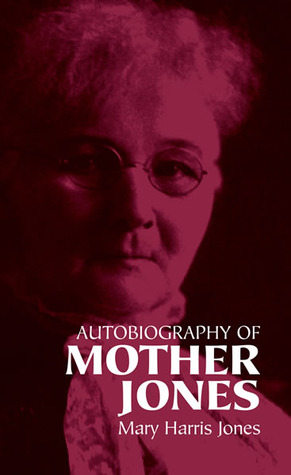
The Autobiography of Mother Jones, by Mary Harris Jones, Mary Field Parton (ed), Clarence Darrow (intro) *****

autobiomotherjonesMother Jones has been called “the most dangerous woman in America”. Some refer to her as an anarchist, but in her autobiography, she denounces anarchism, though allows that these folks have their hearts in the right place. She has been called a syndicalist (which is probably closer to the truth), but the fact is that she was motivated by what she saw right there on the ground in front of her. When the Russian Revolution unfolded, she was by her own account past 90, and by the account of another biographer, in her mid-80’s, so either way, she was very, very elderly, yet she championed its achievement at the Pan-American labor conference held in Mexico:

“…a new day, a day when workers of the world would know no other boundaries than those between the exploiter and the exploited. Soviet Russia, I said, had dared to challenge the old order, had handed the earth over to those who toiled upon it, and the capitalists were quaking in their scab-made shoes.”

Jones’ career as a political organizer began shortly after she turned 30. She was a married woman, her husband an iron worker, and she stayed home with their four small children. “Yellow fever” (which I think is malaria) came and killed her whole family, and then as if that wasn’t enough, the great Chicago fire swept away her home and all her possessions.

Some would have turned to suicide. Some would have gone looking for an elderly widower to marry. Some would have gone off to find distant relatives and live with them as little more than domestic servants.

Jones reinvented herself and gave the next fifty-plus years of her life to making the world a better place.

Still clad in a widow’s black garments, she put her hair up in a chaste bun and left Mary Harris Jones behind. From this time forward, she would be “Mother Jones”. Think of it! The cinders from the American Civil War were barely cold, and women had no position in American political life, including the labor unions. Yet by becoming a mother to workers everywhere, including the women and small children laboring in mines and textile mills, she became a force to be reckoned with. It was a brilliant piece of theater, entirely sincere in its intention and in many cases successful. She was one of the most ardent champions of the 8 hour day:

“The person who believed in an eight-hour working day was an enemy of his country,a traitor, an anarchist…Feeling was bitter. The city [Chicago] was divided into two angry camps. The working people on one side–hungry, cold, jobless, fighting gunmen and policemen with their bare hands. On the other side the employers, knowing neither hunger or cold, supported by the newspapers, by the police, by all the power of the great state itself.”

When Mother speaks, people feel they should listen, and if she speaks in their better interests, they listen harder. And in the early days, at least, the boss’s goons and the local law thought twice about putting a hand on Mother. It wasn’t nice!

Later, as her impact on their wallets hardened their resolve, they would deal with her less gently. She didn’t care. She spent nights in jail when she could have left town instead. Sometimes she traveled into a coal mining enclave where every bit of property besides the public roads was owned by the mine owners. Even homes that had been rented to miners were closed to her, as was made clear enough to break almost anyone’s heart. She describes a mining family that held a union meeting at which she was present in the coal fields of Arnot, Pennsylvania. The following day the company fires and evicts the family, and “they gathered up all their earthly belongings, which weren’t much…and the sight of that wagon with the holy pictures and the sticks of furniture and the children” made the local miners so angry that they decided to strike and refuse to go back to work till their union was recognized.

The quote most well known that shows up on tee shirts, posters, and coffee mugs among the liberal and radical milieu today is knocked clean out of context, in my view. “Pray for the dead and fight like hell for the living” was delivered in order to get working men out of the local church, where the priest was trying to cool down the heat and persuade the coal miners to wait for a reward in heaven. “Your organization is not a praying institution,” she reminded them, “It’s a fighting institution!” She tells them to leave the church and meet in the local school, which their own tax dollars had bought. And she later tells other miners that striking is done to provide “a little bit of heaven before you die.”

From Chicago to the coal fields of West Virginia, from New Mexico to Pennsylvania, she was found among railroad men and their families, machinists, textile workers, and above all, miners. She had no use at all for union officialdom, and though she occasionally praised a senator or governor who saw the light of day and called off the hounds of vengeance so that unions could be organized and the workers represented, more often than not she saw them as perfidious and untrustworthy.

When Eugene Debs became a candidate for U.S. president, she embraced his campaign, though she stayed among the workers, which I think was the correct thing to do. But when Debs comes to speak to coal miners and the union officialdom wants to meet his train quietly with a few representatives, Jones proposes all the union members go to greet him. They stampede down to the train, leap over the railings, and lift Debs onto their shoulders, she says, shouting, “Debs is here! Debs is here!”

I could have been finished with this slender volume quite quickly if I hadn’t been making notes (most of which, as usual, I cannot fit into my review, but then I should leave you some choice tidbits to find for yourself, and there are still many of them!) The chapters are brief, and so the book can be read just a few minutes at a time. And the introduction is written by one no less auspicious than Clarence Darrow himself.

You may look at the price and wonder whether you should pay that price for this slender little volume. The answer is, oh hell yes. Please remember that the words of the woman herself are worth twice as many from some armchair hack who wants to pick it apart and wonder whether she was really 83 or 85 at such-and-such moment? Spare yourself the blather and go straight to the primary source. It’s worth double the cover price!

Buck: A Memoir by M.K. Asante *****


There are spoilers coming. There’s just no other way to review this one.

MK Asante was born in Zimbabwe, but the first time we meet him is in “Killadelphia, Pistolvania”. His family is out of control, and consequently, so is he. His brother is deep into gang life, running guns and drugs. By the time he is 12, MK has “favorite” porn artists, is sexually active, and doesn’t think twice before leaping into a stolen car alongside his brother, who goes by “Uzi”. He adores his brother. His brother is 16 and assumes that he won’t stay long behind bars for the things he does because he is a minor. We never learn for sure whether he is sent to live with a relative in Arizona to keep his influence from affecting MK (too late) or because the local heat has a real itch for him. Once he is there, however, he is tried as an adult for rape, for having sex with a 13 year old Caucasian. He thought she was 16. It’s a huge blow to everyone when he draws hard time.

Let’s pause here a moment. If you know absolutely no street lexicon (USA), and if you regard the Philadelphia police force as brothers and comrades, keep your wallet in your pocket. If you aren’t sure, or have seen the cops in major metropolitan cities do low-income teenagers (and even those from the middle class) irreparable harm and no good (or not much), you might be in the right ballpark.

I hope you are, because this is a powerhouse of a memoir. But there is no glossary, so for example, if the word “blunt” means something that is not sharp-edged, and nothing else, you may get dizzy and give up. If you don’t know the difference between “nigga” and the N word, and who can say it and who can’t, move on to the next selection on the shelf. But if these things have become either part of your own lexicon, or are familiar because of young people in your life who say them, you can read this just fine and Google any parts where you have difficulty. It’s well worth it.

Oh, and lest I forget, here it is: YES! I got this book free, from the Goodreads giveaway. If this had been a lousy read, my gratuity would have been withholding my review. Nobody gets five stars out of me unless I think what they have to offer is worth five stars.

The one question I have about this one, is where this urban jewel has been hanging for the last several years. All of hip-hop lyrics, the songs of urban protest, are from the 90’s. It is true that Tupac lives on forever, but in 2013, it seems to me that some years have gone missing nevertheless. I hope Random House hasn’t bought the rights to this book and then parked on it for awhile, and I hope it comes out soon.

I began reading within 48 hours of the Trayvon Martin verdict. My own large family is multiracial, and my youngest son, who is African-American and 25, was just packing to move out of the house and in with some friends. Reading the first chapters of this book gave me such an anxiety attack that the man did well to get out of the house before I started sewing name tags into his hoodies and packing him a plastic lunch box to take to school and work. I’m exaggerating, but only a small amount. I think this is a time when family members of young Black men are watching their own closely and holding their breath.

Carole/Amina, the mother who provides counterpoint to Malo’s (MK’s) narrative, is anxious too, but mental illness and a deteriorating marriage have deprived her of her voice. She loves her son, but has lost all authority and communication with him. She begs him to take care of her, and he recognizes, when his father leaves, that he is the “man of the family”. He has been deprived of his childhood somewhere along the way.

He learns his mother’s thoughts only by reading her diary. He is chronically truant from the private Quaker school she and her husband have sent him to, but she isn’t worried about that. She isn’t worried about the fact that he and a friend regularly steal her car and ride around in it until dawn, even though he is way too young to even have a learner’s permit.

I want to scream at her, “Why the hell not???”

That’s the easy part.

The school principal wants to talk to his family, but nobody is available. Ultimately, MK’s mother attempts suicide (not for the first time) and is institutionalized, as her daughter has already been. When she comes home, Malo’s father, a man known and respected as a civil rights activist and scholar, leaves her. His sole remaining child is enraged by his abdication. Every time his father loses control of the household, his response is absence.

The hard part is to say, “What would you do here?”

Can you correct the problem with social workers and foster homes? I don’t think so. Most foster kids vote with their feet. They stay for dinner, maybe try to round up some cash, then hit the bricks and don’t go back.

Can you fix the problem with a good school?

Yes, no, and maybe.

I send my own children to a really wonderful alternative school. It has made a huge difference for my kids who were at risk, and also for the child who was always the perfect example. But if other things get bad quickly enough, the school can’t do a damn thing.

The Quaker school was majority Caucasian at a time when the author of “Why Are All the Black Kids Sitting Together in the Cafeteria” says is actually when Black teens need an immersion experience to foster their sense of self. The Quaker school, though some of the staff appeared to mean well, either wrote Malo off as a bad seed (and face it, how many academics want to hear “fuck you” from an angry student?), or decided that he could not produce, as the high school basketball coach gives him permission to spend his class time shooting baskets if he’d prefer.

A gym is a safer place than the streets…but what kind of education is that? Is this really the best a gifted young Black man can expect? Not only no, but hell no!

The alternative school is one his mother finds after he has been arrested. He agrees to give it a try, and for (amazingly) the first time, he is asked in a friendly, personal yet not invasive environment to write something–anything.

As a retired language arts and history teacher, I find this dreadful. Every kid should be given this type of opportunity. I am appalled by the public school teachers who flatly tell the students they don’t want to be there and only show up for the paycheck. Are they expecting the students to react with understanding? I taught in high poverty schools, too, and you can bet your bottom dollar that I apologized to my students if there wasn’t a desk for everyone, and I found a spot for everyone to sit down until I could rectify the situation. Malo was robbed both by the Quakers and the public school system.

The alternative school helps him find his own voice. He discovers that until he has begun to read, he has no vocabulary, and without a good vocabulary, he wasn’t able to express himself.

But the other critical factor is the reemergence of his father, who to be fair has been trying to call him, trying to get in touch with him, but Malo has been unable to forgive him for abandoning the family and leaving his mother to flounder unaided in an untenable situation. When Malo is arrested, he refuses to phone his father, not wanting to give into his own need, or to see his father’s disappointment. His father finds out and comes to pick him up anyway. And though I have given away a large part of his story, I will leave the climactic scene between the two of them for the reader.

Later, Malo performs at a spoken word session when his girlfriend signs him up. The poem “Buck” is one of his own. He tells us that he finally understands why it was illegal to teach a slave to read and write, because there is so much power in the written word. And he decides that he wants to be a writer.

He is.