Hallowed Ground: An Illustrated History of the Walk at Gettysburg, by James McPherson*****

hallowed groundHallowed Ground packs a great deal of information regarding Gettysburg, past and present, into a tight package. I own an earlier edition, and I used the photographs in it as part of my lectures when I was teaching a unit on the Civil War.

McPherson is a renowned author, winner of the Pulitzer for Battle Cry of Freedom. That volume should be the go-to book for anyone looking for a first highly literate glimpse of the American Civil War. This book is only about Gettysburg, as it is today and as it was then. McPherson has not only walked every square inch of the area involved, but also takes his students on tour there. He tells the reader what parts of the standard park guide tour script are actually incorrect, which is particularly useful for those visiting the park. In fact, this guide is primarily targeted for those planning to walk the large area encompassed, but I haven’t been there, and most likely won’t, and I never regretted the purchase of that earlier edition. If I were teaching still, or mobile enough to be able to do that tour, I’d buy this one as well.

I am delighted to be able to review the DRC for the newer edition, which contains even more digital photographs. I couldn’t see a lot of them–got a blank, gray box instead, which happens with galleys sometimes–but the quality of what I could see was excellent. Put this together with a lot of other primary sources, including battle plans, letters written by those involved at the time, and photographs that were already in the earlier edition, and it’s clear this is a volume that belongs on the shelves of every Civil War buff or instructor, as well as any other interested party.

Highly recommended.

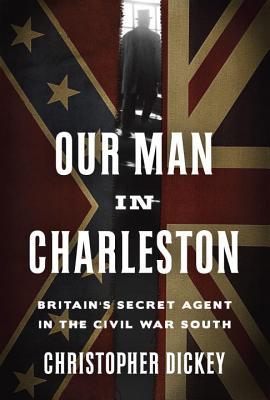
Our Man in Charleston, by Christopher Dickey *****

OurmanincharlestonThis is the most fascinating book I’ve read in a long time! Equal parts biography and American Civil War nonfiction, it details the experiences of Britain’s foremost spy, Robert Bunch, who was living in Charleston, South Carolina when the Civil War began and for its duration. I am truly grateful to Crown Publishers and Net Galley for permitting me to read the DRC in advance. And perhaps it is just as well, in a way, that my kindle fell in the potty when I was done and with it went hundreds (genuinely) of notations that I made as I wended my way through it; I had procrastinated writing this review because there was so much I wanted to say. Too much, in fact! Sometimes I have to remind myself I am writing a review for would-be readers who might want to discover a few things on their own. Part of my writing mind is still wired in the direction of academic analysis, which is too ponderous for most readers to slog through, and not really necessary for our purposes.

I was riveted almost from the get-go. At first I had the bizarre notion that a British view of the Southern Rebellion would be objective. If I’d thought harder, I would have realized that isn’t true; Britain had a tremendous amount of interest in the outcome of this fight. But its interest was completely different from either the Union’s or that of the Confederacy. There were a couple of horrifying instances in which it might have chosen to recognize the Confederacy, but those moments quickly passed.

Even before war broke out, tension had been quietly mounting over the treatment of British seamen that landed in Charleston. On one occasion a single Black sailor had instigated a relatively small uprising on a plantation, and this act—the most fearful nightmare of the Southern ruling class, self-styled aristocrats who lived as a tiny minority among an enormous number of Black laborers who had every reason to hate them—gave birth to the Negro Seaman Act. The law stipulated that any Black sailors from another country that worked on board a ship that docked in Charleston, must be kept in jail until it was time to leave again. This was the stuff of which international incidents were born. Britain would attempt to solve the problem through Washington, D.C., only to find that Charleston had already begun to flout Federal law and that the nation’s promises were not kept. Eventually, a quiet negotiation began with Charleston authorities. When they continued to behave badly, Britain had little recourse, since it did not want it known in Washington that they had been dealing with the government of South Carolina as if it were sovereign. This probably also fed the delusions of Southern grandeur and may have encouraged them to believe they did not need the national government at all.

Robert Bunch was originally stationed in the north, but found himself in Charleston more and more often. His habit, as Britain’s agent, had been to head north during the unbearably humid, tropical summers of the deep South, but as events polarized the nation and northerners were no longer welcome, his own position became more and more tenuous. His job was to send reports to Britain, but whenever he went in public, as he had to do a great deal in order to pick up information, he was questioned increasingly closely about Britain’s view of the Confederacy. Which side would Britain take? Was he a spy? (Gracious, no!) Maybe, were he on the side of the Union, he should be locked up! (Please, please no!) He would have preferred, at one point, to go north and stay there, but his orders were to stay put, so that’s what he did.

In order to maintain his role and save his own neck, his behavior became increasingly misleading. The dispatches he sent to England were so adamantly opposed to recognition of the Confederacy that he was reproached a time or two for trying to make policy when his job was simply to provide information. However, when he was asked by local folk whether surely, Britain would soon recognize the Confederacy, and wouldn’t he encourage this, he gave misleading smiles, made ambiguous remarks, and agreed that of course he would be happy to slip the British nanny’s letter home in his diplomatic pouch so that it could reach the U.S. mail from which they were otherwise cut off.

He became so convincing in his subterfuge that at one point, he was nearly brought up on charges of treason against Britain. U.S. Secretary of State Seward, a difficult, punctilious man, had a number of bones to pick with Britain, and at one point tried to foment war with them, convinced that if it broke out, the South would drop their ridiculous posturing and rush to defend the red, white and blue. Lincoln felt differently, however, and made it clear to Seward and to Britain that he was only interested in fighting one war at a time. To save face, Seward latched onto Bunch’s dismissal as the single demand he would press. Surely, in order to avoid international tension, Britain wouldn’t mind hanging one of their lowly agents out to dry? Send the boy home and there’s an end to it. Get him gone.

Lord Palmerston, a man with power disproportionate to most in his position, had eclectic tendencies, and was having no part of firing Bunch. He liked the guy, and wasn’t really interested in being shoved around by the former colonies of Britain. If the US of A had to have its capitol torched a second time to get the point as to whose navy was better? Fine. Hopefully not, but Bunch was staying. And that is how it was.

There are two things that popped out at me in reading this compelling work. My vantage point, for those who haven’t read my reviews before, is that of a former history teacher. It was my job to teach teenagers about the American Civil War, or as much as teens can learn in ten weeks at one hour a go. It was by far my favorite quarter of the school year, but I was so overwhelmed with work and meetings that I didn’t have a lot of time to read in my field. I could use my six weeks off in the summer to read whatever I chose, if I wanted to, and that was about it. So although I could have used this information back then, it is nevertheless satisfying to have one nagging question answered, however belatedly.

My question, and my students’ question sometimes, was if Europe was able to rid itself of slavery by the government’s buying slaves from slave owners, why didn’t that work in the USA? And the only response I had—one provided by reading James McPherson and a Marxist historian named George Novack—was that they refused. They just wouldn’t do it.

But why? Surely it was obvious they were living in a feudal economy that the rest of the industrializing nations had abandoned. Surely they had to know they could not freeze history. Why cling to it beyond all reason?

Questions related to war are always rooted in economics, and so to simply say they were irrational, which is more or less my answer apart from I-don’t-know, felt incomplete. A number of other historians gave that reason, but it felt like a puzzle piece forced into the wrong hole. And Dickey provided me with the missing piece. Although I had read vague things about speculation in slaves and that uniquely American, horrific practice, slave breeding, which brought us international shame before all was said and done, I didn’t recognize the link between speculation and the tiny handful of wealthy plantation owners that made the choice to go to war rather than let it go.

Those that have followed the financial news in the USA and many other nations over the past decade are aware that a lot of home owners are losing their houses when they can’t pay mortgages, especially balloon mortgages, and more dreadful still is the fact that they are “under water”, meaning that after the bank takes the house back, or it is sold, they will still owe payments on it. They’ve borrowed more against it than it is worth, and only bankruptcy will solve their problem. When they lose that house, they lose everything.

And so it was with a large number of plantation owners. They had borrowed against their slaves. That was where their equity was: in human capital. If they allowed the government to buy their slaves at their current market value, they would become bankrupt, and having gained their social standing on nothing more than wealth and pale pigmentation, they would be ruined socially and financially. As long as there was any other choice, they would take it. They would send their own sons to die for it, though generally they chose to pay someone else to go in their own places.

They were underwater.

Britain’s perspective at the outset was that if one side had slaves and the other did not, then of course they would not recognize the upstart nation. When the border states were permitted to keep their slaves, it was still considered wiser to back the winning horse in any race, and so unless it appeared the Confederacy was about to win the war and gain international status as an independent nation anyway, there was nothing to be gained by antagonizing Lincoln’s administration.

I had wondered, in past years, whether Britain might not have yearned for the South to become independent. If one looks at a map of the USA as it was then, and the size of British possession of Canada, if it also dominated the Southern USA economically, and if it had a navy in the Atlantic that could pound the coastline, could it not overturn the American revolution? That slice of the Union is small compared to Canada, when the Confederate states are added in like the bottom bun of a hamburger. How delicious!

Not so, says Dickey. Britain had other fish to fry. It had been absorbed in fighting the Crimean War, and at the time, events in Europe were considered vastly more important than our own emerging outpost. It might be nice to have, but they didn’t need it badly enough to weigh in with the slaveocracy. The South had been so smugly sure that Britain needed their cotton for its mills, but in fact, they had planned well against such an eventuality, and had over a year’s worth of cotton socked away in storage. To the impertinent Southern men and women that sashayed up to their representatives to announce that Britain would simply have to recognize them, the response was generally somewhat courteous, muted, non-committal. If pressed, they suggested that cotton could indeed be grown in India. No worries.

And here I am three pages later according to Microsoft, and I have really only skimmed the surface. Think if I’d had my notes available! Believe me when I say I have just scratched the surface. I had so many delicious quotes, and now you’ll have to go ferret them out for yourself!

This magnificent book comes out July 21, 2015. For once I can tell you that whether or not you are conversant with the finer details of the American Civil War, you will be able to read this with no trouble. A knowledge of the broad contours of the war will make it more satisfying, but not strictly necessary. Those who enjoy history in general, or biographies in general, will likewise find it a must-read.

You have to get this book!

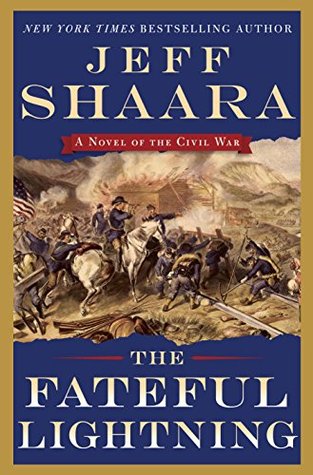
The Fateful Lightning, by Jeff Shaara *****

thefatefullightningThose that love strong Civil War fiction have to get this book. It comes out in June, but thanks to the wonderful people at Net Galley and Random House/Ballantine Publishers, I was able to sneak a peek ahead of time. Although it is the fourth in a series, it also works really well as a stand-alone novel if you know the basic facts regarding Sherman’s siege of Atlanta and its subsequent burning. As we join him and his hardened veterans fighting under Howard and Slocum, “the two fists that Sherman intended to drive through the heart of the deep South”, they prepare to march to the sea.

I have read every one of Shaara’s novels, those about the Civil War as well as the American Revolution and US war against Mexico. I am a fan. The last in the series, The Smoke at Dawn, left me hovering between a four and five star rating. It was a good read, yet I wasn’t sure I liked the way he voiced Sherman; I thought he made him sound a bit remote. But then it became evident that the controversy that sparked the indignation of other reviewers was his inclusion of one fictional character among the various perspectives presented (he flips back and forth, a format he uses regularly and that readers of his other work will recognize). The fictional character was invented to represent the too-often-voiceless rank and file, without whom the war would not have been fought or won. And I thought that this was actually a great idea, so I flipped from four to five stars in defense of his choice.

In this final installment, Sherman’s voice sounds much more real to me. I don’t know what happened, but it feels to me as if all the cylinders clicked into place. William T. Sherman is one of my heroes; I consider him America’s all time finest general, with Grant coming in second. He remains controversial to this day, mostly in the American South, so for those who wonder, the perspective definitely leans toward the Union, though both perspectives are given space. And it seems gobsmackingly obvious to me that in a war between feudalism and industrialization, between slavery and freedom, the latter should be the team to root for. But for those that feel differently, you’ve been warned.

Here we also meet a new fictional character named Franklin. Franklin is a slave until Sherman’s men come through. His father, an older man who was hobbled permanently by one of the master’s coon hounds when he attempted to flee, won’t leave the Plantation even after he hears that he is free. The master is gone, but it doesn’t matter. Walking is too hard, and frankly, he is also too afraid. And if someone were to sic a mean dog on me, I just might feel the same. But his son, Franklin, is grown, strong, and completely unafraid. He is allowed to join Sherman’s men as a laborer, and during a fight, he makes a heroic choice even though he has not been given a weapon or even permission to touch one. And the role that Black troops and spies also played is also included.

Throughout the narrative, Shaara’s voice feels authentic and honest to me. The reality of racist Caucasians within the Union’s forces is acknowledged, and the horrible crossing in which one of Sherman’s new, political generals causes the drowning of an unknown number of African-Americans trying to follow the army across a pontoon bridge that’s being withdrawn from enemy forces is not glossed over. More importantly, the slave breeding that brought international shame on the United States, a practice done exclusively here, in the “land of the free and home of the brave”, is presented; I can’t think of any other novelist I’ve read who includes this critical factor.

Fans of military history will appreciate Sherman’s approach to the war, that one cannot win by capturing the capitol of the rebellion, but rather, the Confederate forces must be defeated, and the people of the South that supported them had to know they were done. The desertions that marked the end days of the Confederate Army were the result of Sherman’s “juggernaut” through the South. Those that left home to fight to defend it, sometimes deserted for the very same reason. Home might not be safe; they might be needed back there. Shaara’s depiction of Sherman was consistent with Sherman’s memoir in this and every other regard.

In reading Shaara’s note to the reader, I felt a bit sorry for him, because it sounds as if every single Civil War buff has some treasured bit of arcane information or some hero in the family and they’re annoyed that Shaara has failed to include them. But this was one big war, and as the author notes, he can’t include everything. His publisher has set limits in terms of time and space. And Shaara has served them, and the memory of those who served the side of moral right, admirably.

The book will be sold in time for Father’s Day. But really, you should buy it for yourself. It’s worth every nickel.

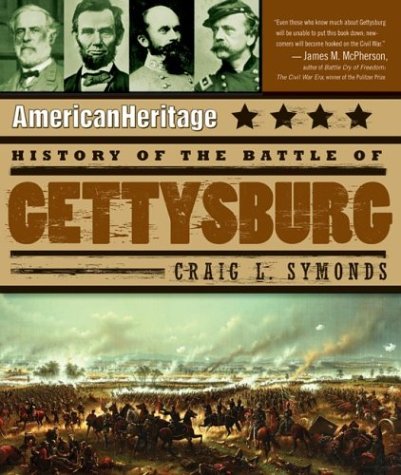
History of the Battle of Gettysburg, by Craig Symonds *****

historyofbattleofgettysburg Ordinarily I have little patience for anyone who picks up a book on US military history and just wants to look at the pictures.

But I read the text. In most places it’s fine, but once you start reading McPherson and Sears on Gettysburg, there isn’t much that Symond’s text will tell you that’s new. Symonds sticks to the basics, and he gives you the brass tacks, if you want to cut to the chase. He is the retired chair of the US Naval Academy. His background speaks for itself, and he is highly lauded as a Civil War scholar.

And look at the pictures!

The American Civil War was the first US war that had photography available. No, they couldn’t take action shots yet; the subject had to remain stationary for too long at a time for that to work. But there are a lot of primary documents here, photographs of leaders, of letters and memos as they were originally written (with the text beneath them if illegible; spelling was pretty much a discretionary practice back then). There are photos of battlefields with men still lying on them. (It is now considered a breach of national security for the press to go to Afghanistan and shoot photographs of US troops, whether in action or in closed coffins, for the American public to see.) There are photographs of the weapons available at the time, and of landscapes you can visit today that look nothing like they did then.

Look at the pictures!

My favorite is a full page photograph of Lincoln. His bow tie is dusty, faded, and crooked. His hair cut is terrible. His face is creased, and it bears the hardship of many sleepless nights, and perhaps also of the death of his son and the illness of his wife. It is a picture of a real person, long before the era when presidents became packaged goods to be marketed to the American public.

I have sometimes felt bad about the fact that I will likely never visit the Smithsonian. It is the dream of all serious students of American history. But my legs won’t let me get far now, and an airport is accessible only if I use the wheelchair service, which makes me feel quite conspicuous. It’s far easier to stay home and read.

This book, which I purchased some time ago in hard cover, will hold a place of pride on my bookshelves for many years to come. Primary sources aren’t that easily come by. Along with Sherman’s and Grant’s memoirs, this is an important addition to my Civil War library.

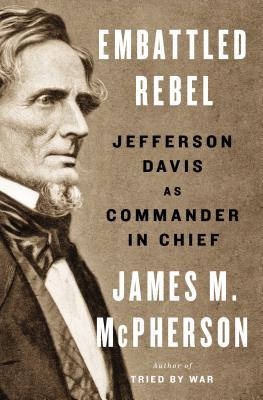
Embattled Rebel: Jefferson Davis as Commander in Chief, by James M. McPherson *****

embattledrebelThis was my first biography of Jefferson Davis. I have studied and taught about the American Civil War for decades, and read biographies and memoirs of and by some of the other principals in this conflict; I have avoided biographies and memoirs of Southern generals and politicians that smacked of nostalgic yearning for that Lost Cause. I would swear some of their authors would cheerfully go back to the enslavement of people of color given half a chance, the way they carry on. In any case, when I found this gem recently released by one of my favorite historians who has proven his scholarship trustworthy, I knew I had to read it. Sadly, I didn’t get the ARC when I requested it; hey, it happens! But my spouse popped through the door with a copy of it and I was in business at last. It was well worth his time and effort. James M. McPherson won the Pulitzer for Battle Cry of Freedom, the best single volume treatment of the Civil War I have read. He didn’t disappoint this time either.

If you read this biography, don’t skip the introduction. All of the details that follow are succinctly outlined in interesting and readable form; in fact, I read it before I read the book, and then I read it again afterward.

The book is punctuated by photographs of commanding generals in excellent resolution when read on an e-reader. I was also pleased to see that the maps could be zoomed to where I could generally tell what was on them when I held the e-reader near the light. This is a huge improvement over earlier history texts produced digitally. I used to suggest to those reading military history that they spring for a paper copy so that they could read these, which are often key to understanding what is being said. This time if you buy the book digitally, it will serve just fine.

The thing I was most curious about was whether it was true that Davis was insane by the time the war ended, and that the proceedings were mostly left to Robert E. Lee. Whereas Lee made his own decision to surrender to Grant, Davis, though undoubtedly in denial and out of touch with the reality of Northern conquest, was not insane nor near death, as the terrible textbook I was assigned to use with my teenagers had it. Happily, I noted that the sections on the Civil War had a number of other incorrect entries, and so I greatly limited my use of that book. Now I am really glad I did. Davis didn’t want the presidential nod, but he got it and took it; in fact, when he died many years later, he was entirely unrepentant. McPherson believes he was a strong politician who did a creditable job with a damnable task; Lincoln was a better president, but the Confederacy did not lose the war because of Davis’s failures. It was almost surely going to lose anyway.

Prior to reading this biography, I had believed that the south held on for as long as it did because its military leaders were stronger than those of the Union. This actually isn’t saying much about Confederate leadership.Union General McClellan cost both sides a lot of years and bloodshed that didn’t have to happen. It isn’t so much that the South had amazing generals; it was more that the Union had nobody who was both dedicated and proven. In fact, says McPherson, the Confederate military was practically tearing itself apart through gossip, infighting, and rivalry. Jefferson probably was guilty of promoting his friends beyond their level of competency; yet the cabals and gamesmanship practiced by those assigned to answer to General Bragg were at best a morale-draining waste of time, and at worst may have cost the Confederacy some battles. And the now-venerated Robert E. Lee was castigated in the Southern press for the number of Confederate soldiers who didn’t walk away from his battles. He was dubbed “the king of spades” for the graves that had been dug.

One Confederate general I had wondered about was John Bell Hood. My impression of him, I admit, was that he was a bad-ass general. He never seemed afraid to attack, even with one leg and one arm gone. Who does that? Still up there on his horse; “Charge!”  But this was one more hole in my scholarship that McPherson quickly filled. Hood would fight unwinnable battles. He destroyed an army during the last-ditch effort to save the Confederacy, losing a full fifty percent of the tens of thousands of men he led into just one fight, and most of the rest of them soon thereafter. The “reserves” consisted of old men; children too young to sign up initially; and those proud wealthy souls who had originally paid someone else to fight on their behalf. (I can imagine how well the latter took orders!)

I was familiar with a lot of the primary information provided here and was therefore free to focus on, and enjoy, the details. One new bit of amusing minutiae was that Southern women saved “the contents of chamber pots to be leached for nitrate to produce gunpowder”. Those of you more familiar with chemistry will know whether the women were lined up with their number one or number two. For me, it was a stitch to envision all those fine ladies dressed up in their hoops and bonnets standing in the potty-donation line!

I was particularly interested in what McPherson had to say about guerilla warfare. Lincoln was intent upon making it as easy as possible for the Confederate states to rejoin the Union. Some of us, had we been present, would have made a strong case for executing Davis and some other leaders—particularly those in South Carolina who started the whole mess—for treason. And some who were in Washington DC at the time made that case, too; but the decision was for quick, peaceful reunion. One reason for this was the concern that rebels made bitter by the price of losing the war might take to the hills and wreck endless havoc upon the offices of government and the economy long after the war had officially ended. But guerilla actions during the period when the Confederate government was in place and holding out for official recognition would have been unwise. Says McPherson:

Guerrilla actions as the main strategy are most appropriate for a rebel force trying to
capture the institutions of government, not defend them. And a slave society that
practices guerrilla warfare is playing with fire, for it opens up opportunities for the
slaves to carry out their own guerrilla actions against the regime.

But what of Beauregard? What about General Johnston and General Johnston? (Of course, there were two.) Bedford Forrest? What was the deal with Kentucky? Ah, there’s so much more to discuss.

I write really long reviews. If you are still with me by the end of this one, your interest is sufficient to go out and get this wonderful book. I don’t recommend it for those unfamiliar with the Civil War; for that, you ought to read Battle Cry of Freedom first. But once the basics are in your tool kit, you will find this biography accessible, interesting, and rewarding. Go for it!

Landscape Turned Red: The Battle of Antietam, by Stephen Sears*****

landscapeturnedredHow familiar are you with the American Civil War? Can you tell McClernand from McClellan from McPherson? Did you know there was a General Ewell of importance for both the Union and Confederacy? One more miniquiz question: in what states would one find Shiloh, Corinth, and Fredericksburg?

What I am trying to say is that this tome, which is either the definitive work on the battle at Antietam or a strong contender, is written for those of us who are pretty well versed in the basics. It won’t explain the essentials as it moves along; there is an assumption inherent in about 400 pages regarding the approach to this battle (about the first 100 pp), the battle itself, and the consequences regarding same. Sears writes with precision and authority, but he does not write for beginners.

As you can see from the rating, I loved it.

Sears isn’t on a mission to merely recount, blow by blow, what happened when. If he were set on hundreds of pages of injury and carnage, I don’t know that anyone but a masochist would care for that many pages of horrifying detail.

Instead, he sets out to prove that General McClellan, who essentially held the Union Army hostage for the duration of his tenure as commanding general, systematically and deliberately prevented the Army of the Potomac from crushing the Confederate forces. He proves the point. Beyond any question, McClellan chose not to send his soldiers to fight because he was sympathetic toward the slaveocracy and wanted the Confederacy to achieve its goal.

He contemplated participating in a coup d’etat,unseating Lincoln and tossing out the Constitution, but the vast groundswell of demand for such a thing,which he believed existed and might carry him to power, never unfolded. Though he had carved out a base of support for himself and his views within the Army of the Potomac sufficient to cripple its use for the duration of the war, there were also soldiers in this army who were sick of not fighting for their country, and who were pleased to see him leave.

I have read other histories of the Battle of Antietam, and they served the purpose of explaining who fought where, and how much blood was shed. What no one else has done is to lay the blame where it rightfully belongs. This battle should have been an open-and-shut deal, and the Confederate forces should have been disabled and the war brought close to a conclusion. Instead, through his reluctance to fight at all and then only because it was clear that to do otherwise would cost him his job, McClellan managed to make the whole thing a bloodbath that was almost a stalemate.

Technically, it was a Union victory, and that was what Lincoln had to have to declare Emancipation and prevent Europe from recognizing the Confederacy. McClellan opposed (of course) the Emancipation, but he was already about to be fired. The question was a political one; no one wanted him to leave before the elections, lest he make a mess of them. Once Congress was once more filled with majority Republican forces on both sides, it was safe to cut the connection and send him packing.

The manner in which he was fired was done with careful attention to military procedure so that he could not contest it without clearly committing a crime.

I had long felt that too much was going unsaid about General McClellan, but I couldn’t tell what it was. I had a hunch it would not do him credit. It was a little bit like childhood, when the grown-ups around you use coded phrases designed to protect you from the terrible truth, and the longer you are aware that you can’t be told something, the worse that something appears to be. And so it was with McClellan. I don’t know whether he has a bunch of really proud ancestors that other writers feared to offend or why he hasn’t been held suitably accountable before this. Perhaps the evidence was buried too deep.

One thing is certain: Sears has built his case as solid as the Rock of Gibraltar. Once the book is done, there can be no doubt whatsoever. For the serious American Civil War scholar, this outstanding volume provides information that is generally not in circulation, and that is key to understanding Antietam, as well as much of what took place before it.

Chancellorsville, by Stephen Sears ****

chancellorsvilleSears won the Fletcher-Pratt award for his retelling of the battle of Chancellorsville, which is meticulously researched. In fact, about 100 of the 600 pages of this mighty tome are footnotes and Index.

If you are waiting for the excitement to start, don’t hold your breath. For one thing, if you are sufficiently interested in the American Civil War to read 500 pages about just one battle, you already know how this one ended, so there is no magic in terms of waiting for the end. The value here is for the die-hard researcher or military theorist, who either wants to examine why the battle turned one way or another, what could have prevented it, etc. Picking apart the miniscule parts of each battle and seeing how they are different in the eyes of one historian from another (usually in small ways) is interesting, for those of us sufficiently obsessed.

In a nutshell, if you are interested in the most minute details of this particular battle, having had your fill of books on Gettysburg and Antietam, this man has done a good job of putting it all together. Sometimes it is compelling, even amusing, and other times dry, but there was no time when I did not feel he had carefully laid the groundwork for what he was describing.