

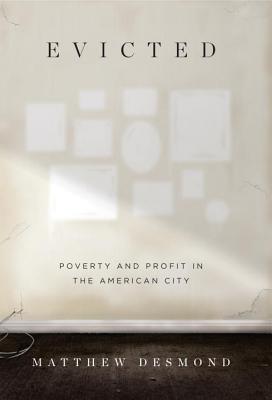
 I was cruising for something new to read, something that wasn’t yet another mystery or thriller. I ran across this title and requested it from Net Galley, then asked myself what I had been thinking! Who wants to read an entire book about eviction? What a grim prospect. I was even more surprised, then, when I opened it and couldn’t put it down. Desmond approaches his subject in a way that makes it not only readable but compelling. Thanks go to the people at Crown Publishing and Penguin Random House for approving my request for a DRC. This book is available to the public March 1.
Desmond undertook his study as part of his study of sociology while attending the University of Wisconsin, and continued it into his graduate studies at Harvard. The whole book is based on rentals among high-poverty families living in Milwaukee, Wisconsin, and Desmond explains why this location is a good case study as regards the rest of Midwestern urban America.
Most of the text is told as narrative nonfiction, with the author shadowing eight families, some African-American, some Caucasian, through trailer parks and ghetto apartments in Milwaukee. There is a great deal of dialogue, all of which was captured with permission via digital recorder, so the text flows like good fiction. One Black landlord and one Caucasian landlord are also shadowed, and although I came away feeling that both landlords—one of whom, to my horror, was a former fourth grade teacher—were lower than pond scum, Desmond is careful to also demonstrate the ambiguities, the times when one or the other let things slide when an eviction could have been forced; brought over some groceries for a new tenant and did not ask for repayment; gave tenants opportunities to work off back rent to avoid eviction.
At the same time, we see how ultimately, almost all of what appear to be landlords’ small kindnesses are actually adding to their profit margins.
The text is nicely organized. The beginning and ending are expository in style, as a newspaper or magazine article would be, with the statistics that demonstrate how much more of a renter’s income is eaten by housing than was true in previous years; how a bad credit history can lead a low-income family into an apartment that is substandard and costs as much or more than a nice apartment of the same size in a calmer neighborhood that might be rented by someone with a good credit history; and the terrible dance that must be done to keep both heat and rent paid sufficiently to avoid being cut off with winter on the way, or evicted. It also points out that there are people living in low income apartments that should not even be living independently due to mental health issues or extremely low IQ; Desmond recognizes the times—though they are a tiny minority—in which someone takes that welfare check and does something tremendously stupid with it, not using it for housing, utilities, food, or even clothing for the kids.
He clues us in to the fact that while huge numbers of Black men are getting locked up, huge numbers of Black women, particularly mothers, are getting locked out.
Desmond discusses the various ways landlords manage to avoid fixing even the most desperate plumbing and structural issues in rental housing. He discusses the inevitability of eviction for a renter that calls police—or for whom someone else calls police—due to domestic violence. The problem is considered a “nuisance” by the city; three visits by cops in a month mean huge fines for the landlord unless an eviction is ordered, in which case fines are waived.
It’s enough to make you sick.
Particularly appalling is the situation in which Lamar (all names are changed ) is diligently scrambling to paint apartments and clean out a basement to avoid eviction. The man has no legs, but he can’t collection SSI, because theoretically, he could do a desk job. He crawls around on his stumps to paint the areas his elementary-aged neighbor kids have missed, climbs through filth and muck in a half basement, and is cursed at by his landlord, who says he is trying to disrespect her by doing such a terrible job.
He is evicted anyway, and the landlord becomes unavailable to do repairs for other tenants soon, because she and her co-owner spouse are off to Jamaica.
There are some people that would fit so cleanly into Dante’s seventh circle.
It is the individual stories of the eight families, the various fascinating rationalizations of the two terrible landlords, which keep this from simply becoming a dark place the reader would never want to go. Some of the cultural nuances were really interesting to me, and I have lived in some hard neighborhoods back in the day, and taught many high poverty students. I’ve been to some of their homes. Yet Desmond taught me a great deal.
For those interested in America’s housing crisis; for anyone that has ever been evicted; for those interested in sociology and culture, this book is a must-read.

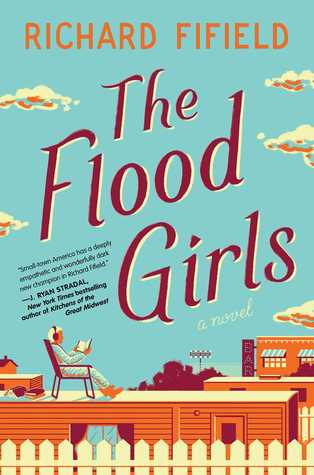 If Fannie Flagg worries that she has no heir, she can relax; Richard Fifield is here. The Flood Girls is his brilliant debut, and you have to read it! Fifield will cut out your heart and feed it to you with a rusty spoon, and he’ll make you like it, too. Hell, he’ll even make you laugh through it. I got the DRC free via Net Galley and Gallery Books in exchange for an honest review, and I’m going to read it a second time before I archive it as I am supposed to. This is only the second time I have done so after hundreds of galleys have come my way; that should give you a measure of how impressed I am with this title.
 Sarah and Jack Quinlan are called to his family’s home in Penny Gate, Iowa when Jack’s aunt is in a serious accident. Julia is not just any aunt; she has been his surrogate mother following the death of both his parents in a car accident. At least, that’s what he tells Sarah. But as she soon finds out, she has been misled about Jack’s early life; in fact, she’s been lied to. What she has to find out on her own is where the lies end and the truth begins.
 In 2015, I reviewed Storme Front, the second of four books in the Wyatt Storme series. I loved it and rated it 5 stars. Given the opportunity to read and review this first in the series, thanks to Brash Books Priority Reviewers Circle, I didn’t have to think twice. Thank you to Brash for the DRC, which I read free in exchange for this review.
 I confess that I am a big fan of Burke’s. He’s written a prodigious number of novels over the past fifty years, and I have read almost all of them. This is why, although I get nearly all of my books free prior to publication, I put this title on my Christmas wish list when I wasn’t given access to a galley. Perhaps because my spouse paid full jacket price for it, I am holding it to a higher standard than I usually do. This book is either a three star or four star read, depending on whether we factor in the dollars. Let’s call it 3.5 and round it up. It seems like a shame to 3-star a writer who is so talented and has contributed so much to American literature.
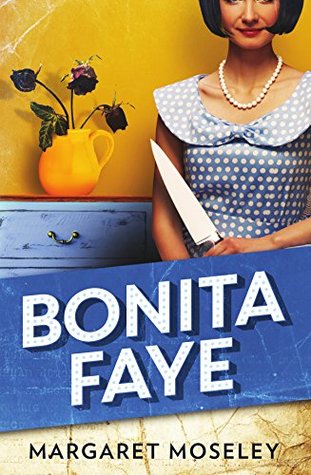 Brash Books has a new release, and it’s exactly the kind of novel you’d want to take to a warm sandy beach, or perhaps just to curl up with while the snow falls. I was permitted an advance glimpse, courtesy of Brash Books Priority Reviewers Circle. It was originally published in 1997, but due to be released again February 23, 2016. You’re in for a good time with this one.
 Dragon’s Teeth is the third in the Pulitzer-winning Lanny Budd series. Set in 1942—the present, at the time it was written—it provides the reader with a fascinating, well-informed, hyper-literate view of Europe during the years before and during Hitler’s ascent to power. While it requires a fair amount of prior knowledge in order for the reader to keep up with the story, history lovers, political philosophers, and especially those fascinated by the period in question will find it riveting. Thank you Open Road Integrated Media and Net Galley for allowing me a DRC. This title is available for purchase digitally now.
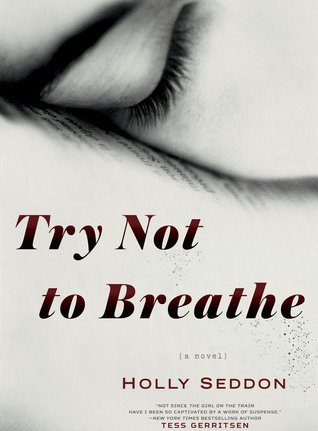 Try Not to Breathe is the sort of book that steals into your senses and takes over your life until it is done.I was invited to read and review this title by Net Galley and Random House Ballantine. My thanks go to both. I fed it to myself into intentionally small bites at first, because I read several hours before I go to sleep, and under no circumstances did I want this story anywhere in my dreams. On Friday I hit the halfway mark, and immediately realized that Seddon’s novel would occupy my Saturday, period.
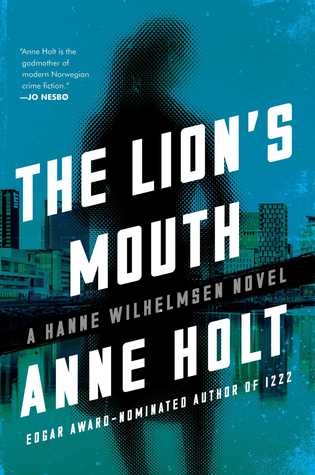 Who killed Prime Minister Birgitte Volter? Was it the neo-Nazis? The Satanists? Was it a personal thing, perhaps an angry family member? The answer is cleverly built up to, so that the reader has a fair chance of figuring it out, and yet will most likely be surprised. I was.
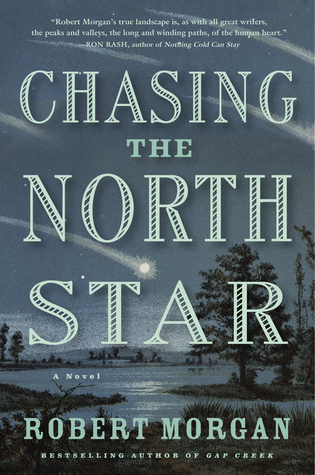 Chasing the North Star is a compelling narrative of two teenagers escaped from slavery on their flight toward the North. Thank you to Net Galley and Algonquin Books for the DRC, which I received in exchange for an honest review. This book becomes available to the public April 5, 2016.
 Seattle Book Mama