
Julia Lee is not amused, and she’s decided to say the things nobody else is saying. In this deeply analytical, provocative memoir, she tells us about her own experiences growing up, and the issues faced by Asian immigrants and Asian Americans in the United States, where “we are critical to the pyramid scheme of the American Dream.”
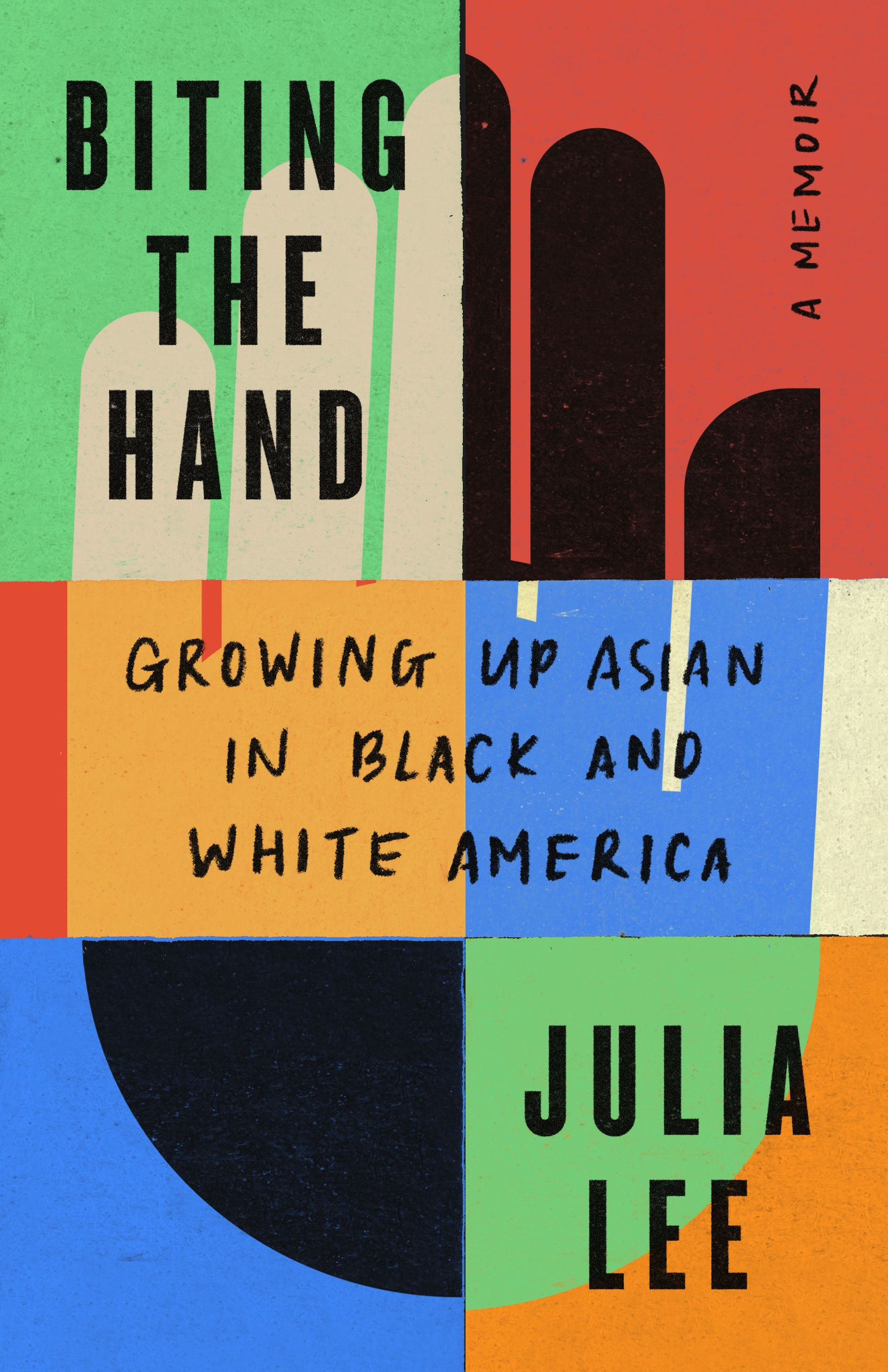
My thanks go to Net Galley, Henry Holt Publishers, and Macmillan Audio for the review copies. This book is for sale now.
In some ways, I feel as though I am reading someone else’s mail as I read this, because it is clearly intended for an audience of people of color. However, I did read it, and I’m going to review it.
When the discussion of race in the U.S. comes about, it is, as Lee states, almost always a conversation about Black people and Caucasians. Those that don’t fit into either group are sidelined. Perhaps more harmful is the way that people of Asian descent are presumed to be sympathetic to the status quo. Ever since a major news periodical dubbed Asians as “the model minority” back in the early 1960s, expectations and assumptions have leaned in that direction. And the roots of this division—Black versus Asian—make this a particularly thorny assumption to untangle. After all, a large percentage of African-Americans can trace their lineage to slavery; their ancestors weren’t born in the States, nor did they choose to come here, but were kidnapped and brought by force. Angry? You bet! But Asian immigrants came of their own accord, oftentimes fleeing untenable circumstances in their countries of origin. And so, their children, and those that have come after, have largely been indoctrinated to be appreciative. If things don’t go well, they tell them, then we must work harder!
This Caucasian reviewer comes to you without the Asian background, appearance, or experience that Lee speaks of; yet I live in a city that has one of the largest Asian populations in the U.S., and am married to an Asian immigrant, and parent to a child that is half-Japanese. So many of the stories—strangers that ask where you’re from, and won’t accept the truth of “California,” where Lee was born, or “Seattle,” my daughter’s hometown, are familiar ones.
Lee is fed up with the mainstream news stories that endeavor to pit Asian and Black people against each other. Her parents were small business owners in a mostly Black part of Los Angeles during the riots of 1992, and her experiences inform her conclusion, that there must be solidarity between all people of color in order to successfully fight for significant change.
The one bone I have to pick is the casual manner in which she dismisses the question of social class as a key factor. Her very brief note about this is that it’s a tomato and to-mah-to issue, not worth much discussion, because most people of color are working class. This is simply untrue, and it enforces a stereotype of Black people as being mostly poor and dispossessed, when in actuality, eighty percent of Black people in the US live above the poverty line. There are African-Americans that have far more money than I will ever see; some of the many Asian groups have a higher median income than Caucasians. So yes, social class is a huge factor here, one that Lee should examine more critically. There are working class Whites that can be allies; there are wealthy families of color that would shut down the struggle, given half a chance. The missing star in my rating reflects her failure to recognize this, and to offer concrete solutions to this problem.
The book’s title comes from Lee’s mentor at the otherwise very white-supremacist dominated Harvard—Jamaica Kinkaid. I actually gasped when I saw this. What a luminary she found to guide her!
Both the audio and print version of this book are equally readable, so go with whatever you usually prefer.
This is a fine resource for those seeking to examine Asian and Asian-American racial dynamics. Read it critically, but do read it. There’s a lot here that has needed to be said for a long, long time.
 Seattle Book Mama