The Memory Collectors, by Kim Neville***

2.5 stars, rounded upward.
I was truly excited to read this book; perhaps too much so. It’s not a bad novel, but not the crowning wonder that I was expecting. My thanks go to Atria Books and Net Galley for the invitation to read and review.

Ev lives in poverty, sorting through trash in hope of finding treasures that she can improve upon and sell. As the story unfolds, we are momentarily off-balance, learning about Ev and the setting primarily through context. We learn early on that Ev has a traumatic past—with the particulars doled out in dribs and drabs to create suspense—and that she has an unusual gift, that of feeling the powerful emotions experienced by the item’s former owner. She wears gloves to prevent herself from becoming overwhelmed, particularly by the negative feelings some objects project.

Harriet is an elderly woman with similar gifts, and she’s in search of an heir. When she and Ev collide over contested objects, she wants to hire Ev. Ev resists at first, but is eventually drawn in after carefully negotiating her terms. An important side character is Ev’s long-lost sister, Noemi, who pops back into Ev’s life unexpectedly. Noemi’s role here is to reveal the past events that have scarred her elder sister, as well as to motivate Ev to be successful and build a better life.

At the outset, I am impressed by the writing, and it looks like the hype is deserved, because I am immediately engaged. But as the story moves forward, it becomes slower, then slooower, then slooooower…and I realize that this is one more fantasy novel in which the one original aspect, the “stains” that reveal the character of an object to people like Ev and Harriet, is just about all the author is going to give us. Everything else, from the revelations about the past, to the relationship between the sisters, to the dynamics between the elder and younger sensitive women, to the problem posed by another gifted but malign person, to uh, everything, is sort of lackluster and tedious. The character development is shallow and barely there. I never become comfortably acquainted with the world in which these women exist. It’s as if the author has trotted out this one device—I’m trying hard not to call it a gimmick—and then figures her job is done.  There isn’t much else that I haven’t seen done much better by other writers. In the end, I tossed it on the DNF pile.

I read this story digitally, but I alternated it with the audio version, and am inclined to recommend the audio version slightly more to those that plan to read it. Initially I don’t like the way that the reader, Emily Woo Zeller, voices Noemi, using a chirpy, almost shrill voice, but after I have listened for a bit over an hour, I become accustomed to it and grow to regard the character with a fondness I don’t find for the other characters. Instead of perceiving her as shrill, I begin to think, “Oh, it’s okay; that’s just the way Noemi is.” Since I don’t fully believe any of the other characters, I have to give Zeller props for her performance.

This book is for sale now; get it free or cheap if you’re interested, but don’t shell out the full jacket price unless your pockets are deep ones.
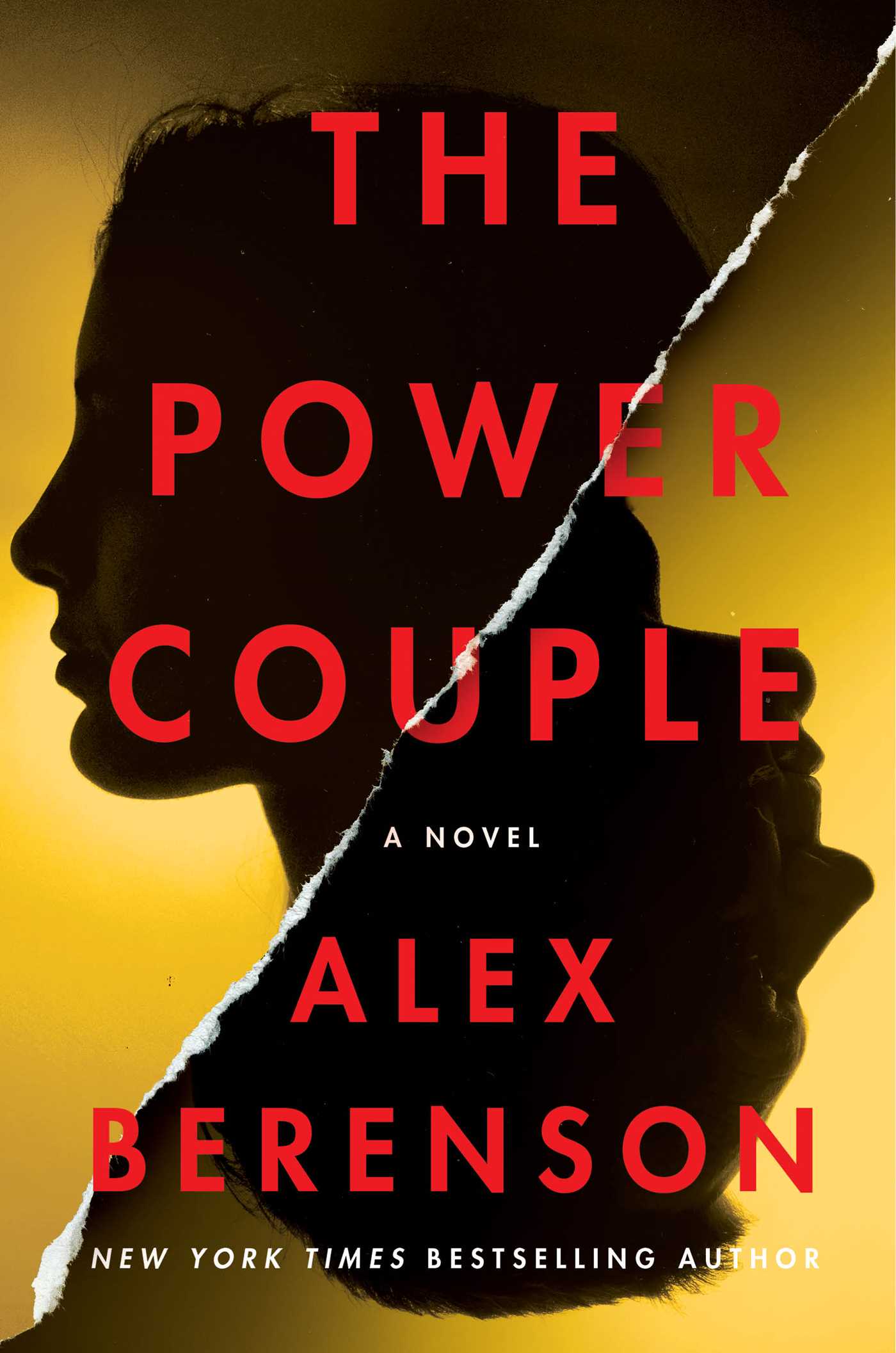
The Power Couple, by Alex Berenson****

Alex Berenson has done it again! I first read his work when I found a galley for The Prisoner, the eleventh in his John Wells series. When I saw that this stand alone thriller was available, I jumped on it. My thanks go to Net Galley and Simon and Schuster for the review copy.  The Power Couple is a fast read and a fun one, and I recommend it to you.

Rebecca (call her Becks) and Brian Unsworth are type A achievers, and both work for the federal government; she is a spy, and he is a hacker. But like so many couples, the similarities that brought them together are getting in their way now. With their children, Kira, who is nineteen, and Tony, who is younger, they take off for Europe to let off steam and spend quality time together. Maybe.

Early in the story, Kira is abducted, and from there forward, the pacing is perfect. Now and then Berenson pulls us back a bit as he shares sketches from their pasts that lead up to this event, but each reminiscence is brief, and the shift between points of view and time periods adds to the suspense. We see their lives through the perspectives of all except Tony, who is a minor character. In the end, Kira is the one we like best. (Trust me.) There’s not a lot of character development, but this isn’t that kind of novel.

I don’t want to give more away, because if I kill any surprises, you won’t enjoy the story as much; what I will say is that even if your own marriage is less than perfect, it is a shining beacon of integrity and affection when contrasted with that of the Unsworths.

This book is for sale now, and just right to take on vacation with you.

The Vanishing Half, by Brit Bennett***-****

This book wasn’t on my radar until it hit the best seller lists. The premise is a provocative one, and so I hopped online and ordered a copy of the audio book from Seattle Bibliocommons. It held my attention all the way through, but when it concluded, I felt a little cheated.

The chief protagonists are two girls, twins, raised in a tiny (fictional) town deep in the American South. The whole town is Black, and everyone—everyone—is light skinned. Sisters Stella and Desiree become restless as they come of age, and they conspire to run away to the big city. They pack a few things, gather what money they can, and head for New Orleans. The time is the mid-1900s. They arrive, find a place to stay, and get jobs. One day Desiree comes home from work, but Stella doesn’t. She’s gone. Enough of her things are missing to suggest that she hasn’t met with foul play, yet Desiree is her twin, and she is undone by Stella’s unexpected departure. Not even a note!

Stella is in the North; Stella is passing for Caucasian. But to do so, she has to cut all family ties. Her new husband has no idea.

The story progresses, and Desiree does the opposite, marrying a man who is very dark. Their daughter is what might be called blue-black. Now neither twin can comfortably return to Mallard, with one too Black, and one not Black at all, as far as anyone can tell.

The story progresses through various life changes, and eventually the focus is on the twins’ daughters, one each. Of course, the reader must wonder whether the sisters will ever be reunited, and if so, what will happen then.

When the book is over, I feel as if I am leaving the table before I’m full. There were so many opportunities here, and the author squandered all of them. The protagonists never develop to the point where I bond with any of them, and I cannot tell what the author’s purpose is here.

This book is for sale, but don’t break the bank to get it. Read it free or cheap, or give it a miss.

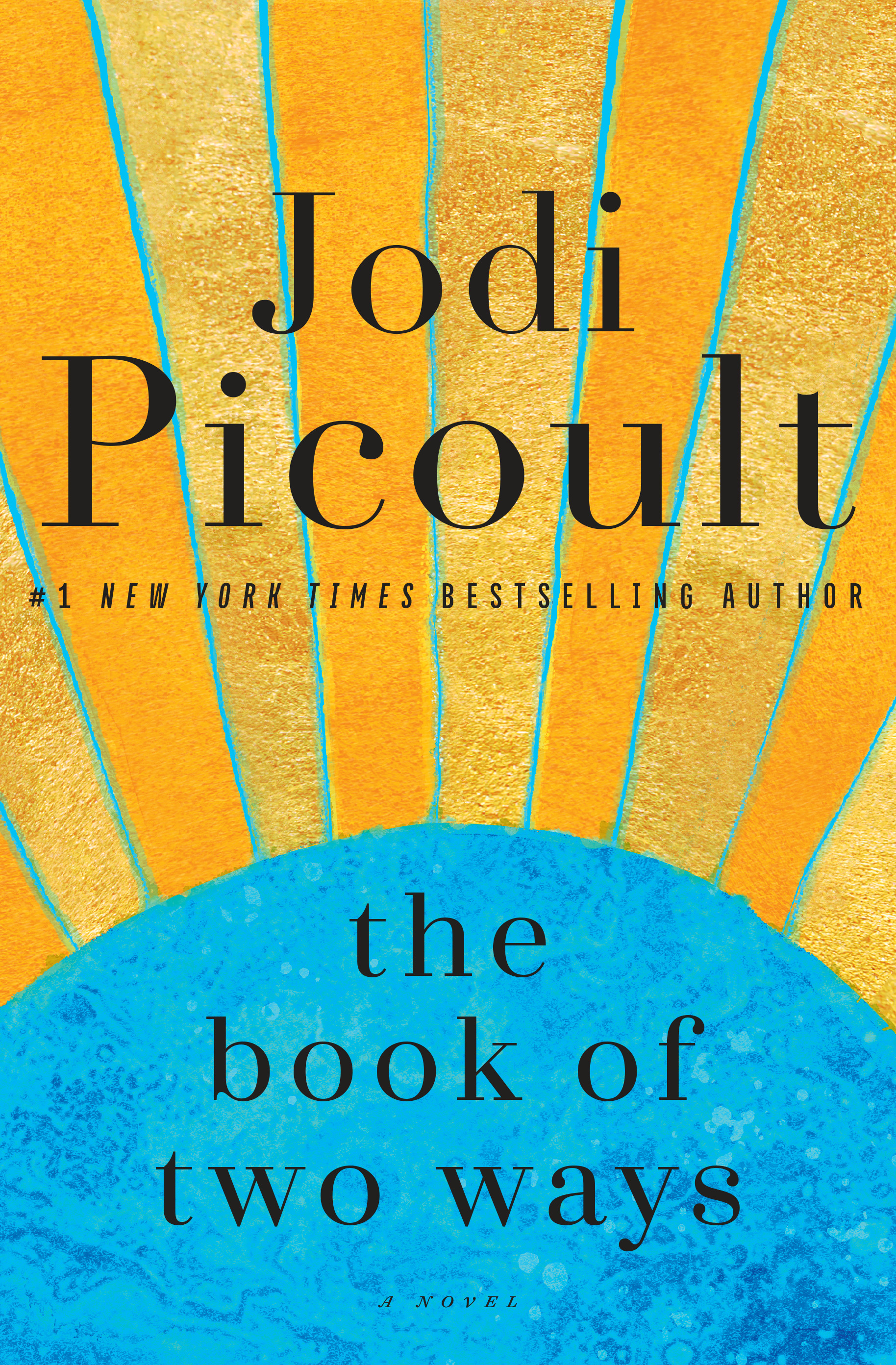
The Book of Two Ways, by Jodi Picoult***

I am generally a fan of Picoult’s writing, but my favorite part of this book is when I got to close it and put it away.  My thanks go, nevertheless, to Net Galley and Ballantine Books for the review copy.

Dawn is the sole survivor of a plane wreck, and as it goes down, she is assaulted by regret about the road not taken.  (My apologies to Frost.) On land once again, she decides to go back to the life she abandoned when she married and had her daughter, to see what might have been; the life she was preparing for was that of an Egyptologist.

There have been times when a novel features some area of history or science that I’ve never studied, and I find it so mesmerizing that it becomes my new favorite area to explore. This was not one of those times. In fact, it took me four tries to get through this thing, and even then, I skimmed much of the story from the fifty to seventy percentiles.  I tried the audio version; no joy there, either. I grew bored and my mind wandered; then I didn’t understand what I was reading, so I had to go back over it to pick up the part I’d daydreamed through.

In my defense, however, I have to say that the organization and frequently shifting points of view and time periods is enough to confuse the best of us, or at least give us whiplash.

Picoult’s strength is creating strong, resonant female protagonists that are easy to bond with, but I didn’t ever warm up to Dawn. Let’s take, for example, the notion of simply walking away, not only from your husband that loves you and with whom, till now, you’ve had a loving and solid relationship; there’s the matter of walking away from a child, or considering doing so. No, no, no. No. NO.

But mostly, this story just bored the living snot out of me.

I have provided three stars, because some readers will enjoy the lessons in Egyptology; if you’ve always wanted to know more within this realm, perhaps this book will work for you. If you go there, though, get it free or cheap; don’t sink full cover price into this turkey.