A Note Between Reviews

I am stepping outside my usual format for a day to let you know of a wonderful opportunity, if you haven’t caught wind of it elsewhere. (I can’t review a book today anyway, since I am still marching through Napoleon and halfway through a few novels.) But here it is:

Author Sara Paretsky, one of my all time favorite writers, posted on social media that if you tweet or Facebook post a book you are giving this holiday season along with the hashtag # GiveaBook, Random House Penguin will donate to Save the Children.

For me, this is a no-brainer. My whole family knows that unless they are that rare bird, the non-reader, they will be getting a book from me this year. I posted some I am giving and a couple more I wish I could give, if only I could match the brilliant book with the right recipient. You can do this as many times as your heart allows.

So if you wish you could give liberally to a good cause but are constricted by your bank balance, here’s one painless, actually kind of fun way to contribute to the greater good. Your title does not have to be a Random House title; it can be any book at all.

Why not? And if you’d like, just for giggles, feel free to post your titles in the comment section of this blog, too! I’d love to see what titles others are giving.

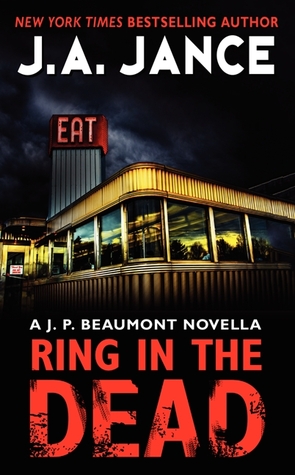
Ring in the Dead, by JA Jance ****

ringinthedeadJance is a matriarch in the world of detective novels, or in this case, the novella. She has four different series that she prodigiously juggles and maintains. The others take place in Arizona and don’t interest me as much as this series, her first, whose protagonist is a Seattle cop named JP Beaumont.

It takes a good writer to make me buy the premise here, namely that the SPD are mostly hard-working, good-hearted citizens who joined the police department out of a sense of civic duty. The reality is very different; Seattle’s cop force was recently named the most violent in the entire USA. Cops here are legendary for their gratuitous use of brute force. They develop vendettas against individual citizens. My own middle-class neighborhood recently met with the chief of police to let him know that we are comfortable policing ourselves, and he can take those cops he says are too few to do the job, and assign them somewhere else. Anywhere else. Please. Just get them out of here!

So while the FBI knocks its collective head against the brick wall of SPD intransigence, trying to find some way to rein in these mad dogs before the city goes completely nuts and becomes another Ferguson, I read this engaging little novella, and for the brief time it lasted—a single evening—I could forget reality and buy Jance’s premise of brother officers doing good things. That isn’t easy to do.

The fifth star is denied simply because of the brevity of the work. There must surely be a definition that separates the short story from the novella, but I am darned if I know what it is. When reading a digital work it’s not a bad idea to skip to the ending first, so you’ll know when it’s coming. I was glad I did that, because this one ended 67% of the way through its brief length. A full third of its space was devoted to plugging another novel. (I was too annoyed by this to remember the title of the work-to-come, so I guess the teaser didn’t work for me.)

The novella focuses on a long-ago case when Beau was a newly-promoted detective. His partner, known as Pickles, died of a heart attack, and his daughter found some papers when she was cleaning out the family home. She comes to talk to Beau and to give him the papers, which relate to a case he had worked. In a nut shell, the story reminds us that time is short, and that we should spend ours on things that count.

I look forward to Jance’s next Beaumont novel. I just hope it’s full length. I obtained this novella from our public library, but if I had paid for it, I would have felt robbed. Get it free or cheap, or keep your plastic put away.

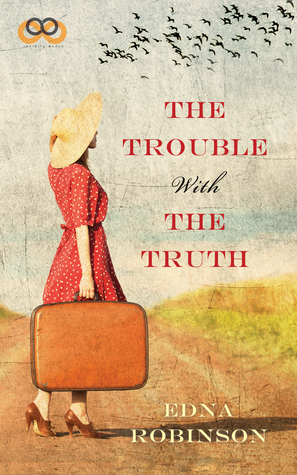
The Trouble with the Truth, by Edna Robinson ****

thetroublewiththetruthThree and a half stars, rounded up. My thanks go to Betsy Robinson, the late author’s daughter, who invited me to preview an ARC and review it. It’s been a fun read.

Lucresse and her brother Ben have an unusual life. On the one hand, they aren’t starving, as many people around the world were during the Great Depression. But on the other hand, their circumstances require a constantly changing back-story in order for them to be accepted by polite society, which was much harsher and more judgmental than it is today.

For one thing, their mother is dead, and their father, a much older man than their classmates’ fathers, has not remarried. Not unless you count Fred, their chauffeur, butler, and otherwise highly respectable servant whose devotion to their family is not fully understood until a crisis strikes. Fred does not sleep with Father, of course. He has separate quarters, but no separate life. They’re pretty much his whole story.

Lucresse has the trouble with the truth that gives our novel its title. Her whole life is predicated upon a series of courteous lies; every time they pack everything and move to a new town, which occurs as often as four times annually, she and Ben are thrown birthday parties. There’s a good reason to do that, but it’s not true that it’s their birthday, and they both know it. And when Father cultivates the acquaintance of a well-known actress and she moves into their guest room, a visiting aunt is told she is the book keeper. It’s another lie, for the sake of appearances.

This highly accessible, charming novel is set out in brief chapters, and in most cases the chapter represents a new story within the overall story, so it is almost like reading a series of consecutive short stories featuring the same characters. With quirky good humor and also a certain amount of ambiguity regarding our head of household, I found myself smiling and nodding at the fib-to-cover-another-fib.

Though the family’s life is bizarre, the children are loved and well cared for; this is no Glass Castle. Rather, it is a portrait of a fictional family that never quite meets the conventional standard society seems to expect.

Recommended for those who like a little whimsy now and then.

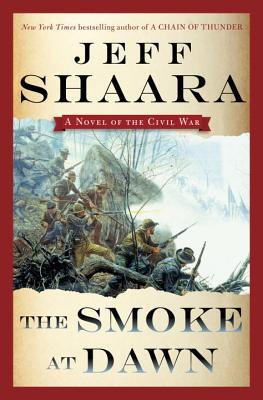
The Smoke at Dawn, by Jeff Shaara *****

thesmokeatdawnI hungered for this book! I am a great fan of Shaara’s work. I didn’t get the ARC, but Seattle Public Library came through. Had it not done so, this is one of the very few books for which I would have paid full jacket price.

Shaara writes historical fiction about American wars, sometimes in the form of trilogies, and here he wraps up a trilogy on the Western campaign of the American Civil War. The scenario: Rosecrans, the Union officer who heads the Army of the Cumberland, has had a strong victory followed by a stunning defeat. First he used brilliant gamesmanship and planning to attack and take Chattanooga; this went largely unnoticed by the press, which was beside itself, understandably, over the twin victories of Vicksburg and Gettsburg. But then, unfortunately, Rosecrans pushed his luck too far, getting his ass kicked and a lot of good men dead at Chickamauga. The result was that he ran like hell, dug himself in, and refused to go forth again. Unfortunately, the Confederate troops led by Braxton Bragg cornered him and he was besieged. When Grant was given overall command of armies in the west, he was asked to choose whether to keep Rosecrans in place, or send him packing and promote George Thomas. He chose the latter.

Shaara is generally brilliant at crafting character based upon the historical record. I found Bragg to be almost a caricature—and hell, for all I know, maybe he didn’t have many good characteristics from which to draw; I haven’t studied him much. Grant is portrayed with warmth in a way that sits right with me; the same holds true for Sherman. Thomas has always been something of an enigma, and he clearly is for Shaara also. Sherman and Grant both said in their memoirs that he was slow. (My own memory of Sherman’s is a letter to Grant in which he says, “We both know Thomas is a little slow,” and I sensed irony and understatement in his tone). Yet other historians swear that he was in fact misunderstood. Shaara gives him the benefit of the doubt while allowing for some ambiguity.

I read my copy digitally, and I was pleased at the way I was able to zoom important maps that made it much more possible to see what troops were moving where.

The most controversial aspect, judging from what other reviewers have said about this trilogy, is the creation of Bauer. When I have wanted to confer 4.5 stars on one of his novels in this series, I round up, and it is for Bauer that I do so. Bauer is the only character that is entirely fictional, but Shaara chose to create him to represent that nameless, faceless soldier who represented the vast number of those who bore the greatest burden. They didn’t become famous or have their belongings shown in museums. It’s rare to find a foot soldier’s whole story. Some kept journals, but these were often lost during a battle, scuttled during a hard march when everything non-essential got tossed on the road, or drenched in rain or during a river crossing. No journalist ever followed a humble private around to record his experiences and opinions. For his effort to include the every-man in spite of the flack he would endure from the purists among his readership, I give Shaara high marks.

Next up: Shaara will tackle Sherman’s march through Georgia, through the flames of Atlanta, to the sea. This is my favorite part of the whole thing, and I am excited as I look forward to reading it.

If you enjoy historical fiction based on the American Civil War, and especially if you do not harbor any cherished sentiments toward the dead lost “Cause”, you can’t go wrong with this one. Historical fiction at its best, from a master of the genre.