
The Family Recipe, by Carolyn Huynh*****

“We all need to feel needed. Otherwise, what’s the point of living?”

Carolyn Huynh made her authorial debut in 2022 with The Fortunes of Jaded Women. It was one of my favorite novels not only of that year, but of all the thousand-plus galleys I have read since I began reviewing. She’s back again with The Family Recipe, and it’s every bit as good as the first. My thanks go to NetGalley and Atria Books for the invitation to read and review, but make no mistake: I would have hunted this thing down and bought it with my Social Security check if it came down to it. I wouldn’t have been sorry, either.

This book is available to the public now.

Once again, our protagonists are Vietnamese and Vietnamese-Americans, mostly women, and once again, they are siblings and other family members that must come together; it isn’t a voluntary reunion. And that’s where the similarities between the first book and this one end.

Duc Tran, the patriarch, has laid out the terms by which his children may inherit his fortune. Once upon a time, he was the Vietnamese sandwich king, and in order to become his heir, each of his four daughters must relocate to a city she doesn’t want to live in, and revive a down-at-the-heels restaurant in a now undesirable end of town. It’s a contest; that is, unless Duc’s one son, Jude, succeeds in getting married within the one year’s time limit of the contest. If he can do that, he wins. (His sisters aren’t worried; who would marry Jude?)

The story is told from several points of view; these include the siblings, their uncle—a shady lawyer, and Duc’s best friend; their mother, who abandoned them when they were small, when her mental health collapsed, and never went back; Duc’s second wife; and briefly, Duc himself, who mostly serves as a mysterious figure that doesn’t even return to the States to lay out his children’s requirements, sending their uncle as his proxy.  As the story unfolds, we learn more about each sibling, and about the traumas they have experienced, as well as their successes.

The thing that makes it work so well is Huynh’s unerring sense of timing. It’s a dramatic tale, but it’s shot full of humor, as we see at the outset, when we learn the sisters’ names. Their father was a huge fan of the Beatles, and so the girls are named Jane, Paulina, Georgia, and (wait for it…) Bingo!

There are plenty of twists and turns, and the dialogue crackles. The internal monologues are mesmerizing. This book would make a fantastic movie.

Since I was reading this galley digitally, I highlighted quotes that I thought I’d like to use in this review, but there are 28 of them. Obviously, I cannot share them all here, but let that inform you, if nothing else here has, how much I love this book.

Highly recommended to anyone that has a beating heart, at least a passing interest in Vietnamese-American culture and/or family stories, and can use a few good laughs.
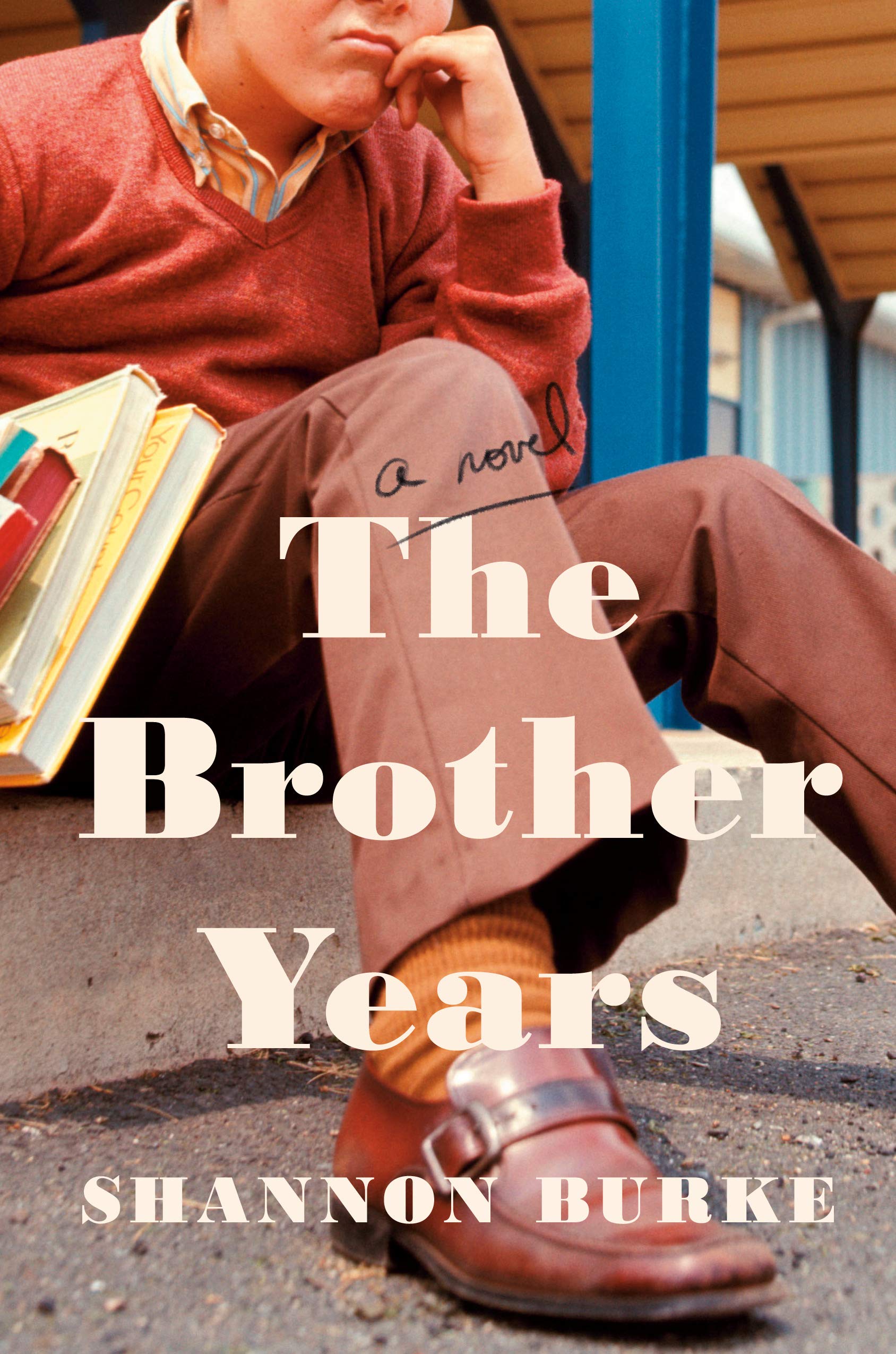
The Brother Years, by Shannon Burke*****

The Brother Years is my first book by this author, but I hope it won’t be the last. Big thanks go to Net Galley and Doubleday for the review copy. This book is for sale now, and if you treasure excellent, character-based fiction, you should get it and read it.

It’s tempting to call this a coming of age story, but the quality of the writing renders it unique and singular, defying categorization. The quiet authority and intimacy with which this story is told within the first person point of view led me to my desktop twice to make certain I was reading fiction, rather than memoir. In addition, I’m a sucker for any story that addresses social class, and class is the flesh and marrow of this tale.

Willie Brennan is the second born into a large family, and almost all of his siblings are boys. His parents are working class strivers, determined to rise, and particularly to help their children rise, through merit and hard work. In order to obtain the best possible education, they move into a substandard rental house in an otherwise upscale community. But social class shapes us, not only in terms of material trappings, but in more subtle ways having to do with culture. For example, when the boys get angry with each other, they are ordered to take it outside. The parents, who work multiple jobs in order to elevate their sons and daughter, are often not available to mediate disputes; moreover, the family is infused with a dog-eat-dog sort of Darwinism, and so sibling on sibling domestic abuse germinates and grows, along with genuine, abiding hatreds for protracted periods of time. This contrasts sharply with the more genteel, nuanced manner that more moneyed families deal with disputes and competition within their families, and between friends. And so, Willie and his older brother Coyle are set apart, not only by their house, family car, and clothing, but by the way they treat their classmates and each other. And we see much of how their classmates and neighbors regard them:

“They knew of our family. Our reputation had grown as we’d gotten older. We were Brennans. We did crazy shit.”

As the story begins, Coyle, the eldest, is the apple of his father’s eye, the achiever in every possible arena. Willie feels the terrible weight of expectation; how does one follow an act like Coyle’s? But in adolescence, Coyle rebels, and nobody knows what to do. Willie, next in line, bears the brunt of his brother’s bottomless rage.

This could be a miserable read in the hands of a less capable writer.  I have seen other writers tell stories of horrifying childhoods, both fictional and autobiographical, that simply made me want to put that book down and walk away. When pleasure reading is devoid of pleasure, what’s the percentage in forcing oneself through to the conclusion?  But Burke is too skillful to let this happen. While there are a number of truly painful passages, the distance projected by the narrator, speaking down the long tunnel between his present adult life and that tortured childhood he recalls, provides me with enough of a buffer that my sorrow for this poor child is eclipsed to a degree by my eagerness to know what will happen next.

This reviewer was also a child of working class parents, and also attended an excellent public school where most of my classmates came from families with money, in some cases a lot of it. No doubt this further fueled my interest. I am riveted when, as a revenge ploy, Willie accepts a friendship overture from Coyle’s nemesis, Robert Dainty, whose family is among the wealthiest and most

 privileged in town. Robert was “the epitome of the New Trier student: competent, self-satisfied, crafty, and entitled.” The interactions that take place within this alliance are fascinating, and I believe them entirely. In fact, I believe every character in this story, from the father, whose judgement and impulse control is dreadful; to the mother, who smolders and tries to make the best of things; to the older brother, classmates, and of course, the protagonist, Willie.

The author—and this reviewer—grew up in the mid-twentieth century, and it was during a time, post-Sputnik, post-World War II, when the United States and its people were passionate advocates of competition and domination. For this reason, I suspect that those from or close to the Boomer generation will appreciate this story most. But it’s hard to pigeonhole writing that meets such a high standard, and everyone that appreciates brilliant fiction, particularly historical fiction, will find something to love here.

Because I was running behind and could tell this galley was one that I shouldn’t let fall by the wayside, I supplemented my usual reading with the audio version I obtained from Seattle Bibliocommons. Toward the end, because it is so impressive, I listened to it and followed along in the galley. George Newbern is the reader, and he does a wonderful job. You can’t go wrong, whether with print or audio.

Highly recommended.