“I always heered that art was for ugly girls and queers.”

The Animators is the right story at the right time, outstanding fiction that is too impossibly good to be debut fiction, and yet here it is. I nearly let the DRC pass me by, because apart from its female main characters, there is nothing here that would ordinarily hook me. I am too old, too straight, and too un-artistic to be part of the target demographic. But I had been in a rut lately, reading too many mysteries, and so I decided to step out of my comfort zone; in doing so, I hit the jackpot. Sometimes rewards come when we aren’t expecting them, and it would be a sad thing to let a golden moment pass by unmet. Thanks go to Net Galley and Random House for the advance copy, which I received free in exchange for this honest review.
Our story revolves around the lives of two women that meet at art school. Sharon Kisses is a shy kid from Kentucky, self-conscious but ambitious. Mel Vaught is hilarious, outrageous, and riotously extroverted, a noncomforming thrill-seeker from Florida. Mel appreciates Sharon’s art in a way that no one else does, and Sharon is grateful to finally have someone understand her. Together they form a team that will become famous.
The entire story hinges on development of our two characters and the relationship that unfolds between them. The plot is original and interesting, but it wouldn’t go anywhere if I didn’t believe Sharon and Mel. I buy both of them immediately, and before we’re even halfway through the story I am making predictions—mostly unsuccessful ones, and it’s the chewy ambiguity that makes the whole thing so fascinating—about what one or the other of them will do. I made one accurate prediction midway through, but nothing else went where I expected it to. That being said, however, everything here made complete sense, and these are two such viscerally relatable characters that I carry them in my head still, though I’ve read at least half a dozen other books since I finished this one. In fact, a hallmark of the very best fiction is that I have to let what I have read cook in my head for awhile before I am ready to describe it. I take notes, but they aren’t enough.
Mel is gay, but Sharon isn’t. On the other hand, Mel is also about ninety percent of everything that Sharon has in this world, once the partnership develops. Sharon always introduces Mel as “my business partner,” and this is both true and safe, but here I wrestle with my own thoughts. Is there anyone else alive that Sharon can love the way she loves Mel, whether she recognizes it or not?
How many women of days gone by—let’s say the early twentieth century—lived with another woman their entire adult lives, never even considered touching one another sexually for fear of their mortal souls, and maybe propagated a myth to the neighbors that they were related? I think there were a lot of them. Being a lesbian was on a par, back then, with having barnyard sex with Old Bessie. No decent person was; no decent person did. So instead, they labeled themselves ‘spinsters’ and invented a story, and just lived together, decade after decade. And when I look at the community from which Sharon has sprung, I can understand how this mindset carries over to some people even today.
Yet there’s another reality, too. Sharon really likes having sex with men. When she isn’t doing it, it’s on her mind. How many women have pledged their lives to someone that does not physically attract them, because they find the person good company and don’t want to break their heart? And so when I think of Sharon, I remind myself that perhaps Sharon really isn’t gay. Maybe she will never want Mel sexually, and maybe that’s a fair thing to recognize.
The story contains so much life, so much sorrow, and it’s so damn funny at times. And the rage! Both women carry a tremendous amount of anger, and it provides fuel for their creativity. Hearing their stories is like peeling an artichoke, one layer after another to get to the best part, which is way deep inside.
As the story progresses, we come face to face with the pasts both women carry with them. Mel’s tortured upbringing is the subject of their first animated film, and it’s clearly therapeutic; yet good therapy can only do so much. And as we see the world through Mel’s eyes, the depth of analysis is both brainy as hell and absolutely riveting.
Sharon is the introvert, and so it makes sense that her own story comes out more slowly, and it may never have done so without Mel’s assertive nature insisting that they stop by Sharon’s home town on the way back to New York.
The critical thinking here is deep and dark. Those that have regarded art as a soft discipline will have to sit up and take notice.
This story is for geeks, artists, and anybody burdened by at least one dark secret. It’s a story for strong, unapologetic women and those that love them. And it’s for sale Tuesday, January 31, 2017. Get a copy. You can’t miss this one!

 Harry Hunsicker is the former executive vice president of the Mystery Writers of America as well as a successful author. Reading this suspenseful and at times almost surreal tale makes it easy to understand why so many people want to read his work. I’d do it again in a heartbeat. Thanks go to Net Galley and to Thomas and Mercer for the DRC, which I received in exchange for this honest review. This book will be available to the public April 11, 2017.
 Patricia Cornwell has a publisher that doesn’t love bloggers, but her books kick ass. For this reason, this white-knuckle thriller was one of perhaps half a dozen books on my Christmas wish list for 2016. So here, in this spot where I traditionally thank the publisher and the site that facilitates them, I will instead thank Benjamin, his lovely wife Amie, and their baby boy. Between them, they gave me three delicious books, but this is the one I had to flip open as soon as the Christmas celebration was over; excuse me everyone, but I am off to bed with my box of Christmas candy and Patricia Cornwell. I am just now getting to the review, since DRCs get first priority, but I gobbled this book up before the New Year holiday.
 The Mercy of the Tide is Keith Rosson’s debut novel, and it’s a strong one. Set in a tiny, depressed town on the Oregon Coast during the Reagan Administration, things start out dark, and they’re about to get a whole lot darker. Thank you, Net Galley and Meerkat Press for the DRC, which I received free of charge for this honest review. This book will be for sale February 21, 2017, and those that love good fiction with a working class perspective will want a copy.
 This is #32 in the Alex Delaware series, and Kellerman’s writing just seems to get better with every entry. Thanks go to Net Galley and Random House Ballantine for the DRC, which I received free in exchange for this honest review.
 Always, Sarah Jio’s much anticipated new release, takes on the homelessness epidemic using the powerful medium of fiction. I received my copy in advance in exchange for an honest review; thank you Net Galley and Random House Ballantine for the DRC. This title is available to the public today, and if you have enjoyed Jio’s other novels, I am confident you’ll like this one too.
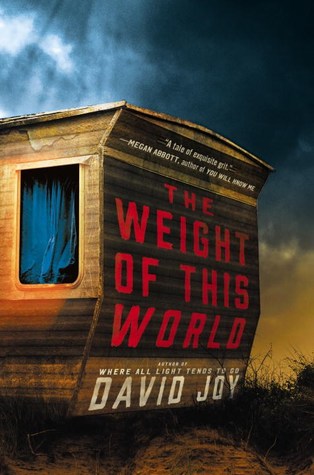 David Joy is a writer that keeps it real, and that’s what made me lurch forward in my desk chair and grab my mouse when I saw his second novel was done. Big thanks go to Net Galley and Putnam Penguin for the DRC, which I received in exchange for this honest review. This title will be available to the public March 7, 2017. Those that cherish strong fiction should buy it and read it.
 Little Heaven is pure hellfire and horror, the sort of novel that makes a person check the closet at bedtime and leave a light burning in the hallway. I received my copy in advance from Net Galley and Gallery Books in exchange for an honest review. The title is available for purchase now.
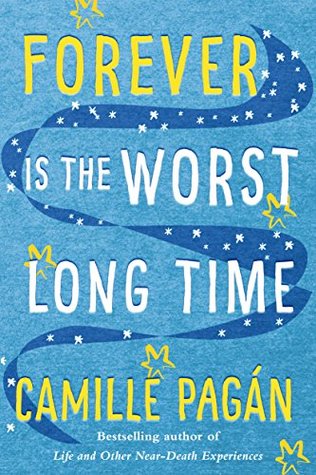 Camille Pagan is the author Life and Other Near Death Experiences. Thank you Net Galley and Lake Union Publishing for the DRC, which I received in exchange for an honest review. This title is for sale February 7, 2017.
 Berenson has written a whole series of espionage thrillers featuring John Wells, a CIA operative fighting al Qaeda. I was unaware of this when I requested a DRC from Net Galley and Putnam Penguin, but I find it stands up quite nicely as a stand-alone novel. Would I have enjoyed it even more if I’d read the others first? We will never know. However, if you’d like to read this tightly woven thriller either in sequence or singly, it will be available January 31, 2017.
