College (Un)Bound: The Future of Higher Education and What It Means for Students, by Jeffrey J. Selingo ****

collegeunboundCollege Unbound is a thoughtful, informative, and nearly exhaustive look at the ways in which higher education may best serve today’s young learners. Thank you, Net Galley and Amazon Publishing for this extremely useful volume, which I received free in exchange for my review. It will be available for sale April 28.

It became available at an important time. My youngest child is a high school senior contemplating college; I am retired, and still paying off my own student loans. Selingo’s discussion of the worth of post-graduate education, whether it is better to attend a two year school or pony up for a pricy school that has a lot of perks and more financial aid available, and the ways in which higher education itself needs to change gained my full attention.

It seems that my own debt-ridden situation is not unusual. Now that not all student loans are subsidized by the government, many graduates exit the comforting, ivy-covered walls of higher learning saddled with 50k or more in student loans and no guarantee of future employment. Most at risk are those that excel in liberal arts, since today’s economy is more geared toward mathematics, technology, and hard sciences.

Selingo suggests, among other things, that higher education needs to unbundle, so that students can combine credits and experience from a variety of schools and other sources, such as on-the-job training, in order to receive their degree. He also points out that many students can get the best result for their dollar (or yours) with a one or two year certification program at a local community college or technical school, rather than paying out the big bucks for a 4 year or advanced degree.

As I read, I flagged nearly 100 passages that I thought were worth revisiting. There’s a lot of information here, and a lot of thoughtful ideas. Selingo has the experience to back his suggestions, and in addition to citing his sources in a conversational way for greater accessibility to text, Selingo has also spent many years in college administration and journalism, including the much-lauded US News and World Report guide to colleges.

One thing I watched for all the way through, as he discussed a wide variety of options, including online learning and experimental hybrid classes, was what he thought of alternative schools. At one point he used the term, but it turned out that he was referring, once again, to online and “unbundled” options. Given that the author discussed the need to avoid “dumbing down” curriculum for the sake of students-as-consumers (here, here!), and the need for critical thinking skills that would create better problem solvers once graduates hit the job market, I immediately thought of actual alternative schools such as Evergreen State College, Bennington, Eugene Lang, and Antioch, where students are not just taught rote content, but how to think more critically. My daughter attends a strong alternative high school, and all four of my other children went there too, turning down Seattle’s much-lauded AP program for highly capable students. I gained my teaching credential and advanced degree at one of these alternative colleges, and although the student loan debt is no joke, I was able to go directly from school to a job in a field where the average graduate in Washington State had to spend three or four years working in temporary or substitute positions while waiting for their break.

And so…what? And this is why the fifth star in my review is denied. Just like US News and World Report (now moribund save for its college guide), Selingo completely leaves alternative schools out of the picture. If he doesn’t like them, he should say that and explain why. If they are recommended, he should include that information.

My conclusion is that this is nevertheless a really good resource for parents of teens who are trying to decide what choices to offer their children after high school is over. The decision, says Selingo, is often not a rational one, and this resonates. How many parents go for the higher price tag because they feel nothing is too good for their son, their daughter? And yet, says Selingo, more expensive is not always better, and a rarefied atmosphere does not always produce the result anticipated by those who pay or borrow heavily. I’ve only scratched the surface of what he has to say. So although I do recommend also considering alternative education, when you find yourself facing that vast selection of college-shopping materials available, include this forward-looking volume in your collection.

Although most teenagers won’t likely read it, adults considering returning to school and facing the financial decisions for themselves, rather than their parents, should also give Selingo’s discussion your time and attention.

In order to get the best education at the best price for ourselves or our children, we must first learn about the schools and educational paths we are considering.
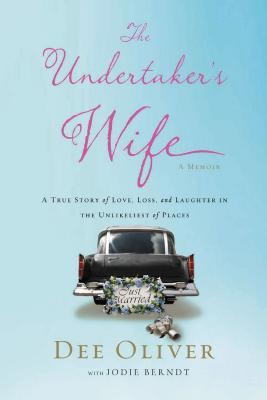
The Undertaker’s Wife: A True Story of Love, Loss, and Laughter in the Unlikeliest of Places, by Dee Oliver and Jodie Berndt***-****

theundertakerswife 3.5 stars. This interesting, accessible memoir will be published in March of this year. My gratitude goes to Net Galley and Zondervan Press for providing me with an ARC.

Dee Oliver grows up in a rarified atmosphere in Virginia Beach, where her parents own an oceanfront home. After completing her degree from a private college, she enjoys life and a series of part-time jobs that entail no serious commitment or career potential, supported by her parents. Eventually she is given a very Southern, Caucasian type of ultimatum: find a real job in which you can support yourself, or find someone to marry. It is understood, in this world in which debutante season actually exists, that the spouse in question will be a man, and that he will be a person of substance. A doctor is preferable, but instead, Dee marries a doctor to the dead, the co-owner of a funeral home.

Life is definitely different now. Dee and Johnnie, her newly betrothed, cannot travel for any length of time, since people don’t make appointments before dying and he could be needed any time. Their honeymoon is a three-way party: just the two newlyweds and the corpse in the rear of the car, being transported, by happy coincidence, to their honeymoon destination.

Their daughters grow up playing tag among tombstones and jumping rope with the velvet rope that keeps the mourners in line.

The one thing that surely does not change is her standard of living. Most of her friends, she tells us, would have to call the painters themselves. How fortunate that Johnnie understood that she needed the advice of a decorator, who would then call the painters personally!

This is a quick, almost flirty read as it begins, but because I make it a point (almost) never to read books by or about affluent people, I almost tossed the book down unfinished. But I knew that something about it had made me request this ARC, and so before throwing my hands up and abandoning ship, I went back to reread the synopsis. It was a good thing I did, because it gave me hope (as Christians like to say) of better things to come.

You see, Johnnie’s occupation taught him how to console and advise the bereaved, but it didn’t take him out of his state of denial about his own mortality. Dee packed him healthy lunches which he threw away, and bought him a gym membership which he never used. It caught up to him in his early fifties, in a sudden and final way.

As half owner of a funeral home, Dee realized that she should go back to school and get the credential necessary to do Johnnie’s job. However, once it was time for her internship, she whacked her well-coiffed head smack on the glass ceiling. No way, no how would her brother-in-law allow her to do such a thing.

It was at this point that Dee received one of life’s more valuable gifts: a new perspective. Riddick’s funeral home is in the African-American section of town, and its owner is not just a man of business, he is a man of the community. It is there that she was able to intern, and the results are really funny, because the area where she lives is exclusively pale, and Riddick’s funeral parlor is in an entirely Black area. Said one visitor, after enquiring whether she was a member of the press, and being told otherwise:

“ ‘So,’ he said slowly, chewing this piece of news the way a child might process his first lima bean. He wasn’t sure whether or not to accept it. ‘So what we got here is a white woman working in a black funeral home.’
‘Yes sir. That’s exactly what you got.’
‘Well, then,’ he concluded, ‘I guess you have overcome too.’ And with that, he tipped his hat to me and walked away.”

Along with her own unique story, Oliver provides us with a good deal of sound advice to follow now, while we are alive. Did you realize that if you die without a will, up to seventy percent of what you own may be taken as taxes? I don’t know whether this applies to those of us in humbler tax brackets than those in her milieu; Oliver did not specify. Either way, though, the point is made that those of us who are married and have divided the responsibilities of married life still need to be aware of a lot of nuts-and-bolts issues that it’s easy to ignore until someone has died.

Here, nobody knows better than Oliver. She has taken care of the dead, advised the bereaved, and she has been widowed. She really does know.

Everyone who writes a memoir is entitled to tell her own story with her own voice. Nevertheless, the class and religious biases here grated and could be toned down. She tells us that we need a “team” to be on to get us through the good times and the bad ones, and here are the teams she recognizes: Baptists, Catholics, Lutherans, Presbyterians, Episcopalians, and nondenominational …it isn’t going to get any more diverse in her world. Jews, Muslims, Hindus, Buddhists, and especially Atheists like me are going to “the other place”, as she describes it earlier in the text, since we have not asked Jesus into our hearts. There’s not a lot of wiggle-room in Oliver’s somewhat limited sphere. Your team may not even exist in her universe.

So should you read this book? I vote that you ought to. Most of this memoir is either light and amusing, or full of down-to-earth, practical advice we can use. Ditch what you can’t use; for example, if you work in construction all day and come home to an empty house, her earnest suggestion that rather than marry too soon after bereavement, you “hire a housekeeper” may not be a real world option for you. But eighty or ninety percent of her recommendations should work for everyone, and if the Bible verses don’t work for you, you can skim past most of them as I did.

The real question is whether you should shell out full jacket price for this book, and that question is a very individual one. If your lifestyle is similar to that of the author, then get one for yourself, and another copy for your BFF. If you’re married, get one for your honey, too.

If not, you may want to pick up a copy less expensively later on, or check it out from your local library if it becomes available there.

Either way, the sobering message to tuck important information where your loved ones can get to it is worth its weight in gold.