The Vanishing Year, by Kate Moretti****

thevanishingyear 3.5 stars, rounded up for this one. I received my copy from Atria Books and Net Galley in exchange for an honest review.  I am impressed most by the first half of the book, and particularly with regard to character, Kate Moretti is a rock star.

Our protagonist is Zoe Whitaker, and we learn that Zoe grew up as Hilary—with one “L”, and no political baggage—and then chose to adopt “Zoe”, the name on her birth certificate prior to her adoption. There’s a lot more mess here than there needs to be, the adopted-child angst, the guilt over having not given her mother Evelyn the funeral she deserved, and fear, fear, fear.

Moretti does a wonderful job of building suspense, and part of this is the vague but real tension, the constant shoulder-checking, wondering if someone has found her. It makes us wonder who, and it makes us wonder why. Bit by bit, she unspools tidbits of the past in the way you might expect someone that needs a friend and is learning to trust a new confidant might do.

Moretti’s main character is beautifully sculpted. Some novelists that withhold information to build tension hang onto so much that we don’t get to know our protagonist, but I was perched right on Zoe’s shoulder, or hanging out with her newly discarded friend Lydia, asking her why the heck Zoe is so passive. Is fear the only language Zoe knows? I felt close to Zoe, and I wanted her to tell me more.

Meanwhile, there’s the marriage. Henry Whitaker, an immensely wealthy man, sees Zoe across a crowd and homes in on her. Those familiar with the patterns common to abusive relationships know that this is a red flag; the guy whose gaze lights on a partner and from then on wants full possession of every move, every thought, and every minute. He makes a snap decision like lightning and then never lets up. And Henry has plenty of other red flags too, but he’s not a stereotypic abuser; Moretti is too cunning to permit any caricatures into her novel.

For the first half of this story, I relished the meaty ambiguity, not only in Zoe’s life but in what it represents. Yes, Henry is too possessive, too bossy, but on the other hand, this young woman that has never been known for her remarkable beauty or extraordinary talent has the Cinderella marriage without the stepsisters.

“I might be under someone’s thumb, but I have money now.”

Zoe has no living relatives to her knowledge, apart from the birth mom she hasn’t located and that may not want her when she does. She doesn’t have a degree, and is working at a florist’s shop in Manhattan when Henry finds her and whisks her away. He is devoted to her, provides her with every small thing her heart desires. She has a car and a driver, she has servants, she has clothes, jewels, and the whole nine yards. Everyone defers to her. There’s no restaurant that won’t make room for her at the front of the queue. Tickets to a sold out event? No problem.

It is easy for us to moralize from afar, we feminists with our principles, but economic want can shorten a woman’s life significantly. As this reviewer heads into retirement, I look at the lives of the women I knew when we were school girls, and no matter how clever or talented, their material well being seems tied, more than anything, to who they married and whether they remained married. Ask any woman over age 50 who’s looking for a job and watching those past-due notices land in her mailboxes, both electronic and physical, and many of those same women would be more than happy to let someone else tell them what to wear in exchange for such a well-padded safety net.

And so as Henry’s behavior escalates, I grow more entranced with the story’s Virginia Woolfish aspect, and I expect Moretti to take us up that mountain. How much is too much? At what point does one relinquish the guarantee, if there is one, of not only the basic requirements but luxuries one may quickly grow accustomed to, in exchange for breathing room, the dignity that comes with independence, self-respect, and with apologies to Woolf, possibly a room of one’s own?

But Moretti doesn’t go in that direction; at the last minute she tosses in a tremendous amount of new information that is original yet seriously far-fetched. Those that want a white-knuckle thriller with a female protagonist may be very happy here, but I was sad, left feeling as if the waiter had decided not to serve me and abandoned me after the hors d’oeuvres.

This title was released on October 4, and so if you are eager to see what all the buzz is about, get a copy, and then let me know what you think.

One way or another, Moretti will be a novelist to watch. The subtlety and nuance that escaped her as this novel progressed are still hers to be had, if she chooses to use them. I know I can’t wait to see what she publishes next.
Doctorow: Collected Stories, by EL Doctorow*****

doctorowcollectedEL Doctorow died last year, and the literary world—well, at least the English-speaking part of it—mourned. I know I did. He was one of the finest writers ever to grace the planet, and so when I spotted this collection of stories, even though I understood that I had probably read most or all of them already I snapped it up. Thanks go to Net Galley and Random House for the DRC, which I received free in exchange for this honest review. The collection will be available to the public November 1.

I am bemused by “The Writer in the Family”; I had read it before, but it’s worth reading again. Families are complicated, and Doctorow deftly creates a deeply dysfunctional dynamic with this one. Check out the premise:

“In 1955 my father died with his ancient mother still alive in a nursing home. The old lady was ninety and hadn’t even known he was ill. Thinking the shock might kill her, my aunts told her that he had moved to Arizona for his bronchitis…And so it came about that as we mourned him in our stocking feet, my grandmother was bragging to her cronies about her son’s new life in the dry air of the desert.”

But Grandma can’t understand why her son isn’t writing to her; this will never do. Thus the aunts approach the protagonist. “You’re the writer in the family,” they open, and then present the obligation to him, that he must forge a letter to Grandma from his late father. The aunts will go to the nursing home and read it aloud to her; all he has to do is write something. And of course one letter isn’t enough; there must be more, more, more, and so even as he is grieving his father’s loss, our protagonist, the good son, nephew, grandson that doesn’t make waves, is required to plagiarize one letter after another in his father’s name, until a shift alters the equation.

Because Doctorow wasn’t just any writer, I visited his Wikipedia page before writing this review, and I learned that his first name was Edgar and that he was named for Edgar Allan Poe; he was expected to become a writer. I trust his parents were satisfied. At the same time, I found myself wondering how many times he had been told that since he was the writer in the family, it was up to him to do this, that, the other. All speculation, of course, but they say to write what you know, and perhaps to some extent, he did.

On my actual bookshelves, the ones made with wood and that have books made of cardboard, cloth, and paper on them, I have half a shelf devoted to this writer’s work, and so when I downloaded this DRC, I went and retrieved the collection of his short stories that I already owned (and paid for), All the Time in the World, which was published in 2011. I wanted to see what difference there was. I found that this new collection has two stories I hadn’t read before, and so that was where my focus began. For those that also already have this author’s complete works up to now, the new short stories are “Baby Wilson” and “Child, Dead, in the Rose Garden”. The other difference is that the short story on which his outstanding novel The Waterworks is based is presented here. That one is short indeed, and it’s strong enough that it’s easy to see why he selected it to expand into novel form (which I highly recommend).

Ordinarily I would say that I’d have been annoyed had I paid full jacket price for this one, with a dozen reprinted short stories I already own; the premise for a novel I already own; and two lonely stories that are new to me. But this is Doctorow, and so my rules are different. Were I not a book blogger and able to get a DRC, I would probably wait for this one to turn up in used bookstores so that I could buy it on the cheap, but one way or another, I would have to have it. And to be sure, both stories—though maybe not good choices for the pregnant reader, given that they involve a dead child and an abducted newborn—are absolutely brilliant. Baby Wilson in particular builds irresistibly and is a masterpiece, but the voice in the Rose Garden story is guaranteed to produce chills.

I also reread my old favorites, among them “Walter John Harmond”. Whoa.

As always, Doctorow’s writing is hyper-literate. If you try to read this while doing something else, you will be lost, and I don’t recommend it to anyone for whom English is not the mother tongue unless the reader is so steeped in the language as to be comfortable with heavy literary fiction.

Don’t try to skim; savor it.

Highly recommended to the fluent reader that loves great literary fiction.

Small Great Things, by Jodi Picoult*****

smallgreatthings“Is it worth being able to say what you need to say, if it means you land in prison?”

Small Great Things is a courageous novel, one that will excite a fair amount of controversy, and it’s one that needed to be written; it’s the most important novel released this year. Thanks go to Net Galley and Random House Ballantine for the DRC, which I received free of charge in exchange for my honest review. This book will be available to the public October 11, and you should read it.

Picoult’s readers will recognize the familiar format presented here, the alternating points of view of the novel’s main characters. Foremost is Ruth Jefferson, a middle aged labor and delivery nurse at Mercy Hospital in New Haven, Connecticut. Ruth is African-American. She’s making the rounds, doing a fairly perfunctory newborn check when Turk, the father of little Davis Bauer orders her out of the room. He wants to see her supervisor; he wants a note on his son’s chart that no Black person may touch his child. Turk is a white supremacist; he has the Confederate flag tattooed on his arm. The chart is flagged to indicate that no Black medical personnel—which in this hospital and on this ward means Ruth, since she’s the only African-American there—may touch or care for Davis Bauer.

She is told it’s for her own protection too.

But an emergency unfolds, and just as in real life, the hospital is understaffed. There are a limited number of nurses that can take care of emergencies, and when the rotation is full, the only person to keep an eye on Davis following his circumcision is Ruth. The nurse that had been attending him swears she’ll be back in just a few minutes. After all, what could go wrong?

What could go wrong does go wrong, as bad as it gets: Davis dies, and Ruth is blamed. She is suspended not only from the hospital but from nursing, and ultimately, when the hospital hears from the Bauers’ attorney, the administration decides to toss Ruth under the bus. She is arrested and charged with murder.

I have to say here that those that have big ugly reactions to triggers may not be able to read this thing. The language is harsh. There are dead babies in multiple places; if you or someone close to you has lost a baby, decide whether you can go here. There are lots of vicious racist and sexist terms tossed about, not carelessly or as a shortcut to establishing that someone is a bad guy, but because there’s no authentic way to voice a white supremacist character without using them. And I am frankly uncomfortable hearing Turk’s voice, and even more so with the amount of care Picoult uses to develop this character. It makes the book much more powerful, and those that wonder just what in hell makes someone turn out this way can watch it unfold. Is her depiction realistic? I have no clue. However, I can say I believe she has done due diligence with research, and it can’t have been easy.

Until now we have heard alternating voices, those of Ruth and Turk.Once Ruth is in trouble, we add a third character, that of Kennedy McQuarrie, the clueless attorney who sits down with Ruth and explains to her that she doesn’t see race. And ultimately the struggle isn’t about getting Ruth out of jeopardy and back to her job; it’s about how to do that.

Because Ruth, who has been more than tolerant around well intentioned Caucasian people that say offensive things without any idea how terrible they sound, has had enough. She went through Cornell University, but first she had to endure the hallway whispers that she only got in because she was Black. She speaks Standard English, and is fed up to here with being told she is too White. And she was paying close attention when Trayvon’s murderer walked away free; she doesn’t want her son to be the next young man in a hoody sweatshirt shot by cops terrified not of weapons or behavior, but of skin color.

So Ruth wants to go to court and she wants to talk about race. But Kennedy tells her that this is a losing strategy; only by sticking closely to the procedural aspects of the case will Ruth be able to reclaim her life. And Ruth is having none of it.

The people that really need to read this book are those that really think “all lives matter” is an encompassing slogan. I fear many of them will be too afraid of this story to go there. Likely those of us that understand that this slogan is a veiled way to say that only White lives matter are the ones that will be drawn into this story.

The ending felt contrived to me, but the rest of this novel is so well done that I’m not going to split hairs here.

I was somewhat taken aback by the author’s note suggesting that Caucasian readers should take the message back to “other White people”, in our “own” communities. And I do understand that much of the USA is still segregated, but I have been the only Caucasian in my house for a lot of years, and I wasn’t sure quite what to do with her assumption, particularly given that the theme of this story could very well be that nobody has the right to assume things about a person based on that person’s race or ethnicity. But I can live with it, because the story itself is much more powerful than the notes at the end, and I understand that her ultimate message to White folks is that we must not try to be “white knights” that rush in and take over the struggle, but rather allies that follow and support.

I wish it could be required reading for everyone…especially for those that say they don’t see race.

Radio Girls, by Sarah-Jane Stratford*****

radiogirlsFearless women change history.

Radio Girls is a fictionalized account of the British Broadcasting Corporation and the remarkable women that shaped it. As we near the centennial of women’s right to vote in the USA and the UK, Stratford’s riveting historical fiction could not be better timed. I received my copy free and in advance thanks to Net Galley and Berkley Press in exchange for this honest review. I am overjoyed to be able to recommend this new release unequivocally. You have to read it.

Maisie Musgrave is born in Canada and raised in New York City. Tossed out of the nest without a parachute by unloving family, she makes her way to Britain, the place her heritage began. She wanders into the BBC half-starved and looking for an honest way to pay for her room and board, hoping in the meanwhile to meet a man she can marry for financial security.

At the BBC she meets supervisor Hilda Matheson, who fears nothing:  “Give that woman an inch and she takes the entire British Isles,” a colleague remarks.

Under the firm and commanding wing of Matheson, Maisie’s confidence and talent grow daily. It’s a very good thing, because over the course of time, more will be demanded of her than secretarial skills and errand-running.  My busy fingers marked one clever, articulate passage after another to share with you, but to enjoy Stratford’s fresh, humorous word-smithery, you really need the book itself.

Occasional historical figures drop in—Lady Astor, who was a moving force in the development of the BBC and a champion of women; Virginia Woolf, early feminist writer and crusader. Yet Stratford metes out these references in small enough batches that it’s clear she isn’t relying on them to hold her story together; rather, they are the cherry on the sundae.

Setting of time and place, pacing, and a million twists and turns in plot make this a good read, but it’s the character development that makes it a great one. I found myself wanting to talk to Maisie and cheering her on when she broke through to higher ground personally and professionally. I feared for her when she veered into dangerous waters and nearly wept with relief each time she was able to extricate herself and move forward. There isn’t a slow moment or an inconsistent one, and the protagonist is just the character women need to see right now as we move forward too.

How much of this is based on truth and how much made up for the sake of a great story? Read the author’s notes; she spills it all.

All told, Sarah-Jane Stratford’s historical feminist tale is perfect for today’s modern feminists—and those that love us.

This book is available to the public Tuesday, June 14. Change the screen and order a copy for yourself now. You won’t want to miss it!


Everyone Brave is Forgiven, by Chris Cleave*****

everyonebraveisforgivenThis is one of those rare novels that I have passed by multiple times despite all the buzz it has generated, because it looked as if it was out of my wheelhouse. A socialite. Pssh. A British officer. Sure. But eventually the enormous buzz among readers and booksellers made me curious. The last time I had this experience, the novel was The Goldfinch, and once I had begun it I gasped almost audibly at what I had almost let slip away from me. And so it is with Cleave’s brilliant novel, historical fiction mixed with more than a dash of romance.  I was lucky enough to get the DRC free of charge in exchange for an honest review; thank you Simon and Schuster and also Net Galley. This luminous novel is available to the public Tuesday, May 3, and you have to read it. It is destined to become a classic.

Our protagonists are Mary North and Alistair Heath; she is dating his best friend, and he is dating hers.  The night before he is to leave to serve in the British armed forces, a moment flashes between them in which they know they want to be together; when he leaves, each grapples with issues of personal loyalty when thinking of the other.

If talent were a mountain, then Cleave would be Everest. If talent were an island, Cleave would not be Malta, but rather all of Britain. And Cleave’s use of word play, first to show how undaunted British youth were by the challenges ahead, and later in a sharper way as the characters learn terrible things and develop a new definition of what courage looks like, is bafflingly brilliant, the rare sort that makes lesser writers hang their heads and understand—this will never be you.

My primary reservation about this novel was that it dealt with the social elite, and my first thought was oh heavens no.  That poor rich girl is going to have to suck it up like everybody else. But I underestimated Cleave and what he was about to take on; Mary, Alistair, and the secondary characters around them begin with a set of assumptions that under his unerring pen seem not only reasonable, but the sort of normal to which their entire lives have accustomed them. Their cavalier approach to the war, from those that serve from those like Tom who at the outset, believe they will “give it a miss”, is the entitlement that has cradled and preserved them from the realities of the greater world all their lives.

And it’s about to change.


Any other city would be chewing its knuckles and digging a hole to hide in.    Alistair    wanted to yell at people: The bullets actually work, you know! What they did not understand was that the city could be extinguished. That every eligible person could die with the same baffled expression that he had seen on the first dead of the war, in those earliest shocking days before the men had learned to expect it. I’m so sorry—I think I’m actually hit.


In turns amusing, poignant, tender, and heartbreaking, this is a novel you will want to reserve hours of your most private moments to read. You may find yourself taking an unexpected sick day so that you can finish it. Based on the overall story of the author’s grandfather with changes, added details, and embellishments, all of which the protagonists would agree are first rate, Everyone Brave is Forgiven is an unforgettable story of love, war, and innocence lost.


The Girls, by Emma Cline*****

thegirlsThe Girls is a fictionalized account of the Manson Murders, a terrible killing spree that stunned the USA in the 1960s before any mass shootings had occurred, when Americans were still reeling from the assassinations of President Kennedy, his brother, Senator Robert Kennedy, and Dr. Martin Luther King. Manson, a career criminal with a penchant for violence yet possessed of a strange sort of charisma, attracted a number of young women and girls into a cult of his own founding. Later they would commit a series of grisly murders in the hills outside Berkeley, and it is this cult and these crimes on which Cline’s story is based. Great thanks to Net Galley and Random House for the DRC. This book will be published June 14, 2016.

Evie is an only child of the middle class; she is well provided for, but her parents have split up and her presence is getting in the way of her mother’s love life. Evie needs her mother’s attention now that she has entered her teens and so she pushes the limits in small ways, then in larger ones. When it becomes clear that her mother just doesn’t want her around, Evie looks elsewhere and finds herself drawn to a feral-looking young woman named Suzanne, who has unsuccessfully tried to shoplift something from a nearby store. Before long, Evie is sleeping on a mattress at the rural commune where Suzanne lives, eating from the communal kitchen and being used sexually by the group’s charismatic leader, and then by a man in the music industry that Russell, the founder, wants to please in the hope of having his music published.  Russell dispenses hallucinogenic drugs freely to make the girls more compliant.

We know immediately that this place, the commune, is not a good place. When we find that the babies  born to young women that live there—in this era before Roe versus Wade gave women the right to choose—are segregated from their young mothers and the pitiful way they regress and attempt to attach themselves to various females in search of a mother or mother figure, that’s a huge tell. But when Evie arrives she doesn’t want to know these things, at least not yet. All Evie wants is to be with Suzanne.

The story’s success isn’t anchored so much in the story line, a story that’s been tapped by previous writers, but in the dead-accuracy of setting, both the details of the time and in every other respect as well, from home furnishings, to slang, to clothing, to the way women were regarded by men. The women’s movement hadn’t taken root yet. This reviewer grew up during this time, and every now and then some small period bit of minutiae sparks a memory. In fact, the whole story seems almost as if a shoebox of snapshots from pre-digital days had been spilled onto the floor, then arranged in order.

The other key aspect that makes this story strong is the character development. Evie doesn’t have to live in poverty among bad people, but she feels both angry at her mother and hemmed in by the conventional expectations of her family and friends. Her boundary-testing costs her the loyalty of her best friend, really her only friend, and so she casts about for a new set of peers. Her mother prefers the fiction that she is still visiting Connie, the friend that has disowned her, and this lie provides Evie with a lot of wiggle room on evenings when her mother is with her boyfriend and finds it convenient for Evie not to be home.

As for Evie, what has started out to be an adventure, a bold experiment in branching out from the middle class suburban life she’s always known, gradually begins to darken. But the worse things get, the more important it is to her to prove her fealty to Suzanne, to not be rejected a second time as she was with Connie. Hints are dropped that probably she ought to just go back where she came from before it’s too late, but she is determined not to hear them.  I want to grab her by the sleeve and get her out of there; Evie won’t budge. Once she is in trouble at home for the things she had done on behalf of the group, her desire to avoid her home and stay with Suzanne grows even stronger, which leads her into more trouble yet. Clues are dropped that something big is going to happen, something that our protagonist maybe should avoid, but she plunges forward anyway with the bullheaded determination peculiar to adolescence.

All told, Evie’s future doesn’t look good.

Readers among the Boomer generation will love this book for its striking accuracy; those that are younger will feel as if they have traveled to a time and place they have never seen before. One way or another, Cline’s masterful storytelling weaves a powerful spell that doesn’t let go until the last page is turned. Riveting, and highly recommended.

Work Like Any Other, by Virginia Reeves****

worklikeanyotherReeves makes her debut here with a deeply moving, haunting tale of a man that tries to do the right thing and finds his entire life miserably, horribly gone wrong instead. Thank you to Net Galley and Scribner for the DRC; this book is available for purchase March 1, 2016.
Roscoe marries Marie, the woman of his dreams, a woman that speaks little but recognizes every bird call in the state of Alabama. When her father dies, he gives up being an electrician, work that he loves, in order to move to the farm they inherit. Unlike his father-in-law, Roscoe’s own father has always looked down on farming as a poor man’s last resort. Roscoe thinks he has found a compromise by bringing electricity, and with it mechanized farm tools, to Marie’s father’s farm; he won’t have to sweat in the fields, and he has found a way to continue doing the work her prefers. Pirating electricity from the lines out on the highway is against the law, but it’s nothing to make a man do hard time. If he is discovered, he’ll pay a fine and the electric company will install a meter. No harm, no foul.

That’s what he thinks, anyway.

Everything goes to hell in the blink of an eye when someone dies grabbing hold of a live wire located on his improvised set up. He is charged with manslaughter; with a halfway decent attorney, he should be able to get the sentence suspended or reduced, since no harm was intended, but Marie chooses not to hire anyone to represent him. She tells the state to give him a court appointed attorney, and instead she pays for an attorney for the man that has assisted him, knowing that the state of Alabama will come down harder on a Black man, a man that has worked for her family since she was a tiny child.

She can afford two attorneys, as we later learn. It isn’t about the money. It’s about blame. It’s about cold, hard vengeance.

We follow Roscoe as he makes his way through the trial, bewildered not to find Marie in the courtroom. We follow him through his years in prison, a system that tells the public it is there to correct bad habits and teach men skills they can use for the future. It’s a cruel, cold lie. And so although Roscoe’s experience is better in some ways than that of Wilson, who is sent to the end of the prison reserved for men of color, his sentence is much longer, with parole denied again and again as Marie fails to advocate for him.

Reeves is a genius with prose. Were I to rate this book solely on her skill as a writer, this would be a five star review, hands down. The kind of lyrical quality shown here is not a thing that can be taught; at some point, the word smithery put to use here is a matter of talent, and Reeves possesses enough for all Alabama.

My sole concern here is credibility. I don’t want to give too much away because you should read this novel, but I have to say that the way the last portion of the book plays out could never, never occur in the Jim Crow heart of Dixie. One could almost imagine some of it occurring in a different way, one closely guarded and unseen by the community, but to have things set up as they are when Roscoe finally gets out of prison and have the local storekeeper be aware of it, regard it as either normal or as private business that is no concern of his, strains credulity beyond the most magical prose. That house and farm would have been burned to the ground. It could never have happened.

Reeves has developed Roscoe’s character with depth and intimacy, and this is the greatest strength of her story; the first 75% of the plot is also well paced, with tension gently building as a story arc is meant to do. But the spell is broken during the last portion by the problem mentioned above.

Reeves is an author likely to go forward and do great things, and this is a strong debut. Apart from the one distraction mentioned, this book is highly recommended to those that love good fiction.

The Tin Roof Blowdown, by James Lee Burke*****

thetinroofblowSometimes people say they “ran across” a book, and that is close to how I came to read James Lee Burke for the first time. I had been tidying up for company, and my daughter had selected this book from the “free” pile at school, then decided she didn’t want it. She is a teenager, so instead of finding our charity box and putting it there, she dropped it on the upstairs banister. I scooped it up in irritation..then looked at it again. Flipped it over…read the blurb about the writer. This man is a rare winner of TWO Edgars. Really? I examined the title again; I hadn’t read any novels based on Hurricane Katrina, so why not give it a shot?
There are about a dozen writers whose novels I will read just because they wrote them. This man is now one of them. I appreciated his ability to develop characters, deal respectfully but realistically with the tragedy and travesty that was Hurricane Katrina (followed by Rita) and recognize it as such; and keep about a million plot threads going without ever dropping anything. In fact, the complexity of the character line-up–somewhere between a dozen and fifteen important people to remember, when I was on the verge of falling asleep for the night–gave me pause, but then this is #6 in a series, so it is possible that if I’d begun with #1, some of them would have been old friends by now, with just a few new ones introduced (and some disposed of before the story was over).

The setting was entirely unfamiliar to me; I have never spent time in the deep southern part of the USA, unless you count a trip with my family to Disney World, and have never set foot in Louisiana. Burke knew it well enough for both of us. His word work was sufficient to lay the canvas before me,and the devastation that was visited upon those who had previously been poor but stable was laid bare:

“They drowned in attics and on the second floors of their houses. They drowned along the edges of Highway 23 when they tried to drive out of Plaquemines Parish. They drowned in retirement homes and in trees and on car tops while they waved frantically at helicopters flying by overhead. They died in hospitals and in nursing homes of dehydration and heat exhaustion, and they died because an attending nurse could not continue to operate a hand ventilator for hours upon hours without rest.”

He gave due credit to those who, in an official capacity or otherwise, worked tirelessly for up to 72 hours on end to save the lives of the vulnerable who had been unable to get out in time, or whose parents had made the wrong choice for them. But he also tells the truth about the condition of the levee that was supposed to protect the residents of New Orleans, and how it had been permitted to deteriorate, when Federal funds were dropped by 50% without a moment’s notice or explanation, and permitted to deteriorate worst in the Black part of town. The narration spills out with disgust the “latent racism…that was already beginning to rear its head.”

Meanwhile, our hero, cop Dave Robicheaux, is trying to find out the whereabouts of a “junkie priest” who perished trying to evacuate his parishioners, but died in the flood waters when criminals stole his boat. He also keeps track of his best friend Clete, a bail bondsman and private detective who will follow him around if he is not included in the search, because some of the people Robicheaux is trying to locate are also bail skippers, and therefore also his bread and butter. Clete is an alcoholic and makes some really bad decisions; Robicheaux tirelessly tries to keep him under his wing and under control, all the while also trying to keep his wife and daughter safe from a local mercenary he’s investigating. The bad guy knows that Robicheaux’s family is his greatest treasure, and threatens them as an attempt to make him back off.

While parts of New Orleans appear untouched by Katrina, others have had their entire infrastructures destroyed, and there are virtually no navigable roads; the waters are treacherous as well, with downed power lines and debris just below the surface. In short, he has his work cut out for him.

Burke’s bad guys are complicated characters. All come from hideous family situations, and childhood has left its unalterable mark on them, but they are layered in the depths to which they will stoop in seeking wealth, power, or simply revenge. One is capable of property crime, violence, even rape, but finds he cannot look an unarmed man in the eye and shoot him; another can do it without a hitch in his heartbeat. The street smart voices I heard within these chapters felt real to me.

But the consistent thread which lies at the core of the story, of the storm, of everything that takes place between its covers, is one which the writer has hold of like a pit bull with a rat. He has his jaws around it and shakes it without ever letting loose of it, whatever other events weave in and out of his pages, the racism that caused the most harm to be brought upon those with the fewest resources, intentionally and maliciously. He will not let go of the racism that rules New Orleans.

“The original sympathy for the evacuees from New Orleans was incurring a strange  transformation. Right wing talk shows abounded with callers viscerally enraged at the fact evacuees were receiving a onetime two-thousand-dollar payment to help them buy food and find lodging. The old southern nemesis was back,naked and raw and dripping–absolute hatred for the poorest of the poor.”

I can see why this guy has a pair of Edgars to bookend his mantel. He spins a compelling, absorbing tale, and the values and priorities that lay at the core of his work are ones I share and appreciate. It was in reading this novel that I became a die-hard James Lee Burke fan. I wrote this review before I had a blog on which to put it, and this book is a must-read for those that love good fiction, good mysteries, or that care about social justice.

Miller’s Valley, by Anna Quindlen*****

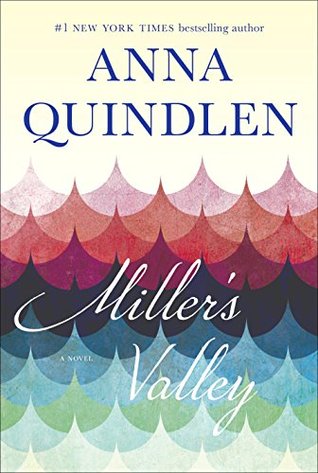
MillersValeyMiller’s Valley is an intimate, poignant story so personal that it is hard to remember that it’s fiction rather than a memoir. Thanks to Net Galley and Random House for the DRC. Though I usually read several DRC’s at a time, this was the one I saved for the end of the day, for that time when the phone stops ringing, the dogs quit barking, the family doesn’t need my attention, and there’s nobody at the front door. During those deep, silent hours I immersed myself into the life of Mimi Miller, hypnotized as if my best friend were perched on the bed spilling out her secrets.

If you love good literary fiction, you have to read this book!

The Millers are a family of working farmers. Day by day, inch by inch, water is claiming their land. Shifty business is going on between a developer, who wants to build and sell a waterfront community in what is now rural land containing farms and woods, and the government, which is interested in increasing the size of the local dam. Visitors come to all land owners in the valley, slick people ready to wheel and deal, threaten and cajole.

The Millers are having none of it.

The reader sees all of this through the eyes of Mary Margaret “Mimi” Miller, who grows up amid the tension, the resistance to the governmental takeover of their land, and the pride…above all, the pride. Her family mucks out the mud when the floods come, and they persevere. They resign themselves to the notion that wall-to-wall carpeting can never happen because water comes into the house so often. You can shovel the muck off of wood or linoleum, but a carpet would be ruined the first time the flood came.

Woven in and out of her story is that of her family members and closest friends, including reclusive Aunt Ruth, her mother’s sister who lives in a separate house on the property. Ruth is agoraphobic, and would not come out of her house if she believed it to be on fire. Ruth says that getting out of the house is “overrated”. We also see her older brother, Eddie, who is “the glory of Miller’s Valley”, the perfect son who goes off to college and makes good; we also follow her other brother Tommy into a host of trouble, trouble, and more trouble.

We view each setting as individual snapshot; she paints it, and we are there. Character development is likewise outstanding. As Mimi grows older, we see the same characters with deeper layers of complexity, just as our understanding of those around us grows fuller and deeper as we age. And as she grows into her adulthood, Mimi becomes so similar to her mother in so many ways that I have to remind myself continually that this is fiction, not memoir.

Quindlen is a veteran writer, and when I started to pass this galley by, I realized it was for a foolish reason: I had been required to read her essays and stories sometimes in teachers’ workshops, and so when I ran across her name, my instinctive response was to associate it with work. But those required-readings were some of the best workshops I ever sat through, and now that I am reading on my own time, I find her novel suits me down to the ground.

And I agree with Mimi’s conclusion that “Maybe everyone stays the same inside.”

Those that love good literary fiction as well as stories of finding ourselves through our heritage will appreciate this beautifully told story as much as I did. It is available for purchase April 5, 2016. Highly recommended.