
The True Happiness Company, by Veena Dinavahi****-*****

4.5 stars, rounded upwards. Veena Dinavahi’s experience as a member of a cult called The True Happiness Company is so outrageous that if it were written about as fiction, it would be universally panned as ridiculous and unbelievable. But it isn’t fiction; it’s what happened to her. My thanks go to Random House and NetGalley for the invitation to read and review. This book is available to the public now.

Veena’s parents are immigrants from India who gave everything that they had in order to provide their children with the best opportunities possible. Between their sacrifices and Veena’s high I.Q., she was admitted to a coveted, highly competitive school that also had a horrifyingly high rate of suicides and suicide attempts due to the intense pressure under which its students labored. When Veena became suicidal, her parents turned to professionals for guidance, but one of the so-called professionals they consulted, the most persuasive and charismatic of them all, was a charlatan. With their life savings neatly stashed in his own bank account, this man, who claimed to be a psychologist but was not, diagnosed Veena as having a borderline personality; once she accepted the diagnosis, “Bob” used it to undermine her instincts of self-protection and what seemed to her to be common sense. She couldn’t be trusted to decide anything for herself, because she was crazy. And thus was this young woman brought under the spell of an insidious conman and sexual predator, one who also used her parents’ unfamiliarity with American culture to gain their acceptance of the things to which their daughter was subjected.

Before she knew it, Veena was married to a young man she didn’t know very well, but who was also susceptible to the charms of this snake oil salesman. She married him because the doctor said to; once this was done, Bob became the third element in their marriage. Both of them spoke to him in person or by phone daily, or even multiple times a day. He resolved every dispute, and he forbade them to resolve anything without involving him first. It is a miracle that Veena was able to find the support and resolve she needed in order to extricate herself and her children from the dungeon of despair he created.

I am quite late with this review; the book came out in May, but it is a harsh read, and I took my time with it. Were it fiction, Veena could have inserted moments of levity or joy to relieve the horror, but it isn’t, and there were none. I would have liked for her to break up some of the roughest bits by flashing forward to bits of her life as it is now, but then, it’s not my story to tell. I’m just glad she and her children are safe, and that she can rebuild her life.

Those that enjoy true crime will be interested in this memoir. Highly recommended to those that have interest in cult stories, and that will willingly endure a rough read.

This American Woman, by Zarna Garg*****

Zarna Garg is an immigrant, born and raised in India. She was rich, except for when she was poor; more on that in a minute. Ultimately, she came here for the same reason many people do: she had to make a break for it.

My thanks go to Random House and NetGalley for the invitation to read and review. This book is available to the public now.

Garg works now as a stand up comic, but she has done many things, and worn many hats. First, of course, she was a runaway bride, more or less, bailing from India before her very wealthy father could marry her off as part of a business arrangement.

“If I hadn’t done that, right now I would be a Mumbai grandma in an arranged marriage to a much older, boring industrialist. I would be draped in brocade silk saris, but I would have a giant padlock on my big mouth.”

Garg’s immigration—fast and sneaky, which was the only possible way–was made easier by her older sister, who was already living in Ohio. Since then, Garg has finished law school and passed the bar, married another Indian immigrant, had three children, and done a number of other impressive things, but it was her own daughter that asked her mother whether she’d ever considered a career in comedy. It takes someone that’s mentally tough to succeed in that realm, but the streets of Mumbai, where she’d lived hand-to-mouth for two years as a runaway teen following her mother’s death, prepared her well, so she was ready for the gritty world she was entering. She explains,   

            “…I had played a show at a club on the Upper East Side and a cockroach fell on my head. The night before that, as I walked to the stage I had to step over a communal puddle of throw up from a bachelorette part who refused to leave. They just kept throwing up and laughing. So far my comedy career had been physically revolting—but it was still my dream! Now here I was in my very first New York City green room that smelled like air…I walked out on stage. Two thousand white ladies politely applauded. Oh my god. What was I doing? Would this audience even understand my humor? For them India is incense and chanting. Were they ready for a foul-mouthed real-life Indian auntie who hated meditation? “

I wondered, after watching some of Garg’s stand up work online, whether the book would be a duplication of her routine, more or less; it’s happened with other comic authors. But although there’s a small smattering of shared content, the memoir is mostly unique, and I never had the sense that I’d already seen this before.

Garg is funny enough that I’ve let her speak for herself here. Anyone that needs to laugh hard, and that enjoys reading about the disorientation and culture shock experienced by those new to America should read this book. Highly recommended!  

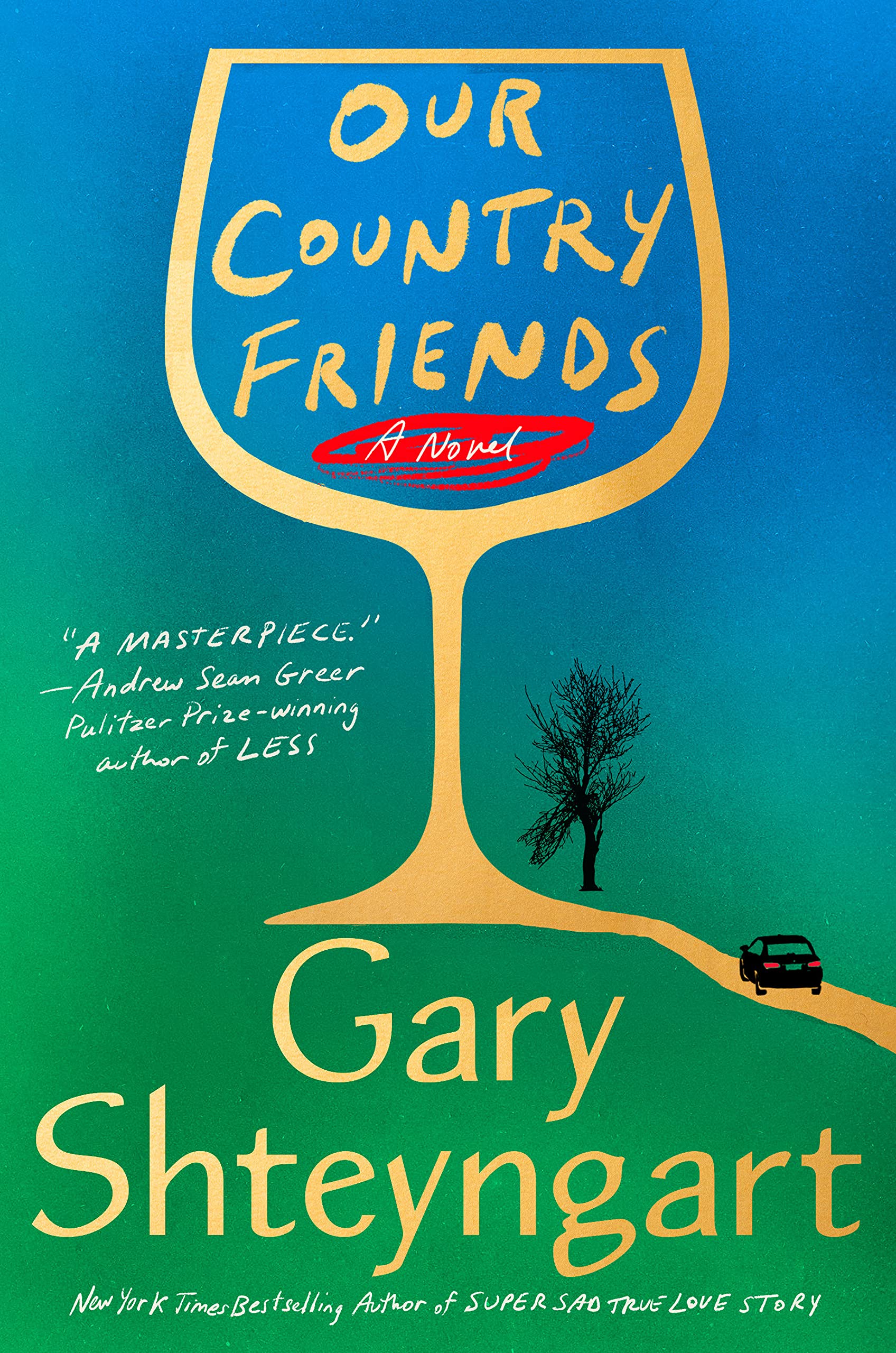
Our Country Friends, by Gary Shteyngart*****

Gary Shteyngart is a funny guy. In Our Country Friends, he tells a story in which Sasha, a former literary luminary, up to his eyeballs in debt, invites five friends to join him and his little family at their country estate to weather the pandemic. The results are not at all what he anticipated.

My thanks go to Net Galley and Random House for the invitation to read and review. This book is available now.

Shteyngart does us the favor of listing the cast of characters (“Dramatis Personae,”) at the book’s opening, and I relied on it heavily. Because all of the characters are introduced at the outset, I took a ridiculously long time getting them straight, but it was worth it. The group’s dynamic would be fairly stable but for the introduction of “The Actor,” someone he knew back in the day but who is an A-lister now. But frankly, some, if not all, of the other guests would probably not have come but for the mention of The Famous One as a possible addition. When he comes, the women practically swoon in his presence, and then nothing is the same for the rest of the story.

The first third of the book seems relatively formless, but I suspect the author (should I say, “The Author?”) is warming us up, letting us get to know the characters before a lot of other action takes place. The promotional blurb tells us that this story encompasses six months and four romances, and that it’s about love, friendship, and betrayal, and that sums it up.

Generally speaking, I don’t enjoy novels about rich people, but because Shteyngart is setting them up for satirical misery and angst, I dive in, and I emerge shortly afterward, laughing. This sly humor is unmissable.

Because nearly all of the characters are over forty, I highly recommend this story to readers of a literary bent—if you know Chekhov, it’s even funnier—who are forty or over.