The Answer is No, by Fredrik Backman****

Who can resist a story by Fredrik Backman? His soothing tone and positive message about the nature of humanity is balm for the soul. So although I seldom read stand alone short stories, I leapt on this one right away. My thanks go to NetGalley and Amazon for the review copy. This book is for sale now.

This is one of those stories where you can see what’s about to happen, in broad strokes, right out of the gate. The blurb gives us the contours, telling us that our protagonist, Lucas, is about to have his life ruined by a frying pan; his life is perfect, single with no entanglements. He has no friends that he owes favors; no girlfriend; his life is simple and uncomplicated. He has a nice little apartment that’s his alone; after work, he can eat his Thai food and play his videogames without harassment. He doesn’t bother anybody, and nobody bothers him.

Then there’s a knock at the door, an insistent one; it’s a small klatch of people that introduce themselves as “the board.” Someone has disposed of a frying pan in an unauthorized spot, and they are determined to root out the culprit and penalize them. Everyone is considered guilty until proven innocent! Lucas protests his innocence and makes a few hapless suggestions in hopes of mollifying them, but instead, they draft him to head a committee, and they won’t let him out of it.

This is a pleasant enough story, consistent with Backman’s usual style, but at the same time, because it is a short story, it lacks some of the most agreeable aspects of a Backman novel. In his full length books, Backman creates and develops a massive collection of characters, and he always juggles them brilliantly, developing several and keeping each of them so distinct that the reader can’t forget who is who. Here he is forced, due to the limited length of the thing, to keep it down to a small handful of characters, and while some will likely appreciate this, I miss the complex stories with infinite character back stories and interrelationships. So, as short stories go, this perfectly fine, but for those of us that are fond of Backman’s epic tales, it feels just a trifle anticlimactic.

Recommended to those that read everything Backman writes, and to those that prefer a more streamlined story.

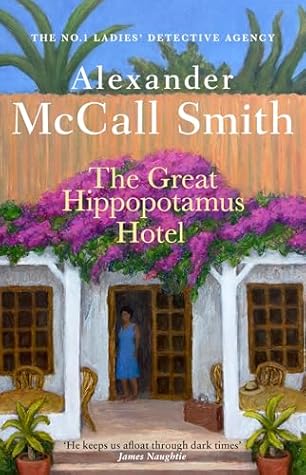
The Great Hippopotamus Hotel, by Alexander McCall Smith*****

The 25th book in the #1 Ladies Detective Agency series is not to be missed. My thanks go to NetGalley and Knopf/Doubleday for the review copy; this book is available to the public now.

When life becomes stressful, what do you do? Some swear by yoga, herbal tea, walking or running, therapy, mindfulness, journaling, or a number of other remedies. Some of us dive into the chocolate; the short-term benefit is mitigated by the long term weight gain, but when we’re upset enough, we don’t care. And for some of us, this series is just what the doctor ordered.

Precious Ramotswe is our detective protagonist, assisted, and occasionally encumbered, by her headstrong but goodhearted colleague, Grace Makutsi, part time apprentice detective, Charlie, and occasionally, by her bestie, Mma Potokwane, who runs the local orphan home.

Our mystery revolves, as the title suggests, around a case of possible sabotage at The Great Hippopotamus Hotel. There’s another thread, too—as there usually is—involving Precious’s husband, Mr. J.L.B Matekoni, owner of the garage and technically, Precious’s landlord.

Those looking for an action packed thriller will always be disappointed here, because that’s not what this series is. Instead, it’s closer to being a Miss Marple-ish cozy mystery. The problem is nearly always solved, not by DNA or murder weapons or questioning baddies until they break, but by an examination of the circumstances and characters of those involved. It is here that Precious is at her finest. In addition, she must tread carefully around the feelings of her staff, primarily that of Grace Makutsi, whose insecurities tend to make her prickly. Grace is a bit threatened by Mma Potokwane, and when Precious explains gently that they will be accompanied by the orphan farm matron on an investigation, Grace says, in a serious case of look-who’s-talking:

“Mma Potokwane—yes, she is observant, but…But Mma, if Mma Potokwane has any faults—and we all have faults Mma, myself included—if she has any faults, one of them is taking over. I am not saying that she is bossy—that is not a word that I would use for Mma Potokwane—I would not say that, Mma, and I am not saying it now. No. But there are some people, I think, who might say that.”

And so, in addition to her detective work, Mma Ramotswe must navigate the small minefields that exist between these two women, both of whom are dear to her.

In some ways, the mystery aspect of these stories is almost superfluous. Every story has to have a problem and a resolution, and so it’s convenient, perhaps, to use a mystery as scaffolding for whatever problem Precious must confront. It’s certainly served Smith well. But the real benefit I see in these series is that the solutions to these problems are always dealt with as gently and as kindly as is possible. Nobody is getting thrown face down on the ground and handcuffed in these stories; every effort is made to turn the problem around while allowing the perpetrator to retain as much dignity as possible. The lyrical prose is so soothing that I love reading these stories at bedtime.

And one more word, for regular readers: the recurring character of Violet, who is the closest we have to a villain, pops up here right away, and I rolled my eyes and said, “Not this again. Smith needs new material.” But the way the character is used this time is different, and if I had a hat, I would tip it in appreciation of the author’s cleverness. He always seems to know when it’s time to break a pattern.

Highly recommended.

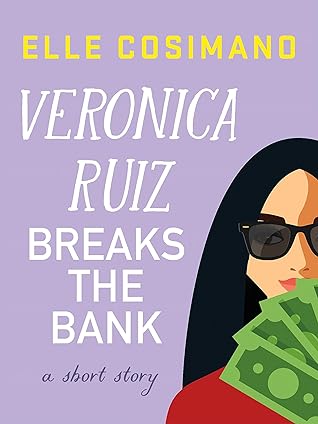
Veronica Ruiz Breaks the Bank, by Elle Cosimano****

Fans of Cosimano’s Finlay Donovan series will recognize her trusty sidekick and BFF, Vero. Over the course of the series, we’ve had many hints about Vero’s past, and Finlay sometimes wonders why Vero is so tightlipped about her personal history. This short story provides curious readers with some background, as well as some of the entertainment for which Cosimano is fast becoming legendary.

My thanks go to NetGalley and St. Martin’s Press for the review copy. This book is for sale now.

I generally avoid this sort of book, because often as not, the author returns to flesh it out into a full length novel, and as much as I enjoy reading it once, I don’t want to read it twice. But this was low hanging fruit, a shorty by an author I greatly enjoy, at a time when I couldn’t get up and move around much, and so I dove into it.

Vero is an honors student from a struggling family, and her academic career is short circuited when an envelope of money goes missing, and Vero is blamed by her sorority sisters. Vero makes a run for it; desperate for work, she takes a custodial job in a bank, and that’s where the fun begins.

This is an entertaining read, but it’s not up to the level of Cosimano’s novels. For a short story to work, a lot must be packed into it, with every single word pulling its own weight, and possibly that of its friends and family. Here, it feels like a chapter out of a book, one in which the author doesn’t want to give up any truly juicy information about the protagonist because she’s saving it for—you got it—a novel.

Of course, I cannot pretend to know what the author is thinking here; this is just an educated guess. But the product is the product, and whereas it was a fun read as a free galley, I might have felt a bit annoyed if I’d paid money for it.

Those looking for a quick, light read to take to the beach could do worse. Some people don’t have the time or stamina for a full length novel of any type; if that’s you, maybe this is your book. But as for me, I’ll hold out for the real deal in the future.

Bedtime Stories for Privileged Children, by Daniel Foxx****

3.5 stars rounded upward.

My thanks go to NetGalley and Octopus Publishing for the review copy. This book is for sale now.

This book came to my attention when a Goodreads friend reviewed it, and I decided on the spot that I had to read it.

Author Daniel Foxx may never get his tongue out of his cheek after this one. The stories are, of course, about very wealthy children that occasionally face dilemmas that the rest of us wouldn’t regard as dilemmas at all. The humor is very dark, so I recommend giving it a good once over with adult eyes before actually sharing it with (older) children. Example: think, nanny sacrifice.

I did enjoy it more toward the beginning than at the end, because after a while the stories became somewhat repetitive.

Recommended for those that want a good laugh; if you can get it in paper form rather than digitally, do.

How to Summon a Fairy Godmother, by Laura J. Mayo*****

“She was Theodosia Balfour. Good things did not happen to her.”

Theo is engaged to be married, despite her wishes; her mother has bartered her to an ancient, badly behaved duke for the prestige of his title and the money she must have to keep the family manse. Beggers can’t be choosers, amirite? Her stepsister and the prince have barred her from their castle due to her own unseemly behaviors, and her sister is about to be wedded to a more desirable man. There’s only one way out of it: Theo needs to find her stepsister’s notes on summoning a fairy godmother. Only magic can possibly get her out of this mess.

My thanks go to Orbit Books, Hachette Audio, and NetGalley for the review copies. This book is for sale now.

Because I am lucky enough to have both the print and audio galleys, I pair this book with my morning regimen on my exercise bike. While my feet are doing the work, my eyes and ears are on a pleasure cruise, listening to the story as read by the talented Josie Charles. At the outset, I’m not sure I’m going to enjoy it. After a handful of quick laughs, the story and voice actor seem to be a little over the top, perhaps trying too hard. However, a number of other reviewers that I respect have really enjoyed this thing, so I keep an open mind, and sure enough—about a third of the way in, I realize that I’m bonded to the protagonist. As I follow the narrative and become accustomed to the writing and narrative styles of the author and performer, the whole thing grows on me, and before long I find myself looking forward to my wretched exercise bike, because Theodosia needs me.

Once the fairy has been summoned, Theo is magicked away to fairy land, and she is provided with a set of tasks she must accomplish in order to be freed from the loathsome old toad to whom she’s betrothed. She is provided with some assistants and supervisors, and it’s a good thing because she needs rescuing now and then. The hardest part, perhaps, is the caveat that as she completes the steps required, she must behave respectfully—at all times!

The chapters are brief and have hilarious titles. A couple of examples: “Chapter 5 Where Theo Should Probably Think of Something Before She Ends Up Married,” “Chapter 11 Where It Becomes Quite Clear Theo Was Never Trained as a Lawyer.”  There’s lots of snarky dialogue, with a tender moment or two tucked in here and there.  There’s a twist at the end that I absolutely did not see coming.

Should you listen to the audio, or read the printed version? There are some American readers that don’t like a British accent, and Ms. Charles’s is a heavy one. Once I’m used to it, I rather like it, but you know what type of reader you are. Follow your usual go-to. If you enjoy an audiobook, this one could make your commute much pleasanter.

Highly recommended to those that enjoy fantasy and/or humor.

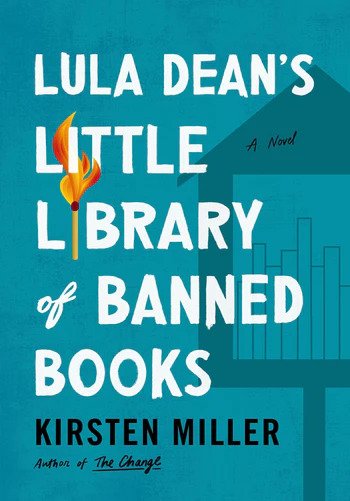
Lula Dean’s Little Library of Banned Books, by Kirsten Miller

Lula Dean is a deeply unhappy woman. Neglected by her children, alone and unappreciated, she strikes on a way to gain the attention she knows that she deserves. She embarks on a crusade to remove books she deems objectionable from local libraries, and she sets a sterling example for her town by erecting a little library on her lawn, a collection of the wholesome material she thinks is most appropriate. Little does she know that one of the town’s youths has snuck out in the dead of night and inserted banned books inside the dust jackets of the books she originally placed there. Her library becomes wildly popular, and Lula hasn’t a clue why.

My thanks go to NetGalley and William Morrow for the review copy. This book is for sale now.

The moment I saw the synopsis for this novel, I knew I had to read it. The First Amendment is a hot button for many people in the U.S., and as a language arts teacher, it’s been at forefront of my mind for most of my adult life. And I think I can safely say that Lula Dean is a soft sell; readers are generally a receptive audience, and so any novel containing the word “book” or “library” in its title should, I would argue, be held to a slightly higher standard. It’s not that hard to preach to the choir.

I love the premise of this story, and I laugh out loud more than once at the beginning. After that, though, things flatten out a bit. There are a lot of characters here, and whereas I have no difficulty keeping them straight, their numbers may have prevented author Kirsten Miller from fully developing them. I feel as if I am reading, for the most part, about cartoon cutouts rather than real people;  had I felt as if the characters were real, I would have been more deeply invested in their outcomes. However, everyone in this thing is either a fine, enlightened character or a despicable, ignorant blowhard. It accurately represents the way many Americans regard those around them, blue versus red, and that is not helpful. Two characters that stand out better than others are side character Beverly Underwood, and the young Elijah. However, even these are not dynamic characters. Nearly everyone here is the same going out as they were coming in.

Those looking for a short, funny novel to toss in their suitcase over the holidays could do worse; they could also do better. The sad thing is that had this been written in a more intentional way, with the literary standards one would hope to see in any novel, it could have been impressive, might even have changed a few hearts. This book isn’t going to do that, and so I see it as an opportunity squandered.

Margo’s Got Money Troubles, by Rufi Thorpe****

Margo’s Got Money Troubles, by Rufi Thorpe, is a bold, inventive, and very funny novel about a young woman cut adrift in a difficult, expensive world. My thanks go to NetGalley and William Morrow for the invitation to read and review. This book is for sale now.

Margo is the daughter of a Hooters waitress and a former pro wrestler, an absentee father with a family of his own; her mother had been his woman on the side. Consequently, Margo has always understood that she would have to hit the ground running when she grew up, and so she’s enrolled in a junior college. When the brief affair with her English professor leaves her pregnant, she has nobody reliable to advise her. The women she confides in urge her to terminate the pregnancy, and of course, the professor does, too; yet Margo likes the idea of becoming a mother, and it’s her fetus. Nobody can make her do anything. She decides to keep it.

Her mother is about to marry a man with money and conservative values, and she sees Margo as a loose cannon that just might upset the whole ship, so she tells her to terminate or be cut off.

Wow, Mom. Really?

Margo’s roommates hadn’t agreed to share an apartment with a baby. They need to sleep! They have to get up early!

Early on, I’m rolling my eyes. Part of me is thinking that Margo is about as dumb as they come; part of me is wondering why no author in this entire world is writing—or, more likely, why no major publishing house is publishing—novels in which a young woman chooses to have an abortion and take back her body and her life. But I’m overthinking, because soon, Margo—who after all, is just young, naïve, and rudderless—admits her error. She loves her little boy, but she had no idea he would be so expensive, or that motherhood would be so difficult. She tells her father, who re-enters her life as her mother steps away,

 “’I shouldn’t have had him,’ as though some rip cord had been pulled inside her. ‘I know that, okay? Everyone told me it would ruin my life and it did. They were right, and I was stupid, and I didn’t get it. Okay? But now I’m here.’ And her father, who strangely enough becomes the most reliable adult in her life, says, ‘Yes. Now we’re here.’”

Later, Margo will comment that nothing can make a person pro-choice like having a baby.

Margo has been waiting tables, but she can’t find child care, and when she brings the baby to work, she’s fired. And the truth is, she doesn’t like leaving her baby. Then one day, while looking at her naked self in a full length mirror, she observes that she has huge boobs for the first time in her life. Men would pay to see this. She opens an account on OnlyFans.

And so this controversial choice becomes the crux of the story. Some friends reject her, and her mother has really had it with her now. But there are a lot of meaty conversations that are thought provoking, and so, even though this old lady schoolteacher reviewer is mighty uncomfortable reading about an online sex worker’s film process, there are related questions that cannot be ignored. For example, Jinx—her father—advises her against it, saying that she shouldn’t get mixed up with these kinds of girls, and she asks him, “What are ‘those kinds of girls’?” And it’s true. A man can send his dick pix out into the world any number of times and places, and whereas many will consider these gross, or obscene, which they are, how many people will condemn the guy’s entire character, his moral fiber, for having done it? So the double standard is screaming to be recognized.

Margo goes through a lot of grief, defending custody of her son when the skeevy professor resurfaces, as well as having to deal with housing crises and other problems. But the central issue lurking in the shadows is that of a young mother choosing sex work as a career.

I have to tell you quite frankly that I was way out of my comfort zone through much of this book. I am probably not part of its target audience, despite the fact that I was approached to cover it. Partway in, I considered not finishing it, but the quality of the writing is so strong that I kept going, and I’m glad I did.

The story is told from a third person omnipotent perspective, but it shifts in a surprising and funny way, and that’s all I will say about that, lest I ruin it. I wonder from time to time if we have an unreliable narrator, but this is more than that. This unusual point of view a brave choice, and I think she carries it off well.

There are a lot of worthwhile discussions that can spring from this novel; it’s fertile territory, if you’ll pardon the expression, for book clubs. It’s also being adapted for Apple TV. I recommend this book for any feminist that likes to laugh, and isn’t afraid to think outside the box.

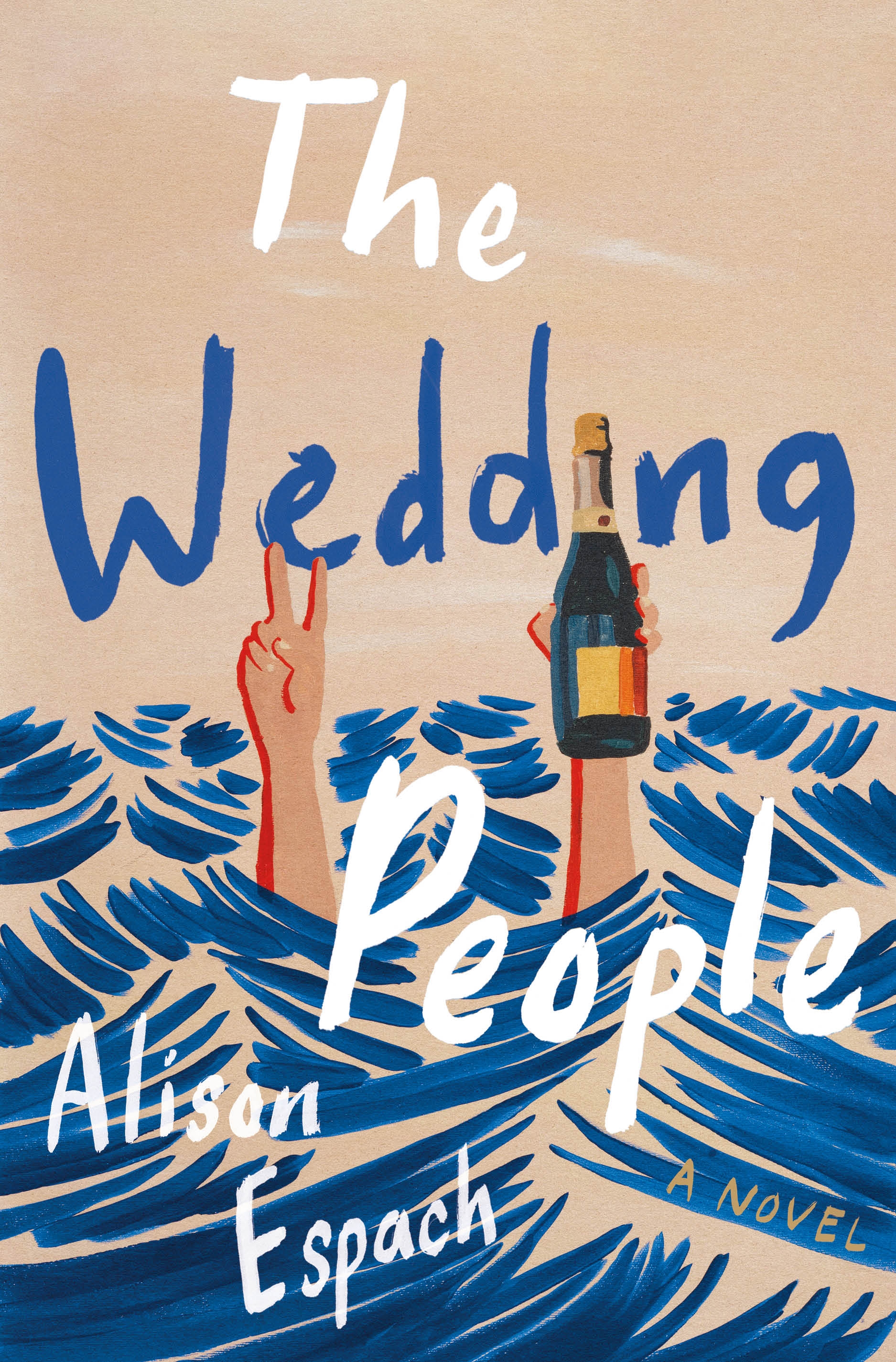
The Wedding People, by Alison Espach*****

It’s a good sign when I finish reading a book, and I’m smiling. Alison Espach’s new novel, The Wedding People, not only left me smiling at the end; it made me laugh out loud almost from the get-go, and it will do the same for you.

My thanks go to NetGalley, Henry Holt, and Macmillan Audio for the review copies. This book is for sale now.

I’m not usually fond of romances, but a friend mentioned the premise of this one, and I couldn’t resist. In a nutshell:  Phoebe, the protagonist, worn down by the pandemic and devastated when her husband leaves her, heads off to the posh hotel where they’d intended to spend their vacation. She takes no luggage or even her phone, because she plans to kill herself once she’s inside that lovely place.

Upon arrival, it’s clear that a mistake has been made. The entire hotel has been reserved for a wedding. But Phoebe’s room hasn’t been double booked, and so she is allowed, with apologies, to proceed to her room. However, the bride—wealthy, entitled, Bridezilla—learns of Phoebe’s presence, goes to her room, and orders her to leave. As they argue, Phoebe discloses her reason for coming, and assures her that she’ll be gone—so to speak—by the time the wedding takes place. But Lila, our bride, is having none of it. How dare Phoebe spoil her wedding! Absolutely not. She isn’t going to have guests gathering just as a corpse is being wheeled out to the morgue, right through the lobby! Phoebe must change her plans.

I won’t share any further developments, but I will tell you this: Espach can write.

Long ago, I decided that five star reviews should not be reserved for the rare gem bound to become a timeless classic. I give five stars to any novel that makes me unusually happy, and that represents the best being published within its genre. This book is one of those.

Helen Laser is the voice actor narrating the audio version, and she makes it even funnier. If you are strictly a visual reader, that’s fine, but if you like both formats, go with the audio this time, or use the audio and print versions together, which is what I did.

Highly recommended to those that enjoy a good romance, a good laugh, or both.

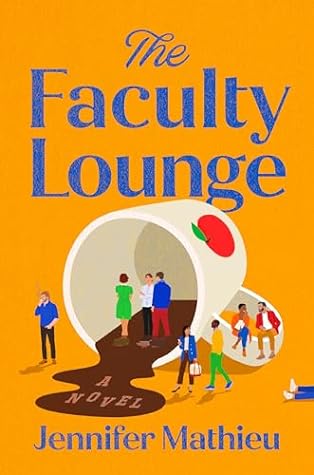
The Faculty Lounge, by Jennifer Mathieu****-*****

“You really had to hand it to Mr. Lehrer. While dying at work is never ideal, he had the decency to do it during his off period. And not only that, but at the start of it, too, giving the clerks in the main office plenty of time to find someone else to cover Ms. DeLaRosa’s Spanish II classes, even as they scrambled to figure out who should be telephoned when an eighty-two-year-old substitute teacher lies down on a ratty couch in a high school faculty lounge and dies. “

Jennifer Mathieu’s new novel, The Faculty Lounge, has been described as love letter to teachers. Though it is darkly funny in a number of places, the description isn’t wrong. By the ten percent mark, I had cackled out loud twice, it was so strangely accurate.

My thanks go to Penguin Group Dutton and NetGalley for the review copy. This book is for sale now.

Our school is Baldwin High, a Texas school with a solid reputation. After the stage is set, with poor Mr. Lehrer breathing his last breaths during his planning period, and another teacher being cranky when the paramedics make her leave before her photocopies are done so that they can work on him, the story is organized with a single chapter per character. Obviously there are a lot more people on Baldwin’s staff, but this method works quite nicely, and since the characters interact, the chapters that come later in the book are richer, because there’s more backstory to help us understand them.

The youngest teachers have grown up with the knowledge that they might be shot to death at school; first they grew aware of this when they were students, and now, as teachers, the danger is still there. While older staff members tend to be rattled by a lockdown, younger ones see it as almost routine. Take attendance, salute the flag, and whoops, there it is. Herd any students outside of your door into the room, then lock it. Everyone on the floor. Pull your window blinds. Wait till it’s over.

I appreciated every character in this book, and I was sorry when it ended.

There are crises at Baldwin, just as there always seem to be fires to put out in real schools; there are high maintenance parents with absurd complaints, as well as idiotic district directives. Bureaucrats! Toward the end, a veteran teacher explains to a newer one that some days, “the best you can do is show up and hang on.” So true! Your reviewer is retired from the profession, and I can recall a wise older teacher saying to me privately during difficult periods, “I’m here. And I’m dressed.”

The whole thing seems so familiar.

How much will this resonate to readers that aren’t educators? I have no idea, but I know that the in-jokes, the sense of the familiar, can’t be as strong. For a general readership, I’d say this is a four star read. Possibly this is true as well for those that have always taught early childhood, because many of the parameters are different. But for those of us that have taught middle and high school, particularly for those that are veterans, this is a solid five star read.

Cheerfully recommended to all, and highly recommended to veteran secondary teachers.

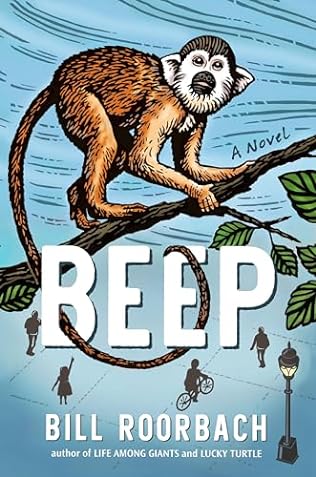
Beep, by Bill Roorbach****

Beep is squirrel monkey, born and raised in the rain forest of Costa Rica. He’s not a baby anymore, and his old uncles have informed him that all the females are spoken for, and he must travel to a new area to mate and propagate. It’s tricky business, though, because human encroachment has separated the forests from one another, so Beep cannot get to the next forest without going through areas developed by humans. Beep’s odyssey takes him much farther than anyone imagined, and in the end, he finds fame and satisfaction.

My thanks go to NetGalley and Algonquin for the invitation to read and review. This book is for sale today.

Much of the book is devoted to the relationship that Beep develops with a human child named Inga. While traveling through neighborhoods, a bit lost and unsure where the next forest might be, he spots her eating some delicious fruits in her backyard, so he introduces himself in order to get lunch. Inga’s mother comes out and meets him also, and this passage provides an idea of the story’s character:

“’Squirrel monkey,” the mother said warmly, ‘Ooooh. They aren’t usually solo. Oooh, ooh. Keep your eyes peeled, there will be more.’

“Ugh, eyes peeled? ‘I’d like some fruit,’ I said clearly.

“’Oh, how charming,’ said the mother. ‘Hoo-hoo, monkey.’ She’d wiped most of yesterday’s blood from her lips, but at the edges of the enormous mouth some remained (probably she’d caught and eaten a bird). Also, part of her outer wrappings had come loose and her poor chest looked more distended than ever, wrapped in a bright banner of some kind. Somemonkey once said they look like us, but come on: they do not.”

But this is not Inga’s permanent home; she is on vacation. When her family returns to New York, which Beep calls Nyork, she smuggles him in with her carry-on items and it is in New York City that he meets fame after surviving several harrowing situations.

For the most part, I find this novel charming. There’s no need to concern ourselves about the credibility of the overall story line, because after all, we’ve begun with a monkey providing the narrative, so it’s clear that we just need to roll with it. It is funny in places, a bit dark in others, and then—as with the above quote—sometimes it’s darkly funny. Some of the reviews I’ve read take issue with the ending, but I’m good with it. My sole dissatisfaction, and unfortunately it’s one of my pet peeves, is Roorbach’s failure to develop Inga appropriately in keeping with her age. There’s a scene at the airport when she starts to cry because her stuffed animals are being taken away to be scanned by security, and another soon afterward where she is walking her doll buggy in Central Park, so I’m figuring she’s maybe six years old; but subsequent scenes make her seem much older, and finally we’re told that she’s eleven years old. It doesn’t take years of study to know that an eleven year old girl doesn’t wail about her stuffed animals or take her dolls for a walk in the park. Get real.

Happily, as the story unfolds from there, Inga settles into being a real eleven year old, and my irritability ebbs so that I can enjoy the rest of the book.

All told, this is a delightful read. Because of its dark characteristics, which I will not provide because they’d be spoilers, this is not a book to read to your little ones, but if you have a young Goth in your home who is able to read alternate spellings and dialects, then this book would likely be that kid’s happy place. The overall message is a worthy one, although Roorbach is probably not going to change hearts and minds about the environment, since those in favor of unchecked development in the face of environmental devastation and disaster aren’t going to buy this book. All told though, it’s a fine read for those that are ready for something a bit different and that can handle dark humor.