
 I confess that I am a big fan of Burke’s. He’s written a prodigious number of novels over the past fifty years, and I have read almost all of them. This is why, although I get nearly all of my books free prior to publication, I put this title on my Christmas wish list when I wasn’t given access to a galley. Perhaps because my spouse paid full jacket price for it, I am holding it to a higher standard than I usually do. This book is either a three star or four star read, depending on whether we factor in the dollars. Let’s call it 3.5 and round it up. It seems like a shame to 3-star a writer who is so talented and has contributed so much to American literature.
Most of Burke’s novels are detective fiction, crime fiction, mystery, or all three; now and then he writes historical fiction instead. And his choice to send Dave and Clete, the protagonist and side kick of the Robicheaux series, is a good one. No matter how much I enjoyed it, in that fictional world where cops do the right thing and bad guys are really bad every time, there is no way the reading public would be able to continue to enjoy their vigilante behaviors between the covers of a book at the same time that the Black Lives Matter movement has made us aware of that problem—along with the throw-down weapons used to justify gratuitous brutality after the fact–that exist in real life. So, that series is over, and I’m okay with it.
Technically, House of the Rising Sun is a four to five star novel. Burke’s use of imagery is rivaled by few and exceeded by none. Here, his use of allegory, creating a personal Odyssey based on one of the author’s own ancestors, is unquestionably strong. If you love literary fiction for its own sake, this is your book.
By far the strongest writing lies in the portions are set on the battlefields of Europe. Burke’s prose is eloquent and stirring in narrative passages that speak to the class nature of imperialist warfare.
For me, the issue has to do with plot and pacing. The entire book is essentially built around Hackberry Holland’s effort to find his son. They are separated when his wife leaves him and Ishmael is still a child, and through World War I and the period that follows, the journey to find Ishmael winds its way in a way that serves the allegory, but that feels tedious to me as a reader. A fight here; a fall off the wagon and drunk in the streets; looking here, there, everywhere; writing letters; making phone calls; it seems for a long time as if he has barely missed his son. Throw into it the villains—Maggie, Beatrice, and above all, Arnold Beckman—and that’s pretty much it. I don’t want to give anything away, but there isn’t that much suspense to begin with.
A lot of the dialogue seems as if it has been recycled from Burke’s previous books; not whole paragraphs, just speech patterns with a fragment here, a fragment there that left me thinking I had read it before this.
Anytime I find a jarring racist term in a novel, I point it out so that prospective readers will know it’s coming. The “N” word gets used several times; it is within the context of establishing or emphasizing someone’s malign nature. There are also other areas in which Holland takes Caucasian characters to task for racist behavior. Still, I like to think a writer of Burke’s stature can and should develop a credible villain without resorting to this hurtful, and to my thinking, cheap and easy method.
Whether this novel is for you probably depends most on what you look for in a novel. Lush descriptions and horrifically real violence abound, but there isn’t the kind of suspense you’d expect a missing-kid story to employ.
When push comes to shove, I recommend you read this, if you are still interested after reading the reviews, but get it once it goes to paperback, or wait for it to be available used; don’t pay full cover price for it unless your pockets are deep and your interest strong.
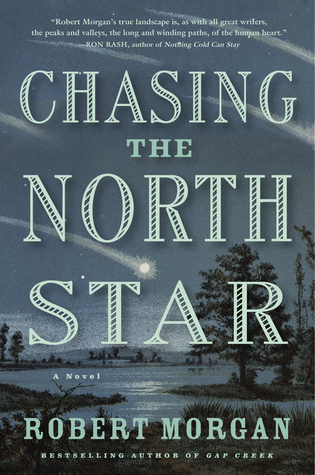 Chasing the North Star is a compelling narrative of two teenagers escaped from slavery on their flight toward the North. Thank you to Net Galley and Algonquin Books for the DRC, which I received in exchange for an honest review. This book becomes available to the public April 5, 2016.
 What an amazing book! Once I began reading Loigman’s masterful historical fiction, my other galleys waited, meek and neglected until I was done with this one. Thank you twice, first to Net Galley and second to St. Martin’s Press for giving me a DRC in exchange for this honest review.
 Military history and World War II buffs will enjoy this well written third installment in Jackson’s Sergeant George Yeoman series. I hadn’t read any of the others in the series, but it didn’t matter; it serves just fine as a stand-alone novel. Thanks go to Net Galley and Endeavour Press for the DRC, which I received free of charge in exchange for this review.
 HE Bates wrote these stories during WWII; he served in the British Royal Air Force and received the unusual commission of author. His whole job was to write one short story after another. He was stationed with British pilots from 1941-1942, and he sat with them when they were between flights and listened with a sympathetic ear. He listened well, and the result is a collection of nearly 30 short stories, one of which is novella length, and they are strong, resonant fictional stories whose protagonists were inspired by actual pilots. Thank you twice to Net Galley and to Bloomsbury Publishers for the DRC. This collection is for sale now.
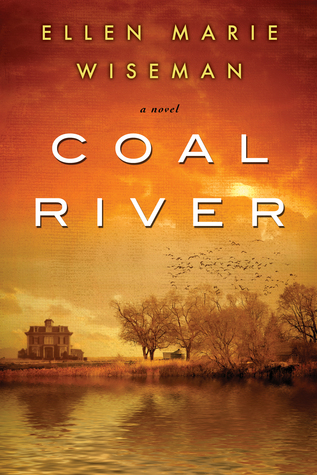 Coal River is a work of historical fiction set in Coal River, Pennsylvania. A region by that name exists, and was the location of pitched battles between the United Mine Workers of America and local cops, strikebreakers, and company goons. Wiseman does a creditable job in her rendering of the setting in which it all unfolded. Thank you to Kensington Publications and Net Galley for the DRC, which I received in exchange for this honest review. It is now available for purchase.
 Since when do I read westerns? Since never…until a Goodreads friend recommended this title. He knew I liked history and historical fiction, and I couldn’t dismiss the recommendation, not only because this person has never steered me wrong, but because this book won the Pulitzer. That doesn’t guarantee I will like it either, of course, but it certainly enhances the likelihood. So on one of my increasingly-rare ventures to my favorite local used bookstore, I searched out the title. There it was, 857 pages bound in a beautiful hard cover, foliated-paged tome, for less than ten bucks. Sold!
 As a rule, I am not fond of British fiction; I prefer working class protagonists to the silver-spoon variety; and I like urban settings more than pastoral ones. But The Lake House is written by the author that produced The Forgotten Garden, and so when I had the chance to grab the galley, I went for it. And once more, experience proves that a brilliant writer can sell any story, in the setting of her choice, with the protagonists of her choice, and she can make it flow smooth as warm butter.
 Seattle Book Mama