
Waco is a disaster that will be remembered for a very long time, one of the most egregious uses of excessive force against a group of people in the history of the United States. Kevin Cook’s new book, Waco Rising, is well researched and documented, yet is also written in a way that is accessible to a general audience. My thanks go to Net Galley and Henry Holt for the review copy. This book is for sale now.

The religious compound at Waco was headed by the charismatic David Koresh, and Cook takes us there, through the evolution of this sect, various splits and skirmishes among the faithful, and its final structure. Unlike many cults and other religious offshoots, this one was largely middle class, and numerous members brought their assets into the group. But the most distinctive aspect of it, compared to other such oddball organizations, was its fondness for munitions. The compound at Waco was armed to the teeth.
Koresh’s organization drew the attention of the Federal government when a disaffected former member leaked the news that Koresh was practicing polygamy—nobody else, just him—and that many of his wives were children:
“One Davidian remembered [Koresh] ‘approaching Michele in the dead of night.’ The word “approaching” was a euphemism. Describing the encounter later as if he found it amusing, [Koresh] told some of the men that he’d invited Michele, who had recently celebrated her twelfth birthday, into his bed “to get warm.” When he tried to pull down her underwear, she resisted. He kept going, he said, because God told him to.”
Initially, the ATF (Bureau of Alcohol, Tobacco, Firearms and Explosives) saw this situation as an opportunity to redeem themselves after the debacle at Ruby Ridge. This time, they would get it right, rescue the little girls, and their reputation would be restored. It didn’t shake out that way. The ATF, and eventually the FBI and the armed forces were deployed, surrounding the Davidians from the land and even the air in a siege of fifty-one days. When it was over, the compound was a smoldering ruin, and seventy-six people, including twenty-five children, were dead.
I was initially unsure if I wanted to read this thing. I knew how it was going to end, after all, and did I want the details in my head? However, Cook paces the story expertly, punctuating the first two-thirds with the occasional darkly funny vignette. But the ending is nothing but grim, and that’s because there’s no other honest way to tell it.
The conversational way it’s written makes it a quick read, and there are a lot of excellent quotes. Cook uses material that hasn’t been reported previously, and he does a fine job. I highly recommend Waco Rising to anyone that is interested in this topic.
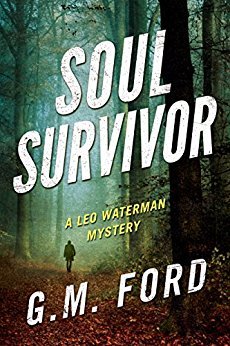 Leo Waterman is one of my favorite fictional detectives. Lucky me, I scored this eleventh in the series free courtesy of Net Galley and Thomas and Mercer in exchange for this honest review.
 Seattle Book Mama