
The Family Recipe, by Carolyn Huynh*****

“We all need to feel needed. Otherwise, what’s the point of living?”

Carolyn Huynh made her authorial debut in 2022 with The Fortunes of Jaded Women. It was one of my favorite novels not only of that year, but of all the thousand-plus galleys I have read since I began reviewing. She’s back again with The Family Recipe, and it’s every bit as good as the first. My thanks go to NetGalley and Atria Books for the invitation to read and review, but make no mistake: I would have hunted this thing down and bought it with my Social Security check if it came down to it. I wouldn’t have been sorry, either.

This book is available to the public now.

Once again, our protagonists are Vietnamese and Vietnamese-Americans, mostly women, and once again, they are siblings and other family members that must come together; it isn’t a voluntary reunion. And that’s where the similarities between the first book and this one end.

Duc Tran, the patriarch, has laid out the terms by which his children may inherit his fortune. Once upon a time, he was the Vietnamese sandwich king, and in order to become his heir, each of his four daughters must relocate to a city she doesn’t want to live in, and revive a down-at-the-heels restaurant in a now undesirable end of town. It’s a contest; that is, unless Duc’s one son, Jude, succeeds in getting married within the one year’s time limit of the contest. If he can do that, he wins. (His sisters aren’t worried; who would marry Jude?)

The story is told from several points of view; these include the siblings, their uncle—a shady lawyer, and Duc’s best friend; their mother, who abandoned them when they were small, when her mental health collapsed, and never went back; Duc’s second wife; and briefly, Duc himself, who mostly serves as a mysterious figure that doesn’t even return to the States to lay out his children’s requirements, sending their uncle as his proxy.  As the story unfolds, we learn more about each sibling, and about the traumas they have experienced, as well as their successes.

The thing that makes it work so well is Huynh’s unerring sense of timing. It’s a dramatic tale, but it’s shot full of humor, as we see at the outset, when we learn the sisters’ names. Their father was a huge fan of the Beatles, and so the girls are named Jane, Paulina, Georgia, and (wait for it…) Bingo!

There are plenty of twists and turns, and the dialogue crackles. The internal monologues are mesmerizing. This book would make a fantastic movie.

Since I was reading this galley digitally, I highlighted quotes that I thought I’d like to use in this review, but there are 28 of them. Obviously, I cannot share them all here, but let that inform you, if nothing else here has, how much I love this book.

Highly recommended to anyone that has a beating heart, at least a passing interest in Vietnamese-American culture and/or family stories, and can use a few good laughs.
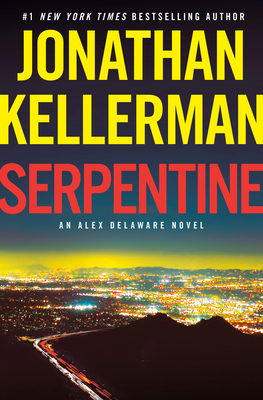
Serpentine, by Jonathan Kellerman****

This is the 36th entry into the Alex Delaware series, and it’s still going strong. Lucky me, I read it free. My thanks go to Net Galley and Random House Ballantine for the review copy. It will be available to the public February 2, 2021.

Milo Sturgis, the only gay detective in Los Angeles, has been ordered to take up a very cold case. Money talks, and big money talks loudest. A massively wealthy young woman wants to know what really happened to her mother, and who her biological father was. Ellie Barker was raised by her stepfather, who left her everything, and now that he’s gone, there’s no reason not to go digging for information about the things he didn’t like to talk about. Milo does an eye-roll and reaches for his phone. He thinks it would be better to have a psychologist along, and so once again, Alex joins him on the case.

The case is a complex one, and it also holds a lot of surprises, especially at the end. There’s a side character named Winifred Gaines, “equine laugh” and all, that I enjoy greatly.

I’m going to use this opportunity to share some reflections on the series as a whole. At the outset, clear back in the single digits of the series, the focus was mostly on Alex, and on children. Since Kellerman is a child psychologist, this format gave him an excellent chance to showcase his professional knowledge by incorporating troubled children or adolescents into the plot. I always learned something when he did this, and it was riveting.

Over the course of the series, children have become thinner on the ground. Perhaps this is because Kellerman has used up his reserves, but I don’t think so, somehow. It’s a mighty rich field, and as far as I know, he has it all to himself in terms of long-running series. This time, there are a few references to how children might behave under particular circumstances, and there’s a brief mention of a custody case Alex is working on, which is not central to the plot, but I nevertheless learned something just from the tiny little fragment he snuck into the story. I fervently wish that he would incorporate more child psychology and less kinky sex into his series now. If that makes me sound like a bluestocking, I’ll live with that.

What he has done that I like is build Milo into a more central character. Earlier in the series, Delaware was the central protagonist, and he and his girlfriend Robin—the sort of girlfriend that seems more like a wife—had some ups and downs. They separated at one point, then reunited. It did make them seem more like real people to me. Now, both of them are static and bland, but they provide a neutral backdrop for us to see Milo in action. And I have to admit, it works for me. Right from the get-go, Milo, who has a large appetite, comes lumbering into Alex and Robin’s kitchen, flings open the fridge, and starts making himself the mother of all sandwiches, and I realize that I am smiling widely. What an agreeable character! There’s a point about a third of the way in, where another guy stands up and Milo takes his seat, and “the couch shifted like a lagoon accommodating an ocean liner.” I just love it. There are a couple of allusions toward the end that hint that Milo may be experiencing some health issues that are common to large folk, but there’s no way that this character will die; not unless Kellerman wants to kill of his protagonists as part of an authorial retirement.

When all is said and done, this is a solid mystery from a solid series. Can you read it as a stand-alone? You can. However, you may become addicted and find yourself seeking out the others as well.

Recommended to all that love the genre.