Two if By Sea, by Jacquelyn Mitchard*****

twoifbysea“Whoever really believed that thing you feared most would come to pass?”
It’s Christmas, and Frank is outside Brisbane, Australia celebrating with his wife Natalie and their family, awaiting the birth of his son. It’s to be a boy, and he’s so excited. But then the tsunami comes while he is away from the house, watching on high ground in speechless horror as Natalie and nearly all her family are washed away. Gone, just gone. Unthinkable!

I was fortunate enough to read this riveting novel in advance, courtesy of Net Galley and Simon and Schuster, in exchange for an honest review. And what follows the disaster is purest spun magic, laced with moments of breathless fear, anticipation, and gratitude. Because if this story doesn’t make you want to hold your family and even your pets close to you, nothing will.

Frank is in a boat assisting with the rescue effort when he pulls the little boy out of the sinking minivan. He has a child that appears to be 7 or 8 years old in a good firm grip, but the boy pushes his younger brother out and says to take him first, because he’s important. When Frank reaches back for the first boy after saving Ian, it’s too late. The van has gone down.

Frank tells himself that he will hang onto Ian for a bit, knowing that these family-destroying events are fertile hunting ground for pedophiles and other sick bastards on the hunt. That’s what he tells himself anyway. But ultimately, he can’t make himself drop the child off with the others that have been rescued, and the fiction develops that this is his nephew.

He takes him home with him.

One thing he had feared proves true: there are other people that are very interested in Ian, and willing to go to extreme lengths to find him and take him. Even the watchfulness of a former cop is challenged by those that are stalking his new little son. Ian has a way with people that is sometimes a better defense than what any cop could provide. Sometimes Ian’s method works; sometimes, not so much.

Mitchard incorporates elements of fantasy and the supernatural into this remarkable story, and when I sit back and analyze it, I don’t understand why I didn’t find myself rolling my eyes. When you take the story apart one step at a time, it seems absurd. No no no! But just as a lousy writer can’t make us believe much of anything, so can a gifted writer make us believe anything. Michard removed all doubt before it could even get a toehold near my imagination.

When I read something particularly excellent, I return to my desktop to see what else the author has published. In doing so, I discovered that Mitchard’s first novel is regarded as the second-most influential fictional writing in the UK (topped by Harry Potter, I am so sorry to report). That book will now hold place of pride on my extremely short list of books I’d be willing to pay for.

Whether you are headed to the beach or just looking for something to provide you with a really great weekend curled up at home, you have to read this book. So, as Ian advises, just “be nice.” Please? Get it and you’ll be glad you did!

This brilliant novel is available to the US public March 15, 2016.

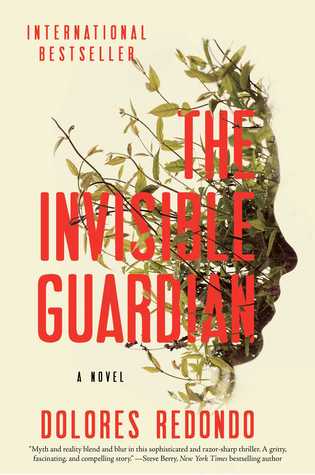
The Invisible Guardian, by Delores Redondo***-****

theinvisibleguardianThe Invisible Guardian has received widespread acclaim in Spain. It will be available to English speaking audiences March 8, 2016. My thanks go to Net Galley and Atria Books for the DRC, which I received in exchange for an honest review. I rate this book 3.5 stars and round upward.

The title comes from the Basajaun, which translates to “invisible guardian”. It’s a mythological creature, large, hairy, filled with kind intentions; sort of a goodhearted Bigfoot. Protagonist Amaia Salazar is a detective who finds herself drawn back to the Basque country, where she grew up and where her family resides, in order to solve a mystery. Locally, many residents regard the Basajaun as undeniable reality. Salazar deals with this, in addition to limitless family drama, in order to solve the crime.

I really struggled with this novel. There were times I felt I was being talked to death, and I am guessing that Basque conversational tradition may be very different from that of the US. I was stunned that a detective would be permitted to run an investigation in which her own family members are considered suspects, but since it isn’t discussed beyond a brief conversation in which Salazar is offered the chance to hand the case off to someone else, it is probably a thing that is done in that part of the world. I can’t see how it would become an international best seller if not. Or perhaps I am naïve.

At times it feels as if there was far too much personal drama, and it seems to distract from the mystery. Some of it turns out to be germane to the case, and other parts are included primarily to develop the protagonist. On top of the relationship issues between Salazar and siblings, Salazar and in-laws, and Salazar and her colleague, she is trying to become pregnant, and we have to deal with her feelings about that. If it were up to me, the pregnancy thread would be yanked and saved for a future installment if used at all. It seems like one thing too many.

I did a huge eye-roll during the scene in which a local resident wants to know whether the body was bitten by a bear or the Basajaun, and Salazar explains that it’s too early in the investigation to know, one way or the other. There are also hideous sexist assumptions and statements in the dialogue throughout the book, but these will be dealt with near the end, so don’t abandon the story over this alone.

To the positive, I wanted to read this novel partly to stretch my own cultural boundaries, and in that I succeeded. When I think of Spain, I tend to think—as urban dwellers often do—of its cities, art, and music. I knew nothing, nothing, nothing about the Basque people. I still don’t know a great deal, but I got my toes wet, and everyone has to start somewhere.

In addition, Redondo can tell setting like nobody else. The descriptions of areas I have never been and never will are adroit and visceral. I felt as if I were the invisible presence standing alongside Salazar.

It seems unfortunate that there is new information introduced during the last ten percent of the novel, without which the reader has no possible opportunity to unravel the mystery. However, the plot and pace pick up significantly, and many of what seem to be extraneous story elements are braided together so deftly that my overall impression of the novel is greatly improved.

For those interested in learning more about the Basque culture, this novel is recommended.

Where All Light Tends to Go, by David Joy*****

WhereAllLightTends“Dead men tell no tales, Jacob. The ones left to living are the ones who write the history.”

I received my DRC courtesy of Net Galley and Putnam Penguin publishers in exchange for an honest review. This title is available for purchase.

Jacob McNeely is a teenager in Cashier, North Carolina, a tiny  town deep in the crags and hollows of the Appalachian Mountains. His mother is a crank user recently released against his father’s wishes from a psychiatric hospital. Jacob has always wished she might turn into a real mother, but it isn’t going to happen.

His father is the local drug czar, with cops on his payroll and a wide variety of other employees as well. He uses McNeely’s Auto Garage to launder his drug money. If any clueless tourist should come by, he gives them a quote so outrageous they take their business elsewhere. Locals foolish enough to cross him or get in his way find themselves and their vehicles in a deep, watery grave yard. That’s if the abused, underfed Walker coonhounds that are tied up at intervals throughout his property don’t kill them first.

Jacob walks a careful tight rope just in order to stay alive. He doesn’t like the life he leads, but he doesn’t see a way out. That is, unless he can run away with Maggie, the girl he has loved since childhood. Maggie is cut out for greater things; Maggie should go to college and escape the danger and poverty of Cashier.

If only Jake could go with her.

Joy is a gifted writer. His stark prose is chilling yet poignant, and so arresting that the reader will be hard pressed to set it down once it’s begun. But you may think twice about reading it at bedtime.

Where does all light tend to go? The allegory is heavy but sophisticated. Perhaps all light goes toward heaven, the candle that reminds us of the existence of God.

Or it’s possible that all light just goes out.

Searing, wrenching, and deeply affecting, this is a book to remember long after you’ve forgotten everything else you’ve read. Highly recommended to adults. Definitely not for children or adolescents.

Simply brilliant!


Bad News and Trouble, by Maxine O’Callaghan****

badnewsandtrouble.jpgI am always on the lookout for a new, well written female detective series. There are some Grand Masters out there that I adore, but the problem is that I can read faster than they can write. So when I was given the opportunity to check out Delilah West, a sleuth whose stories originated during the latter half of the 20th century, I jumped on it, and I am so glad I did. Thank you, Brash Books Priority Reviewers Circle, for the free DRC. This book is available for sale now.

Delilah West may be cozy at times, but she is never cutesy or smarmy, and “never pert”. She never wonders why she didn’t bring her gun, because she always has the sense to have it with her. In Bad News and Trouble, we are treated to seven short stories, each of which is a separate case that Delilah describes to us. The suspense is thick, but now and then the feverish pace slackens just long enough to bring a good, hearty guffaw from the reader. Each episode is set primarily in California. She is a lone wolf, independent and smart as hell. She knows how to get things done, and she never has to call on a big strong man to save her personal ass. Believe it.

My favorite among the stories is second to the last, “Going to the Dogs”, a case in which a client is convinced that someone out there is trying to steal one of her dogs. I won’t give away the goods, but I will tell you that it kept me on the edge of my seat, made me laugh out loud more than once, and the ending was unusually satisfying.

You’ll have to excuse me now. Brash has more Delilah West stories on tap, and I am going to go find them. You should do the same.

Major Pettigrew’s Last Stand, by Helen Simonson*****

majorpettigrewHad this story not received such wide acclaim and been made into a movie (which I’ve yet to see, but I watched the Oscars), I would probably never have gone near it. I like working class protagonists, and I don’t read many romances, because often as not, they are corny, soft porn, or both. But I saw it at the library and decided to give it a try, and I quickly remembered, upon reading it, that some rules are made to be broken. So even if you usually don’t read romances, and even if a retired British pensioner is not your idea of an interesting protagonist, this should be the exception to the rule.

 I loved this story!

Major Pettigrew has difficulty with some sorts of change. He doesn’t want to see his village built up and the green spaces developed. He has lost his wife and his brother, and loss of any type is very difficult. His solitude is not splendid; he is a lonely, lonely man.

And in some ways, he seems to have lost his son, who has become arrogant, dismissive, and wants nothing more from him than his wallet and his bank card.

On the other hand, he has found something really precious, but what he has found is so controversial that the whole wide world seems to be against him.

Perhaps the hook for me was the interracial marriage, since mine is one also. But on the other hand, maybe the hook is just excellent writing. A really great writer can make us enjoy a genre we didn’t think we cared for; I believe this is one of those.

I hit a certain point in this story and could not go to bed until it was done. I usually read lying down before I go to sleep, but I was literally sitting upright on the edge of my bed leaning forward when this climax broke.

You have to read this story. It’s glorious, and it’s available to the public. Highly recommended!

Miller’s Valley, by Anna Quindlen*****

MillersValeyMiller’s Valley is an intimate, poignant story so personal that it is hard to remember that it’s fiction rather than a memoir. Thanks to Net Galley and Random House for the DRC. Though I usually read several DRC’s at a time, this was the one I saved for the end of the day, for that time when the phone stops ringing, the dogs quit barking, the family doesn’t need my attention, and there’s nobody at the front door. During those deep, silent hours I immersed myself into the life of Mimi Miller, hypnotized as if my best friend were perched on the bed spilling out her secrets.

If you love good literary fiction, you have to read this book!

The Millers are a family of working farmers. Day by day, inch by inch, water is claiming their land. Shifty business is going on between a developer, who wants to build and sell a waterfront community in what is now rural land containing farms and woods, and the government, which is interested in increasing the size of the local dam. Visitors come to all land owners in the valley, slick people ready to wheel and deal, threaten and cajole.

The Millers are having none of it.

The reader sees all of this through the eyes of Mary Margaret “Mimi” Miller, who grows up amid the tension, the resistance to the governmental takeover of their land, and the pride…above all, the pride. Her family mucks out the mud when the floods come, and they persevere. They resign themselves to the notion that wall-to-wall carpeting can never happen because water comes into the house so often. You can shovel the muck off of wood or linoleum, but a carpet would be ruined the first time the flood came.

Woven in and out of her story is that of her family members and closest friends, including reclusive Aunt Ruth, her mother’s sister who lives in a separate house on the property. Ruth is agoraphobic, and would not come out of her house if she believed it to be on fire. Ruth says that getting out of the house is “overrated”. We also see her older brother, Eddie, who is “the glory of Miller’s Valley”, the perfect son who goes off to college and makes good; we also follow her other brother Tommy into a host of trouble, trouble, and more trouble.

We view each setting as individual snapshot; she paints it, and we are there. Character development is likewise outstanding. As Mimi grows older, we see the same characters with deeper layers of complexity, just as our understanding of those around us grows fuller and deeper as we age. And as she grows into her adulthood, Mimi becomes so similar to her mother in so many ways that I have to remind myself continually that this is fiction, not memoir.

Quindlen is a veteran writer, and when I started to pass this galley by, I realized it was for a foolish reason: I had been required to read her essays and stories sometimes in teachers’ workshops, and so when I ran across her name, my instinctive response was to associate it with work. But those required-readings were some of the best workshops I ever sat through, and now that I am reading on my own time, I find her novel suits me down to the ground.

And I agree with Mimi’s conclusion that “Maybe everyone stays the same inside.”

Those that love good literary fiction as well as stories of finding ourselves through our heritage will appreciate this beautifully told story as much as I did. It is available for purchase April 5, 2016. Highly recommended.

Pilgrims: A Lake Wobegon Romance*****

PilgrimsOh my stars. Keillor is at his finest here. I’ve never read anything funnier. Every now and then I permit myself to read a title that isn’t a new release but that I’ve been considering reading for a long time. This is one of those.

By now you probably have an idea whether or not you are a Keillor buff. His appeal is largely (but not limited to) the boomer generation. His trademark capacity to satirize people from rural Minnesota, and in particular Lutherans and Norwegians and most of all himself, is legend. He somehow manages to tug the heartstrings occasionally and evoke bittersweet feelings that are experienced by those of us who grew up in the USA during a particular time period, even if we are not from his part of the nation or his culture.

Keillor seemed to me to be sort of a hit-or-miss writer for awhile, but lately, he’s been hitting, at least for me. Liberty, Pontoon, and this one, which parodies Chaucer’s pilgrims in the Canterbury Tales, carries on without slowing or hitching or ceasing to be interesting and at many times (especially the end) a total crack-up.

If you have never read Chaucer and don’t intend to, that won’t wreck it. The basic contours: Chaucer wrote about people going far away, in a limited group, and Keillor uses the same style of poetry Chaucer used to mark the beginning and end of this book. If there are other parallels, then I am not deep enough to find them, but if I found this to be a good bedside read with only that much recollection, then it will likely suffice for you too.

Here are the story’s components. (I actually flagged fifteen hilarious passages, and then realized that if I quoted them here, it would ruin it to you, so I’ll just give you the basics and set you free.) Margie is 53 and very unhappy. Life has sort of ground to a dull halt; the nest is empty, and husband Carl has moved to a different bedroom. She doesn’t know why. She hopes that if they take a romantic trip to Italy, it will rekindle the flame.

Writer Gary Keillor comes to town. No one includes him in anything. They all assume he is being standoffish by not coming, and he is hurt that no one invites him; very Scandinavian. Before he knows it, he has livened up the speech he is giving (and which is obviously boring his audience senseless) by offering to fund the trip to Italy. Holy smokes! What has he done?

On top of all of it, the town hero, Gussie, their fallen Norwegian soldier who fought in World War II, should have his grave decorated. His daughter Margo, born in Italy outside the sanctity of wedlock, has never gotten around to coming to the USA to meet him, and his remaining brother, very elderly and in a nursing home in another part of the USA, has long wanted someone to convey a photo of Gussie to his grave site. A simple request, and nobody would do it. Now, Margie calls to tell him she’ll be happy to help, and joy of joys, he sends her a big pile of money, and on his deathbed, he refers to her as his “daughter, Margie.” She is entirely untroubled about taking his money as the little band from Lake Wobegon sets out on its vacation and its mission to decorate Gussie’s grave.

This should give you enough information to decide if you want to see the rest. I will only tell you this: the story has some surprises in store at the end; it is not as predictable as it appears to be at the 75% mark.

I found my copy during an annual pilgrimage of my own, to Powell’s City of Books in Portland, Oregon. It has been available to the public for some time.

Hilarious, and highly recommended!

Bonita Faye, by Margaret Moseley****

bonitafayeBrash Books has a new release, and it’s exactly the kind of novel you’d want to take to a warm sandy beach, or perhaps just to curl up with while the snow falls. I was permitted an advance glimpse, courtesy of Brash Books Priority Reviewers Circle. It was originally published in 1997, but due to be released again February 23, 2016. You’re in for a good time with this one.

Bonita Faye is our protagonist, of course, and although her story has been compared to Fannie Farmer’s work, I found her to be more of a female, less extreme version of Forrest Gump. The narrative begins in a dialect that is semi-literate; the setting is partly in Poteau, Oklahoma and partly elsewhere. Bonita Faye is born poor and without any real source of support, but rises above it through means that are both ingenious and at times, very funny. Although the story is ostensibly a mystery, we don’t need to know who-dunnit, because Bonita Faye did it. All of it.

Because some of us don’t need a knight to ride to our rescue. Some of us can take care of ourselves.

Although I found the protagonist to be engaging, I think the novel would actually be strengthened by pulling back a bit on the cornpone dialect. There is also a point at which her education is improved and her English becomes more eloquent, but then for no discernible reason, she falls back into the same aw-shucks dialect she had initially.

There are multiple characters that are developed besides Bonita Faye. I liked Claude (“Oink oink!”) and also Simone. I had trouble buying into the second half of the thread involving Michel. I also found the thread with Elly to be problematic, although I loved the final resolution of the problem that develops toward the end.

When push comes to shove, Margaret Moseley is a force to be reckoned with, and I look forward to seeing more of her work in the future. Those looking for a fun, accessible vacation read should order this book.

Dragon’s Teeth, by Upton Sinclair*****

dragonsteethDragon’s Teeth is the third in the Pulitzer-winning Lanny Budd series. Set in 1942—the present, at the time it was written—it provides the reader with a fascinating, well-informed, hyper-literate view of Europe during the years before and during Hitler’s ascent to power. While it requires a fair amount of prior knowledge in order for the reader to keep up with the story, history lovers, political philosophers, and especially those fascinated by the period in question will find it riveting. Thank you Open Road Integrated Media and Net Galley for allowing me a DRC. This title is available for purchase digitally now.

Sinclair, himself a socialist of the Utopian variety, shows us the ideas of the “reds and pinks” that were plentiful and active—yet in the end, not active enough to prevent a Fascist takeover—during this period. Budd is the heir to a munitions-maker’s fortune, and so his is the life of the idle rich. He amuses himself by hosting salons, popular at the time, which were group discussions regarding alternative political ideas. His wife Irma is heir to an even greater fortune, and is uncomfortable hosting these odd people that speak of redistributing wealth, but in time she relaxes, understanding that this is just one of Lanny’s hobbies and is unlikely to ever affect her personal comfort level. And indeed, Lanny is never going to sully his hands by taking to the streets with working class militants; in fact, apart from buying and reselling artwork, he’s never going to even hold down a job, reasoning that it would be wrong of him to take a job he does not need when someone else really does need it. He is amused and comfortable in his role as armchair socialist and angel financier to a leftwing newspaper. Yet the idea of actually taking power…hmmm.

“It seemed to have begun with the Russian Revolution, which had been such an impolite affair.”

Nobody writes setting like Sinclair. The story begins in Italy following the First World War; Mussolini has risen to power, and we can almost hear the hard heels striking the cobblestones. Budd is somewhat concerned for Hansi, his brother-in-law who is Jewish, but he also believes that money talks, and any unpleasantness can probably be squared away with a donation here and a greased palm there. As long as the seas are safe, the family considers simply waiting out all the unpleasantness on the family yacht, hoping that things will be settled down by the time they want to dock somewhere.

Hitler is out and agitating, but no one really thinks he will take over the world; if he were going to do that, he surely wouldn’t stand in the streets and scream about it, now would he? And we feel, through Lanny and his family, the stark startled horror when his power increases and his Storm Troopers become an official government organization rather than simply a pack of street thugs. At the same time, we also experience his and others’ perplexity at the name chosen by the NSDAP, because it invokes the name of Socialism for a system that is actually far-flung from it, and it calls out to the working class even as it pounds their unions to dust and sends their leaders to concentration camps.

While the working class of Europe starves or stands on line at a soup kitchen, the Budd family has the traditional six meals daily; when they are not at home, they do the charitable thing, and instruct the servants to find some “worthy poor” to consume the unused meals. Well…not in the house, of course. Somewhere else.

At times, the tone is satirical, and in a few places made me laugh out loud, mostly in the beginning. Later the tone changes and is sharper, angrier. I found it deeply satisfying.

Particularly fascinating is the statement that “He who could get and hold the radio became God.” In one form or another, this has been true since the radio was introduced into first-world homes nearly 100 years ago. Major media sources had the monopoly on information, apart from the printed press. The radio, then television…only recently have ordinary people had the means to record and disseminate information on the phone they carry with them everywhere. And it’s interesting to see the changes that result.

Perhaps your thoughts will travel in different directions than mine did in reading this interesting nugget, but it is bound to make you think. If you are looking for some escapist material to take to the beach or curl up with by the fire, this isn’t it. This is fuel for the brain, fierce material that came from a time when all of Europe had to decide which side they were on.

For those that love history, literary fiction, or political science—or all three—highly recommended!

Try Not to Breathe, by Holly Seddon*****

trynottobreatheTry Not to Breathe is the sort of book that steals into your senses and takes over your life until it is done.I was invited to read and review this title by Net Galley and Random House Ballantine. My thanks go to both.  I fed it to myself into intentionally small bites at first, because I read several hours before I go to sleep, and under no circumstances did I want this story anywhere in my dreams. On Friday I hit the halfway mark, and immediately realized that Seddon’s novel would occupy my Saturday, period.

It’s a story that will make you put the cereal in the fridge and the milk in a cupboard. But on the other hand, it’s a terrific book to be snowed-in with.

Our premise is that Amy, a fifteen year old girl that was savagely beaten by a party unknown, has been unconscious in the hospital for fifteen additional years. But she isn’t on a ventilator, and brain waves turn up on the MRI. She can’t communicate, but she is thinking part of the time.

She’s still in there.

Our two other chief protagonists are Jake and Alex. Jake was Amy’s girlfriend, and briefly was considered a suspect by police. He didn’t do it, and he still visits her now that her family is gone. Partly it is because it’s believed that she can hear what is said to her, and he hopes that he can provide some measure of comfort. And partly he visits the ward for the quiet. It’s his private time, when neither work nor his wife can claim his attention. But he doesn’t tell his wife, and the lies are building up, corroding his relationship with his very pregnant spouse.

Alex is a free lance reporter whose love affair with alcohol has displaced her career, ended her pregnancy, and destroyed her marriage. She is isolated, miserable, and needs someone to talk to. With the tantalizing promise that her nearly moribund career can be rekindled by uncovering new information in Amy’s case, she begins visiting Amy, and she begins digging. And as one revelation leads to another, the tension and suspense are nearly unbearable!

The ending leaves me slightly dissatisfied, a left curve thrown in order to surprise the reader, but the innovative way in which it is revealed is so clever that I can’t bring myself to lop even half a star off my rating. If like me you occasionally wallow in a good thriller or mystery, you’ll find this one is a cut above the rest.

Seddon, herself an accomplished journalist, makes her debut as a novelist with this title, and she is a writer to watch in the future. Her thriller is available to the public February 23, 2016. Highly recommended!