My Name is Emilia del Valle, by Isabel Allende****

“Aren’t you afraid, Angelita?’ I asked her. ‘All the time, but I don’t think about it. I want to die with my boots on my feet,’ she answered…

“I did not know who I truly was until circumstances put me to the test.”

My Name is Emilia del Valle is the newest novel published by feminist icon and author Isabel Allende. The story is a fictionalized account of a journalist that travels from California to Chile, where war has broken out. Because she is a woman, her editor resists sending her, and then, under pressure, agrees that she may go, but only to cover human interest stories in the city. Those that have read any book ever by Allende will know instantly that this is not what our journalist does.

My thanks go to NetGalley and Random House Ballantine for the invitation to read and review. This book is available for sale now.

Like all of Allende’s protagonists, Emilia is a woman that refuses to be constrained by the expectations of the time regarding gender. She is possessed of feverish curiosity, and once she finds herself in the thick of the conflict, she has no interest whatsoever in finding and maintaining a safe, distant place from which to report. She assists the “canteen girls,” who provide water to fallen soldiers, along with minor first aid. Emilia learns first hand about the horrors of war, and she is forever changed by it.

This conflict is one that isn’t widely reported, and Allende writes about it so that it may not be forgotten. Ten thousand died here, mostly men from poor families, killed for no good reason. Emilia’s experiences highlight the disparity in treatment according to social class and wealth, as well as gender.

The writing is first rate as always. However, in most of her earlier novels, the author found a way to intersperse shocking or horrific passages with some that were uplifting, and often very funny. I would bark with sudden laughter at some witticism that I had not seen coming. I wish she had done that here. When there’s too much horror and bloodshed, it is tempting, natural even, for readers to tune out, let the words wash over us. And while there is romance here that provides some relief, I would have liked more.

Nevertheless, those that love historical fiction, social justice, feminism, and especially those that love Allende’s writing will want to read this book.

In the Time of Five Pumpkins, by Alexander McCall Smith*****

In the Time of Five Pumpkins is the 26th installment of the #1 Ladies’ Detective Agency mysteries by Alexander McCall Smith. This is hands down my favorite cozy series, and it may very well be my favorite series, period. Precious Ramotswe is our chief protagonist and owner of the business, and her easy-going manner with others and her capacity to smooth over a difficult situation are a breath of fresh air. Of course, Precious is fictional, but she feels real to me. I feel as if I have known her for decades, which in the literary sense, I have. My thanks go to NetGalley and Random House for the invitation to read and review. This book is for sale now.

As with all of my best loved, long-running mystery series, the joy of reading is only partly to do with the mystery. In fact, I almost think Smith could forget to include a mystery and I might take a good long while to notice; I enjoy greeting the continuing characters that I haven’t seen in some time. Mr. J.L.B. Matekoni, who is married to Precious and runs a garage in the same building where Precious has her office; Mma Potokwane, Precious’s “traditionally built” best friend, who runs an orphanage and always has fruitcake ready when Precious visits; Charlie, the formerly bumbling mechanic who is shaping up nicely as a part time detective trainee; and of course, Mma Makutsi:

Employees who leave it to their employers to promote them may have a long time to wait, but this was not the fate of Mma Makutsi. She had somehow managed to promote herself, first to the role of senior secretary, then without discussing the matter with Mma Ramotswe, to assistant detective, associate detective, associate director, co-director and so on, to the position she had most recently chosen for herself—executive president for development. This was a novel description and had rather puzzled Mma Ramotswe.

Passages such as this one leave me gasping! How many of us, in a similar situation, would allow someone that we had hired to give herself such exalted titles? It’s both bizarre and preposterous. But there’s never a question of salary; no matter what she calls herself, Mma Makutsi makes the same money as before, and no one here is making very much.

The stories usually have more than one thread, and so it is with this one. A woman arrives from the States to meet someone that turned up in her ancestry search, and the agency is hired to help her find them. At the same time, another case involving marital problems, though not the usual sort, is presented. And a third thread has to do with a shady character that has befriended Mr. J.L.B. Matekoni. Before all is said and done, Charlie has a “Clovis Anderson moment,” which has been a long time coming, and J.L.B. Matekoni saves his creepy new friend from a “government crocodile.”

This is a series that never gets old, and perhaps because the excitement is ramped up just a tick in this one—not too much, we do want to keep it cozy, after all—it may be my favorite so far. Highly recommended to all that love the genre.

Over Yonder, by Sean Dietrich*****

Sean Dietrich has written another fine novel, Over Yonder, one full of quirky characters, weird yet oddly credible situations, and a whole lot of heart. My thanks go to NetGalley and Thomas Nelson Books for the review copy. This book is for sale now.

Dietrich has been writing for a long while, but this is just the third of his books that I’ve read. As I begin this one, I develop a niggling suspicion, wondering whether this author uses a formula. This would be a sad discovery, because till this point, I have greatly loved his work. And so the question I have to answer before I can do much else is whether that’s true, or whether he is writing unique stories using a signature style. Here is what I am seeing: each story focuses on a girl—teen or child—who’s down on her luck, possibly facing a crisis, with no adult that will help her or advocate for her; an older man dealing with misfortune of his own such as a fatal or serious illness, and who is otherwise isolated and in need of redemption; and a chance meeting of the two in a small town in the deep South.

I suppose, after reading this third one I am inclined—as you can see from my rating—to say this is a signature style rather than a formula. I hate to be played. If I felt this was a formula, I would feel annoyed and my review would not be generous, but that’s not what happens.

Caroline is 17 and pregnant. Her boyfriend, Tater Bunson, is at the wheel of his ’93 Honda.

“Caroline stared out the lace-like cracks of the passenger window’s single bullet hole at downtown Knoxville…her hair was the color of a carrot. She was ninety-four percent freckles. Her small, upturned nose, full cheeks, and cherub face brought to mind a character from the highly successful Cabbage Patch Kids product line…Tater spun the wheel right. The car made a sound not unlike a Folgers can of rocks falling down a public stairwell. The spiderweb crack on the passenger window came from a .22 caliber bullet that had passed through the glass during Tater’s last heated disagreement with his mom.”

Woody Barker used to be a priest. He has a houseboat and a bad heart, and not much else. He can qualify for a heart transplant, but only after he quits smoking, and it’s not going well. He’s lonely; he had hoped to pick up with his ex-wife once he got out of prison, but now that he’s out, he sees that she has a boyfriend, and it looks like he’s out of luck. Then an old girlfriend summons him to her deathbed. She wants him to meet his 17-year-old daughter. Who? What??

Dietrich’s wry humor and visceral figurative language are out in force here. Highly recommended to those that enjoy strong Southern fiction with deeply developed characters.

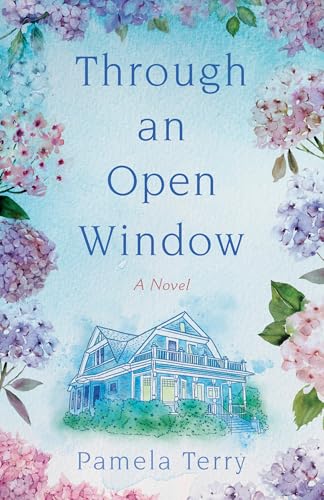
Through an Open Window, by Pamela Terry*****

“When you’re the last one with memories it’s like trying to hold on to hot sand.”

Author Pamela Terry never misses. Her debut, The Sweet Taste of Muscadines, forged such an emotional connection in me that if someone had told me they didn’t like it, I might not have cared for them as much as before. The same held true for her next work, When the Moon Turns Blue, which was every bit as good if not better. And now, with her new novel, Through an Open Window, I know that I will follow this author anywhere.

My thanks go to NetGalley and Ballantine Books for the invitation to read and review. This book will be for sale August 19, 2025. If you are female and have a beating heart, you should get it and read it.

We open with a scene from 1956. The local sheriff rescues two small children from a scene of horrific carnage; the baby girl is surrendered to the social worker before they find the little boy. The sheriff and his wife have been unable to have children, and want them so badly that instead of reporting the boy also, he takes him home and they keep him.

Cut forward now to the fictional town of Wesleyan, Georgia. A family is grieving the loss of its patriarch, Lawrence Elliot. His widow, Margaret is the first to receive a visitation—not from Lawrence, but from Great-Aunt Edith, who has been dead for years. Aunt Edith wants her to know something. And in fact, other family members will also see her at various times, in various places, but it’s not the sort of thing one shares with others. But Edith isn’t leaving until her message is received and understood.

As we see Margaret and her three adult children cope in different ways, we also see the interplay of their relationships to each other. This story is loaded with character development, and I believe each and every one, even Jubal, the rescued Clumber Spaniel that comes to live with Margaret. (I had never heard of this breed before, and now I kind of want one. Someone stop me!)

Events roll forward, and slowly we learn what it is that Edith is trying to convey, as the family does, and we find the tie-in to the prelude. It’s done brilliantly! Along the way, the author’s voice comes through in undeniable word smithery that forces me to highlight way, way too many passages to quote here. I experience the entire gamut of emotion, and when I near the ending, I am torn, wanting to read more slowly so that the book won’t end, but also needing desperately to know what is coming next.

The only possible improvement would be if Terry could write, and write up to the standard she has established, as fast as I can read, because I cannot wait for her next novel! She has become a favorite author, one I’d pay to read if I couldn’t do it free of charge. Highly recommended.

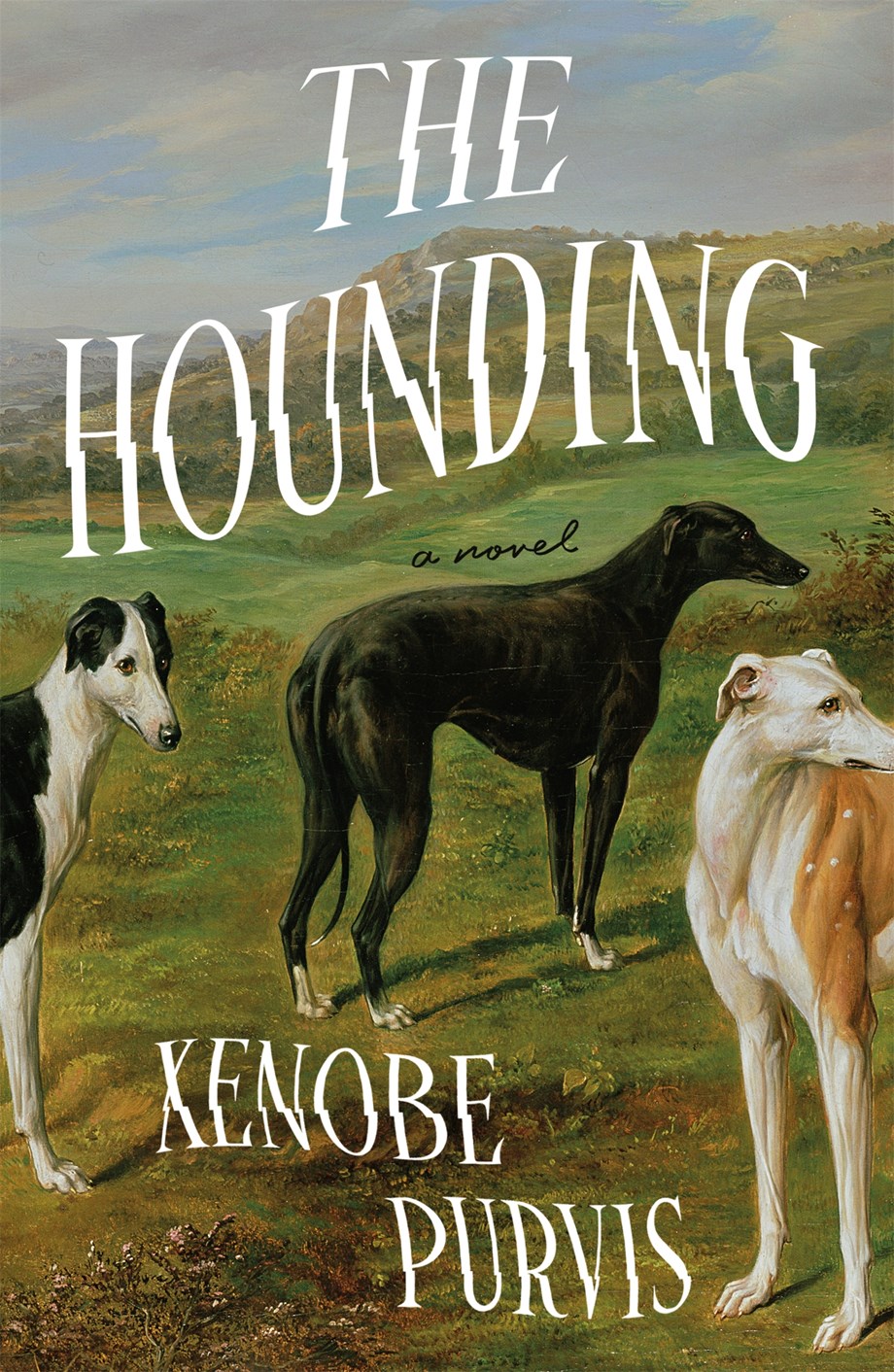
The Hounding, by Xenobe Purvis***-****

Who could walk away from this book cover? The Hounding, the arresting debut by Xenobe Purvis, is a story set during summer in eighteenth century England, in a tiny hamlet. Five motherless girls are given more freedom than is customary, and a rumor takes hold that the girls turn into dogs and wreak havoc on the village of Little Nettlebed.

My thanks go to NetGalley and Henry Holt for the invitation to read and review. This book will be available to the public August 5, 2025.

The Mansfield girls are being raised by their grandparents; their parents are long dead. But now, their beloved grandmother has died as well, leaving them in the care of their elderly grandfather, who is almost blind. It’s not a great summer for anyone else, either; there’s a dreadful drought that affects agriculture, and the riverbed is nearly dry. Then one day, Pete, the ferryman, tells the local gossip that he has seen the Mansfield sisters transform into dogs! Soon the rumor has spread, and others report that they’ve seen it happen, too; everyone wants to get in on the excitement.

The story tells a cautionary tale, not a new one, but a worthwhile one about the way society sometimes victimizes people that are a little different from most. There’s not much by way of character development, but this book is not about character or setting, it is purely plot-based. Purvis is a fine wordsmith, and since I was lucky enough to have both the digital and audio galleys, I found myself drawn into the narrative, first by the text, and then by the audio. Reader Olivia Vinall does a splendid job, and I recommend the audio version for those that enjoy the medium.

My only sorrow is that although this book is engaging, it could have been so much more. There are opportunities here that are left unfulfilled, and the plot twist at the end destroys the message that has been so carefully crafted up to that point. I find it frustrating. This is a good read, but it could have been a great one.

With that caveat, I recommend this book to you.

Overkill, by J.A. Jance*****

Overkill is the 18th book in the Ali Reynolds series. Ali and her husband, B. Simpson, run a cybersecurity firm. This mystery features two parallel problems. The first is when B’s first wife, Clarice, is accused of a murder that she didn’t commit. B. wants nothing to do with the problem—or Clarice—but Ali is convinced that she should look into it. The second problem is that Cami, the young woman that works for Ali and B., is being stalked while on a business trip. Both problems create a tremendous amount of suspense for the reader, and Jance is an expert at juggling many threads and details without dropping anything, while making the story clear enough that the reader can keep track. I enjoyed this book a great deal, and it’s for sale now.

My thanks go to NetGalley and Gallery Books for the review copy.

One of the things I love most about reading a J.A. Jance mystery is the feminist mojo she brings to every book. It’s subtle and built into the plot, rather than reading like a manifesto, but her sympathies toward working women, both professionals like Ali, and humble housekeepers such as the woman accused here, is manifest. It’s not an unusual mindset to encounter in a novel these days, but Jance has been doing it since long before it was common. In addition, her pacing never flags, and I don’t get confused by her plot lines, even when there are a good number of characters to track.

This is the first time I’ve used an audio version to read any of Jance’s books; I had fallen behind a bit, so I checked out the audio to keep me company on a road trip. Karen Ziemba does a fine job with the narration. I highly recommend this book to those that love the genre; you can read it as a stand alone if desired.

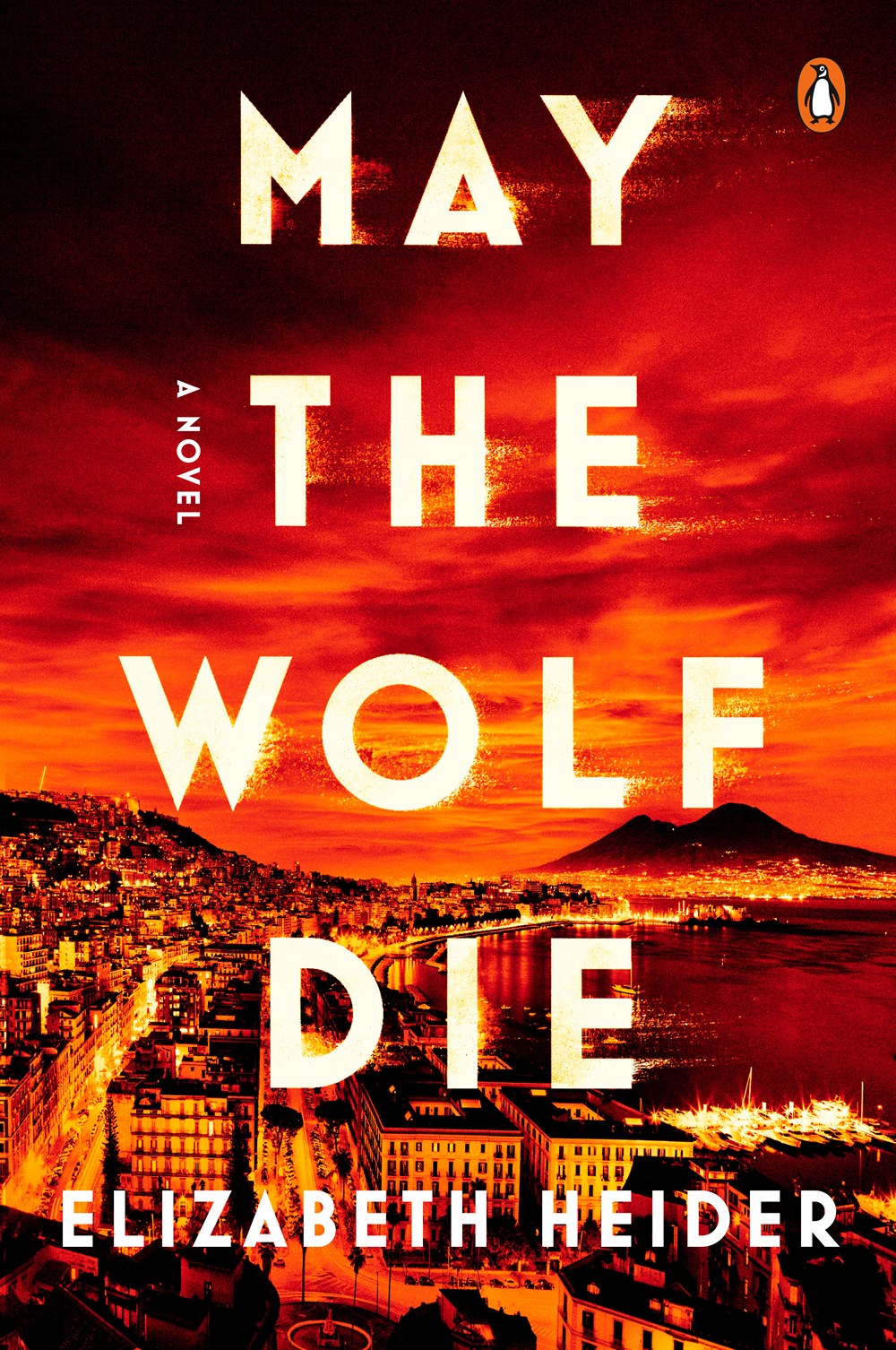
May the Wolf Die, by Elizabeth Heider***-****

“Sometimes, killing is necessary.”

Elizabeth Heider is a scientist with a long, impressive track record. Now she has published her first mystery, May the Wolf Die, as well, proving that some of us can wear multiple hats very well indeed. My thanks go to Penguin Random House and NetGalley for the invitation to read and review. This book is for sale now.

Our protagonist is Nikki Serafino, an investigator living in Italy. She’s out in her boat one day when she finds a man’s corpse, and from there we venture into local organized crime.

The mystery itself wasn’t as engaging as I had anticipated, given the buzz, but there are a few laudatory aspects nonetheless. First, Heider is a scientist, and often when someone is a specialist in some other field, they info-dump so much data into their novel that it loses its sheen. Heider’s restraint here is admirable. The unusual characteristic of the corpse, which I won’t disclose, appeared to be a gimmick that would take over the story, but it wasn’t and didn’t. The ending was solid. But the best and most important feature, the thing that elevates this mystery from three stars to four, is the punchy yet tasteful manner in which Heider deals with sexism and violence against women in the military. There are a couple of stand up and cheer moments that made me sit up and take notice.

This is a debut novel, and a promising start for Heider. I wish her well in her new career.

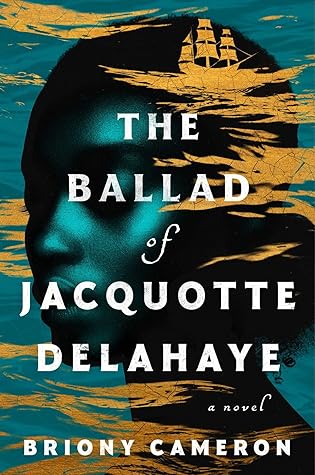
The Ballad of Jacquotte Delahaye**-***

The Ballad of Jacquotte Delahaye marks Briony Cameron’s authorial debut. She is a talented wordsmith, and my thanks go to Atria Books and NetGalley for the invitation to read and review. While I enjoyed several exciting passages—I do adore a good pirate tale—in the end there were issues with credibility that got in my way.

 This story of a pirate woman’s derring do is for sale now.

When I read that Jacquotte Delahaye was a real person and that the book is based on true events, I was all in. However, there are passages that made me raise an eyebrow, and since there didn’t seem to be any notes that would indicate what is true and what is the author’s invention, I took to Google to find out more. This is where I learned that actually, she may have been a real person, or she may be only legend. The stories surrounding her life and exploits are also legend. There’s virtually no verified historical information on this character.

I love good historical fiction, which is where actual, documented facts are given warmth and life by an author that adds dialogue and perhaps fleshes out a few areas where the record is sketchy. Then, if the author is sharp and professional, there will be end notes that explain what is a matter of historical record, and what has been invented. That’s my happy place. Even better is when sources are provided for interested readers. Of course, a writer of any kind of fiction isn’t required to provide footnotes or other documentation, but when they do, it’s the cherry on the sundae, and it makes me love them all the more.

Because this story is not nearly as closely aligned to historical record as the promotional materials would have me believe, I nearly dropped my rating to two stars. I felt, and still feel, that the synopsis provided is misleading. I don’t like feeling as if I’ve been played. However, I realize that the author probably is not in charge of her own promotional blurb, and I can’t see penalizing her for what the publicist has chosen to do.

Do I recommend this story? Not so much. Had it been written in such a skillful way that I felt no need to do research of my own, I might not know that this is pure fiction based on little more than speculation. That’s not the case, though. It doesn’t ring true in a number of places, and that’s partly because it isn’t. However, should the reader decide to pursue it, I would advise that you get this book free or cheap, unless your resources are endless ones. Don’t pay full cover price.

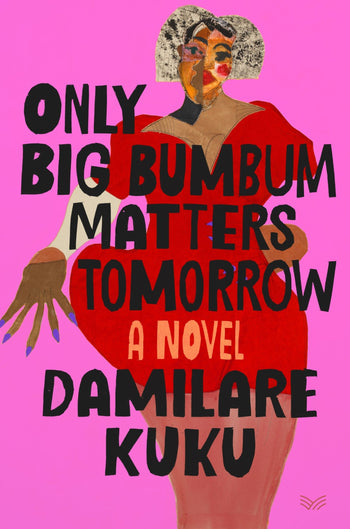
Only Big Bumbum Matters Tomorrow, by Damilare Kuku

When a novel written and set in Nigeria is so successful that it’s translated into English and sold in the U.S., you know it’s probably one hell of a good book, and Only Big Bumbum Matters Tomorrow is clear evidence that this is true. My thanks go to HarperCollins and NetGalley for the review copy; this book is for sale now.

Our protagonist is Teme (TEE-mee), a young woman fresh out of college who is sure of her next course of action: she must develop a perfect body, starting with her backside. She works and saves her money so that she can have her buttocks enhanced surgically. Everybody loves a woman with a big butt, and once hers is augmented, she can marry anybody she wants. It will be a great investment!

This choice, not surprisingly, blows the roof off her family home. All of the women, her mother, auntie, sister, and others are adamant, and they scheme together, and bicker together, about how to prevent her from carrying out what they perceive to be a dangerous and foolish task. In the process, they reveal their own long held secrets, and also? They are hysterically funny!

The reader should know that the best material isn’t dropped in at the beginning, as is the unfortunate trend. Instead, it starts out fairly serious, and then I find myself snickering a little, and then a little more, and by the end, I am howling! There are quite a number of characters, and not recalling all of them won’t interfere with your enjoyment; however, it’s easier to catch up and also identify certain Nigerian terms that are peppered in, most of which are self-explanatory anyway, if you read digitally. However, because I had fallen behind, I checked out the audio version from the library and followed along as I did my morning exercises, and the audio version is brilliant as well. The lilting Nigerian dialect is mesmerizing!

Although it doesn’t seem like it at first, this novel packs a satisfying feminist punch. I highly recommend it to any reader that has eyes, ears, or both. Don’t miss it!

The Love Elixir of Augusta Stern*****

Augusta Stern is about to turn eighty, and she’s being forced into retirement, darn it. Her beloved niece persuades her to leave New York and spend what remain of her golden years in a Florida seniors’ community. From there, a wave of surprising events unfolds, changing Augusta’s life.

My thanks go to NetGalley and St. Martin’s Press for the invitation to read and review. This book is for sale now.

Loigman’s debut novel came in 2016, and as of now, she’s published three more. Every single one is golden. This author writes with warmth and intentionality, and although the first was wonderful, each subsequent one has been better than the last. And so, although I have gone on to read other novels by other authors since I finished this one, this is the one I’m still thinking about.

You see, in 1922, Augusta’s mother became gravely ill. Try though they might, neither the doctors nor her pharmacist father were able to help her, and she died. Augusta, her sister, and her father were all plunged into a dark and terrible place without her.  Great Aunt Esther showed up to run the household, and she brought with her a case full of herbs and tinctures; Esther was an apothecary. Her methods, which were sometimes unconventional, put her at odds with her nephew, but they got results, sometimes where conventional medicine had failed. Soon Augusta was spending her hours after school helping her father in the pharmacy, and sneaking out of bed in the middle of the night to observe Esther devising natural concoctions of her own. Esther declared Augusta to be her heir; she had a loving heart and a healer’s instincts.

Her social life was very limited, absorbed as she was with the family business, but the brightest spot in her day was when Irving Ripken, her father’s delivery boy, came to work. Often, they would talk as they worked; in time, they fell in love. Imagine her horror, then, when he abruptly married someone else and moved to Chicago! Augusta never recovered from the blow, and so she has never married.

Now, imagine her astonishment when sixty years later in Rallentando Springs, Irving shows up at the pool!

Much of what follows is what a reader might expect, but the details and character development take the story to a higher plane, and as we follow it, we also see the events of 1922, and these enable us to understand these characters and what drives them. There’s an unusually clever twist at the end, and it’s one that I absolutely do not see coming.

Ordinarily I would include ways in which the novel fell short or could be improved, but that’s impossible in this case. Loigman has spun magic for us from start to finish, and all I can do is bow in appreciation, and recommend this novel to you.