4.5 stars. An impulsive choice made at the last minute, and how often do those pan out? Literary fiction, 4 stars.
Joannie is an author trying to live off the increasingly scant checks garnered by her first–and last–novel. She’s a single parent, and as she and the rest of the world come out of hiding following the pandemic, blinking like naked mole rats, she accepts a date, her first in seven years, from a man that lives around the corner. He has a child too! So it all starts out so innocently, so normally, and might have remained so, had the billionaires not crash landed their hot air balloon in Johnny’s pool that evening.
My thanks go to NetGalley and Knopf for the review copy. This book is for sale now.
I generally avoid novels that feature major characters that are wealthy, but this one had its platinum tongue in its diamond-encrusted cheek so plainly that I decided to take a chance. Here’s what I love the best about it: instead of opening with a humorous passage or two that turn out to be about the only funny material the book has to offer—the sort that makes me suspicious that the author only brought out their A game for the first three chapters, the part that the publisher would see—Hot Air begins with a clever moment or two, and then it ramps up until the climax, at which point I am helpless with laughter. The pair in the balloon—Jonathan and Julia—are the most solipsistic individuals I’ve seen in print in some time, but they want to believe in their own goodness, and the inner conflict, what there is of it, between trying to be at least sort of decent, yet being determined, in the end, to put their own wishes first, is deftly handled. Joannie, on the other hand, is from the real world, and she’s trying to find just a scintilla of personal happiness without screwing things up and making her little girl pay the price. We bounce between their points of view, including the home owner’s, of course, with occasional references made to Jonathan’s personal assistant, Vivian, a young Vietnamese woman tasked with cleaning up all of his messes. Here’s a sample from the very beginning, so I’m not spoiling anything:
“He took a photo of the hot air balloon at the bottom of the pool and sent it to Vivian in a text message. ‘Here’s a challenge for you,’ he wrote. She could take care of it. She was the one who had actually rented the balloon, after all, set up the lessons. It occurred to him that this was her fault. She should have told him it was a bad idea.”
We’re well into the second half of this novel when we hear Vivian’s point of view, and it is a miracle that I am able to avoid spraying my sandwich across the table, it’s so surprising and so funny!
At 208 pages, this little novel flies by, aided by the abundant, punchy dialogue. I haven’t had such a happy surprise in ages; now you can, too! Anyone might enjoy this story, but I especially recommend it to women. If you need some comic relief, get this book! You won’t be sorry.
Charmaine Wilkerson is the author of the massively successful Black Cake. Her sophomore effort, Good Dirt, carries some of the same components—an impending marriage, a family heirloom, secrets and betrayals—but is nevertheless a very different story, and it’s an even better one. My thanks go to Random House Ballantine and NetGalley for the invitation to read and review. This book will be available to the public on January 28, 2025.
Our protagonist is Ebby Freeman, which is short for Ebony. She lives with her parents in an affluent neighborhood in New England, but there was a fourth family member, her brother Baz, who was murdered during a home invasion; Ebby witnessed all of it, and has long carried the guilt of survivors. Could her ten year old self have done something to save Baz?
Now Ebby is grown, and plans to be married, but things don’t go as anticipated.
As in her previous novel, Wilkerson packs so many points of view into the story that I eventually stop counting, and although I am skeptical about this choice through much of the book, by the end I have to admit that she has carried it off nicely. Some points of view are urgently necessary to carry the plot forward; others, like that of the intended groom, Henry, are straight-up hilarious in places. Once again, we move not only between points of view, but time periods as well, reaching back into an earlier century, when some of her ancestors were enslaved. These passages aren’t entertaining, but they are necessary to provide clarity and urgency.
Ordinarily, I don’t read stories with wealthy protagonists, and make no mistake, Ebby’s family has a great deal of money; but having the family be African-American, and self-made rather than heirs to massive, often ill gained fortunes helped a great deal. Ultimately it was easy to bond with Ebby. When she experienced pain and rejection, I felt it, too. I carried her around in my head in a way that I usually don’t; over 1,000 reviews are in my rearview mirror, and only the truly special ones take hold of me as this one has.
Margo’s Got Money Troubles, by Rufi Thorpe, is a bold, inventive, and very funny novel about a young woman cut adrift in a difficult, expensive world. My thanks go to NetGalley and William Morrow for the invitation to read and review. This book is for sale now.
Margo is the daughter of a Hooters waitress and a former pro wrestler, an absentee father with a family of his own; her mother had been his woman on the side. Consequently, Margo has always understood that she would have to hit the ground running when she grew up, and so she’s enrolled in a junior college. When the brief affair with her English professor leaves her pregnant, she has nobody reliable to advise her. The women she confides in urge her to terminate the pregnancy, and of course, the professor does, too; yet Margo likes the idea of becoming a mother, and it’s her fetus. Nobody can make her do anything. She decides to keep it.
Her mother is about to marry a man with money and conservative values, and she sees Margo as a loose cannon that just might upset the whole ship, so she tells her to terminate or be cut off.
Wow, Mom. Really?
Margo’s roommates hadn’t agreed to share an apartment with a baby. They need to sleep! They have to get up early!
Early on, I’m rolling my eyes. Part of me is thinking that Margo is about as dumb as they come; part of me is wondering why no author in this entire world is writing—or, more likely, why no major publishing house is publishing—novels in which a young woman chooses to have an abortion and take back her body and her life. But I’m overthinking, because soon, Margo—who after all, is just young, naïve, and rudderless—admits her error. She loves her little boy, but she had no idea he would be so expensive, or that motherhood would be so difficult. She tells her father, who re-enters her life as her mother steps away,
“’I shouldn’t have had him,’ as though some rip cord had been pulled inside her. ‘I know that, okay? Everyone told me it would ruin my life and it did. They were right, and I was stupid, and I didn’t get it. Okay? But now I’m here.’ And her father, who strangely enough becomes the most reliable adult in her life, says, ‘Yes. Now we’re here.’”
Later, Margo will comment that nothing can make a person pro-choice like having a baby.
Margo has been waiting tables, but she can’t find child care, and when she brings the baby to work, she’s fired. And the truth is, she doesn’t like leaving her baby. Then one day, while looking at her naked self in a full length mirror, she observes that she has huge boobs for the first time in her life. Men would pay to see this. She opens an account on OnlyFans.
And so this controversial choice becomes the crux of the story. Some friends reject her, and her mother has really had it with her now. But there are a lot of meaty conversations that are thought provoking, and so, even though this old lady schoolteacher reviewer is mighty uncomfortable reading about an online sex worker’s film process, there are related questions that cannot be ignored. For example, Jinx—her father—advises her against it, saying that she shouldn’t get mixed up with these kinds of girls, and she asks him, “What are ‘those kinds of girls’?” And it’s true. A man can send his dick pix out into the world any number of times and places, and whereas many will consider these gross, or obscene, which they are, how many people will condemn the guy’s entire character, his moral fiber, for having done it? So the double standard is screaming to be recognized.
Margo goes through a lot of grief, defending custody of her son when the skeevy professor resurfaces, as well as having to deal with housing crises and other problems. But the central issue lurking in the shadows is that of a young mother choosing sex work as a career.
I have to tell you quite frankly that I was way out of my comfort zone through much of this book. I am probably not part of its target audience, despite the fact that I was approached to cover it. Partway in, I considered not finishing it, but the quality of the writing is so strong that I kept going, and I’m glad I did.
The story is told from a third person omnipotent perspective, but it shifts in a surprising and funny way, and that’s all I will say about that, lest I ruin it. I wonder from time to time if we have an unreliable narrator, but this is more than that. This unusual point of view a brave choice, and I think she carries it off well.
There are a lot of worthwhile discussions that can spring from this novel; it’s fertile territory, if you’ll pardon the expression, for book clubs. It’s also being adapted for Apple TV. I recommend this book for any feminist that likes to laugh, and isn’t afraid to think outside the box.
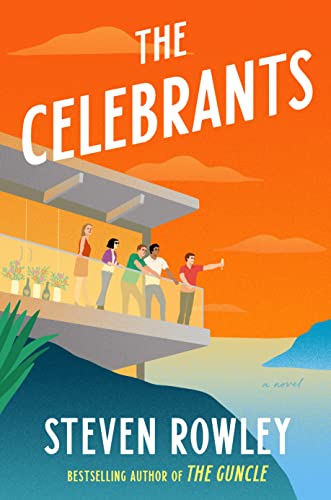
I enjoyed Rowley’s novel, The Guncle, which came out in 2019. When I was invited to read and review The Celebrants, I jumped at the chance. Unfortunately, it didn’t do a thing for me. Nonetheless, my thanks go to Net Galley and Putnam Books for the review copy. This book is for sale now.
As a child, we once had a bird bludgeon itself to death on our sliding glass door, unable to accept that the invisible barrier was really there. Reading this book made me feel just a bit like that bird. I’d liked Rowley’s last book. Other Rowley fans liked this book. So why…(BAM!)…why…(BAM!)…why could I not get into it?
I think it all boils down to privilege.
Had I read the premise more carefully, I might have avoided this trap. A group of seven college friends, grief-stricken after losing the eighth friend, agree to meet every few years and give each other mock funerals to celebrate the lives that still exist among them.
What rarefied conditions must exist to make such a thing possible? Imagine having the resources to be able to drop everything and fly off to wherever the meeting is held. Air fare. Childcare. Housing. But as I read the abundant dialogue in this thing, such trivialities are seldom mentioned. These are people that for the most part came from money, and they have money now, and they assume they will have as much, if not more, in the future.
Of course, the story is not about money and privilege. It’s about taking stock of their current lives and comparing them to their youthful expectations. There are secrets. There is baggage. And now, in their middle aged years, they are older, wiser, and in many ways, sadder.
Oh honey. They think they’re old now? My ass! My children are middle aged. Get a fucking grip.
So okay, I am probably not the ideal audience; and yet, I will remind you that I didn’t volunteer for this. I was selected. Someone clearly believed that I am within the target audience.
I initially felt some of this when I began reading The Guncle. The protagonist there was a successful actor with a pile of money; and yet, the challenges he faced, first with the death of his partner, and then with the homophobic relative that tried to keep him from taking the children that had been entrusted to him, won out. The presence of well-written children helped a good deal, and the humor was completely on point. I cannot fail to appreciate an author that can make me laugh out loud.
I didn’t laugh out loud this time. It’s grim, but it’s wealthy-people grim, not working class grim. If you don’t know the difference, then we all know which one you are. I rolled my eyes a great deal, but it’s even harder to read when you do that, so I borrowed the audio from Seattle Bibliocommons. It didn’t help a bit, apart from making it possible to take in the book and roll my eyes at the same time.
I see that this title has been nominated for the Goodreads Choice awards, so clearly, a lot of people have loved this book. But I am not one of them.
Recommended to rich people that believe their lives to be harder than they actually are.
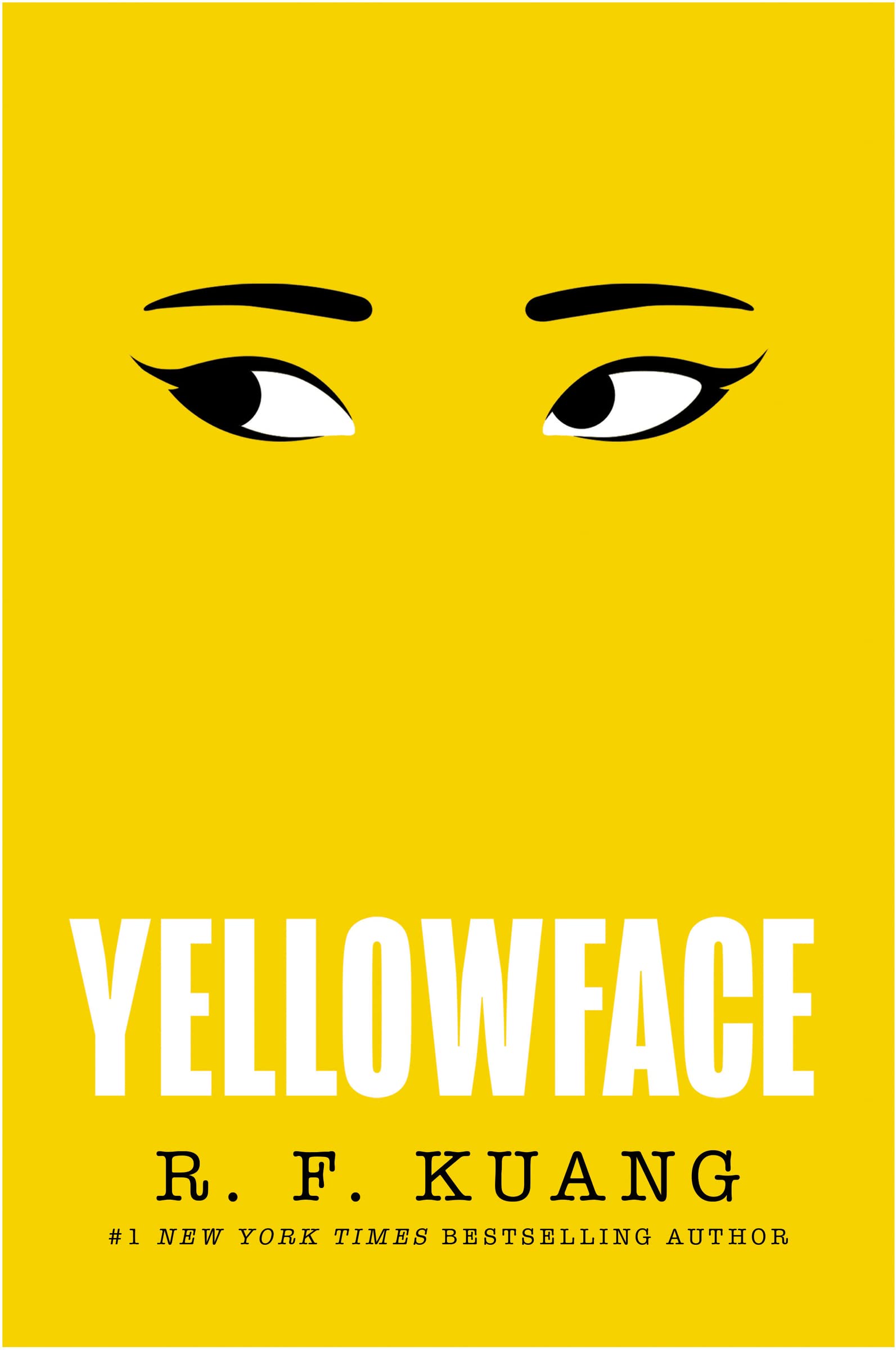
Rebecca F. Kuang lights a match, and the literary world explodes! Her new novel, Yellowface, takes on issues of racism, cultural appropriation, cancel culture, and identity politics. My thanks go to Net Galley and William Morrow for the review copy; this book is for sale now.
Our protagonist is Juniper Hayward, a struggling writer. June’s longtime friend, Athena Liu, is spectacularly successful, and though June tries not to be bitter, Athena is a bit oblivious to June’s distress, and so although June likes her, she also kind of hates her. Then one day, as the two of them are discussing Athena’s newly completed masterpiece, which took a decade to create and has been seen by no one yet, Athena chokes to death on a bit of food. June employs the Heimlich maneuver, but it doesn’t work. Now Athena is dead, and June has in her possession the unpublished manuscript.
What comes next makes my jaw drop! June leaves with the manuscript, which still needs cleaning up before it can be published, and using every lame attempt at justification one can imagine, she edits it and publishes it under her own name. She rationalizes:
“The truth is fluid. There is always another way to spin the story, another wrench to throw into the narrative. I have learned this now, if nothing else…My only sin is loving literature too much.”
To make matters worse, her publisher suggests she use her middle name, Song, as a pen name. (Oh, snap! There’s already a mystery series that stars Juniper Song, though this doesn’t make it into the novel.) The book is a brilliant success, but during her book tour, audiences cannot help noticing that June is, well, Caucasian.
Man your battle stations!
Initially, June seems like a decent enough person that has made one self-serving mistake, but as the narrative unfolds, her judgment, behavior, and moral character deteriorate. The suspense is thick and absorbing as I wait to see just what will happen next.
In places, this story is drop dead funny.
I recommend this book to those that love to see good fiction based on current events.
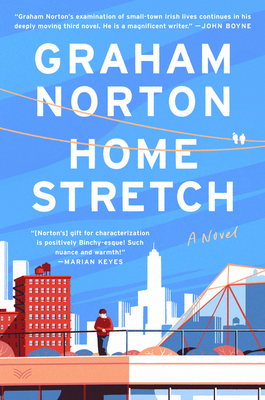
Home Stretch is Graham Norton’s third novel, and because I absolutely loved his first, Holding, and his second, A Keeper, I expected great things from this one. It’s not a bad book, but it didn’t delight me the way the first two did.
My thanks go to Net Galley and HarperVia for the review copy. This book is for sale now.
We start with a tragic accident, and our protagonist, Connor, is unhurt, but three of his friends are killed, and Connor is blamed by everyone, including his family. It’s a small town, so trying to keep his head up and avoid people that dislike him is impossible.
His family feels the same, and so he is abruptly packed off to Liverpool, and from there to bigger and in many ways, better places. And in many ways this is a favorable development, as he is no longer forced to hide his sexuality; and yet, it’s a tough thing to live a life that’s separate from your family, one that you know would horrify them.
The story is set in the 1980s, the era of the AIDS epidemic. This reviewer lost friends to it during that time; a lot of people did. Norton does a serviceable job with setting, and with character too; and yet, this book lacks the spark of his earlier two novels. The pacing is not as brisk, and the surprising bursts of humor that made me laugh out loud never materialized here. At times it felt like work to read it, and I wonder if he found as much joy in writing it.
I still believe in Norton as a novelist; everybody has a “meh” moment now and then. I look forward to seeing what he writes next.
Leonard Fife is a legendary filmmaker, his searing social commentary an important part of North American history. But now he is dying, and he has a few things he needs to get off his chest before he goes. My thanks go to Net Galley and Harper Collins for the review copy. This book is available to the public March 2, 2021.
Fife is not a lovable character, and now that the end is near, he wants everyone to know it. With the cameras trained on him, darkness all around him but for the spot shining on him as he speaks, he tells his life’s story, and he spares himself nothing. One relationship after another, abandoned without even a goodbye. Children left fatherless. Lives laid waste in his passing. Banks is one of the most brilliant novelists in the U.S., and his word smithery can turn nearly any terrible story into spun gold, but he never pulls punches. His writing is often painful to read, and here it is true in spades, agonizing. By the halfway mark, I am watching the page numbers crawl by and wishing it over.
But of course, there’s a surprise in store.
I don’t want to give spoilers, but in the last half of the book, the question arises as to whether our narrator is reliable. He says he did all of these dreadful things; but did he really…?
The book flows so seamlessly that the difficulty of writing it is not obvious, but here it is: almost the entire thing is one man’s narrative. There’s very little dialogue. It’s not an easy thing to carry off, and yet, this is Banks, and he does.
As his narrative unspools, we are occasionally reminded of his current circumstances by breaks in the action. Once in awhile he is overtaxed and starts to drift off, or worse, and action has to cease immediately while the nurse does important things quickly. Now and then she has to change his bag, or help him onto the toilet and wipe his butt afterward. There’s not a lot of dignity left to the man. But he doesn’t give a…okay, I’m not saying it.
As he insistently recounts his many betrayals of loved ones, ignoring the more suitable, conventional questions that the people filming him thought were going to provide the framework of the film, he makes it crystal clear that it doesn’t bother him in the slightest, what he is doing to his legacy. Torpedo all of it; hell, he’ll be dead before the film opens. What he wants is to be truthful, and the one person he wants to know the truth is Emma, his wife. He knows he cannot be truthful with her unless the camera is rolling, and he won’t proceed unless she is there. RIGHT there. He calls for her many times, making certain she hasn’t left. And through the occasional things she says, we are aware that Emma is not merely his arm candy, not a sycophant that married him for fame, fortune, or prestige; she’s a respected professional in her own field, juggling her own commitments in order to be present here and now for Leonard.
By the time the story ends, my feelings have changed. Leonard is still no angel, but he’s not the sack of excrement I believed him to be, either. The guy I hate at the end is the filmmaker, once Leonard’s protegee, but now wolfishly eager for his mentor to die on camera for him. The nurse orders the camera turned off, but the director calls over the top of her to keep it rolling, the vulture. I want to smack him!
Ultimately we see that death is a final betrayal, a form of abandonment; but Leonard is at peace, because his goal is realized. And this is the story’s title, but I am not going to tell you how that works.
Get the book and read it. All your own sorrows will feel smaller.
What a way to start off the new year! Chris Harding Thornton has written one of those debut novels, the sort that makes an author reluctant to publish a second book, lest it fail to live up to the first. Lucky me, I read it free; thanks go to Net Galley and Farrar, Strauss and Giroux. It’s for sale tomorrow, and those that love excellent working class fiction should get a copy right away.
The setting is rural Nebraska, for a single week in 1978. It’s one of those tiny towns where not only does everyone know everyone else, but also just about every single thing that has happened in the lives of everyone else. Or at least they think they do; gossip takes on a life of its own. We have three protagonists, and their points of view alternate, always in the third person omniscient. Harley Jensen, the deputy sheriff, opens the story; then we meet Pam Reddick, a miserable, trapped, 24 year old housewife living in a singlewide trailer with her baby and a husband who’s always working; and Rick, the man Pam is married to, who works for his father, buying and renovating old mobile homes. Now there’s a job for you.
Both of the men, Harley and Rick, are leading lives of avoidance. As a child, Harley found his mother on the kitchen floor after she blew her own face away with a shotgun. The table was set, and the gravy was just beginning to form a skin on top. Gravy boat; bare, dirty feet facing the door after she fell over; cane bottom chair, shotgun, and…yeah. So now Harley is middle aged, single, childless; he maintains a careful distance emotionally from everyone. He does his job, but he’s no Joe Friday. He maintains a stoic, lowkey demeanor most of the time, putting one foot in front of the other, so that people won’t look at him with pity, which is intolerable:
People evidently needed that. They needed to know that you could overcome a thing like what happened here and keep going. That or you were just broken—more broken than they’d ever be. That worked fine, too. The one thing they couldn’t abide was that you just lived with it. You drank and slept and did laundry with it. You waited at the DMV and clocked in and out with it.
The opening scene in which we meet Harley finds him driving his usual patrol, eager to pass the last homestead he routinely checks for prowlers, vandals, or partiers. It is his parents’ home, now derelict and unsaleable. He prefers to zip past it, but he can’t today because there’s a truck down there. Turns out to be Paul Reddick, the wily, sociopathic brother of Rick, whom we’ve yet to meet. This scene is as tense and still as the air right before the tornado hits. It’s suffused with dread, and we don’t fully understand why yet. It sets the tone for the rest of the story.
Pam Reddick is too young to be so bitter, but it isn’t stopping her. She doesn’t love her husband, and if she ever did, we don’t see evidence of it. They are married because of Anna, their now-three-year-old daughter. This fact gives me pause, since Roe v. Wade came down in 1973; abortion is legal. But then I realize, first, that the Supreme Court made a ruling, but it didn’t furnish clinics, and an out-of-the-way place like Pickard County may never have had access. Pam and Rick have so little money that a trip to the nearest clinic and the payment for the procedure was about as likely as an all expense paid trip to Europe. No, she’d have that baby all right. And she has. But she has no enthusiasm for parenting or her daughter, who looks just like her daddy. Pam goes through the barest motions of motherhood, and only that much because her mother and her mother’s friends always seem to be watching.
Rick, on the other hand, is a guy you can’t help but feel sorry for. The entire Reddick family is a mess. Their father, who is a shyster, has more or less abandoned their mother, who has mental health problems, the severity of which depends on who is talking. The whole town knows about the night when, following the murder of her eldest son, she was seen in the backyard, stark naked, burning clothing in a barrel. His younger brother, Paul, whom we met earlier with Harley, uses street drugs and steals his mother’s prescriptions; he’s been in and out of trouble most of his life. Worse still, perhaps, is the fact—and it isn’t spelled out for us, but as the narrative unfolds, it becomes evident—that Paul is smarter than Rick. Nobody tells us Rick is stupid; rather, his inner monologue fixates on the mundane and tends to turn in circles. And here, we can see also that poor Rick loves Pam and Anna deeply, and considers them the very best part of his young life; he counsels Paul to settle down, find someone like Pam so that he can have a good life, too. And while Rick knows that Pam is unhappy, he tells himself that she’s mad about nothing, that she’ll settle down. He’s working hard, and we can see that; the guy is a slob, but he’s industrious, on his back in the dirt ripping fiberglass out of an old trailer, stripping wallpaper, replacing pipes. And when he goes home, exhausted and reeking, his feet are sore and itching, and the thing he finds most soothing, and which makes Pam crazy, is rubbing his feet on the radiator until pieces of dead skin come off in strips, which he of course doesn’t clean up.
At this point, I’m ready to get my purse out and give Pam some get-away cash. I couldn’t live that way, either. The worst of it is that Rick is already doing his very best.
The plot unfolds like a burning tumbleweed descending a dry hillside, and it is masterfully written. Much of its brilliance lies in what is not said. There are probably half a dozen themes that bear study, for those so inclined. The violence and poverty are obvious, but more insidious is the way this county chews up the women that live there.
Another admirable aspect of the narrative is the restraint with which cultural artifacts are placed. We aren’t barraged with the headlines of 1978, or its music or movie actors. Thornton doesn’t take cheap shortcuts. Yet there are occasional subtle reminders: the television’s rabbit ears that have to be adjusted to get a decent picture; the Corelle casserole dish.
So, is this book worth your hard-earned money? If you haven’t figured that out by now, you’re no brighter than poor Rick. Go get this book now. Your own troubles will all look smaller when you’re done.
Who do I enjoy reading more than Jess Kidd? Nobody.
Thanks go to Net Galley and Atria for the DRC, which I received in exchange for this honest review. The book, which was also published in UK as The Hoarder, is available today in the US. And I have to tell you also that although her work is billed as similar to Fredrik Backman, I find it to be better—and that’s saying a good deal.
Maud Drennan is a caregiver, which in the USA would translate as a combination social worker and home health provider. She’s been sent to the large, rambling home of Cathal Flood, a tall, fierce old man who has driven his previous caregiver to a nervous breakdown. Speculation abounds: is he an innocuous old fellow in need of some organization, treatment, and TLC, or is he dangerous—perhaps a murderer, even? What about the missing girl that was last seen at this address? It’s enough to make even Maud’s staunch heart tremble:
“In the musty depths of Cathal’s lair, one eye flicks open. Noise has pulled on the strings of his web, setting his long limbs twitching. He’ll be slinking out of his trapdoor and threading through the rubbish. Crawling up the staircase with a knife clampled between his dentures and a lasso of fuse wire in his hand, ready to garrot me and hack me to pieces.”
The suspense builds as Kidd moves our point of view from Maud’s by day, to her frightening, confused dreams at night, to those of the missing and the dead. Because Maud is gifted in her ability to see those that have gone before, particularly saints, she receives their cautions and advice in ways that are often truly hilarious. The result is a story so enjoyable that it became the dessert book that I held out to myself as a reward for having finished less enjoyable galleys. Had I no other obligations, I would have gobbled this deliciously dark tale up in a weekend.
As it is, I found myself going back and rereading passages twice, partly for fun and partly to try to pick apart what makes this writing so effective. But although I can point to several components—brilliant development of Maud, Cathal, and friend Renata; some of the finest figurative language in contemporary fiction; a hugely original voice and concept; a soaring climax in which the weight of Western society’s failure to care adequately for its elders comes crashing down before us—ultimately the book is much more than the sum of its parts, an alchemy that is spun magic with a few naughty bits of raunchy humor sprinkled in, and a social justice issue nailed to the wall where we cannot help seeing it.
Should you purchase this title for your magnificent, outrageous mother on her special day, for which there are just 12 remaining days to shop? Should you order a copy for your own fabulous, fierce father, whose day is about a month later? Well of course you can, and you should, assuming you aren’t going to try to force them into a home. But it isn’t nice to break the binding open, and so they’ll be able to tell if you have fudged a free read before gifting it. Better to get a copy for yourself as well, fair and square. You’ll want to read it more than once anyway.
Warm and clever, Mr. Flood’s Last Resort is the most entertaining novel of 2018 to date, hands down.







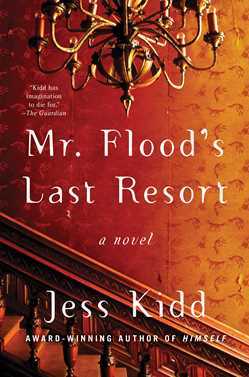 Who do I enjoy reading more than Jess Kidd? Nobody.
 Seattle Book Mama