
Where All Light Tends to Go, by David Joy*****

WhereAllLightTends“Dead men tell no tales, Jacob. The ones left to living are the ones who write the history.”

I received my DRC courtesy of Net Galley and Putnam Penguin publishers in exchange for an honest review. This title is available for purchase.

Jacob McNeely is a teenager in Cashier, North Carolina, a tiny  town deep in the crags and hollows of the Appalachian Mountains. His mother is a crank user recently released against his father’s wishes from a psychiatric hospital. Jacob has always wished she might turn into a real mother, but it isn’t going to happen.

His father is the local drug czar, with cops on his payroll and a wide variety of other employees as well. He uses McNeely’s Auto Garage to launder his drug money. If any clueless tourist should come by, he gives them a quote so outrageous they take their business elsewhere. Locals foolish enough to cross him or get in his way find themselves and their vehicles in a deep, watery grave yard. That’s if the abused, underfed Walker coonhounds that are tied up at intervals throughout his property don’t kill them first.

Jacob walks a careful tight rope just in order to stay alive. He doesn’t like the life he leads, but he doesn’t see a way out. That is, unless he can run away with Maggie, the girl he has loved since childhood. Maggie is cut out for greater things; Maggie should go to college and escape the danger and poverty of Cashier.

If only Jake could go with her.

Joy is a gifted writer. His stark prose is chilling yet poignant, and so arresting that the reader will be hard pressed to set it down once it’s begun. But you may think twice about reading it at bedtime.

Where does all light tend to go? The allegory is heavy but sophisticated. Perhaps all light goes toward heaven, the candle that reminds us of the existence of God.

Or it’s possible that all light just goes out.

Searing, wrenching, and deeply affecting, this is a book to remember long after you’ve forgotten everything else you’ve read. Highly recommended to adults. Definitely not for children or adolescents.

Simply brilliant!


House of the Rising Sun, by James Lee Burke***-****

houseoftherisingsunI confess that I am a big fan of Burke’s. He’s written a prodigious number of novels over the past fifty years, and I have read almost all of them. This is why, although I get nearly all of my books free prior to publication, I put this title on my Christmas wish list when I wasn’t given access to a galley. Perhaps because my spouse paid full jacket price for it, I am holding it to a higher standard than I usually do. This book is either a three star or four star read, depending on whether we factor in the dollars. Let’s call it 3.5 and round it up. It seems like a shame to 3-star a writer who is so talented and has contributed so much to American literature.
Most of Burke’s novels are detective fiction, crime fiction, mystery, or all three; now and then he writes historical fiction instead. And his choice to send Dave and Clete, the protagonist and side kick of the Robicheaux series, is a good one. No matter how much I enjoyed it, in that fictional world where cops do the right thing and bad guys are really bad every time, there is no way the reading public would be able to continue to enjoy their vigilante behaviors between the covers of a book at the same time that the Black Lives Matter movement has made us aware of that problem—along with the throw-down weapons used to justify gratuitous brutality after the fact–that exist in real life. So, that series is over, and I’m okay with it.

Technically, House of the Rising Sun is a four to five star novel. Burke’s use of imagery is rivaled by few and exceeded by none. Here, his use of allegory, creating a personal Odyssey based on one of the author’s own ancestors, is unquestionably strong. If you love literary fiction for its own sake, this is your book.

By far the strongest writing lies in the portions are set on the battlefields of Europe. Burke’s prose is eloquent and stirring in narrative passages that speak to the class nature of imperialist warfare.

For me, the issue has to do with plot and pacing. The entire book is essentially built around Hackberry Holland’s effort to find his son. They are separated when his wife leaves him and Ishmael is still a child, and through World War I and the period that follows, the journey to find Ishmael winds its way in a way that serves the allegory, but that feels tedious to me as a reader. A fight here; a fall off the wagon and drunk in the streets; looking here, there, everywhere; writing letters; making phone calls; it seems for a long time as if he has barely missed his son. Throw into it the villains—Maggie, Beatrice, and above all, Arnold Beckman—and that’s pretty much it. I don’t want to give anything away, but there isn’t that much suspense to begin with.

A lot of the dialogue seems as if it has been recycled from Burke’s previous books; not whole paragraphs, just speech patterns with a fragment here, a fragment there that left me thinking I had read it before this.

Anytime I find a jarring racist term in a novel, I point it out so that prospective readers will know it’s coming. The “N” word gets used several times; it is within the context of establishing or emphasizing someone’s malign nature. There are also other areas in which Holland takes Caucasian characters to task for racist behavior. Still, I like to think a writer of Burke’s stature can and should develop a credible villain without resorting to this hurtful, and to my thinking, cheap and easy method.

Whether this novel is for you probably depends most on what you look for in a novel. Lush descriptions and horrifically real violence abound, but there isn’t the kind of suspense you’d expect a missing-kid story to employ.

When push comes to shove, I recommend you read this, if you are still interested after reading the reviews, but get it once it goes to paperback, or wait for it to be available used; don’t pay full cover price for it unless your pockets are deep and your interest strong.

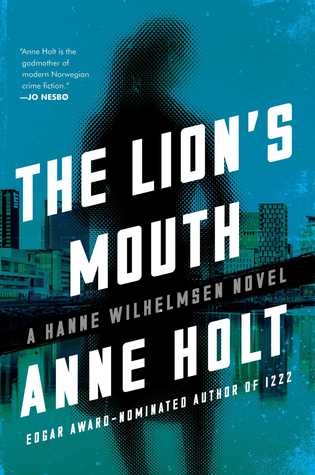
The Lion’s Mouth, by Anne Holt****

thelionsmouthWho killed Prime Minister Birgitte Volter? Was it the neo-Nazis? The Satanists? Was it a personal thing, perhaps an angry family member? The answer is cleverly built up to, so that the reader has a fair chance of figuring it out, and yet will most likely be surprised. I was.
Thank you, Net Galley and thank you also, Scribner for the DRC. Anne Holt is an established writer and it shows in the way she expertly crafts character and setting. I was at something of a disadvantage, never having been to Norway; the place names had no meaning to me, apart from the names of major cities, and I struggled with the governmental structure. When Parliament was mentioned I was fine, and likewise the Supreme Court made sense, but then we came to the President of the Supreme Court, a prominent figure—is that like a chief justice, or is it a very different construct from that of USA?—and also there is a President of Parliament. Americans should be prepared to either Google these items or accept a certain amount of ambiguity; I chose the latter, and it worked all right for me. I knew that there would be some new terrain when I began reading, and as part of my goal was to widen my own reading world a little bit, it was worth battling the unknown. A mystery is an accessible way to do this, and I enjoyed it.

The book was originally published in 1997; even so, I found a couple of stereotypes unsettling. The fat jokes seemed inappropriate and disturbing; Little Letvik started out a caricature, and even when she was developed a bit more at the end, it didn’t help much. Ruth-Dorthe is a “blonde bimbo” and “slightly worn Barbie doll”. There was also some slut-shaming that I could have done without.

On the other hand, the character for whom the series is named, Hanne Wilhelmsen, is a lesbian and is the hero of the story. She is sensible, even-tempered, (thin,) and very intelligent. Another character I really enjoy is Billy T, a boisterous, funny fellow who lightens the story considerably. In fact, there were a number of places that made me laugh out loud.

Although the book is part of a series—this novel being the fourth—I liked it just fine as a stand-alone.

All told, it’s a strong work of fiction and a good choice for the mystery lover to add to her collection. With the above reservations, I recommend it to you.

It is available for purchase February 9, 2016.

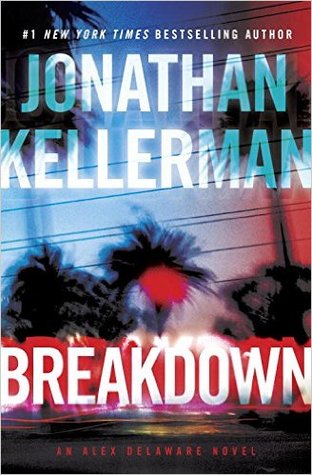
Breakdown, by Jonathan Kellerman*****

BreakdownBreakdown is #31 in the Alex Delaware series, and Kellerman’s long-running series still has plenty of gas left in the tank. The premise this time is that six years ago, Delaware was called in to evaluate the parental fitness of a mother; custody issues have become his bread and butter, done on a case-by-case basis. The boy’s mother, Zelda, was an actress plagued by mental health issues, but seemed to be doing a competent job of raising Ovid. The actress’s psychiatrist wanted to be sure, so he called in Delaware to spend time with the child in question. Now things have gone downhill, and the psychologist that treated Zelda is dead. Zelda isn’t doing so well herself.

But the greater question for Delaware is…where is Ovid?

I received this galley in advance thanks to Net Galley and Random House Ballantine in exchange for an honest review. I rate the novel 4.5 stars and round it up. It’s a fast read, with lots of dialogue and a fair amount of action.

The most laudable aspect of this particular novel is the way it highlights the capricious, bureaucratic manner in which state and federal funds are disbursed to supposedly care for the mentally ill. Delaware is called to what is supposed to be a temporary facility where the mentally ill are kept just long enough to be evaluated as to their own capacity to care for themselves and live independently. The place that passed for a transitional medical setting was appalling; even worse, I suspect it may have been based on something close to the truth. A couple of decades of working with at-risk teens, combined with having loved ones that have struggled with mental health issues, has left your reviewer with a dim view of the care offered to those that cannot care for themselves. If there were such a thing as an award for mental health awareness in fiction, Kellerman would be a contender.

But let’s get back to the contours of the story itself. I appreciated the level of anticipation the author built without departing so far from reality as to breach believability. Whereas previous Alex Delaware novels sometimes strained the credulity of the reader—just how much gun play and tearing after bad guys does your average kiddy shrink do, even if his best buddy is a cop?—this one was much more realistic in terms of Delaware’s role, and the light jokes made by the protagonists about having invented enough ideas for a TV miniseries brought the credibility gap out into the open, gave us a chance to laugh along with the author and better yet, with his characters. Well played!

Brief mention of headaches and personal struggles with claustrophobia make Delaware a more tangible, less Olympian personality, and of course also provide us with some foreshadowing for things to come in future novels. This is one of the better aspects of a long-running series with a faithful readership, the ability to run a thread from one novel within the series forward into another one. He’s done it before, most notably with relationship issues, and done it well.

This book is available to the public February 2, 2016, and if you enjoy a good psychological mystery, you should get a copy and read it.

Wake Up and Die, by Jack Lynch****

wakeupanddieThis book is the fourth in the series featuring Peter Bragg; the series was nominated for the Edgar Award and twice for the Shamus Award. I’ve read three others in the series already, so imagine my delight when I located this book, formerly published as Sausalito, among the DRC’s offered by Brash Priority Readers Circle.

And apologies to my readers: I originally published this review under a different title. I use my Goodreads account to organize my shelves, a lazy, easy way to keep track of what I am reading (usually 6-8 books at a time); what is waiting to be read next; what I have, own, and intend to read later; and even what books I don’t have and hope to get. The weak link, as was proven here, is that when a book’s title changes, Goodreads’s new owner, Amazon, is very restrictive about accepting new titles. In years past, since I am a Goodreads volunteer librarian, all I had to do to personally add a title and book jacket was either scan it physically, or send a relevant link to the superlibrarians (the ones that get paid), and they would drop it into the website.

Not anymore.

Before I knew it I was confused, and since I knew I had two Bragg titles to read and had just finished one, I assumed it was that of the single book jacket on my Goodreads page. There is a cost to letting someone else’s system organize one’s reading, and this is it. So this review was originally published on this blog as The Dead Never Forget, which is the first Bragg title and which I have not yet read. My apologies again to my readers and to Brash Books.

Like most Peter Bragg mysteries, this one is set in the Bay Area. A huge development is about to built on the waterfront, complete with a convention center and any number of hotels and restaurants. The problem arises when the residents of area houseboats protest the likelihood that they will be shut out. Bragg is working a different case, one involving pornographic photos that have been sent to the subject’s father, when he finds himself on the waterfront near his home helping to get people and pets to safety after a suspicious fire breaks out. A murder is discovered and before you know it, all hell has broken loose.

The setting is the 1990’s, shortly before the internet changed all of our lives. It is actually a contemporary setting because this is when the mystery was written, but now as it is re-released, it feels like a noir setting, because all of the telephones are land lines and all files are on paper buried in metal cabinets. In this sense, I think the series actually benefits from the time lag.

The novel is ambitious, bouncing us from one setting to another and introducing a large number of characters. I had trouble keeping track of them all. I might have wondered whether my mind was getting old and rusty but for the fact that I was reading a different galley at the same time with even more characters, and the latter left me with no doubt whatsoever who each one was.

On the plus side is not only our opportunity to meet the detective in his first criminal investigation, but I also like the way issues of race and gender are treated; appropriate and at times quite zesty without ever appearing to be self-consciously PC or awkward. There is a moment toward the end that made me want to stand up and cheer! This moment took what was about to be a three star review and bounced it back up to four stars.

On the downside, in addition to the confusion engendered by too frequently hopping between undeveloped characters and situations, there’s an over-the-top moment that some readers will enjoy, but that I found was too much for me: too much vigilantism, too violent, and over the top on my personal ick-meter.

Those that are fans of Jack Lynch will want to read this newly-republished mystery in order to introduce themselves to a kick-ass series. Those that love good mysteries and/or fiction set in the San Francisco area should also get this book and read it.

Why not spend a weekend curled up with Peter Bragg?

The Two-Family House, by Linda Cohen Loigman*****

TheTwoFamilyHouse What an amazing book! Once I began reading Loigman’s masterful historical fiction, my other galleys waited, meek and neglected until I was done with this one. Thank you twice, first to Net Galley and second to St. Martin’s Press for giving me a DRC in exchange for this honest review.

I have seldom seen such brilliant character development in a novel. Although Loigman is proficient with setting, it’s really the characters that drive this book. It begins just after World War II. Mort and Rose live downstairs with their three daughters; Abe, Mort’s brother, lives upstairs with his wife Helen and their sons. Though Rose and Helen are not biologically related, they are emotionally closer than many sisters. And what a great thing it is when they both find themselves pregnant, just when they believed they were finished having babies! Mort has wanted a son forever, and his resentment has begun to damage his marriage. He isn’t abusive, but he is cold toward Rose. When she says another baby is on the way, he becomes almost sentimental, making a deal with the cosmos that if he treats his wife well enough, she will bear him a little boy.

Helen loves her sons of course, but she sure would like a daughter; just one. Please.

And then during a blizzard, both women go into labor. Nobody can get to a hospital, and no doctor can reach their home. Instead, a midwife makes her way into the bedroom where both of them labor. Two babies are born.

This story grabbed me by the front of my shirt and wouldn’t let me go. Where I ordinarily make remarks about pacing, setting, and characterization, my e-reader is instead full of indignant comments. First I have become annoyed with Rose, and jot down notes about the things she says and does as if I were gossiping; eventually my remarks are made to Rose herself, because all of these people are so real to me, and she is behaving so badly. The author’s development of her characters, primarily Rose, Mort, and Judith, is so subtle and so sly that at first I wonder if I am imagining the change; eventually I just want to grab Rose and yank her into the kitchen for a good talking-to.

Maybe you think I have said too much, but there is oh so much more. I never saw the ending coming until we were there, and it was so cleverly done. When the story was over, I felt bereaved in a way I had not felt since I read The Goldfinch.

Those that love excellent historical fiction, strong literary fiction, good family stories or all three have to read this book. I gobbled it up early and had to sit on my hands for awhile prior to reviewing; a number of other books have passed between then and this writing, but The Two-Family House still stands out in my mind as having met excellence and surpassed it.

This book is available for purchase March 8. Highly recommended!

Blind Spot, by Tom Kakonis***-****

BlindspotThis one is 3.5 stars, rounded up. Thanks go to my friends at Brash Books for permitting me access to a DRC. The book is available for sale now.

Kakonis is a kick in the pants, and he builds suspense like nobody’s business. What could be scarier than having one’s youngster snatched by a stranger? The stakes build high, higher, and higher still. Into the bargain we are concerned for the hopeful yet still-grieving mother who believes she has lawfully adopted young Davie (formerly Jeff). Her own child, Sara, died tragically, and her husband has done everything, including the unthinkable, to bring home another child to make the family feel whole again.

Meanwhile, the Quinns search everywhere for their son. After the first 48 hours, the cops have clearly quit looking, so they print flyers to tack on every available public surface, and for good measure, they post an extra large one on their own car window. The “blind spot” occurs when a friend of the new parents passes the Quinns’ car in traffic. The friend’s husband is at the wheel, leaving her free to crane her neck and gawk at the poster, and Marshall Quinn’s pulse quickens as he sees the woman’s mouth form the words, “I know that kid.” Now the search is even more heated as Marshall searches for Della, the woman who knows who has their little boy.

Kakonis’s strength is in his spicy dialogue and strange dialects. In some ways his work is hyper-literate, delving into vocabulary most folks may not see often, but both the dialogue between characters and the internal dialogue as well are so riddled with offensive terms that it’s hard to enjoy. It’s true that Kakonis uses these terms to make plain who is a bad guy and who is not—not that it’s ever unclear, but it’s not the first time I’ve seen an author use the device to make us hate a character even more than we already do. But in such a case, less is more, and the whole first half of the story is studded with really ugly racist expressions, as well as slurs on women, the aged, and the gay. I can see where there would once have been a readership that would have casually flicked through these terms and excused them either because they were untroubled by them at all, or because it is the villain that generally says them. I know this work is seeing fresh publication after a hiatus. But to me, it feels like a lot of work to sift through the epithets to find the mystery under all that sludge.

I considered rating this tale, one with strong pacing and characterization but so many challenges, as 3 stars, but I enjoyed another of this author’s stories quite a lot, and some of the good will has carried over into this review. I’m not ready to give up on this writer’s work yet.

For those that like a fast-paced thriller or mystery and that can overlook the issues I have mentioned, this book is recommended.

When Breath Becomes Air, by Paul Kalanithi*****

whenbreathbecomesairPaul Kalanithi was a promising young physician who had nearly finished completing ten years of training as a neurosurgeon when he was diagnosed with Stage IV lung cancer. His twin ambitions had been to become a neurosurgeon and to write. When he realized how little time was left of his too-brief life, he decided to spend his remaining time writing this book. Thank you, Net Galley and Random House Publishing House for the DRC. Dr. Kalanithi died in March 2015, but he left this luminous memoir behind as part of his legacy. It is available to the public January 19, 2016.

The memoir starts with fond adolescent memories that left me dumbfounded, not only at the level of privilege he was born into, but the assumptions that go along with that. I was afraid I would fall into the uncomfortable place of not being able to generously review a dead man’s memoir. To make matters worse, I read two other memoirs that bitterly recounted the arrogance of doctors. I set this one aside about a third of the way into it until I could look at it with fresh eyes, and I am glad I did.

The spell of entitlement is broken by the forty percent mark; in fact, when he decides to continue in college simply because he isn’t done learning—a luxury that would never occur to most of us—I find myself interrupted mid-eye-roll when he mentions that in order to afford his apartment, he has to take a part time job. Now we are back in the realm of the real, and I can relate to the author.

With deft pacing and remarkable eloquence, he takes us into the world of the medical student, and we go with him to his first dissection and learn a few basic facts about the brain, including what tumors, both benign and malignant can do, and what priorities are generally set in maintaining its function. He explains why doctors sometimes recommend against heroic measures to continue a patient’s life when the patient inside is forever gone. There is information that should be shared, and information that should sometimes be saved for later; we see this from a much more personal vantage point later on.

And upon Kalanithi’s own diagnosis of terminal cancer, which has invaded his lungs and his brain, he is left “searching for a vocabulary with which to make sense of death.” Once his medical options are gone—oh, so swiftly!–he delves into poetry, philosophy, and even religion in order to come to terms with what he knows will happen, as well as the frustratingly ambiguous aspect of not knowing how long that will take.

Despite the fact that his death interrupted his writing, Kalanithi’s work is eloquent and absorbing, and it really didn’t feel as if it were under length to me. Maybe its brevity is what prevents it from becoming too emotionally taxing for the reader to absorb. It should rank high along with the work of Mitch Albom and Randy Pausch as a story that helps us learn to let go. Because as he points out, death will come for each of us. It always wins; the only question is when.

This book contains an epilogue written by his wife Lucy, but it stands quite nicely on its own.

Recommended for those facing death or dealing with loss, as well as for those who just like a powerful, hyper-literate memoir.

Angels Burning, by Tawni O’Dell*****

angelsburningTawni O’Dell is an experienced writer, but she is new to me. I was attracted to her working class setting and protagonist Dove Carnahan, the fifty year old police chief in a tiny Pennsylvanian coal town. I received this galley free for an honest review thanks to Net Galley and Gallery Threshold Pocket Books, and I liked it so much that now the rest of her work, some of which has been featured in the Oprah Book Club, is on my to-read list. Dispensing hilarity and palpable real life truths in equal measure, O’Dell is a keeper.
The strong characterization and the stirring immediacy of this storyline had me at hello. O’Dell’s genius and deft skill are shown by her capacity to develop her small town characters into flesh, bone, and sinew. We know Dove as if she were in front of us; we know her sister Neely; we even know Neely’s dogs.

In her 27 years in law enforcement, Dove has never had to deal with a murder before, and this one is particularly nasty. Camio Truly was just 17 years old when someone smashed her head in, dropped her down a sink hole and set fire to her body. Naturally, this murder isn’t Carnahan’s job; of course not. She has two deputies, one office worker and a busted vending machine. No, the larger and better funded neighboring cop department will deal with this problem. Yet in such a small town, every problem leads into every other problem, so she’s up to her neck in it in no time anyway.

The victim was one of many children in the Truly family. The Trulys are local rednecks whose days run into one another lulled by a steady dose of television viewing. The baby’s bottle has something brown and fizzy in it. Since the narrative is in the first person, Dove tells us herself:

“I marvel as I always do at this very specific kind of American poverty. The Trulys by most people’s standards would be considered poor, yet they were able to buy everything here that has ended up as trash in their front yard. They have a $3,000 TV and the latest phones, and I can’t imagine what they spend monthly on beer and cigarettes, but they couldn’t afford a laptop for their daughter to help her with her schoolwork or a copy of Psychology for Dummies.”

O’Dell gets some good ones in at the expense of this generally ambition-free family, but she also avoids turning them into a caricature. Eldest son Eddie lives away from the family home now, and when she talks to him about his last visit from Camio, she recognizes Eddie’s own traumatic past, which includes the deaths of two brothers and the horrors of Vietnam.

And in her interrogation of Shawna, the perpetually neglectful mother of the Truly brood, she throws us some surprises, establishing dignity and gravitas for this woman stoically enduring disappointment, heartbreak, and perpetual discouragement.

Interwoven into the murder mystery are two subplots that are more important than they appear. One is that her brother Champ, who’s been gone for twenty years, suddenly surfaces with a son; the other is that the man that spent a long stretch in jail for the murder of Dove and Neely’s mother is out of prison and harassing Dove endlessly, claiming that she sent him to prison knowing that he was not guilty.

Put it all together and it’s so much more than the sum of its parts. In fact, it’s pure gold. Janet Evanovich may have to move over and save a stool for a new regular at the Sassy Murder Writers’ Saloon. This title is super smart and the pages turn rapidly, leaving the reader with a sense of loss when it’s over. Whether you buy it for a beach trip or to curl up by the fire, this one’s a must-read, and it comes out January 5, 2016.

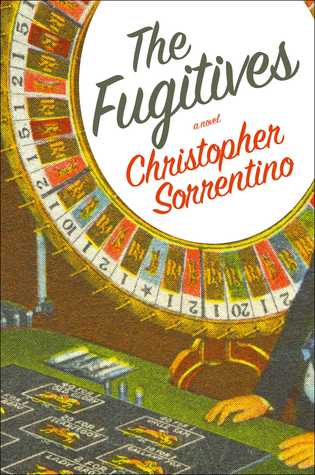
The Fugitives, by Christopher Sorrentino****

The fugitivesSandy Mulligan is a renowned author, but he’s hit a crisis. He’s left his wife and children for someone else, and it didn’t work out. Now he’s taken to the hinterlands to try to write the book he’s contracted to produce. Meanwhile, he runs across John Salteau, who claims to be an Ojibway storyteller, but it doesn’t ring quite true. Like Mulligan, Salteau is hiding from something. And if that isn’t enough, we have Kat Danhoff, herself a refugee of sorts, and she has landed in the same tiny burg, first to write about Salteau, and then to write about Mulligan interviewing Salteau. And before I can say more, I need to tell you that this clever satirical work was given me free of charge by Net Galley and Simon and Schuster in exchange for this honest review. It goes up for sale on February 9, 2016.

Early in the book we read of Mulligan’s infidelity, and I have to tell you, reader, that the explicit sex scenes and above all, the words selected to describe them, are not words that I am comfortable with. I am from the Boomer generation; if you are younger and don’t mind passages of erotica dropped into your novel, you might find this is a five star read for you. I was horrified, and read through it quickly.

Where are my smelling salts?

Where were we? Ah yes, the story. The dialogue in this thing is absolutely hilarious at times, and although Mulligan’s literary agent is a secondary character, I loved the sly, deliberate way Sorrentino crafted what we must regard as the typical agent, one who just wants him to write something, anything for heaven’s sake, so they don’t lose the deal. If Mulligan needs to retreat to the wilderness of Northern Michigan, then fine. Go. “Go walk in the footsteps of Hemingway, catch a trout or something…”

Mulligan does a lot of walking, alrighty, but what he does not do, is write. The internal dialogue is rich in many places; in a few, I wanted a red pen to edit it down a bit. The fact is, Mulligan is an exasperating character, but that’s okay; he is intended to be so. Not every protagonist is supposed to be lovable.

And so he ruminates endlessly, thinking of everything except his book. He recalls his affair, the one that snapped his already-fragile marriage like a twig. When the whole thing is over, he realizes that he could as easily had a conversation with the other woman’s underwear as he could have with her. But it’s too late now; water under the bridge. A lot of it.

Kat is from Chicago; she is married but also restless. She cheats in her marriage, but doesn’t turn it into a spectacle the way Mulligan does. Her work involves travel, and what Justin doesn’t know won’t hurt him.

Underlying all of this is the question of the storyteller, John Salteau. He’s a fake. Danhoff can smell it a mile away. At one point she witnesses him telling school children a Nigerian folk tale. What the hell? Her journalist antennae twitch, and she is on a mission.

Sorrentino is not a novice, and has been nominated for the National Book Award for Sound on Sound, a novel he published in 1995. His experience shows. His capacity to render setting immediate (and sometimes really funny) is important, because he constantly changes it up, bouncing us back and forth to the points of view of three different characters, switching from first person to third in the wink of an eye. If he isn’t proficient, the reader will get lost. As it is, this is a hyperliterate read, which suits me just fine, but if your mother tongue is not English, you might want to consider something else.

No one could possibly predict the way this story ends!

Recommended for those that love strong fiction.