
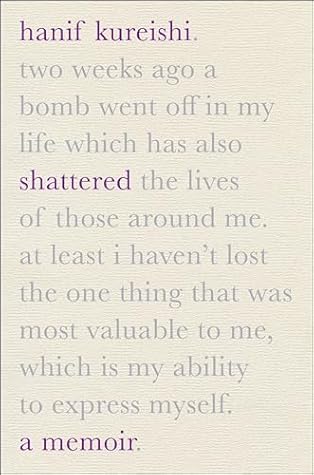
A while back, I read a novel by Hanif Kureishi titled The Last Word. It was not his most successful book in terms of sales, but I was gob-smacked by his cleverness, and so when I saw that he had a memoir coming out, I felt compelled to read it, even though it was likely going to be sad, since it is, at least in part, a memoir of what it’s like to be almost completely paralyzed.
My thanks go to Harper Collins and NetGalley for the review copy. This book is for sale now.
Kureishi is a seasoned writer and journalist, and as he writes about this horrifying event alternately with the earlier parts of his life, we see happier times as well. I thought it would be a narrative that I would need to take in small bursts because of its tragic nature, but that I would nevertheless appreciate it for its brilliance. What a surprise; I can read about his accident, hospitalization, and the experiences he has as a disabled person without a lot of difficulty, but I am drawn up short by the numerous passages about his sexuality.
You see, I am of the old school that believes that just because a thing is true, that doesn’t necessarily mean that its many details belong in a memoir. For example, sometime during nearly everyone’s life, we have digestive difficulties brought on by a case of the flu or some other thing. Has it happened? Yes. Do we need a detailed description of the writer’s vomit and bowel movements? Perhaps not. And this is the way I feel about his fondness for porn, for explorations of his own sexuality with various partners and all by himself (ew!) and even his fondness for street drugs and booze. Why would I want to read about any of this?
Sadly, Kureishi says that he no longer enjoys reading or writing fiction, and since that is the part of his work that I admire, I think we’re done here.
To be clear, he is a capable wordsmith, and those that are curious about what a disability might be like can get a taste of that here, which is why there are three stars and not fewer. I cringe when I read about his plane flight, with people shoving past him, even as they glance pityingly down at him. But like many Boomers, I have tasted a less extreme aspect of this myself, and so Kureishi’s version of it feels to this reviewer like a busman’s holiday.
This book is recommended to those of his readers that have appreciated his earlier nonfiction work, and to those with an interest in the lives of paraplegics and quadriplegics. For others, there are numerous online reviews that include large excerpts, and I recommend reading those before you invest in this book.
 Seattle Book Mama