
 Reeves makes her debut here with a deeply moving, haunting tale of a man that tries to do the right thing and finds his entire life miserably, horribly gone wrong instead. Thank you to Net Galley and Scribner for the DRC; this book is available for purchase March 1, 2016.
Roscoe marries Marie, the woman of his dreams, a woman that speaks little but recognizes every bird call in the state of Alabama. When her father dies, he gives up being an electrician, work that he loves, in order to move to the farm they inherit. Unlike his father-in-law, Roscoe’s own father has always looked down on farming as a poor man’s last resort. Roscoe thinks he has found a compromise by bringing electricity, and with it mechanized farm tools, to Marie’s father’s farm; he won’t have to sweat in the fields, and he has found a way to continue doing the work her prefers. Pirating electricity from the lines out on the highway is against the law, but it’s nothing to make a man do hard time. If he is discovered, he’ll pay a fine and the electric company will install a meter. No harm, no foul.
That’s what he thinks, anyway.
Everything goes to hell in the blink of an eye when someone dies grabbing hold of a live wire located on his improvised set up. He is charged with manslaughter; with a halfway decent attorney, he should be able to get the sentence suspended or reduced, since no harm was intended, but Marie chooses not to hire anyone to represent him. She tells the state to give him a court appointed attorney, and instead she pays for an attorney for the man that has assisted him, knowing that the state of Alabama will come down harder on a Black man, a man that has worked for her family since she was a tiny child.
She can afford two attorneys, as we later learn. It isn’t about the money. It’s about blame. It’s about cold, hard vengeance.
We follow Roscoe as he makes his way through the trial, bewildered not to find Marie in the courtroom. We follow him through his years in prison, a system that tells the public it is there to correct bad habits and teach men skills they can use for the future. It’s a cruel, cold lie. And so although Roscoe’s experience is better in some ways than that of Wilson, who is sent to the end of the prison reserved for men of color, his sentence is much longer, with parole denied again and again as Marie fails to advocate for him.
Reeves is a genius with prose. Were I to rate this book solely on her skill as a writer, this would be a five star review, hands down. The kind of lyrical quality shown here is not a thing that can be taught; at some point, the word smithery put to use here is a matter of talent, and Reeves possesses enough for all Alabama.
My sole concern here is credibility. I don’t want to give too much away because you should read this novel, but I have to say that the way the last portion of the book plays out could never, never occur in the Jim Crow heart of Dixie. One could almost imagine some of it occurring in a different way, one closely guarded and unseen by the community, but to have things set up as they are when Roscoe finally gets out of prison and have the local storekeeper be aware of it, regard it as either normal or as private business that is no concern of his, strains credulity beyond the most magical prose. That house and farm would have been burned to the ground. It could never have happened.
Reeves has developed Roscoe’s character with depth and intimacy, and this is the greatest strength of her story; the first 75% of the plot is also well paced, with tension gently building as a story arc is meant to do. But the spell is broken during the last portion by the problem mentioned above.
Reeves is an author likely to go forward and do great things, and this is a strong debut. Apart from the one distraction mentioned, this book is highly recommended to those that love good fiction.
 Peter Straub is a legendary writer of horror, and has been publishing novels and short stories for decades. Those that have followed him everywhere and sought every new thing he has written won’t find much joy here. This new collection draws on earlier collections. So for fans of Stephen King looking to add a second horror writer to their favorites list, this book is a winner, and it is for this new generation of horror readers that I mark this collection 4 stars. For die-hard Straub fans like me that are looking for stories that haven’t been published before, it may be a disappointment. I read my copy free courtesy of Net Galley and Doubleday in exchange for an honest review.
 Dear god. What was I thinking?
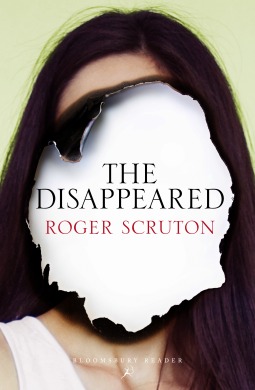 The Disappeared was published in UK, and is now available to readers in the USA. Scruton shines a spot light on victims of domestic violence, trafficking, and rape. It’s a timely issue, and no one can read his story and walk away unmoved. Thanks go to Bloomsbury Reader for inviting me to read and review the DRC free in exchange for an honest review. This book is available to the public tomorrow, February 26.
 Coming out of the gates, this novel seemed really strong. The premise is that Evelyn Gallagher, a CIA employee, sees an abuse of power, and it’s a chase to the end to see whether the NSA director, a man who knows no moral limits, will have her terminated before she can notify someone that can stop him. I received this DRC free from Net Galley and Thomas and Mercer in exchange for an honest review. It is now available for purchase.
 What, another one? Yes friends, every time I find a noteworthy biography of Grant, it leads me to another. This is not a recent release; I found it on an annual pilgrimage to Powell’s City of Books in my old hometown, Portland, Oregon. I always swing through the American Civil War shelves of their history section, and I make a pass through the military history area as well. I found this treasure, originally published in 2001 when I was too busy to read much of anything. It was a finalist for the Pulitzer; A New York Times and American Library Association Notable Book; and Publishers Weekly Book of the Year. But in choosing a thick, meaty biography such as this one—it weighs in at 781 pages, of which 628 are text, and the rest end-notes and index—I always skip to the back of the book and skim the sources. If a writer quotes other secondary texts at length, I know I can skip the book in my hand and search instead for those the writer has quoted. But Smith quotes primary documents, dusty letters, memos, and military records for which I would have to load my wide self into the car and drive around the country to various libraries in out of the way places. Source material like Smith’s is promising, so I bought a gently used copy for my own collection and brought it on home. And unlike the DRC’s I so frequently read at a feverish pace in order to review them by a particular date, I took my time with this one, knowing that if I only read a few pages each day and then reflected on them before moving on, I would retain more.
 “There is a terrible alchemy coming.”
 “Whoever really believed that thing you feared most would come to pass?”
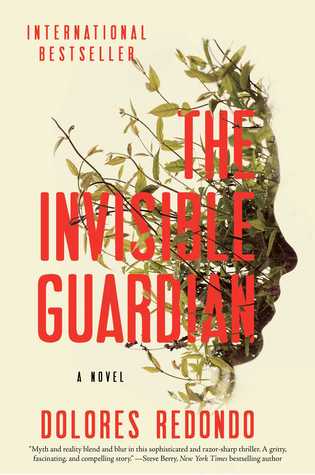 The Invisible Guardian has received widespread acclaim in Spain. It will be available to English speaking audiences March 8, 2016. My thanks go to Net Galley and Atria Books for the DRC, which I received in exchange for an honest review. I rate this book 3.5 stars and round upward.
 I had promised myself not to read any more Holocaust memoirs. What is to be gained? But when I saw this title available as a review copy on Net Galley, I thought that there is actually something to cheer the spirit in recounting how some of these monsters were tracked down and brought to justice. To date this is the most comprehensive telling of that achievement that I have read. Thanks go to Simon and Schuster and also to Net Galley for the DRC. This book is available for purchase May 17.
 Seattle Book Mama