
 Peter Straub is a legendary writer of horror, and has been publishing novels and short stories for decades. Those that have followed him everywhere and sought every new thing he has written won’t find much joy here. This new collection draws on earlier collections. So for fans of Stephen King looking to add a second horror writer to their favorites list, this book is a winner, and it is for this new generation of horror readers that I mark this collection 4 stars. For die-hard Straub fans like me that are looking for stories that haven’t been published before, it may be a disappointment. I read my copy free courtesy of Net Galley and Doubleday in exchange for an honest review.
The first story, Blue Rose, is one of the most chilling, most terribly great stories Straub has ever written. This is probably why once I was partway into it, I suddenly remembered the middle and ending exactly after all these years, with over a thousand works of fiction read between then and now. I also suspect this story may have been featured in multiple collections, although I don’t know it for a fact. Likewise, the stories featured from his Houses Without Doors collection were all stories I remembered having read more recently.
However, I found three stories that had been published earlier in Magic Terror that had somehow slipped my attention. In particular, “Porkpie Hat” and “Mr. Clubb and Mr. Cuff” are well done. I became a Straub fan before I finished college, and also before I was a literature teacher. It is great fun to go back and look at all the miraculous ways he uses imagery and other devices in these two stories to build dread in the reader and connect us in a nearly-visceral way to his protagonists. There is only one story in this collection that pushes my ick button—that part of my gut that turns over when something goes from being sick in an entertaining way to being sick in a way that makes me really feel sick and regretful at what I’d read; this is “The Ballad of Ballard and Sandrine”, originally published as a novella.
One sad thing in coming back to Straub’s work with more depth of knowledge than I had when I first read it is that I see a problem I didn’t notice before. Straub cannot develop female characters, and falls prey to every stereotype imaginable. There is one story in the “Noir” section where he deliberately uses stereotypes tongue in cheek, but this apparently hasn’t caused him to notice that he practices many of the same habits in the rest of his prose. It is this failure that denies him the fifth star in my rating.
Horror writers love to use kiddies, and Straub is no exception. If you cannot bear to read stories in which fictional children are subjected to cruelties in order to move the story forward, don’t read this book. In fact, if that’s the case for you, this may not even be your genre. Sometimes Straub rescues the kid at the end of the story, but then again, sometimes he doesn’t. And sometimes, it’s gruesome. I would not have cared to read these tales when I was pregnant or raising young children; I was way too close to his fictional characters at that time in my life. I mention this in case it’s true for you right now.
Conservative Christians won’t like this book.
Most of these stories were written for the book buying public of the late twentieth century, the majority of which was Caucasian and perhaps more clueless than most white folks are today. I could not help but notice that none of his scary characters had blue eyes. However, there’s one nicely done story involving allegory as well as wry humor titled “Little Red’s Tango”. In this story a Japanese book buyer turns up and stays awhile; Straub avoided every stereotype and the character was both believable and respectfully drawn. I appreciated it.
Between what I have said here and the table of contents that you can find online, you should know now whether this collection is in your wheelhouse and whether it’s something you want to pursue. It is available for purchase now.
 Dear god. What was I thinking?
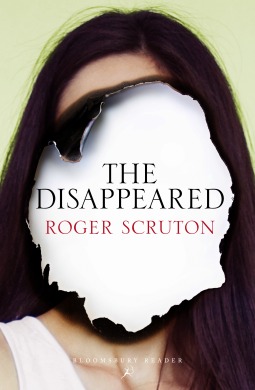 The Disappeared was published in UK, and is now available to readers in the USA. Scruton shines a spot light on victims of domestic violence, trafficking, and rape. It’s a timely issue, and no one can read his story and walk away unmoved. Thanks go to Bloomsbury Reader for inviting me to read and review the DRC free in exchange for an honest review. This book is available to the public tomorrow, February 26.
 Coming out of the gates, this novel seemed really strong. The premise is that Evelyn Gallagher, a CIA employee, sees an abuse of power, and it’s a chase to the end to see whether the NSA director, a man who knows no moral limits, will have her terminated before she can notify someone that can stop him. I received this DRC free from Net Galley and Thomas and Mercer in exchange for an honest review. It is now available for purchase.
 What, another one? Yes friends, every time I find a noteworthy biography of Grant, it leads me to another. This is not a recent release; I found it on an annual pilgrimage to Powell’s City of Books in my old hometown, Portland, Oregon. I always swing through the American Civil War shelves of their history section, and I make a pass through the military history area as well. I found this treasure, originally published in 2001 when I was too busy to read much of anything. It was a finalist for the Pulitzer; A New York Times and American Library Association Notable Book; and Publishers Weekly Book of the Year. But in choosing a thick, meaty biography such as this one—it weighs in at 781 pages, of which 628 are text, and the rest end-notes and index—I always skip to the back of the book and skim the sources. If a writer quotes other secondary texts at length, I know I can skip the book in my hand and search instead for those the writer has quoted. But Smith quotes primary documents, dusty letters, memos, and military records for which I would have to load my wide self into the car and drive around the country to various libraries in out of the way places. Source material like Smith’s is promising, so I bought a gently used copy for my own collection and brought it on home. And unlike the DRC’s I so frequently read at a feverish pace in order to review them by a particular date, I took my time with this one, knowing that if I only read a few pages each day and then reflected on them before moving on, I would retain more.
 “There is a terrible alchemy coming.”
 “Whoever really believed that thing you feared most would come to pass?”
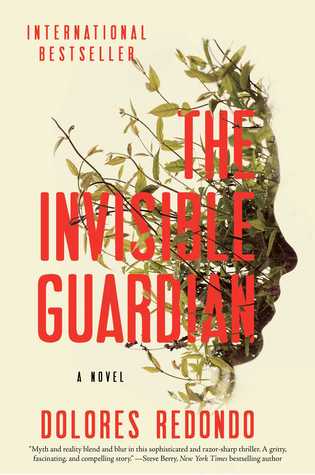 The Invisible Guardian has received widespread acclaim in Spain. It will be available to English speaking audiences March 8, 2016. My thanks go to Net Galley and Atria Books for the DRC, which I received in exchange for an honest review. I rate this book 3.5 stars and round upward.
 I had promised myself not to read any more Holocaust memoirs. What is to be gained? But when I saw this title available as a review copy on Net Galley, I thought that there is actually something to cheer the spirit in recounting how some of these monsters were tracked down and brought to justice. To date this is the most comprehensive telling of that achievement that I have read. Thanks go to Simon and Schuster and also to Net Galley for the DRC. This book is available for purchase May 17.
 Initially I was surprised not to have seen the autobiography of such a famous individual before. Twain, I learned at the outset, composed his memoir with the stipulation that it not be published until 100 years following his death, because he wanted to be entirely frank about some situations and persons without incurring the displeasure of them, their children, or their grandchildren. Twain died in 1910, and his memoir had been finished just four months. For those of us living now, it was worth the wait. Although I was fortunate enough to snare the DRC for volume 3, I had to go out and hunt down volumes 1 and 2. It’s well worth obtaining and reading for those with the attention span and literacy skills it requires.
