Soldier Girls: the Battles of Three Women at Home and at War, by Helen Thorpe*****

soldiergirlsNow that this title has created some buzz, I thought I’d reblog this!

seattlebookmama's avatarSeattle Book Mama

I was able to read this before its publication date, courtesy of NetGalley.com. Thanks, guys!

I am usually good for half a dozen books at a time, but I have to admit that this one story has dominated my reading hours for the past week or so. I had so many preconceptions (and yes, stereotypes) that I didn’t even realize I’d developed until I read about these brave souls who have gone to Afghanistan and in some cases, Iraq.

What kind of woman leaves the home she knows and signs up for the National Guard? Sometimes (often!) it is someone who needs money quick. Sometimes it’s a woman who is desperate to get out of her current living situation. And once in awhile, it is something done, at first, when one is dead drunk and out of control; the Guard will fix that quickly!

I’ve been a Marxist my whole…

View original post 115 more words

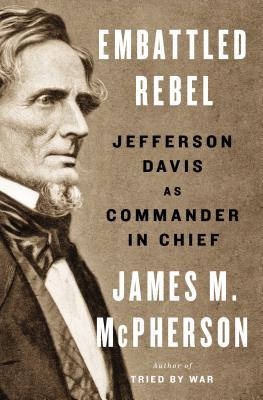
Embattled Rebel: Jefferson Davis as Commander in Chief, by James M. McPherson *****

embattledrebelThis was my first biography of Jefferson Davis. I have studied and taught about the American Civil War for decades, and read biographies and memoirs of and by some of the other principals in this conflict; I have avoided biographies and memoirs of Southern generals and politicians that smacked of nostalgic yearning for that Lost Cause. I would swear some of their authors would cheerfully go back to the enslavement of people of color given half a chance, the way they carry on. In any case, when I found this gem recently released by one of my favorite historians who has proven his scholarship trustworthy, I knew I had to read it. Sadly, I didn’t get the ARC when I requested it; hey, it happens! But my spouse popped through the door with a copy of it and I was in business at last. It was well worth his time and effort. James M. McPherson won the Pulitzer for Battle Cry of Freedom, the best single volume treatment of the Civil War I have read. He didn’t disappoint this time either.

If you read this biography, don’t skip the introduction. All of the details that follow are succinctly outlined in interesting and readable form; in fact, I read it before I read the book, and then I read it again afterward.

The book is punctuated by photographs of commanding generals in excellent resolution when read on an e-reader. I was also pleased to see that the maps could be zoomed to where I could generally tell what was on them when I held the e-reader near the light. This is a huge improvement over earlier history texts produced digitally. I used to suggest to those reading military history that they spring for a paper copy so that they could read these, which are often key to understanding what is being said. This time if you buy the book digitally, it will serve just fine.

The thing I was most curious about was whether it was true that Davis was insane by the time the war ended, and that the proceedings were mostly left to Robert E. Lee. Whereas Lee made his own decision to surrender to Grant, Davis, though undoubtedly in denial and out of touch with the reality of Northern conquest, was not insane nor near death, as the terrible textbook I was assigned to use with my teenagers had it. Happily, I noted that the sections on the Civil War had a number of other incorrect entries, and so I greatly limited my use of that book. Now I am really glad I did. Davis didn’t want the presidential nod, but he got it and took it; in fact, when he died many years later, he was entirely unrepentant. McPherson believes he was a strong politician who did a creditable job with a damnable task; Lincoln was a better president, but the Confederacy did not lose the war because of Davis’s failures. It was almost surely going to lose anyway.

Prior to reading this biography, I had believed that the south held on for as long as it did because its military leaders were stronger than those of the Union. This actually isn’t saying much about Confederate leadership.Union General McClellan cost both sides a lot of years and bloodshed that didn’t have to happen. It isn’t so much that the South had amazing generals; it was more that the Union had nobody who was both dedicated and proven. In fact, says McPherson, the Confederate military was practically tearing itself apart through gossip, infighting, and rivalry. Jefferson probably was guilty of promoting his friends beyond their level of competency; yet the cabals and gamesmanship practiced by those assigned to answer to General Bragg were at best a morale-draining waste of time, and at worst may have cost the Confederacy some battles. And the now-venerated Robert E. Lee was castigated in the Southern press for the number of Confederate soldiers who didn’t walk away from his battles. He was dubbed “the king of spades” for the graves that had been dug.

One Confederate general I had wondered about was John Bell Hood. My impression of him, I admit, was that he was a bad-ass general. He never seemed afraid to attack, even with one leg and one arm gone. Who does that? Still up there on his horse; “Charge!”  But this was one more hole in my scholarship that McPherson quickly filled. Hood would fight unwinnable battles. He destroyed an army during the last-ditch effort to save the Confederacy, losing a full fifty percent of the tens of thousands of men he led into just one fight, and most of the rest of them soon thereafter. The “reserves” consisted of old men; children too young to sign up initially; and those proud wealthy souls who had originally paid someone else to fight on their behalf. (I can imagine how well the latter took orders!)

I was familiar with a lot of the primary information provided here and was therefore free to focus on, and enjoy, the details. One new bit of amusing minutiae was that Southern women saved “the contents of chamber pots to be leached for nitrate to produce gunpowder”. Those of you more familiar with chemistry will know whether the women were lined up with their number one or number two. For me, it was a stitch to envision all those fine ladies dressed up in their hoops and bonnets standing in the potty-donation line!

I was particularly interested in what McPherson had to say about guerilla warfare. Lincoln was intent upon making it as easy as possible for the Confederate states to rejoin the Union. Some of us, had we been present, would have made a strong case for executing Davis and some other leaders—particularly those in South Carolina who started the whole mess—for treason. And some who were in Washington DC at the time made that case, too; but the decision was for quick, peaceful reunion. One reason for this was the concern that rebels made bitter by the price of losing the war might take to the hills and wreck endless havoc upon the offices of government and the economy long after the war had officially ended. But guerilla actions during the period when the Confederate government was in place and holding out for official recognition would have been unwise. Says McPherson:

Guerrilla actions as the main strategy are most appropriate for a rebel force trying to
capture the institutions of government, not defend them. And a slave society that
practices guerrilla warfare is playing with fire, for it opens up opportunities for the
slaves to carry out their own guerrilla actions against the regime.

But what of Beauregard? What about General Johnston and General Johnston? (Of course, there were two.) Bedford Forrest? What was the deal with Kentucky? Ah, there’s so much more to discuss.

I write really long reviews. If you are still with me by the end of this one, your interest is sufficient to go out and get this wonderful book. I don’t recommend it for those unfamiliar with the Civil War; for that, you ought to read Battle Cry of Freedom first. But once the basics are in your tool kit, you will find this biography accessible, interesting, and rewarding. Go for it!

The Impossible Exile: Stefan Zweig at the End of the World, by George Prochnik ****

 theimpossibleexile If you’re looking for a real-life horror story, this one is for you. It is the story of Stefan Zweig, a writer and collector of original musical scores, very well known in Vienna and throughout Europe prior to the rise of the Third Reich. It’s also a Holocaust survivor’s story, to a degree. When one surveys it objectively, his fate seems so much more sanguine than so many others who were unable to escape, or who suffered terrible physical and material misfortune before doing so. And yet it isn’t. Zweig makes it out of Vienna in time…and yet, he doesn’t.

My thanks go to Net Galley for the ARC.

Prochnik is an able writer, and he balances Zweig’s perspective with world events well in most instances; it is a highly literate, well documented biography. It is hard to rate a book like this, because while the writer is proficient, I finished the book not knowing why Zweig’s story was important. The man cut himself off from political resistance, and while he initially helped other Jews who needed to escape, eventually he was so overwhelmed by their need that he not only turned them away, but spoke of them in contempt as “schnorrers” (Yiddish which literally means ‘beggars’) who had not had the prescience to get out in time.

At one point, he is said to have thrown one giant party in order to discharge all of his social obligations in one extravagant evening. He supposedly embraced “all classes”, but the single “working class poet” is the only member of the working class ever mentioned as a guest or friend, and the poetry arguably inches that man toward the intelligentsia and professional crowd that Zweig embraced, when he was embracing anyone.

Depression and mental illness were not understood well in that time, and that had to be the key to his terrible end, which otherwise seems so unnecessary. Without it, the reader may have a difficult time sympathizing with a man who was able to travel the world after his escape and afford servants upon his arrival. I had a hard time liking this protagonist.

Before reading The Impossible Exile, I had never heard of Zweig, but I have read hundreds of biographies, autobiographies, and memoirs, and often they are by or about strangers (or both). Often I find myself seeking out the protagonist’s work after I have read about them, because they have endeared themselves to me as I read their stories. Not so with Zweig. But again, those who have spent any amount of time with a depressed individual know that depression doesn’t merely imbue sorrow; depressives are often angry, moody, or appear lazy when they just won’t get out of bed. Thus, I can understand his difficult nature to that degree (and Prochnik also recognizes it).

My recommendation, then, is for a niche audience only. If you are interested specifically in Stefan Zweig, read Prochnik’s book; I cannot imagine the subject in better hands. If you seek a wide cross section of Holocaust refugee stories, this one is likely atypical enough that it should be included.

If you are looking for a story in which a survivor rises triumphant against adversity, or dedicates himself to helping others after a narrow escape, this is not your story. It is instead, almost unbearably tragic.

Ulysses S. Grant: Triumph over Adversity 1822-1865, by Brooks D. Simpson *****

ulyssessgrantEveryone needs heroes, and Grant has long been one of mine. This outstanding biography by Brooks D. Simpson is engrossing, and Simpson’s storytelling is well documented. I read several books at a go, but I found myself turning to this one oftener than my others. It is well organized and provides a balanced, meticulously researched look at Grant’s life through the end of the American Civil War. (Another volume that will deal with his presidency through the end of his life is planned, and I look forward to it also.) Thank you, thank you to Edelweiss Books, Above The Treeline, and Zenith Press for the ARC. I rated this book 4.5 stars and rounded it up.

Generally, I have a bias toward autobiographies and memoirs, because in most cases, the person can tell their own story in their own voice much better than some outside person. Exceptions are those who would over-inflate their own glory, sometimes unnecessarily (think Patton); really bad guys, like Goebbels; dead folks who went without writing a memoir, also like Goebbels; and a fourth group that I hadn’t even considered till I read this biography: people who are so modest that they understate their own achievements. Grant was just such a modest man, and he only wrote his autobiography because he was dying and in debt, and was told that the book would provide enough income to keep his wife Julia housed, fed, and reasonably happy until she followed him in death. He passed over many opportunities to point out his own remarkable qualities because his nature was unpretentious and unassuming, and so those of us who love history and biographies can’t ask for much better than what Simpson has offered here.

My second-favorite general (the first being Sherman) was born Hiram Ulysses Grant. The regional accent made his first name into a single syllable that sounded like “harm”. His father Jesse was overcome with pride in his young son, who could ride standing up on the back of a horse by the time he was five years old. “My Ullys” was bragged about constantly, to where people grew tired of hearing about it. In later years, his horsemanship would stand him in good stead, both in the war with Mexico and the American Civil War. If the reader considers that a horse back then was militarily a lot like a jeep of today, but animate and so more subject to performance based on its treatment by the rider, this takes on greater importance still.

Simpson characterizes Grant’s father Jesse as a braggart and windbag, but I could not help thinking that all children ought to have at least one parent who is so absolutely convinced they will grow up to do marvelous things.

Some parents who dream big and dream early about their offspring are deflated when the child reaches the age of majority without turning rocks into bread or parting the nearest sea to walk through it. So it was with Jesse Grant. His son didn’t do well at farming or in business, and Jesse made it clear to his son that he hadn’t lived up to expectations. At least, not yet. Although it meant having to go hat in hand to an old friend with whom he had quarreled, Jesse asked that his son be given one of his state’s positions as a student at West Point. It wasn’t about being in the military; it was about getting a college education free. And it was there that “Sam” Grant (nicknamed by Sherman, who was an upperclassman when Grant arrived) found the key to his future. Grant excelled at mathematics, and had war not come, he would most likely have followed through on his ambition to become a professor of mathematics. Fate crossed his path, and between the events that unfolded and Grant’s superior qualities, his life impacted the world in ways that are impossible to measure.

Simpson fills in all sorts of gaps in my own knowledge of Grant. He speaks frankly about Grant and alcohol, and sets the record as clear as it is likely to get given the time elapsed. He talks about his leadership qualities, and also points out what he sees as the errors in judgment Grant made (although I occasionally quibbled with him, as if he were in a chair across the room and could hear me; seemed to me in some cases, Grant could have been criticized no matter which way he went.) But our writer champions Grant’s greatest qualities, among which were his absolutely even temperament, and the fact that he never became frightened or agitated during battle, as well as his unstoppable determination and work ethic. He was a man of high principles, and he also knew how to back off from a power struggle even when he carried the authority to smack someone down. Humanity could use a few more folks like that.

Grant was unafraid to promote the use of Black soldiers, and pushed to include them even when the generals he commanded weren’t all that happy about doing so. He treated them with more decency and dignity, perhaps, than any other general (all of whom were Caucasian). He refused to participate in prisoner-of-war exchanges with the Confederates for as long as they killed or mistreated Black soldiers rather than regarding them as military prisoners. That’s integrity.

Most of all, the writer demonstrates that the greatest historical criticism of Grant’s generalship, that he used men up needlessly and was heedless of lives lost, is unfair and incorrect. In fact, had the Union had fewer generals like McClellan and more like Grant earlier in the war, it might have been done and over a whole lot sooner.

I flagged a lot of quotes and have not included all of my notes in this review, but common sense dictates that I end this here. By now surely you can see that if the American Civil War and General Ulysses S. Grant are topics that interest you—or that might do so—then this approachable yet scholarly volume is surely worth your time and money.

Goebbels, by Peter Longerich ****

goebbelsLongerich has established himself as a scholar who specializes in writing about the Nazi thugs who surrounded and supported Hitler’s regime in the 1930’s and 40’s. Thank you to Net Galley and Random House for the ARC.

The fact is, despite my strong preference for meaty, well-documented, detailed historical works including biographies, I really struggled with this one. At first I thought it was my own fault for asking for 992 pages (about a third of which is documentation) about such a rotten guy, but that isn’t the reason I kept setting it aside. I devoured John Dean’s recent tome on Nixon, who while not actually a fascist was a really dirty guy, and that was really interesting reading. This colossal volume on Goebbels, on the other hand, is dry, dry, dry.

Longerich’s thesis, if such a large work can be boiled down to its essence, is that while Goebbels was a villain and a sociopath, he wasn’t nearly as important a player in Hitler’s regime as he considered himself to be. He was emotionally dependent on Hitler and the reverse was also true, but his scope and authority were not as great as many people may believe. Longerich makes his case thoroughly and carefully, using Goebbels’s own journal entries and other primary documents, often citing works in the German language to back his assertions. And maybe that is where part of my ambivalence lies, because what he sets out to prove, isn’t what I wanted to know. I wanted to know—just as we always do when something really calamitous occurs or a really monstrous person draws the public eye—what the hell happened to make someone participate in, and even initiate, the things that Goebbels did. I don’t care about his love life, and would just as soon see a good portion of the first 200 pages edited, since the interesting part of his story is later in his life, once the fascists assume power. However, Longerich has written about at least one other top Nazi, and he followed the same basic format, relying on the man’s early life to demonstrate the formation of his character, and he’s had success and acclaim by doing so, and perhaps that isn’t entirely the reason I found this work to be so unexpectedly dull.

For those who are pursuing research projects that involve Nazi top officers, Goebbels is bound to be a valuable resource. For general audiences it might have been more interesting to see him from multiple perspectives. We see Goebbels through his own eyes, and we see what Longerich has discovered to be fact in terms of the authority he was given and the positions he held. I wonder, what about what others who worked with him thought about him? What about how the German public perceived him? I think it might have livened up the text to include more vantage points.

I have no doubt whatsoever that this is the most thorough biography of Goebbels that is widely available and written in English. For scholars seeking information for purposes of research, I highly recommend it. For the audience that seeks an accessible and interesting history and biography that relates to the Holocaust and Nazi officers, I recommend Six Million Accusers: Catching Adolph Eichmann, by D. Lawrence-Young.

In short, Goebbels is more appropriate for a niche audience than as a general read.

Last Train to Memphis: The Rise of Elvis Presley, by Peter Guralnick *****

lasttraintomemphis I belong to the generation that came about a decade after Elvis was king, and so for a lot of years I tended to avoid his music. It was not my music. And that was my mistake.

Whether or not you are an Elvis fan, this biography is best read with internet access to his music, and better still with access to film footage of him performing (and it does exist). It is hard to understand much of what Guralnick writes about unless you can see the body language in the performance. Even if Elvis’s work has served as background music that you’ve never listened to very much, a review is in order to understand any of the tumult that his work created.

Last Train to Memphis: The Rise of Elvis Presley was a New York Times Notable Book of the Year and garnered other awards and praise as well. It is justified. So much research, so many interviews, so much data has been crammed into an easy-flowing, readable narrative that he makes it look almost easy. Almost.

Presley was not a song writer, he was a performer. It was the style with which he interpreted songs that were already popular and well-known, such as Blue Moon Kentucky, as well as to lesser-known hits that came from the Black community, that rocketed him to fame. It’s hard to get a bead on the man, even with everything the writer has ferreted out from all possible sources. A pair of musicians he worked with referred to him as an “idiot savant”. If he were alive today, he might be diagnosed as OCD (my own conclusion); though his family was poor enough to qualify for the first public housing, he has his very own plate, his very own knife, and his very own fork, and if anyone else had used it, no matter how many times it had been washed, he would not eat. His closer-than-average relationship with his mother probably was the saving factor here. She accommodated this and more, and between this and the fact that there were no other children in the family (apart from his twin, who was stillborn), no diagnosis was necessary. He was ostracized at school, but found his greatest love was not in the halls of academia anyway. He began with a child’s guitar that his mother scrimped and saved to buy for him, and worked his way up the ladder. (He later said that he had found some of his ideas by sneaking out of the church his parents took him to on Sundays and sneaking over to the “Negro” church service, where he could listen at the door. He went for the music.)

His dance style had never been seen  by any wide audience. His hair and clothing, while fodder for a whole lot of jokes up the road, had found their time and place. Somehow he knew exactly what would work, and those who worked with him also said that he was always aware of what individual components of his act resonated with his audience, and which fell flat. He wore makeup on stage to enhance his features before any other known male American musician did; some of his fellow musicians wondered what that was about. Someone else asked him why he put glop in his hair; he said it was so that a lock of it would fall forward in a particular manner when he snapped his head. Once he got the opportunity to make a movie–an opportunity he actively sought–he spoke with hairdressers about its color. One of them told him black would look wonderful on film against his pale skin tones, and so he dyed his blond hair black from then on. (I had always thought that was his natural hair color.)

As a young woman, I often heard about how tragic Elvis Presley’s life had been. I was not yet twenty, clerking in a convenience store nights to augment my student financial aid, when the newspaper delivery van came with the evening newspaper and there was the headline. Elvis–the older, heavier Elvis–was dead. I was young enough that most adults seemed pretty ancient, but I mused, “Huh. He wasn’t THAT old yet.” My boss came over to look, and was surprised also.

But in reading this biography, I am more struck by how many dreams came true for this young man. He got to do exactly what he wanted to do for a living, and he loved having fans scream out his name. He wanted a Cadillac; he had half a dozen of them. He was able to provide well for his parents, and he built his dream home, complete with a real soda fountain. He had women on his arm everywhere he went.

…and he scared conservative America half to death! Oh, the panic! “New York congressman Emmanuel Celler, chairman of the Antitrust Subcommittee of the House Judiciary Committee” labeled Elvis Presley and his “animal gyrations…violative of all that I know to be to good taste.” He and several other prominent politicians managed to work some racist demagogy into the mix as well. Elvis later let everyone know exactly what he thought of that by showing up at the fairgrounds in the Jim Crow south on the one day of the month designated as ‘Colored Day’ and buying a ticket. He was the only white boy at the fair. He was allowed to attend and widely welcomed, though there was some push-back later in the local Black press complaining that too many young ladies at that same fair had been screaming after him instead of young men of their own skin tone. Ah well.

This marvelous book is volume one of two. It ends when he is drafted and goes to Germany (a peacetime draft that his agents decided it would look bad for him to avoid). Maybe it is just as well. We send young Elvis off to Europe still full of youth, joy, and hope. (Your reviewer confesses that she has ferreted out the second volume, gently used, from her personal book temple, Powell’s City of Books, and will read it when time allows.)

Highly recommended to anyone who enjoys biographies of famous musicians. I loved it!

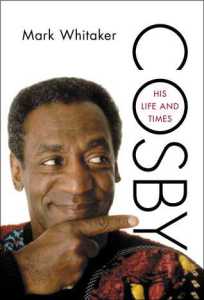
Cosby: His Life and Times, by Mark Whitaker *****

Now that it’s on the shelves where you can buy a copy, I thought I’d post this one more time.

seattlebookmama's avatarSeattle Book Mama

In the lateCosby twentieth century, Americans trusted “God, Walter Cronkite, and Bill Cosby”. Cosby is an icon, and Mark Whitaker is his biographer, author of the first comprehensive biography of the great comedian, actor, author and humanist. I have admired Bill Cosby my entire life, and it was an honor to be able to advance-read this well written, thoroughly documented biography. Kudos to Whitaker for a job well done.
Cosby grew up really poor, the child of a man his friends later described as a “wino” and a hard-working, ambitious mother who valued education. His teachers could tell he was very bright, but he had no interest in school work during his formative years, enjoying sports, friends, and jazz music more than academia. He would later change his mind. His college degree and graduate work were done legitimately; he respected education too much to ever accept an honorary degree anywhere…

View original post 907 more words

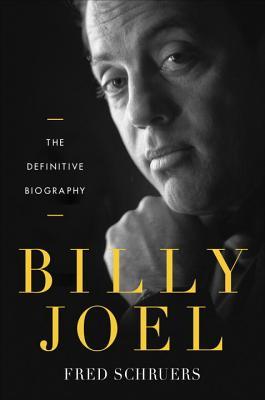
Billy Joel, by Fred Schruers *****

BbillyJoelilly Joel is a legend. He has rocked this world from Leningrad to London, from Tokyo to New Orleans. His working class roots and his family’s history as survivors of Nazi Germany have kept a boxer’s spring in his step, on stage and in the wider world. Pretension irritates him, and he can spot it a mile away. And all of these aspects of who he is, together with an innate musical sense, have created some of the best songs this world will ever see. Someday the Piano Man will leave us, but his legacy will be with us forever.

My thanks to Net Galley and Crown Publishing for the chance to read and review this one in advance. It will hit the shelves October 28, just at the time you want to crawl into a warm place with a great book.
Joel began his musical career in adolescent garage bands. They didn’t really go anywhere, but he did. He would have been content, in the beginning, to write music for others to perform, but others counseled him that the artist needs to make a demo. And whereas musical greats like Carole King, Barbara Streisand, and Garth Brooks have performed hits he has written such as New York State of Mind, Shameless, and a number of others, his most outstanding work has been that which he has performed himself.
For this reviewer, his most memorable album is Glass Houses, which came out in 1980. In the mid-80’s, I had been married for nearly a decade, and when I turned thirty, it occurred to me with a startling immediacy that I could break free if I wanted to. The sound of breaking glass followed by the authoritative, take-charge chords and Joel’s sassy, do-what-I-feel-like voice was a tonic, and I listened to it over and over and over again. I can never think of that time period without hearing “You May Be Right”. Later I would dance at a high school reunion to “It’s Still Rock and Roll to Me.” And it was, and it is.
Joel has given so much of himself in his work that it is no surprise that he has in turn stepped into untold people’s lives as he did into mine. There seems to be a running joke between Joel and those around him about the number of weddings at which his music has been performed. And while this is just one more sign that the bond between Billy Joel and his audience is rock solid, it is also a little bit worrisome.
According to Schruers, every time something monumental has occurred in Joel’s life, he has headed for the piano. It has been his therapist and his source of cartharsis, and so for decades, his personal life and his innermost feelings have been out there on display in the work he performs. He isn’t the first to feel the best understood and maybe the most alive when communicating with fans that are listening to him perform. I could reel off a string of names, but I don’t need to, because the reader has probably already thought of half a dozen such people. Joel’s marriages to Elizabeth Weber; Christie Brinkley; and Katie Lee are all out there for the world to share. We bounce joyfully to “Uptown Girl”, and when he makes a joke at a concert where a fan is proposing marriage, telling the groom to get a pre-nup, everyone who isn’t Billy laughs.
So what happens when such a man reaches his sixties and finds that he now wants a modicum of dignified privacy? Many of those he loved best in his personal life have moved on and left him behind. His fans are ready to receive more, more, more, but there is a point in life when we become a little more reticent about spilling all the beans to whoever wants to know. And here it was inevitable, this being the time it is, that I think about Robin Williams, and about Michael Jackson. They gave us everything, and look what happened. And I think those who bond with the public in such an unfettered fashion are in a way set up for that kind of ending. It scares the hell out of me. I am not the weepy type, but I am struggling a little as I write this.
Billy Joel is a legend, a working class guy from Levittown who made good through hard work and immeasurable talent. He has used remarkable restraint in dealing with those who have shown him bad faith; have cheated on him romantically and financially; and in some cases, all but robbed him blind. He has climbed back, but of course it has cost him emotionally. He would have to be stupid to remain unaffected by it, and the man is anything but stupid.
He credits as his early influences Ray Charles, John Lennon, Paul McCartney, Otis Redding, and a host of other musicians. His love of the classical causes him to reference Beethoven and Bach when he talks about music, and his album of classical piano music went straight to the top of the Billboard charts; I think I want that album. Apparently he has been called “derivative” at some time in the press, with which he initially had a similar relationship as one of my personal heroes, General Sherman. Derivative of what, and of who? He freely admits that the genre was begun by brilliant Black musicians, but does that mean nobody else can do that or go there? Of course not! And it should be noted that the press, from the New York Times to Rolling Stone to Billboard, lauded him unconditionally in more recent coverage.
The man has more than paid his dues. He has been around the block a time or two, and he knows more about the business and about life than when he was brand new to the world of professional music.
I recently wrote a review for Mark Kincaid’s bio of comedy king Bill Cosby. When Cosby’s manager was dishonest, Cosby solved the problem by handing the business end of his work to his wife, Camille, and it was a strong move. But Billy did the same thing, and it took the warnings of several trusted friends and associates to help him understand that his faith in his wife was misplaced; she too was robbing him blind, and putting plenty of resources into her own name in anticipation of the inevitable split.
What’s a guy gonna do?
After their separation, estranged wife Christie Brinkley and beloved daughter Alexa are injured in a helicopter crash in which Christie’s boyfriend died. Joel had them taken to his home, arranged for medical care and paid for everything, and came home one day to an empty house. Was there even a note? We don’t know.
There are two sides to every story, and I am sure the women who have loved him and left him have theirs. This writer grew up with two parents with serious alcohol problems, and so I know it isn’t easy. Brinkley’s heartfelt plea that he deal with it—though I question the public nature of the plea—hit a resonant chord for me.
At the same time, I want to cheer when Joel says flatly that he is an atheist, and there is no Higher Power to whom he wants to give his worries. He doesn’t want to let go and let god. WHO? Oh, hell no. And again, this reviewer remains close to two (other) family members who cast off the demon alcohol without any kind of religious juju, and without standing up in front of strangers to testify. It can be done, and if Joel hasn’t, I too hope he will.
But there we are again, in the middle of his private business. See what I mean?
In his path to glory, this iconic musician has been inducted into the Rock and Roll Hall of Fame, honored at the Kennedy Center, has played with Paul McCartney, Bruce Springsteen, Elton John, and a host of others. He has collected Grammys like some folks collect baseball cards; in 1989 he was honored with the Living Legend Award. And since the baseball simile has arisen, let’s note that he was also there to close Yankee Stadium, and then help McCartney reopen it under its new carnation. Leonard Bernstein asked him to write musical scores. Joel not only has a record for the number of appearances in Madison Square Garden, he had, at the time the biography was written, a standing engagement there, for as long as his new, bionic hips and aging spinal column can hold on.
What then? Joel has developed side interests. He has customized motorcycles and also has a boat business. His financial empire has recovered many times over despite the double dealings he was dealt when he was younger and more trusting. And he has a bond with daughter Alexa that nothing can take from him.
And so, when it’s time to go home, when the last curtain comes down and Joel has had enough of life on the glittering stage, I hope that the satisfaction of a career well managed; a high road held both in terms of how he has dealt with the ticket-buying public, his former loves, and his former associates; his new, more physically manageable interests; and the love of his daughter and other family members, will suffice.
As for our scribe, Fred Schruers, I was initially taken aback by the lack of documentation and footnotes, but after reading the postscript, I came away reasonably satisfied that he had covered his bases. He sure knows how to tell a story.
And what a story it is!

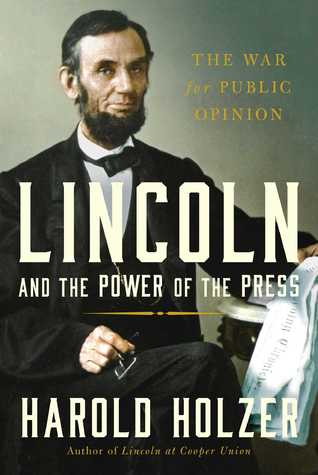
Lincoln and the Power of the Press: the War for Public Opinion, by Harold Holzer ****

lincoln and the pressThis book is for the serious reader. Well researched and creatively conceived, it traces the influence of the newspaper on young Lincoln, and then follows its role in his emergence as a politician, as a contender for the presidency, and later the complicated relationship between Lincoln and the press during the American Civil War. It raises thorny, thoughtful issues regarding censorship; when do we hold the First Amendment dearest above all, and when may its authority be abrogated for the security and integrity of the Union?

It starts a bit slow, and I began wondering whether this would be one of those rare books that I skim and then review, as opposed to reading every word. Still…LINCOLN. I stayed the course and was rewarded. Just be aware that the narrative doesn’t really wake up until about the 30 percent mark.

Lincoln had amazingly little formal schooling. Though this was common among pioneer families at the time, with settlements sparse and young males needed to help with a tremendous amount of hard physical labor, but knowing not only that he became US president, but that he was an attorney before that, I was surprised to learn that most of his reading skills were obtained by reading every single newspaper he could get his hands on, no matter how old it was by the time it made its way to Illinois, which was then considered the northwestern USA. A sister later recounted seeing him turn a chair over and lean against it while he sat on the floor and used the firelight to read by. How many people are sufficiently motivated today to teach themselves reading skills through this sort of very difficult total immersion?

He later fed his newspaper habit by becoming postmaster, and he used this office to read the newspapers being sent by mail before they were delivered to their intended recipients. (He would later use the franking privilege bestowed upon postmasters to send out his own campaign materials free of charge.)

Newspapers were tremendously influential, approaching the zenith of their importance during this time. There was no radio or any other media to spread the news of the nation besides word of mouth. Litigation for libel or slander had not yet blossomed, and so newspapers were often very loose with the facts, and this made it all the more important to read as many of them as possible in order to tease apart truth and rumor.

Young Lincoln left home hoping to become a journalist himself. He was well known as a gregarious fellow who always had a great story ready for whoever wanted to listen. I envision his parents throwing their arms up in the air: all that work to be done at home and where is their son? Off somewhere talking, talking, talking. I also found this tidbit interesting because it contrasts sharply with the haunted and often depressed man he would later become when authority and personal tragedy marked him.

As a congressman and also as a frequent writer of freelance articles and letters to editors, Lincoln marked out his position against the extension of slavery early and with great passion. He called the war with Mexico for what it was: a land grab that would primarily benefit the feudal rulers of the south. At one point he even suggested that the attack against US citizens by Mexican soldiers was a hoax, demanding to know exactly where on the map this had occurred. Folks in Washington DC, Illinois, and even New York sat up and took notice.

Holzer also traces the beginnings of the most notable newspaper publishers of the time. The unfortunate Elijah Lovejoy is dispatched with haste, just as he was in life. Greeley, the bootstrap newsman and fervent abolitionist, at least most of the time, at first spurned Lincoln. For most of both of their careers, they had a strong working relationship, but Greeley was both quixotic and a bit unstable, and he turned on Lincoln at some pivotal times, most noteworthy when the latter was running for re-election. Bennett, founder of the Herald and innovator of a number of the institutional practices that are still in place today, was conservative politically and represented Manhattan’s pro-secessionist, pro-slavery majority. Raymond was Lincoln’s most steadfast supporter and campaign manager the second time around, though he wavered for a brief but terrible time when the tide seemed to turn in favor of the Copperhead Democrats, who wanted to give the secessionist states independence in order to end the war.

In the land of Dixie, there was no debate about Constitutional rights to freedom of speech and the press; newspapers who even hinted at Union sentiments were quickly suppressed without qualm. Despite Lincoln’s suspension of Habeas Corpus and at times the suppression and/or closure of newspapers that either leant aid to the enemy by publishing battle plans before the fights had taken place, or by less overt and therefore more controversial antiwar editorials, he won his office in a fair fight, not attempting to tamper with the electoral process or outlaw the printed word that ran in favor of McClellan, a former general whom this reviewer regards as a treasonous scoundrel.

I confess it gave me a good deal of food for thought. I was a child during the 1960’s and a teen during the 1970’s, but I recall well the controversy regarding free speech, the Vietnam War, and Nixon’s enemies list. If I am in favor of free speech and press during contemporary times, why should it have been different during the Civil War? But I eventually concluded that it was indeed different, and the exasperation of General Sherman toward the press that gave away critical secrets all in the interest of a scoop and the bottom line was entirely correct.

But that’s just one reviewer’s opinion; thanks to Net Galley for the ARC. If you are willing to devote the time and attention this tome demands, you are sure to come away with a viewpoint of your own.

To those interested in the American Civil War, President Abraham Lincoln, or the history of the American newspaper, highly recommended.

A Spy Among Friends: Kim Philby and the Great Betrayal, by Ben Macintyre *****

Recently released; reblogging!

seattlebookmama's avatarSeattle Book Mama

A Spy Among Us Kim Philby     This was a real page-turner, which says a lot, given that I already knew how it would end. I read the historical fiction version by another author and was fascinated by it, but also wondered what was fact and what was invented. Macintyre take his job so seriously that 25% of the book is citations. You KNOW he’s not making this up!

A great big thank you goes to Net Galley and Crown Publishers for the free read; that said, yes, this one is worth buying. I haven’t read anything else by Macintyre, but now that I have seen what he can do, he’ll be on my to-read list!

Kim Philby is considered by many to have been the world’s greatest spy. Perhaps the phrase should be “best known spy”, since the best spies are never found out. But that’s a digression. The fact is that this British-born, upper-class…

View original post 390 more words