All In, by Joel Goldman and Lisa Klink *****

all inThis one is 4.75 stars, rounded up. Thank you to Net Galley and to Thomas and Mercer for the DRC. This absorbing thriller will be available September 8 for purchase.

Cassie Ireland is an asset recovery specialist; she views herself as a modern-day Robin Hood whose job it is to steal back money, goods, or even really embarrassing videos from those that originally stole them. Her employer is a shadowy individual code-named Prometheus–a moniker chosen because Prometheus was the sneak thief of the gods. Ireland’s nimble, silent in her work, and careful in trusting others. She really can’t be played.

Her job here is to steal select items from the home safe of crooked-wealthy magnate Alan Kendrick. In order to gain access to his treasure trove, she must first make it past a sophisticated security system, to which she gains access by deceiving Kendrick’s wife, Gina. Once Cassie found her way into that safe, I stopped breathing until she was out again. I think my fingertips turned blue. But once she’s been in and out, things once more begin to unspool at a heart-pounding pace.

Jake Carter is a professional gambler, and he too has a grudge to settle with Alan Kendrick. He plans to beat him at poker; he’s fast, smart, and fair. Unfortunately, the last whale he took down has sent goons after him. They want the money he took from Theo at the table, and they also want him dead. Jake’s challenge is to go after Kendrick while dodging Theo’s assassins.

Ultimately, Cassie, Jake, Theo and Kendrick all land on the same enormous floating gambling casino. You can run…but only so far. You can hide, but sooner or later, you’ll be found. On the other hand, you can also turn your stalkers into your prey, if you’re cunning and well organized, and if you can gain the loyalty of others nearby. And then too, you might be able to grab a helicopter!

All In is fast, escapist fun. Ordinarily I would call this a four-star review. Four stars are my default for books that are anywhere from pretty good to really good, but that don’t meet the gold standard of five stars. My four star reviews are big houses with a lot of rooms. If I hate a book but concede that others are likely to enjoy it, I will go with four stars and explain what I didn’t like. I also give four star reviews to books like this one that I like a lot, but can’t see them as the very epitome of their genre. Five stars means excellence that is above and beyond ordinary work.

The tipping point here that knocked this up to five stars is the use of race and gender. Nobody wants to be preached at in the middle of a thriller, and Goldman and Klink don’t do that. Rather, it is by the assumptions that are inherent in their choice of protagonist (Ireland is African-American, female, smart as hell and way more fit than any gum shoe I can recall); the way the plot unfolds, with no helpless damsels waiting for great big men to come save them; and the way secondary characters are handled, the butler foremost among them. It reminded me a bit of Barbara Neely’s writing, and so I wanted to stand up and cheer.

Fall is coming, and whether you are still basking in the sun on weekends or huddled by a fire, it’s a great time to treat yourself to a tightly paced, accessible thriller by authors that show their respect for all people, especially the working class, in the way they sculpt their characters and plot. It looks like a winner to me.

Why not order it while you can?

Giveaway: Black-Eyed Susans, by Julia Heaberlin

BlackEyedSusansThis giveaway ends Friday, July 31 at midnight! Thank you to my sponsors for permitting me to extend the deadline. Hot new psychological thriller won’t go for sale until August 21, but thanks to Net Galley and Ballantine, you have a shot at your very own advance copy! If you live in the continental USA and have a snail mail address to give me if you should win, then you are eligible.

This is my first giveaway ever, and I began it on the review page, but so far only 5 people have expressed interest, and only one has left the contact information necessary for me to notify the winner. That means that by entering your contact info–which I will not use for any other purpose but to notify you that you’ve won and get your address to the sponsors–you have an outstanding chance of winning. Just a few days, people! Come on in!

Black-Eyed Susans Giveaway; My Very First!

I am pumped about this! I was contacted by a rep from Net Galley and offered a copy of Ballantine’s hot new mystery for a blog giveaway, which I have not done before. I hope a lot of people will enter. If you’d like to be included in the drawing, which will occur at the end of this week in a totally random manner, please go down to the bottom of the page where it says “Leave a Reply”. Type in your name (or a pseudonym for now if you prefer) and an e-mail address where I can reach you. If you win, I will send a message to your e-mail, and at that point you need to give me a real name and snail mail address, which will be released only to the Net Galley rep.

I promise not to use your e-mail address for anything else. Actually, I don’t have an e-mail list to sell, and I don’t have anyone to sell it to. But if someone pops up and offers me great riches, I will turn them down…I promise!

This page will dominate my blog for the whole week. As a refresher, here’s the review again, and the attention-getting cover:

BlackEyedSusansTessa is the sole survivor of a group of young women who were left for dead in a mass grave, which was then planted with flowers. The Black-Eyed Susans became a metaphor for the trauma she experienced. This thriller, Heaberlin’s first following a highly respected career in journalism, is a great read with a few problems, most of which have to do with trying to cram too many details into a single novel. It was looking like 3.5 stars to me until it passed the halfway mark; then it hit its stride. Ultimately, the eloquent manner in which issues surrounding the death penalty were braided into the narrative won the final .5 star from this reviewer. And at this point, I have an obligation to tell you I read the book free, and to say thank you to Net Galley and Random House Ballantine for the DRC. The book will be available to the public August 11.

Tessa is an adult, a single parent, and it’s been twenty years since her abduction and attempted murder. There are memories she tries to bury, and there are other niggling details that she can’t make sense of. In a writing style somewhat reminiscent of Jodi Picoult, Heaberlin flashes us back and forth from Tessa’s adolescent memories to the present, a life in which her sole objective at first is to protect her own teenage daughter, Charlie, whom she is afraid may pay the ultimate price. Because Tessa’s stalker has been planting Black-Eyed Susans in her yard and various other places, and she is scared half to death.
Strange, threatening packages appear in the mail. And her best friend Lydia disappeared mysteriously not long after the trial. There are so many shadows, so many possible threats out there that her inclination is to retreat into her artist’s studio, and into her home. Don’t rock the boat.

The problem is that an innocent man is about to become one more victim of Texas’s capital punishment. Her supposed attacker, the supposed killer of the other Susans, waits on death row…and the clock is ticking. She knows he didn’t do it, and she’s been holding out. Once she decides to testify to his innocence, will she be believed? Can she get there in time?

A tremendous amount of research went into teenage trauma and its possible affects, and the capital punishment process (and the process of its defense) in Texas. Heaberlin has done her homework; if anything, she may have done a little too much, or tried to incorporate too much of her work into one novel. Somewhere around the 37 percent mark, I found myself not mystified, but confused. What were all these references to the OJ Simpson trial doing here? Who the hell is Jo? Is Lydia dead, moved away, or what? The suspense fell away while I stopped reading in irritation to go back over the book and try to discern what I had missed or forgotten.

However, just before the halfway mark, the author found her stride and everything came together. From that point till ninety percent, I was riveted. Portions of the text approached the level of literary fiction. I found myself questioning my earlier complaints, and went back and reread the passages I had marked earlier to see whether I had just been distracted, or in a snarky frame of mind. But no, the inconsistency is really there.

The supernatural bits about the other Susans being in her head, talking beyond the grave, may have turned up in the author’s research as a possible outcome of trauma, but they felt extraneous to me, as if they had been shoe-horned into the text. If I had been her editor, I would have cut them.

I was not entirely happy with the ending, which felt a bit contrived, but I was so deeply satisfied by what I had read up to that point that I didn’t feel let down.

My advice to the reader is this: if you are opposed to the death penalty and love a good thriller, get a copy of this novel. I think you’ll find it as satisfying as I did. You may want to flag pages where you have questions with sticky notes, or mark it digitally if you read it that way; later on it will all make sense.

And whatever you do, remember: there are no millionaires on death row. Not in Texas, and not in any other state that has capital punishment in the USA.

Black-Eyed Susans, by Julia Heaberlin ****

BlackEyedSusansTessa is the sole survivor of a group of young women who were left for dead in a mass grave, which was then planted with flowers. The Black-Eyed Susans became a metaphor for the trauma she experienced. This thriller, Heaberlin’s first following a highly respected career in journalism, is a great read with a few problems, most of which have to do with trying to cram too many details into a single novel. It was looking like 3.5 stars to me until it passed the halfway mark; then it hit its stride. Ultimately, the eloquent manner in which issues surrounding the death penalty were braided into the narrative won the final .5 star from this reviewer. And at this point, I have an obligation to tell you I read the book free, and to say thank you to Net Galley and Random House Ballantine for the DRC. The book will be available to the public August 11.

Tessa is an adult, a single parent, and it’s been twenty years since her abduction and attempted murder. There are memories she tries to bury, and there are other niggling details that she can’t make sense of. In a writing style somewhat reminiscent of Jodi Picoult, Heaberlin flashes us back and forth from Tessa’s adolescent memories to the present, a life in which her sole objective at first is to protect her own teenage daughter, Charlie, whom she is afraid may pay the ultimate price. Because Tessa’s stalker has been planting Black-Eyed Susans in her yard and various other places, and she is scared half to death.
Strange, threatening packages appear in the mail. And her best friend Lydia disappeared mysteriously not long after the trial. There are so many shadows, so many possible threats out there that her inclination is to retreat into her artist’s studio, and into her home. Don’t rock the boat.

The problem is that an innocent man is about to become one more victim of Texas’s capital punishment. Her supposed attacker, the supposed killer of the other Susans, waits on death row…and the clock is ticking. She knows he didn’t do it, and she’s been holding out. Once she decides to testify to his innocence, will she be believed? Can she get there in time?

A tremendous amount of research went into teenage trauma and its possible affects, and the capital punishment process (and the process of its defense) in Texas. Heaberlin has done her homework; if anything, she may have done a little too much, or tried to incorporate too much of her work into one novel. Somewhere around the 37 percent mark, I found myself not mystified, but confused. What were all these references to the OJ Simpson trial doing here? Who the hell is Jo? Is Lydia dead, moved away, or what? The suspense fell away while I stopped reading in irritation to go back over the book and try to discern what I had missed or forgotten.

However, just before the halfway mark, the author found her stride and everything came together. From that point till ninety percent, I was riveted. Portions of the text approached the level of literary fiction. I found myself questioning my earlier complaints, and went back and reread the passages I had marked earlier to see whether I had just been distracted, or in a snarky frame of mind. But no, the inconsistency is really there.

The supernatural bits about the other Susans being in her head, talking beyond the grave, may have turned up in the author’s research as a possible outcome of trauma, but they felt extraneous to me, as if they had been shoe-horned into the text. If I had been her editor, I would have cut them.

I was not entirely happy with the ending, which felt a bit contrived, but I was so deeply satisfied by what I had read up to that point that I didn’t feel let down.

My advice to the reader is this: if you are opposed to the death penalty and love a good thriller, get a copy of this novel. I think you’ll find it as satisfying as I did. You may want to flag pages where you have questions with sticky notes, or mark it digitally if you read it that way; later on it will all make sense.

And whatever you do, remember: there are no millionaires on death row. Not in Texas, and not in any other state that has capital punishment in the USA.

Everybody Rise: a Novel, by Stephanie Clifford****

everybodyriseAll Evelyn has ever wanted is to please her mother; all Barbara, Evelyn’s mother, has ever wanted is for Evelyn to be accepted into elite Eastern society. Barbara doesn’t care whether Evelyn is well read, but she had sure as hell better know which spoon to use, and what to wear to every occasion…and most of all, she had better know “everybody who’s anybody”. In other words, Clifford’s skewer of high society hits the mark in ways both wry and hilarious. This terribly amusing little tale goes on sale August 18—oh wait, was my rhyme a trifle tacky? Anyway, you can buy it soon, or you can order it in advance, but I was lucky and got a copy free from Net Galley and St. Martin’s Press for this humble review. Thank you to both of them.

Evelyn’s parents want different things, and it’s just her luck—she is their only child, so all their expectations fall on her shoulders. Her father, an attorney with egalitarian notions and a folksy Southern manner, is often out of town, working for the clients he represents and sticking it to the big pharmaceutical companies. So most of the time, it’s Evelyn and her mother. And her mother is relentless in her need for social stature.

Evelyn is sent to Sheffield Boarding School, which should provide some relief, but her mother obtains a copy of the student directory, and has tracked the social value of every child there. Evelyn is friends with Charlotte, a young woman of high ideals and great loyalty, but she has pigtails, a social no-no, and the wrong damn family. Evelyn is conflicted, because she is close to Charlotte, but her mother wants her to drop her. Her mother has chosen the people Evelyn should cultivate. Imagine!

Over the course of time, Evelyn manages to worm her way into the upper reaches of the social echelon, but she can’t financially afford the lifestyle she is expected to lead. And worst of all, she comes to realize, once she is rubbing elbows with the cream of society, that her mother is actually pretty embarrassing. Her mother does not have as much upper-crust social sense as she thinks she does.

She’d better avoid her.

You may think I have spoiled the surprises, but you haven’t heard the half of it. There are so many choice bits along the way, and then the ending is something else entirely. At times I felt that I was watching a train wreck I was incapable of stopping, but the thing is, I really liked watching it, and the ending, which seems obvious as it approaches, is a surprise after all.

If you’re heading for the beach this August, or just need entertainment for a good long holiday weekend with the air conditioner cranked and a nice drink ready to hand, this is a gift you should get for yourself. It’s absorbing and vastly entertaining.

Memphis Ribs, by Gerald Duff ****

Memphis RibsIt’s tourist season in Memphis; the Mississippi Delta land is filling up with convention-goers and barbecue lovers. They’re fixing to parachute in a couple of whole hog carcasses, but not until after the Cotton Queen goes by on her float. And this being Delta country, the float really is a float; it is a barge made over, and she is much more concerned about keeping every hair exactly where it belongs than she is about finding out who killed Daddy the other night. Okay, actually she pretty much knows, and it was badly done. But damned if it’s going to spoil her special day. As for me, I just want to say thank you to Net Galley and Brash Books for the DRC. It’s been a dark but enjoyable viewing.

So let’s have a chat, just the two of us, about the best way to break into an ATM machine. Never tried it myself. I would never have thought to do it the Memphis way, so maybe it’s just as well I turned out to be more the sort to read and write things and less the criminal type. Because frankly, I never would have considered just ripping the thing off its moorings with a forklift and driving it away to where I could tear it apart in privacy. Franklin Saxon is more suited to this kind of activity. We’ll let him do it, or at least direct the hired help to do it. Well, for as long as he can, anyway; things don’t go well for him up the road a fair piece.

As for our local cops, JW Ragsdale just wants to get out of Memphis for a bit. It’s so humid, so crowded. The bugs alone will make you crazy. If he can launch an investigation that will take him out of town, preferably with a fishing pole and a six-pack in tow, he’ll be happy to fill out the paperwork saying he’s been on the job, been conducting critical interviews.

How sad for him, then, that he is so good at his work. One interview leads to another, and before you know it, the man is right in the thick of all sorts of drug smuggling, fraud, thievery and yes, oh yes…murder. It ain’t so much a holiday after all, and looky here, even the barbecue done turned rancid. It really isn’t his day.

The Bones family figures prominently; they’re employees of Franklin Saxon, recently bereaved son of Aires Saxon. The hard part is not sampling the merchandise.

“ ‘Shee-it,’ said Stone Job. ‘Shee-it. Merchandise. Why you call it that?’
“ ‘Fool, that’s what it is. That’s what we be buying and selling. Why you think we
done made a withdrawal from the ATM the other night?’”
“’To pay the white man the money for the rock. That’s why.’”
“’Right, you getting it. That be the Bones business…Free enterprise, motherfucker.’”

At first, with my political antennae always on alert regardless of genre, I was concerned about the negative depiction of African-Americans in the story. Were we going to veer toward stereotypes here? And what is up with the use of the word “honky”, which I hadn’t heard since the 1970’s?

But not to worry. This little tale treats everyone with equal irreverence. In fact, the very best, sickest humor, to my way of thinking, was the scene at the pork processing plant, when JW indulges in a little fantasy of his own regarding the speed-that-line-up foreman.

Trust me.

If you are squeamish, if you can’t deal with sick humor or gruesome interludes, give it a pass, already. It isn’t half as gross as most of what’s on television, but never mind; the point of dark humor is to enjoy it, and we want you to have a good time here.

If, however, you can read Janet Evanovich and The Onion and come away holding your sides, then this little goodie just might be up your alley. Originally published in 1999, it will be released in digital format May 5.

I recommend you read it separately from meal time, though.

A Grown-up Kind of Pretty: A Novel, by Joshilyn Jackson ****

agrownupkindofprettyMosey Slocumb’s mother, Liza, has had a stroke. It’s a good thing both of them live with Big. Big is the name given Ginny, mother of Liza, grandmother of Mosey. The ladies in the family tend to give birth early and unexpectedly; both Ginny and Liza had babies at fifteen. In the inner city, this happens so often that most folks don’t care, but in their tiny southern town, the judgments fall hard and fast. They are not welcome in the homes of their other relatives, nor even at church. They are “the ones who had been put out like bad cats. Outside, all Liza and I could hope for was the dark, ass end of Jesus,” according to Ginny.

The town does not only judge sins that have taken place; it also anticipates sin. Mosey is fifteen now. She can feel the eyes of her classmates, her teachers, and even Big and Liza keep her under close scrutiny. Although she is a virgin, she has taken to using home pregnancy tests…just in case.

All of this changes with the discovery of the silver box buried beneath the willow tree.

All that Ginny, Liza, and Mosey have, really, is each other, and when their family is threatened, all of them–even poor, damaged Liza–come out swinging.

This is a fun book once the early part is past, or at least that was my take on it. Jackson is a courageous writer, but some may find her style too abrasive to enjoy. She takes conventional religion apart, no doubt about it, and whereas I was fine with this, those that enjoy a family-like church relationship may easily be offended. So then, this is for the more leftward-leaning among us, yes?

Yes but no. There were several passages at the start of the book that also sounded a lot like life-begins-at-conception, and abortion-is-murder. It wasn’t said, but it was implied strongly enough to raise my hackles. Had I not already really enjoyed this writer’s later work (Between, Georgia), I think I might have slammed the book shut and tossed it onto the yard sale pile.

Even the most brilliant author must make sure that when she takes a stand, or two, or three, she has an audience left after those she has offended fall by the wayside.

That much said, I really enjoyed this story once I was past the initial rough patch. An engaging story, mostly, about three generations of women who stand by one another through whatever comes.

The Devil Wears Prada, by Lauren Weisberger ****

thedevilwearsThe Devil Wears Prada is a fun, light read. By now many readers will have either seen or heard of the movie, and I had too. I tend to create mental pictures of fictional characters, sometimes using actors, and other times inserting the faces of people I have known in real life. In this case, I could not imagine anyone other than Meryl Streep as Miranda Priestly, the boss from hell.

Andrea Sachs has finished college and yearns to write for a big-name magazine, preferably The New Yorker. She stumbles across the opportunity to break into the publishing world as Priestly’s assistant at Runway, a fashion magazine. This is a job with a high rate of turnover, and one can see why from the moment the position commences. There is no such thing as off-the-clock time. Sachs is on call 24-7, often for such trifling things as a gift for Priestly’s snarky twin daughters, or the ubiquitous dry cleaning. If it rains, Sachs is blamed. If a flight is late, Priestly wonders why Sachs couldn’t anticipate this problem and deal with it. Sachs is constantly demeaned and belittled, and she puts up with it because of the immense amount of power Priestly represents in her chosen field.

Sachs watches her relationships flounder as she is constantly required to break personal engagements in order to leap whenever her phone buzzes. She keeps at it knowing that at the end of a year with Priestly, her career in print journalism will either be made or broken by her boss.

The book spins an over-the-top villain at the perfect place in time. The book was published in 2007, and this was a time when the First World had just begun to realize the downside that is inherent in the brave new world of satellite-based communications. People that used to enjoy going on vacation and walking away from their telephone now take it with them, and this is often either a plainly stated part of their job, or a better-safe-than-sorry aspect of damage control. I didn’t have to do this during my twenty years as a public school teacher; so far, teachers really can carve out a part of their time away from the classroom purely for personal privacy and enjoyment. However, my husband is in the tech field, and though work didn’t phone him while he was away, he constantly checked into his work e-mail via laptop computer, insisting that it was better to know if a crisis was unfolding so he could be prepared to meet it upon his return rather than being blindsided and unprepared.

The movie version of the story develops Priestly a bit more and keeps her character from being a cardboard cutout. Unfortunately, the book doesn’t do that. But then, this is not serious literature; this is a romp.

Though many modern professionals are married to their phones and other devices all the time, Weisberger has spun a tale that will make just about anyone gratefully reflect that their own job is better than that. So like horror stories, part of the joy in reading this fluffy beach read is in comparing one’s own life favorably to that of the protagonist.

If you have a generous book-buying budget and want a fun read to pack for your beach trip or an escapist weekend at home, this one is a great choice. If your budget is tighter, try your public library; that’s where I found my copy. Unless you have a schedule like Sachs’s, you likely won’t have difficulty finishing this one by its due date.

Great beach read; fluffy escapist novel.

Glitter and Glue, by Kelly Corrigan*****

GLITTERANDGLUE

Whoops, nearly forgot! Thank you, thank you to Ballantine Books and the First Reads program at Goodreads for permitting me to read this book free and in advance!

This isn’t Corrigan’s first book, and it shows. At first it appears to be light, fluffy material, a beach read. The confidential one-gal-to-another tone may create the illusion that we’re going to sit down over a cup of coffee and have a little chat, just us, and the book.

It goes deeper than this, though. The complexity of relationship between mother and daughter is not a new topic, but Corrigan is a strong writer, and she makes it feel new. She recounts how she had saved her money so that she could leave home to find out who she was, following college graduation. She needed to go out into the world to do that, she explained to her mother, who thought she should do something more practical with her nest egg.

In Australia, Corrigan runs low on money, and she finds herself signing on as a temporary nanny. The dad has just been widowed, and his 5 and 7 year old children are smarting from the loss. Reminders of “Mum” and mortality seem to be everywhere. And Corrigan, who is for better or worse playing the role of surrogate mother, finds herself channeling her mother. Everywhere she goes, her mother is still in her head. I recognize some of the truisms and turns of phrase from my own mother, though I am about a decade older than Corrigan. And gradually, Corrigan comes to realize that what her mother had said before was true: her father, who always praised her and was always positive, but didn’t deal with any of the details of raising her or disciplining her, was the glitter. Her mother was the glue.

Later she comes to realize that there is not one woman inside each woman, but dozens of them: the mother who has always seemed a trifle harsh, undemonstrative, curt, and (my word) anal at home is “a hoot” at the office. Everyone finds her hilarious there. She isn’t trying to be anyone’s role model, so she cuts loose. What a revelation!

Two favorite moments: toward the beginning when she is a “classic” snoop while babysitting. Whoa, I totally did that, and my friends did too! We used the house phone where we were babysitting to call each other up and announce our findings! Funny. Another favorite was toward the end, when the author, fuming a bit at home in San Francisco because she has been back home to her folks many times, but her mother hasn’t visited her, is told by a friend that she needs to invite her mother. “Maybe she thinks you don’t care.” Again, hell yes! My own mother instilled in me the notion that once your kids are grown, you don’t push yourself at them, sure as hell don’t drop in on them. I have been inside my own son’s house just once, and last summer he made an ironic remark about it. Hey, I was waiting for the invitation! Last thing any mom wants is for her kid to pull back the curtains and hiss to whoever is present, “Oh crap. It’s my mom.” *cringe!*

Ultimately, Corrigan experiences the role reversal that inevitably must come, and she becomes her mother’s glue when she falls ill. Her father is still the glitter.

I end a lot of reviews by saying that the reader shouldn’t pay full cover price, but consider reading it if your library or used book store has it. Not so this time. If you love an accessible yet intelligently written memoir as much as I do, cut loose and buy this when it’s released. If not for yourself, read it for your family. You’re bound closer than you may think.

Confessions of a Prairie Bitch, by Alison Arngrim *****

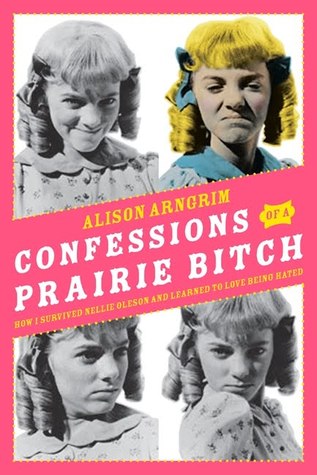
confessionsofaprairiebitchThey say actors tend to have high IQs. This book is one more piece of evidence. Arngrim is super smart, and she can really write. And she is very, very funny.

Like a lot of comedians (which is what she did after being a child actor,at least for a time), her unerring comic instinct developed as a survival skill. Terrible families come in a wide range of dysfunction, but if domestic atrocities were a contest (and thank goodness they aren’t), Christina Crawford (Mommie Dearest) would be left eating Arngrim’s dust. The enormous temper tantrums and other vile forms of acting out inherent in the character she played were a recipe for mental health. How many other people get to go out and scream at other people for a living? And trust me, she needed all the help she could get. For the specifics, get this book and read it. It is worth the cover price.

Public reaction to Arngrim ranges from the hysterically funny to the almost unbelievable. She and her Prairie mom went to a fair as part of a publicity effort, to sign autographs etc, but they were attacked by an angry mob and had to slide out of there quietly. On a French television program, she was asked to explain her bad behavior, and she explained, as if she were her character, that she had been raised by a dreadful mother and was jealous of Laura. The studio audience and talk show hosts all understood entirely. It’s just too hilarious!

In real life, she has been close friends with Melissa Gilbert since their early days together on the set, and she spoke so well of Gilbert that I think I may read her memoir, too…and I was not even remotely interested in doing so before this! She also has some interesting things (I am dying to divulge, but won’t…READ THE BOOK!) about Michael Landon. Wowzers.

Not-so-funny is her experience losing a good friend to AIDS. I lost an old high school chum in the late 80’s, when a whole generation (or more) of gay men were unknowingly exposed to a deadly virus that at the time had no useful treatment. I applaud the years she has served as an advocate for HIV awareness and treatment. She has gone to bat for abused children, too. Again, you have to get the book! You just have to read it!

I always have 4-6 books on a string at a time, and I float more or less freely from one to the next. The only time I put this one down for another was at bedtime, because for awhile it was rollicking enough not only to keep me awake, but to keep me awake and laughing, or shaking the mattress with suppressed gales.