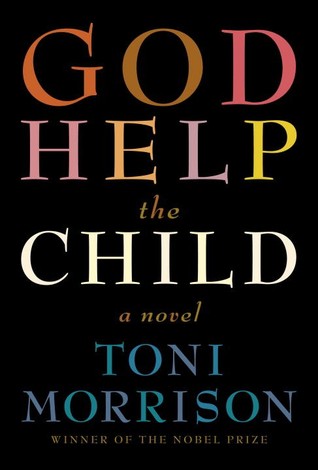
God Help the Child, by Toni Morrison *****

godhelpthechildI’d been looking forward to reading this book, and I’d been dreading it. The fact that Morrison is such an outstanding writer makes the pain in her prose more tangible than most. One doesn’t feel the pain of a character; one feels the pain of a friend. And so even though I have three of her books I haven’t read yet sitting on my to-read stack, challenging me as if to ask why I had skipped them so many times when it was their turn, I still asked for this hot-off-the-presses title for Mother’s Day. When I opened it, my son (the eldest, the one who worries about me now and then) said gently, “So Mom…you know…have you read Toni Morrison? Because…” And I told him I had, and I knew, and that I would also read something light or funny during the time I read this one, to break up the horror.

Going into it with that level of caution, not unlike going out to pick flowers when I was seven, wanting the heavenly fragrance of the posies that grew in our California yard but not wanting to encounter the rattlesnakes that sometimes lay coiled in their vines, I was actually pleasantly surprised. Because although there is certainly plenty of pain to go around, our protagonist advocates for herself; she takes charge. I came away feeling as if there was more that was good in the world, and in people, than bad.

And when we go to the contest for best first lines, hers should be a contender, particularly when one considers context: “It‘s not my fault.” Lula Ann’s mother was horrified at the very sight of her newborn: “Midnight black, Sudanese black.” She and her husband were both light-skinned people, “What we call high yellow”.

“You should have seen my grandmother; she passed for white and never said another word to any of her children.”

It’s all there on that first page: betrayal, betrayal, betrayal, and in the case of Lula Ann’s parentage, betrayal suspected (by her father) and denied (by her mother) and a marriage undone.

I think of my own family; when I was born, everyone in my family, and all of the photographs carefully lined up of those that had gone before, were of the super-pale variety found on the British Isles and in Northern Europe. Turn us loose in the sun for twenty minutes without sunscreen and we look like a family of lobsters.

And yet, over the generations, we have chosen to marry and procreate with people of color. Then, since there were already Black and Asian children in the family, the family members that could not have children adopted two children, the first one white, the second Black. At family parties, the Black relatives all congregate for part of the festivities, then move out to rejoin the rest of us.

And I know it’s not at all the same as for Morrison’s fictional family, because Lula Ann’s parents didn’t have the choice to be all white, or to bring people of color into the family. My generation and the Caucasian members of subsequent generations have had the power to choose who would be in their immediate family; of course, our Black and Asian relatives also had a choice of who to marry, but they also had less power socially and economically, so again: not the same thing. They have none of the history, none of the rage that is inherent of being a son or daughter of a grandson or granddaughter of slaves.

Lula Ann is instructed to call her mother “Sweetness”. There’s deniability there. Her mother doesn’t want people to think…to think something is wrong.

She grows up, ironically, to become a model who is prized for her dark skin. She turns it into a brand, with help from a friend, and wears only white, using the name “Bride”. White clothing day in, day out, to emphasize her darkness. She owns a cosmetic brand but wears no cosmetics. She needs to appear pure in order to carry it off.

She has a man, until he finds out the secret that is buried in her past. Actually, he doesn’t know the whole thing, and that’s where the trouble begins.

Literary fiction often carries power and authority that nonfiction can’t convey, and so it is with God Help the Child. I suspect professors that teach African-American Studies are putting it on their required reading list, and that’s a great thing, because there is so much to think about packed into this slender volume.

If you don’t have this book, get it and read it. If you don’t have the money, go to your local library and put yourself on the waiting list. And if it is assigned to you to read for a class, please, please, don’t buy a paper to get out of reading it (and don’t copy this blog post and turn it in as if it were your own). Don’t read the Cliff Notes. Read the book. It is both accessible and potent. It may be the most important book you read all year, and you won’t forget it.

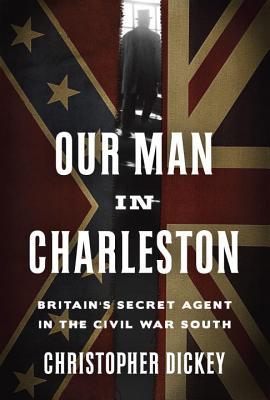
Our Man in Charleston, by Christopher Dickey *****

OurmanincharlestonThis is the most fascinating book I’ve read in a long time! Equal parts biography and American Civil War nonfiction, it details the experiences of Britain’s foremost spy, Robert Bunch, who was living in Charleston, South Carolina when the Civil War began and for its duration. I am truly grateful to Crown Publishers and Net Galley for permitting me to read the DRC in advance. And perhaps it is just as well, in a way, that my kindle fell in the potty when I was done and with it went hundreds (genuinely) of notations that I made as I wended my way through it; I had procrastinated writing this review because there was so much I wanted to say. Too much, in fact! Sometimes I have to remind myself I am writing a review for would-be readers who might want to discover a few things on their own. Part of my writing mind is still wired in the direction of academic analysis, which is too ponderous for most readers to slog through, and not really necessary for our purposes.

I was riveted almost from the get-go. At first I had the bizarre notion that a British view of the Southern Rebellion would be objective. If I’d thought harder, I would have realized that isn’t true; Britain had a tremendous amount of interest in the outcome of this fight. But its interest was completely different from either the Union’s or that of the Confederacy. There were a couple of horrifying instances in which it might have chosen to recognize the Confederacy, but those moments quickly passed.

Even before war broke out, tension had been quietly mounting over the treatment of British seamen that landed in Charleston. On one occasion a single Black sailor had instigated a relatively small uprising on a plantation, and this act—the most fearful nightmare of the Southern ruling class, self-styled aristocrats who lived as a tiny minority among an enormous number of Black laborers who had every reason to hate them—gave birth to the Negro Seaman Act. The law stipulated that any Black sailors from another country that worked on board a ship that docked in Charleston, must be kept in jail until it was time to leave again. This was the stuff of which international incidents were born. Britain would attempt to solve the problem through Washington, D.C., only to find that Charleston had already begun to flout Federal law and that the nation’s promises were not kept. Eventually, a quiet negotiation began with Charleston authorities. When they continued to behave badly, Britain had little recourse, since it did not want it known in Washington that they had been dealing with the government of South Carolina as if it were sovereign. This probably also fed the delusions of Southern grandeur and may have encouraged them to believe they did not need the national government at all.

Robert Bunch was originally stationed in the north, but found himself in Charleston more and more often. His habit, as Britain’s agent, had been to head north during the unbearably humid, tropical summers of the deep South, but as events polarized the nation and northerners were no longer welcome, his own position became more and more tenuous. His job was to send reports to Britain, but whenever he went in public, as he had to do a great deal in order to pick up information, he was questioned increasingly closely about Britain’s view of the Confederacy. Which side would Britain take? Was he a spy? (Gracious, no!) Maybe, were he on the side of the Union, he should be locked up! (Please, please no!) He would have preferred, at one point, to go north and stay there, but his orders were to stay put, so that’s what he did.

In order to maintain his role and save his own neck, his behavior became increasingly misleading. The dispatches he sent to England were so adamantly opposed to recognition of the Confederacy that he was reproached a time or two for trying to make policy when his job was simply to provide information. However, when he was asked by local folk whether surely, Britain would soon recognize the Confederacy, and wouldn’t he encourage this, he gave misleading smiles, made ambiguous remarks, and agreed that of course he would be happy to slip the British nanny’s letter home in his diplomatic pouch so that it could reach the U.S. mail from which they were otherwise cut off.

He became so convincing in his subterfuge that at one point, he was nearly brought up on charges of treason against Britain. U.S. Secretary of State Seward, a difficult, punctilious man, had a number of bones to pick with Britain, and at one point tried to foment war with them, convinced that if it broke out, the South would drop their ridiculous posturing and rush to defend the red, white and blue. Lincoln felt differently, however, and made it clear to Seward and to Britain that he was only interested in fighting one war at a time. To save face, Seward latched onto Bunch’s dismissal as the single demand he would press. Surely, in order to avoid international tension, Britain wouldn’t mind hanging one of their lowly agents out to dry? Send the boy home and there’s an end to it. Get him gone.

Lord Palmerston, a man with power disproportionate to most in his position, had eclectic tendencies, and was having no part of firing Bunch. He liked the guy, and wasn’t really interested in being shoved around by the former colonies of Britain. If the US of A had to have its capitol torched a second time to get the point as to whose navy was better? Fine. Hopefully not, but Bunch was staying. And that is how it was.

There are two things that popped out at me in reading this compelling work. My vantage point, for those who haven’t read my reviews before, is that of a former history teacher. It was my job to teach teenagers about the American Civil War, or as much as teens can learn in ten weeks at one hour a go. It was by far my favorite quarter of the school year, but I was so overwhelmed with work and meetings that I didn’t have a lot of time to read in my field. I could use my six weeks off in the summer to read whatever I chose, if I wanted to, and that was about it. So although I could have used this information back then, it is nevertheless satisfying to have one nagging question answered, however belatedly.

My question, and my students’ question sometimes, was if Europe was able to rid itself of slavery by the government’s buying slaves from slave owners, why didn’t that work in the USA? And the only response I had—one provided by reading James McPherson and a Marxist historian named George Novack—was that they refused. They just wouldn’t do it.

But why? Surely it was obvious they were living in a feudal economy that the rest of the industrializing nations had abandoned. Surely they had to know they could not freeze history. Why cling to it beyond all reason?

Questions related to war are always rooted in economics, and so to simply say they were irrational, which is more or less my answer apart from I-don’t-know, felt incomplete. A number of other historians gave that reason, but it felt like a puzzle piece forced into the wrong hole. And Dickey provided me with the missing piece. Although I had read vague things about speculation in slaves and that uniquely American, horrific practice, slave breeding, which brought us international shame before all was said and done, I didn’t recognize the link between speculation and the tiny handful of wealthy plantation owners that made the choice to go to war rather than let it go.

Those that have followed the financial news in the USA and many other nations over the past decade are aware that a lot of home owners are losing their houses when they can’t pay mortgages, especially balloon mortgages, and more dreadful still is the fact that they are “under water”, meaning that after the bank takes the house back, or it is sold, they will still owe payments on it. They’ve borrowed more against it than it is worth, and only bankruptcy will solve their problem. When they lose that house, they lose everything.

And so it was with a large number of plantation owners. They had borrowed against their slaves. That was where their equity was: in human capital. If they allowed the government to buy their slaves at their current market value, they would become bankrupt, and having gained their social standing on nothing more than wealth and pale pigmentation, they would be ruined socially and financially. As long as there was any other choice, they would take it. They would send their own sons to die for it, though generally they chose to pay someone else to go in their own places.

They were underwater.

Britain’s perspective at the outset was that if one side had slaves and the other did not, then of course they would not recognize the upstart nation. When the border states were permitted to keep their slaves, it was still considered wiser to back the winning horse in any race, and so unless it appeared the Confederacy was about to win the war and gain international status as an independent nation anyway, there was nothing to be gained by antagonizing Lincoln’s administration.

I had wondered, in past years, whether Britain might not have yearned for the South to become independent. If one looks at a map of the USA as it was then, and the size of British possession of Canada, if it also dominated the Southern USA economically, and if it had a navy in the Atlantic that could pound the coastline, could it not overturn the American revolution? That slice of the Union is small compared to Canada, when the Confederate states are added in like the bottom bun of a hamburger. How delicious!

Not so, says Dickey. Britain had other fish to fry. It had been absorbed in fighting the Crimean War, and at the time, events in Europe were considered vastly more important than our own emerging outpost. It might be nice to have, but they didn’t need it badly enough to weigh in with the slaveocracy. The South had been so smugly sure that Britain needed their cotton for its mills, but in fact, they had planned well against such an eventuality, and had over a year’s worth of cotton socked away in storage. To the impertinent Southern men and women that sashayed up to their representatives to announce that Britain would simply have to recognize them, the response was generally somewhat courteous, muted, non-committal. If pressed, they suggested that cotton could indeed be grown in India. No worries.

And here I am three pages later according to Microsoft, and I have really only skimmed the surface. Think if I’d had my notes available! Believe me when I say I have just scratched the surface. I had so many delicious quotes, and now you’ll have to go ferret them out for yourself!

This magnificent book comes out July 21, 2015. For once I can tell you that whether or not you are conversant with the finer details of the American Civil War, you will be able to read this with no trouble. A knowledge of the broad contours of the war will make it more satisfying, but not strictly necessary. Those who enjoy history in general, or biographies in general, will likewise find it a must-read.

You have to get this book!

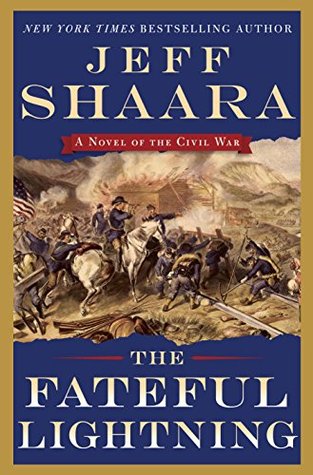
The Fateful Lightning, by Jeff Shaara *****

thefatefullightningThose that love strong Civil War fiction have to get this book. It comes out in June, but thanks to the wonderful people at Net Galley and Random House/Ballantine Publishers, I was able to sneak a peek ahead of time. Although it is the fourth in a series, it also works really well as a stand-alone novel if you know the basic facts regarding Sherman’s siege of Atlanta and its subsequent burning. As we join him and his hardened veterans fighting under Howard and Slocum, “the two fists that Sherman intended to drive through the heart of the deep South”, they prepare to march to the sea.

I have read every one of Shaara’s novels, those about the Civil War as well as the American Revolution and US war against Mexico. I am a fan. The last in the series, The Smoke at Dawn, left me hovering between a four and five star rating. It was a good read, yet I wasn’t sure I liked the way he voiced Sherman; I thought he made him sound a bit remote. But then it became evident that the controversy that sparked the indignation of other reviewers was his inclusion of one fictional character among the various perspectives presented (he flips back and forth, a format he uses regularly and that readers of his other work will recognize). The fictional character was invented to represent the too-often-voiceless rank and file, without whom the war would not have been fought or won. And I thought that this was actually a great idea, so I flipped from four to five stars in defense of his choice.

In this final installment, Sherman’s voice sounds much more real to me. I don’t know what happened, but it feels to me as if all the cylinders clicked into place. William T. Sherman is one of my heroes; I consider him America’s all time finest general, with Grant coming in second. He remains controversial to this day, mostly in the American South, so for those who wonder, the perspective definitely leans toward the Union, though both perspectives are given space. And it seems gobsmackingly obvious to me that in a war between feudalism and industrialization, between slavery and freedom, the latter should be the team to root for. But for those that feel differently, you’ve been warned.

Here we also meet a new fictional character named Franklin. Franklin is a slave until Sherman’s men come through. His father, an older man who was hobbled permanently by one of the master’s coon hounds when he attempted to flee, won’t leave the Plantation even after he hears that he is free. The master is gone, but it doesn’t matter. Walking is too hard, and frankly, he is also too afraid. And if someone were to sic a mean dog on me, I just might feel the same. But his son, Franklin, is grown, strong, and completely unafraid. He is allowed to join Sherman’s men as a laborer, and during a fight, he makes a heroic choice even though he has not been given a weapon or even permission to touch one. And the role that Black troops and spies also played is also included.

Throughout the narrative, Shaara’s voice feels authentic and honest to me. The reality of racist Caucasians within the Union’s forces is acknowledged, and the horrible crossing in which one of Sherman’s new, political generals causes the drowning of an unknown number of African-Americans trying to follow the army across a pontoon bridge that’s being withdrawn from enemy forces is not glossed over. More importantly, the slave breeding that brought international shame on the United States, a practice done exclusively here, in the “land of the free and home of the brave”, is presented; I can’t think of any other novelist I’ve read who includes this critical factor.

Fans of military history will appreciate Sherman’s approach to the war, that one cannot win by capturing the capitol of the rebellion, but rather, the Confederate forces must be defeated, and the people of the South that supported them had to know they were done. The desertions that marked the end days of the Confederate Army were the result of Sherman’s “juggernaut” through the South. Those that left home to fight to defend it, sometimes deserted for the very same reason. Home might not be safe; they might be needed back there. Shaara’s depiction of Sherman was consistent with Sherman’s memoir in this and every other regard.

In reading Shaara’s note to the reader, I felt a bit sorry for him, because it sounds as if every single Civil War buff has some treasured bit of arcane information or some hero in the family and they’re annoyed that Shaara has failed to include them. But this was one big war, and as the author notes, he can’t include everything. His publisher has set limits in terms of time and space. And Shaara has served them, and the memory of those who served the side of moral right, admirably.

The book will be sold in time for Father’s Day. But really, you should buy it for yourself. It’s worth every nickel.

Moon Walk, by Michael Jackson ****

1062902Moonwalk was written at the height of Jackson’s fame, in the wake of Thriller and the 25th anniversary Motown TV special. It is a fascinating read, and was the #1 New York Times bestseller at the time. I give it only 4 stars because there is a ghost writer here. It’s understandable; Jackson had his finger in so many pies at the time, and also was somewhat reluctant to breach his own privacy by speaking candidly about his own life. Ultimately, though, the writer-behind-the-writer says that Jackson decided it was time to set the record straight about some things. He still nearly pulled the plug at the dead last minute, after editing and approving the final copy, leaving his ghost writer with an immense amount of time and effort that nearly came to nothing. I’m glad he decided to follow through.

At the time this was written, Jackson had no children. His name is associated with more than one book, and I may see if I can get a copy of a later one.

I am not much of a pop music fan, but the sheer enormity of Jackson’s accomplishments and his role in music history makes his a must-read for a memoir reader like me.

I came out of this convinced that though (through the lack of a normal childhood) Jackson’s social skills were sometimes off a notch and his judgment not always sharp, he was not a pedophile. I believe him when he says that children are the only people he can talk to who don’t seem to have ulterior motives (beyond a particular circle of family members and close friends), and that he enjoys making them happy. I really do think he was naive enough to think that a child would find it fun to sleep in the host’s big bed rather than be all alone in a room he wasn’t familiar with (and assume that the oh-so-grateful parent would remain such). Beyond that, I think that at some level, his involvement with children had to do with his own lack of a childhood that involved the fun and freedom usually associated with that time. My best guess is that he brought kids home, or went to their homes and hospitals, and spoiled them rotten, and enjoyed the experience vicariously.

Jackson’s own upbringing, though he loved the music and turned out to have a genius for it, was grueling. He is diplomatic in the things he says about his father, and gives him credit for finding the resources to bring not only musical instruments but microphones into their 3 room home in Gary, Indiana, so that his talented tribe would understand how to handle them and move with them by the time they were on stage. They began with talent shows that had cash prizes, and worked their way up to auditions. They played in some really raunchy clubs at an age where most first-graders would not even be watching R rated movies. But Jackson took to the life, and grew close to his brothers. Motown signed them, and they were off to California.

Jackson was instantly enthralled by all things Californian. The trees had oranges, he says, and there was the ocean, and Disneyland! Welcomed to the “Motown family” by singing legend Diana Ross and by the vice-president of Motown, who lived just down the street, they were house guests until they were settled and established, and ran freely between the two fabulous homes. Ross was like a second mother to Jackson,and she introduced him to the art world, which would later become not only a love of his, but a source of smart investments also.

In Gary, he and his family had all been practicing Jehovah’s Witnesses, and he mentions this only briefly, to show that some of the corruption and profanity that young performers take on was not going to be part of his own life, because that was not how he was raised. He doesn’t mention the religion again after his move to California. This left me curious. Could a man like Jackson have truly believed that only a certain number of people are allowed to go to heaven?

He writes about his break with Motown,which he and some of his family precipitate when Motown is not receptive to having him write music, and about his lengthy, fond collaboration with Quincy Jones. He is able to get in on the ground floor once MTV breaks loose, and spends his own money in order to create music videos of the highest caliber. (“Bad” used real gang members from South Central LA; the massive security was loosened a bit once they found that since the gang members pretty much just wanted recognition, respect, and lunch and were getting all three, they were courteous and cooperative. I’ll admit I really liked this part, having taught young people with similar issues.)

His hair and skull catch fire due to negligent fireworks use while making a commercial for Pepsi. He knows he could have sued them and won big, but he chose not to.

Without a trace of irony or hubris, he states that he is thankful he never got involved using any sort of drugs, since he had seen what this does to others. (To be fair, he specifically refers to street drugs like marijuana and cocaine; I suspect that some of the drugs that would later plague him were due, in part, to the pain he experiences after accidents on the job such as the Pepsi adventure.)

A star like Jackson could have used his life story as a vehicle for payback, but he goes out of his way to avoid any semblance of that, and when he has to talk about people who did rotten things, such as a management-level person who stole from him, he does not name names. I thought this was really nice. He briefly mentions his father and the belt, but also gives the man credit for the early start he and his brothers had, and the fact that they were the first big family act to enter the pop scene.

Later he simply mentions that his father was no longer representing him at a point in the story. He makes no reference to the marital discord between his parents.

The one place we can almost see the hair rise on the back of his neck is when he speaks about the controversy regarding the changes in his facial structure. He owns that he had a nose job and a chin cleft added, and points out that entertainers all over Hollywood do exactly the same thing, and he asks why this is such a big deal, when after all, he is a musician. The man has a point. On the one hand, those with the most fame get the most scrutiny, but on the other, it also (though he never says it) sure seems as if a black man who makes it big gets more scrutiny than others. He adopts a vegetarian diet, and of course, as we grow older, our faces lengthen anyway, thus the harder planes to his face and loss of baby fat. And in thinking about some of the bizarre things printed in tabloids…who is really going to have the bones in his face broken and reset? Even if vain enough for something of that nature, it would be extremely risky, and involve a huge amount of time away from work.

I believe that Jackson is telling the truth; a nose job, a chin cleft, terrible acne as a teen that started the habit of hiding his face at times, and then later (not in this book), the skin disease. I think this is true, though it doesn’t make as good copy for selling sensationalistic news rags.

The one really unsettling note was that Jackson seemed to think it was a hilarious practical joke to surprise people who were afraid of snakes with Muscles, his boa constrictor, and chase them around the room. I have the same phobia, and once had (honestly) a science teacher who chased me around his 7th grade classroom with a big snake, ordering me to “touch it.” I did not, and I had nightmares for weeks. But it’s too late to tell Jackson that this particular thing is not funny.

Jackson’s songwriting partnership and friendship with Paul McCartney led the latter to recommend that he consider investing some of his money in song rights. This had not occurred to Jackson before, and turned out to be a strong move financially, as most of us now know. And he says that although he knows others in the business discourage their own children from performing, if he ever has children, he will tell them to follow their dreams, and if they want to perform, they should go for it.

The artist, with all his eccentricities and extraordinary talent, can’t talk to us anymore. For those who enjoy memoirs and autobiographies of musicians who have made historical strides in their field, this is highly recommended.