A Swollen Red Sun, by Matthew McBride *****

A shudder went through me as I pressed the five star rating, but it’s true: this is among the very best of its genre. Think of Deliverance; think of The Shawshank Redemption on steroids. No…picture it on crank.

A Swollen Red Sun is set in the middle of the hills and “hollers” in Missouri, a long, long way from a real city, a miserable, impoverished place where some folks’ goal is just to find a nice, normal person to smoke crank with instead of all these crazies. (I am avoiding the direct quotation because I read a galley and the rules don’t allow me to use them, but the figurative language and many other well-turned passages here make it really really tempting.) All told, this horrific account of a small community that has rotted from the inside out will make you think long and hard about whether growing up out in a rural area will somehow keep your kids isolated and protected from all the drugs, crime, and gangs that you know big cities hold.

At least in those cities, there are wholesome choices to be made as well, such as museums, theaters, and video arcades. And at least in those cities, there will be someone to hear you scream.

In my own digital shelves, I labeled this grim but brilliant work as “crime fiction”, but that doesn’t really cut it (oh, if you’ll excuse the expression). It’s more like a horror story minus the supernatural elements. McBride stirs up plenty of horror without needing to summon spirits from the great beyond. His are right here on earth, and they do a fine job of giving the reader a case of the heebie-jeebies all by themselves.

Yet, curiously, this novel has just enough moments of relief, however momentary, to keep it from crossing my “ick” threshold. You know what I mean, right? Once in awhile I start reading a book that is so unrelentingly horrifying, contains deeds so nightmarish that I think, “I don’t want to spend my time with something like this,” and then walk around with a sour stomach for a week over what I have already read. I thought this one might go there, but it didn’t.

I have a friend who likes Patricia Cornwell just fine, but there are certain other writers that she’s told me she’ll take a pass on. When I finish a book by Stephen King, I don’t send it her way, and likewise, both Jan Burke and the non-Sherlock thrillers by Laurie B. King caused her to say, “It’s too much.” And for my friend, this story would also, I guarantee, be too much. Let that be your litmus test.

So my advice for you is this. If you like a fast-moving, original, complex thriller with plenty of skeletons in plenty of closets metaphorically, I promise this hardscrabble tale will hold your attention to the very end. If your nerve-endings are too tender for horror tales, or if you have recently had someone close to you die and you aren’t really over it, you may want to set this title aside, at least for now.

I would be amazed if there are no awards headed this author’s direction. It’s a powerhouse of a story, and there’s really nothing else like it.

The Yiddish Policeman’s Union, by Michael Chabon *****

They say all stories have been told in one way or another, but to reduce Chabon’s The Yiddish Policemen’s Union to a “whodunit” is a travesty.

When I saw that a fellow reviewer had laughed at the notion of Chabon smiling and patting himself on the back as he wrote, I thought she was being ungracious. This was until after I had completed the book, which another reviewer accurately described as “hyper literate”. Now I can see him doing just that.

Oh yes, this is good writing at its finest, with a plot that pulls together with breathtaking attention to detail (LOTS of detail), incredibly lush descriptions, and droll humor, all of which no doubt account for the myriad honors and awards heaped upon the writer. He earned them all, but in reading, one feels the envy that a wallflower feels in the presence of the homecoming queen, or the 98 pound weakling feels when a muscular Adonis struts his stuff at the beach.

If you want a nutshell version of a review, it’s “Who killed the Yid?” But if you want a nutshell of anything, this book will be too much for you. It is not a tome to be skimmed or looked over while you hold a conversation or watch television. It demands full and complete attention. At first, I didn’t understand this, and had to restart twice when I took the book into my hands right before falling asleep and didn’t remember any of what I had read the next morning. It is better to begin it with full, wide awake attention!

Others have done a fine job of covering the setting, both place and time. There are a lot of characters to shuffle; Chabon does so deftly, but it is the job of the reader to keep up with him. Landsman is the detective and protagonist, but there are so many more, and some people are not what they seem to be. The story is rife with surprises, and I won’t spoil it for you by giving them away.

One thing worth noting as you go into it, especially if, like me, you are reading on an e-reader: the end, though this is not a short book, may feel abrupt because there is a glossary of Yiddish terms at the end, along with a teaser for the next book. Therefore, although all signs pointed to the story’s being nearly wrapped up, I thought Chabon was about to toss one more spanner into the works to fill up about 75 more e-pages. I was startled when the book ended , saying, “Wait. That’s it?” This is unlikely to be a problem if you have the physical book in hand, though.

Over and over again I found myself highlighting passages that were, I thought, the most magnificent figurative language I had ever seen. Eventually I was foolishly highlighting whole pages, and you don’t want them all here. Just know that Chabon has created a strange and miraculous world that features an underworld rebbe (rabbi) and a host of goons as the obstacle, but ultimately the Moriarty to the Yiddish Holmes is a surprise, to say the least.

I conclude with just one bit of philosophical musing dropped in toward the end, which I find irresistible. It does not provide a spoiler, though, because the answer to the puzzle is not revealed here. It’s just a little sample of the marvelous word-smithery wrought by our champion of writers, as Landsman reflects that in the future, “any kind of wonder seems likely. That the Jews will pick up and set sail for the promised land to feast on giant grapes and toss their beards in the desert wind. That the Temple will be rebuilt, speedily and in our day, War will cease, ease and plenty and righteousness will be universal…and every suit will come with two pair of pants.”

Between, Georgia by Joshilyn Jackson *****

Jackson’s folksy, humorous love story is more complex than it appears at first glimpse; its entertainment value is instantly obvious. She has taken the town of Between, Georgia, which exists midway twixt Athens and Atlanta, and used it to create a fictional haven for a plethora of characters drawn so deftly that they all but materialize in front of the reader.

Nonny, our protagonist, is between many things. In fact, the deeper one looks at this supposedly light romance, the more “betweens” there are in the story, in setting, in plot, and above all, in character. The teacher in me wants to assign an essay question about it. You are excused from the essay, but you ought to read the book, even if, like me, you generally pass on romances. And for goodness sake, pay attention!

In some ways, this is a story that could have been set in just about any Between in just about any English-speaking setting as long as it was in a small town (and anyone who sniffs at the story as failing to accurately represent Georgia and Georgians completely misses the fact that this is not really a story about Georgia at all). How many of us have dealt with the question of nature versus nurture? How many of us have alcoholics, anxious individuals who are prone to harming themselves, yet keeping “four baby steps” out of the psych ward, neat freaks, slobs, and feuding relatives in our lives? Are you nodding yet? And how many of us have a small person in the family we suspect is being raised by the wrong relative? Then there are those of us who are between relationships, and the world that exists between the hearing and the deaf, the blind and those whose visual acuity is dandy. I am only scratching the surface here. There is so much of life jammed into this one work of fiction that it leaves me breathless.

It is the commonness and humanity in this tale that ultimately makes it so empathetic and readable, but the writing is brilliant. The prose are so fresh and original that they make me question several of the five star ratings I have given to other writers.

Jackson has written a real gem. Sometimes I conclude my reviews by saying that a book is worth reading if you can get it free or cheap. Not this story, not this time. Open a window and order it, or get in the car and go get it. You have to read this book. Whether for depth of literary analysis or pure fuzzy joy, you’ll be richer for doing so!

The All-Girl Filling Station’s Last Reunion, by Fannie Flagg *****

Big, big fun! I recently read this wonderful new work by the famous and always hilarious Fannie Flagg. One of Flagg’s hallmarks is that she spins over-the-top characters so real you can almost see them, but then she sneaks in subtle metaphors and other devices so clever that for me, it takes awhile to sink in.

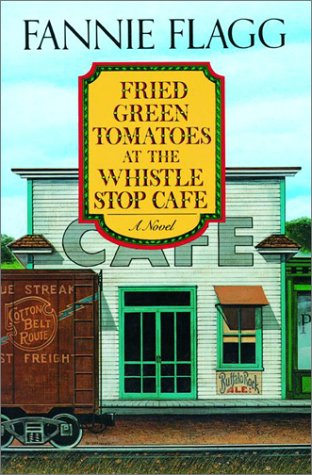
As she did in Fried Green Tomatoes (a personal favorite), she morphs back and forth between the present and the bygone era of World War II, homing in on the WASPs–women who served as pilots for the armed services, ferrying planes from one part of the country to another so that all military male pilots could do other things.

The story starts in the present with the key protagonist, Sookie, who is informed one day by mail that she is adopted. Given that she is already having a few anxiety issues, this is the last thing she needs. As women go, she feels like a failure; she is a little finch, and does not stand a chance of fulfilling the thunderous expectations of her adoptive mother, who was a Blue Jay from the get-go. When the bomb drops on Sookie, she realizes that she has been reading the wrong horoscope all this time! Her mother has made such a fuss about family bloodlines and heredity, and it turns out that her long-gone ancestors are “total strangers”! She is about ready to come unstuck.

I won’t spoil the rest of it for you. In a completely entertaining manner, Flagg drives home the inequity dealt women pilots during this time period, who received no veteran status, medical benefits, or pension for their service to the country. The 39 who died on the job had no death benefits, either. I salute Flagg (oh, sorry, bad pun!) for putting her literary muscle behind a feminist cause at a time when many sneer at feminism as a thing of the past.

One minor detail that I mention for those who are Japanese-American, Japanese, or close to someone who is: because Pearl Harbor is mentioned here, vintage (but nevertheless painful) use of the “J” slur is used here. It is contextual, and it passes by quickly, but just as many folks blanch at reading Twain’s fiction for the “n” word, so do those who are stung by the “J” word (myself among them) need to know it’s coming. It just helps to be prepared. It isn’t done in a mean-spirited way, and I am glad I read it. But sometimes it helps if you can brace yourself.

The plot is well-paced and is less complex than Fried Green Tomatoes, which hosted a variety of settings that required the reader to carefully scan the heading on the first page of a given chapter in order to be properly oriented. This is more of a quick back-and-forth. It was my fun, light reading at bed time. My only real regret is that it’s over.

Get a copy right away if you love Fannie Flagg as I do!

Life Among the Lutherans, by Garrison Keillor, Holly Harden (ed.) *****

Garrison Keillor is one of the funniest men alive. Most people who follow his work do so from his Prairie Home Companion, a show carried on NPR and at least for a time, also on the Disney cable channel in the USA.

But obviously, he writes, and he does it a lot; there is quite a bit of overlap between his radio bits and what he publishes. Usually his best work doesn’t stray too far from that track.

This little gem is a case in point. Each little chapter (3-5 pp. each generally) is almost certainly one of his monologues, and they are worth purchasing. Some of us are better at appreciating his work in print, anyway. This compact volume moves, as is typical of the writer, between gut-splittingly funny, to wry, to poignant. He is able to blend these in a bittersweet way nobody else I can think of does.

The first three selections are among the most hysterical. A convention of Lutheran ministers comes to Lake Wobegon; I won’t give you more than that, it would ruin it. I love his Norwegian bachelors, the herdsmen, and at one point, I looked at my husband, who is a Japanese citizen, and realized that in his reticence and solitude, he just could be a closet Norwegian, and maybe also a closet Lutheran. After all, as Keillor points out, a lot of Lutherans don’t really believe in a god, but it’s awkward to come out and admit it.

If you are a very serious-minded Lutheran, this book may offend you. If you are completely new to Keillor, just be aware that he isn’t truly reverent about very much.

But for his fans, and of course I am one, that’s where his genius lies.

Will Not Attend: Lively Stories of Detachment and Isolation, by Adam Resnick *****

Humor is a risky genre. A romance or historical fiction can be a little dull, wander a bit, and perhaps get away with it, but when something isn’t funny, it really just isn’t. Happily, that is not a problem for Mr. Resnick, who has been writing humor for others, including David Letterman, for a good long while, but not as much as himself. Here he is. Thanks for the free book, Blue Rider Press, but thanks even more to Adam Resnick, because there is seldom anything any of us need more than a good laugh.

Despite the title, Resnick’s dark humor does not wander so far down the path of alienation as to lead to misogyny. If you have ever desperately wanted not to attend a party, speak to a neighbor, or pretend to be in a good mood when you really aren’t, this is your book.

Favorite chapters were “An Easter Story”, “Booker’s a Nice Guy”, “Scientology Down Under”, and “The Strand Bag”. However, nothing here strikes me as filler; the quality of the writing is consistent throughout.

For every teacher’s inservice I endured in which all of us were solemnly reminded that sarcasm is never appropriate when speaking to students (yeah, right), this book serves as vindication.

In fact…at the end of the school year, it is a cherished tradition to gift one’s teacher. If you have a child or grandchild between grades kindergarten and high school graduation, you’ll need a copy of this book for the last day of school. Give the hard cover edition to show you have class, and that you respect education. If your child inscribes it, the teacher may remember him or her up the road apiece. Just a consideration.

Do it now.

A Bad Day for Sorry, by Sophie Littlefield*****

abaddayforsorryWhat? Five stars for this, a beach-read type novel? Well yes, because I think it is among the best in its genre. This darkly hilarious tale is really strong. It’s well paced and has enough quirkiness to be endearing without seeming overdone or contrived.

How many women out there have been subjected to domestic abuse? In talking with friends old and new, parents and students, colleagues and neighbors, I am amazed to see how many women go through it. It takes different forms; sometimes it is they who have been abused, and sometimes they learn, to their horror and sometimes guilt (for not having picked up on the cues), it is their children.

Domestic abuse is never funny.

The reason this story works is that it takes the inner vigilante that lurks within the hearts and minds of those who have been abused or love someone who has, and it plays out all sorts of revenge fantasies that in real life just can’t happen. This first in the series was nominated for all sorts of awards, and the competition must have been stiff or it would have won.

You can win, if dark humor appeals to you as it does to me, by getting this well-crafted spin and reading it.

Thicker Than Water, by GM Ford *****

There are a number of masters of the mystery genre that I read faithfully. There are about a dozen, if we count those no longer among us (such as Ed McBain, Donald Westlake, and Tony Hillerman) whose novels I would read simply on the basis of their authorship.

GM Ford is among my dozen. In fact, he’s toward the top of the heap. I can’t objectively say whether the latter is because he sets his mysteries here in my own stomping grounds–so that while James Lee Burke can give me a really great travelogue, when Ford hooks a left on Madison and heads to Madison Park, I am looking out the front of the car windshield with him, since we’re less than twenty minutes from my home.

But the one thing I can say with objective certainty is that he is one fine writer. He can take a premise that is as old as the hills and in the hands of a lesser writer would cause me to moan, “Oh, come ON, not THIS again!” and give it a twist to turn it into something else, so NOT really ‘this again’, and then write it with such amazing deftness, word-smithery, pacing, and wry humor that I almost can’t put it down.

But I do. I put it down at bedtime, because I’m going to read SOMETHING after I take my sleeping aid for the night, and whatever it is, I may not remember it very well. My very favorite reading material only gets read while my brain is in fully active mode. I doled this out to myself in bits and pieces, like Mary Ingalls hoarding her Christmas candy. Ohhh, don’t let it be over yet!

But I don’t delay gratification all that well, and as the weekend hazes to a close, the last page of the book terminated, and now I must wait for the one that will be out in a few months.

I had half a dozen sticky-noted quotes to toss your way, poignant moments with “the boys”, as the first-person protagonist fondly refers to his late father’s crowd, some of whom are truly as down-and-out as people can be, living beneath freeways, in doorways, and under trees in city parks. His trenchant observation that “the line between middle class and out on your ass is thinner than a piece of Denny’s bacon” is most painfully clear in pricey metropolises such as Seattle, where the annual take-home pay of a waitress or clerical worker would not even pay the rent for an studio apartment in the city, let alone allow for other costs of daily living like food, transportation, medical premiums, and clothing.

And for me, this recognition is one of the key grooves that turns my mental tumblers into place and permits me to feel empathy toward an author. It’s a hard world out there, and even in a glorious place like Seattle, poverty’s knife edge is closer to most of us than we care to even acknowledge.

Leo Waterman, our intrepid detective, has inherited enough to live off of, having come of age at a middling forty-five, but life has already taught him what down-and-out looks like. He feels the bumps on the head and the shock that strikes his skeleton when he climbs a fence and jumps to the concrete on the other side, but if there’s a good enough reason, he does it anyway. He doesn’t have a death wish, but he has the character and integrity to go out and butt heads with bad people when the city’s cops settle in more comfortably behind their desks and wait for retirement to edge ever closer. Leo’s an easy hero to bond with.

As for the rest of the little bookmarks and sticky notes I have reluctantly pulled from my still-new book’s pages…why ruin it for you? It doesn’t get much better than this. Find the quotes for yourself. You can order that book and it will be at your gates inside the week. But you can’t have my copy. It’s been claimed by another family member, even as I typed this review.

Black Cherry Blues, by James Lee Burke *****

Wow. I can give this book a short review for someone considering reading it, and I want to go more in depth, because this man has a lot going on.

So here’s the short version of this Edgar winning novel: the story line holds together w/o pause, slow spot, or error, but it’s more than that. The development of character is the most engaging of any new-to-me writer I’ve read in a very long time. I was so sick of reading novels about alcoholics, and really, really tired of the hackneyed ruse of ordinary-person-gets-involved-because-he’s-framed and ALSO of ordinary-person-gets-involved-to-save-a-loved-one. Yet Burke made both of these tired old saws brand, spanking new, breathed such amazing new urgency into character, plot, and setting that I could only drop my jaw and say, “WOW.”

I consider this a must-read. Now you can be done, unless you’ve already read it; spoilers below.
__________________________________________________________________________

When I take on a new author–and this guy had been writing for over 20 years before I found him, so I was looking at this novel not only as a new book and writer, but also as someone whose entire series I was considering reading–I need to know a little bit about his outlook on the world before I can really engage. If he spins too far to the right, with Black folks being just born to a life of crime and gay people being sick, sick sinners (for example), I just can’t go there and do that. So I reserve a little of my buy-in until I trust the writer.

You can read on many levels. If you are a pleasure reader and don’t do analysis, and if you are still with me, you can go now. I’m about to delve into issues of race as they come into play in this novel, and I will take my time. Again, there will be spoilers.

That said, I went in wary, and came out very impressed, though still a little bit puzzled. What is WITH the habitual use of the word “Negro”? It may be on the U.S. census, but I don’t know a single African-American who wants to be called by it. When six syllables are too long to sustain, simply “Black” is preferred. My basis for this belief is my many years of teaching in what was considered by some to be a “dangerous” school (oh please) and my own family members. I am pretty pale, but the miracle of blended families has brought us all together. And I looked at the word, and my back went up. WHAT? What’s that about? And because the writer drives home his message subtly and uses that weird, weird term (socially weird, anyway,) I had red flags all over his work until I was three-quarters of the way done.

He compounds the error by referring to “Texans and Negroes”, inferring that no Black person can be Texan…this is uncharacteristically clumsy, or else the guy really has a few issues that he probably doesn’t even realize he has; his writing later sympathizes with a former Panther behind bars who hears that the system works, and says, “That’s right, Motherfucker. And it work for somebody else.”

And still later, he talks about how people who complain about the cost of welfare and paying for free housing for the poorest of the poor have absolutely no idea what it costs the people who grow up in projects to live the way they must, and how very little they actually have.

So the guy is not a racist in the true sense of the word; like a lot of folks who think they have passed all the hurdles, he has one or two left, at least at this stage in his writing.

What he really wants to talk about, though, besides of course building an outstanding suspense thriller, is how the Indians have been treated. And he uses this term, but also directly refers to AIM (the American Indian Movement). This didn’t bother me right up front, the way the word “Negro” did, but I was watching to see where he took it.

Part of the story takes place in Montana. The writer is very familiar with the area; he has two homes, according to his profile, one in New Iberia, Louisiana, and one in Montana. And all through the build-up, as he decides that the death of a man who is a member of the Blackfeet tribe may be the key to his own dilemma, he inquires of various locals as to whether they knew this man, or what happened to him. And again and again, they explain to him, not about the man as an individual or whose well being causes them concern. They tell him about Indians. They tell him about the reservation.

I have sticky notes on all the pages where this occurs, but this review will be long enough without all of them, so here’s the short version: they say something that sounds token, like how sorry they feel about what was done to the Indians…and then, they feel free to say what they really think, which is that Indians drink, they fight, they blow all their money in bars, they don’t show up for work. They’re violent; alcoholic; unreliable. “They’re a deeply fucked up people.”

So, as a new reader, I am still wondering whether the author believes this is true. The way he pops that bubble is artistry, all by itself.

He does this with two people who are also Blackfeet. One is the sister of the victim, with whom he has an affair; the other is the mother of the victim.

The victim’s mother is a wizened old woman out in the dusty fields, cropping away at the dirt and weeds with her hoe, working in what is trying to be a garden. He speaks to her as if she is simple, maybe doesn’t speak very good English. It’s both an act of racism and ageism, but as the narrator, he outs himself. He realizes when she looks him straight in the eye and asks him who he is and what he is after, that he has underestimated her. Then he talks to her like someone who knows something, and she invites him in for a chat.

The victim’s sister is better still. She notes that the Blackfeet Reservation is in the lee of the mountain, and she has to tell HIM what that means (it’s the side away from the wind, on the eastern slope). The US government has its missile silos under the reservation. The government had freely admitted that if the missiles were ever used, every single person on the reservation of the Blackfeet would die. She has quite a bit to say, and none of it is stupid, violent raving or alcohol-induced stupor.

He also does not shrink from talking about the misery experienced by those who live in the kind of poverty to which reservation Indians have been consigned, or issues of addiction. He compares them to Salvadoran refugees whose village has been the site of terrible warfare. Any people who loses a war, he says, is consigned to unspeakable degradation. And he gives us details to support it.

This is all sideline stuff in terms of the story itself, but it was essential to me as a reader. I can’t bury myself in a writer’s story until I feel that his good guys and my good guys are mostly the same people. His tale is one outstanding ride, and the writer, warts and all, meets my standard of what a decent human being looks like.

The Neon Rain, by James Lee Burke *****

This book is the first in a twenty-book series. Brilliantly written, it introduces the reader to Lieutenant Dave Robicheaux, a complex, flawed, fascinating character. Other reviewers say that what is not said is as important as what is. The deft skill exemplified here is a real pleasure to witness, and I kept disturbing my husband, who reads almost exclusively nonfiction and was reading an IT printout, to tell him things I noticed. I could NOT keep it to myself, I was so impressed. (If you have seen any of my other reviews,you know that this is no small thing.)

The protagonist/narrator frustrates us again and again with his compulsions. We may even say right out loud, “NO! Don’t go into the bar!” but he trots right on in. We want to say, Go get the girlfriend and say you are sorry. But instead, he goes and does something else that will get him into trouble.

I generally have no patience at all for the suspense that is similar to the slasher movies we saw as teens, where you sat on the edge of the theatre seat and cried, “Don’t go in the old, dark house!” and the sweet little couple said, “Oh, maybe we can get out of the rain! Doesn’t look as if anyone has lived here in a long time.” And in they go.

So what makes this so good? Why do I still care about this character, after he screws things up twenty different ways? Why do I even like him?

I think I like the dignity the writer bestows upon his protagonist, and I also like the fact that he is flawed and torn, as real people are. I suspect that the writer either struggles with alcoholic urges himself, or is very, very close to someone else who does. Again, I have read so many novels in which alcoholism is a key plot point that I swore off them, quitting alcohol stories forever, but this writer makes it seem as brand new as every individual person you meet is.

We have to like this protagonist, not for what he thinks, but for what he does. He cannot afford something very important, (trying to avoid a spoiler), but ends up borrowing money from the bank to avoid having someone close to him carry his debt when they voluntarily pony up. There are NO ADVERBS in this book. None are needed. The writer lets us know how things are said and done in more skillful ways.

It is the ways that the protagonist responds to real people, and who he chooses to help, that ultimately make me really, really like him.

I will admit I also appreciate the palpable taste of the setting. I like local authors (USA, Pacific NW) for the familiarity, but I like Burke for the sense of a place I have never been, and may never go. I have always been leery of traveling in the deep south. My family is multi-racial, and even today, I am not sure I could drive comfortably through the backwaters of Louisiana and Mississippi with my African-American son, my Japanese husband, and our biracial daughter. With Burke there, I don’t really need to; I feel as if I am in the Gulf Coast part of Louisiana (and for awhile, Mississippi) as he describes them.

My first taste of this writer’s work came out of sequence, when my daughter came home with a freebie from the shelf at school, a much later book in the series. I was sufficiently impressed to put his first books on my wish list. Now that I have read this remarkable novel, my next task is to go back and get the rest of them, a little at a time.

Edgy, brutal, and painful in places; not for the faint of heart, but unmatchable in quality; a fascinating read.