A Painted House, by John Grisham*****

apaintedhouseGrisham has written a wonderfully refreshing book. He is a fine writer, and I think he dwelt a bit too long and too timidly in the familiar swimming hole of the legal thriller. This is a really strong, well-written novel, steeped in the deep South (USA) in the 1950’s. For those of us up north who heard in school that the cotton weevil ended cotton farming soon after the end of the Civil War, Grisham has news. The protagonist and narrator is a seven year old boy named Luke Chandler. He is wise beyond his years, but I bought the premise for two reasons. First, it is discreetly revealed up front that he is academically talented, and so having him able to analyze things that an average 7 year old cannot, becomes believable. Second, he has no siblings, but has been raised in an all-adult household, a big frame house (NOT painted) that somehow houses himself, his parents, and his paternal grandparents. His “buddy” is 12 years older than himself. Uncle Ricky is his father’s younger brother, and is fighting in Korea, and anxiety over his well-being filters in and out of the myriad other anxieties that went with cotton farming. Though the Great Depression officially ended with WWII, small farmers (80 acres plus “the garden”, which is vastly larger than any ordinary suburban garden) in the deep south are living decades behind those in cities. They have water from a pump out front, and an outhouse. There is electricity, convenient but expensive. There is no telephone. The latter is viewed with cheer; it gives neighbors permission to visit one another without advance notice or an appointment, and there is a tacit understanding that this will happen mostly in the off-season. Winters are for rest and hospitality; summers are for work. And they ALL work. The two men haul huge cotton bags along with the workers they’ve hired, and they bring in 100 pounds of cotton off their own backs every blessed day, rising at 4, finishing at dark. It is a grueling existence. The women, including the grandmother, spend less time in the fields due to domestic chores. (There is no washing machine). But once they have cleaned up the breakfast dishes, they too are out in the field, leaving earlier than the men to cook a hearty lunch. There is often a break afterward due to the incredible heat and humidity, but because of the ever-present fear of rain, a very real fear, given that their farm is “bottom land” fronting the river, they are out again as soon as humanly possible. The seven year old, whom modern mothers would be taking for play dates and curling up to read with, is expected to haul 50 pounds of cotton daily also. Interestingly however, despite the family’s immense debt burden, he is paid the same wage as the other workers, and may dispense with the money as he sees fit. The two most striking features of this time, place, and way of living that struck me were the stratification of classes and subclasses, and for all the hail-well-met hospitality, a deep sense of privacy, and the need to keep secrets. At first, our young protagonist is weighted with one or two sworn secrets, and they are fairly benign. Later, however, he is beset by some whoppers, ones that could cost someone a life. Beyond this point are spoilers. If you have not read the book and think you may want to, stop here. If you have read it and want to compare notes, keep going.

The social levels are deep and intrenched. The most respected are the small business owners in town, preachers, and the farmers who own land, no matter how heavily indebted they may be. Those next were families like our protagonists, renters. Again, their debt level might be heavy, their clothing worn and not abundant, but they could hold their heads high, be church deacons, and be well regarded socially. After that, there is a large drop. On a similar social par, yet treated differently to an extent, are the hill people (very rarely are they referred to as “hillbillies”) who come down to pick cotton for a summer wage. They are not respected, but they are treated with a certain level of deference, nevertheless, because if they leave, the cotton may not all get harvested, and it is essential that every possible bole be brought from the immense cotton bushes to the truck. Workers are paid according to the amount they pick in weight. They can get away with a certain amount of disrespectful talk and obnoxious behavior because it will be hard to replace them once harvest season has begun.

On a social par with hill people, but considered more of a community responsibility, are the sharecroppers. Sharecroppers are considered to be above Mexicans only. (There do not appear to be Black people, at the time referred to as ‘Negroes’, in this town or its surrounding community). One does not interact socially with them; they are wage-slaves, forced to give most of their crop to the landowner, and often suffering from malnutrition. They are described as thin and dirty. They are so demoralized that no real attempt is made to teach their children manners, and any discipline meted out is so extreme that it would earn them a trip from a social worker today (assuming someone told; it might be the local “secret”, though nothing to that effect is said; it is considered typical sharecropper behavior). It is considered “Christian duty” to feed extra vegetables from the garden to the sharecropper’s family, and the giving is done in such a way as to protect, to the extent possible, the pride of the recipients.

The local sheriff, known as Stick, has no respect from anyone. This appears to be because he DOES NOT WORK. The work ethic in this town goes wide and deep. While respectable people are in the fields breaking their backs from sun-up till sundown, the sheriff “takes naps in that patrol car” and comes around “nosing into things” when a crime has been committed. In point of fact, two murders take place more or less under his nose, and no one, not ANYONE will give him the full story. Luke is witness to both murders. They are SECRETS. Later, when he finally confides in his grandfather at a time when knowing the facts will not mean economic ruin for the family, he is told that he “did the right thing” in keeping his mouth closed. “Are you gonna tell Gran?” he asks his grandpa. “Nope.”

Mexicans, even those who have far better manners and are far more tidy when they depart the Chandler farm, who do as they are told (with one singular exception, and even he was sorely provoked) are on the bottom of the social heap, and racism is not veiled, it is right out there in the open. “The Mexicans” are provided for well, just as the hill people are. They are given lodgings in the barn, and Kathleen, Luke’s mother, has been campaigning for them to be brought in for picking season in a bus, not heaped on the back of trucks where they will become parched and sunburned. She puts out quilts and pillows in the well-swept loft, and takes them big baskets of vegetables “that they like” from her garden, and introduces these as part of the wage package, so that they will not feel they are accepting charity; her decency is above that of most white folks. But they are Mexicans, and when one of the hill people, a 17-year-old named Tally who has told Luke she’d like to go north and never pick cotton and see real snow, runs away to marry one of them, the whole Chandler family feels sorrow for the degradation to which the hill people have been submitted. The hill people’s head of household even suggests his daughter has been kidnapped, until a letter is found from his daughter, at which point the pretense implodes and the reality, that his daughter genuinely fell in love with someone with dark skin, is laid bare. The word “humiliation” is used repeatedly.

The hill people, though they work for a wage and are poorly clad, actually enjoy a higher standard of living than the farmers do. One of them, Hank, who bullies young Luke in unconscionable ways that he keeps “secret” so his father will not have to dismiss him and lose the whole family’s labor, brags endlessly about how his family has a car and a painted house. It is the disabled family member who takes pity on them, and together with funds earned by Tally, secretly begins to paint their house white.

Kathleen Chandler accompanies Gran more than usual to visit the sharecropping Latcher family with vegetables these days. They have been enlisted by the local church ladies, who want to know the Latchers’ secret. It is rumored that their fifteen year old daughter has become pregnant, and as the Latchers’ nearest neighbors, they have been deputized to learn the truth. Gossip is not viewed as unchristian, but is almost the only form of recreation available in this insular community. But the girl is kept deep inside the house, and Darla,the Latcher family’s mother, is lightning-quick at greeting them on the porch so that they can’t come inside. Ultimately, the secret is made manifest when the truth of Libby’s pregnancy is doubled with another, closer-to-home truth: Ricky, the 19-year-old who is away fighting in Korea, is the baby’s father. It is of course only Libby’s word…except for the fact that both Chandler women say that the baby boy looks just like Ricky. Again, Luke forsees humiliation and public shunning as real possibilities. NO ONE is supposed to even socialize with a sharecropping family unless they, too, are sharecroppers.

Then there is the house. It had been secretly painted in a back corner. About half the farmers had painted houses and half did not, so until now, having an unpainted house meant no embarrassment locally. Now, however, a house that is partly painted is just not acceptable. Because rain has ruined the crop and left his parents destitute, Luke gives up his dream of a Cardinals jacket to wear to school when it starts close to Christmas, and instead invests his own money in paint and brushes. Once more, Tally kicks in and buys more too, and hill people, Chandlers, and Mexicans all paint 3 sides of the family home. The Mexicans display gratitude this way because they know other farm families do not always show respect by offering bedding, clean sleeping quarters, a fan, and vegetables. They can’t pick because the crops are flooded, and while Eli Chandler, the patriarch, seeks employment for them elsewhere, they burn off the boredom by helping Luke, side by side. He begins to perceive that the Mexicans are real people.

Later, when the rains come harder, the Latchers are in danger of drowning. Eli and Luke’s father take him with them to rescue all eleven Latchers, and temporarily house them in the barn. Though Gran insists that they have enough to feed everyone in their own family and the Latchers too for the next 6 months, Luke isn’t so sure. Gran is doubling the food in her mind, but the Latchers have twice as many family members, including Ricky’s baby, who will only stop crying for the ultimate, unheard of luxury of store-bought vanilla ice cream.

Kathleen Chandler, the mama, has the final word, at least when it comes to Luke’s future. All along, she has told him he will NOT become a farmer. She has shared the home and kitchen of her in-laws with decency and grace for seven years or more; one year, Luke’s father went north to Flint, Michigan and worked in an auto plant long enough to cover all or most of the debt incurred, and then brought it home. Kathleen has gone to work on her husband. She wants to go to Michigan, for him to go to work in the plant (where his obnoxious but helpful brother has a job waiting for him), and leave the cotton fields, the dirt, and the poverty behind forever. They will have indoor plumbing, drive a car (“unheard of” in their tiny community, where everyone owns a truck for farming), and maybe even have a television set. And this is the most fascinating to me of all: ultimately, the second-most powerless person on the surface, after Luke only, is the one who determines her family’s fate. In the home of her in-laws, she has little to say and is occasionally overruled even in the discipline of her own child (though she usually prevails in that venue, as well as the vegetable garden, which will keep Gran, Grandpa and the Latcher family from starvation after they leave for Michigan). In the end, Luke states, the “final word” in what will happen to his smaller family–himself, his father, his pregnant mother (but that’s a secret)–will be up to his mother. His mother is the one who persuades his father that the time to break loose has come. They leave behind a painted house, with only a few boards at the top left undone when the paint and money ran out. His grandparents promise that when he “comes home”, those boards will be white, but Luke understands that he will never live in the painted house in the Arkansas hinterland again.

California, by Edan Lepucki *****

californiaLepucki has written a powerhouse of a novel, one that resonates with the tense times in which we live. Her premise is an imagined future USA which has gone to ruin, aside from a few small enclaves for the very wealthy, where life is lovely. Resources are scarce, and attrition has claimed most of the population. Cities have caved in, with toppled power poles and roofs stoved in…she uses the word “deflated” for homes, great figurative language. In fact, her descriptive language, both for setting and character, are so palpable that this ruin-of-the-future she has built seems quite believable.

Her main character, Frida, is not entirely lovable. Most of the time, we identify with her as we should, but many times we are her unseen sister, brother, invisible friend, wanting to yell at her to do things differently, or develop a spine, or take action, or NOT take action. She isn’t the sharpest knife in the drawer, but she is entirely credible nevertheless, or maybe even because of it.

Frida and Cal have been living in a shed in the wilderness, nearly starving, nearly freezing. They are barely scraping by, just the two of them, stumbling along in the dark, when they learn of a whole community of people not too far away. But this community doesn’t want outsiders. Will they be allowed in; chased away; killed for approaching? There are spikes surrounding the area, strongly suggesting that intruders are really not welcome. But they have to try.

The story that unfurls is fascinating. I am a six-book-at-a-time reader, but once I got halfway through this one, it took up a disproportionate amount of my reading time.

The book is also available as an audiobook. By lucky circumstance I was able to get both print and audio. The reader who performs the audio version is easy to bond with and listen to, but a third of the way in I chucked the audio version because I knew I could read it a lot faster. A great big thank you goes to Net Galley for hooking me up.

Lepucki introduces half a dozen hot-button topics. When does life begin after a woman becomes pregnant? Is it responsible to give birth when there are so few resources that others must sacrifice besides the woman and her partner? When is it acceptable to deceive others? When is it acceptable to look the other way for the purpose of self-interest when one is aware of wrong-doing, perhaps of the variety that might be unstoppable anyway? What about internet privacy, personal space, and again, the individual versus society? Is human nature invariably selfish?

At times the tone is Orwellian, but the novel never turns into a soapbox to drive a particular point home. Rather, it raises questions that may leave the reader scratching his or her head long after the story ends.

And any story that makes us think more and deeper is good for all of us…individually, and as a group.

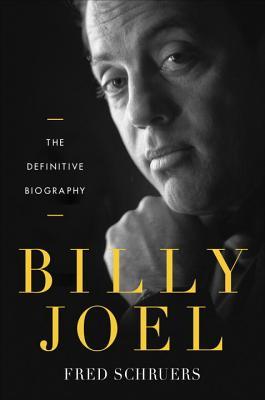
Billy Joel, by Fred Schruers *****

BbillyJoelilly Joel is a legend. He has rocked this world from Leningrad to London, from Tokyo to New Orleans. His working class roots and his family’s history as survivors of Nazi Germany have kept a boxer’s spring in his step, on stage and in the wider world. Pretension irritates him, and he can spot it a mile away. And all of these aspects of who he is, together with an innate musical sense, have created some of the best songs this world will ever see. Someday the Piano Man will leave us, but his legacy will be with us forever.

My thanks to Net Galley and Crown Publishing for the chance to read and review this one in advance. It will hit the shelves October 28, just at the time you want to crawl into a warm place with a great book.
Joel began his musical career in adolescent garage bands. They didn’t really go anywhere, but he did. He would have been content, in the beginning, to write music for others to perform, but others counseled him that the artist needs to make a demo. And whereas musical greats like Carole King, Barbara Streisand, and Garth Brooks have performed hits he has written such as New York State of Mind, Shameless, and a number of others, his most outstanding work has been that which he has performed himself.
For this reviewer, his most memorable album is Glass Houses, which came out in 1980. In the mid-80’s, I had been married for nearly a decade, and when I turned thirty, it occurred to me with a startling immediacy that I could break free if I wanted to. The sound of breaking glass followed by the authoritative, take-charge chords and Joel’s sassy, do-what-I-feel-like voice was a tonic, and I listened to it over and over and over again. I can never think of that time period without hearing “You May Be Right”. Later I would dance at a high school reunion to “It’s Still Rock and Roll to Me.” And it was, and it is.
Joel has given so much of himself in his work that it is no surprise that he has in turn stepped into untold people’s lives as he did into mine. There seems to be a running joke between Joel and those around him about the number of weddings at which his music has been performed. And while this is just one more sign that the bond between Billy Joel and his audience is rock solid, it is also a little bit worrisome.
According to Schruers, every time something monumental has occurred in Joel’s life, he has headed for the piano. It has been his therapist and his source of cartharsis, and so for decades, his personal life and his innermost feelings have been out there on display in the work he performs. He isn’t the first to feel the best understood and maybe the most alive when communicating with fans that are listening to him perform. I could reel off a string of names, but I don’t need to, because the reader has probably already thought of half a dozen such people. Joel’s marriages to Elizabeth Weber; Christie Brinkley; and Katie Lee are all out there for the world to share. We bounce joyfully to “Uptown Girl”, and when he makes a joke at a concert where a fan is proposing marriage, telling the groom to get a pre-nup, everyone who isn’t Billy laughs.
So what happens when such a man reaches his sixties and finds that he now wants a modicum of dignified privacy? Many of those he loved best in his personal life have moved on and left him behind. His fans are ready to receive more, more, more, but there is a point in life when we become a little more reticent about spilling all the beans to whoever wants to know. And here it was inevitable, this being the time it is, that I think about Robin Williams, and about Michael Jackson. They gave us everything, and look what happened. And I think those who bond with the public in such an unfettered fashion are in a way set up for that kind of ending. It scares the hell out of me. I am not the weepy type, but I am struggling a little as I write this.
Billy Joel is a legend, a working class guy from Levittown who made good through hard work and immeasurable talent. He has used remarkable restraint in dealing with those who have shown him bad faith; have cheated on him romantically and financially; and in some cases, all but robbed him blind. He has climbed back, but of course it has cost him emotionally. He would have to be stupid to remain unaffected by it, and the man is anything but stupid.
He credits as his early influences Ray Charles, John Lennon, Paul McCartney, Otis Redding, and a host of other musicians. His love of the classical causes him to reference Beethoven and Bach when he talks about music, and his album of classical piano music went straight to the top of the Billboard charts; I think I want that album. Apparently he has been called “derivative” at some time in the press, with which he initially had a similar relationship as one of my personal heroes, General Sherman. Derivative of what, and of who? He freely admits that the genre was begun by brilliant Black musicians, but does that mean nobody else can do that or go there? Of course not! And it should be noted that the press, from the New York Times to Rolling Stone to Billboard, lauded him unconditionally in more recent coverage.
The man has more than paid his dues. He has been around the block a time or two, and he knows more about the business and about life than when he was brand new to the world of professional music.
I recently wrote a review for Mark Kincaid’s bio of comedy king Bill Cosby. When Cosby’s manager was dishonest, Cosby solved the problem by handing the business end of his work to his wife, Camille, and it was a strong move. But Billy did the same thing, and it took the warnings of several trusted friends and associates to help him understand that his faith in his wife was misplaced; she too was robbing him blind, and putting plenty of resources into her own name in anticipation of the inevitable split.
What’s a guy gonna do?
After their separation, estranged wife Christie Brinkley and beloved daughter Alexa are injured in a helicopter crash in which Christie’s boyfriend died. Joel had them taken to his home, arranged for medical care and paid for everything, and came home one day to an empty house. Was there even a note? We don’t know.
There are two sides to every story, and I am sure the women who have loved him and left him have theirs. This writer grew up with two parents with serious alcohol problems, and so I know it isn’t easy. Brinkley’s heartfelt plea that he deal with it—though I question the public nature of the plea—hit a resonant chord for me.
At the same time, I want to cheer when Joel says flatly that he is an atheist, and there is no Higher Power to whom he wants to give his worries. He doesn’t want to let go and let god. WHO? Oh, hell no. And again, this reviewer remains close to two (other) family members who cast off the demon alcohol without any kind of religious juju, and without standing up in front of strangers to testify. It can be done, and if Joel hasn’t, I too hope he will.
But there we are again, in the middle of his private business. See what I mean?
In his path to glory, this iconic musician has been inducted into the Rock and Roll Hall of Fame, honored at the Kennedy Center, has played with Paul McCartney, Bruce Springsteen, Elton John, and a host of others. He has collected Grammys like some folks collect baseball cards; in 1989 he was honored with the Living Legend Award. And since the baseball simile has arisen, let’s note that he was also there to close Yankee Stadium, and then help McCartney reopen it under its new carnation. Leonard Bernstein asked him to write musical scores. Joel not only has a record for the number of appearances in Madison Square Garden, he had, at the time the biography was written, a standing engagement there, for as long as his new, bionic hips and aging spinal column can hold on.
What then? Joel has developed side interests. He has customized motorcycles and also has a boat business. His financial empire has recovered many times over despite the double dealings he was dealt when he was younger and more trusting. And he has a bond with daughter Alexa that nothing can take from him.
And so, when it’s time to go home, when the last curtain comes down and Joel has had enough of life on the glittering stage, I hope that the satisfaction of a career well managed; a high road held both in terms of how he has dealt with the ticket-buying public, his former loves, and his former associates; his new, more physically manageable interests; and the love of his daughter and other family members, will suffice.
As for our scribe, Fred Schruers, I was initially taken aback by the lack of documentation and footnotes, but after reading the postscript, I came away reasonably satisfied that he had covered his bases. He sure knows how to tell a story.
And what a story it is!

And There Was Light: Autobiography of Jacques Lusseyran, Blind Hero of the French Resistance, by Jacques Lusseyran *****

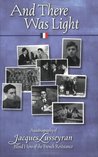
  and there was light Lusseyran was sighted at birth, but a childhood accident caused him to lose his vision. Neither Lusseyran nor his parents–comfortable members of the petit bourgeoisie–let his blindness define him in the way that most people living in the more developed nations of the early 20th century would have done. Instead, they promoted his mental and physical development and sacrificed some of their own comfort to be sure their son continued to receive an education, although the law didn’t guarantee him one. In return, he gave not only his parents but the world a hero, one who became a leader of the French Resistance.

I have heard it suggested that those who lose one sense make up for it with the others, and so those whose eyes no longer see, or see nothing except shadow and light, hear, smell, touch and taste more acutely. Lusseyran claims that even as a child, he navigated his home town largely by smell; the baker was this way, and the creamery that way. And so the foundation was laid.

Though his education was challenged by instructors who were reluctant to have a blind student present, and who sometimes threw up nearly impossible requirements, such as reluctance to permit him the use of the braille typewriter his parents bought for him, yet others inspired him and moved him forward. Teachers, many of us at least, aspire to be someone like Jacques’s history teacher. He describes this man’s fire, and the bond that his passion for his subject and his vocation created:

“He wanted us to be exactly as we really were, funny if we couldn’t help it, furious if we were angry…his learning made us gasp. He made numbers and facts pour down on us like hail…the syllabus for history stopped at 1918…but for him this was no obstacle, for he would go ahead without any syllabus. He went past all the barriers…”

The teacher would continue to teach at the end of the school day, excusing anyone who wanted to leave (and here I think of the yellow school buses that constrict the schedules of US public school students so often now). He says that everyone stayed. “Naturally.”

The dynamic time in which he lived no doubt was responsible for much of their enthusiasm; history was clearly being created with each breath they took. Their history teacher told them–relying upon texts he had read in the original Russian–of the Bolshevik Revolution and of the Stalinism that had taken hold thereafter, of the purges. He spoke of the United States, Roosevelt, of initiative and imagination triumphant.

And so Lusseyran was not yet past adolescence when he felt he had a duty to change the world, to participate in driving out the Nazi occupiers. He tells us that it was understood for some time among himself and the friends he trusted to keep their dangerous knowledge confidential, that he would be the leader of their youth Resistance movement. Others would listen and observe to see what other individuals might join them, but of course, there were spies and each person they trusted could instead lead them to their own deaths. It was very dangerous.

And in such a circumstance, blindness became an unusual asset. New potential recruits would be led to their interview, but instead of an office or home, they were led through a labyrinth of boxes and crates in a completely unlit warehouse. Their interviewer waited at the end of this maze, and he interviewed them in the dark. He could detect falseness of character or fear of exposure from those who would betray the Resistance by listening to the nuances of their voices, and those individuals who weren’t deemed worthy were left to find their own way back out. Of course, the location sometimes had to change, but the setup was the same.

Lusseyran’s heroism is a testament to initiative and idealism. The reader will have to learn the rest of his story the way I did; the narrative is as skilled and engaging as the political work that preceded it. It is one of the most unusual and inspirational autobiographies I have encountered.

Highly recommended.

Blacker Than a Thousand Midnights, by Susan Straight *****

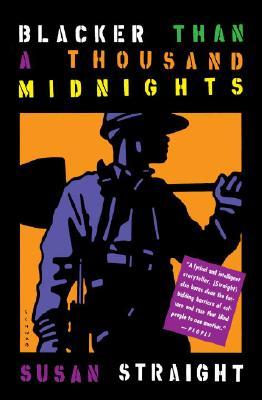
blacker than a thousand

Susan Straight is one of my favorite authors. I wish she had written more, but I suppose if you want quality, sometimes you have to sacrifice quantity.

As the parent of a young Black man, I recognize the fictional character Darnell’s dilemma: how do you play it straight while keeping it real (in other words, without playing the White man’s game to where you find yourself betraying some of your family and old loyalties)? How do you keep your friends from the neighborhood where you grew up and went to school, without landing your butt in jail right along with them? Remember that the US “justice” system is far from colorblind.

Darnell is tangible and believable. I came away feeling as if I knew him.

This is made all the more brilliant by the fact that Straight is a Caucasian woman. How dare she write in the first person as a Black man? Yet she carries it off, in my opinion, with grace and dignity. Her bio says that she grew up in an area in Riverside, California that was almost exclusively Black, so it may be that she considers herself culturally Black as well. That would explain a great deal.

Regardless of your political views, though, on race and everything else, this is strong writing, a character portrayed with immediacy and dignity. I like the way this woman writes, every single time.

Lincoln and the Power of the Press: the War for Public Opinion, by Harold Holzer ****

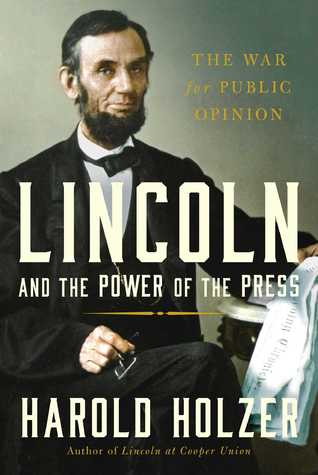
lincoln and the pressThis book is for the serious reader. Well researched and creatively conceived, it traces the influence of the newspaper on young Lincoln, and then follows its role in his emergence as a politician, as a contender for the presidency, and later the complicated relationship between Lincoln and the press during the American Civil War. It raises thorny, thoughtful issues regarding censorship; when do we hold the First Amendment dearest above all, and when may its authority be abrogated for the security and integrity of the Union?

It starts a bit slow, and I began wondering whether this would be one of those rare books that I skim and then review, as opposed to reading every word. Still…LINCOLN. I stayed the course and was rewarded. Just be aware that the narrative doesn’t really wake up until about the 30 percent mark.

Lincoln had amazingly little formal schooling. Though this was common among pioneer families at the time, with settlements sparse and young males needed to help with a tremendous amount of hard physical labor, but knowing not only that he became US president, but that he was an attorney before that, I was surprised to learn that most of his reading skills were obtained by reading every single newspaper he could get his hands on, no matter how old it was by the time it made its way to Illinois, which was then considered the northwestern USA. A sister later recounted seeing him turn a chair over and lean against it while he sat on the floor and used the firelight to read by. How many people are sufficiently motivated today to teach themselves reading skills through this sort of very difficult total immersion?

He later fed his newspaper habit by becoming postmaster, and he used this office to read the newspapers being sent by mail before they were delivered to their intended recipients. (He would later use the franking privilege bestowed upon postmasters to send out his own campaign materials free of charge.)

Newspapers were tremendously influential, approaching the zenith of their importance during this time. There was no radio or any other media to spread the news of the nation besides word of mouth. Litigation for libel or slander had not yet blossomed, and so newspapers were often very loose with the facts, and this made it all the more important to read as many of them as possible in order to tease apart truth and rumor.

Young Lincoln left home hoping to become a journalist himself. He was well known as a gregarious fellow who always had a great story ready for whoever wanted to listen. I envision his parents throwing their arms up in the air: all that work to be done at home and where is their son? Off somewhere talking, talking, talking. I also found this tidbit interesting because it contrasts sharply with the haunted and often depressed man he would later become when authority and personal tragedy marked him.

As a congressman and also as a frequent writer of freelance articles and letters to editors, Lincoln marked out his position against the extension of slavery early and with great passion. He called the war with Mexico for what it was: a land grab that would primarily benefit the feudal rulers of the south. At one point he even suggested that the attack against US citizens by Mexican soldiers was a hoax, demanding to know exactly where on the map this had occurred. Folks in Washington DC, Illinois, and even New York sat up and took notice.

Holzer also traces the beginnings of the most notable newspaper publishers of the time. The unfortunate Elijah Lovejoy is dispatched with haste, just as he was in life. Greeley, the bootstrap newsman and fervent abolitionist, at least most of the time, at first spurned Lincoln. For most of both of their careers, they had a strong working relationship, but Greeley was both quixotic and a bit unstable, and he turned on Lincoln at some pivotal times, most noteworthy when the latter was running for re-election. Bennett, founder of the Herald and innovator of a number of the institutional practices that are still in place today, was conservative politically and represented Manhattan’s pro-secessionist, pro-slavery majority. Raymond was Lincoln’s most steadfast supporter and campaign manager the second time around, though he wavered for a brief but terrible time when the tide seemed to turn in favor of the Copperhead Democrats, who wanted to give the secessionist states independence in order to end the war.

In the land of Dixie, there was no debate about Constitutional rights to freedom of speech and the press; newspapers who even hinted at Union sentiments were quickly suppressed without qualm. Despite Lincoln’s suspension of Habeas Corpus and at times the suppression and/or closure of newspapers that either leant aid to the enemy by publishing battle plans before the fights had taken place, or by less overt and therefore more controversial antiwar editorials, he won his office in a fair fight, not attempting to tamper with the electoral process or outlaw the printed word that ran in favor of McClellan, a former general whom this reviewer regards as a treasonous scoundrel.

I confess it gave me a good deal of food for thought. I was a child during the 1960’s and a teen during the 1970’s, but I recall well the controversy regarding free speech, the Vietnam War, and Nixon’s enemies list. If I am in favor of free speech and press during contemporary times, why should it have been different during the Civil War? But I eventually concluded that it was indeed different, and the exasperation of General Sherman toward the press that gave away critical secrets all in the interest of a scoop and the bottom line was entirely correct.

But that’s just one reviewer’s opinion; thanks to Net Galley for the ARC. If you are willing to devote the time and attention this tome demands, you are sure to come away with a viewpoint of your own.

To those interested in the American Civil War, President Abraham Lincoln, or the history of the American newspaper, highly recommended.

Confederate Bushwhacker: Mark Twain in the Shadow of the Civil War, by Jerome Loving *****

confederate bushwhacker Good things come to those who wait. Jerome Loving established his credentials as an academic and historian a long time ago. I haven’t read the other biographies he has written, but they’re going on my list now.

Here’s what you have to know going into it: if you are looking for the sound bite, the cut-to-the-chase, you can’t have that wish. Loving uses induction rather than deduction, and brick by brick he builds toward his conclusion, taking the time to set context in a way that only a specialized biography such as this one, which focuses on the single year 1885, can do. And since I received this gorgeous little hardcover book as a Goodreads.com First Reads giveaway, I was impatient at first. “What the heck. Where’s the bushwhacking? Where’s Grant?”

Uh uh uh. No. Go back, reread. Everything that is in this book is there for a reason. If you hustle through the first part to get to the second, you may leave too many holes in the foundation. Do you want the wall to fall down? Of course not.

What I noticed, as I marched through with my sticky notes, is that the clusters were initially sparse, as the stage was set, and then suddenly ramped up around page 100, and by the end of the biography I was putting a sticky on every page and sometimes on facing pages.

I could tell you what he has to say; I went back and looked at all of those notes, but then, why would I wreck it for you? An author who builds up to the last page does not need a reviewer to hand over his punch line for him.

Instead, I can tell you that this is a careful, painstaking, well-documented analysis of a complex character. Twain’s ideas evolved between his 20’s and the end of his life, and of course, for most of us they do, but perhaps because his mind was open and searching, or perhaps because of his great fondness for “Sam” Grant, he watched what took place–including the Haymarket martyrdom, which I never knew had been an interest of his–and revised his ideas accordingly. Smart people can do that.

Perhaps the greatest measure of the success of this work is that it not only makes me want to see what else Loving has written, it also makes me want to revisit Twain. I had avoided much of Twain’s philosophical writing because of his anger toward the “damn human race”, to which I am much attached, thanks. But I want to see more about the connection between the events that played out during this time period and his changing perspectives.

One small correction is in order to Loving’s work, though I know this is a tiny, picky detail: Loving states that a huge redwood tree had been named for Grant. Ahem. It is a Sequoia tree. It is immense, but it is General Sherman’s that is the largest in the entire world. Sequoias belong to the same family as redwoods, but they are different. Having driven several days from Seattle to Southern California to see the tree; survived a four-car pile-up, rescued my luggage, bandaged and iced myself and my children, hired a rental car and driven onward to fulfill my mission, I can’t let it go by without mentioning it. Two great huge trees in honor of my two favorite American generals of all time. Sequoias. A hint is that they are located in Sequoia National Park. Makes sense, no?The biggest tree in the world!  50%

If you are reading this exclusively for the Civil War aspect, I will tell you that most of the book is not devoted to that time period; it says it is about 1885, not 1865, and when examining the book’s jacket, a knee-jerk reaction will leave you dangling. There is a small but meaty portion in which Twain discusses his part in the American Civil War, but this is not a Civil War history.

For those who read memoirs and biographies as rapaciously as I do, this is a must-read. For those who enjoy American history and literature, and most of all Twain, it is highly recommended. If you like Grant and maybe have even plowed through his remarkably readable autobiography, even better! But you can easily understand this book without it.

Many of my Goodreads.com First Reads will eventually be given away to my daughter’s school or some other good cause. Not this one; it will retain a place of pride in our home library. Thank you for writing it, Mr. Loving, and thanks to the University Press of New England for the free copy.

Shannon, by Frank Delaney *****

 shannon

Frank Delaney has done it again.

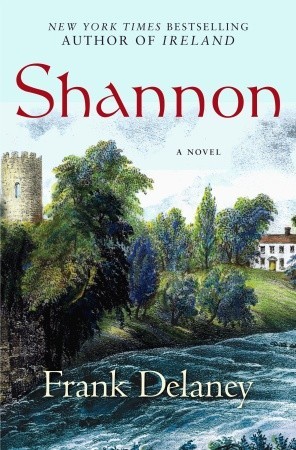
There are some writers that have such a gift for spinning a compelling tale while seamlessly weaving in subplots that the rest of us can but applaud. He’s clearly one of them. I was spellbound by his Ireland, but there are a lot of people with one remarkable book in them. I was surprised again, then, at how good Tipperary was. Now this.

Everything I’ve read by Delaney thus far (including Shannon) is set in some part of Ireland for most of the novel. He favors the period when the whole world is changing–World War I is either imminent, taking place, or we’re in the aftermath; Ireland struggles for her own freedom, and he doesn’t gloss over the errors and tragedies that go with this struggle–and I mentally note that it’s also the period of the Russian Revolution. He’s done a whole lot of research so that he can provide his novels with a rich, accurate background. His target audience is one with an interest in Irish history, but he is never dry, never lapses into the lecture-like style that I’ve seen in some writers who are specialists in a given academic area use when the narrative aims at their area of expertise. It’s riveting clean through. The people, whatever their station in life (we have several members of the Catholic clergy and a nurse foremost) are individuals first.

If you have a strong anti-Catholic bias, you may not like this story. There are some Catholic bad guys, for sure, though they aren’t two-dimensional ones, but you won’t see the pedophiles that have been the sole focus of the mainstream US press where Catholics are concerned. Rather, there are those who are corrupt ladder-climbers; there’s (oh my god) an assassin; and the protagonist, Robert Shannon, who is recovering from PTSD, then known as “shell shock”.

Altogether, I found it nearly magical. I will read anything that Delaney writes at this point; he’s that good!

War On the Waters: The Union and Confederate Navies, 1861-1865 by James McPherson *****

This was my Mother’s Day gift from waronthewatersmy spouse last May, and boats are HIS thing. I thought, Psssh. RIGHT. But since I strive to be a scholar of the American Civil War and the navy is about the only stone (as opposed to gravel, metaphorically) that I’ve left unturned, I started in. No, I FELL in.

First of all, it has to be recognized that McPherson is undeniably the USA’s #1 living Civil War scholar. His status as professor emeritus at Princeton has been well earned. When he decides to delve into some aspect of Civil War history, he finds his primary sources wherever he has to go. So, though he is an old man, he went on those waters. He walked where soldiers trod in order to get to the forts he, too, visited. He believes that in order to understand how any battle unfolded, on land or sea, you’d better get a sense of the geography. This is what a serious scholar looks like.

Then he tracked down the letters and journals of the key players. Once his tools were out and he was ready to go, he stated his bold thesis and then methodically proved it. And it is something of a startling thesis to me. He says that without the navy’s contributions, the war could not have been won.

When Grant says it, one wonders if it was a diplomatic gesture toward the seamen who so tenaciously pounded away during the siege of Vicksburg. How many times have you heard someone who is receiving an award say, “I would not be here tonight if it were not for the support of…” (whoever)?

When McPherson says it, I sit back and say, “Whoa.”

He takes his case and spins it into an enjoyable narrative, for those interested in the American Civil War. There are maps with just exactly the right amount of detail to prove the point. Photographs are clear as a bell (remember that this is the first U.S. war in which photography was available, though not so much for action shots…but for a naval battle? Certainly!).

So although my husband never reads anything on this site, Honey? Sorry to have misjudged you. And I forgive you for stealing it back to read when I was thirty pages from the end. Do you forgive me for stealing it back? You can finish it now if you like!

And to other readers who are Civil War buffs: why are you still on this page? You should be on another screen, ordering the book!

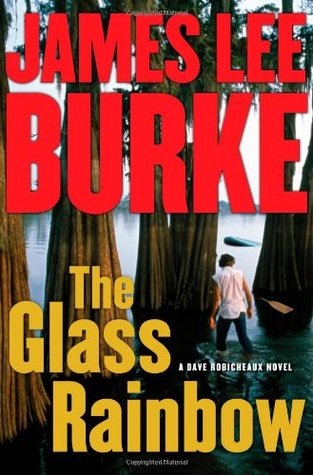
The Glass Rainbow, by James Lee Burke *****

theglassrainbowIf you are new to the series, do yourself a favor and go all the way back. This book is #18 of 20. Start with The Neon Rain and work your way forward. You won’t be one bit sorry.

For those who wonder whether this remarkable author whose work began in the 1960’s still has the stuff it takes to write Edgar and Pulitzer-nominee worthy material, the fact is that if anything, he’s even better. He is one of a very small number of mystery and crime thriller authors that can juggle the bad guys and storyline that is related to the crime under investigation and weave them inextricably and seamlessly with the continuing story of friendship, of familial devotion, and of personal ethics. Besides Sue Grafton, I have never seen a mystery writer develop character more fully or completely without missing a beat, and do it in an ongoing manner over decades without any consistency popping up to remind us that time has passed and the author’s memory is imperfect. Either Burke has an amazing memory or an amazing editor; one way or the other, he is an unmatchable writer.

The Glass Rainbow finds Dave still living in his home in New Iberia with Molly, Snuggs, and that almost supernaturally long-lived raccoon, Tripod. Alafair is home from Reed College, and she is dating a very bad man. Kermit Abelard, the man Alafair has fallen for, has contacts in the literary world that Alafair has been told will help launch her career; but people like Robert Weingart and Layton Blanchet are not in the world to be guardian angels to the young, the naïve, or the vulnerable. In fact, the opposite is true:

“ Sex was not a primary issue in their lives. Money was. When it comes to money, power and sex are secondary issues. Money buys both of them, always.”

This gibes with what I also believe is true of the vast majority of very wealthy people, and that is one of the reasons Burke’s work resounds in such a personally satisfying way for me. But it’s really more than a philosophical affinity; it is also unmistakably about character development.

In many novels, whether they are mystery, historical fiction, or general literature, there are plot devices that pop up over and over and over again. A threat against the protagonist’s family member is as old as the mountains, and as tired as a traveling salesman who’s been on his feet for three weeks straight. In other words, I see it coming and I groan. Once in awhile, if the novel was already not going well, I abandon the book then and there.

Another is alcoholism. A lot of writers know that there are a tremendous number of recovering alcoholics, not to mention people who love them, among their readership. I can relate to it. There are so many drunks and former drunks in my family that I won’t even have hooch in my house. I am a single-household Carrie Nation. Get it out of here! But hell if I want to read about it. I am already sick of alcoholism, and I do not need it in my fiction. Do. Not.

Cancer is another one. I won’t rant. You get the idea.

But because Burke’s writing is so deeply personal, he can (and does) use all of those above devices at one point or another and sometimes I don’t even notice that I am accepting his premise until halfway into the book. During the first three books of his series, which he has said in interviews were a trilogy in which Robicheaux sorts out his alcoholism before he is good for much else, I got tired of it but I kept on turning the pages.
The magic that makes his writing so exceptional is that he draws the reader in deeply enough to persuade us, at least for portions of the time that we are reading his novel, that we are part of his family. Alafair is not just his daughter. She is part of our family. We have to watch out for her. The boomer generation reads this stuff, and a lot of us have raised teens and young adults who have made some mis-steps that either were dangerous or appeared to be, and we spent our fair share of sleepless nights, so when Dave rolls out of bed after failing to sleep and goes to sit in the kitchen until his newly-adult daughter shows up to home, we put on our bathrobes and trudge into the kitchen with him. We blink drowsily and pull up a chair. Or we follow him on out to the porch.

And we don’t like these people Alafair is hanging out with. When we get older, we become adept, often through cruel experience, at spotting the phony altruism that these people slide over their personas like cheap sparkling hubcaps with metallic spinners on an old jalopy. When Layton dies, Burke reflects to Clete:

“I think Layton was too greedy to kill himself. He was the kind of guy who clings to the silverware when the mortician drags him out of his home.”

Later, when trying to get a handle on Abelard and his involvement in a case to which Robicheaux has been assigned, he and Clete attend a charity gala:

“ The guests at the banquet and fundraiser were an extraordinary group. Batistianos from Miami were there, as well as friends of Anastasio Somoza. The locals, if they could be called that, were a breed unto themselves. They were porcine and sleek and combed and brushed, and they jingled when they walked.”

Later in the story one of them speaks down to Robicheaux, telling him that his working class roots are repugnant:

“You may have gone to college, Mr. Robicheaux, but you wear your lack of breeding like a rented suit.”

Hey. That’s not a rented suit. It’s his own damn suit, and he should wear it proudly.

And thus I find myself defending him as I might a brother, a cousin, an uncle. He’s not just one of the good guys; he’s one of my good guys.

Some reviewers say that Burke has a particular kind of book he writes that becomes redundant over time. I disagree. His Robicheaux series no more becomes redundant than a human life does. Is my sister’s personality, my cousin’s, my son’s and my daughter’s, consistent over time for the most part, though of course we all grow and evolve in certain ways? Oh yes yes yes. And am I tired of them? Do I feel as if I would prefer to move on to others who may be more full of surprises? Not in the least.

Just as we make new friends, I love reading new novelists, whether they are merely new to me, or just breaking into the field.

But there is nothing quite like an old friend or a beloved aunt; nobody and nothing can replace these.

And thus it is with the novels written by James Lee Burke.