
“’You can only see fifty-nine percent of the moon from the earth’s surface. No matter where you go, in the entire world, you’ll only see the same face. That fifty-nine percent.’
“‘Why are you telling me this?’
“’I’m just saying. We know this fact, but it doesn’t stop us from staring.’”
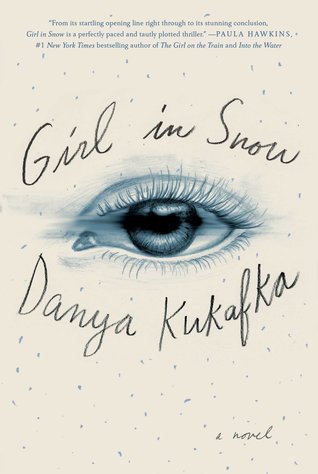
Half a century ago, a young writer named Harper Lee took the literary world by storm with To Kill a Mockingbird, a story that centered itself on justice, on a child trying to do the right thing, and on a strange, misunderstood fellow named Boo Radley.
Today the literary world meets wunderkind Danya Kukafka. Get used to the name, because I suspect you’ll be seeing a lot of it. Her story also revolves around misunderstood characters with dark pasts, and a small town’s often misdirected quest to see justice done and safety restored.
Thank you Simon and Schuster and also Net Galley for inviting me to read and review in exchange for this honest review. I’ve read and reviewed a lot of galleys this summer, but right now this is the only one I want to talk about.
So back to our story. We have three narratives, all from unhappy characters, all of them watching, watching, watching. Our protagonist is Cameron Whitley, a troubled, “Tangled” adolescent that has spent his evenings secretly following a popular, attractive classmate named Lucinda. He watches her through the windows of her house. He stares at her in her bedroom, and he does other things, too. Cameron has a troubled past, his father gone now after a storm of controversy destroyed his reputation and left his family hanging in tatters. And now that Lucinda is dead, the investigators have to look hard at Cameron. We do, too. We can see that Cameron is grieving, but of course, people often grieve the people they have killed. Grief doesn’t always denote innocence.
“Cameron stood outside Maplewood Memorial and wondered how many bodies it held that did not belong to Lucinda. How many blue, unbending thumbs. How many jellied hearts.”
As the story proceeds, we hear a third person omniscient narrative of Cameron, though it doesn’t choose to tell us everything. Not yet. We also hear two alternate narratives, those of Jade, Cameron’s classmate, and of Russ, the cop that was Cameron’s father’s partner before things unraveled.
Jade is friendless and frustrated, an overweight teen with iffy social skills, unhappy in love. Her home life is disastrous, her alcoholic mother monstrously abusive. Jade could be out of that house in a New York minute if she’d out her mother, but instead she turns her anger toward herself. After all, she provokes her mother. The bruises, the cuts, the blackened eye all signs that she has pushed her mom too far.
And so, bereft of healthier peer relationships, Jade watches Cameron watch Lucinda. She doesn’t have to leave home to do it; she has a box seat, so to speak, at her bedroom window. Standing there and looking down on a good clear night, she can see Cameron sequestered behind the bushes or trees, and she can see Lucinda, who doesn’t seem to know what curtains and window blinds are for. Ultimately Jade befriends Cameron, who is frankly afraid to trust her. And he may be right.
Russ is the third main character whose narrative we follow. As a child, he always thought it would be awesome to carry a gun and put handcuffs on bad guys:
“He memorized the Mirandas…playing with a toy cop car on the back porch…Russ had a lisp as a kid. You have the wight to wemain siwent.”
So his dream has come true; why isn’t he a happier man? Again and again we see the ugly things Russ does and the ugly reasons he does them, but just as it appears he’s going to become a stereotypic character, Kukafka adds nuance and ambiguity, and we see that underneath that swinish exterior is the heart of…no, not a lion. He’s really not that great a guy. But we see his confusion, his dilemmas, the aspects of his “bruised yellow past” that motivate him. He isn’t a hero, but he is capable of loving, and of doing good. And he doesn’t want to frame a kid for Lucinda’s murder, especially not his partner’s kid. He wants to know the truth.
Interesting side characters are Russ’s wife, Ines, and Ines’s brother Ivan, the school custodian that is caught in the crosshairs of the investigation.
Ultimately, though, the story is about Cameron, and Kukafka’s electrifying prose makes my thoughts roll back and forth like a couple dozen tennis balls left on deck when the ship hits choppy seas. Poor Cameron! He didn’t do this…and then, whoa, Cameron is seriously creepy here. Maybe he actually did it. I spend much of my time trying to decipher how deeply troubled this lad is—those of us in education and other fields that work with teenagers would undoubtedly deem him an ‘at-risk’ child—and how far he has gone.
Is Cameron the Boo Radley of 2017, misunderstood and falsely vilified; or is he a Gary Gilmore, a John Wayne Gacy?
Clearly, I’m not going to tell you. That would ruin it for you. The one thing I will say is that the ending is not left ambiguous. This isn’t the sort of book you throw across the room when you’ve read the last page.
In addition, know that there is plenty of edgy material here. Those considering offering this book to a teen as summer reading may wish to read it themselves before passing it on. I would cheerfully have handed it to my own teens, but your standards and mine may differ.
If you can read this book free or at a reduced price, lucky you. If you have to pay full freight: do it. Do it. Do it. It’s for sale today.
 “It doesn’t do any good to just run away from something, you’ve got to be running to something.”
 Amish Guys Don’t Call is funny, absorbing, and ultimately lifting. Dodds has a great heart for teenagers, and this title is one that should grace every high school and middle school library, and will also attract parents and teachers of adolescents. I read it free and early thanks to Net Galley and Blue Moon Publishers. This book will be available to everyone June 13, 2017.
 Amy Engel makes her debut as a writer of adult fiction with this title, having begun her career writing fiction for young adults. The Roanoke Girls is smoking hot, a barn burner of a book, diving into some of society’s deepest taboos and yanking them from the shadows into the bright rays of Kansas sunshine, where the story is set, for us to have a look at them. It’s not available to the public until March 7, 2017, and frankly I don’t know how you are going to wait that long. I received a DRC for this title from Net Galley and Crown Publishing for the purpose of a review.
 “Hope is a curious thing. It emerges in the most unexpected places.”
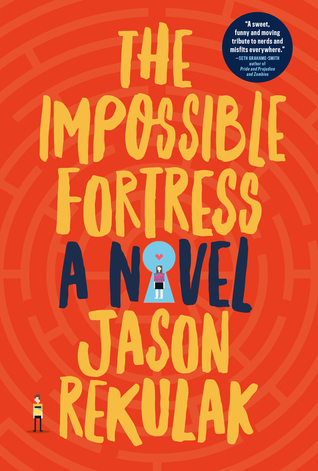 The Impossible Fortress has been generating a lot of buzz since last summer when the review copies came out, and rightfully so. It’s hard to believe this is a debut novel, because it’s smoothly designed and hugely original. It’s written with a deftly woven plot that never misses a step; engaging characters that are nearly corporeal, they are so well sculpted; and an utterly captivating voice that unspools the narrative. Best of all, it’s hilarious! I thank Net Galley and Simon and Schuster for my DRC, which I received in exchange for an honest review. This title comes out February 7, 2017.
 The Impossible Fortress has been generating a lot of buzz since last summer when the review copies came out, and rightfully so. It’s hard to believe this is a debut novel, because it’s smoothly designed and hugely original. It’s written with a deftly woven plot that never misses a step; engaging characters that are nearly corporeal, they are so well sculpted; and an utterly captivating voice that unspools the narrative. Best of all, it’s hilarious! I thank Net Galley and Simon and Schuster for my DRC, which I received in exchange for an honest review. This title comes out February 7, 2017.
 The place is Mill Valley, California, the most affluent community in the USA, and yet there’s serious trouble in paradise. Although this title is being marketed as a novel for young adult readers, a lot of adults will want to read it. It’s thought provoking and a real page-turner. Thank you to Net Galley and Random House for the DRC, which I read free in exchange for this honest review. I actually finished this book some time ago, but often I find that the most interesting, complex books are ones I will want to give considerable thought to before I review them; everything I have read and thought has to gel. So I apologize to the publishers for my tardiness, but it’s not a matter of not caring; maybe it’s a matter of caring too much.
 I rate this 4.5 stars and round it upward. Thanks go to Kensington Publishing and Net Galley for the DRC, which I received in exchange for this honest review. This courageous novel, one that takes place in the past but couldn’t be more timely, is going to create a lot of buzz. Get your marshmallows ready, because I think I smell hot tar and burning wood…or is it paper?
 Seattle Book Mama