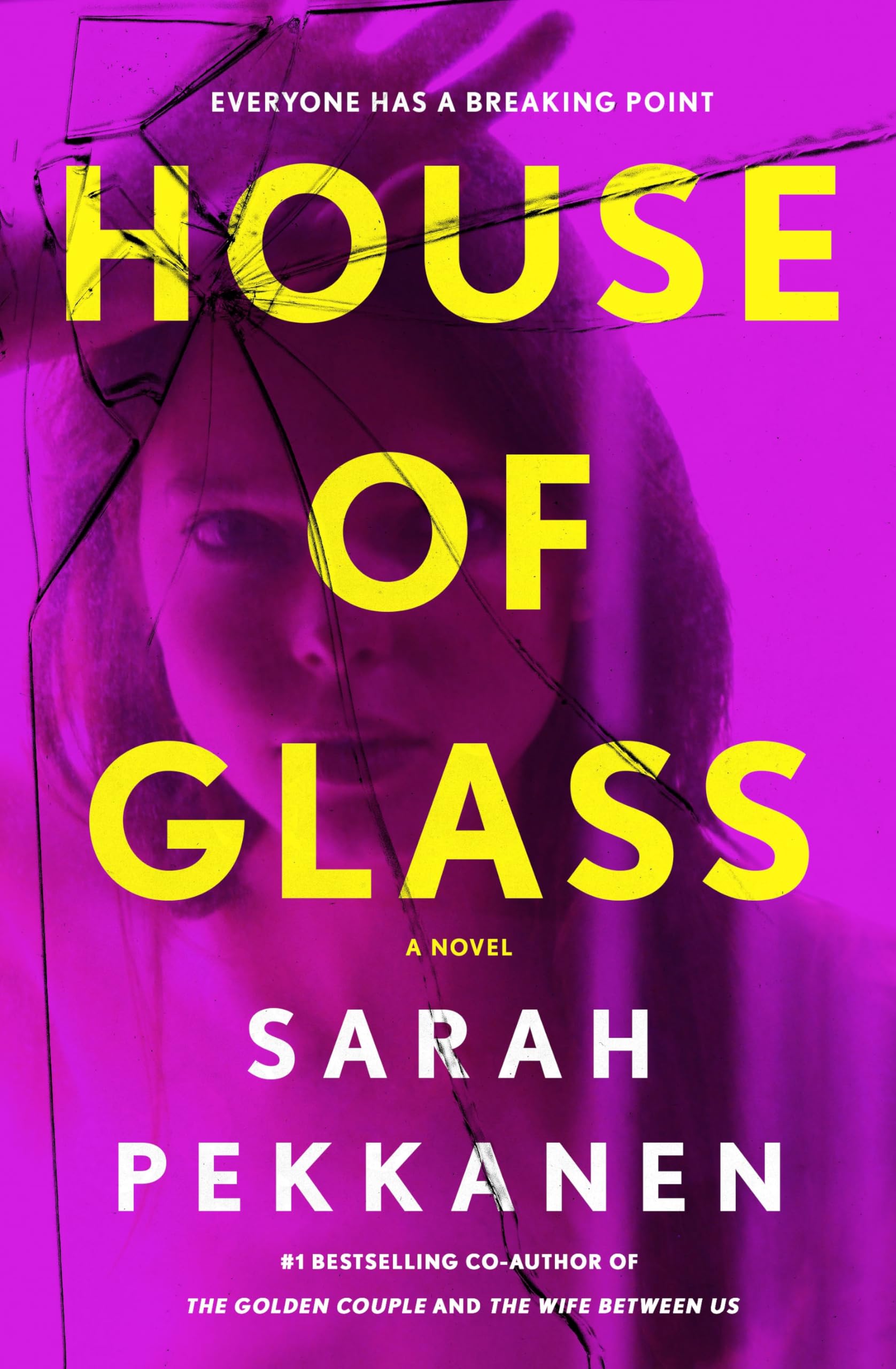
House of Glass, by Sarah Pekkanen***-****

3.5 stars, rounded upwards.

Author Sarah Pekkanen is known for writing psychological thrillers, and her newest novel, House of Glass, is a real page turner. My thanks go to NetGalley and St. Martin’s Press for the invitation to read and review. This book will be available to the public August 6, 2024.

Our protagonist is Stella Hudson, and she works as guardian ad litem, which is a professional whose job it is to represent the best interests of a child when he or she is the subject, or an important participant in, a court case. Stella’s father figure and mentor is a judge, and a case has come up that he feels Stella is uniquely qualified for. It’s a divorce case, two wealthy individuals squabbling over a child. The child, Rose Barclay, has experienced a great trauma that has left her mute. She saw her nanny fall (be pushed?) out of the attic window and die, and she hasn’t spoken since. By convenient coincidence, Stella also experienced the same condition after a childhood trauma of her own; this is why Charles, her mentor, has asked her to serve.

I’ll tell you right now, I am not terribly impressed with this book. A protagonist who’s been traumatized in ways related to her task at hand is fast becoming a trope, and I’m ready to be done with it. Rose is a prodigy, brilliant in every way, which is also overused, and very convenient for an author that doesn’t want to deal with developmental stages even though the child is a major character. Also, Stella’s job does not require her to solve the nanny’s murder, that’s the job of the cops. Yet the book leads us to believe that this is part of a guardian ad litem’s work.

But the most annoying facet of this mystery is that I had it solved before the 20% mark. That’s just straight up ridiculous. If I had solved it because I am so darned clever, that would be one thing, but I feel as if my cat could probably have done the same. First, a suspect that’s identified very early in the story is almost never the killer, and then of course, the person least suspected by the other characters is often the one that did it. And so at first I waited hopefully for some new spin or plot twist that would make me change my mind, but it never damn happened.

Consequently, I was prepared to give this book a rating of 3 stars, which is lower than my average, but one thing stopped me. I noticed that, however cranky I felt about this transparently obvious mystery, I didn’t want to stop reading it. I could have quit at the halfway mark, skimmed the ending to be certain I was right, and then written my review, yet even though I knew exactly how it would shake out, I still wanted to see/hear the rest of the story.

I was fortunate in having both the digital review copy and the audiobook, and the narrator, Laura Benanti, does a first rate job. That’s worth something, too.

Because of the fact that Pekkanen’s mysteries are beginning to feel formulaic, I am probably finished with this author, but I also think there are a great many readers that will like it. Nevertheless, my recommendation to you is to get it free or cheap, rather than to pay full cover price.

Unnatural Death, by Patricia Cornwell*****

Unnatural Death is the twenty-seventh installment in the Kay Scarpetta series by Patricia Cornwell, and it’s as good as they get. My thanks go to NetGalley and Grand Central Publishing for the review copy. You can get it now.

For those not conversant with the series, Scarpetta is a medical examiner for the state of Virginia. She’s moved around over the course of the series, decamped to Boston, and come back. So now she’s in her old stomping grounds, but all is not well. The obnoxious, obstructive secretary she was saddled with in the last book, a miserable woman that blamed her for the ouster of the corrupt man that came before, has been—finally—fired, but somehow, she is back in a different government position in the same building, along with the corrupt guy she likes working with, so it’s tense.

Our other permanent characters are Pete Marino, who’s worked with Kay forever and is now married to her sister, Dorothy, who’s a hot mess; Benton Wesley, Kay’s enigmatic husband, a forensic psychologist that works in extremely high level situations that he can’t tell Kay about, even when they have a bearing on her life; and Lucy, her adult niece whom she has raised as her own, and who is the daughter of Dorothy. Lucy is a wunderkind, a tech wizard employed by the FBI, sometimes on loan to the CIA.

I won’t go into the premise for this installment because you can get that in the promotional blurb, but I will tell you that by the ten percent mark I was riveted, and before the halfway point my notes say, “I hate being away from this thing.” A shocking development occurs that is much more impactful to those of us that have followed the series from the start. I have heard other reviewers say that they used to read the series, then lost the habit, so I will say this: if you have read most of the series but missed a book here or there, you can still get the full measure of this thriller. If you just missed the most recent one, that’s okay. But if you go into this book cold, your very first time reading a Scarpetta book, some of the magic will be missing. Perhaps you will read it and be impressed enough to go back and binge read the whole series. It’s not a bad idea!

Any author that writes a long running, successful series like this has to flesh out the main characters to keep readers’ attention. For the first few books, pure plot-based adrenaline rushes are possible, but at some point, there’s going to be a credibility issue continuing that way. I would have difficulty believing that a forensic coroner had been kidnapped by bad guys and hurled into the back of a vehicle, bound and gagged, even once, but when it happens over and over, I’m done and I’m done. Cornwell does the smart thing instead, developing crises that are sometimes more about others in Kay’s family, but that nevertheless spill over onto her in a big way. In doing this, she forces us to examine questions that have no easy answers. For example, if an extremely dangerous development comes up that could affect you or your family, but it is also a matter of national security, and one family member knows, should they break the vows of their office in order to let you or other family members know? Or should they keep it ambiguous, along the lines of, “Maybe you should stay home today?” What if two know, and you don’t?

One way or the other, this story is a wild ride. The tension is occasionally broken up by Marino’s fixation on Bigfoot. He’s obsessed, and it cracks me up when we’re worried about killer drones and enemies unseen, and then Marino pipes up about the big ole footprint he found in the woods. For quite awhile I have wondered why Cornwell hasn’t been made a Grand Master by the Mystery Writers of America. Hopefully, this outstanding novel will serve as a clarion call. Highly recommended.

Blind Fear, by Brandon Webb and John David Mann*****

Blind Fear is the third book in the red hot series by former Navy Seal Brandon Webb and concert cellist turned author, John David Mann. When the two of them collaborate, the pages jump. My thanks go to Net Galley and Random House for the invitation to read and review; this thriller is for sale now.

In Cold Fear, the second in the series, our protagonist, Finn, is on the run. He’s a SEAL for the U.S. Navy, an elite combat diver, but corrupt elements have framed him for the slaying of his closest team members, and until he can prove his innocence, Finn needs to be invisible.

He’s good at it.

Now he’s moved on from Iceland to Puerto Rico, and he’s been renting a room from Zacharias, an elderly man that supports himself and his two grandchildren by running a café. He works in the café in exchange for room and board. But now there’s trouble; his two grandchildren haven’t come home. Zacharias would go and look for them, but Zacharias is blind.

There’s nobody better at ferreting out secrets than our man Finn, but doing so puts him at risk. He’s deliberately stayed clear of the city because there are so many military people stationed there. The hinterlands have been safe, and until he can come forward with the proof he needs to save himself, the hinterlands are where he belongs.

But then…what about the children?

Like those before it, this is a taut, tense thriller with multiple massive emergencies weaving in and out of one another. We have Finn’s need to avoid discovery yet, find the missing children; now add a serial killer known as El Rucco who’s left grizzly human remains all over the island and a major hurricane, and friend, this is not your bedtime reading material. Read this one sitting up and with the lights on. Just trust me.

Through all of this, Finn also deals with personal baggage that he tries to ignore, but which comes to him in dreams. He has blocked out a large portion of his early life due to trauma, and he has “questions that had hung over him for thirty years like a kettle of vultures.” This is no soap opera and so we see and hear very little of it, but the snippets that intrude during Finn’s unguarded moments heighten the suspense and the reader’s sense of dread.

There are other praiseworthy attributes I could discuss; as we are introduced to the setting, we have brief but meaty passages that serve to inform us about the injustices that are meted out to this lovely but impoverished nation, and the way that the U.S. government has kept its boot on the necks of the people that live there. But all of this remains secondary to the story itself, and the focus is tightly maintained. The research is meticulous, and the organization is stellar. The development of the protagonist is outstanding; the secondary characters, particularly Zacharias and the older grandchild, Pedro, are visceral and memorable, and I would be delighted to see them again.

Highly recommended to all that enjoy a true thriller.

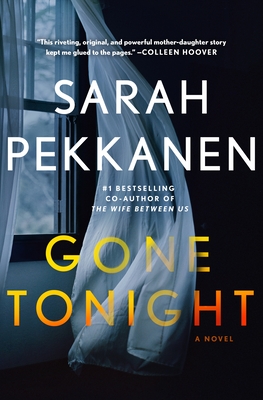
Gone Tonight, by Sarah Pekkanen*****

I’ve been reading and enjoying Sarah Pekkanen’s novels for years now, but Gone Tonight is far and away the best of the bunch. My thanks go to Net Galley, Macmillan Audio and St. Martin’s Press for the invitation to read and review. This book will be available to the public August 1, 2023. If you love psychological fiction or thrillers, you should order it now.

In her previous thrillers—the ones I’ve read, at least—there is similarity. She’s written about women ganging up on one woman, and love triangles, or what appear to be love triangles. This one is different, and it’s better. Here we have just two characters, mother Ruth and her young adult daughter Catherine. The unseen character is James, Catherine’s biological father. Throughout the story, Ruth is vigilant, always watchful. She’s afraid she’s being stalked, or investigated, or otherwise watched. Ruth isn’t merely careful; she keeps a bug-out bag ready for each of them, varies her routine to where she really doesn’t have one. She doesn’t take the same exact route to any of the places she frequents regularly. To see and hear this character, one would think that the CIA, the Mafia, and all of the cartels were out to get her and kill her.

Early in the book, Ruth provides Catherine with some hard news: she has early onset Alzheimer’s. I tell you this in particular, because when I saw it, my eyes glazed over with boredom and I thought that this thriller wasn’t going to thrill me at all. I nearly slid the book onto the bottom of my stack, and that would have been a terrible mistake, because this is *not* an Alzheimer’s story.

Catherine has never met any of her relatives; Ruth lies to keep her from investigating them. But now Catherine is an intelligent adult, and there is the internet. It’s mighty hard to keep a secret these days, and that’s rough for Ruth, because she’s got a lot of them, some bigger than others. As Catherine digs, she is surprised, and this makes her dig even harder. She keeps finding things, and Ruth keeps changing her explanations. It isn’t long before Catherine realizes she’s been lied to, and she stops telling Ruth what she discovers.

The format Pekkanen uses is an effective one, and it’s easy to follow. She changes the point of view in the standard way from one to the other and back with both sides told in the first person, but the tricky part is how to provide Ruth’s narrative. Catherine can give us her first person narrative and we think nothing of it, but Ruth talks to no one except her daughter, and even so, she lies to her daughter all the damn time, so under what circumstances will she spill her guts to us? The solution isn’t all that original, but it’s effective and reasonably believable. Ruth has a secret diary that she’s writing for Catherine to have when Ruth is gone. It requires me to overlook the unlikelihood of someone as obsessively private as Ruth sitting down and documenting the whole shooting match, including names and dates in writing, but this is such a fun book that I set my momentary disbelief aside and keep reading, because I have to know what happens next.

Once we are past the Alzheimer’s passage, my attention is rapt, but friend, the last ten percent of Gone Tonight is one for the ages! I rarely say this, but this creepy little novel would make an amazing movie or miniseries.

Actor Kate Mara reads the audio version, and she does a fine job. Highly recommended!

Zero Days, by Ruth Ware****-*****

What would spring be like without another Ruth Ware mystery?  I hope never to find out. My thanks go to Net Galley and Gallery Books for the review copy.  This book goes up for sale Tuesday, June 20, and those that love a fast-paced, high octane read should order a copy.

One of the finest things about Zero Days is the premise. Our protagonist is Jacintha “Jack” Cross, and she and her husband, Gabe, run a pen testing business. I had never heard of pen testers before; these are people that are hired by corporations to hack into their systems and then report their areas of vulnerability so that they can be corrected before unfriendly hackers find them. Jack is the physical penetrator, and so while Gabe is home worming his way into the client’s network, Jack is on site, physically breaking into the business’s building.

This reviewer has two immediate family members that are fairly high on the IT food chain, so I asked both of them whether this is a real thing; they assured me that it is, although they had never heard the abbreviation. Most penetration testers don’t physically breach the physical building; usually it’s a tech breach only.

On this occasion, Jack meets up with a security guard that doesn’t believe she’s there legitimately, and by the time she straightens things out and gets home, her husband is dead.

When I read my notes, I can find plenty to criticize. At the outset, as Jack is breaking into the site, she has her earbuds in and Gabe is talking to her, and there is some conversation about the sex they’re looking forward to after the job that I find jarring and out of place. Yes, the purpose is to let the reader know that their marriage is strong, but I would have preferred greater subtlety. Then the cops decide Jack is their number one suspect, and when I see that Jack is going to investigate in order to clear her own name and find Gabe’s killer, I actually groan, because this is such a tired, overused trope. And the vast majority of this novel is Jack being chased, Jack running, Jack hiding, Jack running some more.

However, when it’s time to read–and I have several books going at a time, some galleys, some not–I find myself reaching for this one every time. Ware’s pacing never flags, and there’s creativity in the choices Jack makes that are reminiscent of Thomas Perry’s legendary Jane Whitefield series, but with technology added. I love that it’s the woman in this pen business doing all of the physical work, and Jack is a genuine badass, which makes my feminist heart beat harder. She is injured badly in one escape, and I fret over her and even wonder how she’s carrying it off, given the severity, but Ware convinces me that Jack is propelled by adrenaline and a complete indifference to her own safety and health, now that Gabe is gone. There is a small twist thrown in at the end that I find annoyingly predictable, but it’s almost an afterthought, and so it doesn’t impact the main body of the story. And there are occasional brilliant, original bits of figurative language that I love.

In point of fact, I wouldn’t mind seeing Jack Cross again.

For those that love an adrenaline rush, this book is recommended.

With My Little Eye, by Joshilyn Jackson*****

Joshilyn Jackson is one of my favorite writers, first as an author of brilliant—and often hilarious—Southern fiction, with bestsellers such as Gods in Alabama and Almost Sisters, and now with acclaimed suspense novels. All of the latter have titles that use the names of children’s games to chilling effect. She began with Never Have I Ever, followed with Mother May I, and her current release, With My Little Eye. Jackson never disappoints.

My thanks go to Net Galley and William Morris for the review copy, though I’d have paid cold, hard cash if push came to shove. This book is for sale now.

Meribel Mills is an actor with a past and a problem. Years ago, she fled her hometown in Georgia and her marriage following a traumatic surgery, but she realized her dream of becoming a working actor. But a persistent stalker has caused her to flee Los Angeles with her adopted daughter, Honor, and now she’s back in Georgia, laying low, working locally, and stalking her ex-husband.

Wait. What?

This intrigues me, the notion that a stalker might also be stalked. Meribel’s intentions are benign, as she wistfully revisits the past, but she’s also over the line, obsessively following her ex’s social media accounts, mostly via his second wife, and at one point following them out to dinner. The heck? And so I wonder if that will be the focus of the story.

But Jackson never does anything predictable, and that’s part of what keeps me coming back.

Throughout the story, I am on the back foot, trying to ascertain which of her would-be swains is a genuinely nice guy, and which is the creepo. At one point I begin to wonder if she has multiple stalkers! And Jackson makes a strong point about the worthlessness of law enforcement when it comes to dealing with stalkers and women threatened with violence:

“Rape threats, abduction threats, death threats, and I got forms and tutting and sad jazz hands…I made copies [of the letters] and took them to the police, who filed them for just in case he killed me, later. Then it would be serious. Then someone would find his ass and get him into prison. It would make a great Lifetime movie, with a purely fictional, leggy lady cop as the necessary strong, female protagonist. And me? I’d be playing the dead girl, once again.”

But the best part of this novel isn’t Meribel or her stalker(s), it’s the children. Daughter Honor is Autistic, though very bright and relatively high functioning. Her new friend comes with baggage of her own; both of these girls is so well developed that I feel I would know them if I saw them on the street. They develop a friendship with a homeless teen who also has an important role here, and these girls are what make the story shine.

The resolution is believable and nothing comes from left field. This is an outstanding read, and I recommend it to you.  

The Things We Do To Our Friends, by Heather Darwent**-***

2.5 stars rounded upwards.

The Things We Do To Our Friends is a debut thriller by newbie Heather Darwent. Our protagonist is Clare, a young woman who’s studying art history at a university in Edinboro. She’s new and knows no one, but is soon swept up in a small, elite group of students she meets in one of her classes. Before she knows it, they are her main curriculum, and her classes become secondary.

My thanks go to Net Galley and Random House Ballantine for the invitation to review. This book is for sale now.

At the outset it’s easy to relate to Clare, who tells us her story using the first person limited. She has never lived here before, and she doesn’t have a lot of resources. She gets a job at a nearby bar, and the everyman proprietor, Finn, punctuates the story now and then with an objective take on Clare’s life and her new friends. She is soon invited to join a clique of students that are flashier, louder, and more confident than most of her classmates, and she wants desperately to become one of them. Tabitha is the ringleader, and it is she that Clare most wants to please.

The opening chapters here make me wonder if we are about to rehash Ruth Ware’s most recent mystery, The It Girl. The elements are certainly there. But there’s an undertone that builds here, teasingly referencing Clare’s unfortunate past. We don’t know much except that she’s estranged from her parents, who don’t want to hear from her.

That can’t be good.

The clique goes to Tabitha’s family home in France over the winter break, and Clare is thrilled to be included. But while they are there, she is pressured to join with them on a moneymaking venture that isn’t entirely legal. They let her know they are aware of her past, so she’d better cooperate.

Here is where the book starts to lose me. Clare is essentially being extorted, and yet her emotional attachment to the group only intensifies. At one point, she tells us that she sometimes forgets whose skin is whose, so tightly bonded are they, and in particular, she and Tabitha. But this makes no sense. Tabitha has threatened to harm her, as have the others. Why does she love them all the more for it?

More and more tidbits from Clare’s past are revealed, and yet Clare herself isn’t developed much. Neither is anybody else. We are told a lot, but shown only a little. I love books that are about character, and if there’s not much plot, I’m fine with that, but these characters are all static. At the 50 percent mark, I become impatient and skip to 62 percent; from there, I read to 72 percent, which is where things should begin to feel urgent, but they don’t. I skip again to 90 percent and read the ending. I seldom skip anything when reading, and on the occasions when I have done so, I sometimes find things when I skim the last half that convince me to go back and read it completely. That didn’t happen here. There are loose threads dangling, and plot elements that appear to have no purpose. Worst of all—and to be fair, this is probably not the author’s doing, but it rankles, nevertheless—is that this weak tale of warped humanity is billed as a “feminist page-turner,” which is what drew my interest initially, and as a lifelong, card-carrying feminist, I can assure you that this is absolutely not that.

I cannot recommend this book to you.

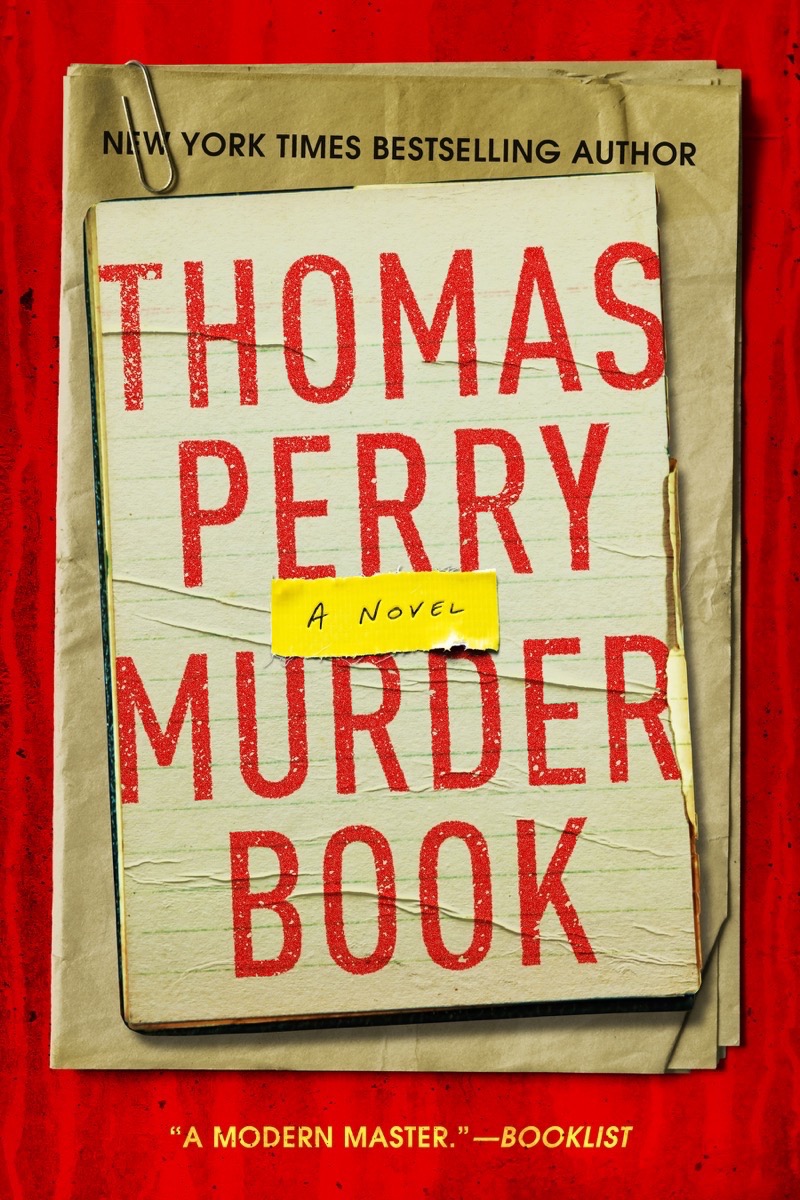
Murder Book, by Thomas Perry*****

Harry Duncan is a former cop, now a private investigator. His ex-wife, Ellen, is the U.S. Attorney for the region, and she asks him to check out a small town that appears to have a racketeering problem. Is it serious enough to warrant the attention of the FBI? Harry agrees to explore the situation, which turns out to be far more serious than either of them imagined.

My thanks go to Net Galley and Random House for the review copy. This high octane thriller is for sale now.

Perry’s feet have hardly hit the ground in this tiny Indiana backwater before he discovers a protection racket. A local businesswoman is determined not to pay; how can a bar or restaurant pay $300 daily and still stay open? The profit margin just doesn’t allow for it. And the thugs know that. But let’s not get ahead of ourselves. Rather than give anything away, I’ll just say that there’s more to this than meets the eye in this tiny, out of the way burg.

Perry is king when it comes to details involving stealth and unobtrusive investigation. Whereas a cop cannot use the unorthodox (and okay, illegal) methods that Duncan employs, a consultant can and does, or at least, he can and does in this story.

And if one were to criticize this novel, that’s the soft spot—because almost nothing about this tale is realistic. It’s so much fun to read, though, that by the time I thought, “Wait a minute…” the rest of my thoughts shushed my inner cynic as if it were a noisy jerk in the back row at a movie theater.

Highly recommended.

Fox Creek, by William Kent Krueger*****

I’d been in a reading slump, with most of my reading carrying an element of obligation; I love reviewing except when I don’t. Something had poked a hole in my reservoir of joyful discovery, and all the juice was leaking out. William Kent Krueger’s new entry in the Cork O’Connor series, Fox Creek, put a stop to all that. I found myself looking for extra openings in my day, craving the chance to bury myself in this absorbing mystery. I haven’t felt this great about a galley since last winter.

My thanks go to Net Galley and Atria Books for the invitation to read and review.

The story is set way up north in Minnesota, near the Canadian border, in the tiny community of Aurora. Cork, our protagonist, has left law enforcement and instead runs a diner, hiring himself out as a private investigator when the opportunity arises, which doesn’t happen often. When a man comes to the diner and asks Cork to help find his wife, Cork says he’ll think about it. Meanwhile, Dolores, the wife in question, is engaging in a sweat ritual out in the woods where the ancient and very wise Ojibwe healer Henry Meloux lives. It turns out that Cork’s would-be client is not her husband, and she doesn’t know him at all. He’s got a hidden agenda, alrighty, and he’s brought some rented thugs along to make his chore easier. Now there are two tasks: the first is to hide Dolores, and the second is to find out who these guys are and why they want her so much. Meanwhile, Cork’s wife, Rainy, guides Dolores deep into the woods near the Boundary Waters; Henry joins them. What follows is one of the most suspenseful stories I’ve read recently. I have a hunch that Cork will be okay, since killing him would also kill the series, but the others—Henry, Rainy, and Dolores—might make it out, or they might not.

I was about to say that this is character-based fiction, so well rounded are the main characters, but the setting is resonant and important to the characters and the plot. All told, this is the way a novel is supposed to work, with strong characters and settings that make the plot believable and urgent. And as always happens when I read Krueger, I also learn some things about the setting, and about Ojibwe culture and history. (His depiction of the art of disappearing and eluding pursuers reminds me a little bit of Thomas Perry’s Jane Whitefield series, but that’s all the two series have in common, apart from genre.)

This is the 18th book in the series. Can you dive in, right here right now?  Emphatically, yes! I began with the prequel to the series, which came out last year, and I loved it so much that I went to the library to check out the first book in the series—and then, I found it disappointing, because over the course of this long series, Krueger’s skill has increased, so the first book, Iron Lake, is decent, but nowhere near as brilliant as his more recent work. Now I look forward to more of this series, but always going forward, never back.

This riveting novel will be available to the public on August 23, 2022. If you love this genre, you should get this book and read it—or better still, preorder it right now. You won’t be sorry.

Cold Fear, by Webb and Mann*****

“Christmas is special here. In Reykjavik, nothing bad ever happens at Christmas.”

Cold Fear is the second in the Finn thriller series. Last year authors Webb and Mann launched the first, Steel Fear, to widespread acclaim, and I loved it, too.  My thanks go to Random House Ballantine and Net Galley for the invitation to read and review. This book is for sale now.

Our protagonist, Finn, is a singular fellow. A Navy Seal (like one of our authors,) he is currently on the run, being sought for questioning regarding war crimes that took place in Yemen. He doesn’t think he is guilty, but he isn’t sure; a large chunk of his memory of that time has vanished, leaving him—and us—slightly off balance. But Finn is a survivor, and now, in Iceland, three members of his own team are here too; he thinks they may have the information that he needs to fill in the gaps he can’t access. There’s another more worrisome person, an assassin, looking for him as well.

Meanwhile, a woman has been found dead, face up under the ice. Suicide has been suggested, but that notion quickly falls apart. When her body disappears from the morgue, the police kick into overdrive. Iceland has almost no crime of any kind, let alone murder, and so immediately, they begin eyeing the Americans in their midst, including Finn.

Finn is a memorable character. He’s funny looking, like a cross between a Gecko and E.T., and yet, thanks to his training, he can merge seamlessly into a crowd and be invisible. His traumatic childhood haunts him, but the authors don’t beat us to death with this aspect of his personality. To my delight, he is burdened with none of the overused tropes used by lesser authors such as alcoholism. He is not on a mission to avenge the deaths of people in his personal life, and he doesn’t get kidnapped and thrown in the trunk of a car or van. Bad guys don’t try to harm his family—of which there is none, in any case—or his pets. He doesn’t get neurotic and bite his lip till he tastes blood, or bunch his fists up so tightly that he cuts his palms with his own fingernails. Feel me? I have quite a list of things I never want to see in a novel again. This happens, once one reads over a thousand novels in this genre, and for awhile I quit the genre entirely, thinking that there was nothing new left to read. Webb and Mann have proven me wrong, and I couldn’t be happier about it.

One last word about setting. Though Finn is a resonant protagonist, the setting is more important here than in most thrillers; that was the case in Steel Fear, which was set on the aircraft carrier, the USS Abraham Lincoln, and it’s true here, as well. The descriptions are resonant, but they don’t slow us down. This is a true thriller, with a pace that never flags.

I’m in this series for the duration. I also urge other women to ignore the promotions that boast that this is Alpha Male material. Last time I looked, I was an old lady school teacher, and I am all in. If you love a good thriller, I highly recommend both Finn books to you.