Shadow Woman, by Thomas Perry *****

Shadow Woman is an adrenaline rush from the first chapter till the book ends. It builds with such a pounding intensity that you would think it was your own life that was at stake rather than that of the guy in the book.

Jane Whitefield is a character who uses her Seneca roots to help cover the trails of hunted humans. She helps them develop completely new identities as a do-it-yourself witness protection program. Under her helpful wing, others flee and get a second shot at a life that will precipitately end if the thread of their previous deeds is traced back to them.

Whitefield puts herself in danger as well, every time she intercedes for someone else. As a matter of conscience, she steps in where the more self-absorbed or cynical would shake their heads and close the door.

I have a friend who can’t stand the pace of this series. If you have recently lost a loved one and are still tender around the edges, this might be something you should pass up, or else save for later.

For those who like a novel to pick them up by their shirt front and shake the shit out of them until the story is ready to conclude, get this book right away. It is exactly what you’re looking for!

Rebel Streets, by Tom Malloy *****

This is the first novel I have read about what are referred to in Belfast as “The Troubles”. The protagonist, Jimmy Fitzgerald,is a Catholic youth and a member of the IRA. Virtually all the young men in the Catholic (i.e., working class)neighborhood there belong. And in the opening scene, Jimmy is being tortured. He is being treated in ways that the Geneva Convention was created to prevent, yet it doesn’t. He is a “terrorist”, and so he can be treated any way they like, proof or no proof. The scene goes so far as to have him placed in a helicopter after the beating is over and he has regained consciousness. They drop him from the helicopter…and he goes only ten feet before he hits the ground. He is broken. After spitting in their faces, after beating after beating in which he will only swear at his interrogators or say “I love Ireland”, he is broken. He only wants to live, and to be gone, and we might hope that the information he gives them is false…but it isn’t. He gives up safe houses. He gives up friends. He does it with the condition that his closest friend since boyhood, Louis Duffy, will be spared.

When it’s over, he is assigned to be an informant.He must meet with Detective Ian McDonald, whose perspective we also gain later in the book. He is outwardly an ordinary man, a man who can look himself in the mirror and like what he sees every morning, one who is responsible for enforcing the law, upholding order, and stopping the Irish attacks on the British troops that make their lives hell. He has a wife and a little boy he loves, and he thinks that he is a good person. Some might see him as merely cynical. I went into this book with a bias, and I see a monster there. I hope that others who read this book will think so, too.

Catholics are considered a lower class, Finian dirt on the floor of Belfast. We learn early on of a job Jimmy and his “Da” were given cleaning out the coal cellar of a Protestant family. The family, clearly enjoying a much higher standard of living, is converting to gas central heat, but they warn Jimmy and his Da that they have inventoried and expect everything to be there when they are done. Jimmy and his father are horrified and seething at the suggestion that they might walk off with their one-day-employer’s coal in their pockets. This kind of rage beats in the hearts of most native Irish (as opposed to the Orangemen imported generations ago by the Brits to give some credence to the lie that Belfast is majority Protestant).

Later, much later in the story, after British cops have kicked in doors all over the neighborhood looking for IRA members, after the family furniture in one residence (and we can infer, many others) has been shredded, mirrors broken, the family’s only television set smashed, an Irish mother turns to her small son and asks, “Who was it put your Grandpa in prison?”
The lad replies,”The Brits”.
“Who?”
“The Brits.”
“Aye…Who wants to get your Da and lock him away?”
“The Brits.”
“Who?”
……..
“Why did they do this to ye?”
“Because I’m Irish.”
“An’ who is it that hates the Irish, who is it robs the Irish, who is it murders the Irish?”
“The Brits.”
(first person, quoting author here)”She took his head in both her hands to whisper, “An’ who will protect yer mother from the Brits when he’s a strong young man?”
“I will.”
“Why?”
“Because I’m Irish.”
The mother calls her son a “wee man” and a “brave Belfast boy”.

This novel spoke to me deeply. I was a supporter of Sinn Fein during the hunger strikes of the 80’s, and I, along with many other Irish Americans of whatever generation, gave money for humanitarian aid. Two-thirds of the funds that paid for Irish independence came from Irish American pockets. The same has held true for the cause of making Ireland free and united once more.

Not everyone will appreciate this novel as I did. The IRA has had press that likens them to serial killers when “The Troubles” took place, and very few rejoinders sent to large newspapers ever saw the light of day.

But if your heart beats for one united Ireland, or if you enjoy one helluva ride and you are neutral or undecided on the Irish Question, then buy this book. Read it. You haven’t read anything like it lately, I promise.

The Director, by David Ignatius *****

Wow! That was a really fun ride. A great big thank you to the Goodreads First Reads program and the publisher for a free look-see.

Imagine, if you will, that the CIA has a new chief, and he’s a good guy who wants to do the right thing. How much chaos might this create?

I am, of course, not a fan of the CIA, so I have to play make-believe to enjoy the premise. My heroes are Marx and Engels; my teenager’s hero is Edward Snowden. And in this lovely bit of spy-craft by the experienced David Ignatius, the CIA wants to prevent another Snowden from occurring. See, the “moles” of yesteryear are no longer an issue, since the Soviet block fell apart and China is no longer red; now the issue is worms. In this story, there’s a really juicy one, and it’s “inside”. And I know I can’t quote a galley extensively, but the phrase “freedom addicts” made me squawk with laughter.

That’s it. That’s all I’m going to tell you. If this sounds as hilarious to you as it did to me, you really ought to go get your own copy. I haven’t had this much fun in a long time!

The Accident, by Chris Pavone *****

Chris Pavone takes off like a rocket with The Accident, and he doesn’t slow the pace down or allow the reader to even breathe until the last page has been turned. Absolutely riveting!

I was so excited about this compelling novel that I nearly forgot to acknowledge my receipt of it via the Goodreads.com First Reads program. And what a read! The story,which centers around what may or may not be a rogue CIA agent and the publishing industry, struck me as highly original. They say you should write what you know, and he has (clearly) had two long decades in the latter. I laughed at the reference to a speed reading course; I took one myself as a college prep class almost forty years ago, and have not been able to slow my reading since. But this insider’s peek at the publishing industry made me really glad that I can pick and choose what to read and review, rather than having endless galleys thrust upon me to absorb my personal time.

Setting and character are done in a way that allows the reader to peek from behind the character’s eyes and take everything in, or zoom in on the character from outside, and the action does not slow a bit, but is rather enhanced by the detail.

Short version: get it. Read it. Do it now!

Holy War, by Mike Bond *****

holywarThat was the best horrible story I ever read. Holy War is set in Lebanon during the civil war. There are three protagonists whose stories and points of view interweave throughout this complex, highly literate novel. The plot centers on these individuals, each with one or more relationships whose ruin runs parallel to the destruction and chaos of Lebanon by various opposing forces (with the authorโ€™s emphasis on the religious disparity as opposed to the political differences, and indeed itโ€™s a pretty fine distinction to make in this case). I requested the book from Net Galley because I havenโ€™t read anything set in Lebanon. I am aware of the tendency of US citizens to focus over-much on our own enormous nation, and since I havenโ€™t had the opportunity to travel beyond North America physically, I make a point to read contemporary novels set in other places. In this case, it paid off. I learned a good deal. I had never regarded Beirut as having once been a thriving cosmopolitan city; all Iโ€™d ever heard on the daily news in past years was โ€œwar-tornโ€. I live in a city thatโ€™s so scenic itโ€™s nearly magical, and I am hard to impress when I travel. I have never thought of Beirut as having been lovely, but the writer describes it as breathtakingly beautiful, and the descriptions that he inserts into the story, without breaking stride in his pacing, convince me that it is much more than just some arid chunk of rock and sand. Bond makes the reader want to weep for Lebanon, and for the characters whose lives are coming undone as they attempt to do the right thing; this is considered different, naturally, by each of the protagonists. During the first third of the book, I was distracted by trying to figure out the writerโ€™s political line. He doesnโ€™t really have one, though, apart from the wish that this beleaguered place might have peace. I also initially wondered why all the sex and relationship material was jammed into what is otherwise essentially a thriller; then I began to see the parallels (although I could really, really live without ever seeing the โ€œcโ€ word applied to womenโ€™s anatomy ever again). In the end, inevitably, the protagonists find themselves in the same place together after having missed each other by mere inches at times throughout the story line. I wonโ€™t tell you how that plays out; youโ€™ll have to see it for yourself. By the storyโ€™s end, though, each of the main characters seemed so utterly lost and hopeless to me that I found myself rooting for the dog, which was supposed to be peripheral. I engaged enough with Bondโ€™s novel that I had to go look at a world map (and happily, we have one on the wall in our hallway) to see where exactly Lebanon is located. As it happens, Israel is smack in the center between Lebanon and Palestine; hence the struggle of the Lebanese Palestinians. I also found myself wondering why Britain (one protagonistโ€˜s homeland) and France (anotherโ€™s) feel they have any right to determine what happens here. There is no American protagonist, and yet I know the USA hasnโ€™t exactly kept its hands off or its voice silent, either. But Lebanon is a tiny, tiny place, dwarfed by Syria, and practically a fly on the wall in contrast to Saudi Arabia. So why are all the big dogs interested in this tiny place? Are the Americans looking for a military base to replace the one they lost in Iran when Reza Pahlavi was chased away by the Iranian people? Or is there money involved? (At one place fairly early in Bondโ€™s plot, a character says that wherever there is a war, profit is driving it, and I agree.) A trip to Wikipedia tells me that thereโ€™s oil in the Mediterranean. Hypothetically, then, the whole thing should be left to the countries that border the Mediterranean, but it would be naรฏve to believe it could shake out that way. And just as the great cedar forests of Lebanon have been razed for the betterment of Europe, one wonders just what shape the Mediterranean will be in once the next great oil disaster occurs there. Of course, you can read this book without examining all of those questions. Itโ€™s a fine read right on the surface level, but youโ€™ll need a strong literacy level and full attention for it, regardless. This is not a beach read. Itโ€™s serious stuff. For those who enjoy a good thriller or have an interest in Beirut, you should get this book as soon as you can.

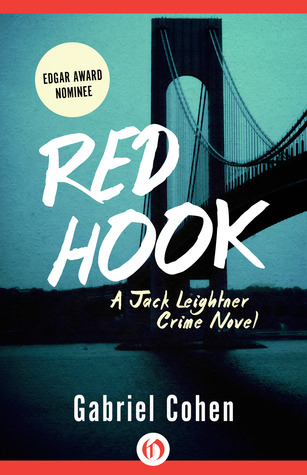
Red Hook, by Gabriel Cohen *****

redhookI am generally a six-book-at-a-time reader. I have different books in different rooms; books on my e-reader, paperbacks, and hard covers. Red Hook is one of those unusual books, though, that has kept me from my other reading. Once Net Galley gifted me with a free copy, the story picked me up by the front of my shirt and kept me reading, even when the normal demands of daily living beckoned. So you say it was nominated for the Edgar Award? Why am I not surprised?

No, there are no ghosties or hobgoblins or other supernatural things that go bump in the night, but the story packs enough goose pimples in the plot alone to make it an October-worthy read.

The story is police procedural in format, and bounces between two points of view, that of the protagonist, a New York City cop named Jack, and his son Ben, who lives close by, but with whom he has a remote relationship. Jackโ€™s fear of losing control of himself stands in the way of his capacity to develop and maintain close relationships; to say more would be a spoiler.

Son Ben, now (barely) grown and 23, is a documentary film maker, and is interested in producing a documentary on Red Hook, the Brooklyn neighborhood in which his father grew up. Jack, on the other hand, has too many ghosts that await him there, and he avoids the place like the plague. And from there, the story builds to a place that may keep you awake long into the night.

Cohen does masterful work at developing character, plot, and pacing, and setting, while not quite as deft, is still stronger than most writers. This is a must-read for anyone who enjoys police procedurals. I look forward to reading the rest of his work.