
Good Behavior, by Blake Crouch****

goodbehaviorcrouchLast spring I advance- read and reviewed the riveting sci fi thriller Dark Matter, which was my introduction to author Blake Crouch, who has already met with success as a screenwriter. When I saw that something else he had written was up for grabs at Net Galley, I landed on it eagerly. Thanks go to them as well as Thomas and Mercer at Amazon for the DRC, which I received in exchange for this honest review.

Good Behavior consists of a trilogy of Letty Dobesh stories, along with a brief narrative that follows each one explaining how it was tweaked (pardon the pun) as it was adapted to television. Our protagonist herself is, in fact, a recovering meth addict, and there is only one activity that comes close to the rush she experiences when she uses it, and that’s crime. Not just the seamy survival type of theft; not just cleaning valuables out hotel rooms while the guests are off in tourist-land. A big theft with huge risk and a potentially tremendous payday provides the adrenaline rush Letty needs to stay clean, not forever, but for one more day.

Letty is a kick-ass character, a woman who’s been knocked down a million times and gotten back up a million and one. I love the way Crouch works her motivation. Actor-director Jodie Foster once commented that when men in the film industry want to reach the core of a character’s motivation, they reach every damn time for rape, and I’ve noticed that male authors do this with female protagonists a lot also. It’s a fascination they can’t seem to let go of. I am cheered to see that Crouch does something much different, with Letty’s main motivation being the need either to stay clean, or on bad days, the need to score. Behind the need to stay clean is the possibility of seeing her six year old son, Jacob, again. He is living in Oregon with his paternal grandparents; he’s in a stable, loving environment, and though Letty yearns to see him, she won’t let herself go there until she is convinced she can stay clean. But there are triggers out there in the everyday world that some of us could never have imagined:

“She could almost taste the smoke. Gasoline and plastic and household cleaners and Sharpies and sometimes apples. Oh yes, and nail polish.”

Around every corner, temptation calls to her. She can’t even get a pedicure without the fumes invoking a primal craving.

My hunch is that Letty will be with us a long time, and I am curious to see whether this child will remain six years old forever; grow up, but more slowly than real-time chronology; or be aged as if in real time. I can think of some hit mystery series that have been frozen in time to good effect. Crouch could keep Jacob small throughout the life of the series, and this might make more sense than having him grow up and be independent; on the other hand, this series is so full of surprises already that there’s no telling what will happen.

To see the first television episode, in which the protagonist’s name is different from the book:

https://www.goodbehavior.tntdrama.com/?sr=good%20behavior%20video

The first story involves a murder for hire. The second is a complicated rip-off of a billionaire who’s about to go to prison. The last and by far the best is a scheme to knock over a casino. The casino plot is proof positive that a relatively old concept (theft of a casino’s funds) can be made brand new in the right hands.

I believed Letty nearly all of the time; the only weak spot I see is when she considers dialing 911, a thing that former prisoners just never, ever do. No matter how big and ugly a situation gets, for someone who’s been in jail, and especially for those that have gone to a penitentiary, calling cops will only make it worse. Even if the caller is Caucasian, and even if she believes she can do so anonymously, cops are never desirable. They’re just not on the menu of choices anymore.

This is a super fast read, one that might make for a fantastic holiday weekend. There’s lots of dialogue, crisp and snappy. Best of all, it has just been released, and so you can get a copy now. If the turkey is dry and the marshmallows on your yams catch fire, Letty Dobesh can knock everything back into perspective for you.

Recommended to those that love dark humor and big surprises.
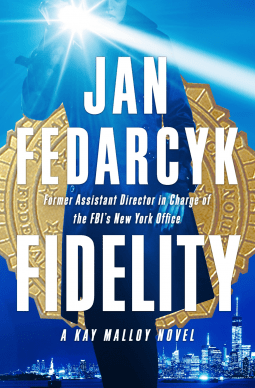
Fidelity, by Jan Fedarcyk***-****

fidelityRetired FBI agent Jan Fedarcyk makes her debut with this intense spy novel, and it is bound to keep the reader guessing and turning pages deep into the night. Thanks go to Simon and Schuster and Net Galley for the DRC, which I received for review purposes. I rate this story with 3.5 stars and round it upward.
The selling point for the new reader of what is destined to become the Kay Malloy series, is that the author has spent 25 years in the FBI and knows what she’s talking about. Though she reminds the reader that a lot of the FBI agent’s job is done at a desk sifting through endless forms to fill out and reports to write and not much of what we see on TV, we also know that she can spot an implausible situation a mile away and not go there or do that.

So the initial question that came to me was whether someone that’s worked for the Feds for a quarter century still has enough imagination left to write interesting fiction, and now I can tell you straight up that Fedarcyk does, and she can, and she did. I like the level of complexity, which is literate without being impossible to follow. The reader will want to give her story full attention; nobody can watch television and read this book during the ads. It’s well paced and the suspense is built in a masterful manner.

Characterization comes up a little short, and I can imagine that this will be her key focus in writing future books in the series. Kay is so darn perfect, and I never feel I know her deeply, despite the discussion of her past and how she is motivated by it. We see her tempted to use her position for a very small, somewhat justifiable personal reason briefly, but she is nonetheless something of a cardboard hero all the way through. Likewise, the Russian spies are big, blocky bad guys, thugs that drink Vodka. The spy novel tradition has been honored, but I would like to see more layers to these characters as we move forward. The ending, while it surprises me to some extent, is not one that the reader had a reasonable chance of guessing, but to some extent that’s true of a lot of espionage thrillers.  What might be really cool would be to see an espionage version of Kay’s own Moriarty come into play.

As is always the case for me when I read espionage thrillers, police procedurals, and other novels that involve heroic cops, I have to construct a mental barricade between what I see in real life and what I am willing to believe when I read fiction. One of Fedarcyk’s characters snorts in derision about the time when people were willing to die for Marxism, and I have news: some of us still would. But for a fun ride, I am delighted to suspend reality and buy the premise until the book is done.

One area where I struggled—and to be honest, I don’t know whether anyone else will or not—was with two characters, first Luis, whose last name isn’t used very much, and then Torres, whose first name doesn’t get used much either. This reviewer has taught more than one student named Luis Torres, so this may factor into my confusion about 75% of the way through the story when I realize that these have to be two separate people, but for awhile I am convinced that Uncle Luis Torres has mentored her into the field, and so when the story arc is near its peak, I have to go back and reread some of the novel to be certain I knew who is who. Luis is the uncle; Torres is the agent and mentor; they’re two separate guys.

All told, this is a promising start to what is sure to be an engaging series. The world needs to see more strong women in fiction, and so I welcome Kay Malloy and look forward to seeing future installments. A fine debut, and it’s for sale now.

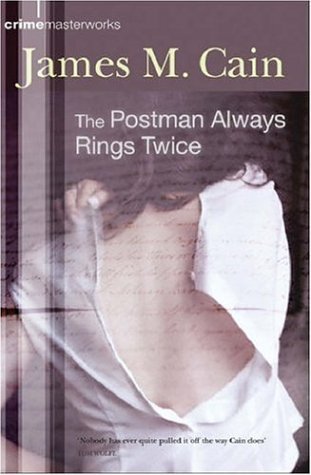
The Vanishing Year, by Kate Moretti****

thevanishingyear 3.5 stars, rounded up for this one. I received my copy from Atria Books and Net Galley in exchange for an honest review.  I am impressed most by the first half of the book, and particularly with regard to character, Kate Moretti is a rock star.
Our protagonist is Zoe Whitaker, and we learn that Zoe grew up as Hilary—with one “L”, and no political baggage—and then chose to adopt “Zoe”, the name on her birth certificate prior to her adoption. There’s a lot more mess here than there needs to be, the adopted-child angst, the guilt over having not given her mother Evelyn the funeral she deserved, and fear, fear, fear.

Moretti does a wonderful job of building suspense, and part of this is the vague but real tension, the constant shoulder-checking, wondering if someone has found her. It makes us wonder who, and it makes us wonder why. Bit by bit, she unspools tidbits of the past in the way you might expect someone that needs a friend and is learning to trust a new confidant might do.

Moretti’s main character is beautifully sculpted. Some novelists that withhold information to build tension hang onto so much that we don’t get to know our protagonist, but I was perched right on Zoe’s shoulder, or hanging out with her newly discarded friend Lydia, asking her why the heck Zoe is so passive. Is fear the only language Zoe knows? I felt close to Zoe, and I wanted her to tell me more.

Meanwhile, there’s the marriage. Henry Whitaker, an immensely wealthy man, sees Zoe across a crowd and homes in on her. Those familiar with the patterns common to abusive relationships know that this is a red flag; the guy whose gaze lights on a partner and from then on wants full possession of every move, every thought, and every minute. He makes a snap decision like lightning and then never lets up. And Henry has plenty of other red flags too, but he’s not a stereotypic abuser; Moretti is too cunning to permit any caricatures into her novel.

For the first half of this story, I relished the meaty ambiguity, not only in Zoe’s life but in what it represents. Yes, Henry is too possessive, too bossy, but on the other hand, this young woman that has never been known for her remarkable beauty or extraordinary talent has the Cinderella marriage without the stepsisters.

“I might be under someone’s thumb, but I have money now.”

Zoe has no living relatives to her knowledge, apart from the birth mom she hasn’t located and that may not want her when she does. She doesn’t have a degree, and is working at a florist’s shop in Manhattan when Henry finds her and whisks her away. He is devoted to her, provides her with every small thing her heart desires. She has a car and a driver, she has servants, she has clothes, jewels, and the whole nine yards. Everyone defers to her. There’s no restaurant that won’t make room for her at the front of the queue. Tickets to a sold out event? No problem.

It is easy for us to moralize from afar, we feminists with our principles, but economic want can shorten a woman’s life significantly. As this reviewer heads into retirement, I look at the lives of the women I knew when we were school girls, and no matter how clever or talented, their material well being seems tied, more than anything, to who they married and whether they remained married. Ask any woman over age 50 who’s looking for a job and watching those past-due notices land in her mailboxes, both electronic and physical, and many of those same women would be more than happy to let someone else tell them what to wear in exchange for such a well-padded safety net.

And so as Henry’s behavior escalates, I grow more entranced with the story’s Virginia Woolfish aspect, and I expect Moretti to take us up that mountain. How much is too much? At what point does one relinquish the guarantee, if there is one, of not only the basic requirements but luxuries one may quickly grow accustomed to, in exchange for breathing room, the dignity that comes with independence, self-respect, and with apologies to Woolf, possibly a room of one’s own?

But Moretti doesn’t go in that direction; at the last minute she tosses in a tremendous amount of new information that is original yet seriously far-fetched. Those that want a white-knuckle thriller with a female protagonist may be very happy here, but I was sad, left feeling as if the waiter had decided not to serve me and abandoned me after the hors d’oeuvres.

This title was released on October 4, and so if you are eager to see what all the buzz is about, get a copy, and then let me know what you think.

One way or another, Moretti will be a novelist to watch. The subtlety and nuance that escaped her as this novel progressed are still hers to be had, if she chooses to use them. I know I can’t wait to see what she publishes next.

The Postman Always Rings Twice****

thepostmanalwaysringstwiceWell, they do say karma’s a bitch.

I fell heir to a first edition hard cover copy of this classic 1934 crime fiction. It’s too well worn to be a collector’s item, so instead of selling it, I decided to just enjoy holding a book in my hands that could have been held, hypothetically, by my great-grandparents. I think I enjoyed the crispy yellow pages and the old school print more than I enjoyed the story itself.  With wide margins and plenty of dialogue, it was a quick read, and before the weekend was over I’d finished it.

Our protagonist, Frank, is a drifter that does odd jobs and occasional crimes as he travels through Mexico and the Western USA; the story itself is set in California. He comes to an out-of-the-way place where a Greek immigrant and his wife run a small roadside restaurant. The owner is interested in expanding the business to include car repair, and hopes that a free meal and a bed for the night will lure Frank to stick around and work for him. Instead, Frank stays and finds a white-hot attraction to Cora, the owner’s wife. The two of them make love like cats in a pillowcase, snarling and biting and tearing at each other, and they like it so well that they decide to kill the Greek guy so they can do it together forever.

Those that don’t follow history may not know that at the time this story was published, U.S. xenophobia toward immigrants from Eastern and Southern Europe was at its pinnacle. Jim Crow and the Klan had silenced any open dissent from African-Americans with a reign of terror, but it was somewhat commonplace for Caucasians, who were by far the largest group in terms of population and certainly in terms of power and money, to make nasty assumptions and references about people from Greece, Turkey, Italy, and the surrounding area.

So it’s within that context that Cora declares that although her husband Nick loves her and treats her really well, he repulses her because he’s “a little soft greasy guy with kinky hair”. He wants her to have his baby, and she doesn’t want to touch him. She’d hate to go back to turning tricks, but she would far prefer to be with fair, blonde-haired Frank than Nick Papadakis.

The story arc here is flawless, and I can see how it became a classic, but it has many aspects that haven’t aged well. There are nasty remarks about Mexicans; Cora urgently wants Frank to know that she’s white, even though her hair is dark. She isn’t “Mex”. And although I understand that some people do like rough sex, I had to take a deep breath when Frank became aroused and showed it by blacking Cora’s eye for her.

Right. So you see what I mean.

The way the story is plotted is ingenious, and the characters are consistent all the way through; the ending is brilliantly conceived and executed.

For me, though, one reading is enough.

Combustion, by Martin J Smith*****

combustionPaul Dwyer is dead, a floater that has only been found because his construction business diverted the water from the place where his body is dumped, and it dries up in the Southwestern desert heat, leaving his body exposed to the world.  I was lucky to be able to read this book early, thanks to an invitation from Net Galley and Diversion Publishing, in exchange for this honest review.  I am overjoyed to rate it five stars. I knew nothing at all about either Smith or Diversion, but it turned out to be a risk that worked out in my favor and the author’s.

Our detective is Ron Starke, a single man whose father has Alzheimer’s. The reader cannot help but warm to him as we see him appear in his father’s room, hamburgers in a paper bag, prepared to patiently have the same conversation with his dad that he had with him several times yesterday and most likely will have tomorrow too.

Shelby Dwyer, the victim’s widow, is a very wealthy woman now. She isn’t sorry that he’s gone, and neither is their teenage daughter Chloe. Dwyer was a violent, ugly man in private, regardless of the shine he demonstrated publicly. Naturally, Shelby is the chief suspect, a thing made more difficult by the fact that she was Starke’s girlfriend a decade ago, when they were in high school.  But it’s a small town, a tiny exurb of Los Angeles, and everyone really does know everyone, aside from Starke’s supervisor, Kerrigan, a recent transplant from the big city. To make matters even more awkward, Starke had been considered a shoo-in for the job Kerrigan now occupies, and Kerrigan knows it.

He has a feeling that his new boss is gunning for him.

The story is told from alternate points of view, and Smith creates whiplash tension by shifting between them at key points.  Character development is solid, and it makes me wonder about the possibility of a series emerging from this debut.

Shelby may be rich now, but she is in tremendous personal jeopardy. All of the lonely nights spent holed up in the study, cruising online for connections she can’t find at home, have led her to expose herself in a horrifying way. And as she is forced to confess to Chloe about the unwise things she has said to another visitor in a chat room, a person using the handle LoveSick, and despite the horror of the moment I had to smile, as the traditional tables are turned and 17 year old Chloe has to tell her mother that you should never, never provide a stranger with personal details.

Smith’s debut is hot as the desert sun, a page turner that will live in your head after the last page has turned. Those that know me are aware I finish an average of three titles weekly for review, and so months or even weeks later if I am contacted by the writer’s publicist, I sometimes have to flip back through my records to remind myself…wait, this what which book again? And this is especially true of mysteries, which no matter how unique, tend to share a certain sameness. But in this case, that didn’t happen. The settings are so resonant, the characters so well sculpted that I felt as if I were an unseen guest among them.

It’s for sale today, and I highly recommend that you read it.

Nothing Short of Dying, by Erik Storey***

nothingshortofdying Nothing Short of Dying is Storey’s first novel, and it’s full of no-holds-barred action. Despite some inconsistencies, it’s a good read, featuring a protagonist alienated, as so many Americans are, by time spent in prison. In some ways it is very much a tale of 2016 America. I received my DRC free and in advance in exchange for my honest review; thanks go to Net Galley and Scribner.

Our protagonist is Clyde Barr, and since the novel is labeled “Clyde Barr #1”, we’ll be seeing him again. Barr is back on the outside. He’s spent so much time away, between prison and time spent in Third World nations, that the rampant consumerism he finds upon returning to US society and the vast number of choices over trivial things overwhelms him. He wants to head to the Yukon and enjoy some time in the woods, but before he can do that, he gets word that his younger sister Jen, who’s very close to him because of shared childhood trauma, is in trouble and needs to be rescued.

I’d seen evil on three continents, some of it unspeakable, but it seemed worse in this place I called home. On a different continent, everything—good and bad—can seem strange, alien. But you don’t expect to come back to places that seem too familiar and discover the greatest evil of all.

Despite the occasional moment in which a female does something proactive, Storey’s plot is full of damsels in distress, and Barr’s whole mission is to save his sister, and then later to also run to the rescue of another woman that appears along the way, but to whom he grows inexplicably attached in a really short time. Character development is shallow, but I can see that an effort is made. Storey also uses the unsavory technique of identifying a bad guy by having him use nasty, racist language. But this is not one of those books I only finish due to a deal with the publisher; I genuinely want to see where this one is going and how it will come out.

Barr is a rough and tumble type, the kind of guy that makes his truck start by kicking the side panels and door and slamming his fist on the hood. It makes me like him.

Not so appealing is his reaction to the irritated woman working in the bar: “On her the expression looked cute.”

However, the thing that resonates most for this reviewer is that when trouble comes calling and another character asks him whether they ought not to call police, Barr says no:

“’They probably have guns.’

“’So do I,” I said.’”

The fact is that Barr flies under a black flag. He doesn’t care about preserving evidence; in fact, it improves things if his fingerprints are nowhere close to any of the messes he either starts or finds himself part of. And fifteen years ago, I don’t think a book like this would’ve found a reputable publisher like Scribner. Barr is our hero, but he has no respect for officers of the law, and his inclination is to solve problems and even make a living in a way that goes around US law rather than in accord with it.

But today so many ordinary, decent people have either done time for something most countries wouldn’t consider to be a lock-up kind of offense, or have a loved one that is or was imprisoned, that alienation from cops and the sometimes the law has become the new normal. I write this from a middle class neighborhood in mellow Seattle, a place where the neighborhood association sat down with a representative from SPD to ask that they let us solve our own problems and quit sending officers here to stalk every Black kid that drives, walks, or gets off a city bus. And I know this scenario is playing out across the nation, but it’s worse in down-and-out areas where people prefer to hide from cops, or film them, because nobody from the cop shop is going to come out to have coffee and chat with the locals.

When you have no power, nobody from downtown cares what you want. And so I think a story like this one will find a receptive audience. There is really no Officer Friendly; if you can’t avoid problems, you have to deal with them yourself nine times out of ten.

This novel, the reader should know, is brutal, violent, and grim. There are torture scenes. The pacing is almost always lightning fast, with lots of fast driving and shooting; the pace only slows in one area, and that is whenever Barr has to build a campfire out in the middle of nowhere, we get a detailed lesson in how this is done.  Once I was on my second detailed campfire lesson, I made a note in my tablet. Why are we suddenly stopping for another campfire lecture? But in general, the action travels at warp speed. You have to have the stomach for it, though. But I am a retired English teacher, and there are stories I don’t want to read because they are too graphic; this one stayed inside my ick-boundary by a tiny margin. So if you’re still reading my review and considering reading this book, likely you’ll be okay.

I made a more positive note at the end of chapter 23, because it flowed really well.

A favorite passage is when Barr is hobbling up the mountainside on an injured leg, “sucking air like a sun-stroked impala.” Storey’s figurative language is strong in a number of places, and it helps keep the pages turning.

The story’s denouement left a bare thread dangling in a somewhat obvious way, but this is the writer’s first installment in the series. With strong imagery, a clear plot line, and action, action, action, I know this is a writer to watch. I look forward to seeing the next Clyde Barr novel; this one was released recently, and you can get a copy of your own right now.

With the caveats above, I recommend you read this adrenaline-coursing thriller.

A Time of Torment, by John Connolly*****

ATimeofTormentI had never read anything by John Connolly before, but this eerie thriller has made a forever-fan of me. Thanks go to Net Galley and Atria books for the invitation to read and review.  Connolly cooks together a hair-raising thriller with a handful of horror, a smidge of fantasy and a dash of magical realism; the resulting brew is one that nobody else could possibly cook up. For those that write, reading this dark redemption tale is likely to produce both admiration and despair, because this novel is born of a talent that no creative writing workshop will ever be able to produce. You may write, and I may write, but nobody else will ever, ever be able to write like Connolly.

Our story is part of the Charlie Parker series, but I have not read any of the others and found I was able to hop into this story as a single read with no difficulty. Connolly provides just enough background to catch us up without dragging us through the book using promotional paragraphs some lesser authors might indulge in. I suspect not enough is repeated here to annoy his faithful readers.

Parker is a private detective that has been through a triple-death experience and come out the other end, but not unchanged. He’s hard enough to confront the ugliest nemesis, and it’s a good thing, because soon a trail of corpses will persuade him to leave his home in Maine for the dark place that is Plassey County, West Virginia.

The people of Plassey County have learned over the years—and centuries—to leave The Cut alone. Evil things are brewing there; it is there that the Dead King waits in an ancient building, and it is there that Oberon and Cassander struggle for dominance of this insular, cult-like community.  After all, “…the Cut looks after its own.”

This is a high voltage, hyperliterate read. Your middle-schoolers can’t read this, and it is so infused with violence that I’m not sure you’d want them to have it. But though I sometimes am put off from gory prose, I found that Connolly measured out these passages in small enough batches that my “ick” threshold, that little voice inside that tells me when a story isn’t fun anymore, wasn’t tripped. Spare but strong spots of irony and humor help lighten things up before they get dark, dark, dark again.

If I were to compare Connolly to any other writer, it would be James Lee Burke. The similarities that exist are a brilliant capacity to craft character, and the use of strongly resonant setting to reinforce character and move the story forward. The small but potent religious references are also similar. I highlighted the characters that were introduced throughout the course of this novel and found more than two dozen of them, and yet at the end of the book I still knew who each of them was without having to go back and reread. Connolly draws characters so real that by the time the book is done, the reader knows them as if they were family; yet thank goodness they aren’t.  This reviewer particularly enjoyed Parker’s assistants, Angel and Louis, as well as side characters Perry Lutter and Odell Watson.

Throughout the story, the pacing is swift and the plot absorbing. There is never a word that could be cut from the text and have the same result. If anything, the spare prose creates a sense of tension not only for that which is said, but also for that which is not.

This creepy tale was released this week, so you can have it to curl up with over the weekend if you’re quick about it. But before you commence, you’ll want to make sure that all the lights in your home are burning, and that all your doors and windows are locked.

Highly recommended.

Salvation Lake, by G.M. Ford*****

salvationlakeFord is the rightful heir to the late great Donald Westlake, a writer of monstrously amusing mysteries full of quirky sidekicks and kick-ass, zesty dialogue. There’s nobody like him in Seattle or anywhere else. I gobbled up the DRC when it became available via Net Galley and publishers Thomas and Mercer,  so I read this free in exchange for an honest review. But I’ll tell you a secret: if I’d had to, I’d have paid for this one had it been necessary. And so should you. It’s for sale today, and you can get it digitally at a bargain rate.
But back to our story.  We open at a bar called the Eastlake Zoo. The band of misfits to which detective Leo Waterman is tied through bonds of family history and quixotic affection are rocking the house in “well-lubricated amiability”. In fact, there’s a story being told right as we begin, and if it doesn’t hook you, check your pulse, because you’re probably dead. Here:

“Red Lopez was a spitter. When Red told a story, it was best to get yourself alee of

something waterproof, lest you end up looking like you’d been run through the

Elephant Car Wash.

‘So we was comin’ down Yesler,’ Red gushed. “Me and George and Ralphie.’

Everyone had found cover, except the guy they called Frenchie, who was so tanked

he  probably  thought it was raining inside the Eastlake Zoo…”


Right?

As it happens, Waterman, who’s inherited his old man’s ill-gotten wealth, has been lying low and enjoying the good life, but now his late father’s hideously distinctive overcoat has been found on a corpse, and  Timothy Eagen of the Seattle Police Department want to talk to Leo. Now.  There’s bad blood between them:

“…he hated my big ass the way Ahab hated that whale…Eagen was a skinny little turd with a salt-and-pepper comb-over pasted across his pate like a sleeping hamster.”

Since SPD has been under the eye of the Feds lately, Eagen can’t give full rein to his attack-Chihuahua impulses. SPD needs to provide “the kind [of law enforcement] that doesn’t look like Ferguson, Missouri or Staten Island, New York.” So Waterman doesn’t get shaken down or tossed into a cell, but his curiosity is piqued, and since he has no paying job and time on his hands, he finds himself checking into a few things. One thing leads to another.

What relationship does the victim, known as the Preacher, have to Mount Zion Industries, whose pamphlet is found among his effects? Before we know it, Leo is off and running, checking out Salvation Lake, located at the end of Redemption Road. Events tumble one upon the next, and I found that instead of reading in my bed that evening, as is my usual bedtime custom, I was reading on it, bolt upright and clicking the kindle to go a little faster please.

Waterman may have come into money midway through life, but his perspective is a working class perspective. His take on the city’s thousands of homeless denizens and the relationship that cops have to those in need strike a sure clear note that must surely resonate with anyone that’s been paying any attention at all.

Meanwhile, Salvation Lake is written with warp speed pacing, sharp insight, authority, and the kind of wit that can only come from a writer that has tremendous heart.

Don’t miss it. Get it now.

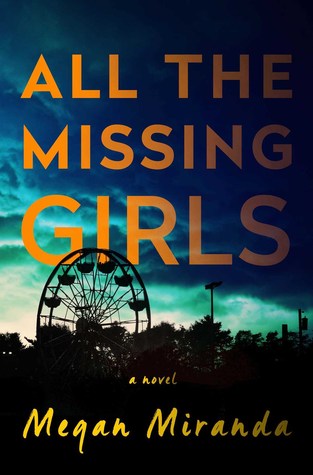
All the Missing Girls, by Megan Miranda*****

allthemissinggirlsI was invited to read by Net Galley and Simon and Schuster in exchange for an honest review, and I am so glad I did. It’s a juicy read that kept me transfixed through most of my Memorial Day weekend. You can order your copy now and have it when it comes out June 28.

The format is unique and very effective. We start in the present and step back to the day before, and before that, and so on, because just as is usually true when a person is missing, the most important information is what took place right at the beginning; that’s the part that has the key, and so we receive it last. It creates an electric sense of suspense I haven’t seen elsewhere in a long, long time.

We start with Nicolette Farrell driving away from her job, fiancé, and life in Philadelphia back to her hometown of Cooley Ridge, North Carolina. She couldn’t wait to get away from there when high school was over, and she isn’t eager to go back. And here, I felt her pain, urban snob that I am. Why would anyone want to return to a podunk place like that once they’d tasted life in a cosmopolitan city? But she has little choice; her father is in assisted living, his faculties fading, and Nic’s brother Daniel says they will have to sell the house in order to continue paying for Dad’s care. But Dad won’t agree to sell, and it’s up to Nic to reel him in.

But Nicolette, it turns out, had plenty of very personal reasons for needing to leave Cooley Ridge. Dark, mysterious questions about the disappearance of her best friend, Corinne, have never been answered, and once she is back, another girl disappears, this one the girlfriend of Nic’s old high school flame.  It doesn’t look good.

But Nic knows more than she’s telling; lots of people do.

“We were a town full of fear, searching for answers. But we were also a town full of liars.”

It’s been ten years since Corinne vanished, and now it’s happened again. Daniel is worried about Nic staying alone in that house, because the woods where the girls have last been seen is right behind it, and she’s there alone. He urges her to stay with him and his wife, but she doesn’t like to intrude; her relationship with Daniel hasn’t been strong since that last terrible night following graduation, and so she stays put.

This riveting psychological thriller grabbed me by the front of my shirt and didn’t let go till it was over.  Tantalizing bit by bit, Miranda takes us back to Nicolette’s earlier days, and one clue after another unspools until we sit stunned and amazed at the end. Miranda is a writer of formidable talent, and frankly, I can’t wait to see what else she has in store for us.

You can order your copy now so you can have it as soon as possible; go online, by car, by train, bus, foot, or skateboard, but reserve this book. It comes out Tuesday, and you won’t want to miss it!

The Last One, by Alexandra Oliva****

thelastoneThose that occasionally hole up on their days off and binge on reality TV shows will love this book; those that don’t will love it too.  This reviewer has never watched a single episode of “Survivor” or any other reality-survival show, and yet once I began reading this novel, it elbowed aside all the other books I was reading till I was done. Thanks go to Net Galley and Random House Ballantine for the DRC, which I received in exchange for this honest review.

In an interesting twist, readers are told up front that part way through this competition, most of the other contestants, along with the cameraman, producer, and a number of other support staff that would ordinarily be in charge of extricating her or announcing her victory, will die. Our protagonist, whom the show’s producers call “Zoo” because she has a job involving animals in real life, won’t know that the show is over, because the people in charge of telling her will be gone.  And so the suspenseful aspect of this story for readers is at what point does the competition actually end, and once we are sure it’s over, when will Zoo figure it out? What will she find when she finally makes it home, assuming she does?


The production team tries to get everyone out, but they’re on Solo Challenges and widespread. There were contingency emergency plans in place, but not for this. It’s a spiral like that child’s toy; a pen on paper, guided by plastic. A pattern, then something slips and—madness. Incompetency and panic collide. Good intentions give way to self-preservation.


Oliva is a champ when it comes to examining media and its effect on the thinking of ordinary people living in the real world, and in this case, even in a virtual one. And as the competition begins, we see how real people are being warped and cast as characters for a viewing audience; a sympathetic  contestant’s ungentle words during a stressful moment are edited out; an introverted, serious individual is billed as arrogant, and so his small acts of kindness will be cut from the final film.

It’s an unreal sort of reality programming, stories retold to make them more saleable to the viewing audience. Oliva nails the way that mainstream media manipulates our thinking; it’s one reason I watch so little television, but it’s not a book that will ruin your favorite shows for you.

Those looking for an absorbing beach read or a thriller to curl up with at the family cabin could do a lot worse.  This guilty pleasure becomes available to the public July 12, 2016.