I suspect just about everyone in the USA, or who frequently has to travel to the USA, is heartily sick of the extreme security measures that raise our taxes through the roof and cause so many delays, inconveniences, and even the confiscation of ordinary products that cost us a fair amount of money, on those occasions that we foolishly forget not to take them with us on the plane. The racial profiling makes it even worse. And so I requested this DRC from Net Galley and Oxford University Press with the expectation that I would agree with it wholeheartedly and immediately form the virtual simpatico with its writers that readers form with their favorite authors. Alas, not so much.
It’s not a terrible book, but it’s also not a great one. The writing style comes across as strangely antagonistic, odd given that I was ready to agree with them when I began the book. They make a lot of good points, particularly in comparing the expenditures of the Federal government to the amount that was spent on the Cold War and the anti-communist hysteria of the 1950’s. But whenever I read scholarly nonfiction, I am inclined to check out the end notes early on, and I was struck by the large number of times Mueller and Stewart quoted themselves (or sometimes one or the other of themselves separately). Their other sources were more likely to be newspapers and magazines rather than primary documents, which were used sparingly.
My sense is that if you’re going to challenge the status quo, you have to roll up your sleeves and do it right. In this case, a worthy thesis, at least to some extent, is less credible than it might have been with more diligent research and more legitimate scholarship.
My gut was inclined to rate this book two stars rather than three, but then I realized that my gut was responding to the ISIS mass killings in France. For the writers, it’s just pure dumb bad luck that the real terrorists created such tremendous outrage and heartfelt sympathy throughout the Western world, and in doing so underscored the reason such stringent security measures are in place, just as their book was nearing publication.
The most compelling argument against the Patriot Act and all of its associated agencies and agents is that when someone is willing to die in order to commit a mass killing, nobody and nothing can really stop them. The security measures being utilized are effective against people that want to enter an establishment or a vehicle and kill as many people in it as possible, then walk away and live to kill more people another day. This wasn’t the primary argument Mueller and Stewart rolled out. Their main argument, that the Bill of Rights is being trampled by the very government that was invented to uphold the Constitution, is a good one and I think would have been easier to get behind had events not unfolded as they did, and of course, had the source material been more impressive; yet the safety of all of us will always preclude individual liberties. So in a sense, ISIS gives the conservative, locked-down wing of the ruling class a red-carpet invitation to clamp down on civil liberty; but that would not have made a book that would sell, and perhaps that is why the authors didn’t make this their focus.
If this is an area of interest to you, you can get a copy November 30. I wouldn’t pay hard cover price for it unless you have tremendous interest and very deep pockets, though.
John Dean is a man with a mission, one that has lasted him most of his adult life. This comprehensive tome is the sort of documented, primary evidence that is only done by someone who’s got a large stake in setting the historical record straight. Dean is that man.
It goes to show that even though the First Amendment has become narrower in some ways, what with the NSA helping itself to all of our phone records and no reporters or photographers being permitted in war zones anymore, yet in some ways it has become much broader. If you are curious about these transcripts yourself, you can get onto the website Dean offers at the very beginning of his missive, or you can do as I did, and go to YouTube. I don’t know whether all of the transcripts are there; I wasn’t on a mission with a scope as large as Dean’s, and there were so many, many hours of taped conversation, but YouTube has so much material, some of it historical and/or arcane. But during my surf I did note that there was a lot of what would previously have been considered restricted material there. It wasn’t just the resignation and the Checkers speech; it was a tremendous amount of data. Send out your thanks to the gods of technology, which is what made Dean’s newer and more comprehensive transcription possible.
I was in high school during the Watergate scandal, and I wasn’t in Seattle then, but in a nearly 100% Caucasian,mostly affluent Republican suburb outside Portland, Oregon. My high school peers said things like, “Oh well of course he lied, but he’s still a better president than McGovern would have been”, and “Wow. Rose Mary Woods. Now there’s loyalty!”
My own father, a conservative Republican, scowled at my sister and me as we avidly viewed the presidential resignation speech. He poured himself another, another and yet another glass of bourbon and shook his head, telling us that the president was a fine man who had been viciously hounded by a liberal press. So, for those of us who lived through this American political saga, it’s about context.
For those who seek less detail than is included here or want a novel-like story arc, I would recommend “All the President’s Men”, which is a briefer and less repetitive narrative told by one of the investigative journalists who uncovered the Watergate scandal. For those who are sticklers for detail, either for academic or professional reasons or because, like me, you are addicted to Watergate material, this will be a deeply satisfying read.
To put it another way: if, like me, you had to get a copy of The Pentagon Papers and read what the US government tried to suppress, then you also ought to read this book.
At first, I thought Dean’s tone was a little too plaintive, given that he had cooperated in a cover-up himself, albeit under protest, for nearly a year. Once I got into the trial material and saw the vindictive and purposeful way Richard Nixon and those who worked for him set about to “destroy Dean”, I no longer felt that he protested too much. The machinations of Nixon’s revenge are worth a thesis unto themselves, so I will let that bit go and move on. You’ll have to read the book if you want more about Nixon’s vengeance.
What did Nixon know? I started to provide it in bullet points here, and realized it was just no fun that way. Let me say this much: Dean does answer the question. Nobody living knows more about this subject than John Dean. It has become his life’s work. If you invest yourself in 700+ pages of text, you will not come away feeling cheated, unless you skim and miss things. I didn’t.
It was not only Nixon’s self-righteous attitude when it was clear that he was legally and morally wrong that I found disturbing, but also the tone. The racist and sexist remarks that punctuate the conversations he has with his highest-level advisors cannot simply be written off as relics of that point in history. It is appalling.
What is equally appalling is that upon learning of the burglary at the Democratic headquarters, Nixon, Haldeman and Ehrlichman find no moral objection to what has been done; hell, they’ve authorized far worse things, as we later learn. No, what disturbs them is how badly the job was done, how unprofessional the burglars were. It sounds like something out of a Godfather sequel.
And it just gets worse. By the time Dean decides that Nixon cannot be redeemed and goes to the prosecutor to explain what has happened and try to gain immunity, we see Nixon vow first not to speak to him and to fire him as White House counsel; then to “destroy” him, which is ugly but can have multiple meanings, literal and figurative…and then ultimately Dean must enter a witness protection program for awhile because of the mountains of death threats that are received daily. Dean’s counsel wants to know whether Nixon would try to have him killed, and at first Dean, who did not ruffle easily, thought not. But then he mused that it was possible the president would arrange something through his pal, Bebe Rebozo.
I had heard from friends who had read more than I had that Mitchell, Haldeman and Ehrlichman were serious thugs. This transcript and the brief paraphrasing that connects its pieces (not unlike Sheehan’s Pentagon Papers) makes all of it quite real. This man was supposedly the leader of the “free world”! He used public monies to bring down retribution on his enemies (his own word), and used other people’s tax dollars to fund a remodeling and extension of his home in San Clemente. He continually revised the truth according to what was convenient for him.
At first, I wondered: did the guy have some sort of psychiatric disorder that made him unable to process clearly? But as the story unfolded, I could see exactly how well he tracked events. His temperament and loyalties were ever-changing and always in line with his own self-interest. He could not, absolutely could not bear for the burglary scandal to touch his dear friend and former law partner, John Mitchell, who headed up the Committee to Re-elect the President. Absolutely not! It was unthinkable, but only until the jig was obviously up. And when Mitchell had to be sacrificed, then Nixon just didn’t talk to him anymore. That was it, over, done. And then, everything was Mitchell’s fault; his old friend was more like a waste basket by the door. When you see a problem, toss it onto the Mitchell pile. He did it.
Then of course he had other two best friends, Haldeman and Ehrlichman, who were the only people he still trusted (and though this book is about politics, I found it interesting that the First Lady is never mentioned; he doesn’t eat dinner with her, doesn’t have her out on the presidential yacht…we hear from Tricia and Julie, his daughters, during the peak of crisis, but the guy’s wife was practically invisible).
But Haldeman and Ehrlichman should not be culpable for all the illegal things they had helped him plan and execute, and so he decided that his counsel, John Dean, should serve as the go-between, so that everything that was told to Nixon by Dean would (he thought) be covered by attorney-client privilege. And this is when Dean begins to squirm, as things that are illegal, immoral, and untenable are sent via him as the presidential filter. At first he just does what the boss says; then he starts to tentatively warn him that he’s getting into some deep water here; and eventually he is laying it on the line, and Nixon tells him that of course, those discussions never occurred, and these things never happened.
Later, when Dean realizes that he cannot work with Nixon without breaking the law, he goes to the prosecutor, hoping to avoid prison. Then, Dean is no longer the guy Nixon trusts, and in fact every bad thing anyone who ever worked for Nixon ever did, is said to have been done by Dean. It is a fascinating transformation. And the way Nixon first clings to Haldeman and Ehrlichman, and seems to actually be a little afraid to fire them, but he then is ready to lay blame at their door (while suggesting to Haldeman on the side that he can pardon him when the whole thing is over). Fascinating. It is so dreadful that I found myself tempted to add this book to my “horror” shelf.
Here’s the obvious analogy I see: when people go to the zoo, some of them want to see the giraffes, the hippos, the monkeys, and then they get their cotton candy and take the kiddies home.
But others have to visit the small dark building where the reptiles slither around.
And so it is with Nixon buffs: we cannot help but be transfixed by that which seems so sinister, so repulsive to our own humanity. We look because we can’t stand not to look. Once we look, we cannot look away.
Dean’s revenge is in having the last word about what was done during that terrible time, and in making absolutely plain what the truth is. He is painstaking in using new technology to improve the historical record. Payback is sweetest when you are absolutely correct, and if there is a theme to this publication, there it is. And now most of the ugliest players are dead and cannot come back to wreck havoc upon the living anymore. May they rot where they lie.
If like me you cannot look away, read Dean’s record of this criminal conspiracy to cover up covered up obstructed justice by the man who held more power than any other politician, and by his loyal minions. The repetition of the conversations in some ways is entirely appropriate because it shows the level of obsession, and in particular, of Nixon’s obsession with the power that his presidency provided, at least for a time, and how badly the public’s trust and resources can be misused and abused.
If you read it at night, you may want to leave the light on when you go to sleep. Nixon is dead, but you just never know who the hell is out there.
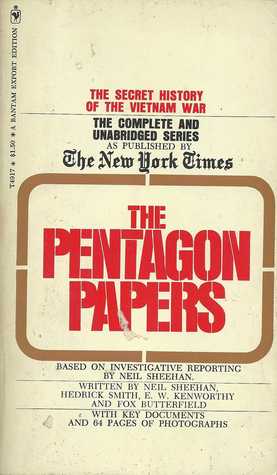
This book is a MEAL. Undertake it for purposes of research, or if, like me, you feel the need to own and read a set of government documents that the US government tried so hard to keep its citizens from seeing. The documents themselves are not written to entertain or to be readable; they were written candidly in most cases, under the assumption they would remain of limited availability.
Parts of these lengthy epistles have been edited down and quoted from by Neil Sheehan, the New York Times journalist who fought to get them and make them accessible to the public. I was just a kid myself when the earthshaking ruling by the U.S. Supreme Court came down saying that the documents should be printed and available, and I used my lunch money to hustle down to the local bookstore as soon as it was out in paperback. I have that copy still.
Some of the scariest moments come in memorandums discussing the possibility of using nuclear weapons on the Vietnamese. The dryly written notes about a policy toward “exfoliation” belies the human and environmental holocaust Washington brought down when it became clear that the Vietnamese people actually did NOT want a Western-style government, and that the only way to force it upon them was to destroy the jungles in which they hid.
One plan considered is to withdraw the bombing raids from Hanoi and Haiphong Harbor. Too many pilots are being killed, and it takes a long time to train a pilot. That’s the actual reason, along with a desire not to ramp up aggression toward the Chinese.
HOWEVER, the plan is to tell the American people (“the public”) that the bombings have been moved from north to south because all the targets that were bombed in the north were destroyed. There is discussion about the fact that this is untrue, but would look better in the press.
Small wonder the US government fought so hard to suppress these damning documents! The loss of credibility and innocent trust toward government in the USA did not start with the Watergate break in; it started during the US war against Vietnam.
There is a point at which it is acknowledged (in a document, not by paraphrasing), that the only reason the US government remains in Vietnam is to prevent US “humiliation”, even though the KIA (“Killed In Action”) figures are projected to be 1,000 US lives lost (and of course innumerable Vietnamese, 80% of whom will be civilians) per month. Even General Westmoreland, the most tireless advocate for more troops, calling up the reserves if necessary, cannot project a date the U.S. can declare a victory, or even gracefully withdraw without a clear and obvious loss of this war.
The risk of staying in: possible war with China, also “world-wide revulsion against us” (Memorandum #96, prepared by John McNaughton for Sec. of Defense McNamara, who would become disillusioned with the whole mess and advocate for withdrawal).
The guerilla fighters in the mountains are at one point compared (Memorandum #101, p.447) to the Irish freedom fighters who were defeated after WWI.
This tome is a treasure trove of primary documents, and the NY Times narrative is carefully written to honor the original meanings of quotations that have been pieced together and make it possible to publish the events and documents in a single volume. Don’t bother with it unless you have a serious interest in the US war against the people of Vietnam, and the deceit regarding same of the American people whose tax money paid for it.
I have seldom stayed with a book so difficult for so long when there was no academic requirement involved. I began this book for the second time (didn’t finish it the first time, when I bought it) in Oct. 2012. Because it was so dense and important, and because I didn’t want my mind to wander, I only read a few pages daily till I hit page 500. At that point I picked up a pen and could not put it down. I have no idea why this is so, but I just HAD to finish it. I did that in May 2013, and am glad I followed through.
Trotsky wrote this while he was in exile. Lenin was dead, and Stalin had come to power in the Soviet Union, striking a death knell for world revolution as he moved to consolidate the gains that the working class had won and establish an elite, privileged power structure, corrupt and bureaucratic.
In Germany, the revolutionaries, courageous to the bitter end, were rounded up and for the most part, exterminated.
Trotsky offers a convincing argument regarding the causes of fascism. He does not see this as mass hysteria or a “quasi-religious” movement, to quote others on the topic, but one with a purely economic basis.
It is not light reading. It is an historical treasure and possibly instruction for what the future may hold if workers, farmers, students, and social activists who care about the world are not wary and careful. The best way to read it is with the television set off and some sticky notes or a highlighter in your hand.
I was stunned to see I had not reviewed this sooner, as I have read it multiple times. Alongside the work of Daniel Guerin, I consider this the best analysis of the causes of fascism ever written.

 I suspect just about everyone in the USA, or who frequently has to travel to the USA, is heartily sick of the extreme security measures that raise our taxes through the roof and cause so many delays, inconveniences, and even the confiscation of ordinary products that cost us a fair amount of money, on those occasions that we foolishly forget not to take them with us on the plane. The racial profiling makes it even worse. And so I requested this DRC from Net Galley and Oxford University Press with the expectation that I would agree with it wholeheartedly and immediately form the virtual simpatico with its writers that readers form with their favorite authors. Alas, not so much.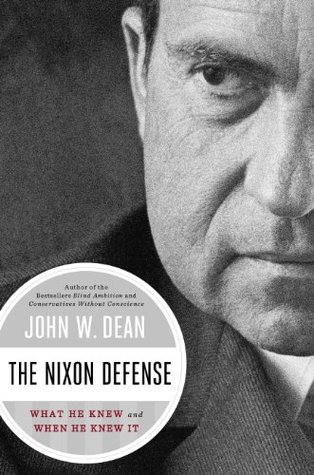
 Seattle Book Mama