Betrayal of Trust, by J.A. Jance *****

betrayaloftrust Jance’s JP Beaumont detective series is one of my all-time favorites. Set (usually) in my own home town, it carries a gritty yet human, thoroughly believable flavor that I just can’t find anywhere else.

In this case, Beaumont is roped into a scandal unfolding at the governor’s mansion; it turns out he knows the governor. She was the girl who was too important to talk to him in high school, but now she wants his skill in discreetly looking into some things she’d rather not see on the front page.

It doesn’t work out that way.

This title has been re-released, and so I accidentally read this twice, but even once I had realized my error, I decided to plow through and finish it a second time. It wasn’t that I had no other books; but this series is on my very short list of things I don’t mind seeing a second time around.

Highly recommended to anyone who enjoys good detective fiction.

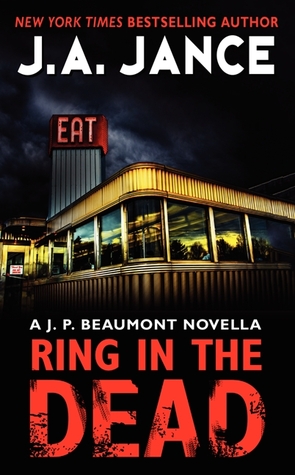
Ring in the Dead, by JA Jance ****

ringinthedeadJance is a matriarch in the world of detective novels, or in this case, the novella. She has four different series that she prodigiously juggles and maintains. The others take place in Arizona and don’t interest me as much as this series, her first, whose protagonist is a Seattle cop named JP Beaumont.

It takes a good writer to make me buy the premise here, namely that the SPD are mostly hard-working, good-hearted citizens who joined the police department out of a sense of civic duty. The reality is very different; Seattle’s cop force was recently named the most violent in the entire USA. Cops here are legendary for their gratuitous use of brute force. They develop vendettas against individual citizens. My own middle-class neighborhood recently met with the chief of police to let him know that we are comfortable policing ourselves, and he can take those cops he says are too few to do the job, and assign them somewhere else. Anywhere else. Please. Just get them out of here!

So while the FBI knocks its collective head against the brick wall of SPD intransigence, trying to find some way to rein in these mad dogs before the city goes completely nuts and becomes another Ferguson, I read this engaging little novella, and for the brief time it lasted—a single evening—I could forget reality and buy Jance’s premise of brother officers doing good things. That isn’t easy to do.

The fifth star is denied simply because of the brevity of the work. There must surely be a definition that separates the short story from the novella, but I am darned if I know what it is. When reading a digital work it’s not a bad idea to skip to the ending first, so you’ll know when it’s coming. I was glad I did that, because this one ended 67% of the way through its brief length. A full third of its space was devoted to plugging another novel. (I was too annoyed by this to remember the title of the work-to-come, so I guess the teaser didn’t work for me.)

The novella focuses on a long-ago case when Beau was a newly-promoted detective. His partner, known as Pickles, died of a heart attack, and his daughter found some papers when she was cleaning out the family home. She comes to talk to Beau and to give him the papers, which relate to a case he had worked. In a nut shell, the story reminds us that time is short, and that we should spend ours on things that count.

I look forward to Jance’s next Beaumont novel. I just hope it’s full length. I obtained this novella from our public library, but if I had paid for it, I would have felt robbed. Get it free or cheap, or keep your plastic put away.

Native Speaker, by Chang-Rae Lee *****

native speakerNative Speaker has been praised by the most prestigious periodicals, from New York to London to Los Angeles, and yet, though it has won a number of awards, I had not heard of it until I found it in a special award-winners area of Powell’s City of Books, when I made my annual pilgrimage to my old hometown and my old bookstore this summer. Perhaps I first found him there because he teaches at the U of Oregon; or perhaps it is because Powell’s is the only brick-and-mortar bookstore I frequent anymore. At any rate, this book was a real find.
Our protagonist is Henry Park, who works as a spy of sorts for a private firm:
“Our clients were multinational corporations, bureaus of foreign governments, individuals of resource and connection.”
Henry is having problems with his work. He is supposed to insinuate himself into the lives of individuals who may be working against the interests of one client or another, find out all he can about them, develop a psychological profile. To do this, he has to pretend to become emotionally attached to them, and in some cases make them dependent upon him; then he files his final report on them and disappears from their lives.
His most recent subject was a psychologist named Luzan. He saw Luzan regularly, began telling him things he had never told anyone. What with his problematic relationship with his father, now deceased, and the accidental death of his beloved son, his only child, and his marital problems…the man actually needs a psychologist, and in the end the firm has to muscle their way into the shrink’s office and physically remove Henry from his subject in order to break the connection.
Now they have thrown him a really easy job to get him back into shape. He is supposed to cover and report on a politician, John Kwang. There is the Korean connection, which makes him a shoo-in; he begins by posing as a freelance journalist, but becomes more and more involved as a member of the campaign staff. His reports become scantier and fewer as he adopts Kwang as the father he never really had.
Beautifully interwoven throughout Lee’s narrative are the cultural understandings between those of Korean ancestry; the conflicts that arise between first and second generations in the US; the racist assumptions, stereotypes, and miscommunications between Koreans and Caucasians, whom he pointedly refers to as “Americans”. Black people are just Black, but white folks are “Americans”. Park is still in love with his “American” wife, but she recently figured out what he does for a living, and she isn’t sure she can live with it. His plan is to finish this assignment, he tells her, and then he’ll get out, go do something else.
There is such grace and care in Lee’s story-telling, both in what is said, and in what is not. I’ve never read anything like it. And one thing I really appreciate is that without overtly saying so, he lets us know that there is no such thing as an Asian-American. A certain skin tone, a fold at the outside of the eyelid, these are superficial things that don’t speak to culture, to language, to expectations. I also really appreciated the way he dealt with the hostility between Korean small shop owners and their African-American neighbors and customers, and the historical reality to which he deftly traces back, without ever stepping away from the central storyline.
Native Speaker is unlike anything else I have ever read. It doesn’t even have a genre, unless we drop it into the “Asian studies” category that his story demonstrates is artificial in any case. It’s a thoughtful, deep story, yet it is not hyperliterate or particularly lengthy. It’s there for anyone who will take the time to read it. A worthy and thought-provoking journey.

The Living, by Annie Dillard *****

When I got home from my annual pilgrimage to Powell’s City of Books, I looked over my treasures. Those that had been on my wish list got read first. Now I am down to the books I bought because a Powell’s employee liked them, or from impulse (rare). I also sometimes buy a book if it has won awards and is in a subject area of interest to me.

This book made me wince when I saw I had paid 75% of the original price. It did not look promising.Stained, or fly-specked around the edges; pages yellowing and about to fall out. What had I done?

On the surface, it is historical fiction about the development of Bellingham, WA. A snore (unless you live there MAYBE), right? But then, why was it a New York Times best seller, if it was a waste?
Flip to the author page…Guggenheim Foundation grant, National Endowment for the Arts, Washington Governor’s Award…okay, okay, I would read it!

The story was praised by others as “epic”, and it is true. The characterization and plot are first-rate. There are many families whose lives are followed, and yet, even with sleeping pills under my belt (metaphor; I don’t sleep wearing a belt), I kept track of them all and even more, felt as if I knew them. The writer was true to her characters, and there was nothing formulaic or tossed in as filler to meet a deadline. It was s story about PEOPLE who were shaped by their environment. Some of it filled me with joy, and other parts broke my heart. I was sorry to reach the last page, even though this was a long, leisurely read.

The page numbers are deceptive. It clocks in under 400 pages, but in trade paperback size, it packs a whole lot of words onto each page. (Think small type, slim margins).

This is not a book to be rushed through. Once you are hooked–and if you enjoy historical fiction, or even strong, well built, dynamic characters (and multiple characters are dynamic here!), this is good read by a cozy fire. Buy it for yourself this winter, or get it for a friend.

Thicker Than Water, by GM Ford *****

There are a number of masters of the mystery genre that I read faithfully. There are about a dozen, if we count those no longer among us (such as Ed McBain, Donald Westlake, and Tony Hillerman) whose novels I would read simply on the basis of their authorship.

GM Ford is among my dozen. In fact, he’s toward the top of the heap. I can’t objectively say whether the latter is because he sets his mysteries here in my own stomping grounds–so that while James Lee Burke can give me a really great travelogue, when Ford hooks a left on Madison and heads to Madison Park, I am looking out the front of the car windshield with him, since we’re less than twenty minutes from my home.

But the one thing I can say with objective certainty is that he is one fine writer. He can take a premise that is as old as the hills and in the hands of a lesser writer would cause me to moan, “Oh, come ON, not THIS again!” and give it a twist to turn it into something else, so NOT really ‘this again’, and then write it with such amazing deftness, word-smithery, pacing, and wry humor that I almost can’t put it down.

But I do. I put it down at bedtime, because I’m going to read SOMETHING after I take my sleeping aid for the night, and whatever it is, I may not remember it very well. My very favorite reading material only gets read while my brain is in fully active mode. I doled this out to myself in bits and pieces, like Mary Ingalls hoarding her Christmas candy. Ohhh, don’t let it be over yet!

But I don’t delay gratification all that well, and as the weekend hazes to a close, the last page of the book terminated, and now I must wait for the one that will be out in a few months.

I had half a dozen sticky-noted quotes to toss your way, poignant moments with “the boys”, as the first-person protagonist fondly refers to his late father’s crowd, some of whom are truly as down-and-out as people can be, living beneath freeways, in doorways, and under trees in city parks. His trenchant observation that “the line between middle class and out on your ass is thinner than a piece of Denny’s bacon” is most painfully clear in pricey metropolises such as Seattle, where the annual take-home pay of a waitress or clerical worker would not even pay the rent for an studio apartment in the city, let alone allow for other costs of daily living like food, transportation, medical premiums, and clothing.

And for me, this recognition is one of the key grooves that turns my mental tumblers into place and permits me to feel empathy toward an author. It’s a hard world out there, and even in a glorious place like Seattle, poverty’s knife edge is closer to most of us than we care to even acknowledge.

Leo Waterman, our intrepid detective, has inherited enough to live off of, having come of age at a middling forty-five, but life has already taught him what down-and-out looks like. He feels the bumps on the head and the shock that strikes his skeleton when he climbs a fence and jumps to the concrete on the other side, but if there’s a good enough reason, he does it anyway. He doesn’t have a death wish, but he has the character and integrity to go out and butt heads with bad people when the city’s cops settle in more comfortably behind their desks and wait for retirement to edge ever closer. Leo’s an easy hero to bond with.

As for the rest of the little bookmarks and sticky notes I have reluctantly pulled from my still-new book’s pages…why ruin it for you? It doesn’t get much better than this. Find the quotes for yourself. You can order that book and it will be at your gates inside the week. But you can’t have my copy. It’s been claimed by another family member, even as I typed this review.

Chump Change, by GM Ford *****

chumpchangeFrom within the crowded field of mystery, crime thriller, and detective fiction writers, there are three still living who can make me laugh out loud without missing a beat or slowing the pace of a damn fine novel. GM Ford is one of them. (For the curious: James Lee Burke and Sue Grafton are the others.)

I celebrate whenever one of his novels, which had become something of a rarity in recent years, is published, and because of their whimsical yet biting nature, I prefer the Leo Waterman series to the excellent but not funny Frank Corso series.

Had this one not come up like a gift waiting to be unwrapped on Net Galley, it would have been on my Mother’s Day wish list.

When in Seattle, what should one do when a crime is being committed—whether property related or violent—within one’s view, or even to oneself? The knee jerk reaction is to call the cops; as Ford reminds us, we grew up expecting “Officer Friendly” to turn up with his big muscles and righteous justice, brimming with yearning to help the oppressed and exact justice. But that’s a myth. And right now, when SPD is in such hot water for its gratuitous use of violence that the FBI is monitoring its cops and the Justice Department is telling the new mayor that it’s not okay to substitute additional training in place of discipline, this novel could not have been better timed. Waterman falls for the 911 plea for assistance gambit twice, though he is old enough to know better. Chaos ensues both times, of course. When justice comes, it is because of the protagonist’s smarts and his excellent connections in other places.

Much of this novel is set on the Eastern side of the Cascades, out in wheat country near the Idaho border. And there, his fictional cops are about the same as those everywhere in the US of A: easily greased by the squeaky wheels that have the most resources. The gloves are off; the veneer of political correctness that sometimes hides the scruffier side of law enforcement in the state’s alpha city is nowhere to be seen way out there in good ol’ boy country.

Once again, Ford uses what would ordinarily be considered a trite device toward the story’s climax, but stews it in enough crazy juice to make it absolutely brand new. The only mitigation of my joy was in noting how few pages of the story remained.

I also appreciated what he does with his side kick character, who has done a really bad thing, but who is young enough to redeem himself in a fresh situation. The measures of forgiveness and caution are well played.

I hope this marvelous book will receive enough publicity and promotion for Ford’s work to be appreciated by a wider audience than local folk. He deserves it. Just as I enjoy a journey to Louisiana or Montana through the pages of Burke’s literature, or to Southern California through Grafton’s, so should everyone, including those who read the New York Times, be treated to a taste of Leo Waterman and the misty yet gritty city he calls home.