Unlikely Animals, by Annie Hartnett*****

There are indifferent writers; good writers; outstanding writers; and then there are writers like Hartnett, that leave me with my jaw dropped down to my knees, thinking that I like to write, and you probably do, too, but friend, neither one of us will ever write like this. Not ever.

My thanks go to Net Galley and Random House Ballantine for the review copy.

Emma Starling is our protagonist, and she was born with healing powers in her hands. She went away to medical school, but was expelled for reasons that we don’t understand until later, and her healing touch is gone. She has quietly left school without telling a soul back home. She hasn’t even returned for a visit, but now she has been summoned unequivocally; her father is dying, and her mama wants her to come home. NOW.

There are enough points of view in this story to make your head spin. We have the graveyard crowd, for example, and since Everton, New Hampshire is such a tiny town, everybody knows everybody, dead or alive. When I first see that the dead are discussing the affairs of the living, I am dismayed, because the legendary Fannie Farmer has already done this in The Whole Town’s Talking. But soon it becomes obvious that this story isn’t derivative in the least; Hartnett takes this device and uses it in a different way, and it doesn’t dominate the story as Flagg’s does; these characters are there to provide a slightly more objective perspective than those that still live.

There are several points of view from among the living, too. And there are references throughout to the writings of Harold Baines, a naturalist instrumental in shaping the town and in particular, the iconic yet bizarre Corbin Park, which is open only to a chosen few. There are points of view offered from the critters as well; not all of the critters are real, however. And at the EXACT moment when I begin to think that the author should have pared this thing down, for heaven’s sake, because the organization appears to be all over the place, the narrative explains that “A good story doesn’t always follow an arrow, sometimes it meanders a little instead, so we hope you’ll excuse this tangent…It might seem unrelated, but sometimes a minor character doesn’t become important until later…The lives of the living often get tangled up in unexpected ways, especially in a town as small as ours, even when a ten-foot electrified fence splits it up.”

I howled, because it felt as if the author had read my mind!

An important plot point is the disappearance of Crystal Nash. Crystal was Emma’s best friend, and had lived with the Starling family as sort of an informal foster child. Crystal developed an addiction and disappeared; Emma and Crystal had had a falling out, and Emma tries not to think about her too much now. Clive, Emma’s father, seldom thinks about anybody else. He’s turned over every rock; slapped a poster on every telephone pole.

To say the least, it’s an interesting homecoming for Emma.

As if the many points of view don’t make for a complex enough story, Hartnett takes us back in time—sometimes just a few years, at other times, way back in the past—and I am awestruck at the way she pulls all of it together at the end, with no loose ends hanging. At the outset I had been sure that this story should have been streamlined, but at the end, when I look back to see what, if anything, could be cut without detracting from the story, there is nothing that’s superfluous. Not one thing. All of these odd bits and pieces are essential to the story she is telling; “meandering,” indeed.

Because I had fallen behind in my reading, I checked out the audio version from Seattle Bibliocommons, and it is brilliantly performed. Usually a story this complicated doesn’t work for me as an audiobook, but this one is outstanding and not hard to follow (although I did go back over the DRC for some quotes.)  Mark Bramhall and Kirby Heyborne do an exceptional job as narrators.

This is undoubtedly one of the finest novels we’ll see in 2022. Highly recommended in whatever format makes your heart happy.

The Sentence, by Louise Erdrich*****

I wasn’t able to get a galley this time, and so I checked out the audio version from Seattle Bibliocommons. This turned out to be the best possible way to read it, because Erdrich narrates it herself.

The Sentence is set in Minneapolis during the pandemic, from November 2019 to November 2020. It starts with the world’s most hilarious crime, one which sends our protagonist, Tookie, to prison; however, most of the meat of the story takes place once she’s out again. Tookie develops a love of writing (“with murderous intent,”) while she’s incarcerated, and so, once she is released, what more natural place is there for her to look for work, than a bookstore? But this bookstore is special. It’s haunted.

Tookie’s story is wrapped around a number of social issues and current events; most prominently, of course, is that of American Indians’ rights; this is the time and place of the murder of George Floyd by Minneapolis cop Derek Chauvin, and so the demonstrations of outraged citizens are folded into the novel as well. And of course, this is not one bit funny.

I came to read Erdrich late in the game, when The Night Watchman, which won the Pulitzer, came out in 2020. That one novel persuaded me that from now on, I would read every blessed thing Erdrich writes. The Sentence strengthens this resolution.

Highly recommended.

The Ogress and the Orphans, by Kelly Barnhill*****

This book is not at all what I expected; it’s much better than that. My thanks go to Net Galley and Algonquin Young Readers for the invitation to read and review. This book is for sale now.

This lovely story is told in the second person omniscient, and we cannot tell, until the end, who the narrator is. Our setting is the sweet (fictitious) village of Stone-in-the-Glen, and it’s told in linear fashion. Because its telling is straightforward, with no changes in point of view or time period, and no heart-hammering suspense, it is ideal for bedtime reading. It’s marketed as a children’s book, and here I disagree, in part anyway. The vocabulary is too advanced for an early reader, but would serve well as a story to read aloud to students in upper elementary classes, or as a read-alone for the gifted child. There is no sexual content, drugs, or bad language.

Because I believed this was going to be a children’s book, I thought I’d whisk through it in no time and review it the same week I started, but I sensed immediately, once I’d begun, that this was not that kind of story. Its length, density of page and paragraph, and content call for a more leisurely pace, but also, it’s just too good to rush through. I am a sucker for excellent alliterative language (see what I did there?) and Barnhill is a champion in this regard. I found myself going back a page or two to reread, highlighting the best passages for no reason but my own pleasure.

The plot is easily summarized. The lovely little village is friendly and flourishing until the town library, which has magical powers, burns down. Without benefit of the library, villagers keep to themselves, and they become secretive and greedy. The mayor could help, but chooses not to do so. He’s a real piece of, um, work.

The orphanage in particular is in dire straits. They haven’t been getting their promised funding lately, and the place is starting to fall apart. The children are hungry. Were it not for the largesse of an anonymous donor, one that leaves big boxes of vegetables at the gate for them to find in the morning, they would starve.

The Ogress is their benefactor. We know this early on, so I don’t consider it a spoiler. However, due to the misconceptions of the villagers, which the mayor feeds shamelessly, the Ogress soon becomes a scapegoat. These two problems—local poverty, and the hostility toward the one among them that is different—form the basis of the story.

As to the allegory, which is dropped in midway through in a fairly heavy-handed manner, I am of two minds. On the one hand, my philosophy is similar to the author’s, and so I snicker when I see what she’s doing here. On the other hand, this is exactly the book one reaches for when one has had enough, enough, enough of current events and the outside world, and allegory becomes something of a distraction. When I see who the mayor represents, I start eyeing the other characters. Does the Ogress represent someone in the real world as well? What else am I missing? These musings are more likely to lodge themselves in the mind of a language arts teacher; I recognize that. But my preference would be to either turn the whole thing into a piece of political satire and own it, or to leave it alone and have a sweet story devoid of political content, one that readers on both ends of the political spectrum can enjoy—maybe even enjoy together.

These minor issues aside, I love this story. It’s my first taste of Barnhill’s writing, but it surely won’t be the last. Highly recommended.

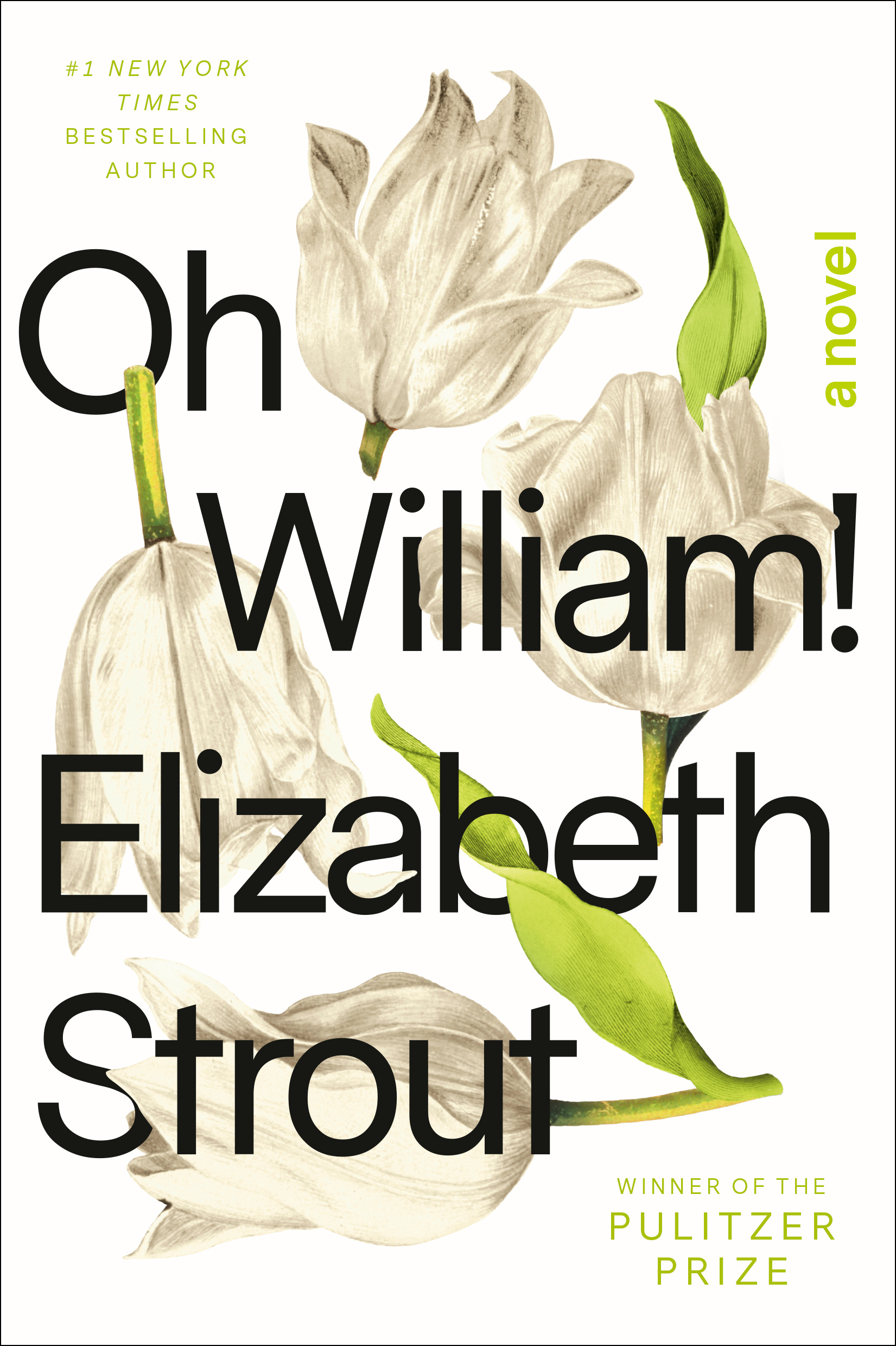
Oh William! by Elizabeth Strout*****

Nobody writes more convincing characters than Pulitzer winner Elizabeth Strout. In her most recent novel, Oh William!, she brings back Lucy Barton, the protagonist in My Name is Lucy Barton and Anything Is Possible.  My thanks go to Net Galley and Random House for the invitation to read and review; this book is for sale now.

Reading Strout is a mixed blessing. On the one hand, it’s a glorious thing to read writing this strong. On the other, poor Lucy Barton has endured a tremendous amount of pain, and Strout’s skill enables her to communicate every inch of Lucy’s pain and suffering to the reader. I wasn’t sure if I was up for it, but now I am glad I read it, because in this installation, most of her dreadful early years are left in the past, where they belong, and she is a successful novelist that can afford to provide for herself and when necessary, her adult daughters.

The premise is that Lucy’s ex-husband, William, has once again been left by his most recent wife; this is what happens when a man can’t keep his zipper shut. But he has taken an ancestry test, and he’s discovered that he has a half-sister that lives in Maine. His mother is dead, so there’s no asking her about this. Should he contact this sister? Well, probably not. But he’s curious. Should he? Maybe. Well, no. Unless.

Lucy is recently widowed, and she is hurting. Her second and last husband, David, was a wonderful man, and it was a terrific marriage. She misses him terribly. But she has remained friendly with William; after all, they had two daughters together, and so there are occasions. William calls Lucy to ask her advice about the half-sister, and later, he wonders if she’d drive with him to Maine. He’s not sure what to do.

I am always astonished at people that can divorce, yet remain so friendly. It’s hard enough to be courteous on occasions involving children and grandchildren; to be chummy enough to chat on the phone, to seek each other’s advice, to go on a road trip together, for heaven’s sake, seems to me like a tremendous gift. At any rate, Lucy and William are friendly, and she agrees to go with him to scope out the land of his forefathers, and do a little recon on Louise, the secret sister.

The magic of Strout’s prose is in her sterling character development. Earlier here, I was discussing how amazing it is that Lucy and William are on such good terms; these are fictional characters, but to me, they have become flesh. Lucy’s first person narrative is so intimate that I feel as if I am talking with an old friend over coffee.

If I could change one thing, I’d tone down a couple of Lucy’s mannerisms. The title, Oh William!, is used so frequently in the narrative that by the last quarter of the book I want to say, Yes, okay, I get it already. The other one is “What I mean is…,” and “…is what I was thinking.” These are legitimate devices that contribute to the writer’s voice, but I would use them less often.

Because I had fallen behind–or more truthfully, I had been avoiding this galley because I expected it to be grim—I checked out the audio version from Seattle Bibliocommons. Kimberly Farr is an exceptional reader, and for that reason I recommend the audio book over the print, although both are excellent.

Highly recommended to those that treasure fine literary fiction.  

Violeta, by Isabel Allende*****

Violeta is an epic tale that spans, along with its protagonist, a century-long period that begins during the Spanish Flu and ends with our modern day pandemic. Technically, then, it is part of the growing body of pandemic literature, but as is always true for Allende’s novels, it is so much more.

I received a review copy, courtesy of Net Galley and Random House Ballantine, but had I not, I’d have found a way to read this glorious story anyway. It’s available to the public now.

Violeta is born to wealth and privilege, the only daughter in a large family. Schooled at home by a nanny, sequestered in a mansion with servants to do her bidding, she is unaware that her luxurious standard of living comes at a tremendous cost to others. Then the market drops, and her father, who has overextended himself with unwise investments, is ruined. Most of her brothers are already grown and gone, but one brother, Jose Antonio, had remained at home, groomed by their father to take over the business one day. “He was the model son, and he was sick of it.” After their father’s abrupt departure, Jose Antonio finds himself responsible for the family; with the local populace in a state of near insurrection, the only thing left to do is to take his family—including Violeta—and leave town. They remove themselves to a distant farm owned by poor but generous friends, and they learn to make do as they’ve never done before.

We follow Violeta through her early marriage to a German immigrant who was “so bland and boring that he inspired instant trust,” and then through a long, tempestuous relationship with a handsome thug named Julian, who makes his fortune in dark, horrible ways involving illegal substances, the CIA, and the Mafia. And here, Allende’s startling sense of humor is in full brilliant flower, as she describes his retrieval of ill gotten funds from the septic tank of their Florida home:

He pulled a filthy bag from the hole, dragged it to the kitchen and poured the contents out on the floor; rolls of wet bills covered in poop. Gagging, I saw that Julian planned to clean the money in our washing machine. “No! Don’t even think about it!” I shouted hysterically. He must’ve understood that I was willing to draw blood to stop him, because I’d instinctively grabbed the largest knife in the kitchen. “Okay, Violeta, calm down,” he begged, frightened for the first time in his life. He made a call, and a short while later we had two mafia goons at our disposal. We went to a laundromat and the gangsters paid everyone to leave. Then the men stood guard as Julian washed the poop-covered bills. After that he had to dry them and pack them in a bag. He brought me along because he had no idea how to operate the machines. “Now I understand what money laundering is…”

As with all or most of Allende’s protagonists, Violeta becomes a strong woman that can stand on her own, and who picks and chooses the men she wants to be with. She is beautiful, intelligent, and ends up with piles of her own money that she has earned in an ethical manner. And here is my one, very small issue with this book; just once I would like to see an Allende main character that doesn’t get rich, but is fine anyway.

I am late in reviewing this book, but it’s important not to try to rush through a story such as this one, because the literary alchemy Allende creates is the sort that must be appreciated at one’s leisure. Her novels are not page turners; they don’t try to be. Instead, Violeta is the sort of book you take with you on a spa date, or to your very own bathtub with bubbles, candles, and your favorite beverage.

Highly recommended to feminist readers that enjoy top quality literary fiction.

Our Country Friends, by Gary Shteyngart*****

Gary Shteyngart is a funny guy. In Our Country Friends, he tells a story in which Sasha, a former literary luminary, up to his eyeballs in debt, invites five friends to join him and his little family at their country estate to weather the pandemic. The results are not at all what he anticipated.

My thanks go to Net Galley and Random House for the invitation to read and review. This book is available now.

Shteyngart does us the favor of listing the cast of characters (“Dramatis Personae,”) at the book’s opening, and I relied on it heavily. Because all of the characters are introduced at the outset, I took a ridiculously long time getting them straight, but it was worth it. The group’s dynamic would be fairly stable but for the introduction of “The Actor,” someone he knew back in the day but who is an A-lister now. But frankly, some, if not all, of the other guests would probably not have come but for the mention of The Famous One as a possible addition. When he comes, the women practically swoon in his presence, and then nothing is the same for the rest of the story.

The first third of the book seems relatively formless, but I suspect the author (should I say, “The Author?”) is warming us up, letting us get to know the characters before a lot of other action takes place. The promotional blurb tells us that this story encompasses six months and four romances, and that it’s about love, friendship, and betrayal, and that sums it up.

Generally speaking, I don’t enjoy novels about rich people, but because Shteyngart is setting them up for satirical misery and angst, I dive in, and I emerge shortly afterward, laughing. This sly humor is unmissable.

Because nearly all of the characters are over forty, I highly recommend this story to readers of a literary bent—if you know Chekhov, it’s even funnier—who are forty or over.

Black Cake, by Charmaine Wilkerson****-*****

“I was not the first person to go through the world living two separate lives, one out in the open and the other locked up inside a box.”

Elly Bennett dies and leaves a detailed recording for her children. Wilkerson’s novel is about Elly’s life, but more than that, it’s about secrets. Everyone in this book has one or has been impacted by one in a major way, and for most, both are true. Elly and her late husband had a whopper, and they built their lives and their family around it. Their two children are Byron and Benny, and Benny’s secret is all consuming for much of her life; it has had a role in estranging her from her once-adoring older brother and parents. Meanwhile, there’s a child—now grown to middle age—in Europe that is herself a secret, and whose very identity has been obscured by one. Elly’s closest childhood friend carries a particularly potent secret, and so does the nanny that raised her. Even the lawyer that handles the estate has one.

When is it safe to let go of a secret?

I was invited to read Wilkerson’s debut novel by Random House Ballantine and Net Galley, and I thank them for the review copy. This book is for sale now, and everyone is talking about it. You’ll want to get in on it.

Our story unfolds with seventeen year old Coventina Brown, known as Covey, quietly launching a plan to join her boyfriend, Gibbs, in London. He’s gone there to go to school, and when she’s done with school, she will join him. That is, until her father, who has raised her alone, gets into big trouble with a loan shark, a local thug who now holds title to her father’s store and his home, and now wants the one thing this father has left: Covey. If Covey marries this nasty old man, the debt will be squared. Most fathers would send their daughters to safety, and then square their shoulders and solve their problem, even when their own lives hang in the balance. But alas, Johnny Lyncook is not most fathers. He’s not a particularly nice man. As one of our characters will observe later, “A shit is a shit, young or old.”

Covey escapes on her wedding day (at which Black Cake, similar to fruitcake, is traditionally served), and her experiences from that time forward will form the foundation of her own life, her (future) husband’s, and their children and other loved ones.

The story is told in the third person omniscient, with the point of view changing by chapter, along with the time period. Readers will find themselves wretchedly confused if they fail to note the chapter titles, which are the key to everything that follows. The result is a story that is assembled like building blocks, and although it works out in the end, with everything coming together for a satisfactory resolution, I am frustrated at times, because just as a character begins to take shape for me, we leave them and join someone else.

I would have enjoyed more integration and perhaps a wee bit of streamlining. For example: we learn that Johnny, Elly/Covey’s father, is ethnically Chinese, and that there are a lot of them in the Caribbean, but there appears to be no reason whatsoever to include this. It is as if Wilkerson wants to include every interesting fact about life in the Caribbean, and so there are components her that add nothing to the narrative. It’s a distraction. The story is complex enough without tidbits thrown in for no benefit. There are some small credibility issues as well. Two people within the story become famous enough to be recognized on the street, and receive breaks that they ordinarily wouldn’t; one is a distance swimmer, and the other an oceanographer. I can imagine how one or the other might be charismatic and photogenic enough to achieve this, but two? Name a famous oceanographer. Name a famous distance swimmer. See what I mean?

Nevertheless, this is in many ways a story for our time, and as such, it will make meaty discussion material in book clubs and in classrooms.  When is a person black enough, and must a biracial person choose one side of their heritage over the other? How much information do adoptive parents owe their child, and when should they provide it? What about biological parents? When is it acceptable to keep secrets related to their children’s heritage, and when not? There are MeToo and other women’s issues at play, and there are issues of race. You could probably read this thing three or four times and still come away with observations, ideas, and questions that you hadn’t found the other times.

I am grateful that this story never devolves into a cookbook.

As debuts go, this is a strong one, and I look forward to seeing what else Wilkerson publishes. I recommend this novel as a welcome distraction from the stormy months ahead.

The Eternal Audience of One, by Remy Ngamije*****

“Life is not hard in Windhoek, but it is not easy, either. The poor are either falling behind or falling pregnant. The rich refuse to send the elevator back down when they reach the top. And since cities require a sturdy foundation of tolerated inequalities, Windhoek is like many other big places in the world. It is a haven for more, but a place of less. If you are not politically connected or from old white money, then the best thing to be is a tourist. The city and the country fawn over tourists. The country’s economy does, too. That is when it is not digging itself poor.

That is Windhoek. The best thing to do in the city is arrive and leave.”

And now, raise your hand if you find yourself wondering where Windhoek is. Don’t be shy. You’ll have plenty of company…ah. Yes. I applaud your bravery, being the first. And you, and you…and you in the back. Anyone else? That’s what I thought. Look around. Almost all of you. So now, I’ll relieve your discomfort and tell you, it’s in Namibia. Our protagonist, Seraphim, and his family must relocate there during the upheaval in their native Rwanda. This is his story, told in the first person.

My thanks go to Net Galley and Gallery Books for the review copy. This book is available to the public now.

Seraphim’s parents are strivers, working industriously to ensure that he and his siblings will have excellent educations and better lives. As a young man, he works hard and is fiercely competitive in school, but once he is at university in Cape Town, he becomes a party animal, using Cliffs Notes to dodge the assigned reading and embarking on booze fueled, all night romps. Ultimately, this is a coming of age story in a different time and place than that which most Western readers are accustomed to. And oh, my friend, if you are going to spread your wings and stretch your global literacy just a teensy bit, then this is one painless way to do it.

Once he’s inside South Africa, Sera deals with Apartheid, and during the course of his education, is advised by a wise friend, who tells him that if you want decent notes, you must befriend BWGs. These are Benevolent White Girls, and they seem to know some sort of educational code that young Black men have somehow been shut out of. There’s a funny passage about how to tell if a Caucasian is the sort one can hang out with, and to explain the difference in his own social class growing up, in contrast to others in his social group, he describes a problem with desks. There are fifty children in the class, he says, and not everyone can have a desk. Little Sera gets busy, and eventually is able to rise from chair number 50, to chair number three. Then, after a struggle with Gina and Hasham, the first and second place students, he rises to the first chair, first desk. When a friend asks what became of Gina and Hasham, Sera shrugs with his characteristic cocky arrogance, and he tells him, “I like to think they married and had second and third place children.”

Part of what I love is the way the voice here sounds like young men in their late teens and early twenties, here, there, or probably just about anywhere. In my experience, his demographic is the most hilarious of any in real life, and it comes shining through here, full of irreverent wit.

The narrative isn’t linear, and there’s some creative jumping around that, when combined with the internal discussions the narrator calls “The Council of the Seraphims,” can be difficult to keep up with. Don’t try to read the second half of this novel after you’ve taken your sleeping pill.

All told, this is a brainy, hilarious work, which is perhaps why Ngamije is being compared to Chabon and Zadie Smith.  He resembles neither, apart from being very literate and extremely funny. In fact, this book is worth reading just for the snarky texts sent by Sera and his friends; their handles crack me up even before I see what they have to say. Highly recommended, even at full price.

All the Little Hopes, by Leah Weiss*****

Recently, I read and reviewed Weiss’s debut novel, If the Creek Don’t Rise, which was delightful. This year’s novel, All the Little Hopes, is better still. My thanks go to Net Galley and Sourcebooks Landmark for the review copy.

Weiss’s story is of two girls born in different parts of North Carolina, both geographically and culturally, and of how they come together and ultimately, become each other’s family. The novels I love best provide a resonant setting, an original plot, and compelling character development; these three elements don’t compete for the reader’s attention, but rather, each of them serves to develop and reinforce the others. That’s what I find here.

Our story takes place in the 1940s, during World War II. The narrative comes to us in the first person, with the point of view alternating between the girls; we begin with Lucy. Her father is a farmer, and by far his biggest crop is honey. As the story opens, government men come to visit, and they want to buy all of his honey for the war effort. Lucy’s eldest sibling and brother-in-law have both gone to serve in the military, and there’s an emotional scene after the government men leave, because they’ve given permission for both sons to return home to help with the honey. Lucy’s mother pleads with her father to write to them and order them home at once; he stands firm, saying that the choice must be their own. Now we begin seeing how conflict plays out in this family, and how the various relationships work. But all of it is done through the plot, so that we aren’t slowed down by a bunch of emo for its own sake.

Bert, whose given name is Allie Bert, lives in the mountains, and her family has far fewer resources than Lucy’s. Her story unfolds with the death of her mother in childbirth, along with the baby. Her father sends her to live with his sister, Violet, who is expecting a baby of her own. He suggests that Violet will need household help, and Bert can provide it; he doesn’t know that Violet has gone stark, raving mad. When Bert arrives, Violet is behaving irrationally and at times, violently. She locks Bert out of the house in a storm, and the nearest house is that of the Brown family. And so it begins.

One of the most critical aspects of this book’s success is Weiss’s facility in drawing the girls, who are just beginning adolescence. At the outset, we learn that Lucy takes pride in her advanced vocabulary. I groan, because this is often a device that amateurs use to try to gloss over their lack of knowledge relating to adolescents’ development. Make the girl smart, they figure, and then they will have license to write her as if she were an adult. Not so here! These girls are girls. Though it’s not an essential part of the plot, one of my favorite moments is when the girls are locked in a bitter, long-lasting quarrel over whether Nancy Drew is a real person. Bert says she is not; Lucy is sure she is. This isn’t silly to them. It’s a bitter thing. Further into the book, Lucy realizes that it’s more important to be understood, than to use the most advanced word she can come up with. And so my estimation of Weiss rises even higher.

When someone comes from truly devastating poverty, the few things that they own take on great importance. Bert arrives with a treasure box, and in it, she keeps things that may seem inconsequential, but that mean the world to her. And Bert is also light-fingered. After meeting Lucy’s mother, who is one of the nicest people she’s met in her life, she pockets a loose button that Mama means to sew back onto a garment. Bert wants this button fiercely, because Mama has touched it. Later—much later—she confesses this to Lucy, and then to Mama, and is flabbergasted when there is no harsh punishment. She explains to a neighbor,

“Mama says sometimes stealing is necessary, but that don’t make a lick of sense. Stealing’s a crime. Back home, there ain’t two ways bout stealing. You get a whipping. You get sent to your room with no supper. No breakfast the next day neither. Stealing is a sin against the Lord Jesus, so salt gets put on the floor, and you get on your knees on that salt and stay there till you cry out and your knees bleed, till you fall over and Pa says that’s enough.”  

One feature of the story is when Nazi prisoners of war are housed nearby, and they become available as labor. At first locals fear them, but then they get to know some of them, and they discover that like themselves, the prisoners play marbles. Gradually, the rules about avoiding the prisoners relaxes to where the girls are allowed to play marbles with them sometimes. “We tread close to the sin of pride when it comes to marbles. I don’t think we can help ourselves.” And now I am veering toward an eyeroll, because (yes, I’ll say it again,) writers are awfully quick to find humanity in Caucasian enemies, whereas we know the story would have been very different had these prisoners been Japanese. BUT, as my eyes narrow and my frown lines deepen, another development occurs that reminds us that these men aren’t really our friends. Again, my admiration increases.

Weiss’s last book was a delight for the first eighty-percent, but it faltered at the end, and so I was eager to see whether this novel stands up all the way through. I love the ending!

You can get this book now, and if you love excellent historical fiction, excellent Southern fiction, or excellent literature in general, you should get it sooner rather than later. If you’re stone cold broke, get on the list at your local library. This is one of the year’s best, hands down.

Foregone, by Russell Banks*****

“Oh, Canada!”

Leonard Fife is a legendary filmmaker, his searing social commentary an important part of North American history. But now he is dying, and he has a few things he needs to get off his chest before he goes. My thanks go to Net Galley and Harper Collins for the review copy. This book is available to the public March 2, 2021.

Fife is not a lovable character, and now that the end is near, he wants everyone to know it. With the cameras trained on him, darkness all around him but for the spot shining on him as he speaks, he tells his life’s story, and he spares himself nothing. One relationship after another, abandoned without even a goodbye. Children left fatherless. Lives laid waste in his passing. Banks is one of the most brilliant novelists in the U.S., and his word smithery can turn nearly any terrible story into spun gold, but he never pulls punches. His writing is often painful to read, and here it is true in spades, agonizing. By the halfway mark, I am watching the page numbers crawl by and wishing it over.

But of course, there’s a surprise in store.

I don’t want to give spoilers, but in the last half of the book, the question arises as to whether our narrator is reliable. He says he did all of these dreadful things; but did he really…?

The book flows so seamlessly that the difficulty of writing it is not obvious, but here it is: almost the entire thing is one man’s narrative. There’s very little dialogue. It’s not an easy thing to carry off, and yet, this is Banks, and he does.

As his narrative unspools, we are occasionally reminded of his current circumstances by breaks in the action. Once in awhile he is overtaxed and starts to drift off, or worse, and action has to cease immediately while the nurse does important things quickly. Now and then she has to change his bag, or help him onto the toilet and wipe his butt afterward. There’s not a lot of dignity left to the man. But he doesn’t give a…okay, I’m not saying it.

As he insistently recounts his many betrayals of loved ones, ignoring the more suitable, conventional questions that the people filming him thought were going to provide the framework of the film, he makes it crystal clear that it doesn’t bother him in the slightest, what he is doing to his legacy. Torpedo all of it; hell, he’ll be dead before the film opens. What he wants is to be truthful, and the one person he wants to know the truth is Emma, his wife. He knows he cannot be truthful with her unless the camera is rolling, and he won’t proceed unless she is there. RIGHT there. He calls for her many times, making certain she hasn’t left. And through the occasional things she says, we are aware that Emma is not merely his arm candy, not a sycophant that married him for fame, fortune, or prestige; she’s a respected professional in her own field, juggling her own commitments in order to be present here and now for Leonard.

By the time the story ends, my feelings have changed. Leonard is still no angel, but he’s not the sack of excrement I believed him to be, either. The guy I hate at the end is the filmmaker, once Leonard’s protegee, but now wolfishly eager for his mentor to die on camera for him. The nurse orders the camera turned off, but the director calls over the top of her to keep it rolling, the vulture. I want to smack him!

Ultimately we see that death is a final betrayal, a form of abandonment; but Leonard is at peace, because his goal is realized. And this is the story’s title, but I am not going to tell you how that works.

Get the book and read it. All your own sorrows will feel smaller.