
The Girls, by Emma Cline*****

thegirlsThe Girls is a fictionalized account of the Manson Murders, a terrible killing spree that stunned the USA in the 1960s before any mass shootings had occurred, when Americans were still reeling from the assassinations of President Kennedy, his brother, Senator Robert Kennedy, and Dr. Martin Luther King. Manson, a career criminal with a penchant for violence yet possessed of a strange sort of charisma, attracted a number of young women and girls into a cult of his own founding. Later they would commit a series of grisly murders in the hills outside Berkeley, and it is this cult and these crimes on which Cline’s story is based. Great thanks to Net Galley and Random House for the DRC. This book will be published June 14, 2016.

Evie is an only child of the middle class; she is well provided for, but her parents have split up and her presence is getting in the way of her mother’s love life. Evie needs her mother’s attention now that she has entered her teens and so she pushes the limits in small ways, then in larger ones. When it becomes clear that her mother just doesn’t want her around, Evie looks elsewhere and finds herself drawn to a feral-looking young woman named Suzanne, who has unsuccessfully tried to shoplift something from a nearby store. Before long, Evie is sleeping on a mattress at the rural commune where Suzanne lives, eating from the communal kitchen and being used sexually by the group’s charismatic leader, and then by a man in the music industry that Russell, the founder, wants to please in the hope of having his music published.  Russell dispenses hallucinogenic drugs freely to make the girls more compliant.

We know immediately that this place, the commune, is not a good place. When we find that the babies  born to young women that live there—in this era before Roe versus Wade gave women the right to choose—are segregated from their young mothers and the pitiful way they regress and attempt to attach themselves to various females in search of a mother or mother figure, that’s a huge tell. But when Evie arrives she doesn’t want to know these things, at least not yet. All Evie wants is to be with Suzanne.

The story’s success isn’t anchored so much in the story line, a story that’s been tapped by previous writers, but in the dead-accuracy of setting, both the details of the time and in every other respect as well, from home furnishings, to slang, to clothing, to the way women were regarded by men. The women’s movement hadn’t taken root yet. This reviewer grew up during this time, and every now and then some small period bit of minutiae sparks a memory. In fact, the whole story seems almost as if a shoebox of snapshots from pre-digital days had been spilled onto the floor, then arranged in order.

The other key aspect that makes this story strong is the character development. Evie doesn’t have to live in poverty among bad people, but she feels both angry at her mother and hemmed in by the conventional expectations of her family and friends. Her boundary-testing costs her the loyalty of her best friend, really her only friend, and so she casts about for a new set of peers. Her mother prefers the fiction that she is still visiting Connie, the friend that has disowned her, and this lie provides Evie with a lot of wiggle room on evenings when her mother is with her boyfriend and finds it convenient for Evie not to be home.

As for Evie, what has started out to be an adventure, a bold experiment in branching out from the middle class suburban life she’s always known, gradually begins to darken. But the worse things get, the more important it is to her to prove her fealty to Suzanne, to not be rejected a second time as she was with Connie. Hints are dropped that probably she ought to just go back where she came from before it’s too late, but she is determined not to hear them.  I want to grab her by the sleeve and get her out of there; Evie won’t budge. Once she is in trouble at home for the things she had done on behalf of the group, her desire to avoid her home and stay with Suzanne grows even stronger, which leads her into more trouble yet. Clues are dropped that something big is going to happen, something that our protagonist maybe should avoid, but she plunges forward anyway with the bullheaded determination peculiar to adolescence.

All told, Evie’s future doesn’t look good.

Readers among the Boomer generation will love this book for its striking accuracy; those that are younger will feel as if they have traveled to a time and place they have never seen before. One way or another, Cline’s masterful storytelling weaves a powerful spell that doesn’t let go until the last page is turned. Riveting, and highly recommended.

Tears in the Grass, by Lynda Archer***

tearsinthegrassTears in the Grass marks the debut of novelist Lynda Archer. It tells the story of three generations of Cree women, and in doing so also provides the reader with that tribe’s rich history and culture. Thank you to Net Galley and Dundurn for the DRC, which I received in exchange for an honest review. This book is available for purchase now.
Elinor is old. She is old enough to have been through the shameful period in North America in which Native children were forcibly wrenched from the arms of their parents and forced to attend boarding schools in order to become assimilated and indoctrinated into the dominant culture. Her traumatic memories are harsh reading, but it’s the only way that story can be shared with any degree of honesty. And there’s something she has held back from her daughter Louise and her granddaughter Alice: she has another daughter out there somewhere. She was raped by a Caucasian man, carried the baby to term, and then it was stolen from her. She knows that baby, now a woman, is out there somewhere, and she wants to meet her before she dies. She turns to Alice to get the job done:


“’Are you listening? I want you to find that child.’

‘ I don’t know what you’re talking about.’

‘Your mother’s sister. Your aunt. My daughter. I was raped in that damned school.’”


The point of view shifts throughout the narrative, with the dominant one being that of Elinor, but also including those of Louise, Alice, and a bison. It doesn’t always flow in a way that makes sense; sometimes we are rolling right along through one of the women’s narrative and suddenly the thoughts being voiced are clearly those of an animal, with no transition to mark the change. The first time, it is that of a taxidermied bison in a museum, and the effect strikes me as somewhat cartoonish rather than reverent. At other times, there is no possible way that the animal in question could be a bison, unless we allow for some magical realism.  Remember, however, that I read a DRC, and sometimes details that are going to be present in the finished work, such as lines that mark a change of setting or point of view, are missing.  Your copy may make these changes clearer.

A lot of social justice issues are worked into the flow of these three generational narratives. Louise recalls the Vietnam War, which makes her a senior citizen also. She remembers the slaying of Dr. King, and if these details are to be utilized to establish setting and develop the character, they might be more effective if included earlier in Louise’s narrative.

Alice seems the easiest for the reader to relate to, even though my own age is closer to that of Louise. Her contemporary spin and flexible thinking are more in line with what most young people of any age are likely to resemble. Her affection for her grandmother comes through the page, and although all three women are effectively developed, she seems the most tangible. Alice is lesbian, and so there is also this aspect of social justice as a subscript, though it stays primarily in the background.

But let’s go back to the grandmother for a moment. Along with the need to meet her stolen daughter, Elinor has one more key task on her bucket list: she wants to know what the secret is that Louise has been hiding from her all these years. And Louise doesn’t want to tell her or even think about it. It’s an interesting twist, and adds to the characters of both Elinor and Louise.

Though shaky in places, Tears in the Grass is a worthy debut, and the subscript, the history of the Cree people at the hands of European settlers, is a tough read but an essential one, a story often left out of the core curriculums currently taught. Kudos to Archer, who will be a writer to watch in the future.

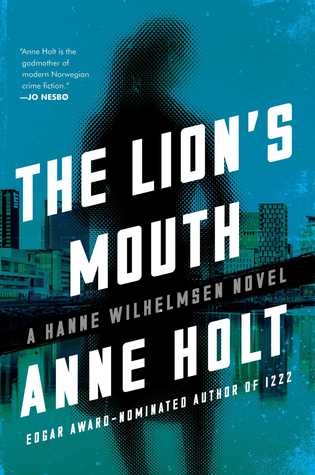
The Lion’s Mouth, by Anne Holt****

thelionsmouthWho killed Prime Minister Birgitte Volter? Was it the neo-Nazis? The Satanists? Was it a personal thing, perhaps an angry family member? The answer is cleverly built up to, so that the reader has a fair chance of figuring it out, and yet will most likely be surprised. I was.

Thank you, Net Galley and thank you also, Scribner for the DRC. Anne Holt is an established writer and it shows in the way she expertly crafts character and setting. I was at something of a disadvantage, never having been to Norway; the place names had no meaning to me, apart from the names of major cities, and I struggled with the governmental structure. When Parliament was mentioned I was fine, and likewise the Supreme Court made sense, but then we came to the President of the Supreme Court, a prominent figure—is that like a chief justice, or is it a very different construct from that of USA?—and also there is a President of Parliament. Americans should be prepared to either Google these items or accept a certain amount of ambiguity; I chose the latter, and it worked all right for me. I knew that there would be some new terrain when I began reading, and as part of my goal was to widen my own reading world a little bit, it was worth battling the unknown. A mystery is an accessible way to do this, and I enjoyed it.

The book was originally published in 1997; even so, I found a couple of stereotypes unsettling. The fat jokes seemed inappropriate and disturbing; Little Letvik started out a caricature, and even when she was developed a bit more at the end, it didn’t help much. Ruth-Dorthe is a “blonde bimbo” and “slightly worn Barbie doll”. There was also some slut-shaming that I could have done without.

On the other hand, the character for whom the series is named, Hanne Wilhelmsen, is a lesbian and is the hero of the story. She is sensible, even-tempered, (thin,) and very intelligent. Another character I really enjoy is Billy T, a boisterous, funny fellow who lightens the story considerably. In fact, there were a number of places that made me laugh out loud.

Although the book is part of a series—this novel being the fourth—I liked it just fine as a stand-alone.

All told, it’s a strong work of fiction and a good choice for the mystery lover to add to her collection. With the above reservations, I recommend it to you.

It is available for purchase February 9, 2016.

The Flood Girls, by Richard Fifield*****

TheFloodGirlsIf Fannie Flagg worries that she has no heir, she can relax; Richard Fifield is here. The Flood Girls is his brilliant debut, and you have to read it! Fifield will cut out your heart and feed it to you with a rusty spoon, and he’ll make you like it, too. Hell, he’ll even make you laugh through it. I got the DRC free via Net Galley and Gallery Books in exchange for an honest review, and I’m going to read it a second time before I archive it as I am supposed to. This is only the second time I have done so after hundreds of galleys have come my way; that should give you a measure of how impressed I am with this title.
From his arresting first line to the deeply satisfying ending, I was completely bound up in this book, only setting it aside as a reminder to myself to delay gratification and make it last a little longer. In the end my e-reader had 177 notes and marks, and every single one of them was there to highlight outstanding imagery, a passage in which yet another character was developed, a place in which he had shown us something important while saying something else, or a place in the text that was drop-dead funny. I would guess the last of these accounts for 100 of those 177 notes.

Let’s start with the premise: Rachel Flood has returned home to Quinn, Montana after many years away. She is here to make amends. It isn’t easy: “A small town never forgets, or forgives.” It’s a tough town, full of people that have survived dozens of harsh 6 month winters. Its people are abrupt and sometimes rude; they don’t suffer fools here.

Rachel’s sponsor has assured her that she doesn’t have to move back to Quinn to make amends; she isn’t here to do penance, after all. Offer the amends and then, whether or not they are accepted, hit the road! But for several reasons, not all of which Rachel understands herself at first, she chooses to stick around, and it isn’t easy. Ultimately, she is cornered into playing in the outfield of The Flood Girls, the local softball team sponsored by the mother she has wronged. She becomes a friend and mentor to Jake, a quirky twelve year old with a fondness for fine fabrics, wardrobe and design, and an intolerant right-wing Fundamentalist stepfather.

Perhaps the most technically impressive aspect of this work is the way Fifield differentiates a very wide cast of characters. I cannot think of any other novel among the 151 books I read and reviewed over the past year in which there were so many characters that were juggled so deftly. When I put down the book, I did a quick finger count of how many characters I could actually name and identify without looking. I stopped at 21, and I didn’t try long or hard. Every single one of these characters, most of whom are wonderfully eccentric, stood out in my mind, apart from two small groups (the silver miners and the Sinclairs) that are treated as such in the text.

It isn’t only the eccentric characters and the small town setting that makes me think of Flagg’s masterpiece, Fried Green Tomatoes; it is also the message. Fifield wants us to know that intolerance will kill us. It is only by accepting and celebrating one another’s differences and quirks that we become part of the human family. We must learn to help and rely upon each other, because we are all we have. That said, The Flood Girls shares Flagg’s spirit, yet it is not derivative, but wholly original.

You don’t have to like baseball to enjoy it.

This hilarious, engaging new novel is for sale to the public February 2, 2016. Very conservative evangelical Christians won’t enjoy it, and it wasn’t written for that audience anyway. It is highly recommended to everyone else. This book will be talked about, and you’ll want to be in on it from the get-go! Put this one at the top of your list.

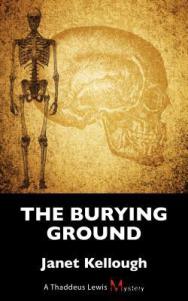
The Burying Ground, by Janet Kellough ****

This book will be released in a couple of weeks, and I can tell you, it’s already gotten some really good reviews. Since I read and reviewed it clear back in January, I’m reblogging it today.

seattlebookmama's avatarSeattle Book Mama

theburyinggroundThis is the fourth book in Kellough’s Thaddeus Lewis series, but it was brand new to me, and I was able to follow the story quite well as a stand-alone. My thanks go to Net Galley and Dundurn Group for the DRC. This book comes out in early August, and I will run my review a second time on my blog then to remind readers that it’s available.

Kellough has merged two enjoyable genres, mystery or detective fiction and historical fiction, and added a splash of social justice–the sort that slides into the story neatly and without preaching. Lots of different story threads eventually braid together elegantly into an ending that satisfies deeply.

The settings are Montreal close to the time of the Industrial Revolution, and outside of Montreal in a village called Yorke. Our protagonists are Thaddeus Lewis, a Methodist Episcopal preacher who travels the circuit, and his son…

View original post 219 more words