Napoleon: A Life, by Robert Andrews *****

napoleonalifeRobert Andrews has created an historical masterpiece in this massive tome, a biography of Napoleon. Thank you and thank you again to Net Galley and Viking Adult Publishers for the ARC.

Andrews is well known among historians; his scholarship and experience firmly establish him as an expert in the field of European history, especially military history and biography. The recent availability of a vast treasure-trove of primary documents made this biography possible, together with a tremendous amount of work and travel. He visited libraries all over the world and battle sites where Napoleon had been before him, before all of us. (And he set off the alarm in Napoleon’s throne three times!)

How long did this take, I wonder? By the time it was published, Andrews must have felt an overwhelming sense both of loss and of satisfaction.

As for your humble reviewer, I came to read about Napoleon, whose military career, rule, and downfall I had studied only at the shallowest level during my undergraduate years a whole long time ago, through the back door. My field is the American Civil War, but I was intrigued by the number of Civil War heroes (and others) who had studied Napoleon’s methods in detail, and referred to them when creating their own battle plans. What was it about Napoleon?

Generally, my advice to those contemplating reading a lengthy biography is to get the basics down first, but I didn’t follow my own advice here. I had the opportunity to get the ARC at the end of November, and it was now or never. I decided to plunge in, poorly prepared though I might be. When I was finished, I found I had bookmarked or made notes in over 700 places in this 926 page work. So whereas I won’t use all of my references, I can truthfully say that there is no filler, no fat. If you haven’t the patience for almost a thousand pages of Napoleon, then don’t go there, but for heaven’s sake don’t pretend that more is included here than is necessary for a thorough, scholarly, yet interesting treatment.

Having said that much, I also have to confess that I struggled somewhat with the ARC. My knowledge of European geography is pretty basic. I know where most of the countries are, what their climates are like, and for the most part, where the borders are located. When we morph into the Napoleonic era, I really, really needed maps, and that’s the price one sometimes pays for an ARC: your “map” is [map insert] noted. There will be a map; I don’t get to see it. So I gamely brought myself to my desktop for the first four Coalition Wars, and was lucky enough to find an interactive map that gave me part of what I needed to know. In some places, Andrews explained what took place so well that I could see most of the battle inside my head. But as of the fifth coalition forward, I quit trying to find my own maps when I couldn’t follow the action, and just read what was in the book.

All told, Andrews corrected some misperceptions I had developed regarding Napoleon. My own view had been that there was a heroic French Revolution, followed by what are usually termed “excesses” by the Jacobins who began the Revolution. (Today these en masse trips to the guillotine would be called atrocities.) But could the whole thing be salvaged? It seemed such a terrible waste to have a popular revolution, throw out not only a monarchy but one unusually lacking in decency toward the peasants and urban poor of France, and then have it all come tumbling down. And it also seems like a waste to have an autocrat take over. This was my perspective before reading Andrews’s biography.

Though his approach is both scholarly and balanced, Andrews offers a positive portrait of Napoleon, whom he treats with a fond, almost affectionate narrative. He points out that Napoleon kept the Bourbons off the throne for over twenty years, and it’s true that they returned in 1815 after Napoleon’s first abdication. Things got really ugly then. And he also points out that Napoleon’s career was unusually complicated. The point is well taken.

For example, who invades neighboring nations, overthrows their leaders, presumes to rewrite their constitution without consulting anyone that lives there…yet bestows upon them more civil rights than they have ever had before? And who else would insist in his terms for peace not only remuneration so that he can pay his troops and the annual benefits of military widows, but also demands that great works of art, privately owned, be turned over to him…whereupon he places them in a gallery where all visitors can enjoy them?

Mind you, the man is no Robin Hood. Far from it! He makes it clear from the beginning that he has no use for the ‘hoi polloi’, and whenever he ceases privately held property, he also sees to it that the previous owner is compensated.

The word “hubris” is often applied to Napoleon, and if not him, then who? Andrews argues that he might have been successful…if only. And there’s the rub, right? Because initially, he and his troops travel fast and hard. In the beginning, he asks nothing of them that he would not do himself. His opponents, on the other hand, are spoiled and effete. They travel with vast amounts of personal baggage and servants. They can’t move until they personally have this, that, the other. And in the end, that is the guy that Napoleon becomes.

The text is made more lively throughout with quotations of Napoleon himself, a prolific writer and a brilliant, articulate speaker.

The chapters are organized according to place, generally speaking, and this is very useful when the reader needs to go back and fact-check.

Andrews argues that Napoleon’s autocracy-as-meritocracy might have been successful if he had applied the standard to all of the dynasties he created after toppling their rulers that he applied to France. Nepotism created endless problems, and though Napoleon somehow thought that he personally might make up for the failings of his relatives, there is only so much one man can do. The many, many worthless siblings and other relatives he installed as instant royalty drained his resources and made problems that didn’t have to happen. His first wife, Josephine, was such an obsessive spender that one hates to think of the number of children under age six who might have lived had the wealth been more widely distributed.

Napoleon’s most loyal base of support was within the military, but he fought so aggressively that too many soldiers died, and the backlash was bound to come sooner or later. Yet the military base he so depended upon wanted him back again after just ten months of Bourbon reign.

Could Napoleon have been successful if he had left the Iberian peninsula alone? If he had avoided attacking Russia? Napoleon himself, upon looking back while in exile during his last years, recognizes that trying to best Britain, with its unstoppable navy, was folly; yet he certainly kept them busy for a good long while.

At one point, he reflects that if he had known he would end up defeated, he could have made different choices. He would like to be allowed to emigrate to the United States; who knows, he could have founded a state there! And here, my jaw drops as I imagine that instead of selling the Louisiana Purchase (which doubled the size of the USA) to the USA via President Thomas Jefferson, he had decided to settle it. But being Napoleon, would it have even stopped there, I wonder? He hated Britain and had nothing against US rulers; maybe he would have been able to kick the British out of Canada instead of fruitlessly attempting to rout them from their homeland.

Suddenly I can see how Andrews has become spellbound by what might have been. He has spent a lot more time with this material than I have, and it’s starting to affect me, too!

I know that some of those who read my reviews are teachers. I don’t see this as high school material; a small portion of it could be selected for honors level seniors or community college students perhaps, but then you have huge books to buy in order to use just a portion. I don’t see even the most gifted teenager sticking it out from start to finish. Though the narrative is engaging, the definitive biography is epic .It requires patience and dedication on the part of its readers. Developmentally, most young folks in their late teens and early twenties just won’t be there yet.

But if you are in doubt, buy one copy and read it yourself, then pass it around a little bit and see how it goes. Likewise, if you are homeschooling a truly extraordinary teenager that you think would gobble this up, buy it, read it (because you can’t home school anyone using a text you have not personally read), and then if you still think it may work and your student is game, give it a try.

All told, the price you will pay for this remarkable single volume biography is nothing compared to its worth in your own library, even if only used as a reference source.

Ice Brothers, by Sloan Wilson ***-****

icebrothersSloan Wilson was a veteran of the second world war, and he served in the Greenland Patrol. Here he uses his knowledge of the place to create an entirely unique setting. In fact, Greenland itself is very nearly a character in Ice Brothers. Thank you to Net Galley and Open Road Media for the ARC.

At the start, I was torn. Although I enjoy both historical fiction and military history a great deal, I deliberately avoid World War II stories that take place in the Pacific theater. My reason is that I don’t like to see Japanese people referred to with racist slurs, even though I know that at the time it was commonplace among many Caucasian members of Allied nations. The”J” word is every bit as offensive to me as the “N” word is. I understand that there was a time when Euro-Americans freely bandied both terms about. However, most editors have the sense to remove it and substitute a less heinous term these days, unless the use of the term serves an important purpose in the story. (For example, check the use of anti-Semitic language by the villainous skipper, Lowery, against whom we develop the bright and personal Nathan Green, who hears his name misused one time too many and vows to change it back to “Greenburg” once he is back in the US.)

So I wanted to read this book, about which little description was available, for two reasons: one was the setting, which will serve as the hook for a lot of readers. What did I know about Greenland? I didn’t even know it was Danish territory! A trip down my upstairs hallway to the large world map hanging on the wall there confirmed the story’s assertion: sure enough, right there underneath the word “Greenland”, writ large albeit in parenthesis, it says “Denmark”. How typically North American of me to have assumed it was Canadian! I surely needed to learn more, and good historical fiction is the most enjoyable way to learn many things.

The second reason for my interest was that it was described as a story in which the protagonist hunts for a Nazi ship. GOOD. So, Japan is unlikely to surface, and I can comfortably read without the story exploding in my face.

So when I hit the “J” word, which was not at all important to the story, but thrown in perhaps as set dressing or to set the tone of the story, I was shocked. The further extraneous reference by a character in the story who asserted that “…those little yellow bastards can’t fight” made it worse. (Of course, there was no reference to the internment of Americans of Japanese descent; extraneous material here is limited to that which is ugly and prejudicial.) I told myself I would take a break and read it a little bit later.

Every time I remembered my obligation to Open Road and Net Galley, I picked up my e-reader, but I had other galleys and other obligations, and each time I thought I would give Sloan’s work another try, I found myself reading a different ARC instead. This persisted for over a month; I can usually finish and review a book faster than that, unless asked to hold my review for publication.

Finally, I had to make a choice. I went back and reread the introduction. I steeled myself and forged onward. It’s a good thing that the plot, setting, and character development were so well done, because that word was used about ten times, and it never contributed a single thing to the story itself.

All right; let’s look at the story, then.

I know very little about watercraft, and was delighted with the accessible, instructive manner Sloan used to clarify the various types of ships and boats and the nautical terms that are most commonly used. I was also surprised and bemused by the stratification of resources apportioned to the Coast Guard as opposed to the Navy, with the Coast Guard serving as the poor cousin that receives whatever the Navy doesn’t need. The ingenious ways in which our fictional Coast Guard officers and crew work around the lack of resources, often not at all legally, must have had at least some basis in fact. I found it really interesting, and it drew me closer to the story as I sympathized with the men on the trawler (The Arluk).

Sloan’s approachable way of describing Greenland’s weather and geography were also really useful.

Greenland is a dangerous place to sail. Today it is different than it was during that time period. I did a web crawl and was horrified to see how much of it has melted now. Back then, at least, it was possible for a sturdy ship to weave its way into a fjord (which is like a peninsula made of water that pokes into the ice mountains), and then have everything freeze, and the ice might crush the ship and its crew against the mountains. The ever-present tension of a possible encounter with Nazis created a sense of suspense that made the book hard to put down after a certain point was reached, even with the racist terminology, which continued to grate and became worse when Paul and Nathan discussed the loyalties of the “Eskies” or “Eskimos” with the Danish inhabitants. The Inuit people were treated as cartoon characters, and the static, repeated description of their faces as round and copper-colored and their mentality as “child-like” made me wonder where this capable writer’s otherwise outstanding skill with varied language had gone. Yet the story still tugged at my interest, and so I made a note in my e-reader and forged on.

Another facet of the story that kept me reading late into the night was the ambiguity of the Danish residents of Greenland, and in particular, the character of Brit. Were these folks really held by force by the Nazis that we could not even see, or were they complicit? Whose side were they on? Would Brit betray Paul to them? When he acceded to her request to see the ship, and she curiously nosed into every odd corner, asking technical questions about the engine and radar, I wanted to pick her up bodily and toss her off the ship!

Sloan was a strong writer for a very different time. His work could still be really compelling, but I doubt I am the only reader who will take exception to the racial slurs that do nothing to drive the plot or develop the characters. I hope either his heirs or his editors will go in and update this work. It can only improve the story to do so.

Recommended, with the qualifications mentioned.

Victorian Murderesses, by Mary S. Hartman ****

victorianmurderessesIt took me awhile to decide to include this title on my blog. The problem as I saw it was that it was marketed in October as a fun-but-naughty romp through history. The reality is less interesting, and to my eye, unbelievably dry. My daughter, a high school student, saw it differently. The four stars are our compromise between my three stars and her five.

“True crime” is a big house with a whole lot of rooms. Some true crime books are deliciously prurient; others are as dusty as the top of a ten foot tall bookcase. In this case, the title (“unspeakable”) and the jacket artist lead the reader to believe we are really going to get down and dish the dirt, and what is more…it’s all true!

Instead, what we have here is a very well-written, well-documented, extremely scholarly if surprisingly dull bit of research, maybe the author’s advanced degree work. The collision between the teaser and the product are somewhat jarring. This was a First Read sent me free through the Goodreads program and the publisher. I would have abandoned it more readily had I not felt a duty to get through it.

What would have fit the bill without ruining the author’s hard work is a good piece of juicy narrative nonfiction. Put in the documentation, but pick up the pace! As is, the book is sometimes a feminist treatise that all but blames Victorian society’s social contract for slut-shaming as an understandable excuse for murder in the case of unsuitable, unmarriageable mates of the lower classes (sorry, no sympathy here), or a self-defensive maneuver against constant verbal abuse, without the loss of a high standard of living that came with the ornery groom. A baby born out of wedlock gets snuffed when an abortion can’t be obtained. The author is inexplicably sympathetic to the not-for-long-I’m-not young mother. Don’t get me wrong; I am pro-choice and an ardent feminist, which you already know if you’ve been reading my blog long. But we’re talking about an infant carried to term, birthed, then suffocated. It turns my stomach to think of it.

At other times, the pace quickens a bit, as if the author is about to get excited and take us along with her, but then her dispassionate researcher’s mind grabs hold of her–stop it right now, you’re getting worked up!–and we go back to the librarian’s hushed monotone.

The font, while suitably Victorian, is really tiny and hard on the eyes.

It may be that I am being unfair to Hartman; she has done a good deal of work here, and the fault may lie with Dover or whoever is publishing and promoting her work. All I know is that I expected this to be a fun read, and it wasn’t. I kept pushing it away in favor of other reading, as if postponing the book might make me like it better once I returned to it.

My daughter, on the other hand, took it to a corner and became disconcertingly fascinated by it, not unlike a cat who’s just found an aquarium full of fish. Hmmm! Her explanation: “It’s even better than I expected!” Well…okay. And now, it’s HER galley.

A strong, scholarly effort that should have been marketed as such. Not a Halloween read.

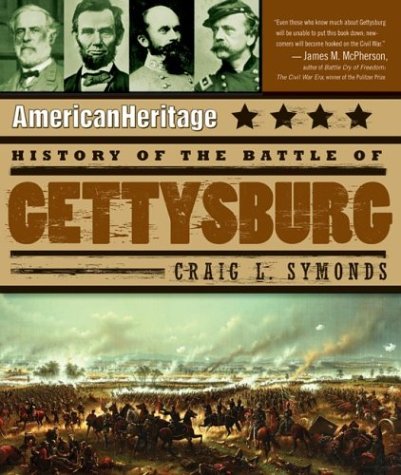
History of the Battle of Gettysburg, by Craig Symonds *****

historyofbattleofgettysburg Ordinarily I have little patience for anyone who picks up a book on US military history and just wants to look at the pictures.

But I read the text. In most places it’s fine, but once you start reading McPherson and Sears on Gettysburg, there isn’t much that Symond’s text will tell you that’s new. Symonds sticks to the basics, and he gives you the brass tacks, if you want to cut to the chase. He is the retired chair of the US Naval Academy. His background speaks for itself, and he is highly lauded as a Civil War scholar.

And look at the pictures!

The American Civil War was the first US war that had photography available. No, they couldn’t take action shots yet; the subject had to remain stationary for too long at a time for that to work. But there are a lot of primary documents here, photographs of leaders, of letters and memos as they were originally written (with the text beneath them if illegible; spelling was pretty much a discretionary practice back then). There are photos of battlefields with men still lying on them. (It is now considered a breach of national security for the press to go to Afghanistan and shoot photographs of US troops, whether in action or in closed coffins, for the American public to see.) There are photographs of the weapons available at the time, and of landscapes you can visit today that look nothing like they did then.

Look at the pictures!

My favorite is a full page photograph of Lincoln. His bow tie is dusty, faded, and crooked. His hair cut is terrible. His face is creased, and it bears the hardship of many sleepless nights, and perhaps also of the death of his son and the illness of his wife. It is a picture of a real person, long before the era when presidents became packaged goods to be marketed to the American public.

I have sometimes felt bad about the fact that I will likely never visit the Smithsonian. It is the dream of all serious students of American history. But my legs won’t let me get far now, and an airport is accessible only if I use the wheelchair service, which makes me feel quite conspicuous. It’s far easier to stay home and read.

This book, which I purchased some time ago in hard cover, will hold a place of pride on my bookshelves for many years to come. Primary sources aren’t that easily come by. Along with Sherman’s and Grant’s memoirs, this is an important addition to my Civil War library.

The Trouble with the Truth, by Edna Robinson ****

thetroublewiththetruthThree and a half stars, rounded up. My thanks go to Betsy Robinson, the late author’s daughter, who invited me to preview an ARC and review it. It’s been a fun read.

Lucresse and her brother Ben have an unusual life. On the one hand, they aren’t starving, as many people around the world were during the Great Depression. But on the other hand, their circumstances require a constantly changing back-story in order for them to be accepted by polite society, which was much harsher and more judgmental than it is today.

For one thing, their mother is dead, and their father, a much older man than their classmates’ fathers, has not remarried. Not unless you count Fred, their chauffeur, butler, and otherwise highly respectable servant whose devotion to their family is not fully understood until a crisis strikes. Fred does not sleep with Father, of course. He has separate quarters, but no separate life. They’re pretty much his whole story.

Lucresse has the trouble with the truth that gives our novel its title. Her whole life is predicated upon a series of courteous lies; every time they pack everything and move to a new town, which occurs as often as four times annually, she and Ben are thrown birthday parties. There’s a good reason to do that, but it’s not true that it’s their birthday, and they both know it. And when Father cultivates the acquaintance of a well-known actress and she moves into their guest room, a visiting aunt is told she is the book keeper. It’s another lie, for the sake of appearances.

This highly accessible, charming novel is set out in brief chapters, and in most cases the chapter represents a new story within the overall story, so it is almost like reading a series of consecutive short stories featuring the same characters. With quirky good humor and also a certain amount of ambiguity regarding our head of household, I found myself smiling and nodding at the fib-to-cover-another-fib.

Though the family’s life is bizarre, the children are loved and well cared for; this is no Glass Castle. Rather, it is a portrait of a fictional family that never quite meets the conventional standard society seems to expect.

Recommended for those who like a little whimsy now and then.

The Smoke at Dawn, by Jeff Shaara *****

thesmokeatdawnI hungered for this book! I am a great fan of Shaara’s work. I didn’t get the ARC, but Seattle Public Library came through. Had it not done so, this is one of the very few books for which I would have paid full jacket price.

Shaara writes historical fiction about American wars, sometimes in the form of trilogies, and here he wraps up a trilogy on the Western campaign of the American Civil War. The scenario: Rosecrans, the Union officer who heads the Army of the Cumberland, has had a strong victory followed by a stunning defeat. First he used brilliant gamesmanship and planning to attack and take Chattanooga; this went largely unnoticed by the press, which was beside itself, understandably, over the twin victories of Vicksburg and Gettsburg. But then, unfortunately, Rosecrans pushed his luck too far, getting his ass kicked and a lot of good men dead at Chickamauga. The result was that he ran like hell, dug himself in, and refused to go forth again. Unfortunately, the Confederate troops led by Braxton Bragg cornered him and he was besieged. When Grant was given overall command of armies in the west, he was asked to choose whether to keep Rosecrans in place, or send him packing and promote George Thomas. He chose the latter.

Shaara is generally brilliant at crafting character based upon the historical record. I found Bragg to be almost a caricature—and hell, for all I know, maybe he didn’t have many good characteristics from which to draw; I haven’t studied him much. Grant is portrayed with warmth in a way that sits right with me; the same holds true for Sherman. Thomas has always been something of an enigma, and he clearly is for Shaara also. Sherman and Grant both said in their memoirs that he was slow. (My own memory of Sherman’s is a letter to Grant in which he says, “We both know Thomas is a little slow,” and I sensed irony and understatement in his tone). Yet other historians swear that he was in fact misunderstood. Shaara gives him the benefit of the doubt while allowing for some ambiguity.

I read my copy digitally, and I was pleased at the way I was able to zoom important maps that made it much more possible to see what troops were moving where.

The most controversial aspect, judging from what other reviewers have said about this trilogy, is the creation of Bauer. When I have wanted to confer 4.5 stars on one of his novels in this series, I round up, and it is for Bauer that I do so. Bauer is the only character that is entirely fictional, but Shaara chose to create him to represent that nameless, faceless soldier who represented the vast number of those who bore the greatest burden. They didn’t become famous or have their belongings shown in museums. It’s rare to find a foot soldier’s whole story. Some kept journals, but these were often lost during a battle, scuttled during a hard march when everything non-essential got tossed on the road, or drenched in rain or during a river crossing. No journalist ever followed a humble private around to record his experiences and opinions. For his effort to include the every-man in spite of the flack he would endure from the purists among his readership, I give Shaara high marks.

Next up: Shaara will tackle Sherman’s march through Georgia, through the flames of Atlanta, to the sea. This is my favorite part of the whole thing, and I am excited as I look forward to reading it.

If you enjoy historical fiction based on the American Civil War, and especially if you do not harbor any cherished sentiments toward the dead lost “Cause”, you can’t go wrong with this one. Historical fiction at its best, from a master of the genre.

Terrible Swift Sword, by Bruce Catton *****

terribleswiftswordBrilliant and highly recommended for those who want the details in their American Civil War account. May be read singly or as the second in Catton’s trilogy.

Catton’s trilogy was written as a Centennial History for the 100th year of Union victory and the preserved integrity of the United States of America. His writing reflects the time period, as a strong historian with a nevertheless very Caucasian focus to his work. “People” means white folk when he does the talking, and to be fair, in 1965, unless a writer was a person of color, this was the unfortunate tendency. Nevertheless I give this work five stars, because I have done quite a bit of reading about this bottomless topic, and he taught me a great deal.

Before you set off to read it, though, whether by itself or as the second volume of a trilogy, look at the subject and the page count. Don’t read it if you are still separating Stanton from Seward or McClernand from McPherson. Be ready.

That said, I never really understood before that the Cumberland Gap is also the Wilderness Road (so, Daniel Boone meets the Civil War, sort of). I hadn’t completely understood that US forces were poised on the border of Kentucky, which had (ridiculously it seems now) attempted to remain neutral between the warring factions, way too much land right there in the middle, but they gave it a go, and said that the first army to cross into Kentucky was the enemy, so Lincoln said to wait till the Confederacy crossed, and the rest is history. And before reading this trilogy, I didn’t realize that there was ever a thought over fighting for West Virginia, which was silly of me. In a time where almost every square foot of the border (and eventually beyond) was a source of contention, why would I have believed that West Virginia could leave Virginia, with all of its resources, and no effort have been made by the Confederacy to keep it? And because McClellan took the (physical) high ground before the opposing forces could get there, he got to be the grand pooh-bah of the Union army, after humiliating poor old Scott whose Anaconda Plan was actually very good.

In fact, McClellan really wanted all the power all of the time, and the nasty-tempered letters he sent back to the missuz (oh how many of us think our correspondence will be kept private?) show that he not only wanted to control the army, but he wanted to be either dictator or president long before the re-election of Lincoln was in question. His slowness and reluctance to do battle with his slave-holding pals down south looks more treasonous the more I read about it. Catton builds a compelling case. But Lincoln had to be very careful in replacing him, as Catton documents it, because the attitude had entrenched itself down into the other officers and to a smaller (but weaker) extent, the rank and file. Ultimately, when Lincoln unseated McClellan, it was the rank and file that pulled the army through to the other side when McClellan weighed the matter to see whether his army would march against its own president to install him in personal, powerful splendor. I tremble to think what might have happened had McClellan been more fortunate, and Lincoln less savvy.

I most of all enjoyed a quote by Lincoln that says it all, and which I don’t recall seeing elsewhere. When a representative of Louisiana Unionists sought his reassurance regarding slavery in 1862, Lincoln responded, “It may as well be understood once and for all, that I shall not surrender this game leaving any available card unplayed.”

Well played, President Lincoln, and well written, Mr. Catton. Onward to the last volume in the series!

Far As the Eye Can See: A Novel, by Robert Bausch ****

farastheeyeSharply evocative of time and place, Bausch’s novel Far As the Eye Can See is a treat and in some ways an education as well. Bausch’s fictional tale, set during the Grant Administration in the USA around the time of Custer’s last stand, draws on considerable research with regard to the Crow, Cheyenne, Nez Perce and other American Indian tribes. He uses story to drive home his message, which is that neither Caucasian nor indigenous people were either entirely good or entirely in the right, and that the conflict between the two was inevitable.

I only agree with part of that last bit, but I really enjoyed his story. Thank you to Net Galley and Bloomsbury Publishing for allowing me an advance glimpse via an ARC.

Bobby Hale is a deserter from the US army some seven times over. During the latter part of the American Civil War, he took the cash bounty for signing on, went to fight, and left the first chance he got. By using a wide variety of names he was able to do so repeatedly, but he was nevertheless roped into participating in some terrible battle. Were he real, and were he alive today, we’d say he has PTSD.

And there you have it! I always know an author has done a strong job developing their character when I find myself giving out diagnoses. It’s just as well that the character is indeed fictional, since my medical credentials don’t exist either.

Hale is headed west, away from cities and civilization. The idea of holding down a job and answering to a supervisor is anathema to him. The classic (but not stereotypical) mountain man, he is willing to sleep in freezing temperatures out of doors when necessary, climb steep cliffs and slog through ravines, all in the name of independence. But even out west, he inevitably runs into other humans from time to time, and not being completely antisocial, he makes friends, makes enemies, and falls in love. Twice. He finds himself having to make difficult choices a number of times. At other times, he is forced into action before he can really examine his options.

Here we check in with what I call the “ick meter”. Every reader has an independent threshold for bloodshed, human body parts, and other gore. Given that this is a soldier’s story, renegade or not, we would expect to find some of it here. I would not have cared to see Bausch add any more of it than he did; however, my own sense is that there was nothing added that was gratuitous or overdrawn. If you can’t stand reading war stories, you probably already know that by now, in which case, I wonder why you are still with me here.

Another noteworthy detail has to do with his use of place. When he describes the approach to the Rocky Mountains from the eastern part of the USA, I can see those blue mountains and all that sky, because I have driven across the USA a few times, and I have vacationed in Montana and Wyoming. Bobby Hale covers a tremendous amount of ground. If you are somewhat familiar with location in regard to the Black Hills, the Northern (inside the US) Rockies, and the Great Plains, you will probably enjoy the book more than if you don’t have a clue. I think if I were starting from scratch, I might have become confused, because he puts on a lot of miles without pausing to lay out which state lines he is crossing. Actually having been to at least one of these places, even if only to drive through it and notice the difference in elevation, climate, etc. will increase your appreciation and understanding.

As for me, I found it very satisfying. It’s a great read to have ready to hand beside a snug bedside. When Hale froze in the mountains and froze again on the plains, I burrowed deeper into the blankets and found myself even more content than when I began.

A great story for late fall and winter reading in a toasty nest.

Hardcastle, by John Yount ****

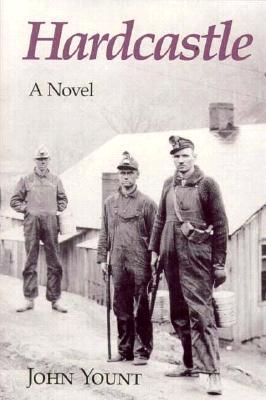
hardcastleThis hauntingly evocative Depression-era novel centers around a coal battle near Harlan, Kentucky. Our protagonist is Bill Music (originally Musik, before the Ellis Island people decided to yank the German element from the family name). Music has gone from his family’s bare-dirt farm in Virginia to seek his fortune in Chicago. He worked his way through a nine month electrician’s certification program, did hard labor to support himself, and just when he was ready to go on home, he was robbed. His attackers even found the $20 hidden in his shoe, since they took his shoes also. Barefoot, broke and hungry, he joins throngs of other down-and-out Americans by jumping a freight train toward home. The third day on an empty stomach, he sees a farm with piglets in the back yard and crazed from hunger, leaps from the train with no thought how he’ll get back on one. A twenty mile, post-piglet walk leads him to Hardcastle, a mining town filled with impoverished, bitter miners on the brink of unionization.

Regis Patoff may be my favorite character in Yount’s story. The name itself is great; I will leave the reader to uncover its origin, one of the few humorous moments in the story. Patoff offers Music the heart-stopping salary of three bucks a day, more than he used to make in a whole week, to be a mine guard. He deceives Music by telling him that the mine is too small to attract union drama anyway, and so he will be paid this handsome amount to routinely trudge around the property at night three times a week.

When something looks too good to be true, it generally is.

Music moves in with Regis and his mother, the wonderfully drawn Ella Bone, who takes to him as a second son. When all hell breaks loose, Music is in too deep to walk away. Winter is coming; he has been away so long that he can no longer imagine the faces of his parents or siblings, but Regis, Ella, and his beloved Merlee are right there in front of him. He stays.

The reader should expect to deal with a certain amount of Appalachian/country dialect. If English is your second language, you will want an e-reader for definitions, or a native English speaker to guide you through some of the vernacular.

For me, however, it created an immediate bond. Two generations ago, my father’s people were miners; they were comfortably ensconced in more lucrative, less dangerous work by the time I was born. Until I read Yount’s novel, I was unaware of how many cultural artifacts had leeched into my own childhood from the mines of the Depression era. Immediately a little girl calls her grandfather “Pappaw”, and I found myself missing my own Pappaw, who died in 1977. One of the main characters calls out the greeting, not hello but “Hydee!” and I can hear my father’s voice, gone 35 years, as clear as day. When you read the word “victuals”, hear it as “vittles”, and it means food, usually a good meal. And so it went.Somewhere along the way I realized I had flagged so many terms I hadn’t heard for ages that those reading my review would not want to march through all of them with me, so I will leave off here and continue with the story.

For me, this was a page-turner. The last star fell off the review during the last ten percent of the story, when some historical inaccuracies too great to dismiss as mere story-telling devices came up. The greatest was the depiction of the United Mine Workers as a union made up entirely of communists. And given that contemporary working class history is my field of expertise, it really grated. For those who want the truth, here it is:

During the early years of American union struggle, most industrial unions banned anyone who was not Caucasian; who was not an American citizen; or who was a communist from their ranks. The UMW refused to let its ranks be decimated by these distinctions, believing in solidarity. So yes, people who were communists and said so openly were allowed to join, and if the ranks voted them into leadership, they were allowed to take their posts. The union did not yield to red-baiting. There were white folks in the union who didn’t think people of color should be allowed in, but the UMW pointed out that solidarity was the best way to keep workers all on the side that would fight for their interests.

Yount correctly depicts the UMW as inclusive of every ethnicity, race, and nationality, but it incorrectly paints the UMW as a communist union, to the extent that in order to stay in the union, members were ultimately expected to renounce their Christian beliefs and take up little red flags. It is preposterous. When it came into the story, I expected some other thing to happen in order to undo the incorrectness of it, but he left it lay there, the dead elephant in the room. It really got in the way of the story. It was just stupid, and I did a complete 180 from being really entertained and enjoying the story and its characters, trying to determine what would happen in the future to the main surviving players, to being aggravated at the lie on which the resolution of the tale hinges. I also didn’t like the implication that mine workers were dumb enough to be led around by the nose without having known who was leading them. Many of them (including my grandfather) had a low or nonexistent literacy level, but that didn’t make them stupid, just poor.

For other readers, the whole story may be entirely enjoyable. The characterizations are endearing, the setting palpable. When Yount brought winter, my feet got cold. His writing is really strong.

But watch the history. Changing major historical events and realities through fiction is a dangerous thing, because when emotion runs high, people bond to what’s in the text, and if they have no reason to believe otherwise, they assume they are getting the truth, or the mostly-truth. And this author hasn’t merely tampered with some minor realities for the sake of a good story; he has stood the historical record on its head.

Lincoln and the Power of the Press: the War for Public Opinion, by Harold Holzer ****

Once more.

seattlebookmama's avatarSeattle Book Mama

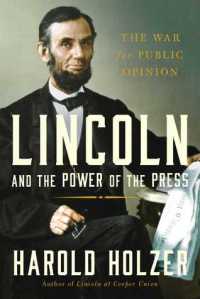
lincoln and the pressThis book is for the serious reader. Well researched and creatively conceived, it traces the influence of the newspaper on young Lincoln, and then follows its role in his emergence as a politician, as a contender for the presidency, and later the complicated relationship between Lincoln and the press during the American Civil War. It raises thorny, thoughtful issues regarding censorship; when do we hold the First Amendment dearest above all, and when may its authority be abrogated for the security and integrity of the Union?

It starts a bit slow, and I began wondering whether this would be one of those rare books that I skim and then review, as opposed to reading every word. Still…LINCOLN. I stayed the course and was rewarded. Just be aware that the narrative doesn’t really wake up until about the 30 percent mark.

Lincoln had amazingly little formal schooling. Though this was common…

View original post 867 more words