My Name is Emilia del Valle, by Isabel Allende****

“Aren’t you afraid, Angelita?’ I asked her. ‘All the time, but I don’t think about it. I want to die with my boots on my feet,’ she answered…

“I did not know who I truly was until circumstances put me to the test.”

My Name is Emilia del Valle is the newest novel published by feminist icon and author Isabel Allende. The story is a fictionalized account of a journalist that travels from California to Chile, where war has broken out. Because she is a woman, her editor resists sending her, and then, under pressure, agrees that she may go, but only to cover human interest stories in the city. Those that have read any book ever by Allende will know instantly that this is not what our journalist does.

My thanks go to NetGalley and Random House Ballantine for the invitation to read and review. This book is available for sale now.

Like all of Allende’s protagonists, Emilia is a woman that refuses to be constrained by the expectations of the time regarding gender. She is possessed of feverish curiosity, and once she finds herself in the thick of the conflict, she has no interest whatsoever in finding and maintaining a safe, distant place from which to report. She assists the “canteen girls,” who provide water to fallen soldiers, along with minor first aid. Emilia learns first hand about the horrors of war, and she is forever changed by it.

This conflict is one that isn’t widely reported, and Allende writes about it so that it may not be forgotten. Ten thousand died here, mostly men from poor families, killed for no good reason. Emilia’s experiences highlight the disparity in treatment according to social class and wealth, as well as gender.

The writing is first rate as always. However, in most of her earlier novels, the author found a way to intersperse shocking or horrific passages with some that were uplifting, and often very funny. I would bark with sudden laughter at some witticism that I had not seen coming. I wish she had done that here. When there’s too much horror and bloodshed, it is tempting, natural even, for readers to tune out, let the words wash over us. And while there is romance here that provides some relief, I would have liked more.

Nevertheless, those that love historical fiction, social justice, feminism, and especially those that love Allende’s writing will want to read this book.

I’ll Be Right Here, by Amy Bloom***

I’ve been a reader of Amy Bloom’s novels for decades, and so when I see a new one is coming out, I leap, usually without even checking out the synopsis. Just the author’s name is enough to get me moving. This time was a little different. I began reading, but had trouble engaging, and my mind wandered. I decided to get the audio from the library, once the publication date had come and gone, and that was how I eventually finished it.

My thanks go to NetGalley and Random House for the invitation to read and review. This book is for sale now.

We start out in Europe during World War II. Gazala emigrates from Paris to New York, and becomes friends with a pair of sisters; later Samir, Gazala’s brother, joins her. Now here’s where it gets icky, (to use a highly literary term.) Gazala and Samir become a couple. They don’t tell people they meet that they are related, so they are accepted. Their friends also become involved in—to be charitable—unconventional relationships. In looking back at the synopsis, it’s all right there: “the lawlessness of love.” Hoo boy. It definitely is.

So, after forcing myself to finish listening to this thing, I nearly give it two stars, but the nugget that saves it for me is the concept that occurs when they are grieving a loved one, the notion of a “dead people’s party.” I love thinking about this! I have already started imagining my own such party, having lost too many people I cherished, when my sister dies. Her death is not altogether unexpected, as she was a great deal older than I am and has been in ill health for many years, but it still packs a punch. The thought of my sister’s dead people’s party—complete fantasy, as far as I am concerned, but who cares? Is what has helped me through a dark time.

So Bloom gets an extra star.

Nevertheless, I don’t recommend this thing unless the reader has carefully read the synopsis and is still interested. Yikes! I’ll probably read Bloom again, but this time I’ll be more careful before I commit.

Something to Look Forward to, by Fannie Flagg****

Nobody should ever say that Fannie Flagg doesn’t give us our money’s worth! There are over 30 short stories in this nifty collection, and I enjoyed it thoroughly. My thanks go to NetGalley and Random House for the invitation to read and review; had it been necessary, I would have paid hard cold cash for this collection, and I seldom say that.

This book is available to the public now.

Flagg has always been known for her feminist swagger and perceptive humor. Here she crosses into several genres, beginning with science fiction—a first for this author? —and continuing on more familiar ground with historical fiction, Southern fiction, contemporary fiction, LGTBQ, and of course, humor. There are a handful that start early and reemerge later, but most are just simple short stories, easy to read and for the most part, filled with the feel-good vibes that we all need right now.

My favorite of them all is “Darla Womble,” a story set in Pot Luck, Arkansas in 2004. Here’s how it begins:

“At 9:18 A.M., in and around Pot Luck, Arkansas, thirty-eight relatives of Darla Ann Womble received a frantic email, which read:

            ‘DARLA’S NOT DEAD, AND SHE’S MAD AS HELL!’

After seeing the email, two people threw up, one fainted, and another decided he would run for his life. This news came as quite a shock to all, especially since all thirty-eight had recently attended the reading of Darla’s ‘Last Will and Testament.’

It only gets better from there, and it was a near thing since I was eating lunch; I narrowly escaped spraying my cheese enchiladas all over my kitchen! Other favorites are “Beware of Weathermen” and “Don’t Mess with Texas,” both near the beginning of the collection, and “A Thinking Man,” which is near the conclusion.

As with her other works, these stories are primarily from female points of view and will appeal more to women than men; yet I suspect there are a good number of men that will enjoy them as well. I recommend this collection to Flagg’s faithful readers, and to anyone that needs to feel a little better than they do right now.

The Fisherman’s Gift, by Julia R. Kelly*****

“Why is it, she asks herself, that we only ever remember the things we did wrong?”

Julia R. Kelly’s novel The Fisherman’s Gift tells a luminous tale of long ago, and it is one of the year’s best. My thanks go to NetGalley and Simon and Schuster for the invitation to read and review. This book is for sale now.

Dorothy lives alone in Skerry, a tiny Scottish fishing village, in the year 1900. She is an outsider, having moved here to teach the children; she marries and has a child, but when the child is tragically drowned, her husband leaves her, and now her life is one of solitude and regret.  Then a little boy washes up, a shipwreck victim, and Joseph, a fisherman that shares a past with Dorothy, brings him to the village; it is Dorothy that takes care of him, and every day, he seems more like her own lost boy. She wonders from time to time whether God has sent him back to her.

This is a beautifully written novel, glorious not only for what is said, but for what isn’t. Kelly crafts every character in the story with nuance, and so there are no bad people, and also no perfect ones. The entire book is written in third person omniscient, so we get a peek into one character’s thoughts, and then another’s. Sometimes this can be frustrating, because I want to climb onto the page and explain to one of them or another that what they’re thinking is wrong, and can’t they see that they have misunderstood a person, or an event? But when I yearn to do this, it’s because I believe every single word about every single character.

It’s a bittersweet tale to be sure, but readers can rest assured that Kelly won’t burn everything to the ground.

To those that love historical fiction, and to those that enjoy a good love story, I highly recommend this sweet story.

The Hounding, by Xenobe Purvis***-****

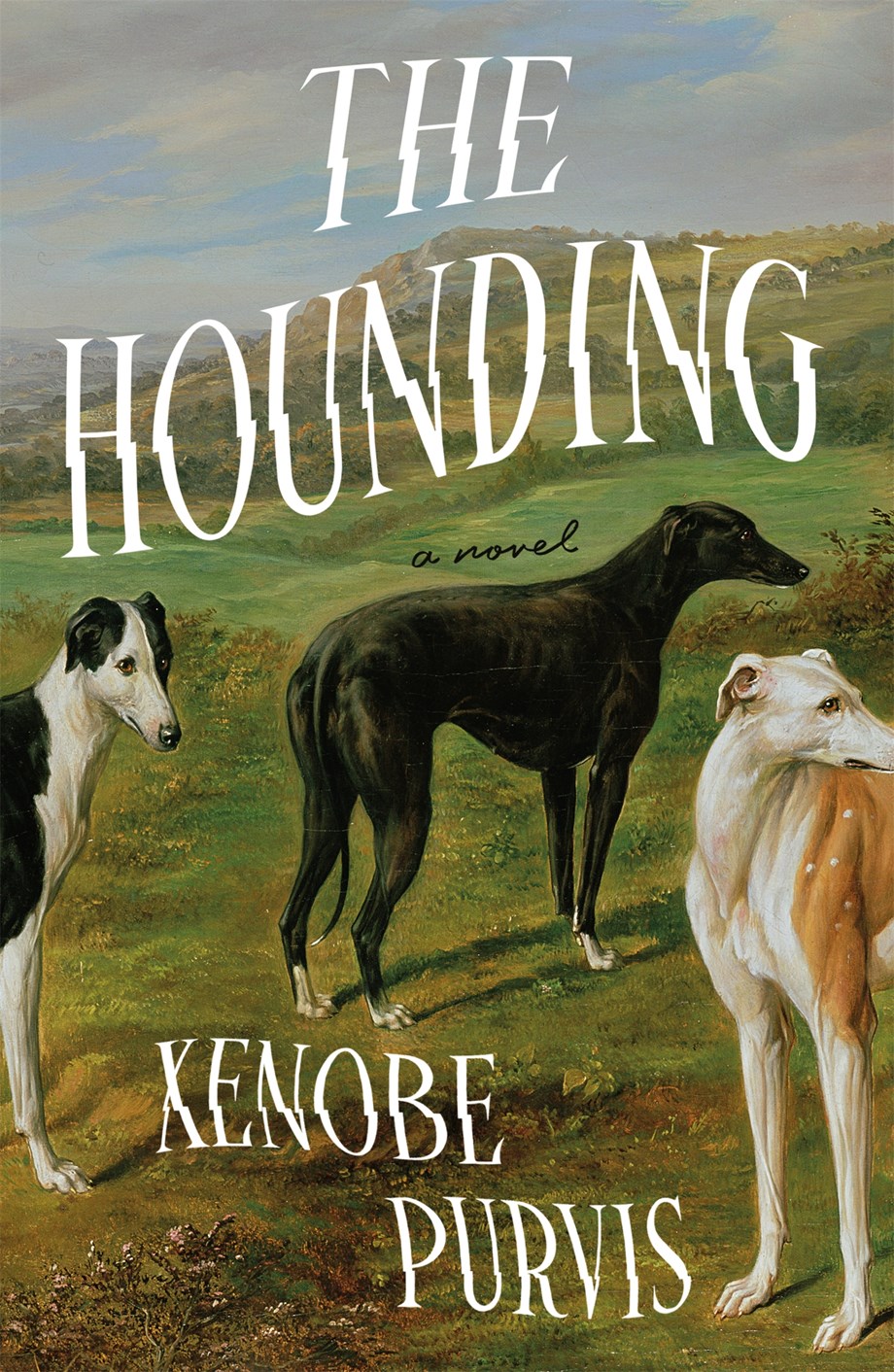
Who could walk away from this book cover? The Hounding, the arresting debut by Xenobe Purvis, is a story set during summer in eighteenth century England, in a tiny hamlet. Five motherless girls are given more freedom than is customary, and a rumor takes hold that the girls turn into dogs and wreak havoc on the village of Little Nettlebed.

My thanks go to NetGalley and Henry Holt for the invitation to read and review. This book will be available to the public August 5, 2025.

The Mansfield girls are being raised by their grandparents; their parents are long dead. But now, their beloved grandmother has died as well, leaving them in the care of their elderly grandfather, who is almost blind. It’s not a great summer for anyone else, either; there’s a dreadful drought that affects agriculture, and the riverbed is nearly dry. Then one day, Pete, the ferryman, tells the local gossip that he has seen the Mansfield sisters transform into dogs! Soon the rumor has spread, and others report that they’ve seen it happen, too; everyone wants to get in on the excitement.

The story tells a cautionary tale, not a new one, but a worthwhile one about the way society sometimes victimizes people that are a little different from most. There’s not much by way of character development, but this book is not about character or setting, it is purely plot-based. Purvis is a fine wordsmith, and since I was lucky enough to have both the digital and audio galleys, I found myself drawn into the narrative, first by the text, and then by the audio. Reader Olivia Vinall does a splendid job, and I recommend the audio version for those that enjoy the medium.

My only sorrow is that although this book is engaging, it could have been so much more. There are opportunities here that are left unfulfilled, and the plot twist at the end destroys the message that has been so carefully crafted up to that point. I find it frustrating. This is a good read, but it could have been a great one.

With that caveat, I recommend this book to you.

Broken Country, by Clare Leslie Hall*****

I am late to the party, but it would be a crime not to review Broken Country, the stirring love story by Clare Leslie Hall that can make even the hardest cynic weepy-eyed. My thanks go to NetGalley and Simon and Schuster for the review copy. This book is for sale now.

The story is set in a small village in Britain during the mid-1900s. The setting bounces back and forth between the present day and the past; it’s easy to keep track of, partly because the author takes care to delineate which chapter is which, and partly because there are few characters to keep track of. Our protagonist is Beth, and she and her husband, Frank, are farmers, have lived in the same community for their whole lives. A farm accident claimed the life of their only child, Bobby, a few years before, but they are both still fragile, ragged in their grief.

Then, oh my my, who comes back to town but Beth’s old flame, Gabriel, a man that came from money and went on to make a name for himself as a novelist. Gabriel has inherited the family house and land, and in the wake of his divorce, has brought his son Leo to live here. Here. Right next door to Beth and Frank.  And to complicate old feelings all the more, his son Leo is about the same age as Bobby was when he died.

Is it possible to be in love with two men at the same time? Beth would tell you that it is. Frank can see what is unfolding, and he tries to reason with Beth, but she assures him that everyone is grown up now, the past is the past, and there’s no reason that they and their new old neighbor cannot be friends.

Well.

I seldom reach for novels like this one, wary as I am of schmalz and schlock, but reader, I see none of either one in this story. The writing is disciplined and restrained, yet oh, so intimate. When a formula or trope comes into view, Hall goes the other way instead. And though I may have thought I knew where we would all end up, I was mistaken; the ending is beautifully planned and executed.

Because I had fallen a bit behind, I checked out the audio version from Seattle Bibliocommons; reader Hattie Morahan does a stellar job with the narration.

Highly recommended.

The Ballad of Jacquotte Delahaye**-***

The Ballad of Jacquotte Delahaye marks Briony Cameron’s authorial debut. She is a talented wordsmith, and my thanks go to Atria Books and NetGalley for the invitation to read and review. While I enjoyed several exciting passages—I do adore a good pirate tale—in the end there were issues with credibility that got in my way.

 This story of a pirate woman’s derring do is for sale now.

When I read that Jacquotte Delahaye was a real person and that the book is based on true events, I was all in. However, there are passages that made me raise an eyebrow, and since there didn’t seem to be any notes that would indicate what is true and what is the author’s invention, I took to Google to find out more. This is where I learned that actually, she may have been a real person, or she may be only legend. The stories surrounding her life and exploits are also legend. There’s virtually no verified historical information on this character.

I love good historical fiction, which is where actual, documented facts are given warmth and life by an author that adds dialogue and perhaps fleshes out a few areas where the record is sketchy. Then, if the author is sharp and professional, there will be end notes that explain what is a matter of historical record, and what has been invented. That’s my happy place. Even better is when sources are provided for interested readers. Of course, a writer of any kind of fiction isn’t required to provide footnotes or other documentation, but when they do, it’s the cherry on the sundae, and it makes me love them all the more.

Because this story is not nearly as closely aligned to historical record as the promotional materials would have me believe, I nearly dropped my rating to two stars. I felt, and still feel, that the synopsis provided is misleading. I don’t like feeling as if I’ve been played. However, I realize that the author probably is not in charge of her own promotional blurb, and I can’t see penalizing her for what the publicist has chosen to do.

Do I recommend this story? Not so much. Had it been written in such a skillful way that I felt no need to do research of my own, I might not know that this is pure fiction based on little more than speculation. That’s not the case, though. It doesn’t ring true in a number of places, and that’s partly because it isn’t. However, should the reader decide to pursue it, I would advise that you get this book free or cheap, unless your resources are endless ones. Don’t pay full cover price.

Good Dirt, by Charmaine Wilkerson*****

Charmaine Wilkerson is the author of the massively successful Black Cake. Her sophomore effort, Good Dirt, carries some of the same components—an impending marriage, a family heirloom, secrets and betrayals—but is nevertheless a very different story, and it’s an even better one. My thanks go to Random House Ballantine and NetGalley for the invitation to read and review. This book will be available to the public on January 28, 2025.

Our protagonist is Ebby Freeman, which is short for Ebony. She lives with her parents in an affluent neighborhood in New England, but there was a fourth family member, her brother Baz, who was murdered during a home invasion; Ebby witnessed all of it, and has long carried the guilt of survivors. Could her ten year old self have done something to save Baz?

Now Ebby is grown, and plans to be married, but things don’t go as anticipated.

As in her previous novel, Wilkerson packs so many points of view into the story that I eventually stop counting, and although I am skeptical about this choice through much of the book, by the end I have to admit that she has carried it off nicely. Some points of view are urgently necessary to carry the plot forward; others, like that of the intended groom, Henry, are straight-up hilarious in places. Once again, we move not only between points of view, but time periods as well, reaching back into an earlier century, when some of her ancestors were enslaved. These passages aren’t entertaining, but they are necessary to provide clarity and urgency.

Ordinarily, I don’t read stories with wealthy protagonists, and make no mistake, Ebby’s family has a great deal of money; but having the family be African-American, and self-made rather than heirs to massive, often ill gained fortunes helped a great deal. Ultimately it was easy to bond with Ebby. When she experienced pain and rejection, I felt it, too. I carried her around in my head in a way that I usually don’t; over 1,000 reviews are in my rearview mirror, and only the truly special ones take hold of me as this one has.

Highly recommended.

The Briar Club, by Kate Quinn*****

I had never read a novel by Kate Quinn, but my friends on Goodreads raved about it and I was overcome by the fear of missing out. Happily, I was not too late to get a review copy; my thanks go to NetGalley and William Morrow, along with my apologies for lateness. From the get go, I could tell this book was too good to speed read, and so I set it aside for a time when I could sink into it and appreciate it. This fall I was able to get the audio version from the library to help me along; narrator Saskia Maarleveld is outstanding, and those that enjoy hearing their books should strongly consider ordering that format.

Our story takes place just after World War II, and it takes place almost entirely within the confines of Briarwood House, a women’s boarding house owned by the selfish, odious Mrs. Nilsson. The book’s prologue comes to us from the point of view of the house, and for a brief spell I wonder whether the house itself will become the main character. It doesn’t, and that’s probably just as well, because the women that rent its rooms, along with Pete and Lina, Nilsson’s two children, fill the story quite nicely, and all are beautifully developed, some more than others, with Nilsson herself being the only truly static character. In fact, I could argue that even the house’s character is developed somewhat.

I seldom do this, but the prologue is so juicy that I’m going to reprint a considerable chunk of it here, because Quinn’s voice—and okay, the house’s—provide a more convincing incentive to read on, than anything I can offer:

If these walls could talk. Well, they may not be talking, but they are certainly listening. And watching…Now its walls smell of turkey, pumpkin pie, and blood, and the house is shocked down to its foundations. Also, just a little bit thrilled. This is the most excitement Briarwood House has had in decades. Murder. Murder here in the heart of sleepy white picket fence Washington, D.C.! And on Thanksgiving, too. Not that the house is terribly surprised by that; it’s held enough holidays to know that when you throw all that family together and mix with too much rum punch and buried resentment, blood is bound to be shed sometimes…This was a very enthusiastic murder, the house muses. Not one moment’s hesitation from the hand swinging that blade…Briarwood House doesn’t like Mrs. Nilsson. Hasn’t liked her since she first crossed the threshold as a bride, complaining before she’d even shaken the rice out of her hair that the halls were too narrow (My halls! Too narrow!), and still doesn’t like her twenty years down the road. No one else in this kitchen does, either, the house knows perfectly well. It knows something the detective doesn’t. The killer is still very much in this room.

Now that the murder has been mentioned, I must caution you not to identify this story foremost as a murder mystery; it isn’t. The murder doesn’t come till nearly the very end, and the reason that it affects us so deeply is because of the author’s success in making every character here feel tangible and known to us. By the time anyone is enraged enough to swing anything, we know all of these women, or most of them at least, well enough to feel as if they are family. Boarder Grace March is revealed to us more slowly than the other women, but there are reasons for that, and by the end, I may love her best of all. No, this is first and foremost a stellar work of historical fiction.

At the outset, no one knows anyone else. Some are married, waiting for spouses to return from the conflict; some are single; some are professionals. Almost everybody has at least one serious secret. But as they grow to know one another, bonds are established that in some cases are stronger than those of blood relatives.

I won’t go through the plot or describe individual characters; as far as I’m concerned, that would be gilding the lily. Instead, I urge you to get a copy of this outstanding novel in whatever form is your favorite, with a slight nudge toward audio if you’re undecided. Highly recommended!

Crook Manifesto, by Colson Whitehead*****

The Ray Carney mystery series is among the most exciting new series to emerge during the past decade, and that is hardly surprising, given that it’s written by Colson Whitehead, who has two Pulitzers and a host of other prestigious awards to his credit. The first in the series is Harlem Shuffle, which came out in 2021. Crook Manifesto is his second. I was unable to get the galley this time, but happily, my son bought it for me for Mother’s Day. I mention this because it’s rare that I pursue a book once I’ve been denied the galley. In this case, it was worth it!

Ray Carney, when we met him first, was a man who’d sometimes been known to bend the law in the past, but as a family man, it was important to him to lead a straight, steady life now. Carney owns a furniture store, financed by money his father had socked away before he died. Ray politely refused to deal with the sort of merchandise that, you know, fell off a truck. That had been a big part of his father’s life, but it wasn’t his.

The place is, of course, Harlem, in New York City; the time is the 1970s.

Ray’s dad had lived on the wrong side of the law. Decent, above board jobs were hard for a Black man to come by in Harlem, so when something needed to exchange owners, or a decrepit building needed to be set ablaze, Mike Carney was your guy.

But not Ray.

I seldom read a book printed on paper anymore, so when I do, I put it in the bathroom. No novel that remains in the bathroom from start to finish can have five stars. In the case of Crook Manifesto, it emerged immediately, but after a few chapters, it went back in, and it managed to stay there until an electrifying moment at the 78% mark, when I sat bolt upright and dragged the book over to the bed.

It all starts out with a corrupt white cop who forces Carney to accompany him on a shakedown. There’s the carrot, and there’s the stick. On the one hand, he can give Carney tickets to see the Jackson 5 live in concert; Carney’s daughter has a birthday coming up, and would give a great deal to see that concert. Tickets are impossible to get, but the cop has some. And then there’s the stick; the cop can make Carney’s life very, very difficult. And so Carney has no real choice.

But among all of the wrongdoings occurring in Harlem, there’s an arson that nearly kills a boy, puts him in the hospital. Carney is obsessed with this. It’s over the line, and he wants to find out who did it and make them pay. And in the process, which involves side business and some interesting new characters, he is forced to reckon with exactly how his own father managed to support his family.

And so that whole middle section of the story, which is atmospheric but relatively low key, is the calm before the storm, but oh honey, that storm is coming. Believe it!

I cannot wait for the third book in the Ray Carney series to come out. When it does, I’ll be ready. If you love this genre, you should start with Harlem Shuffle, then advance to Crook Manifesto directly. Highly recommended.