In the Time of Five Pumpkins, by Alexander McCall Smith*****

In the Time of Five Pumpkins is the 26th installment of the #1 Ladies’ Detective Agency mysteries by Alexander McCall Smith. This is hands down my favorite cozy series, and it may very well be my favorite series, period. Precious Ramotswe is our chief protagonist and owner of the business, and her easy-going manner with others and her capacity to smooth over a difficult situation are a breath of fresh air. Of course, Precious is fictional, but she feels real to me. I feel as if I have known her for decades, which in the literary sense, I have. My thanks go to NetGalley and Random House for the invitation to read and review. This book is for sale now.

As with all of my best loved, long-running mystery series, the joy of reading is only partly to do with the mystery. In fact, I almost think Smith could forget to include a mystery and I might take a good long while to notice; I enjoy greeting the continuing characters that I haven’t seen in some time. Mr. J.L.B. Matekoni, who is married to Precious and runs a garage in the same building where Precious has her office; Mma Potokwane, Precious’s “traditionally built” best friend, who runs an orphanage and always has fruitcake ready when Precious visits; Charlie, the formerly bumbling mechanic who is shaping up nicely as a part time detective trainee; and of course, Mma Makutsi:

Employees who leave it to their employers to promote them may have a long time to wait, but this was not the fate of Mma Makutsi. She had somehow managed to promote herself, first to the role of senior secretary, then without discussing the matter with Mma Ramotswe, to assistant detective, associate detective, associate director, co-director and so on, to the position she had most recently chosen for herself—executive president for development. This was a novel description and had rather puzzled Mma Ramotswe.

Passages such as this one leave me gasping! How many of us, in a similar situation, would allow someone that we had hired to give herself such exalted titles? It’s both bizarre and preposterous. But there’s never a question of salary; no matter what she calls herself, Mma Makutsi makes the same money as before, and no one here is making very much.

The stories usually have more than one thread, and so it is with this one. A woman arrives from the States to meet someone that turned up in her ancestry search, and the agency is hired to help her find them. At the same time, another case involving marital problems, though not the usual sort, is presented. And a third thread has to do with a shady character that has befriended Mr. J.L.B. Matekoni. Before all is said and done, Charlie has a “Clovis Anderson moment,” which has been a long time coming, and J.L.B. Matekoni saves his creepy new friend from a “government crocodile.”

This is a series that never gets old, and perhaps because the excitement is ramped up just a tick in this one—not too much, we do want to keep it cozy, after all—it may be my favorite so far. Highly recommended to all that love the genre.

Something to Look Forward to, by Fannie Flagg****

Nobody should ever say that Fannie Flagg doesn’t give us our money’s worth! There are over 30 short stories in this nifty collection, and I enjoyed it thoroughly. My thanks go to NetGalley and Random House for the invitation to read and review; had it been necessary, I would have paid hard cold cash for this collection, and I seldom say that.

This book is available to the public now.

Flagg has always been known for her feminist swagger and perceptive humor. Here she crosses into several genres, beginning with science fiction—a first for this author? —and continuing on more familiar ground with historical fiction, Southern fiction, contemporary fiction, LGTBQ, and of course, humor. There are a handful that start early and reemerge later, but most are just simple short stories, easy to read and for the most part, filled with the feel-good vibes that we all need right now.

My favorite of them all is “Darla Womble,” a story set in Pot Luck, Arkansas in 2004. Here’s how it begins:

“At 9:18 A.M., in and around Pot Luck, Arkansas, thirty-eight relatives of Darla Ann Womble received a frantic email, which read:

            ‘DARLA’S NOT DEAD, AND SHE’S MAD AS HELL!’

After seeing the email, two people threw up, one fainted, and another decided he would run for his life. This news came as quite a shock to all, especially since all thirty-eight had recently attended the reading of Darla’s ‘Last Will and Testament.’

It only gets better from there, and it was a near thing since I was eating lunch; I narrowly escaped spraying my cheese enchiladas all over my kitchen! Other favorites are “Beware of Weathermen” and “Don’t Mess with Texas,” both near the beginning of the collection, and “A Thinking Man,” which is near the conclusion.

As with her other works, these stories are primarily from female points of view and will appeal more to women than men; yet I suspect there are a good number of men that will enjoy them as well. I recommend this collection to Flagg’s faithful readers, and to anyone that needs to feel a little better than they do right now.

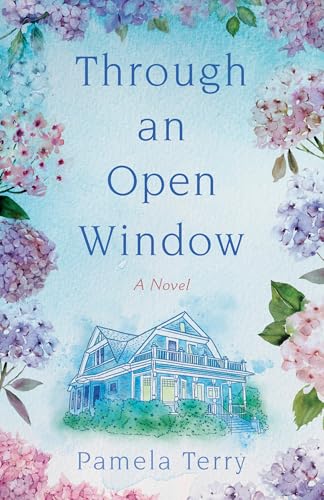
Through an Open Window, by Pamela Terry*****

“When you’re the last one with memories it’s like trying to hold on to hot sand.”

Author Pamela Terry never misses. Her debut, The Sweet Taste of Muscadines, forged such an emotional connection in me that if someone had told me they didn’t like it, I might not have cared for them as much as before. The same held true for her next work, When the Moon Turns Blue, which was every bit as good if not better. And now, with her new novel, Through an Open Window, I know that I will follow this author anywhere.

My thanks go to NetGalley and Ballantine Books for the invitation to read and review. This book will be for sale August 19, 2025. If you are female and have a beating heart, you should get it and read it.

We open with a scene from 1956. The local sheriff rescues two small children from a scene of horrific carnage; the baby girl is surrendered to the social worker before they find the little boy. The sheriff and his wife have been unable to have children, and want them so badly that instead of reporting the boy also, he takes him home and they keep him.

Cut forward now to the fictional town of Wesleyan, Georgia. A family is grieving the loss of its patriarch, Lawrence Elliot. His widow, Margaret is the first to receive a visitation—not from Lawrence, but from Great-Aunt Edith, who has been dead for years. Aunt Edith wants her to know something. And in fact, other family members will also see her at various times, in various places, but it’s not the sort of thing one shares with others. But Edith isn’t leaving until her message is received and understood.

As we see Margaret and her three adult children cope in different ways, we also see the interplay of their relationships to each other. This story is loaded with character development, and I believe each and every one, even Jubal, the rescued Clumber Spaniel that comes to live with Margaret. (I had never heard of this breed before, and now I kind of want one. Someone stop me!)

Events roll forward, and slowly we learn what it is that Edith is trying to convey, as the family does, and we find the tie-in to the prelude. It’s done brilliantly! Along the way, the author’s voice comes through in undeniable word smithery that forces me to highlight way, way too many passages to quote here. I experience the entire gamut of emotion, and when I near the ending, I am torn, wanting to read more slowly so that the book won’t end, but also needing desperately to know what is coming next.

The only possible improvement would be if Terry could write, and write up to the standard she has established, as fast as I can read, because I cannot wait for her next novel! She has become a favorite author, one I’d pay to read if I couldn’t do it free of charge. Highly recommended.

Far and Away, by Amy Poeppel****-*****

Amy Poeppel is the queen of intelligent feel-good novels. Her newest work, Far and Away, is about two women that have never met, one in Dallas, one in Berlin, who exchange houses for several months. The deal is done fast, as both of them have a short time to line something up, and soon they will both regret their hasty decisions.

My thanks go to NetGalley and Emily Bestler Books for the invitation to read and review. This book is for sale now.

One of the things I love best about Poeppel’s writing is her ability to create a complex plot with a lot of moving pieces, along with believable, sympathetic characters; yet somehow, the whole thing is easily understood, never confusing. Our story starts with Lucy and her family in Dallas, Texas. Her eldest child, Jack, is about to graduate from a private high school, then attend M.I.T. At the last minute, however, he is expelled unceremoniously. He’s done something dumb, and it’s been interpreted as something more sinister. He isn’t even offered a chance to explain or to defend himself. And though there is a lot of other business involving other characters, I enjoy this part most for the message it sends us at a time it’s desperately needed. Before you judge someone, take a moment to listen. Ask some questions before you hurl accusations and seek vengeance. If the behavior is as deplorable as you think it is, there’s still plenty of time to accuse and avenge afterward.  We in the U.S. and also Europeans can benefit from this one tasty nugget. Plenty of others can, too.

On the other side of the world in Berlin, Greta’s husband Otto has been invited to teach for a term at a college in Texas. He’s accepted without even discussing it with Greta; he has to go right away! Where will they even live? Otto suggests a hotel; Greta is having none of it. In her desperate search for last minute housing, she is connected with someone that knows that Lucy has decided, quite suddenly, to relocate for the summer. The accusations against Jack have turned to harassment and vandalism, and she’s ready to get out of Dodge. Her husband is incommunicado, performing a simulation for NASA, a part of which is to be cut off from everyone else. Mason still thinks that Jack graduated, and that M.I.T. is Jack’s next step.

And so it is that Lucy and her brood relocate to Greta’s apartment in Berlin, and Greta and Otto take up residence in the massive experimental home in Dallas owned by Lucy and Mason. Not a lot of details have been exchanged about either place; there hasn’t been time. So, they get on the plane, and everybody gets what they get, to their sometimes consternation.

There are many hilarious moments here; I especially enjoy the foreign language errors made, both English to German, and German to English.

If there were one thing I could change, I’d rework the epilogue. There’s a considerable jump in time, but the chapter heading doesn’t tell us, and so I am taking in details while doing some mental calculations. That’s not so bad when it’s at the start of a book, but at the end, it’s disorienting and breaks the flow. I also feel as if there were too many things tied up with too many bows. A kindergarten teacher told me once that the key to having a kindergartner paint, was to know when to stop them. It may also apply to adults and their writing.

Nevertheless, I loved this book! Part of the magic is due to Poeppel’s understanding of human nature, which is inherently good, and part of it is her hilariously quirky humor that often drops in, seemingly out of nowhere. Highly recommended.

The Family Recipe, by Carolyn Huynh*****

“We all need to feel needed. Otherwise, what’s the point of living?”

Carolyn Huynh made her authorial debut in 2022 with The Fortunes of Jaded Women. It was one of my favorite novels not only of that year, but of all the thousand-plus galleys I have read since I began reviewing. She’s back again with The Family Recipe, and it’s every bit as good as the first. My thanks go to NetGalley and Atria Books for the invitation to read and review, but make no mistake: I would have hunted this thing down and bought it with my Social Security check if it came down to it. I wouldn’t have been sorry, either.

This book is available to the public now.

Once again, our protagonists are Vietnamese and Vietnamese-Americans, mostly women, and once again, they are siblings and other family members that must come together; it isn’t a voluntary reunion. And that’s where the similarities between the first book and this one end.

Duc Tran, the patriarch, has laid out the terms by which his children may inherit his fortune. Once upon a time, he was the Vietnamese sandwich king, and in order to become his heir, each of his four daughters must relocate to a city she doesn’t want to live in, and revive a down-at-the-heels restaurant in a now undesirable end of town. It’s a contest; that is, unless Duc’s one son, Jude, succeeds in getting married within the one year’s time limit of the contest. If he can do that, he wins. (His sisters aren’t worried; who would marry Jude?)

The story is told from several points of view; these include the siblings, their uncle—a shady lawyer, and Duc’s best friend; their mother, who abandoned them when they were small, when her mental health collapsed, and never went back; Duc’s second wife; and briefly, Duc himself, who mostly serves as a mysterious figure that doesn’t even return to the States to lay out his children’s requirements, sending their uncle as his proxy.  As the story unfolds, we learn more about each sibling, and about the traumas they have experienced, as well as their successes.

The thing that makes it work so well is Huynh’s unerring sense of timing. It’s a dramatic tale, but it’s shot full of humor, as we see at the outset, when we learn the sisters’ names. Their father was a huge fan of the Beatles, and so the girls are named Jane, Paulina, Georgia, and (wait for it…) Bingo!

There are plenty of twists and turns, and the dialogue crackles. The internal monologues are mesmerizing. This book would make a fantastic movie.

Since I was reading this galley digitally, I highlighted quotes that I thought I’d like to use in this review, but there are 28 of them. Obviously, I cannot share them all here, but let that inform you, if nothing else here has, how much I love this book.

Highly recommended to anyone that has a beating heart, at least a passing interest in Vietnamese-American culture and/or family stories, and can use a few good laughs.

The Road to Tender Hearts, by Annie Hartnett*****

The Road to Tender Hearts is aptly named, possibly the most big-hearted novel of 2025. Author Annie Hartnett first came on my radar in 2022 when she published Unlikely Animals, which turned out to be one of my favorites that year. When I saw that she had a new one out, I tried to temper my expectations; not many authors can write more than one novel so hugely imaginative, genre defying, darkly funny, and yet heartwarming. And it’s true; not many can. As it happens, however, Hartnett can, and she has.

My thanks go to NetGalley and Random House Ballantine for the review copy; however, this is one of those rare instances where I would have paid full cover price if that was the only way for me to read it. It will be available to the public Tuesday, April 29, 2025.

Like Hartnett’s previous novel, The Road to Tender Hearts has quirky characters and at least one sentient animal with an internal monologue, but the structure of the plot is not as complex—a thing I am grateful for, near bedtime—and there are fewer characters and settings. Both are magical, and the distinctions show that Hartnett is not one to write the same book, more or less, over and over. She has more imagination than that; she may have more imagination than ten or twelve ordinary people.

Our protagonist, to the extent we can identify just one, is PJ Halliday. PJ was living the good life, a happy family, steady work, and the esteem of his neighbors in Pondville, Massachusetts, but then his elder daughter, Kate, died when she was eighteen, and PJ, and his marriage, came apart. Since then, he’s been doing two things: drinking, and giving away chunks of his huge lottery prize to every sad sack and every player that comes with an outstretched palm. But all that is about to change.

The son of PJ’s late brother, from whom he was estranged, dies, along with his wife, leaving two elementary aged children without a home or family. It seems that PJ is the only relative these little tikes have. Luna and Ollie aren’t sure that PJ can be trusted, since their own parents and skeezy grandpa never could be, but he actually has some strong if rusty parenting skills, and he is determined to clean up his act for them. There’s just one other thing he needs to do: his old high school flame, Michelle Cobb, has recently become a widow. He never forgot her, and now he intends to drive to her retirement community, Tender Hearts, in Arizona and see if he can try again with her. Two little kids in the car? No problem. And now, add his (still living) daughter Sophie, who figures she’d better keep an eye on him and the tots, and Pancakes, the cat that has adopted him.

Pancakes has a unique talent: he can tell who is about to die, and he goes to them, so that oftentimes, their last breaths are taken as they stroke a purring kitty. And so, Pancakes goes on the trip too, but every now and then, he disappears and is found on the lap of some elderly individual in poor health. (Or, not elderly. Hey, Pancakes just knows.) It’s no coincidence that the story begins and ends with Pancakes.

PJ is not always the best decision maker, and there are several times when I wince at the choices he makes. Sometimes, someone else swoops in and fixes his blunders, and at other times, they’re left hanging in the wind, and we have to wait to see how they will affect the story’s outcome.

Every single aspect of this book is golden. The dialogue flows naturally, and the internal monologues, all told in the third person omniscient, are authentic and full of character. In short—and I rarely say this—there’s not one single thing about this glorious redemption tale that I would change.

Highly recommended to everyone that loves fiction, and that has a beating heart.

The Answer is No, by Fredrik Backman****

Who can resist a story by Fredrik Backman? His soothing tone and positive message about the nature of humanity is balm for the soul. So although I seldom read stand alone short stories, I leapt on this one right away. My thanks go to NetGalley and Amazon for the review copy. This book is for sale now.

This is one of those stories where you can see what’s about to happen, in broad strokes, right out of the gate. The blurb gives us the contours, telling us that our protagonist, Lucas, is about to have his life ruined by a frying pan; his life is perfect, single with no entanglements. He has no friends that he owes favors; no girlfriend; his life is simple and uncomplicated. He has a nice little apartment that’s his alone; after work, he can eat his Thai food and play his videogames without harassment. He doesn’t bother anybody, and nobody bothers him.

Then there’s a knock at the door, an insistent one; it’s a small klatch of people that introduce themselves as “the board.” Someone has disposed of a frying pan in an unauthorized spot, and they are determined to root out the culprit and penalize them. Everyone is considered guilty until proven innocent! Lucas protests his innocence and makes a few hapless suggestions in hopes of mollifying them, but instead, they draft him to head a committee, and they won’t let him out of it.

This is a pleasant enough story, consistent with Backman’s usual style, but at the same time, because it is a short story, it lacks some of the most agreeable aspects of a Backman novel. In his full length books, Backman creates and develops a massive collection of characters, and he always juggles them brilliantly, developing several and keeping each of them so distinct that the reader can’t forget who is who. Here he is forced, due to the limited length of the thing, to keep it down to a small handful of characters, and while some will likely appreciate this, I miss the complex stories with infinite character back stories and interrelationships. So, as short stories go, this perfectly fine, but for those of us that are fond of Backman’s epic tales, it feels just a trifle anticlimactic.

Recommended to those that read everything Backman writes, and to those that prefer a more streamlined story.

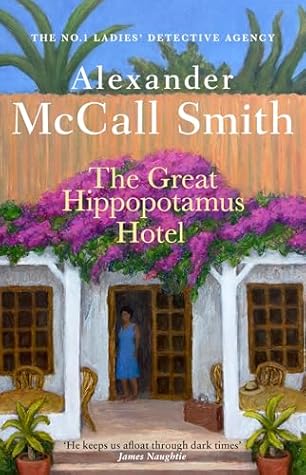
The Great Hippopotamus Hotel, by Alexander McCall Smith*****

The 25th book in the #1 Ladies Detective Agency series is not to be missed. My thanks go to NetGalley and Knopf/Doubleday for the review copy; this book is available to the public now.

When life becomes stressful, what do you do? Some swear by yoga, herbal tea, walking or running, therapy, mindfulness, journaling, or a number of other remedies. Some of us dive into the chocolate; the short-term benefit is mitigated by the long term weight gain, but when we’re upset enough, we don’t care. And for some of us, this series is just what the doctor ordered.

Precious Ramotswe is our detective protagonist, assisted, and occasionally encumbered, by her headstrong but goodhearted colleague, Grace Makutsi, part time apprentice detective, Charlie, and occasionally, by her bestie, Mma Potokwane, who runs the local orphan home.

Our mystery revolves, as the title suggests, around a case of possible sabotage at The Great Hippopotamus Hotel. There’s another thread, too—as there usually is—involving Precious’s husband, Mr. J.L.B Matekoni, owner of the garage and technically, Precious’s landlord.

Those looking for an action packed thriller will always be disappointed here, because that’s not what this series is. Instead, it’s closer to being a Miss Marple-ish cozy mystery. The problem is nearly always solved, not by DNA or murder weapons or questioning baddies until they break, but by an examination of the circumstances and characters of those involved. It is here that Precious is at her finest. In addition, she must tread carefully around the feelings of her staff, primarily that of Grace Makutsi, whose insecurities tend to make her prickly. Grace is a bit threatened by Mma Potokwane, and when Precious explains gently that they will be accompanied by the orphan farm matron on an investigation, Grace says, in a serious case of look-who’s-talking:

“Mma Potokwane—yes, she is observant, but…But Mma, if Mma Potokwane has any faults—and we all have faults Mma, myself included—if she has any faults, one of them is taking over. I am not saying that she is bossy—that is not a word that I would use for Mma Potokwane—I would not say that, Mma, and I am not saying it now. No. But there are some people, I think, who might say that.”

And so, in addition to her detective work, Mma Ramotswe must navigate the small minefields that exist between these two women, both of whom are dear to her.

In some ways, the mystery aspect of these stories is almost superfluous. Every story has to have a problem and a resolution, and so it’s convenient, perhaps, to use a mystery as scaffolding for whatever problem Precious must confront. It’s certainly served Smith well. But the real benefit I see in these series is that the solutions to these problems are always dealt with as gently and as kindly as is possible. Nobody is getting thrown face down on the ground and handcuffed in these stories; every effort is made to turn the problem around while allowing the perpetrator to retain as much dignity as possible. The lyrical prose is so soothing that I love reading these stories at bedtime.

And one more word, for regular readers: the recurring character of Violet, who is the closest we have to a villain, pops up here right away, and I rolled my eyes and said, “Not this again. Smith needs new material.” But the way the character is used this time is different, and if I had a hat, I would tip it in appreciation of the author’s cleverness. He always seems to know when it’s time to break a pattern.

Highly recommended.

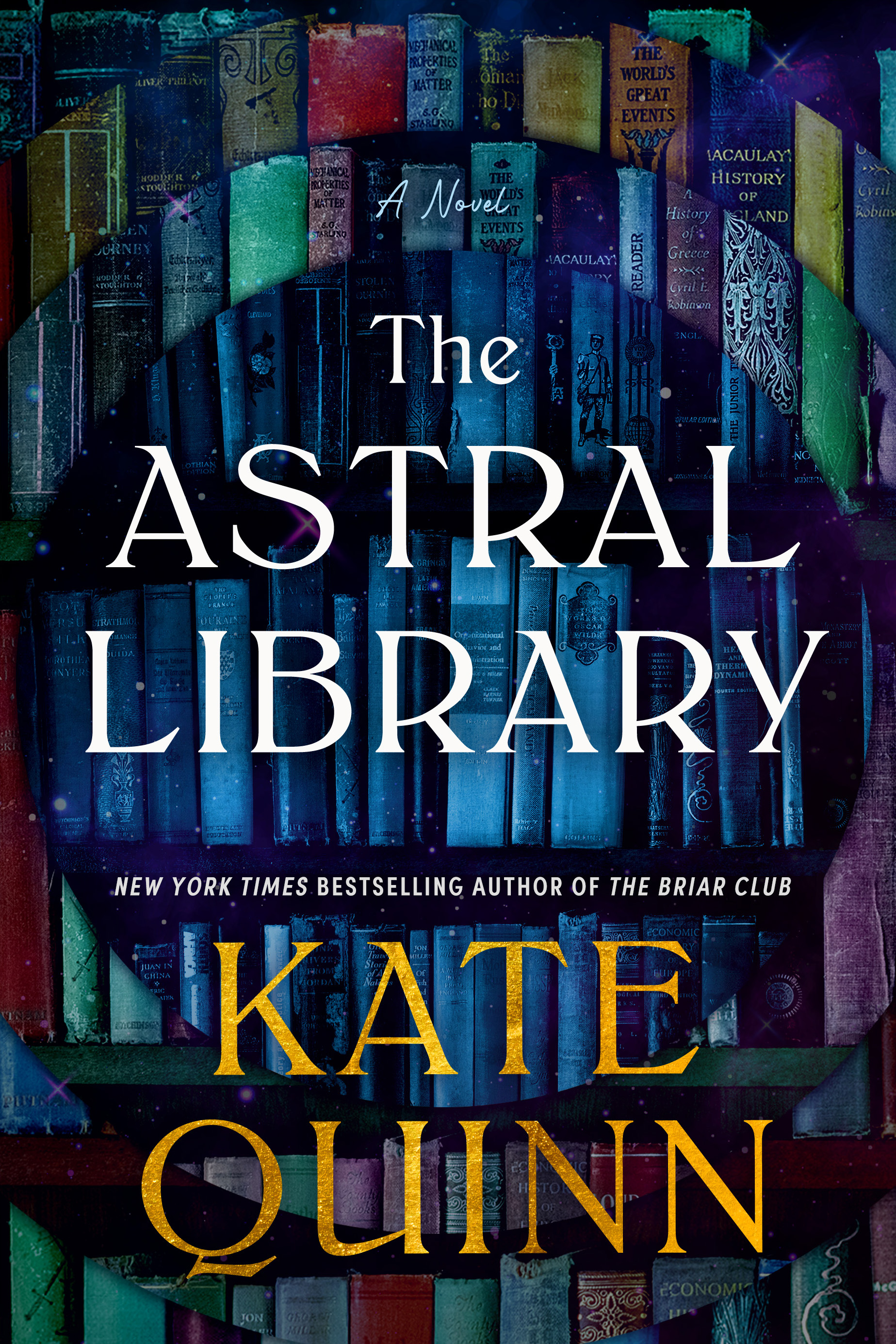
The Briar Club, by Kate Quinn*****

I had never read a novel by Kate Quinn, but my friends on Goodreads raved about it and I was overcome by the fear of missing out. Happily, I was not too late to get a review copy; my thanks go to NetGalley and William Morrow, along with my apologies for lateness. From the get go, I could tell this book was too good to speed read, and so I set it aside for a time when I could sink into it and appreciate it. This fall I was able to get the audio version from the library to help me along; narrator Saskia Maarleveld is outstanding, and those that enjoy hearing their books should strongly consider ordering that format.

Our story takes place just after World War II, and it takes place almost entirely within the confines of Briarwood House, a women’s boarding house owned by the selfish, odious Mrs. Nilsson. The book’s prologue comes to us from the point of view of the house, and for a brief spell I wonder whether the house itself will become the main character. It doesn’t, and that’s probably just as well, because the women that rent its rooms, along with Pete and Lina, Nilsson’s two children, fill the story quite nicely, and all are beautifully developed, some more than others, with Nilsson herself being the only truly static character. In fact, I could argue that even the house’s character is developed somewhat.

I seldom do this, but the prologue is so juicy that I’m going to reprint a considerable chunk of it here, because Quinn’s voice—and okay, the house’s—provide a more convincing incentive to read on, than anything I can offer:

If these walls could talk. Well, they may not be talking, but they are certainly listening. And watching…Now its walls smell of turkey, pumpkin pie, and blood, and the house is shocked down to its foundations. Also, just a little bit thrilled. This is the most excitement Briarwood House has had in decades. Murder. Murder here in the heart of sleepy white picket fence Washington, D.C.! And on Thanksgiving, too. Not that the house is terribly surprised by that; it’s held enough holidays to know that when you throw all that family together and mix with too much rum punch and buried resentment, blood is bound to be shed sometimes…This was a very enthusiastic murder, the house muses. Not one moment’s hesitation from the hand swinging that blade…Briarwood House doesn’t like Mrs. Nilsson. Hasn’t liked her since she first crossed the threshold as a bride, complaining before she’d even shaken the rice out of her hair that the halls were too narrow (My halls! Too narrow!), and still doesn’t like her twenty years down the road. No one else in this kitchen does, either, the house knows perfectly well. It knows something the detective doesn’t. The killer is still very much in this room.

Now that the murder has been mentioned, I must caution you not to identify this story foremost as a murder mystery; it isn’t. The murder doesn’t come till nearly the very end, and the reason that it affects us so deeply is because of the author’s success in making every character here feel tangible and known to us. By the time anyone is enraged enough to swing anything, we know all of these women, or most of them at least, well enough to feel as if they are family. Boarder Grace March is revealed to us more slowly than the other women, but there are reasons for that, and by the end, I may love her best of all. No, this is first and foremost a stellar work of historical fiction.

At the outset, no one knows anyone else. Some are married, waiting for spouses to return from the conflict; some are single; some are professionals. Almost everybody has at least one serious secret. But as they grow to know one another, bonds are established that in some cases are stronger than those of blood relatives.

I won’t go through the plot or describe individual characters; as far as I’m concerned, that would be gilding the lily. Instead, I urge you to get a copy of this outstanding novel in whatever form is your favorite, with a slight nudge toward audio if you’re undecided. Highly recommended!

How to Summon a Fairy Godmother, by Laura J. Mayo*****

“She was Theodosia Balfour. Good things did not happen to her.”

Theo is engaged to be married, despite her wishes; her mother has bartered her to an ancient, badly behaved duke for the prestige of his title and the money she must have to keep the family manse. Beggers can’t be choosers, amirite? Her stepsister and the prince have barred her from their castle due to her own unseemly behaviors, and her sister is about to be wedded to a more desirable man. There’s only one way out of it: Theo needs to find her stepsister’s notes on summoning a fairy godmother. Only magic can possibly get her out of this mess.

My thanks go to Orbit Books, Hachette Audio, and NetGalley for the review copies. This book is for sale now.

Because I am lucky enough to have both the print and audio galleys, I pair this book with my morning regimen on my exercise bike. While my feet are doing the work, my eyes and ears are on a pleasure cruise, listening to the story as read by the talented Josie Charles. At the outset, I’m not sure I’m going to enjoy it. After a handful of quick laughs, the story and voice actor seem to be a little over the top, perhaps trying too hard. However, a number of other reviewers that I respect have really enjoyed this thing, so I keep an open mind, and sure enough—about a third of the way in, I realize that I’m bonded to the protagonist. As I follow the narrative and become accustomed to the writing and narrative styles of the author and performer, the whole thing grows on me, and before long I find myself looking forward to my wretched exercise bike, because Theodosia needs me.

Once the fairy has been summoned, Theo is magicked away to fairy land, and she is provided with a set of tasks she must accomplish in order to be freed from the loathsome old toad to whom she’s betrothed. She is provided with some assistants and supervisors, and it’s a good thing because she needs rescuing now and then. The hardest part, perhaps, is the caveat that as she completes the steps required, she must behave respectfully—at all times!

The chapters are brief and have hilarious titles. A couple of examples: “Chapter 5 Where Theo Should Probably Think of Something Before She Ends Up Married,” “Chapter 11 Where It Becomes Quite Clear Theo Was Never Trained as a Lawyer.”  There’s lots of snarky dialogue, with a tender moment or two tucked in here and there.  There’s a twist at the end that I absolutely did not see coming.

Should you listen to the audio, or read the printed version? There are some American readers that don’t like a British accent, and Ms. Charles’s is a heavy one. Once I’m used to it, I rather like it, but you know what type of reader you are. Follow your usual go-to. If you enjoy an audiobook, this one could make your commute much pleasanter.

Highly recommended to those that enjoy fantasy and/or humor.