Too Old for This, by Samantha Downing*****

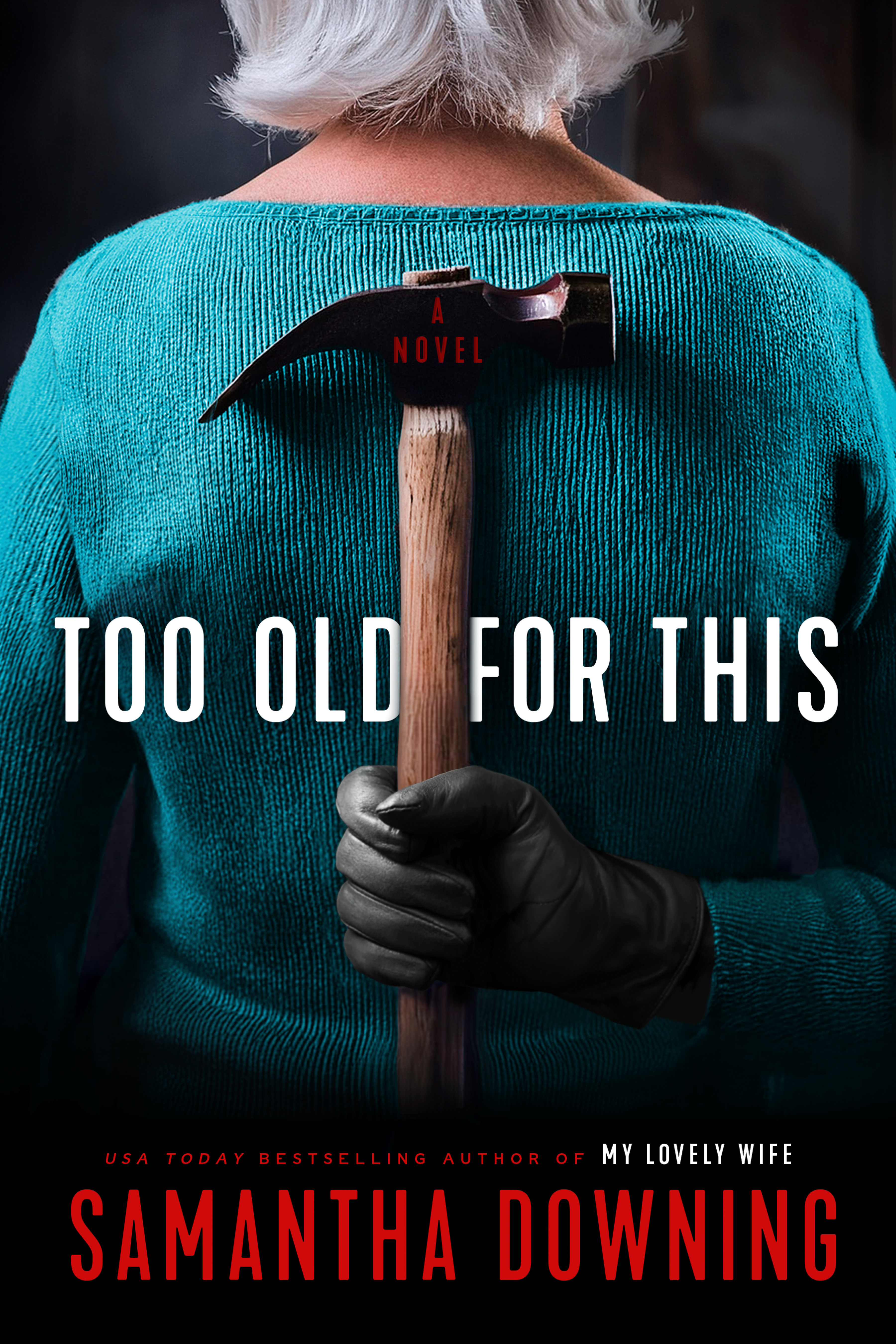
Too Old for This is author Samantha Downing’s wickedly funny novel about a female serial killer. She’s retired now, living under an assumed name, but then a journalist comes to her door. She knows things and intends to write about them, and she won’t be dissuaded; then, of course, a woman has to do what she has to do.
My great thanks go to NetGalley and Berkley Publishers for the review copy. This book will be available to the public August 12, 2025.

Lottie Jones is 75 years old, living the quiet life of a single retired woman. Her son, Archie, is grown; Lottie’s chief delights are the bingo nights at the church and a bit of gossip here and there. A quiet life. Years ago, she was suspected of killing three people. Her name was splashed on the fronts of tabloids; she became a local pariah. In the end, however, she wasn’t even arrested following all of the harassment, and she successfully sued the city for damaging her reputation. The settlement was enough to start a new life for herself and her little boy, including the purchase of her home.

After one gets to be a bit older, one’s priorities and pleasures begin to shift. She doesn’t date anymore, for instance, and

“Like so many other things, murder began to feel like a chore instead of a joy. So I stopped. And I hardly ever thought about it, except in that nostalgic way. I didn’t want to go back, but I enjoyed the memories.”

The whole story is just as droll. It’s a strange alchemy, creating a likeable murderer; in the same way, the dissonance between her homicidal activities and the humdrum routines into which she has settled creates a hilarious sort of mental whiplash. One minute she’s warming up her rechargeable chainsaw to dismember her victim; the next she’s stewing about the snide remark someone at church made about the potluck dish she contributed, and gossiping about that person to her more sympathetic friends. And then her future daughter-in-law surprises her by dropping in unexpectedly, and she is concerned about Lottie’s safety, what with living alone, so she brings her a stun gun. “This was very thoughtful of her. No one has ever bought me a weapon before.”

At some point, I realized that after seeing the back of her head on the book’s cover so many times, I had mentally edited in what Lottie’s face would look like if she turned around. I pegged her as a doppelganger for Camilla Parker-Bowles.

The book’s ending is pitch perfect. Highly recommended!

Fever Beach, by Carl Hiaasen**-***

What happened? I used to absolutely love novels by Carl Hiaasen. In his most recent release, Fever Beach, we see a conflict between good—in the person of our main character, Viva Morales—and evil, played by a variety of Proud Boys wannabees and other undesirables. The good person is always good; the bad guys have no redeeming qualities. Only Viva’s ex-husband is a dynamic character.

Still, my thanks go to Doubleday and NetGalley for the review copy. This book is for sale now.

As I read, I keep reminding myself that this is not a book I’m supposed to take too seriously, to lighten up and just roll with it. I certainly used to do so when reading Hiaasen’s work. But perhaps because of the stereotyping and complete lack of nuance, what might otherwise have seemed droll and satirical, instead comes across like a whole lot of cheap shots fired off the bow.

Mind you, I am certainly not a fan of ultraright organizations, and the rising tide of bigotry, fascist ideology and anti-Semitism concerns me greatly. But in an already highly polarized nation and world, all I can think as I read is that this story isn’t helping. It is the snobbery and elitism of the highly educated that has driven a large number of folks into the arms of extreme right; some intelligently reject the elitism and cancel culture consciously, but they aren’t in this book. In real life, those that are poorly educated and/or intellectually handicapped, as the bad guys in this book are, would in most cases give their right arms to wake up “clever” like Viva.  It strikes me as counterproductive to write a book that makes fun of right-wing intolerance, while practicing intolerance from a different angle.

Back in the day, before anyone judged anyone else by the color of their hat, I used to roar with laughter at this author’s work. Did it change, or did I? I would like to think it is the former.

I rated this book 2.5 stars and have rounded it upward, more from a fondness of his early novels than anything else. I do recall reading another of his more recent books—not for review, but just because I felt like it—and saw some of the same problems, so I will tell you that this book will probably work for you if you enjoyed his last one. Apart from that, I cannot recommend it.

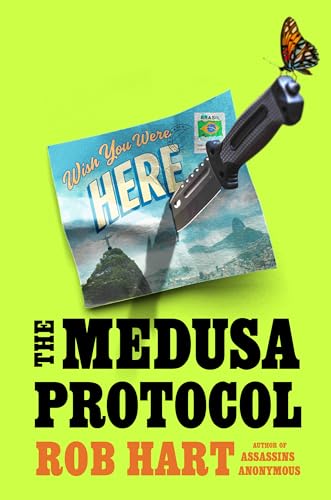
The Medusa Protocol, by Rob Hart****

“’I’m Mark, and I haven’t killed anyone in two and a half years,’ I say.    ‘Hi, Mark.’”


The Medusa Protocol is author Rob Hart’s second book in his Assassins Anonymous series. Happily for me, I didn’t notice that I was reading the second in a series; I didn’t read the first, and I might have sidestepped it had I realized I was entering mid-series. As it was, I had fun and enjoyed this satirical romp through a sea of professional murderers, sharks, and poisonous vipers.

My thanks go to NetGalley and Putnam Penguin for the invitation to read and review. This book is for sale now.

Our story commences with a group of recovering assassins meeting in a church basement. Then things start to go sideways; a member who’s expected isn’t there, but sends her personal choice of pizza to let them know she’s in trouble just as enemy assassins crash the meeting.

Huh? What?

From there, we dive down the rabbit hole, seeing the past and present alternately through the eyes of Mark, who is Astrid’s mentor in the program, and Astrid, a recovering killer who has been kidnapped and is being held in a Brazilian prison on an island in shark-infested waters, and which is home to a great many large, venomous vipers. How can her friends rescue her without having to kill anybody?

Just keep whispering the Serenity Prayer to yourselves, guys.

This is a fun read. Although the point of view shifts with every chapter, either between characters or time periods, these are clearly delineated, and I have no trouble keeping them straight. I only had the digital galley, not the audio, but I suspect that, assuming the reader provides the headings at chapter beginnings, it will be fine. The humorous moments when the rescuers worry about the mission threatening their sobriety are meted out exactly as they should be, not so many that it stops being funny, but frequent enough to keep me chuckling. There isn’t a lot of character development, but I don’t expect it from a satirical, action-packed novel like this one; there is some dialogue toward the middle that is overly wordy and should be edited down, but apart from that, it’s smooth as glass.

Some reviewers suggest not reading this one unless one has read the first; I am glad I didn’t see that advice till after I had read this one. I don’t care that this book provides spoilers for the first, because I am not going to read that one anyway. I will, however, cheerfully read the next in the series, whenever it becomes available. Meanwhile, I recommend this nifty little book to you.

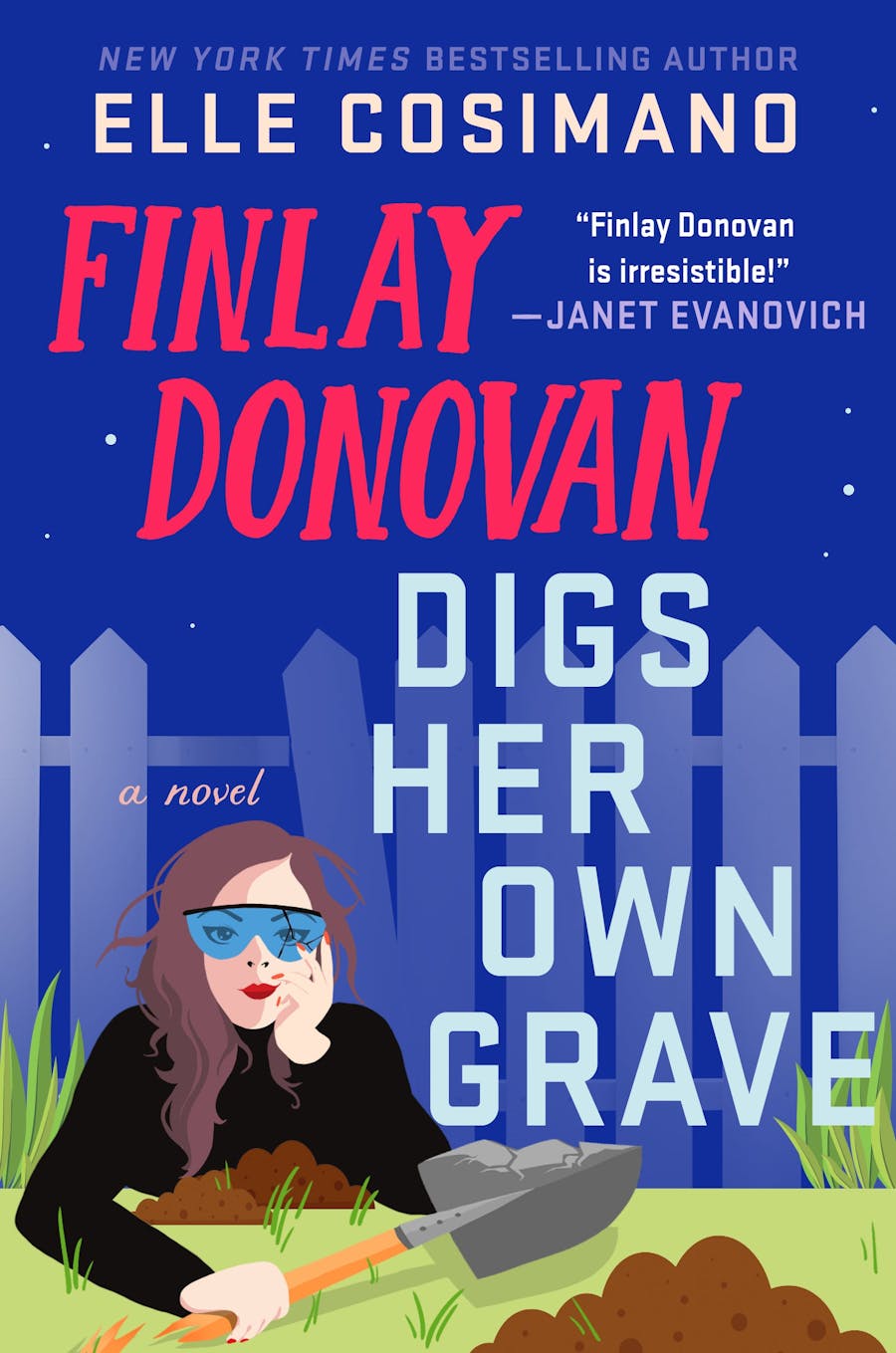
Finlay Donovan Digs Her Own Grave*****

Finlay Donovan is a full time mom who finds herself short on resources after her attorney husband leaves her for someone else. In the first episode, she finds herself with a corpse that she may or may not have killed; fearing the worst, she disposes of it, and the next thing she knows, her name is on some sort of dark web list of killers for hire. By the time she realizes she’s innocent, it’s too late to put the toothpaste back in the tube.

Other things have happened since then, of course, as we find ourselves now on the fifth installment. Present and accounted for is her nanny and close friend, Vero Ruiz, a woman with the kind of street smarts that can come in handy when the chips are down. In this episode there are several recurring characters, and the reader is strongly advised to go back and read the first Finlay before diving in. It’s not as if you can’t just start with this one, but you’ll be missing half of the jokes and jibes if you do.

My great thanks go to St. Martin’s Press Early Readers program and NetGalley for the review copy. This book will be available March 4, 2025.

Finlay’s nosy neighbor, Mrs. Haggerty, assumes a central role this time around when a body is exhumed from her backyard. Her home is declared a crime scene, and before Finlay even has time to react, the woman has installed herself in Finn’s guest room. A beat or two later, Stephen, Finlay’s ex, husband of her two children, is arrested for murdering the corpse that’s been found!

One of my favorite parts of this series is watching the dynamics between Finlay and her ex. On the one hand, the guy is philanderer, and he’s kind of a weasel. Yet, though Vero urges Fin to let justice take its course and stay out of it, Finlay has to defend him. Stephen is the father of her children, and they don’t need to grow up being told their daddy is a murderer. Also? The child support will dry up quick as a whistle if Stephen no longer makes money. And part of what I love about this, is that, in broad strokes, it outlines a dilemma that any number of women with children face. Life is full of nuance, and although this is not literary fiction, not intended to be known for its depth, it does honor the shades of gray faced by so many women. It makes the whole story more relatable.

Mrs. Haggerty also proves to be far more interesting than we previously believed, and that’s all I’m going to say about that. However, I do admire Cosimano’s capacity to juggle a million tiny, moving parts without creating inconsistencies. Once or twice I have seen what looks like an inconsistency, but then it turns out to have been written that way for a reason, usually to expose someone or something.

As the series progresses, I see more critics howling that the series isn’t what it was. Of course they’re right, in a way; when the series grows, the author has to make changes to prevent becoming a one trick pony. But I admire the way Cosimano handles the growth.

One small moan: yes, yes, yes. We can see that Finlay is hot for Nick, her cop boyfriend (the only trite element so far.) And yes, yes, yes, we can see that Vero is madly in love with her sweetheart, a fellow who she’s adored since her teens. We get it. Finlay and Vero are not a couple. We don’t need it hammered in any further, or at least, I don’t. For that matter, I wouldn’t be all that disturbed if they were. But the increased emphasis on their two romances bears just the tiniest whiff if hysteria. It’s not necessary. Finn’s love for Vero and vice versa, is not a lesbian love, but about the family we choose. So, let it rest already. Relax! The lesbian role is fulfilled by Finlay’s cop sister, Georgia, who stays firmly in the background where, apparently, some in the industry believe lesbian characters belong.

Sheesh!

That wee rant aside, I enjoyed this book very much. I heartily recommend it to you, and I cannot wait to read the next in the series.

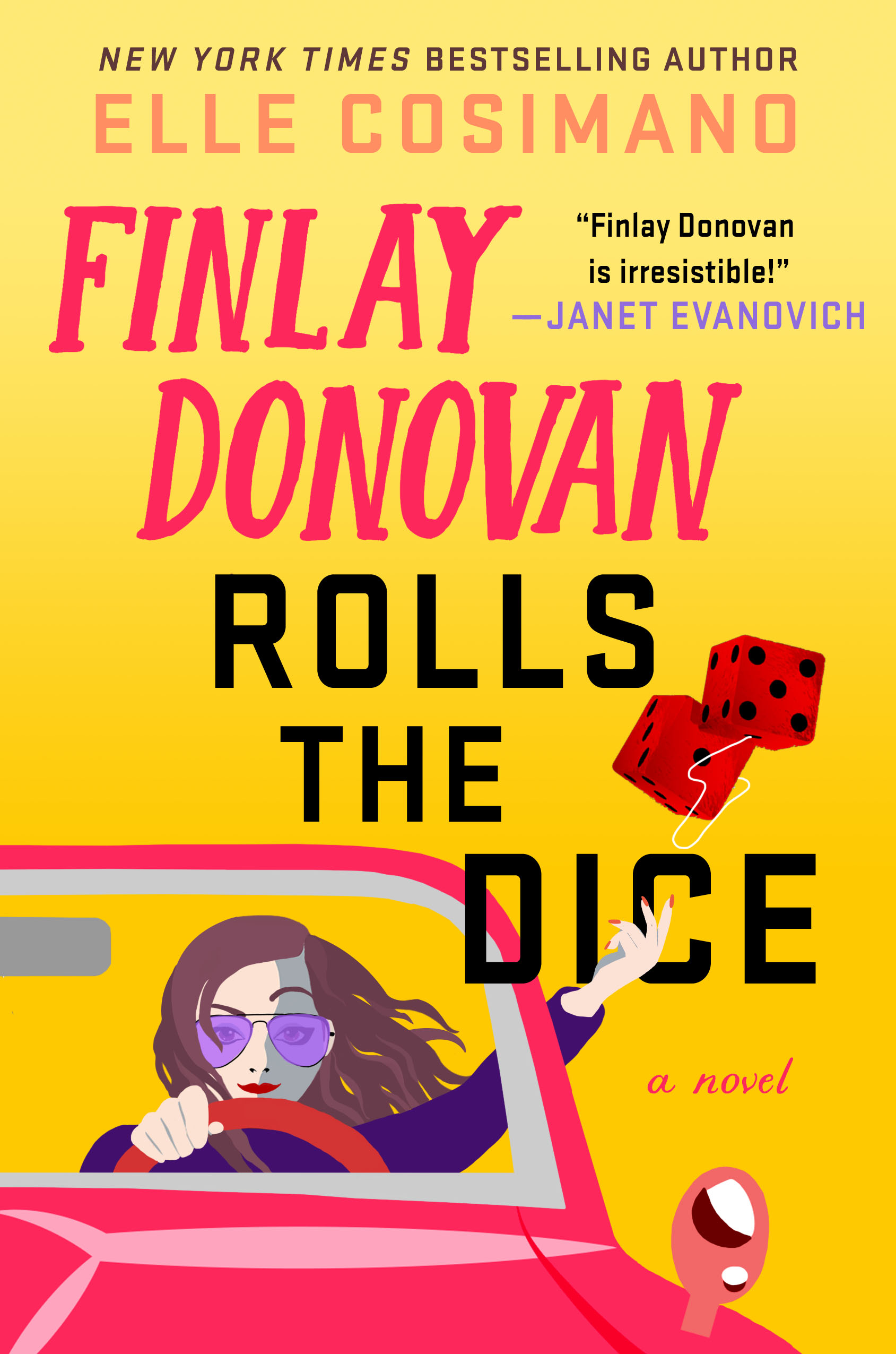
Finlay Donovan Rolls the Dice, by Elle Cosimano*****

“I’m telling you, Finlay, this book is good. This whole SERIES is good. The plots may be a little far-fetched, but these characters are so real! It’s like they just jump off the page!

Finlay Donovan Rolls the Dice is the fourth in the raucously entertaining series by Elle Cosimano. My thanks go to the Minotaur and St. Martin’s Press Influencer Program and NetGalley for the review copy. It will be available to the public Tuesday, March 5, 2024.

At the end of the previous book, Javi, Finn’s nanny Vero’s boyfriend, was abducted by mobsters that wanted to collect a gambling debt incurred by Vero. In this one, the two women plan to travel to Atlantic City to rescue him, with the cover story of needing time to unwind. However, things snowball, and before you know it, almost all the people they hold dear—and a few people that they don’t—are headed there, too. What follows is a riotous adventure with a lot of moving pieces. I love it.

More than any other, this installment has been controversial among reviewers. In the series debut, Finlay is an innocent, entirely law abiding single mother strapped with bills, work, and child care issues. She’s in the midst of a contentious divorce and her soon-to-be ex is an attorney, which makes Finlay’s efforts an uphill battle. She’s easy to relate to, and when, through no fault of her own, she finds herself with a corpse in her car, it seems entirely believable.

With the second and third books in the series, Finn, accompanied by the more street smart Vero, find themselves in deeper trouble. Just as they mop up one mess, another arises, until there’s a sort of house-that-Jack-built tower of problems that see both women in increasingly tenuous circumstances. They break the law once as a life or death matter, but then cannot safely come clean, so they do their best to put it behind them, but someone or something comes along to threaten the modest safety and security they’ve begun to enjoy. Bodies and crimes pile up, and now, with the fourth installment, the author can’t reasonably convince the reader that whatever happens next is purely an oopsie. Instead, she has to draw on other possibilities. Personally, I like it.

Finn and Vero are chasing down the underworld figures that they believe have abducted Javi, and there’s considerable risk involved. A couple of times I literally draw in my breath at the risks they take. Add to this the need to fabricate excuses to tell the myriad members of the retinue that have descended on Atlantic City with them, and it’s an ambitious undertaking.

In this circumstance, I no longer require realism. The whole thing takes on the flavor of a comic caper, what with the clown car full of women, including Finn’s mother; Finn’s ex-husband, who is in charge of the children; and various others (I am being deliberately vague here) that descend on them once they arrive. To put it another way, if Stephanie Plum and John Dortmunder—or if you prefer, Bernie Rhodenbarr—had a baby, she might be Finlay Donovan.  

If you need a good laugh, this book is for you; however, with this series, you really should begin with the first in the series, Finlay Donovan is Killing It. With just four in the series (and the audio is outstanding, too,) this will be a quick and hilarious adventure. What are you waiting for? Jump on in.

The Golem of Brooklyn, by Adam Mansbach*****

Len Bronstein is an art teacher. He has a whole lot of clay he’s filched from his employer’s supply closet, and now he’s stoned. He should make something. He should make a Golem. And friend, that’s just what he does.

Traditionally, The Golem is made by a rabbi to help the Jewish people during difficult times. Len isn’t a rabbi, and he doesn’t expect much from his creation:

Five minutes passed, and nothing happened. Len reminded himself that he didn’t actually expect anything to…he didn’t believe in any of this shit. He stood, dusted himself off, and went inside to grab a beer…Len deposited his beer in the sink just as The Golem ripped his back door off the hinges and flung it aside.

My thanks go to Net Galley and Random House Ballantine for the invitation to read and review. This book is for sale now.

Now that The Golem has awakened, he needs to know what his target is. His answer comes to him as he views the news on Len’s television. White Supremacists are railing about a Jewish conspiracy; the Holocaust, they say, was a hoax. The Golem was asleep during the Holocaust, but once it’s explained to him, he’s ready to get busy. But first, he must talk to the rabbi.

Our second main character is a woman named Miriam, Miri to you and me. She works at the bodega down the street, and Len recruits her to be a translator; The Golem, you see, only speaks Yiddish, and Len doesn’t. Miri has been drummed out of the temple because she is a lesbian, but The Golem likes her just fine. Before you know it, Len, Miriam and The Golem are on a road trip beyond all others, first to find a way in to see the Sassov Grand Rebbe, a wealthy and powerful man with a great many gatekeepers, and then to a scheduled White Pride rally down south.

This is, as may be obvious by now, very edgy humor. There’s a great deal of profanity, and whereas most of it is hilarious, at the beginning, the author could have varied his choices more. There are lots of cuss words out there, and not all of them begin with F. But this is a small matter. This novel’s action is interspersed with brief passages of Jewish history that I find very interesting, and they are so brief, and so skillfully woven into the narrative, that you may not notice that you’re learning some things.

My favorite passages involve a bombastic politician, and multiple encounters with cops. (The Golem doesn’t care for them.) As for me, I have read several very funny novels this year, but none made me laugh out loud as often as this one. And in the end–well, you don’t expect me to tell you how this ends, now do you?

Highly recommended to readers that lean left and can tolerate profanity.

Let’s Not Do That Again, by Grant Ginder*****

“Justice always comes first.”

Grant Ginder is one of the funniest writers alive. I read and reviewed Honestly, We Meant Well when it came out in 2019, and I knew then that I’d read whatever he wrote from that time on. Is Let’s Not Do That Again as funny? No, friend, it’s even funnier.

My thanks go to Net Galley, MacMillan audio, and Henry Holt for the review copies. This book is for sale now.

Nancy Harriman is running for Senate in New York City, with the assistance of her loyal son, Nick, and hindrance from her rebellious daughter, Greta. She’s focused; she’s determined. And that’s a good thing, because her daughter is focused on ruining Nancy’s life.

Parents don’t always know what their children get up to online; this is doubly true when there’s only one parent, and she’s busy running for the public office her late husband used to hold. And so Nancy doesn’t know that Greta is in league with the devil, till Greta has obtained an ungodly sum of travel money from her grandmother, and has flown to Paris to be with him.

With Greta is Paris, one thing leads to another and in a breathtakingly short amount of time, the wicked little Frenchman has manipulated her into causing destruction on a level that makes international news. Nick, the good son, is sent across the Atlantic to retrieve his sister, who appears penitent, but isn’t.

From there things spiral further out of control, and it’s hard to imagine just how this story will play out, but when I see where Ginder takes it, I bow in awe.

I am fortunate enough to have received both the digital and audio versions of this delightful spoof. Susannah Jones is such a skilled narrator that at times, I forget that there’s only one person telling the story. On the other hand, there’s some creative, very funny spelling peppered into the narrative that you’ll miss out on if you don’t see the text. All told, I’d say it’s a toss-up. Go with whichever mode makes you happiest.

Highly recommended, especially if you lean a little to the left.

Psycho by the Sea, by Lynne Truss*****

Lynne Truss is hilarious, but with this fourth installment of the Constable Twitten series, she has outdone herself. My thanks go to Net Galley and Bloomsbury for the review copy. This book is riotously funny, and it’s for sale now.

Truss first came on my radar with her monstrously successful nonfiction grammar primer, Eats, Shoots & Leaves: The Zero Tolerance Approach to Punctuation. A decade later I began reviewing, and one of my first reviews was for Cat Out of Hell, and later, the first in the Constable Twitten series, A Shot in the Dark, followed by the second, The Man That Got Away. I somehow missed the review copy for the third, Murder by Milk Bottle, which I discovered when I received the review copy for this fourth in the series; after sulking for a bit, I took myself to Seattle Bibliocommons and checked it out so that I’d be up to date when I began reading this one. It proved to be a good idea.

I tell you all this so you’ll see why I thought I had this author figured out. She had proven to have a distinctive, rather odd fiction writing style, which began in a sort of corny, groaning, oh-my-God-is-this-the-best-you-can-do style, but then sneakily grew better and funnier until by the second half, I’d be laughing my butt off. So as I open Psycho by the Sea, I have fortified myself to give Truss a minute or two to warm up. It will be funny, I am sure, but probably not just yet.

Surprise! This time, Truss had me laughing right out of the gate.

For the uninitiated, this satirical series is set in Brighton, a coastal resort town in England, in the 1950s. Our protagonist, Constable Twitten, is brilliant but irritating. He joins a small force that consists of Chief Inspector Steine, who has, until recently, been more interested in boosting tourism by pretending that Brighton has no crime, than in breaking up the formidable organized crime gang that runs amok, than in solving any of the crimes that have been committed. That was true until the last installment, when he inadvertently covered himself in glory and is now basking in the limelight, some of it literal as he is invited to speak on television or receive yet another award for his cleverness and courage. We also have Sergeant Brunswick, who would solve crimes gladly if he weren’t so everlastingly stupid; instead, he yearns to go undercover, even when there is no earthly purpose in it; when he does, he always manages to be shot in the leg at least once.

By now the readers know that the cleaning lady in charge of the station is a criminal mastermind. Mrs. Groynes is part cleaner, part den mother, and part overlord, and she makes herself loved and indispensable by showing up with cake, providing constant cups of tea, and listening to the cops to make sure that her operation is nowhere close to being discovered. In the first of the series, Twitten discovers what Groynes has been up to, but not a single, solitary cop or civilian will believe him. He’s new, after all, and they’ve known Palmyra Groynes forever. Mrs. Groynes, a crime lord? Don’t be ridiculous!

Now it seems that Palmyra has a competitor, someone that wants her turf and is willing to mow down her operatives in order to take it. I never would have seen this coming, and it’s an ingenious development. Old characters come back, and a new one, a formidable secretary sent down from London, turns the cop shop into a much more legitimate enterprise, and also sends Groynes packing. Even Twitten wants her back.

My favorite moment is when Twitten is being held at gunpoint, and he is so pedantic and obnoxious that he bores his assailant out of shooting him.

Not only does this book hit my funny bone right away, it also features a more complex, well balanced plot, and more character development. Until now, I had assumed no real character development was being attempted, because it’s satire, satire, satire, but now, it appears one can do both, and Truss does both bally splendidly.

“Flipping hedgehogs!” You have to get this book, but it will be more enjoyable if you read the other three first. Highly recommended.

Hypnosis is for Hacks, by Tamara Berry****

Eleanor Wilde is a sham medium, a fraud who’s used her dramatic talents and the trust of her clients to bilk them. But lately things have changed; she has received intelligence from the great beyond, specifically from her deceased sister. As a businesswoman that now resides in a small town in the UK and doesn’t want her neighbors to hate her, she’s shifted most of her business to herbal cures and such. As it happens, this doesn’t keep all hell from busting loose.

My thanks go to Kensington Books and Net Galley for the review copy. This book is for sale now.

Eleanor–you may call her Ellie—is the protagonist in a satirical cozy mystery series, and this is the fourth. I read and reviewed the first two, but somehow missed out on the third. The first two took place in a tiny village where the ruling family lives in an honest-to-goodness castle. She went there, in the first in the series, to conduct a bogus séance, but instead fell in love with Nicholas, heir to the estate. Now the castle is in need of serious repairs. It’s summer, and the castle is hot enough to be uninhabitable, and so Ellie accompanies the elderly Vivian, matriarch of the castle, to the seaside. Her brother Liam, who is visiting, joins them. And once there, all sorts of things go wrong. We have a menacing, possessed doll that reappears in or near Ellie’s room, no matter what she does to destroy it, and a sinister figure from Ellie’s checkered past shows up as well. And of course, of course, of course, Ellie witnesses a murder shortly after arriving, but nobody will believe her.

I came away of two minds about this particular installment. The thing I’ve appreciated most about this series is that Berry’s writing is hilarious, and whenever an obvious plot device is utilized, it’s done in such an over-the-top manner that we can imagine the author winking and guffawing. Nothing here is to be taken seriously. In the past there’s been very little character development, and I was okay with that, because I wasn’t looking for great literature; I was looking for a laugh.

Here I find some changes. There’s less humor, although two particular bits, one involving lobsters and another involving, per the title, hypnosis, made me snicker. But I also find more character development. Realistically speaking, a series can’t last long if there’s no character development, and so I’m pleased to see Berry adding a bit of depth, but at the same time, what I really want is to laugh out loud. We live in tense times, and there’s a growing body of evidence that we live longer if we laugh. A silly, escapist novel that lets us forget current events entirely for a brief while, forget our own troubles, whatever they may be, and sit back and howl at what our clever author has cooked up, is worth more than many can imagine.

Nonetheless, this story is better by far than most of what’s out there within the humor genre, and I recommend it to you. Now…where’s that cat?

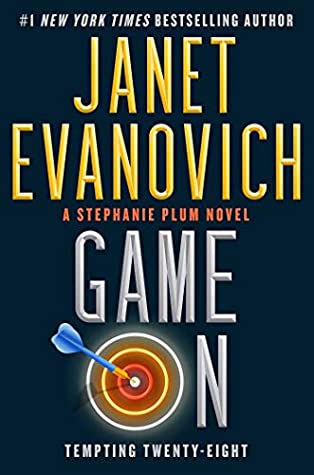
Game On! by Janet Evanovich****-*****

Stephanie Plum has been my constant companion for decades, but she never seems to get any older. We should all be so lucky!

My thanks go to Net Galley and Atria Books for the invitation to read and review. This book is for sale now.

Stephanie is a bounty hunter, working for her cousin Vinnie’s bail bond service. She tracks down no-shows, takes them to have their hearings rescheduled, and collects a commission. Her mother wishes fervently that she would get a normal job such as a bank teller, or just go ahead and marry long-time boyfriend Officer Joe Morelli, and keep house and raise kiddies. But Stephanie is long on independence, and she’s short on marketable skills, and so this is what she does. And we readers are well aware that she wouldn’t be half this hilarious as a housewife, so we cheer her on.

In an interview, author Evanovich said she had lit on the idea of a bounty hunter protagonist because the writer doesn’t need a background in legal matters the way that she would if she used a cop, detective, or lawyer. The primary skill required of a bail bonds enforcer is lying, and she felt she had a good grasp of that one.

You gotta love it.

There have been a few wobbles in the series, and a moment (long ago) when I thought perhaps it was played out. But like her intrepid protagonist, the author rallied and came back stronger than ever.

Can you read this book if you haven’t read any of the others in the series? Yes. Yes, you surely can; but you are most likely going to want to go back for the rest once you do so.

There are a few things that strike me as I read this one. I suddenly find myself wondering why Stephanie doesn’t seem to have women friends. She’s lived in Trenton—in the Burg—her entire life, so shouldn’t she have a few lifelong pals? But by the end of the story, I realized that her work buds are her go-to girls. Lula gets into a scrape and leaves what little she has to Stephanie (but of course, Lula pulls through. I don’t feel like this is a spoiler; since when would a riotously funny writer like Evanovich off a main character?) Connie is a distant relative, but she’s also a friend.

I also find myself, like other reviewers, wondering about the sanitized language and decreasing vocabulary levels. We’ve been drifting in this direction for awhile. At the start of the series, profanity was used by the people and in the situations where you’d expect to find it. The overall language level was accessible to anybody that finished eighth grade. Over the last several episodes, however, it’s been drifting downward. Now, apart from one “damn”, I found nothing, although the euphemisms are stellar (“What the fork,” “What the Hellman’s Mayonnaise,” “Son of a bagel.”)  And the overall vocabulary level is now down to about fifth grade. If it goes any lower (see the author’s other series,) I may not be interested anymore, but as it stands, it’s fast, it’s snappy, and I’m in.

The usual elements—escorting Grandma Mazur to viewings at the mortuary; exploding cars; men surprising Stephanie when they let themselves into her locked apartment; dinner with Stephanie’s parents; a geeky witness, or victim, or possibly even an offender, that Stephanie takes under her wing; and the red-hot Joe Morelli are all present and accounted for. Stephanie’s mother has been drinking heavily every time Stephanie gets into a dangerous scrape, and Evanovich has been toying with some character development in her direction. I hope she follows through.

The tension of Stephanie trying to decide between Morelli and the mysterious Ranger is over, for now, at least, and it was getting old, so I applaud this development. She knows that Ranger will never marry her, and there’s a lot he’ll never tell her. She knows Morelli. They grew up together, and they understand one another. Marriage, maybe not yet; but Joe is the one. She’s tempted by others in this installment, but for once, she behaves herself. Good.

Whereas this series isn’t the magnificent literary accomplishment attained by some mystery Grand Masters, and it doesn’t try to be, I rate it as five stars in the humor genre. It made me laugh out loud on page two, and though I read quite a lot of books each year, those that have made me howl this year can be counted on one hand. It’s a more valuable characteristic than some might guess, especially during these tense times.

Highly recommended to those that need a good laugh.