Finlay Donovan Digs Her Own Grave*****

Finlay Donovan is a full time mom who finds herself short on resources after her attorney husband leaves her for someone else. In the first episode, she finds herself with a corpse that she may or may not have killed; fearing the worst, she disposes of it, and the next thing she knows, her name is on some sort of dark web list of killers for hire. By the time she realizes she’s innocent, it’s too late to put the toothpaste back in the tube.
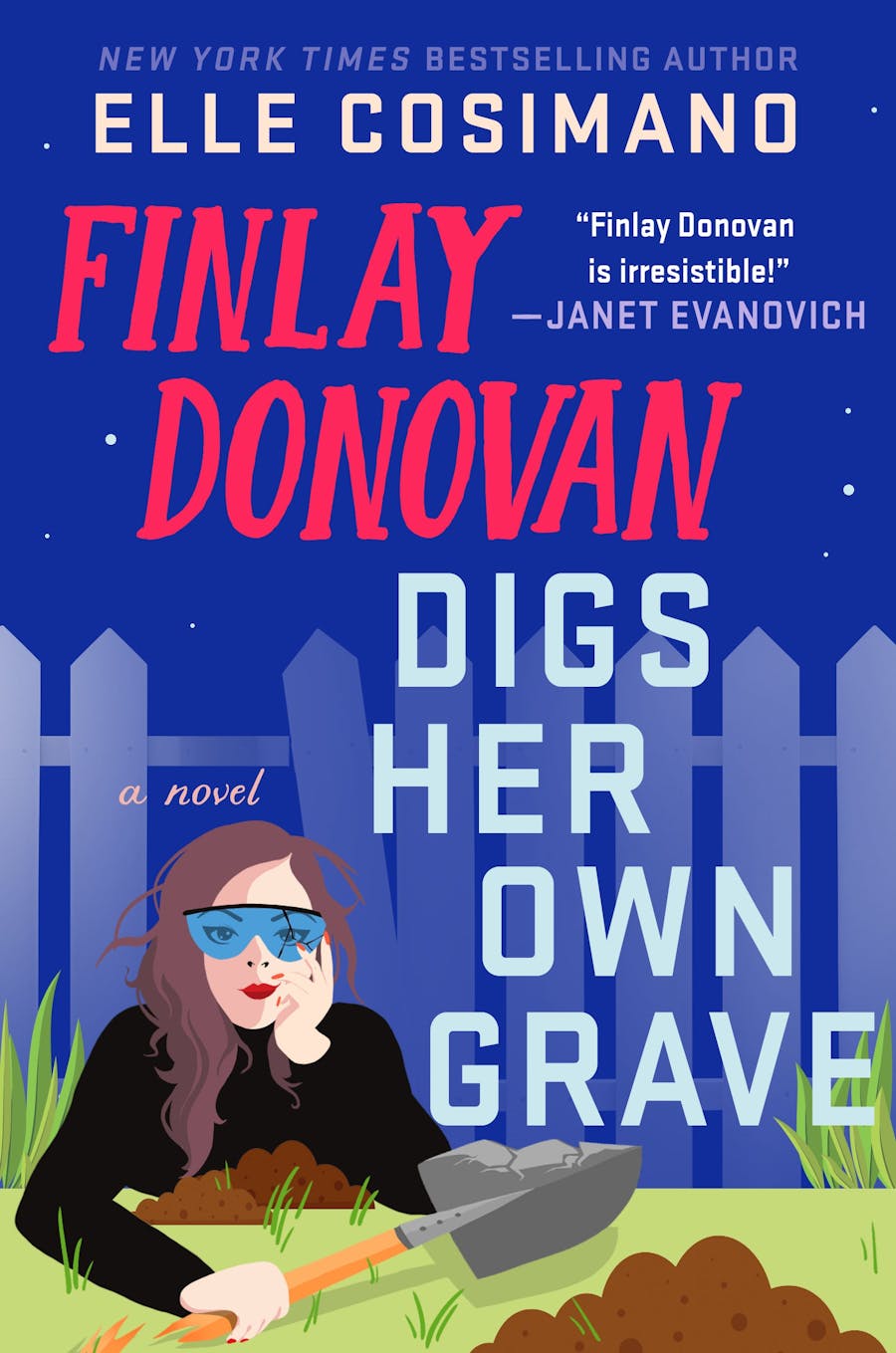
Other things have happened since then, of course, as we find ourselves now on the fifth installment. Present and accounted for is her nanny and close friend, Vero Ruiz, a woman with the kind of street smarts that can come in handy when the chips are down. In this episode there are several recurring characters, and the reader is strongly advised to go back and read the first Finlay before diving in. It’s not as if you can’t just start with this one, but you’ll be missing half of the jokes and jibes if you do.

My great thanks go to St. Martin’s Press Early Readers program and NetGalley for the review copy. This book will be available March 4, 2025.

Finlay’s nosy neighbor, Mrs. Haggerty, assumes a central role this time around when a body is exhumed from her backyard. Her home is declared a crime scene, and before Finlay even has time to react, the woman has installed herself in Finn’s guest room. A beat or two later, Stephen, Finlay’s ex, husband of her two children, is arrested for murdering the corpse that’s been found!

One of my favorite parts of this series is watching the dynamics between Finlay and her ex. On the one hand, the guy is philanderer, and he’s kind of a weasel. Yet, though Vero urges Fin to let justice take its course and stay out of it, Finlay has to defend him. Stephen is the father of her children, and they don’t need to grow up being told their daddy is a murderer. Also? The child support will dry up quick as a whistle if Stephen no longer makes money. And part of what I love about this, is that, in broad strokes, it outlines a dilemma that any number of women with children face. Life is full of nuance, and although this is not literary fiction, not intended to be known for its depth, it does honor the shades of gray faced by so many women. It makes the whole story more relatable.

Mrs. Haggerty also proves to be far more interesting than we previously believed, and that’s all I’m going to say about that. However, I do admire Cosimano’s capacity to juggle a million tiny, moving parts without creating inconsistencies. Once or twice I have seen what looks like an inconsistency, but then it turns out to have been written that way for a reason, usually to expose someone or something.

As the series progresses, I see more critics howling that the series isn’t what it was. Of course they’re right, in a way; when the series grows, the author has to make changes to prevent becoming a one trick pony. But I admire the way Cosimano handles the growth.

One small moan: yes, yes, yes. We can see that Finlay is hot for Nick, her cop boyfriend (the only trite element so far.) And yes, yes, yes, we can see that Vero is madly in love with her sweetheart, a fellow who she’s adored since her teens. We get it. Finlay and Vero are not a couple. We don’t need it hammered in any further, or at least, I don’t. For that matter, I wouldn’t be all that disturbed if they were. But the increased emphasis on their two romances bears just the tiniest whiff if hysteria. It’s not necessary. Finn’s love for Vero and vice versa, is not a lesbian love, but about the family we choose. So, let it rest already. Relax! The lesbian role is fulfilled by Finlay’s cop sister, Georgia, who stays firmly in the background where, apparently, some in the industry believe lesbian characters belong.

Sheesh!

That wee rant aside, I enjoyed this book very much. I heartily recommend it to you, and I cannot wait to read the next in the series.

The Answer is No, by Fredrik Backman****

Who can resist a story by Fredrik Backman? His soothing tone and positive message about the nature of humanity is balm for the soul. So although I seldom read stand alone short stories, I leapt on this one right away. My thanks go to NetGalley and Amazon for the review copy. This book is for sale now.

This is one of those stories where you can see what’s about to happen, in broad strokes, right out of the gate. The blurb gives us the contours, telling us that our protagonist, Lucas, is about to have his life ruined by a frying pan; his life is perfect, single with no entanglements. He has no friends that he owes favors; no girlfriend; his life is simple and uncomplicated. He has a nice little apartment that’s his alone; after work, he can eat his Thai food and play his videogames without harassment. He doesn’t bother anybody, and nobody bothers him.

Then there’s a knock at the door, an insistent one; it’s a small klatch of people that introduce themselves as “the board.” Someone has disposed of a frying pan in an unauthorized spot, and they are determined to root out the culprit and penalize them. Everyone is considered guilty until proven innocent! Lucas protests his innocence and makes a few hapless suggestions in hopes of mollifying them, but instead, they draft him to head a committee, and they won’t let him out of it.

This is a pleasant enough story, consistent with Backman’s usual style, but at the same time, because it is a short story, it lacks some of the most agreeable aspects of a Backman novel. In his full length books, Backman creates and develops a massive collection of characters, and he always juggles them brilliantly, developing several and keeping each of them so distinct that the reader can’t forget who is who. Here he is forced, due to the limited length of the thing, to keep it down to a small handful of characters, and while some will likely appreciate this, I miss the complex stories with infinite character back stories and interrelationships. So, as short stories go, this perfectly fine, but for those of us that are fond of Backman’s epic tales, it feels just a trifle anticlimactic.

Recommended to those that read everything Backman writes, and to those that prefer a more streamlined story.

Open Season, by Jonathan Kellerman***

3.5 stars, rounded downward.

Open Season is the fortieth (!) in the Alex Delaware series, one that I have read since the very first book. Newbies can read it as a stand alone novel, however. My thanks go to NetGalley and Random House/Ballantine Books for the review copy. It will be available to the public February 4, 2025.

One of the joys of reading a long running series is its familiarity. If the writer is good—and nobody will say Kellerman isn’t—the characters begin to feel like old friends. In addition to our protagonist, kiddy shrink and cop consultant Alex Delaware, we have his wife, Robin, who is mostly a background character; Alex’s best friend, Detective Milo Sturgis; and some lesser recurring characters such as cops Sean and Petra. I could include Milo’s husband Rick, but Rick almost never puts in a personal appearance. In fact, we see a good deal more of Blanche, Alex and Robin’s French bulldog, who, like the other characters, never grows old. When Milo lumbers into the Delaware kitchen and raids practically everything in the fridge, I smile. Ah, there he is, the big guy.

When the series began, Alex, a child psychologist (like Kellerman himself,) worked with seriously troubled children and teens, but when the LAPD had a case involving a child, he would consult on it also. Now he works on the private cases of his choosing, primarily custody cases and the like, and is a de facto cop. This has developed in the context of Milo, a gay cop, being ostracized by the rest of the department, and so once a friendship and working relationship develops between Milo and Alex, Alex rides along and they say he’s a consultant, even when there are no funds in the budget and he is merely a volunteer.

All this may seem improbable today, but please remember that the series began in 1985, when gay men were treated brutally by most of American society, and that is exponential when it’s a cop being hazed by his own department. And even today, gay cops don’t always have an easy road.

Is this realistic, then? Let’s look at it this way. To be completely realistic, Alex would never get into that cop car, and he would work only from his office. To consult with the department, he would be sent information to analyze, and if appropriate, the child or children in question would meet with him in an office to be interviewed. Milo would either be on his own, or with whatever newbie was stuck being his partner for now.

And it would be dull as hell.

So, for me to enjoy this series, I just need the most improbable aspects to be scaled back, and I’m happy. Several books ago, Alex was donning a Kevlar vest and rocketing into action with Milo, and that was straight-up ridiculous. But Alex doesn’t do that anymore. The story is just believable enough for me to buy into it, and so I’m happy.

This particular episode involves a sniper, and although I enjoyed it and found little to object to, it didn’t have quite as much sparkle as most of his other books. On the other hand, it also didn’t have a theme involving kinky sex—ew!—as in multiple past novels, and it didn’t have any of my pet peeves that I dislike wherever they turn up. No kidnapping Alex or his loved ones; no struggle with alcohol. So I was happy for the most part and would have rounded the rating up to four stars, which is what I usually rate Delaware novels, but the multiple snarky remarks about abortion rocked me back. Not all women’s health facilities that feature abortion as an option are “abortion mills.” If a grandmother suggests that a pregnant granddaughter consider abortion, it doesn’t make her a bad grandmother. Am I rounding the score on a novel downward because I don’t like the author’s politics? Yes. Yes I am. But, can I do that? Sure I can. I just did.

I’ve loved this series for a long time, and I look forward to reading the forty-first. I do recommend this book to the series faithful, but if possible, get it at a discount or free, rather than paying full price, unless your pockets are deep ones. If you are new to the series, if possible, read either the most recent one before this—number thirty-nine was excellent—or read the very first, When the Bough Breaks, which ties the subject much more closely to Alex’s original profession.

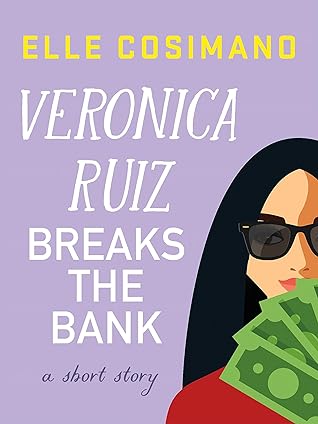
Veronica Ruiz Breaks the Bank, by Elle Cosimano****

Fans of Cosimano’s Finlay Donovan series will recognize her trusty sidekick and BFF, Vero. Over the course of the series, we’ve had many hints about Vero’s past, and Finlay sometimes wonders why Vero is so tightlipped about her personal history. This short story provides curious readers with some background, as well as some of the entertainment for which Cosimano is fast becoming legendary.

My thanks go to NetGalley and St. Martin’s Press for the review copy. This book is for sale now.

I generally avoid this sort of book, because often as not, the author returns to flesh it out into a full length novel, and as much as I enjoy reading it once, I don’t want to read it twice. But this was low hanging fruit, a shorty by an author I greatly enjoy, at a time when I couldn’t get up and move around much, and so I dove into it.

Vero is an honors student from a struggling family, and her academic career is short circuited when an envelope of money goes missing, and Vero is blamed by her sorority sisters. Vero makes a run for it; desperate for work, she takes a custodial job in a bank, and that’s where the fun begins.

This is an entertaining read, but it’s not up to the level of Cosimano’s novels. For a short story to work, a lot must be packed into it, with every single word pulling its own weight, and possibly that of its friends and family. Here, it feels like a chapter out of a book, one in which the author doesn’t want to give up any truly juicy information about the protagonist because she’s saving it for—you got it—a novel.

Of course, I cannot pretend to know what the author is thinking here; this is just an educated guess. But the product is the product, and whereas it was a fun read as a free galley, I might have felt a bit annoyed if I’d paid money for it.

Those looking for a quick, light read to take to the beach could do worse. Some people don’t have the time or stamina for a full length novel of any type; if that’s you, maybe this is your book. But as for me, I’ll hold out for the real deal in the future.

How to Summon a Fairy Godmother, by Laura J. Mayo*****

“She was Theodosia Balfour. Good things did not happen to her.”

Theo is engaged to be married, despite her wishes; her mother has bartered her to an ancient, badly behaved duke for the prestige of his title and the money she must have to keep the family manse. Beggers can’t be choosers, amirite? Her stepsister and the prince have barred her from their castle due to her own unseemly behaviors, and her sister is about to be wedded to a more desirable man. There’s only one way out of it: Theo needs to find her stepsister’s notes on summoning a fairy godmother. Only magic can possibly get her out of this mess.

My thanks go to Orbit Books, Hachette Audio, and NetGalley for the review copies. This book is for sale now.

Because I am lucky enough to have both the print and audio galleys, I pair this book with my morning regimen on my exercise bike. While my feet are doing the work, my eyes and ears are on a pleasure cruise, listening to the story as read by the talented Josie Charles. At the outset, I’m not sure I’m going to enjoy it. After a handful of quick laughs, the story and voice actor seem to be a little over the top, perhaps trying too hard. However, a number of other reviewers that I respect have really enjoyed this thing, so I keep an open mind, and sure enough—about a third of the way in, I realize that I’m bonded to the protagonist. As I follow the narrative and become accustomed to the writing and narrative styles of the author and performer, the whole thing grows on me, and before long I find myself looking forward to my wretched exercise bike, because Theodosia needs me.

Once the fairy has been summoned, Theo is magicked away to fairy land, and she is provided with a set of tasks she must accomplish in order to be freed from the loathsome old toad to whom she’s betrothed. She is provided with some assistants and supervisors, and it’s a good thing because she needs rescuing now and then. The hardest part, perhaps, is the caveat that as she completes the steps required, she must behave respectfully—at all times!

The chapters are brief and have hilarious titles. A couple of examples: “Chapter 5 Where Theo Should Probably Think of Something Before She Ends Up Married,” “Chapter 11 Where It Becomes Quite Clear Theo Was Never Trained as a Lawyer.”  There’s lots of snarky dialogue, with a tender moment or two tucked in here and there.  There’s a twist at the end that I absolutely did not see coming.

Should you listen to the audio, or read the printed version? There are some American readers that don’t like a British accent, and Ms. Charles’s is a heavy one. Once I’m used to it, I rather like it, but you know what type of reader you are. Follow your usual go-to. If you enjoy an audiobook, this one could make your commute much pleasanter.

Highly recommended to those that enjoy fantasy and/or humor.

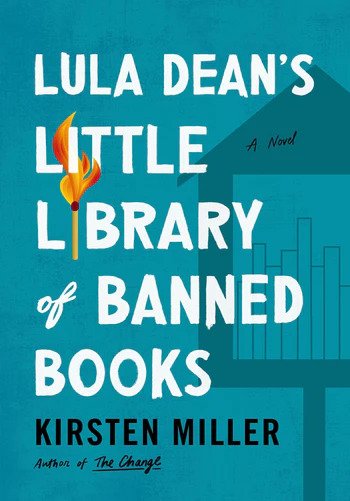
Lula Dean’s Little Library of Banned Books, by Kirsten Miller

Lula Dean is a deeply unhappy woman. Neglected by her children, alone and unappreciated, she strikes on a way to gain the attention she knows that she deserves. She embarks on a crusade to remove books she deems objectionable from local libraries, and she sets a sterling example for her town by erecting a little library on her lawn, a collection of the wholesome material she thinks is most appropriate. Little does she know that one of the town’s youths has snuck out in the dead of night and inserted banned books inside the dust jackets of the books she originally placed there. Her library becomes wildly popular, and Lula hasn’t a clue why.

My thanks go to NetGalley and William Morrow for the review copy. This book is for sale now.

The moment I saw the synopsis for this novel, I knew I had to read it. The First Amendment is a hot button for many people in the U.S., and as a language arts teacher, it’s been at forefront of my mind for most of my adult life. And I think I can safely say that Lula Dean is a soft sell; readers are generally a receptive audience, and so any novel containing the word “book” or “library” in its title should, I would argue, be held to a slightly higher standard. It’s not that hard to preach to the choir.

I love the premise of this story, and I laugh out loud more than once at the beginning. After that, though, things flatten out a bit. There are a lot of characters here, and whereas I have no difficulty keeping them straight, their numbers may have prevented author Kirsten Miller from fully developing them. I feel as if I am reading, for the most part, about cartoon cutouts rather than real people;  had I felt as if the characters were real, I would have been more deeply invested in their outcomes. However, everyone in this thing is either a fine, enlightened character or a despicable, ignorant blowhard. It accurately represents the way many Americans regard those around them, blue versus red, and that is not helpful. Two characters that stand out better than others are side character Beverly Underwood, and the young Elijah. However, even these are not dynamic characters. Nearly everyone here is the same going out as they were coming in.

Those looking for a short, funny novel to toss in their suitcase over the holidays could do worse; they could also do better. The sad thing is that had this been written in a more intentional way, with the literary standards one would hope to see in any novel, it could have been impressive, might even have changed a few hearts. This book isn’t going to do that, and so I see it as an opportunity squandered.

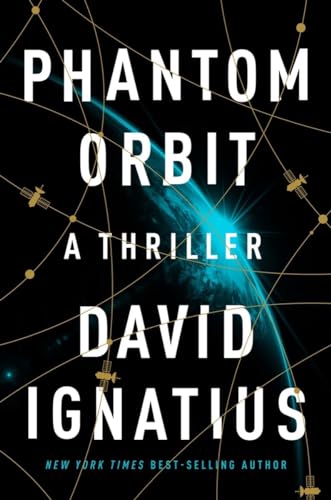
Phantom Orbit, by David Ignatius****

“When we know a secret that could have devastating consequences, what should we do?”

David Ignatius writes spy thrillers, and is one of the most reliable authors I’ve read within that genre. I can always count on an absorbing read. Phantom Orbit centers on Ivan Volkov, a young man from Russia that goes to Beijing to study science, and an American CIA officer named Edith Ryan. They come together and then part, because while their interests and personalities draw them together, their obligations to the lands of their births pull them apart.

My thanks go to NetGalley and W.W. Norton and Company for the review copy. This book is for sale now.

Our chief protagonist, Ivan, is courted by the Chinese, who want to recruit him and his brilliant mind to their space program, but he is summoned home when his mother becomes ill, and once he is there, he comes under intense pressure to remain in Russia. Later, once he has lost almost everything, he finds a chance for redemption.

Edith, on the other hand, is faced with every possible glass ceiling and endless sexism in her work, and nobody will take her ideas seriously. Eventually she gives up on the Agency and returns to civilian life in the States.

This story grabbed my attention from the get go and held it all the way through. I wasn’t able to guess what the resolution would be.

That said, this also isn’t the best he’s written. For those new to this author, I recommend The Quantum Spy. For Ignatius’s faithful readers, and for those fond enough of espionage thrillers to want more than one such novel, this book is recommended.

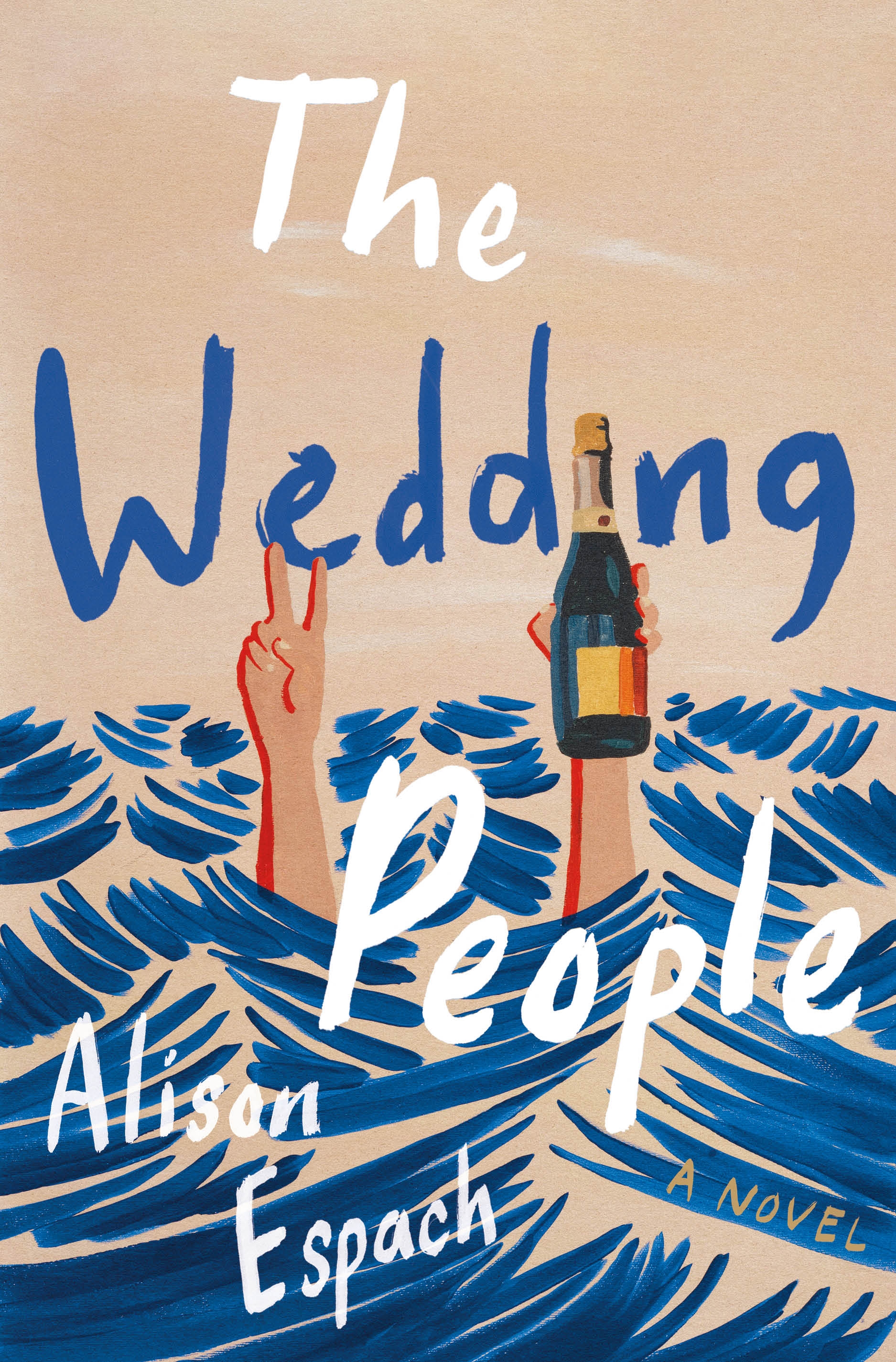
The Wedding People, by Alison Espach*****

It’s a good sign when I finish reading a book, and I’m smiling. Alison Espach’s new novel, The Wedding People, not only left me smiling at the end; it made me laugh out loud almost from the get-go, and it will do the same for you.

My thanks go to NetGalley, Henry Holt, and Macmillan Audio for the review copies. This book is for sale now.

I’m not usually fond of romances, but a friend mentioned the premise of this one, and I couldn’t resist. In a nutshell:  Phoebe, the protagonist, worn down by the pandemic and devastated when her husband leaves her, heads off to the posh hotel where they’d intended to spend their vacation. She takes no luggage or even her phone, because she plans to kill herself once she’s inside that lovely place.

Upon arrival, it’s clear that a mistake has been made. The entire hotel has been reserved for a wedding. But Phoebe’s room hasn’t been double booked, and so she is allowed, with apologies, to proceed to her room. However, the bride—wealthy, entitled, Bridezilla—learns of Phoebe’s presence, goes to her room, and orders her to leave. As they argue, Phoebe discloses her reason for coming, and assures her that she’ll be gone—so to speak—by the time the wedding takes place. But Lila, our bride, is having none of it. How dare Phoebe spoil her wedding! Absolutely not. She isn’t going to have guests gathering just as a corpse is being wheeled out to the morgue, right through the lobby! Phoebe must change her plans.

I won’t share any further developments, but I will tell you this: Espach can write.

Long ago, I decided that five star reviews should not be reserved for the rare gem bound to become a timeless classic. I give five stars to any novel that makes me unusually happy, and that represents the best being published within its genre. This book is one of those.

Helen Laser is the voice actor narrating the audio version, and she makes it even funnier. If you are strictly a visual reader, that’s fine, but if you like both formats, go with the audio this time, or use the audio and print versions together, which is what I did.

Highly recommended to those that enjoy a good romance, a good laugh, or both.

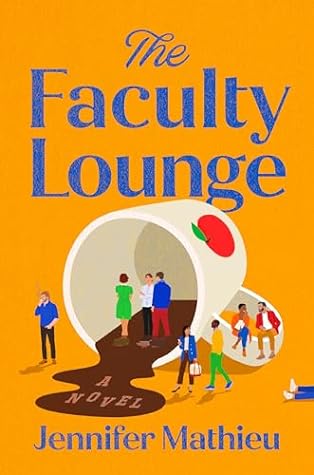
The Faculty Lounge, by Jennifer Mathieu****-*****

“You really had to hand it to Mr. Lehrer. While dying at work is never ideal, he had the decency to do it during his off period. And not only that, but at the start of it, too, giving the clerks in the main office plenty of time to find someone else to cover Ms. DeLaRosa’s Spanish II classes, even as they scrambled to figure out who should be telephoned when an eighty-two-year-old substitute teacher lies down on a ratty couch in a high school faculty lounge and dies. “

Jennifer Mathieu’s new novel, The Faculty Lounge, has been described as love letter to teachers. Though it is darkly funny in a number of places, the description isn’t wrong. By the ten percent mark, I had cackled out loud twice, it was so strangely accurate.

My thanks go to Penguin Group Dutton and NetGalley for the review copy. This book is for sale now.

Our school is Baldwin High, a Texas school with a solid reputation. After the stage is set, with poor Mr. Lehrer breathing his last breaths during his planning period, and another teacher being cranky when the paramedics make her leave before her photocopies are done so that they can work on him, the story is organized with a single chapter per character. Obviously there are a lot more people on Baldwin’s staff, but this method works quite nicely, and since the characters interact, the chapters that come later in the book are richer, because there’s more backstory to help us understand them.

The youngest teachers have grown up with the knowledge that they might be shot to death at school; first they grew aware of this when they were students, and now, as teachers, the danger is still there. While older staff members tend to be rattled by a lockdown, younger ones see it as almost routine. Take attendance, salute the flag, and whoops, there it is. Herd any students outside of your door into the room, then lock it. Everyone on the floor. Pull your window blinds. Wait till it’s over.

I appreciated every character in this book, and I was sorry when it ended.

There are crises at Baldwin, just as there always seem to be fires to put out in real schools; there are high maintenance parents with absurd complaints, as well as idiotic district directives. Bureaucrats! Toward the end, a veteran teacher explains to a newer one that some days, “the best you can do is show up and hang on.” So true! Your reviewer is retired from the profession, and I can recall a wise older teacher saying to me privately during difficult periods, “I’m here. And I’m dressed.”

The whole thing seems so familiar.

How much will this resonate to readers that aren’t educators? I have no idea, but I know that the in-jokes, the sense of the familiar, can’t be as strong. For a general readership, I’d say this is a four star read. Possibly this is true as well for those that have always taught early childhood, because many of the parameters are different. But for those of us that have taught middle and high school, particularly for those that are veterans, this is a solid five star read.

Cheerfully recommended to all, and highly recommended to veteran secondary teachers.

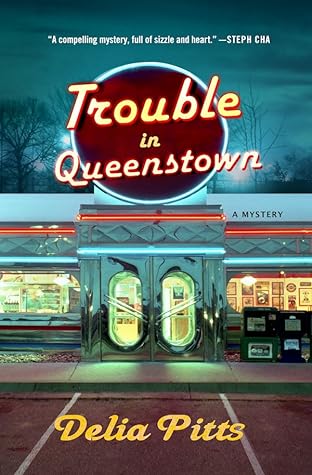
Trouble in Queenstown, by Delia Pitt***-****

Delia Pitts has been writing mysteries for quite some time, but she is new to me. In Trouble in Queenstown, she introduces hardboiled sleuth Evander Myrick. Myrick’s friends call her Vandy, and that helps to distinguish her from her elderly father for whom she is named; he’s in a memory care unit.

My thanks go to NetGalley, Macmillan Audio, and St. Martin’s Press for the review copies. This book is for sale now.

At first glance, I thought that this detective fiction was set in New Zealand. Queenstown, right? But in this case, the locale is Queenstown, New Jersey. The story opens with Vandy cleaning up a mess in her office just as Leo Hannah storms in and wants to see Evander Myrick. He assumes Myrick will be a Caucasian male, and that Myrick herself is a member of the cleaning staff.

Oops.

Hannah comes to hire Vandy in the wake of his wife’s murder. He knows exactly who did it, he tells her, and he wants her to prove it, starting with some surveillance. Vandy isn’t sure she should take this job, but she has to pay top dollar to keep her daddy in the best facility, so she reluctantly signs on. As the story progresses, there are numerous twists and turns, and the violence escalates. By the story’s end, three different people have tried to hire her for exactly the same case!

The thing I appreciate here is the way Pitts addresses cop racism. So many detective novels require the reader to suspend belief, to assume that every cop is fearlessly dedicated to finding out the unvarnished truth and arresting the perpetrator of the crime, regardless of race, ethnicity, or sexual orientation. But as Vandy conducts her investigation, Pitts keeps it real. At one point the detective speaks with a salon stylist that worked on Ivy’s hair, and he tells her that Ivy was afraid of someone at home. Vandy asks if he contacted the police.

“’The police?’ He jerked his neck, pursing his lips as if I’d farted. ‘Girl, you think the cops came here?’ He sniffed. ‘You don’t look like a fool. Maybe I read you wrong.’”

Sadly, the second half of the book doesn’t impress me as much as the first half does. I have a short list of tropes that I never want to see again in a mystery novel, and she trips a few, including my most hated one. I won’t go into details because it’s too far into the story, and I don’t want to spoil anything, but when it appears, I sit back, disengage from the text, and roll my eyes. Ohhh buh-ruther. As I continue reading, I can see who the murderer is well in advance, and the climax itself is a bit over the top, though without the tropes, I mightn’t have noticed this last issue.

In addition to the digital review copy, I have the audio. The reader does a fine job.

The more mysteries a person reads, the staler tropes become. I am perhaps more sensitive than most readers, having logged over a thousand novels in this genre. Readers that have not read many mysteries are less likely to be aware of, and therefore bothered by overused elements, and so this book may please you much more than it did me. But for hardened, crochety old readers such as myself, I recommend getting this book free or cheap, if you choose to read it. Newer readers may enjoy it enough to justify the sticker price.